Author Archives: M.A.D. LIGAYA
Hindi Nga Ba Ukol? (1)
(1st of 7 parts)

Nang matapos ko na ang pangatlong pelikula ay pinatay ko muna ang aking desktop computer. Mamaya eh laptop naman ang aking bubuksan kapag nagbrowse ako sa Internet. Ganoon lang umiikot ang buong araw ko kapag walang trabaho – Nexflix… Internet… at kapag inspired eh magsusulat ako ng kuwento, tula, o essay at ipo-post ko sa aking website. Kapag wala ako magustuhang pelikula at tinatamad akong mag-browse o magsulat eh nagbabasa na lang ako . Basta nasa loob lang ako ng bahay. Ayaw ko naman kasing gumala dahil sa Covid. Weekend kaya siguradong matao ngayon sa labas. Mahilig mamasyal ang mga Koreano kapag wala silang pasok. Bukod doon eh malamig, Hindi pa tapos ang winter.
Bukas eh tatapusin ko naman iyong librong binabasa ko. Nangako kasi ako sa sarili na hindi muna ako gagawa ng ano mang bagay kaugnay sa trabaho buong weekend. Bawas stress muna. Sa opisina ko na lang tatapusin iyong report na pinapagawa ni boss.
Pumunta ako sa terrace ng two-bedroom apartment na inuupahan ko upang sumagap ng sariwang hangin at mag-stretching ng kaunti. Madilim na. Pasado alas-otso na kasi.
Maliit lang ang terrace ng apartment unit na inuupahan ko. Isang upuan at maliit na lamesita lang ang inilagay ko doon. Doon ako umuupo kapag gusto kong magpapresko, magbilad sa araw kapag umaga, nagbabasa ng libro, o tuwing ako’y nagkakape o umiinom ng beer.
Pero sandali lang ako naglagi sa terrace. Gutom na kasi ako kaya nagpunta ako sa kitchen. Makapananghalian pa nang magsimula akong manood. Iyong natira kong chicken at pizza eh minaycrowave kong upang hapunanin. Dinagdagan ko na lang ng ramen para may sabaw akong mahigop.
Bitbit ang aking pagkain eh bumalik ako sa kuwartong ginawa kong study room at mini-theatre. Iyon ang nagsilbi kong workplace noong nagdesisyon ang mga employers ko na work from home muna kaming mga nasa opisina dahil marami ang cases ng covid. Kamakaylan lang kami ulit na nirequire na mag-report na sa opisina.
Habang kumakain, binuksan ko na ang laptop at sinimulan ko mag-browse. At katulad ng dati, bago ko bisitahin ang mga websites at social media platforms na regular kong ino-open eh inuna ko muna ang FB. Nagmessage ako kay Anna, misis ko, para kumustahin kung okay na siya. Hindi kasi kami nakapagchat maghapon dahil masama daw ang kanyang pakiramdam.
Mukhang offline siya, hindi kulay green ang active status niya sa Messenger. Sinubukan kong i-video call ang anak naming si Kenneth. Hindi sumagot. Dalawang bagay lang tulog na siya oh busy sa paglalaro ng Mobile Legends.
Tinignan ko na lang ang mga posts ng mga FB friends ko. Binuksan ko rin ang profile ng ilan sa mga malalapit kong kaybigan at mga mahal sa buhay. Ganoon ko na lang nasusubaybayan kung ano ang nangyayari at ginagawa nila sa Pilipinas. Kapag may gusto akong kumustahin o maka-chat eh mine-message ko sila. Isa sa kanila ang nagse-celebrate ng birthday – si Katherine.
Binuksan ko ang profile ni Kath. Pumili ako ng magandang birthday image sa Google at sinend ko sa kanya sa Messenger. Dinagdagan ko iyon ng isang maikiling message sabay na rin ang pangungumusta.
Pagkatapos niyon eh inopen ko ang website ng ESPN para tignan kung ano resulta ng mga games sa NBA. At mula doon ay lumipat ako sa You-Tube para panoorin naman ang highlights ng mga NBA games. Sa ganoon na naubos ang oras ko. Alas-onse na pala. Ubos na rin ang pagkain ko.
Sawa na ako sa pagba-browse. Manonood na lang ulit ako ng isa pang pelikula. Pero nagtimpla muna ako ng kape.
Bago ko i-turn off ang laptop ay binuksan ko muna ulit ang FB. Hindi ko pa pala nako-close ang profile ni Kath. Tinignan ko kung nabasa na niya ang pinadala ko sa kanyang birthday greetings.
Hindi pa “seen.” Tulog na siguro iyong ale. Baka bukas na niya makikita ang message ko.
Naisipan ko biglang tignan ang convo namin sa Messenger.
Iniskrol up ko.
Wala pala kaming seryosong naging usapan mula noong nagtrabaho ako sa Korea. Tuwing birthday niya eh babatiin ko siya. Pagkatapos niyang mag-thank you at maikiling kumustahan eh babay na. Gusto ko sanang makipagkuwentuhan ng medyo mahaba-haba pero ang hirap tantyahin kung gusto ba niyang maki-pag chat ng matagal o hindi… kung gusto ba niya akong maka-usap katulad ng dati.
Inikskrol down ko naman.
May balak pala sana kaming magkita noong isang taon nang ako’y magbakasyon. Pero sanay na ako sa mga ka-chat kong kaybigan, ma-babae o ma-lalaki, na yayayain akong magkape at magkuwentuhan kapag nagbabakasyon ako sa Pinas pero hindi naman natutuloy. Puro drawing lang. Pero siguro kung hindi nagka-covid noon isang taon eh baka nga nagkita kami ni Kath. Hindi ko palalampasin ang pagkakataong makita siya at makausap. Hindi ko lang alam kung ganoon din siya.
Nang iko-close ko na sana ang FB para makapanood na ulit ako ng pelikula eh biglang naging “seen” iyong message ko kay Kath. Naka online pa siya. At nakita kong nagsisimula na siyang mag-type ng message.
“Sirrr!!!” Iyong ang unang message ni Kath.
Hanggang ngayon sir pa rin ang tawag niya sa akin. Naging intern kasi siya sa travel at recruitment agency ng tito ko kung saan kami nagtatrabaho pareho ni Anna bago ako napunta dito sa Korea. Ang misis ko na lang ang nandoon ngayon. Ako ang head ng HR office at mismong sa office ko ini-assign noon ng tito ko si Kath. Fresh graduate siya noon at ang kasunduan nila ng tito ko eh internship muna ang unang buwan, pero with pay, at kung iha-hire siya o hindi bilang fulltime employee eh depende sa recommendations ko.
“Kumusta po?”
“Ano ba Kath… kanina sir… ngayon pinopo mo naman ako. First name ko na lang.”
“Okay… okay. Sige… take two… Kumusta Marco?”
“Ma-beauty pa rin?” Ang pabiro kong sagot sa message niya.
“Wow! Same here… at mas ma-beauty ako sa iyo.”
Nagpalitan kami ng mga smileys pagkatapos niyon.
“Salamat naman at hindi mo nakalimutan ang birthday ko.”
“Paano ko makakalimutan eh nakalista sa mga dapat kong batiin tuwing magbe-birthday sila.”
“Talaga lang ha. Salamat kasi nakasama ako sa listahan mo.” Ang sagot ni Kath matapos niyang pusuan ang message kong sinagot niya.
“Ano nga pala ang pinagkakabalahan mo ngayon?” Ang tanong ko sa kanya.
Sa tanong kong iyon nagsimula ang mahabang kuwentuhan namin. Noon lamang nangyari ang ganoon, ang mag-chat kami ng matagal sa FB. Dati matapos ang siguro’y palitan ng tatlo hanggang limang messages eh nagpapaalaman na kami.
Kinumusta ko ang kanyang pamilya.
“I and Jay… we’re happy together. We’re blessed as a couple.” Wika niya.
Ang tinatanong ko eh buong pamilya. Sa totoo lang eh hindi ko naman naisip si Jay ng kumustahin ko pamilya niya. Pero dahil doon na din lang niya dinala ang usapan eh tinanong ko na kung nasa Pinas ang asawa niya. Alam ko kasi na seaman ang kanyang napangasawa.
Aniya’y nakasampa daw ito kasalukuyan at sa South America daw bumibiyahe ang barko nila.
“Kumusta naman kayo ni Anna?”
Matagal bago ko sinimulang i-type sa convo namin ang sagot ko. Pinag-isipan ko ito ng mabuti. Kumusta na nga ba kami ng asawa ko?
“We’re okay.”
“Wow. Ang tagal bago sumagot tapos sasabihin lang na okay sila.”
Actually may karugtong iyon. Napindot ko lang kasi ang enter after ko i-type iyong isinagot ko.
“Nang tumigil na akong mag-set ng standards, eh mas naging maayos ang lahat sa amin.”
“Has she changed?”
Hindi ko agad nasagot ang tanong ni Kath.
“Marco… sorry for asking.”
“No worries Kath…. Actually… Anna is Anna. She is who she is. Tanggap ko na iyon.”
Thumbs up na lang ang isinagot ni Kath.
Naala-ala ko tuloy iyong mga pagkakataon na kapag nag-aaway kami ni Anna noon eh si Kath ang nagiging hingahan ko ng sama ng loob. Kapag pumapasok siya sa opisina ko noon at ako’y tahimik lang eh alam na niyang nagkaroon kami ng diskusyon ng misis ko. Ipagtitimpla na niya ako ng kape at pagkatapos ay sasabihin na nitong huwag na akong mahiyang mag-share.
Akala ko na pagkatapos niyang mag-thumbs up eh magpapaalam na siya. Instead eh nag-send ito ng malungkot na emoji.
Nag-type ako sa convo namin.
“Okay lang ako Kath.”
Pinusuan niya ang message kong iyon.
Siya naman ang tinanong ko.
“Kayo, kumusta set-up ninyo ni Jay? Restored na ba? As in back to what it used to be.”
“Yeah, back to normal. Naayos namin lahat ng problema. We both realized na kaylangan naming pagdaanan ang mga pinagdaanan namin. Katulad nang pinagdaanan ninyo ni Anna noon. You know na pareho kaming Christians kaya we chose to stay together and allowed God to lead the healing process.”
Thumbs-up ang isinagot ko sa kanya.
“I think mas matured na kami ngayon when handling our problems.” Dagdag pa niya.
Bago kasi ako nagpunta na Korea ay nagkita kami ni Kath. May pinagdadaanan daw silang mag-asawa na krisis noon at kaylangan lang niya ng kausap. Ako naman ang nakinig sa mga hinaing noon ni Kath. Mukhang hahantong daw sa hiwalayan ang problem nila noon. Tinanong ko kung ano ang dahilan pero nag-alangan siyang sabihin.
Sa bigat ng problemang pasan niya noon eh hindi ko na nagawang ihinga din sa kanya ang mga saloobin ko… ang mga pinagdadaanan ko noong panahong iyon. Ang matiniding krisis na pilit kong nilalampasan noon. Tiyak kong mas mabigat kung ikukumpara sa mga pasanin niya noon… na kinaylangan ko pang maresetahan ng anti-depressants noong mga panahong iyon. Ni hindi ko na rin nasabi sa kanya noon na malapit na akong umalis papuntang South Korea.
“Naku mukhang busy na si Marco.”
“Oops… no Kath. Naalaala ko lang kasi iyong last time na nag-usap tayo. Nanood tayo noon ‘di ba? ”
“Alin ang naalaala mo, pelikula o iyong pananantsing mo… iyong kunwari eh yayakapin mo ako to comfort me pero sumisimple ka nang halik sa pisngi ko?”
“Hoy hindi ah.” Ang sagot ko sa message ni Kath. “I was just really comforting you then. Kung iba ang intention ko noon eh di sana…”
“Stop it Marco…”
“Okay… but I had no other intentions that time.”
“Sige na nga, sabi mo eh.”
Smileys ang isinagot ko kay Kath.
Tatlong puso naman ang sinend niya sa akin.
“I miss you Kath. I really do.”
Hindi ko alam kung tama ba na mag-message ako sa kanya ng ganoon. Para lang kasing may bigla akong naramdaman. Pamilyar ako sa pakiramdam kong iyon sa kanya.
Nasend ko na bago ko na-realize na baka masamain niya iyon.
“Naku… naku Marco… Sige goodnight na. It’s getting late. Sige na.”
Minasama nga siguro ni Kath ang sinabi kong iyon.
“Sorry Kath.”
“Sorry? Sorry for what?”
Hindi ako makapindot sa keyboard ng kahit anong letra. Matagal.
“Kako sorry for what?”
Hindi ko na matantiya kung gaano katagal na para akong natulala. Ang daming nanumbalik sa aking ala-ala.
Nag-type ako ng message. Pero hindi ko alam kung nandoon pa rin si Kath o nag-logout na siya.
“Wala iyon Kath. Ay siya. Sabi mo nga kanina eh goodnight na. Thanks for the time.”
Sumagot si Kath. Galit na mga emoji ang isinagot niya. Sunod-sunod.
“Sige Marco, ibitin mo ako ulit. Sanay naman na ako na ganyan ka.”
Napahawak ako sa noo nang mabasa ko iyon. Itong ganitong pagkakataon talaga ang dahilan kaya kahit gusto ko mang maka-chat si Kath eh umiiwas ako. Ganoon din siguro siya. Pareho sigurong ayaw naming may maungkat na hindi na dapat pang ungkatin.
Sa halip na mag-type ako ng message eh sinubukan kong i-video call si Kath.
Ni-reject niya.
Sinubukan ko ulit.
Rejected pa rin.
“Please answer my call. Hirap na akong mag-type sa keyboard.” Ang sumamo ko kay Kath.
Sinubukan ko ulit siyang tawagan.
Sa wakas eh sinagot na niya. Pero naka-off ang cam niya.
Nag-type ako ng message…
“Pa-on naman ng video mo… please.”
“Why?” Ang sagot niya.
“I want to see you.”
Matagal-tagal rin bago pinagbigyan ni Kath ang kahilingan ko.
Pinagmasdan ko si Kath nang naka-on na ang kanyan cam. Tantiya ko parang ganoon din ang ginagawa niya. Tingin ko parang walang nagbago sa kanya. Halos walong taon na ang lumipas matapos ang huling pagkikita namin.
“Umiiyak ka ba?” Ang tanong ko.
“Buwisit ka kasi Marco. Nakakainis ka. Oh… bakit kaylangan pa natin mag-video call?”
“Eh ngalay na kamay ko’t mga daliri sa kaka-type. Saka kasi…”
Hindi ko maituloy ang gusto kong sabihin.
“Kasi ano?”
“Hay… sige na nga… nami-miss kita Kath.”
“Aywan ko sa iyo Marco. Ang hirap tantiyahin kung nagsasabi ka ng totoo o nambobola ka lang.”
“Ganyan ba talaga tingin mo sa akin.”
“Oo matagal na. Mula nang hindi ka sumipot noong araw na iyon.”
Wala akong maisagot kay Kath. Iyon pa rin ang isyu niya sa akin kapag napupunta sa ganito ang usapan namin. Isyu na hindi ko rin alam kung bakit hindi ko pa nasasagot hanggang ngayon.
“Marco, may itatanong ako sa iyo. At sana once in your life eh maging honest ka sa pagsagot. Kahit ngayon lang.”
Masakit iyon. Brutal. Para bang napakasinungaling kong tao talaga.
“Okay… okay… Promise. I’ll be honest. Ano iyon?”
Hinintay ko ang tanong niya. Alam kong tinititigan niya ako sa monitor ng computer na gamit niya. Pilit kong hinuhulaan kung ano ang tanong na iyon. Iyong nanaman bang hindi ko pagsipot sa usapan naming magkitkita noon? Siguro iyong ginawang paglilipat sa kanya ng tito ko sa ibang branch ng pinagtatrabahuhan namin. Halos six months kaming magkasama sa office ko pagkatapos ng kanyang internship bago siya inilipat. After two months ng paglipat sa kanya eh nag-resign siya at naghanap ng ibang trabaho. Baka gusto niyang itanong kung bakit hindi ko siya pinigilan noong sinabi niyang magre-resign siya o bakit parang balewala lang sa aking nooong sinabi niyang magpapakasal na sila ni Jay. Hindi namin kasi napag-usapan ang mga isyung iyon kahit ilang beses kaming nagkita bago ako nag-Korea. O baka itatanong niya kung bakit hindi ako nagsabi sa kanya na mangingibang-bansa ako at bakit hindi ako gumawa ng paraan na kontakin siya madalas mula noong nagtrabaho ako sa dito.
Aling kaya sa mga naisip ko ang itatanong niya?
Matagal-tagal din bago siya nagsalita.
“Ay huwag na lang. Nakakahiya”
“Ganun? Teen-ager ba ang peg.”
“Sobra ka Marco ha.”
“Okay. Ano ang gusto mong itanong?”
“Hindi na nga kako. Forget about it?”
Napabuntung-hininga tuloy ako. Parang alam ko na kung ano ang gustong itanong ni Kath.
“Okay Kath. Ako na lang ang magtatanong.”
“Sige…sige… huwag lang sa Math ha. Weakness ko iyon.”
Nangiti ako sa sinabing iyong ni Kath. Nandoon pa rin ang kanyang trademark na sense of humor.
“Kath… did you really love me before?”
Napapikit si Kath. Bumuntong-hininga.

Tungkol Sa Aking Pagsusulat

Madalas akong tanungin kung bakit ako nagsusulat. Bakit nga ba? Libangan ko lang talaga ito. Ako’y nagsisikap na maging mahusay na manunulat ngunit aaminin kong marami pa akong bigas na kakainin (matapos ko siyempreng isaing). Wala po akong ilusyon (Wala nga ba?) na maging tanyag sa larangang ito. Kahit na nga ba madalas kong sabihin sa mga estudyante ko sa “Literature” na pangarap kong mapagwagian ang “Nobel prize in Literature.” Biro ko lamang iyon. Sa “Palanca” nga hindi ako manalo-nalo eh sa “Nobel” pa kaya. Ilang beses na rin akong nagsumite ng entries sa “Palanca” pero nganga. Titigilan ko na ba? Siyempre hindi. Gusto ko lang talagang magsulat at masaya ako kapag ginagawa ko ito. At heto pa, medyo malalaki-laki na rin ang kinita ko sa pagusulat. Nalilibang na ako eh kumikita pa. Pero ang mga sinulat ko sa English ang binabayaran, lalo na kapag gumagawa ako (o tumutulong na gumawa) ng “research.” Medyo malaki ang tinatanggap kong bayad kaya sulit.
Kinaloob ng Panginoon na gawing daluyan ng biyaya Niya sa akin ang pagsusulat at kung kaloobin rin ng Panginoon na makilala ako sa larangan ng pagsusulat eh bakit naman hindi. At kung kaloobin niyang balang araw eh manalo rin ako sa “Palanca” eh ‘di wow. Malay mo eh masungkit ko rin ang “Nobel Prize in Literature.” Eh di dalawang wow na. Wow na wow! Si Bob Dylan nga na isang song writer (composer) at hindi talaga regular na writer ng mainstream prose and poetry at fiction ay nanalo. (Sabagay, ang kanta naman kasi ay tula kaya si Bob Dylan, isang musician, pero technically ay isa ring poet.) Pero mismong siya ay nagulat nang mapanalunan niya ang presitihyosong premyo at noong una ay ayaw nga niya itong tanggapin. Siya daw ay nanalo “for having created new poetic expressions within the great American song tradition.”
At ako, eh ano bang “something new” at kakaiba sa mga sinusulat ko na baka ituring na “new poetic expression.” Heto… TINULANG JOKES. Meron na bang mga makata at manunulat noon na gumagawa ng jokes nang patula? Malay mo ako ang nauna. Malay mo mapansin ito ng National Commission for Culture and the Arts at i-nominate nila akong maging National Artist dahil dito. Tama ka, nananaginip ako ng gising. In other words, nahihibang.
May mga TULA, MAIKLING KWENTO, MAIKLING NOBELA at SANAYSAY akong sinulat. May mga nasulat na rin akong mga DULA. May mga sinusulat rin ako tungkol sa mga karanasan ko dito sa South Korea. Tinipon ko ang mga naturan sa KUWENTONG KIMCHI (BUHAY OFW).
Dula ang entry ko nang sa unang pagkakataon ay sumali ako sa Palanca. Ang pamagat ng naturang dula ay “K-Drama.” Resulta? Nasabi ko na kanina – nganga. Hindi ako pinalad na manalo. Mula noong 2014 ay sumasali ako sa Palanca. Hanggang ngayon ay hindi pa rin ako sinisikatan ng suwerte. Pero hindi ako marunong madala. Kaya taon-taon na sasali ako…hangga’t kaya ko pang pumindot sa keyboard ng aking laptop. Pero mula nang nagka-pandemya ay huminto muna ang Palanca sa kanilang patimpalak.
Ang mga akda ko ay simple lang. Patuloy akong nagsisikap upang mapagbuti ko ang pagsusulat. At ang paglikha ko ng website/blogsite na ito ay isang simpleng paglilibang lang. Nais ko lamang na maging produktibo. Ilan sa mga essays sa English na sinulat ko ay ginawan kong video essays. Naka-upload ang mga ito sa aking YouTube channel. Tama po, vlogger din ako at heto ang link patungo sa aking YouTube channel. Napakadami ko kasing libreng oras dito sa South Korea at bukod sa pagsusulat ay naghanap ako ng iba pang mapaglilibangan. At heto nga, ang paglikha ng sarili kong website/blogsite na siyang paglalagakan ko na aking mga sinulat at mga susulatin pa. Sayang at napakadaming mga sinulat ko noon na nangawala na kaya’t dito sa site na ito ay titiyakin ko na lahat ng aking mga likha ay mapi-preserve ko ang aking mga akda. Ang dahilan naman kung bakit ako ay nagdesisyon na mag-vlog ay upang isulong ko ang aking advocacy for self-improvement. Sa mga Pinoy ay hindi po popular na content ang self-improvement pero gusto ko lang talagang tumulong na ma-raise ang awareness ng mga kababayan natin sa kahalagahan ng self-improvement upang ma-achieve nila ang kanilang full-potential bilang isang tao.
Napakalaking challenge sa akin ang bumuo ng website/blogsite at YouTube channel dahil hindi naman talaga ko techie. Pero ano ba ang hindi puwedeng matutunan kung gusto mo talaga itong pag-aralan? At iyon ang ginaw ko – pinagaralan ko ang dapat kong malamam at matutuhan sa paglikha ng website at mga videos. Paunti-unti ay natututo ako.
Maraming salamat po at sana’y may makita kayo dito na magugustuhan ninyong basahin. Nais ko rin pong mabasa ang inyong mga komento upang malaman ko kung paano ko mas mapagbubuti ang pagsusulat. At kung may panahon ay dalawin sana ninyo ang aking YouTube channel.
On Time Management

“Time is really the only capital that any human has,
and the only thing he can’t afford to lose.”
– Thomas Edison
In one of his speeches, Jim Rohn told his audience the story of a man who one day told him the following – “You know if I have some extra time, I can make some extra money.” He told the man to forget about it because there is no such thing as extra time.
Indeed, there is no extra time. Whatever are the things we intend to do in a day, we have a 24-hour window to accomplish them. Definitely, that man did not mean extra as in time over 24 hours but how he could squeeze in in his daily schedule activities that will allow him to have an additional income.
What the man told Jim Rohn is the usual excuse of people for being unable to do what they should do to improve themselves in areas of their lives where they need improvement. How many times have you heard people say that they have no time to – exercise – read – learn a new skill – or do any self-improvement activities? How many times have you heard somebody drop the following lines – “I am too busy earning a living and I could no longer find time to do other things? What about you? Have you ever dropped those excuses also?
Are 24 hours really not enough to finish everything we need to do in a day? That’s the question we’ve been trying hard to answer since time immemorial. People keep saying that they don’t have enough time to do this and to do that. But I think the real problem is not the lack of time. The failure to manage it is.
The real issue is time management – how are we using our hours and minutes in a day. Oxford defines time management as the ability to use one’s time effectively or productively, especially at work. Take note of the italicized words. That’s how we are supposed to use our hours and minutes – effectively and productively.
Jonathan Estrin opined, “The way we spend our time defines who we are.” I agree 100% and let me add that the way we use our time will also determine whether or not we will be listed in the directory of winners and achievers.
Time management is a very important skill in the pursuit of success. According to Brian Tracy, many people think that time management is only a business tool, like a calculator or a cell phone, something that you use to increase productivity. He argued that it is not just a peripheral skill but the core skill on which everything else in life depends. He added that time is your most precious resource, the most valuable thing you have. It is both perishable and irreplaceable. It cannot be saved.
The non-renewability of our time is also one of the things Seneca, a Roman philosopher, reminded us in his essay entitled “On Shortness of Life.” Being non-renewable, the philosopher suggested the need to treat it as a commodity, something valuable that we cannot afford to waste or throw away. Thus, we need to manage (the use of) it well.
Aside from giving us the best chance to achieve our goals and succeed, there are other benefits we can get from effective time management. According to Misra & McKean (2000), “good time management skills have been identified as having a buffering effect on stress.” When you fail to allocate time properly to your responsibilities and activities expect to feel overwhelmed. You know what to expect when for example you realize that you only have an hour to finish the equivalent of a 2-hour workload – an increased level of stress
Time management also offers individuals the means to structure and control their activities (Claessens, et al., 2004). This leads to avoidance of cramming and a better quality of output. When people are hard pressed to finish an assigned task or a commitment to beat a deadline the result may not be as desired.
Let’s go back to the question I asked earlier – Are 24 hours really not enough to finish everything we need to do in a day?
In her book “168 Hours: You Have More Time Than You Think,” Laura Vanderkam deplored the time-poverty narratives that have been persisting for a long time. She said that we all have 24 hours in our day, and 7 days in our week giving us a total of 168 hours (7 x 24) each week to create the lives we want, and if I may add – to do the things we ought to do.
Let’s do some math and instead of using the 24-hour model let’s use Vanderkam’s 168-hour paradigm.
On the average, how many hours in a day do you spend for some specific daily activities? If you work for 8 hours and sleep for 7, how many more do you have left for other things? You still have 9 hours. Right? Let’s say that you spend 2 of those for meals and snacks, what remains is 7 hours.
In one week you have an extra 49 hours (7 x 7). But if you work only for 5 days then add 16 to the 49. That’s 66 hours. What do you want to do with those remaining hours in one week?
Yes, you are entitled to have leisure time or do Netflix binge-viewing. But are you going to spend all 66 hours for fun and recreation? If you do, then say goodbye to success and say hello to failure and poverty.
Okay, spend 2 hours a day for play or “me time.” I think that is still normal. That’s 14 hours. You still have 52. Should you decide to add 1 more hour to your daily leisurely activities (or to your sleeping time), you would end up still having 43 extra hours in a week.
Now, are you going to use all those 43 hours to aimlessly browse the Internet? Don’t! Unless you are not really serious in the pursuit of your goals.
What if you spend only 2 hours a day to check your emails and visit your social media accounts? That will eat 14 hours out of the 43 extra that you still have leaving you with 29 more.
What if you exercise or workout for 1 hour 5 times a week? You still have 24 hours extra. What if you read a book for 1 hour 5 times a week only (if doing it daily is too much)? Look. You still have 19 hours left. Go back to the math we did for leisure time. If 2 hours a day is sufficient then you can put 7 back to the 19 hours. That’s a total of 26 hours. How do you want to use it? Decide. Would you like to spend some of those hours nurture your existing relationships? What about using a few hours to pursue some personal growth and development goals?
You can do the math for your particular situation and determine whether or not you really don’t have enough time to do what you need to do. Find out how many out of the 168 hours a week (or 24 hours a day) are you using productively and how many are you wasting doing things that don’t matter.
When you decide what to do with those remaining hours, you might want to consider what Brian Tracy said, “Perhaps the greatest single problem that people have today is time poverty. Working people have too much to do and too little for their personal lives.”
As you try to manage the hours and minutes in your day, you need to make a conscious effort to maintain a work-life balance. Allocate time for yourself. I don’t mean just taking a time-off from work and have fun. What I mean with allocating time for yourself is dedicating your free time to activities that promote self-improvement and wellbeing. Consider this – “The capacity to manage free time is found to significantly increase an individual’s quality of life (Wang et al., 2011).” So think of how you spend your free time.
What I may consider as the best advise for time management came also from Laura Vanderkam – “Be intentional with the use of your time.”
Now, go back to the 168 hours paradigm. Consider it as a blank slate, how would you fill it? Again, the problem is not the lack of time. How you manage it is.
As Harvey MacKay said, “Time is free, but it’s priceless. You can’t own it, but you can use it. You can’t keep it, but you can spend it. Once you’ve lost it, you’ll never get it back.”
References:
Claessens, C., et al. (2005). A review of the time management literature. Personnel Review, 36(2), 255-276. DOI 10.1108/00483480710726136
Misra, R., McKean, M. (2000). College students’ academic stress and its relation to their anxiety, time management, and leisure satisfaction. American Journal of Health Studies, 16(1), 41-51.
Time Management. (n.d.). In lecixo.com. Retrieved from https://www.lexico.com/definition/ time_management
Wang et al. (2011). Free time management contributes to better quality of life: A study of undergraduate students in Taiwan. Journal of Happiness Studies, 12, 561-573. doi:10.1007/s1142-013-9256-4
Vanderkam, L. (2010). 168 Hours: You Have More Time Than You Think. London: Penguin Books Ltd.
K-Drama

(A one-act play written in Filipino)
Mga Tauhan:
Jack
Arnold
Joy
Waitress
Rose
Korean Man
Korean Woman
Customer
Tagpuan:
Sa isang restaurant sa South Korea.
Panahon:
Isang araw, buwan ng Marso sa kasalukuyang panahon.
(Magkakailaw sa tanghalan. Makikita ang interior ng isang pribadong bahagi ng isang restaurant sa South Korea. Nakasabit sa pader (nakaharap sa audience) ang mga larawan ng mga pagkain na inihahain ng restaurant katabi ang isang malaking larawan ng Jeju Island. Makikitang nililinis ng waitress ang mga ginamit ng mga papa-alis na customer. Nasa gitna ang mesa na kasya ang anim na katao. Walang upuan.)
Waitress: Kamsahamnida! Tashi Oseyo. Annyonghikaseyo.
Isa sa mga customers: Ne! Kamsahamnida!
(Tuloy lang ng paglilinis ang waitress. Nilagyan ng mga bagong hugas na kutsara at chopsticks ang lagayan. Maririnig mula sa labas ang mga usapan.)
Click on the link below to continue reading…
Wellbeing of Filipinos in South Korea: A Needs Analysis
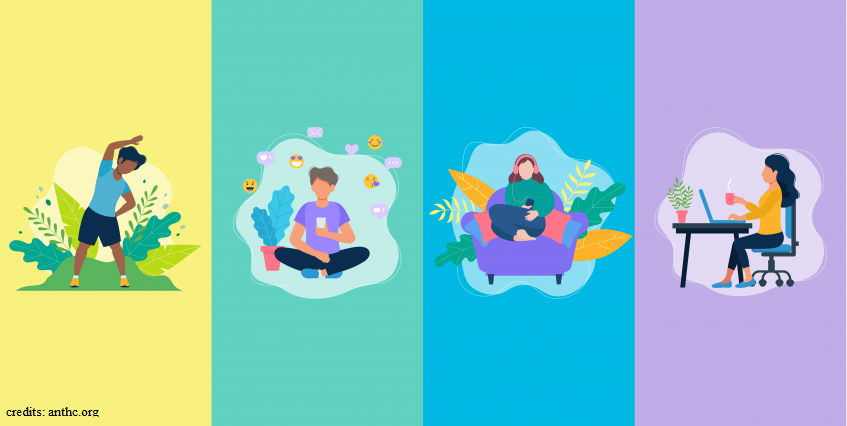
The coronavirus pandemic is an unfolding crisis whose extent of damage could be measured only when it finally ends. Suffice it to say that its economic ramifications are devastating. The global economy shrunk. More and more people are unemployed, hungry, and homeless.
But on top of the economic impact of the COVID-19 crisis, its socio-psychological implications should not be taken for granted. Remember that human beings have needs beyond foods, clothes, and shelter. These are only what Maslow classified as basic in the hierarchy of needs. People have higher needs – psychological and self-fulfillment needs – that must be satisfied.
The inevitable changes that took place because of the spread of this coronavirus have created different kinds of challenges and difficulties that left people with no choice but to contend with. They were confronted by circumstances different from what they were accustomed to.
The ongoing health crisis is testing how much a person could endure… how resilient are they. The current reality forged by the deadly pathogen has created different kinds of problems that may lead to uncertainties, grief, anxiety, fear, and loneliness. It would require resilience to overcome these negative emotions.
Resilience as defined by Luthar (2006), is “positive adaptation despite adversity.” It refers to the person’s ability to adjust to change and/or the capacity to recover from unfortunate events or misfortune. It is the capability to tolerate (and effectively cope with) experiences of change and adversity.
How resilient a person is depends on their level of wellbeing. In any study featuring these two constructs, a hypothesis of a direct positive correlation existing between them is very likely to be accepted. It means that the higher the level of a persons’ wellbeing the more resilient they are.
The Oxford dictionary defines wellbeing as the “state of being comfortable, healthy, or happy (Oxford, n.d.). This concept, as Purcell (2018) explained, embraces more than just physical health. It takes into account the entire person, both body and mind. It indicates not just the absence of illness but also the presence of positive mental states, emotions, and moods.”
“Species with useful adaptations to the environment are more likely to survive.” This is what Charles Darwin famously said. Given the current situation, to adapt is the only option people have. And the ability of a person to adapt to the kind of environment the ongoing pandemic created hinges on the level of their wellbeing.
Surviving the pandemic is the goal of adaptation. It is a personal responsibility. It’s not just a matter of steering away from the deadly path of the infectious disease but also coping with the situation that emerged from its trail of destruction and maintaining a strong resolve not to succumb to the challenges and difficulties that come along.
Overcoming the challenges and difficulties the deadly virus spawned requires all forms of toughness – physical, emotional, mental and spiritual. It demands a body and mind in tip-top shape, a holistic wellbeing.
The fear of possibly getting infected by the virus and losing job or working fewer hours (which means lesser pay too) are causing fear and uncertainty among many people. Losing loved ones to the deadly pathogen has left a lot of people grieving too. Coping to changes in lifestyle has caused so much stress as well. All these and other problems would really require toughness to overcome. And if a person is non-resilient, their inability to adapt or recover might lead to some other and worse problems.
Take into consideration also the directives to stay at home and strictly observe social distancing. Such orders from the authorities may seem inconsequential, but they are not. They do have debilitating effects. While social isolation may have saved a lot of people from getting infected by the virus, it exposed them to another kind of malady – loneliness.
Loneliness is a psychological condition that should not be taken for granted. Wilson et al. (2007) stated that “loneliness is often described as the state of being without any company or in isolation from the community or society. It is considered to be a dark and miserable feeling, a risk factor for many mental disorders like depression, anxiety, adjustment disorder, chronic stress, insomnia or even late-life dementia.”
“Prolonged isolation,” as Cacioppo and Hawkley (2003) argued, “can adversely affect physical and emotional health, altering sleep and nutritional rhythms, as well as reducing opportunities for movement.” Nardone & Speciani (2015) added that “isolation causes the natural channels of human expression and pleasure to become depressed negatively impacting mood and subjective well-being.”
So, social isolation, if not properly handled, may cause both physical and emotional problems. However, it is necessary. Most people would probably choose to bear the problems resulting from social isolation than the one caused by the deadly virus.
Staying at home and socially distancing may not be much of a problem, or not a problem at all, for those who are living with their families. But for people living alone, either by choice or circumstances, it could be. These people are the ones most vulnerable to problems that social isolation brings about.
One particular group that belongs to the category aforementioned expats or people living in foreign countries, mostly as workers or students.
Foreigners in a particular country, just like the citizens of that country, are caught in the same web of problems created by the coronavirus pandemic. They feel or face the same uncertainties, grief, anxiety, fear, and loneliness. But it’s very likely, that the foreigners, being away from their families, are more prone to the dangers of social isolation and other kinds of problems emanating from the ongoing health crisis. Thus, they need all kinds of assistance they could get from whatever support groups their own governments or from private organizations or individuals who are willing to help them.
Click on the link below to continue reading…
Becoming Purpose-driven

“Find your why and you’ll find your way.”
– John C. Maxwell
Purpose-driven is referred to in this article as the desire to find your WHYs and knowing what to do afterward.
**********
“What is your why? Why did you even get out of the bed this morning? Why did you eat what you ate? Why did you wear what you wore? Why did you come here?” These are the questions Howard Inlet, the character played by Will Smith, asks his employees at the beginning of the movie “Collateral Beauty.”
Should you be asked the same questions, would you be able to answer unequivocally? Do you have definite answers, at least, to the first two questions? If your answer is yes, good for you. Way to go! I wouldn’t be surprised if eventually you’ll succeed in your personal and professional pursuits, or you might have already done it. But if your answer is no, I would suggest you do some soul searching because seemingly you have been cruising through life aimlessly. It is very likely that you don’t know your purpose. You may not be living your life knowingly.
Purpose is a powerful driving force in our quest for a better self and a better life. It is the reason why we do what we do and why we exist. They help us have a meaningful existence. Thus, we should strive hard to know (or establish) our purpose and be driven by it. We need to live life with definite intentions.
The question is how. How to live life purposely?
Simon Sinek gave the following suggestion – “Start with why” (which is also the title of probably the most popular among the books he has written). Although the said book focuses on organization and leadership and how having a WHY helps the leader succeed in bringing success to the organization, the WHY principles that Sinek articulated apply to individuals as well. He (Sinek) said that your WHY is your purpose, cause, or belief.
It’s not only organizations and leaders who should have (and be very clear with their) WHYs. Every person should have them, whether or not they belong to an organization, whether or not they are leaders. Each individual needs to determine and establish their purpose, cause, and belief. It’s not only organizations and leaders who should know why they do what they do and why they exist. Each of us should also have a clear understanding of these things.
Two of Howard Inlet’s questions – “Why did you eat what you ate?” and “Why did you wear what you wore?” – may, at first glance, be considered inconsequential. But as one of the owners of that advertising company in that story, Inlet wants to drive home a very important point – that every member of that organization should be aware of the reasons why they do what they do.
This is one thing we ought to be doing even in a personal level also. We ought to be asking ourselves why we do what we do.
I presume (and I hope my presumption is right) that you have set goals in the different areas of life – family and relationships, career and business, personal growth and development, and fun and recreation. The foregoing are the areas with which I subdivided my life into. It is possible that you may have subdivided your life differently from the way I did. But one thing for sure, just like me, you have goals in the different aspects of your life no matter how you may have structured it. Those goals are the manifestations of your purpose or purposes in life, causes you advocate, and the beliefs you uphold.
The answer to the question “Why did you even get out of the bed this morning?” should be as simple as – to pursue the goals you set in the different areas of your life. Right?
But how many out of 10 people set goals (and are you one of them)? How many do live a life driven by a definite purpose? That is difficult to answer with absolute certainty. The one thing I noticed though about estimates on how many percent of people in a particular country succeeded in their chosen endeavors and fields of expertise is that none of the statistics went above 10%. Actually, majority of the articles I read on the topic claimed it’s only 2% to 5%. So, if goals correlate to success, given all the aforementioned numbers, is it safe to assume that approximately only 1 out of 10 set goals?
Granting that my estimation is accurate, only 1 out 10 people know their purpose, cause, and belief. The great majority of human beings wake up in the morning not knowing what are they going to do and where are they headed to. I hope that you’re not one of them.
And those questions that I said earlier are seemingly inconsequential are necessary questions to ask to remind you that even the simplest things you do everyday should contribute to the attainment of your big goals.
What sets apart purpose-driven people from those who are not is that the former constantly ask themselves this question – what consequences do my words, actions, and thoughts bear on the goals that I set.
Your WHY is your north star. It gives you a sense of direction. Not having it is like walking aimlessly not knowing where to go. Not knowing it is like looking for something that you don’t know. You’ll never find it. It’s like living life randomly, not purposely.
Knowing your WHY allows you to clearly identify your goals… goals that as previously mentioned, are the manifestations of your purpose or purposes in life, causes you advocate, and the beliefs you uphold.
But knowing your WHY is only the beginning. It’s like you getting ready at the starting line of a marathon you decided to join. Eventually, you will start running and you know what it takes to succeed in this kind of competition – physical and mental toughness.
There are character traits too required for one to become truly purpose-driven. These are passion and perseverance.
What do you do after setting your goals? Answer: Pursue them with passion and perseverance. After establishing your goals and setting the plans for their pursuit, obstacles and challenges will lie in the path to their accomplishment. It’s not easy climbing Mt. Everest. The things you want to possess, to become, and to accomplish will not be delivered to you in a silver platter. You have to work hard to get them. Whatever you want – wealth, power, fame, success, health, and happiness – will not come knocking at you door. You’ll have to go out and seek for them. And in the process of seeking them out, you need passion and perseverance.
Cambridge defines passion as “an extreme interest in or wish for doing something, such as hobby, activity, etc.” and perseverance as “continued effort and determination.” Both traits, obviously, are needed by those who want to have their hands raised in the podium of winners. You cannot afford to be half-hearted in your undertakings. Be consumed by a burning desire to achieve your goals and realize your dreams. And even when the going gets rough, you’re not supposed to give up so easily. You have to persevere. What’s the use of knowing your why and set goals after if you don’t pursue them vigorously. When you run a race, make sure you finish it.
Duckworth (2016) packaged these two constructs, passion and perseverance, into one concept – GRIT. Duckworth, as cited by Fessler (2018), defines the term “as passion and sustained persistence applied toward long-term achievement, with no particular concern for rewards or recognition along the way. It combines reliance, ambition, and self-control in the pursuit of goals that take months, years, or even decades.”
Studies on grit time and again have proven that people holding steadfast to their goals which they set through time succeed. So, learn to stick with your goals notwithstanding the difficulties and challenges you face.
Surviving The Workplace Jungle
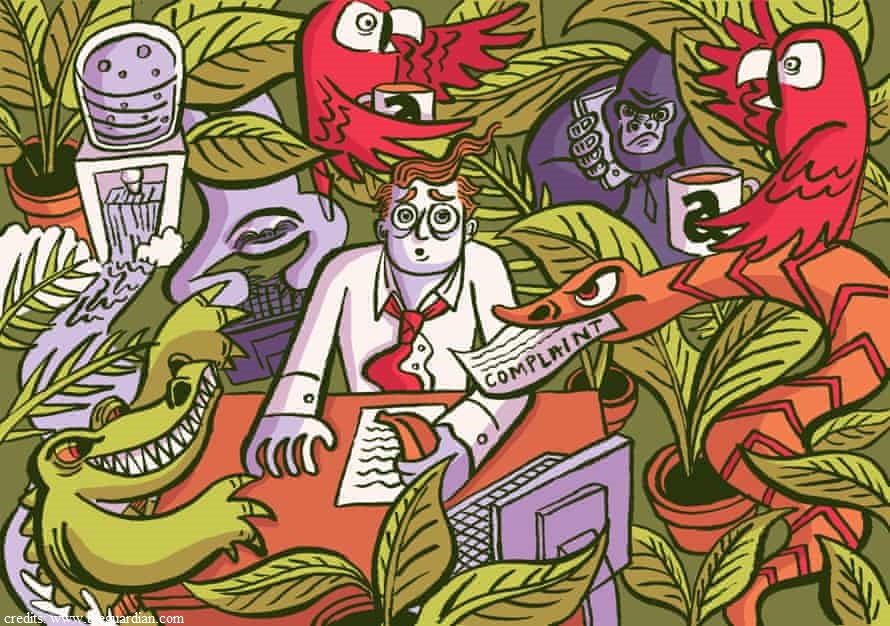
I couldn’t agree more whenever people describe the workplace as “a jungle.” I have been working long enough – thirty years in eight different institutions in two countries – that I could cite a thousand or two reasons why I consider that description accurate in the metaphorical sense. There are uncanny similarities in the behavior of people inhabiting the working environment and the animals in the forest. Even the patterns of relationships between people in the field of work resembles the way the living creatures in the wild treat each other. Thus, they say, in the workplace “only the fittest survive.”
I have been in this jungle called workplace for more than three decades now. Here I am, still standing and breathing. I managed to hold my own against the different animals I cross paths with as I searched for greener pastures and overflowing water holes. I experienced being stared down by a lion, stalked by an eagle, ambushed by a crocodile, bitten by a snake, clipped by a crab, and stung by a bee. Attacks that left me scarred. Nevertheless, I survived. I am still alive… ready to fight or flee to live and fight another day.
How did I do it? How did I live to tell the tale?
I simply took a cue from Charles Darwin who theorized that “species with useful adaptations to the environment are more likely to survive.” Adaptation is the name of the game. That exactly is what I have been doing (and what you should also be doing if you intend to stay alive and sane in your workplace) – ADAPT.
If you wish not to be dinner for the predators it would behoove you to study carefully the environment of the workplace where you belong. Know what kind of animals you are dealing with. Study them carefully. You also need to put your survival instincts into full gear.
Predators lurk in the shadows. It could be a big cat hiding in the bushes or a mighty bird hovering above. These predators could be the “people upstairs” or somebody from among you “downstairs.”
Don’t get me wrong. I don’t mean that all bosses who succeeded in their business endeavors did it at the expense of the people in the rank and file – like predators slaying their preys and eat them. It could be just a few, or half, or most of them. Nobody knows for sure. But definitely not all. Perhaps a majority of them (I hope) consider themselves rhinos and the people they hire oxpeckers whom they allow to freely land on their backs to feast on the insects pestering them.
The point I wish to drive at when I posited that they (the bosses) are predators is that they are at the top of the food chain and like it or not, when you agreed to work for them, you entered their territory. They dictate the terms and conditions of your employment. That doesn’t sound good but it’s the reality in the workplace.
The ones who own or manage the workplace are the alpha males. You need to have a full understanding of how they think and operate. Better if you could dig deeper and try to know what they like and dislike. If it is not too much for your dignity (or should we say EGO) to adapt to their whims and fancies then stay in the pack. These whims and fancies could be the policies that you consider disagreeable. You’ve got to make a choice whether to follow these policies or not. For not following, of course you are not naïve not to understand that there are consequences. Following the terms and conditions of your employment is not equivalent to flopping onto your back to show that you submit to the alpha males. It is simply like the chimpanzees presenting their backs, crouching, bowing and bobbing in order to show deference to the alpha in their group.
If not, if you are tired of being an omega, if your ego clashes with that of the alpha, the wisest thing to do is leave. Find another pack, or better still, be a lone wolf. Don’t be employed. Establish your own business and be your own boss. If you succeed and your business grows big, hire people. That is your chance to be the alpha and see for yourself if you are a better one than your former bosses or… worse than them.
Believe me, you cannot afford to take too much bravado and think you are that brave “angry bird” who would tweet your disagreement and not expect dire consequences. Your chirps will not go unheard and before you know it the eagle will swoop down on your nest and tear you apart with its powerful beaks.
More often than not, or almost always, that locking horns with the “powers that be” in the workplace is like a deer thinking it could take on a full-gown lion. It’s a losing proposition.
Of course not all bosses are saints. Some of them would take advantage of the people they hire in different ways. That you’d discover (hopefully) in time. So, why stay on a watering hole when you know that there are crocodiles under the mud waiting in ambush? Move out. You’re not a tree! You have limbs. Run, walk or crawl from out of there.
What about the predators among you “downstairs”.
Wherever you work, you’ll encounter malevolent individuals. So, be careful. Beware of the wolf in sheep’s clothing. These are co-workers who camouflage themselves as your friends but would stab you in the back when they have the chance.
Okay. Let’s talk more about the different animals in the workplace. You’ve got to be able to identify them if you really want to survive the wild called the workplace.
We have already mentioned about the big cats and the mighty birds. Yeah, including the wolves pretending to be sheep.
Are there other animals you ought to be wary of?
Yes, there are!
Watch out for them. Better watch them like a hawk.
Be careful of the buzzing bees called the rumormongers.
Thinking that they are your friends and therefore could be trusted, you share with them your darkest secrets. Letting the cat out of the bag is the biggest mistake you commit with this type of animals. Later you’ll just discover that the entire workplace is talking about the skeletons you’ve tried so hard to keep in your closet for so long.
Gossiping is a deadly disease in the workplace. It kills reputation and trust. It ruins relationships and careers. So widespread it is that even the people who consider themselves as professionals and who think of themselves as decent individuals spread gossips – both personal and work-related – unmindful of the pain and shame their traitorous act might inflict on their victims.
Identify who among your co-workers are fond of tittle-tattling. Don’t say anything negative to them about the work, co-workers, much less personal matters. Just listen when they talk. Don’t fall into their trap. They will quote you without batting an eyelid. But here is the best way to deal with them – avoid them like the plague. They sometimes appear as if they wouldn’t hurt a fly. That’s their facade. The truth is – they are dogs that eat dogs.
Among your co-workers, you should also be able to spot the crabs.
Why?
Do you know what happens when you put crabs in a bucket? They’ll try to escape by pulling back down others effectively preventing anyone of them from climbing out of the bucket.
That’s the origin of the proverbial “crab mentality.” The philosophy of the malevolent among your co-workers is “if they can’t have a promotion or an incentive, neither can you.” Some people in workplaces just don’t want to see their co-workers succeeding. They so hate it when somebody climbs up the ladder especially if they’ve been there longer. These are the snakes who would bite you with intrigues and gossips when they see you work harder than they do. They would accuse you of being a leech trying to suck the attention and favor of the people upstairs.
Don’t allow the venom of the snakes get through your nerves. Let them not succeed in getting your goat. Continue to work as hard as your personal values would allow you. Don’t be pig-headed like them.
That’s just the reality in the workplace – that generally there are two types of workers – the ants and the termites.
And with who would you rather be associated – with the ants in the workplace who keep themselves busy working and helping one another in order to achieve the goals of the organization or with the termites, whose actions and pronouncements, deliberate or otherwise, are damaging – not only to the organization but more so to themselves?
They are basically a negative bunch that should be avoided at all cost. The termites hold a grudge against the people upstairs for one reason or another and they think that by not doing their jobs the way they ought to and by behaving oddly, they could get even. They spin tales about the current state of the organization basically for the purpose of demotivating people. Be aware that the termites could also sow dissension among their co-workers.
Nonetheless, the people upstairs are not naïve. They could easily detect the existence of termites and they get them exterminated.
Watch out also for the parasites in the workplace.
The parasites seem to have special training in detecting generosity. Once they have spotted a kind-hearted co-worker who wouldn’t say no when asked for favors then they will have a field day. They would ask you to solve their work-related problems and sometimes even seek personal favors.
So, be careful. Learn to say no when you have to or else they would eat up your time and resources. They won’t hesitate to abuse you.
It’s okay if they return the favor. The problem is the word “reciprocate” is not in their vocabulary.
They also tend to exhibit that selfish attribute in their work. You could neither expect them to walk an extra mile for the organization nor perform their duties and responsibilities as stipulated in their contracts. They care for nothing but their salaries.
For the workplace to prosper, the relationship between the people and the organization should be symbiotic.
Let’s consider the relationship between the clownfish and the sea anemone. It’s a perfect example of a symbiotic mutualistic relationship. While the fecal matter from the clownfish serve as nutrients for the sea anemone, the latter provide the former with protection from its predators.
You can choose between becoming a parasite or a clownfish.
The workplace gives you a venue for professional growth and a source of livelihood. You need to keep it afloat. Your organization needs your help for it to succeed and continue existence. You may have disagreements with the people upstairs but you need to bear in mind that commitment to job and organization is different from commitment to your employers.
Lastly, in order to survive in the forest, you need to clearly determine where you rank in the food chain. Identify the different kinds of animals there. And most importantly – don’t stand in the path of your predators.
It’s as simple as knowing your designated place in the organization, being mindful of your words and actions, and being careful with how you deal with everyone. And remember that the most foolish thing to do is to offend your employers.
You have to study the culture of the workplace. Again… ADAPT. Remember what Charles Darwin said, “It’s not the strongest species that survive, nor the most intelligent, but the ones most responsive to change.
If you can’t adapt, if you feel so disrespected and gravely offended, if you think you are no longer growing professionally – what are you waiting for? It’s time to migrate to another forest.
If you think that your current workplace is (as described by Simon Sinek) “like a tree full of monkeys where everyone at the top, looking down, sees only smiles but everyone at the bottom, looking up, sees only asses” then you should leave as soon as possible. Unless you could stomach looking at the same “asses” everyday when you go to work.
And when you’re finally out and begin looking for a new workplace, don’t ever expect that you’ll find a perfect workplace. That’s a wild goose chase. You’ll never find one. You’ll see the same animals.
 M.A.D. LIGAYA


 M.A.D. L I G A Y A