NOT BROKEN… BUT UNFINISHED (2)
(A Personal Essay)
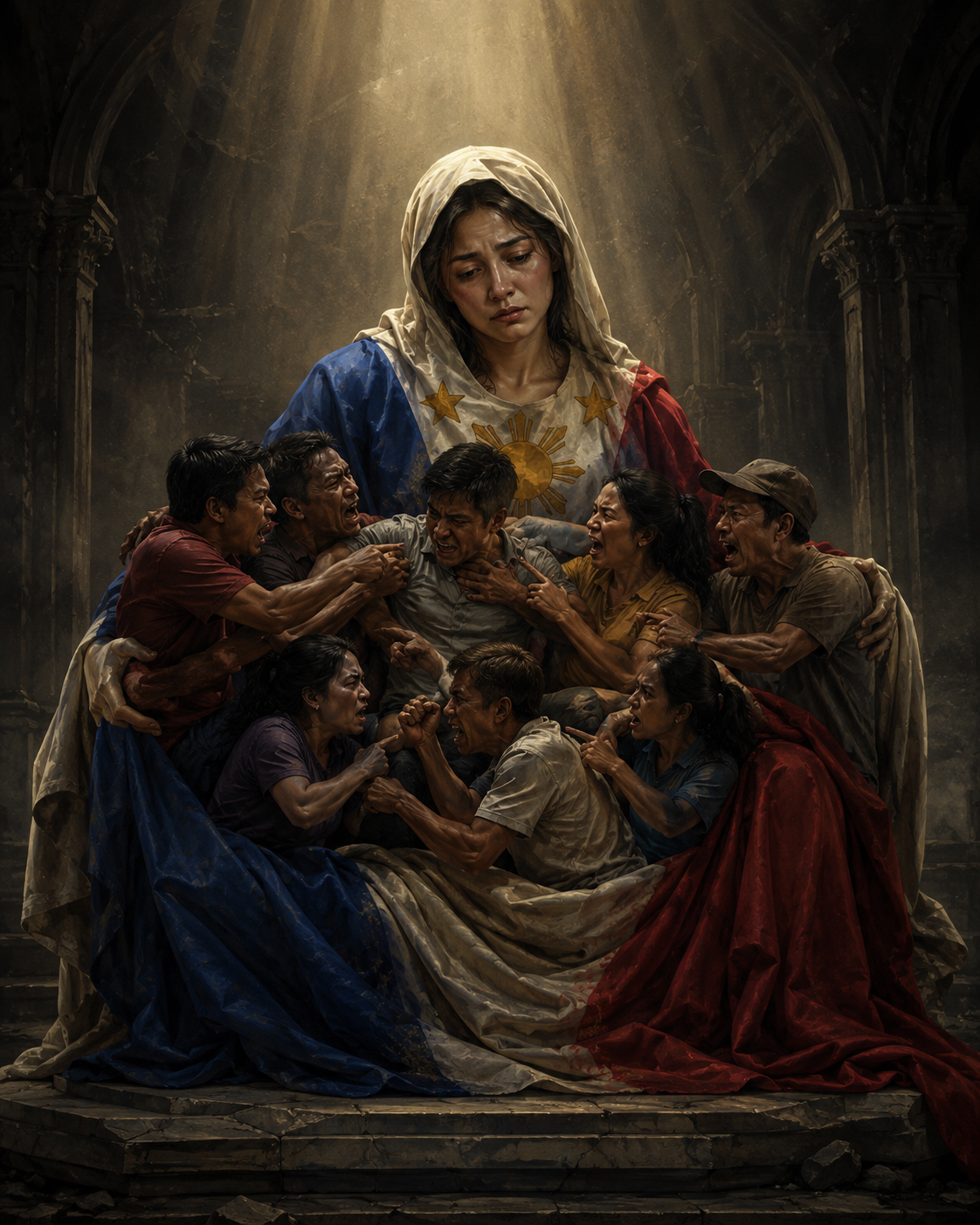
“Sometimes good things fall apart so better things can fall together.”
– Anonymous –
National Limbo: The History We Inherited Without Choosing
Growing up, I never understood why so many Filipinos carried a quiet heaviness when they spoke about the country. It wasn’t anger. It wasn’t despair. It was something older — a tired acceptance that things were the way they were, and maybe always would be.
I used to hear it from my father.
“Ganito talaga sa Pilipinas,” he would say when we watched the news on TV when I visited him in our hometown.
Not with bitterness. Not with outrage. But with resignation.
It wasn’t until I lived abroad that I understood the weight behind those words.
We were a nation interrupted. A people whose revolution was cut short. A country whose identity was never fully forged.
Our fragmentation did not begin in the present. It was shaped by centuries of divide‑and‑rule, a strategy that kept us scattered — not just in geography, but in identity. We were on the verge of becoming a unified people, only for that moment to be taken from us; our revolution was halted before it could fully forge a national self.
What might have been a defining victory against one colonizer became an unfinished chapter when another, more powerful, intervened — leaving behind not just a political scar but a psychological one, a lingering uncertainty about our capacity to shape our own destiny.
We inherited fragmentation — tribal, regional, political.
We inherited resignation — “pwede na,” “bahala na,” “ganito talaga.” We inherited a sense of “almost.”
Almost free. Almost united. Almost empowered.
But never fully.
We were not broken. We were unfinished.
Even the political theatrics I watched from afar were not anomalies; they were traces of an unfinished identity, performances formed by generations who had learned to survive uncertainty by turning it into spectacle.
We are an archipelago not just in geography, but in identity—a collection of over seven thousand islands intentionally scattered by a history of divide-and-conquer. Living in a country as hyper-connected as Korea, I see how our fragmentation has become a mental habit, a quiet belief that unity is a fantasy and that we are destined to remain an incomplete manuscript.
But an unfinished page is not a tragedy; it is simply a call for the writer to pick up the pen again.
And unfinished things can still be completed — but only if someone chooses to finish them.
The Turning Point: My Personal Purgatory
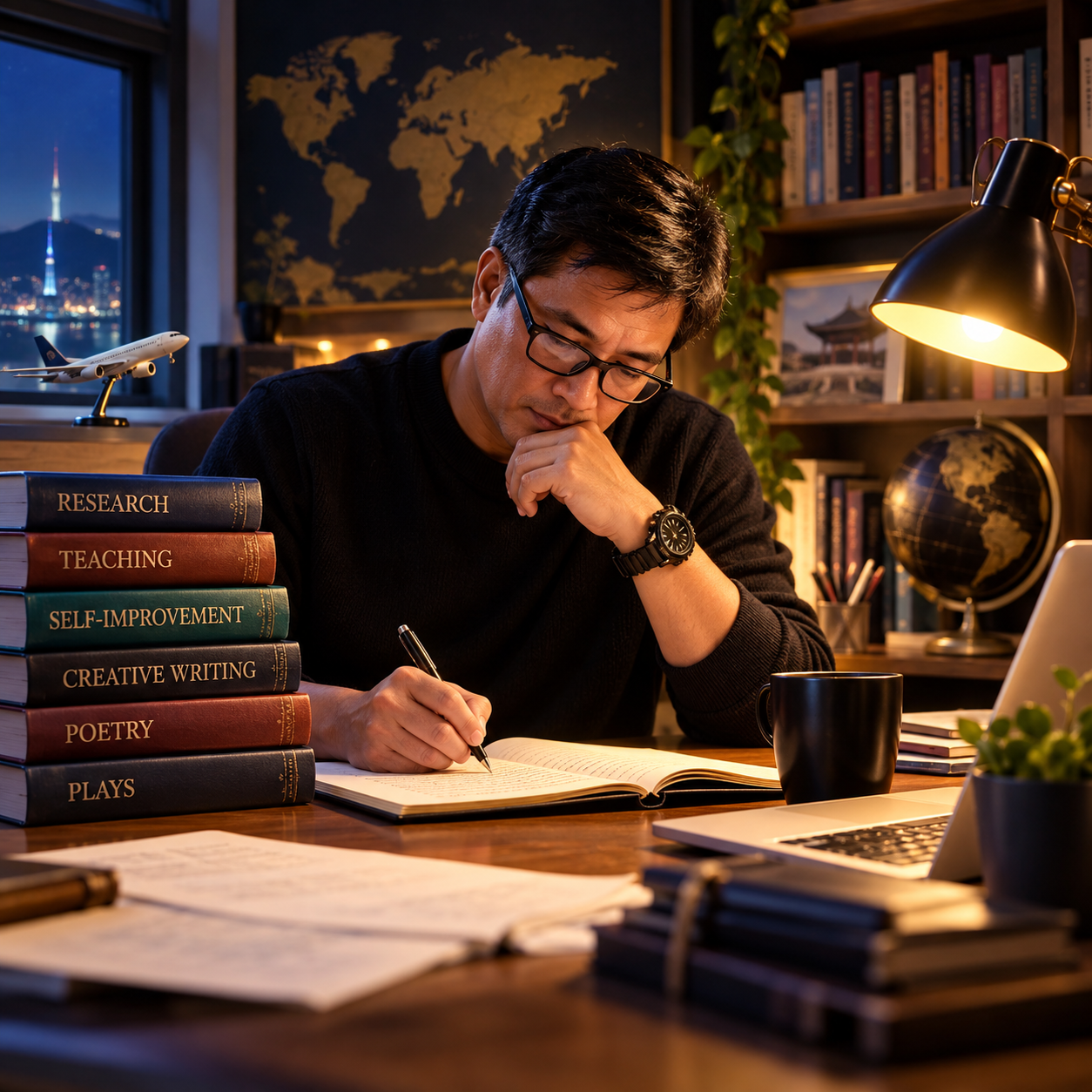
One afternoon in a small café in Seoul, while working on my book, I wrote a phrase about responsibility—a line I had written many times before.
I looked at the screen, at the Garamond typeface I had carefully chosen. It is a font that carries the organic stroke of the human hand, yet adheres to strict, classical rules of proportion. It occurred to me then how much I craved that balance for my own country; it stood in such sharp contrast to the handwritten chaos of our streets back home, where everything from jeepney signs to public discourse feels improvised and loud. I realized that if paradise is a discipline, it must look a lot like a well-set page: ordered, intentional, and respectful of the space it occupies.
I looked away from the monitor, the clean lines of the font blurring as I stared at my own reflection in the glass.
But that day, my writings talked back at me.
How could I write about responsibility when I had shunned my own? How could I speak of accountability when I had mistaken silence for neutrality? How could I talk about transformation when I had left my country rather than help it change?
I could not bear my own writing confronting me. The truth on the screen served as a reflection I wasn’t yet ready to face, but could no longer deny.
I closed my laptop—the gentle click sounding like an ending—and stared out the window.
Outside, the first hints of spring were beginning to touch the air — not warmth, not yet, but the suggestion of it.
People walked with purpose. Cars moved in clean lines. The city breathed with discipline.
And I realized:
I had grown up in a country that taught me to endure, but I was now living in a country that taught me to improve.
That contrast broke something open inside me.
For the first time, I understood that my frustration with the Philippines wasn’t rooted in hatred — it was rooted in love.
At that moment, I made a quiet promise:
I will stop being a spectator. I will stop being a critic from afar. I will stop being part of the silence.
That was the beginning of my ascent.
The Ascent: What Paradise Means to Me Now
The hell I saw in our country wasn’t just political — it was spiritual. It was the result of millions of small choices, including mine.
I visualize a classroom where students speak without fear—not because they are confident, but because they are encouraged to try.
I imagine offices where people no longer feel the need to know someone just to be heard. I imagine elections where conversations are determined by ideas, not incentives.
I imagine a bus stop—not unlike the one in Haemi—where people line up not because they are forced to, but because they understand that order is not oppression. It is respect.
These are not impossible visions. They are habits waiting to be formed.
But habits do not emerge on their own. They are formed in moments so small they are often dismissed—moments when no one is watching, when no reward is guaranteed, when the easier choice is to look away.
They are formed when a student chooses honesty instead of convenience, even when cheating would go unnoticed. When a worker completes a task with care, even when no one will praise them for it.
When a citizen follows a rule, not out of fear of punishment, but out of respect for others.
These instances do not make headlines. They do not go viral. But they accumulate.
Quietly.
Consistently.
And over time, they shape something larger than themselves.
A culture is not built in bold proclamations. It is built in repetitions—of discipline, of restraint, of responsibility. It is built when the right choice becomes the natural choice.
And perhaps that is where we must begin—not with sweeping reforms or distant promises, but with the silent decision to do what is right, even when it feels insignificant.
Because in the end, nations do not rise via moments of brilliance alone. They rise through habits that refuse to break.
And if hell is built through choices, then so is paradise.
Paradise is not a place to be found. It is a culture. A discipline. A collective decision.
It is built when a citizen refuses a bribe. When a voter chooses integrity over popularity.
When a family teaches discipline instead of entitlement. When a community chooses unity over division. When a nation chooses accountability over excuses.
Paradise is not perfection. It is an effort.
And for the first time, I began to imagine what a Filipino paradise might look like:
A nation where we disagree without destroying each other. Where we demand better without waiting for saviors. Where we build systems that outlast personalities. Where we take pride not in slogans, but in discipline. Where progress is not a miracle — but a habit.
That is the paradise I now hold in my heart.
Not a fantasy. Not a dream. But a direction.
Returning to the Bus Stop
Months after that autumn morning in Haemi, I found myself at the same bus stop again. Students lined up as they always did, quiet and orderly.
Winter had passed. Most of my reflections had taken shape during those long, dark winter nights when silence made certain truths harder to avoid. It was already spring, but the air was still cold, sharp enough to sting my cheeks.
The bus arrived — on time, as always — and the driver gave me the same small nod.
But this time, something felt different.
I no longer felt grief. I felt responsibility.
As the bus rolled through the clean, orderly streets, the signs of Korea’s progress came into view again — quiet reminders of how far my own country had been left behind.
I no longer felt envy. I felt clarity.
I no longer felt like a Filipino escaping hell. I felt like a Filipino preparing to climb out of it. The thought of leaving had once tempted me, but now I understood that escape was not the same as ascent.
I am currently retitling a book I have written, a task that requires me to be a ruthless editor of my own thoughts. Just as a book suffers when an author protects a line that no longer serves the story, I’ve realized our nation fails when we protect partisan loyalties that don’t serve the truth. Revision is a form of purgatory—it is the painful, meticulous act of deleting the excuses and the ‘pwede na’ mentality to make room for something that actually works.
As the bus moved through the clean streets, I pressed my forehead against the window and watched the city pass by.
And I realized:
Paradise is not a destination waiting for us. It is a path we must choose to walk. And the first step is always taken within.
That morning, I made a quiet vow:
I will not abandon my country.
I will not abandon my people.
I will not abandon the possibility of our ascent.
Because hell is not permanent.
Purgatory is not hopeless.
And paradise is not impossible.
We only need the courage to begin.
And I have begun.

Posted on May 17, 2026, in Accountability, Good Governance, National Character, National Development, Personal Accountability, Responsible Citizenry and tagged Accountability, Good Government, National Character, National Development, Personal Accountability, Responsible Citizenry. Bookmark the permalink. Leave a comment.


Leave a comment
Comments 0