Category Archives: Filipinos in South Korea
South Korea: On To My 12th Year

I remember certain things as my twelfth year here in South Korea commences.
I remember my father. He influenced me to consider plying my trade as a teacher in another country. Thus, when I revisited my career path at the turn of the 21st century (Yup… that was eons ago!), I included teaching in a foreign land as one of my options. It was not until 2008 that I seriously considered it. What led me to give this option a try was my father’s response when I informed him that I had finally completed my Ph.D. I even bragged to him about me being the first one in our clan to become a “doctor.” He, of course, congratulated me but asked, “How much is your salary now?.” I gave him the exact amount and the possible increase because of my newly minted PhD. Then he informed me that one of my cousins, a seaman, receives a higher income even if he has not finished college. All I could do then was scratch my head. Four years after that exchange between me and dad, I finally flew to South Korea in 2013. Had my father not died in 2014, I am sure I could have brought him and my mom here for a vacation.
I also recall the FAPE accreditors who interviewed me in 2012 when I was the Principal of a basic education institution in the Philippines. The school I was supervising then applied for FAPE re-accreditation. One of them asked why I left the previous schools where I worked. The interviewer even noted that I had good supervisory positions in those schools. However, the question irritates me a little bit because it seems that for that educator who asked it, something is wrong with somebody in any profession if they move so often from one workplace to another. Why, then, do people immediately label the constant movement of an employee from one company or institution to another as a red flag? What if that employee has justifiable reasons to quit and find another job? I had good reasons for jumping out of those ships. How I wish I could divulge the reasons.
I decided to reply politely to that question: “I have not quite found my niche yet.”
That was true. I had a great run as a teacher and school administrator but wasn’t satisfied. My mother helped me figure out the reason for such dissatisfaction – I could not give time for my other passion – writing. My mom is my number one fan as a writer. She loves reading my stories and poems. She was the one who kept reminding me about my gift of writing. Just like me, my mom loves writing stories.
Then, on March 2, 2013, much to my father’s delight, I flew here to South Korea to teach English.
Leaving my country to work here was both a professional and a personal decision. I suffered from severe job burnout then. I wanted to just be a teacher and not hold a supervisory position at the same time. I just want to teach and to pursue my other passion – writing. On the personal side, I had some personal demons to slay… too personal to share. Suffice it to say that the job burnout, combined with the consequences of some wrong decisions I made, led to depression. If I did not do something to address it, I wasn’t sure if I would emerge from that chaos with my sanity still intact. I escaped from that turmoil and could not have chosen a better place than the Land of the Morning Calm to soothe my hurting spirit and continue my academic career.
So, I got what I wished – to teach only and not supervise people at the same time. The pleasant surprise I got when I started teaching here was the required number of working hours – less than 20. Four days a week, teach for not more than 16 hours and stay in the office for possible visits from students for 3 hours. I have 3 full days and plenty of vacant hours during work days to do the other things I love – particularly writing and working out in the gym.
So, did I finally find my niche?
South Korea has turned out to be the best place where I can pursue both teaching and writing. I am so blessed to be in this corner of the Korean peninsula. Way back in my native land, it was only my academic career that blossomed. I may not have fulfilled my dream of operating my own school, but I checked a significant box in my career path – becoming a college dean.
But I am not just a teacher… I am also a writer. Being a teacher and a school administrator at the same time in my country gobbled up my time and energy. I could not focus on my writing. I was lucky to have at least a poem, an essay, or a story in a week. But here in South Korea, with all the free time that I had ( and still have), I could scratch my creative itch to the fullest. I still do until now. And the bonus… I was able to pursue my self-improvement advocacy.
Oh… I might forget. Every semester, we get to work only for 15 weeks. I already did the math; technically, we have 5 months of vacation a year. But we continue to receive pay. What a blessing! I have lots and lots of free time to use for my writing and my advocacy for self-improvement. Now, I have my own websites and social media accounts where I publish the things I write… where I blog and vlog.
The niche I was looking for was a place where I could be most productive professionally and personally. It is here in South Korea where I found that niche. I cannot thank God enough for leading me here. South Korea is my second home, and I feel so blessed that I am now in my twelfth year… and praying for more years to come.
I will forever be indebted to Dr. Larry Chong and Gyeongju University for paving the way for my entry to South Korea. That indebtedness extends to Hanseo University for being my home for the past 10 years.
K-DREAM

Korean motifs are slowly replacing American imprints in our culture as Filipinos. More and more of my compatriots say annyeonghaseyo instead of hello and gamsahamnida instead of thank you. Oppa has become a popular endearment for women calling their boyfriends or husbands and telling them saranghaeyo instead of “I love you.” We Filipinos are so enamored of K-pop and K-drama, which have greatly influenced our lives. The youngsters, in particular, embrace the music of their K-pop idols and dress the way they do.
In my country, especially in urban areas, restaurants offer samgyeopsal, bibimbap, Korean ramen, and other famous Korean dishes. Products made in South Korea are flooding our supermarkets and grocery stores. It is no longer surprising to find soju sold in sari-sari stores and shared by Filipinos when they dine and wine.
Should we be concerned? Are we losing our Filipino identity? We’re not. Our culture is just entering a new phase of development. Remember that culture is dynamic, never static. It evolves continuously.
It is common knowledge that the ongoing assimilation of Korean influences into our culture was engendered by Hallyu. This phenomenon depicts the popularity of South Korean pop culture, not only in our country but globally. Yes, we’re not the only ones obsessed with Korean cultural content. It was reported that by 2022, there were more or less 177 million Hallyu fans worldwide.
Hallyu is one of the 26 Korean words added to the Oxford English Dictionary. When translated to English, the word literally means Korean Wave. With the way that this cultural phenomenon struck the world, tsunami, instead of the word wave, would have been a better term. But tsunami is a Japanese word, and given the history of these countries, the word may not rhyme politically.
The gigantic waves of music, TV shows, and movies from the southern portion of the Korean peninsula reached our shores at the turn of the 21st century. Since then, our TV stations have regularly aired many Korean dramas dubbed in Filipino. Korean movies with English or Filipino subtitles are shown in Philippine movie theatres. Magazines and the entertainment sections of newspapers regularly featured K-pop artists and other Korean TV and movie personalities. Before we knew it, the Korean brand had already profoundly penetrated the Filipino consciousness.
Admittedly, I knew little about South Korea before the Korean Wave came. I remember checking the encyclopedia for information about the Korean War when I took World History in college. At that time, I was researching wars America fought for an article I wrote for our school paper, and the Korean War from 1950 to 1953 was one of them. Then, I discovered that our country sent troops to help South Koreans ward off the Communist invasion from north of its borders.
Without the help of the United Nations’ international forces, the Korean peninsula might have fallen under Communist rule. The thought that soldiers from my country helped in not allowing that to happen made me feel proud. Imagine this – had it been Kim Jong-un ruling the whole of Korea now (and his father and grandfather in the past), there would have been no Hallyu to talk about. Instead of K-pop and K-drama, the hot topics could have been K-missile and K-nuke.
Just imagine how dreadful a picture of the war-torn Korean peninsula the things I read about it created in my mind. It was horrible, to say the least. The narrative of the death and destruction was a clear indictment of the futility of war. Those three years were perhaps one of the darkest chapters in the history of South Korea. It was comparable to the three years that my country was under Japanese occupation during the Second World War as well as the period between 1898 and 1901 when the Filipino revolutionaries helplessly fought a war against the much superior American forces who grabbed the Philippine archipelago from the Spaniards.
But before completing my university education, I had another chance to read more about South Korea. That was when the country hosted the 1988 Summer Olympics. The sporting event put the land south of the 38th parallel line all over the news. It triggered my curiosity, prompting me to check not anymore the pages in the encyclopedia about the Korean War but also books written about the country, magazine articles featuring it, and the newspapers covering the Olympics at that time.
I saw a country different from what those pages about the Korean War created in my mind. I discovered that the nation called the “Land of the Morning Calm” rebounded from the horrors of the Korean War and eventually became very progressive. Then I wondered at that time and asked – “What did the South Koreans do that enabled them to, like the legendary Phoenix, rise from the ashes of a horrendous war and even become only the second country in Asia to host the world’s biggest summer sporting event?” Why could they afford to host such an event that would cost them millions and millions (if not billions) of dollars?
My perception of South Korea changed overnight from a country impoverished, war-stricken, and divided into modern and progressive. The pity I felt for the Koreans when they were ravaged by the war during the early 1950s was replaced by amazement and… envy.
As the years passed, I learned more and more about South Korea through traditional media and the Internet, which eventually became more accessible than when I was a university student. I got to hear more and more Korean music and see more and more Korean dramas.
I will never forget how in 2006, the Korean drama Jewel in The Palace would make me stop whatever I do at night to ensure I see all of it. I was so glued to it. Is it because of the story or the pretty face of Lee Young-ae, the actress who played the role of Jang Geum (the drama’s lead character)? I really don’t know. It may be the setting. I am a student of World History, and the story provides a glimpse of how life was in the Korean peninsula during the Chosun dynasty. The Koreanovelas “Stairway to Heaven,” “Lovers in Paris,” “Winter Sonata,” and “Baker King” were the ones that introduced me to contemporary life and society in South Korea. The first Korean movie I watched was “Please Teach Me English.” The supervisor of the Teaching English to Speakers of Other Languages (TESOL) certificate program, which I attended in 2009, recommended it.
These cultural imports from South Korea made me want to visit the country like many Filipinos. I wanted to visit the places in the country that I could only see on TV programs and movies. I wanted to visit Seoul and go to Gangnam and Myeongdong. I wanted to have a summer vacation on the island of Jeju. I wanted to try soju and maekju, and the combination of the two – somaek. I wanted to taste kimchi and eat Korean dishes prepared and served by Korean chefs. I wanted to try tteokbokki, pyo haejangguk, and kalguksu, together with plenty of banchan (side dishes) in a restaurant in South Korea, not in Korean restaurants or the mall’s food courts in my native land. I wanted to meet actual Korean people and mingle with them. Once, I even jokingly told a friend I wanted to have a Korean girlfriend. In short, I desired to have an authentic Korean experience. My K-dream – “Korean dream” – is taking shape and getting embedded in my consciousness.
That urge strengthened when I decided to take the TESOL certificate program. That was when I watched my first Korean movie, the one I previously mentioned – “Please Teach Me English.” South Korea was mentioned by the program coordinator as one of the countries considered the premiere destination for ESL teachers. The said movie gave me a glimpse of the state of English education in that country. There’s a scene in that movie where Young-ju, the lead character played by the actress Lee Na-young, could be seen eating a page of an English dictionary, believing that it would improve her vocabulary. That part of the movie embodies how much of a big deal it is to learn English for South Koreans.
Thus, since teaching abroad is an option in the career path I set for myself, should I have the opportunity to teach overseas, why not in South Korea? My K-dream suddenly evolved, and I no longer just wanted to have an authentic Korean cultural experience but to work there as an English teacher.
Then I did what I had to do for that dream to come true. I completed my training in TESOL, and I left no stone unturned. I searched the Internet for job openings for ESL teachers in South Korea. At that time, I was also suffering from job burnout. I got physically and emotionally exhausted from my job as a school administrator, and I wanted to return to being a plain teacher.
K-DREAM (Part 3)
(Last of 3 Parts)

For me, it is amazing how this country has gone this far, leaving my native land behind in the race to prosperity and stability. I want to know in what areas we Filipinos should improve if we intend to catch up with the South Koreans, and the rest of the world, in that race.
My desire to figure that out led me to read more about the history of this country. In the process, I discovered certain uncanny similarities between our historical experiences. South Korea and my native land are colonized nations and earned independence after the Second World War, and both countries embraced the democratic form of government. Additionally, just like in my country, the development of democracy in South Korea was also interrupted by military takeovers. And what a coincidence that martial law in this country and mine was declared in 1972. Was it also a coincidence that influential military leaders in both countries were removed via popular revolt in the mid-1980s?
Unfortunately, the similarities in the historical development of South Korea and my country stop there. We took different paths in building our nations from the ashes of colonization, the Second World War, and military juntas. However, the results differed even when the two countries were under totalitarian regimes with identical circumstances. Historians assert that it brought rapid industrialization to South Korea but, unfortunately, economic stagnation in the Philippines.
I really tried hard to figure out what happened. What went wrong for my country, and conversely, what did the South Koreans do correctly? To think that in the 1950s, while my country was soaking in the glory of being Asia’s second most robust economy, the Korean peninsula plunged into a devastating war.
I tried to probe deeper into this nation’s history to find the answers to the following questions I have in mind.
How did the South Koreans slay the ghosts of a bitter colonial past?
How did they survive the devastation wrought by the Korean War?
How did they triumph over internal political turmoil while trying to ward off a belligerent neighbor in North Korea?
How did the South Koreans accomplish all of those mentioned above and eventually catapult themselves to their current lofty position in the global community?
In my probe, I learned what the South Koreans did in 1998 at the height of the Asian financial crisis. They willingly donated their gold – jewelry (including their wedding rings), medals and trophies, good luck keys, and what have you. This they did to help save their economy during that crisis. As reported, the collective weight of the gold they donated may not be much. But more significant than the corresponding monetary value of their donation was the willingness of the South Koreans to make personal sacrifices for their country. Will the Filipinos do the same? I am not sure.
I call what the South Koreans did then an act of nationalism. If it’s not, then I don’t know what is. It is the same sense of nationalism that emboldened them to resist one military junta after another… to sacrifice their lives and limbs to lay the democratic foundations of their country, which eventually became a fertile ground that nurtured the economic prosperity they are currently enjoying.
Yes, my fellow Filipinos also sacrificed and resisted a dictatorship and, in the process, have even created the blueprint for a bloodless revolution – the EDSA revolution. But why were the Korean people able to ride the momentum of their victory after toppling a dictator to collectively bring their nation to prosperity, but we Filipinos could not? After both countries were ruled by dictators in 1972 and eventually returned to democracy approximately in 1987, where are they now economically and socio-politically speaking? ANSWER – South Korea is among the top 15 economies in the world, and the Philippines is far below the ranking. How did this happen?
My search for answers to questions that kept piling up prompted me to further my probe. After turning pages in the history of South Korea and my country, I decided to factor in variables that affect a country’s socio-political and economic development.
We know that nation-building is affected by geographical location, the pervading climate, political stability, natural resources, and human resources. Arguably, there are other factors, and those that I identified are obviously important. But the most vital in a country’s quest for development on all fronts is human resources. How far a country goes in terms of overall growth is contingent upon the quality or nature of its people.
National character is the construct used to embody the quality or nature of a group of people living in a country. Using Hofstede’s Cultural Dimension Theory (Hofstede’s 6-D Model) and the results of the extensive research done by its proponents on the cultures of 118 countries, I decided to make a simple comparative analysis of the national characters of South Koreans and Filipinos, hoping to find reasons why the latter is eating the dust of the former in the race to global significance.
I discovered that the Philippines is a highly hierarchical society, while South Korea is only slightly hierarchical. People in hierarchical organizations are said to embrace the notion that power is naturally unequally distributed and believe there is nothing they can do about it. They defer too much to their leaders, thinking that they are infallible.
That’s how we Filipinos are. We embrace the politicians we decided to follow to the point of fanatism, and we support them to a fault. The South Koreans also respect their leaders, but they strongly demand accountability.
Filipinos and South Koreans are collectivist societies, but the latter do not embrace individualism like the former. We Filipinos may have somehow absorbed the individualistic tendencies of our colonizers.
Filipinos are not so collectivistic. As a matter of fact, we are afflicted with a trait that we need to overcome if we wish to make our nation great. That trait is “kanya-kanya” – the tendency to think of personal, family, and group interests over and above general welfare. The South Koreans are quite the opposite. They consider the welfare of the many as necessary, if not more important than their personal interests. No wonder, as I previously mentioned, they donated their gold during the financial crisis in 1998. I also witnessed first-hand how the South Koreans willingly obeyed the restrictions set by their government during the early onslaught of the COVID-19 pandemic. Their leaders did not need to implement a “hard lockdown” like other countries did, including mine. The citizens strictly wore their masks, observed social distancing, and avoided leaving their homes unless necessary. They have shown their willingness to sacrifice for the greater good.
What is the reason behind the success of the political upheavals in my country in the 1980s not translating to meaningful socio-political and economic gains? Was it because they were driven not by the collective will of the Filipino people but by partisan politics?
What was clearly articulated in the findings of the extensive research done by the proponents of Hofstede’s 6-D Model is that the cultural dimensions of power distance (hierarchy) and collectivism/individualism are significantly positively correlated with wealth or prosperity. The Korean experience had me inferring that the less hierarchical and more collectivistic a society is, the more progressive it could become. And this has all the more expanded my K-dream. I wish Filipinos, like the South Koreans, would be less hierarchical and more collectivistic. Like them, we should demand accountability from our leaders. Like them, let’s think of the general welfare over and above our personal, group, and party interests. An important component of thinking for the common good is remembering our civic responsibilities, including contributing whatever we can to nation-building. But while we hold our leaders accountable, we should not forget that we, as citizens, have accountability too. Nation-building is a shared responsibility between leaders and citizens.
We must ask if Filipinos knowingly copied hook, line, and sinker the socio-political and economic models of our colonizers, or were we unknowingly indoctrinated or coerced to adopt them? Either way, what is clear is that we have yet to get desirable results. After decades of applying their economic and socio-political systems, our country is where it is now. Our needle of success as a nation needs to be moving. But we have been trying to fit the square peg of the countries that colonized us into our round hole. And to no avail. It’s not working. It’s time for us to rethink our strategies for nation-building. And this brings me to the culmination of my K-dream. I wish that we Filipinos give the South Korean economic, social, and political models a try. Let’s see what will happen if we embrace not only the popular culture of the South Koreans but also the standards and values that brought them to where they are now.
K-DREAM (Part 2)
(Second of 3 Parts)

My initial searches ended in disappointment. All the available positions I saw were open only to citizens of native English-speaking countries. Never in my wildest dreams did I imagine that such a policy exists. I never thought that “native-speakerism” was real. Why, in a world where only native English speakers would be allowed to teach the English language? I consider that policy illogical and downright discriminatory. If they imposed that policy because of accent, those who created and enforced it have seemingly forgotten that speaking is only one of the four language macro skills. The other three are reading, writing, and listening. An accent is not the be-all and end-all of English language education. Accent itself is only one of the many components of speaking.
Why most Asian universities hire native English speakers only to teach English is beyond my comprehension. But I did not lose hope. I kept the faith and clung to the belief that some universities in South Korea think Filipinos like me and other nationalities could teach English with the necessary qualifications and training. These universities understand that accent should not be the sole basis for hiring ESL teachers but should be language knowledge and pedagogical skills. It is also impossible that no university in South Korea knows that many South Koreans are studying (or have studied) English in my country. So, I kept searching for openings for ESL teachers.
It turned out that I was right. Some tertiary institutions in South Korea hire qualified ESL teachers from any country, particularly from the Philippines. My persistence eventually paid off. My wish was granted, and I was allowed to live my K-dream when a university hired me as a teacher.
So, off to South Korea, I flew in 2013.
As soon as I exited Gimhae Airport, I started having that authentic Korean experience that I dreamt of going through. The early spring weather giving me an icy cold welcome got it going. In a few minutes, while walking toward the bus that would bring us to Gyeongju city, I realized how insufficient my clothes were against the cold. That moment I fully understood the meaning of the phrasal verb bundle up. But the chilly breeze could not dislodge my excitement at the thought that my dream was coming to fruition. Even when homesickness started to creep in, I would remind myself that I came to South Korea to pursue my K-dream, a dream that was slowly becoming a reality.
As days and weeks passed, I gradually immersed myself in the country’s culture. I was no longer just watching the people of my host country on the TV, the silver screen, and the Internet. It’s no longer a Korean drama I was watching, but it’s real Korean life I was witnessing and actually experiencing… from reel to real. I got what I wanted.
I started mingling with real Korean people – men and women in flesh and blood, not fictional characters. I saw that, indeed, their skin is silky white, and they are taller, on average, than Filipinos. I became a friend to many of them. I talked and laughed with them. I dined with them, drank their wine and beer, ate their kimchi and delicious dishes, and started speaking (a little) of their language.
I witnessed their way of life and even adopted some parts of it. I saw what was inside their houses, churches, other religious temples, theatres, bars, restaurants, and coffee shops. I have entered their museums, watched cultural shows in their theatres, watched movies in their cinemas, strolled in their parks, worked out in their gyms, and hiked in their mountains.
I could also probe their character through daily encounters with my Korean students, colleagues, and friends. I confirmed that just like what I saw in their dramas, South Koreans fall in love, get angry, feel sad and happy, and suffer from anxiety and stress. In short, just like me or any average human being from any part of the world, they also ride the roller coaster of emotions.
They have strengths and weaknesses too, and they are not faultless… like me. Anyway, nobody is.
Like me and my fellow Filipinos, they get mad at corrupt politicians. Like us, they march to the streets and let their government, and sometimes their employers, hear their dissatisfaction and grievances. I noticed that the South Koreans, compared to Filipinos, protest more orderly and civilly.
Yes, they also have fears and uncertainties. Additionally, just like me and anyone else, they have dreams and ambitions too. They have plans and a vision of a good life in the future for themselves and their families. Just like normal humans, they fear death, sickness, and failure. Those who embrace religion among them pray and seek God’s love, grace, and mercy.
I thought my K-dream was already complete with all those experiences and discoveries. I was wrong.
As I lived and worked in South Korea longer, I discovered that their prosperity is not a myth. Those things I saw in Korean dramas and movies that indicate that their country is progressive and modernized are not figments of the imagination, and they are not just props in their films. Their provinces, cities, and towns are effectively interconnected by impressive highway systems that I wish we could also have in my country of origin. More and more items get included in my “wish list.” I want our telecom companies to provide Internet connectivity as fast as South Korea’s. We should be able also to download a movie in less than a minute or a little more.
With all these additional discoveries, I could not help but compare this country to mine. I could not help but envy the South Koreans for what they have accomplished as a nation. As I stayed here longer, my wish list grew longer. How I wish that in my country, packages could be left in front of our doors, even for days, not fearing that somebody would steal them. How I wish that we could also call the police to stop noisy neighbors who, even when it’s midnight already, would still sing their lungs out with the volume of their karaoke maxed. How I wish that politicians found by the law guilty of wrongdoings, particularly corruption and malversation of public funds, would no longer have the gall to run for reelection.
I realized that my K-dream still needed to be completed. It actually expanded. I dream that Filipinos will take research as seriously and meticulously as Koreans do one day. To them, research is a huge deal. Whatever advances in the different fields of science and technology they have achieved could be attributed to their obsession with research. Consequently, their electrical and electronic products, heavy equipment and machinery, passengers and cargo ships, and cars are sought after in the world market. The list of world-class products that they export is long. The reason for this is that they prioritize research. What about us in the Philippines? Where do we put research in the list of our priorities? Unfortunately, we don’t consider research as seriously as the South Koreans do. That’s the sad reality. I even remember one senator giving one particular department in our executive branch of the government a tongue-lashing during a senate hearing because that department allotted a lot of its budget for research purposes.
Whatever metrics I used for the comparison, it was a mismatch with South Korea always ending up on top after all the comparative analyses I performed except for this – my country has a younger population where the median age is less than 26 years, and for this country, it’s been more than 40 years. But overall, South Korea is much ahead of my native land. The superiority of this country will become more glaring should I cite other categories like life expectancy, GDP, and international ranking of universities.
As an academician, I turn green-eyed, seeing South Korea has at least five universities constantly landing among the top 100 in the world annually. Why can’t the universities in my country break into even just the top 400? I know the answer – research. One of the criteria used in determining the annual ranking of world universities is how often their faculty members publish in indexed journals. The lower the rank of a university, the lesser it prioritizes research. In addition, South Korean students perform better in Math and Science than my country’s youth.
If there is any consolation, Filipinos are more proficient in English than South Koreans. But does it matter if we are better at English? Does it make my country more prosperous? The answer is obvious – NO. No direct correlation exists between a country’s English proficiency and economic performance.
My country also has a lower suicide rate. But is that something that we Filipinos could crow about? We say that rarely do Filipinos commit suicide. But we do something worse than taking our own lives, and that is selling our votes during elections. By doing so, we don’t harm our bodies but our dreams and future as a nation. We put the destiny of our children and our country in the hands of wolves in sheep’s clothing or alligators wearing tuxedos. We unwittingly put the reins of our government in the hands of corrupt politicians, thereby killing, again, not ourselves but the possibility of having competent leaders who could lead our country to prosperity and greatness.
There were politicians in South Korea who, after being accused of engaging in corruption or any wrongdoing, committed suicide. Shame and disgrace were too much for them to bear, and this is never heard of in the Philippines. Instead of taking their own lives (or at least retiring from politics), you will find politicians accused (and found guilty) of stealing from the national coffers while running for reelection. And the wonder of wonders – they still win.

K-DREAM (Part 1)
(First of 3 Parts)
Korean motifs are slowly replacing American imprints in our culture as Filipinos. More and more of my compatriots say annyeonghaseyo instead of hello and gamsahamnida instead of thank you. Oppa has become a popular endearment for women calling their boyfriends or husbands and telling them saranghaeyo instead of “I love you.” We Filipinos are so enamored of K-pop and K-drama, which have greatly influenced our lives. The youngsters, in particular, embrace the music of their K-pop idols and dress the way they do.
In my country, especially in urban areas, restaurants offer samgyeopsal, bibimbap, Korean ramen, and other famous Korean dishes. Products made in South Korea are flooding our supermarkets and grocery stores. It is no longer surprising to find soju sold in sari-sari stores and shared by Filipinos when they dine and wine.
Should we be concerned? Are we losing our Filipino identity? We’re not. Our culture is just entering a new phase of development. Remember that culture is dynamic, never static. It evolves continuously.
It is common knowledge that Hallyu engendered the ongoing assimilation of Korean influences into our culture. This phenomenon depicts the popularity of South Korean pop culture, not only in our country but globally. Yes, we’re not the only ones obsessed with Korean cultural content. It was reported that by 2022, there were more or less 177 million Hallyu fans worldwide.
Hallyu is one of the 26 Korean words added to the Oxford English Dictionary. When translated to English, the word literally means Korean Wave. With the way that this cultural phenomenon struck the world, tsunami, instead of the word wave, would have been a better term. But tsunami is a Japanese word, and given the history of these countries, the word may not rhyme politically.
The gigantic waves of music, TV shows, and movies from the southern portion of the Korean peninsula reached our shores at the turn of the 21st century. Since then, our TV stations have regularly aired many Korean dramas dubbed in Filipino. Korean movies with English or Filipino subtitles are shown in Philippine movie theatres. Magazines and the entertainment sections of newspapers regularly featured K-pop artists and other Korean TV and movie personalities. Before we knew it, the Korean brand had already profoundly penetrated the Filipino consciousness.
Admittedly, I knew little about South Korea before the Korean Wave came. I remember checking the encyclopedia for information about the Korean War when I took World History in college. At that time, I was researching wars America fought for an article I wrote for our school paper, and the Korean War from 1950 to 1953 was one of them. Then, I discovered that our country sent troops to help South Koreans ward off the Communist invasion from north of its borders.
Without the help of the United Nations’ international forces, the Korean peninsula might have fallen under Communist rule. The thought that soldiers from my country helped in not allowing that to happen made me feel proud. Imagine this – had it been Kim Jong-un ruling the whole of Korea now (and his father and grandfather in the past), there would have been no Hallyu to talk about. Instead of K-pop and K-drama, the hot topics could have been K-missile and K-nuke.
Just imagine how dreadful a picture of the war-torn Korean peninsula the things I read about it created in my mind. It was horrible, to say the least. The narrative of the death and destruction was a clear indictment of the futility of war. Those three years were perhaps one of the darkest chapters in the history of South Korea. It was comparable to the three years that my country was under Japanese occupation during the Second World War, as well as the period between 1898 and 1901 when the Filipino revolutionaries helplessly fought a war against the much superior American forces who grabbed the Philippine archipelago from the Spaniards.
However, before completing my university education, I had another chance to read more about South Korea. That was when the country hosted the 1988 Summer Olympics. The sporting event put the land south of the 38th parallel line all over the news. It triggered my curiosity, prompting me to check not only the pages in the encyclopedia about the Korean War but also books written about the country, magazine articles featuring it, and the newspapers covering the Olympics at that time.
I saw a country different from what those pages about the Korean War created in my mind. I discovered that the nation called the “Land of the Morning Calm” rebounded from the horrors of the Korean War and eventually became very progressive. Then I wondered at that time and asked – “What did the South Koreans do that enabled them to, like the legendary Phoenix, rise from the ashes of a horrendous war and even become only the second country in Asia to host the world’s biggest summer sporting event?” Why could they afford to host such an event that would cost them millions and millions (if not billions) of dollars?
My perception of South Korea changed overnight from a country impoverished, war-stricken, and divided into modern and progressive. The pity I felt for the Koreans when they were ravaged by the war during the early 1950s was replaced by amazement and… envy.
As the years passed, I learned more and more about South Korea through traditional media and the Internet, which eventually became more accessible than when I was a university student. I got to hear more and more Korean music and see more and more Korean dramas.
I will never forget how in 2006, the Korean drama Jewel in The Palace would make me stop whatever I do at night to ensure I see all of it. I was so glued to it. Is it because of the story or the pretty face of Lee Young-ae, the actress who played the role of Jang Geum (the drama’s lead character)? I really don’t know. It may be the setting. I am a student of World History, and the story provides a glimpse of how life was in the Korean peninsula during the Chosun dynasty. The Koreanovelas “Stairway to Heaven,” “Lovers in Paris,” “Winter Sonata,” and “Baker King” were the ones that introduced me to contemporary life and society in South Korea. The first Korean movie I watched was “Please Teach Me English.” The supervisor of the Teaching English to Speakers of Other Languages (TESOL) certificate program, which I attended in 2009, recommended it.
These cultural imports from South Korea made me want to visit the country like many Filipinos. I wanted to visit the places in the country that I could only see on TV programs and movies. I wanted to visit Seoul and go to Gangnam and Myeongdong. I wanted to have a summer vacation on the island of Jeju. I wanted to try soju and maekju, and the combination of the two – somaek. I wanted to taste kimchi and eat Korean dishes prepared and served by Korean chefs. I wanted to try tteokbokki, pyo haejangguk, and kalguksu, together with plenty of banchan (side dishes) in a restaurant in South Korea, not in Korean restaurants or the mall’s food courts in my native land. I wanted to meet actual Korean people and mingle with them. Once, I even jokingly told a friend I wanted to have a Korean girlfriend. In short, I desired to have an authentic Korean experience. My K-dream – “Korean dream” – is taking shape and getting embedded in my consciousness.
That urge strengthened when I decided to take the TESOL certificate program. That was when I watched my first Korean movie, the one I previously mentioned – “Please Teach Me English.” South Korea was mentioned by the program coordinator as one of the countries considered the premiere destination for ESL teachers. The said movie gave me a glimpse of the state of English education in that country. There’s a scene in that movie where Young-ju, the lead character played by the actress Lee Na-young, could be seen eating a page of an English dictionary, believing that it would improve her vocabulary. That part of the movie embodies how much of a big deal it is to learn English for South Koreans.
Thus, since teaching abroad is an option in the career path I set for myself, should I have the opportunity to teach overseas, why not in South Korea? My K-dream suddenly evolved, and I no longer just wanted to have an authentic Korean cultural experience but to work there as an English teacher.
Then I did what I had to do for that dream to come true. I completed my training in TESOL, and I left no stone unturned. I searched the Internet for job openings for ESL teachers in South Korea. At that time, I was also suffering from job burnout. I got physically and emotionally exhausted from my job as a school administrator, and I wanted to return to being a plain teacher.
South Korea: Celebrating My 10th Year
On to my 10th year here in South Korea. This country has been a huge… huge blessing to me, personally and professionally.
Thank you Lord. To You be the glory!
This video shows a few glimpses of my 10 years in this country.
On Filipinos Teaching English In South Korea

Filipino Educators in Korea (AFEK)
Most universities here in South Korea (and other Asian countries) prefer to recruit English teachers from countries where English is the native language. That is a matter of policy but it does not follow that the best English teachers are the ones coming from those countries… they could be somewhere else just waiting to be given an opportunity to prove their mettle in ESL teaching. And whether that policy reaped dividends and made the students in those countries better at English or ripped those countries of their precious dollars is an interesting topic for discourse.
There are a few tertiary institutions in this country employing teachers from the Philippines to teach English. These are the universities that believe that teaching English is not a monopoly of the teachers labeled as “native speakers” coming from the following countries: USA, UK, Canada, Australia, New Zealand, South Africa, and Ireland. I have also written an article about the Filipinos and their romance with the English language. I also discussed in the same article a little bit about the thesis that ACCENT is getting in the way of INTELLIGIBILITY and COMPREHENSIBILITY. I am planning to explore the topic further in future articles.
If the statistics gathered in 2013 by the Association of Filipino Professors in Korea (AFEK) is accurate then there are more or less 100 teachers from the Philippines in this part of the Korean peninsula. That could still be the same number as of 2022. Reportedly, there are more in elementary and secondary schools and academies (hagwon). This AFEK came to know when they launched in May, 2017 the program “Skills Enhancement for Filipino Teachers Teaching English in Korea.” Several of the attendees were Filipino women married to South Koreans and are employed as English teachers. The Philippine Embassy in Seoul, however, doesn’t have any official record that could give the exact number of Filipinos teaching in the basic education schools and academies here.
Filipino professors are not limited to teaching English subjects only. They are E-1 visa holders and are allowed to teach content subjects depending on their fields of specialization.
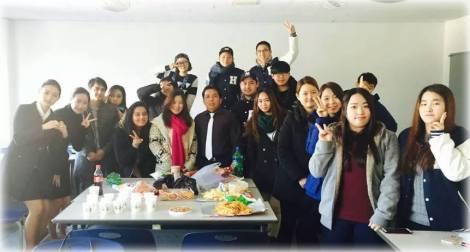
E-2 visa holders are allowed by the Ministry of Education here to teach strictly English subjects only. One advantage of hiring Filipino professors, because theirs is E-1 visa, is they can be asked to teach content subjects related to their fields especially if the curriculum requires that the content subjects should be taught in English. Currently, in the university where this writer is teaching, three teachers from the Philippines, aside from teaching English subjects, would once in a while be invited to teach content subjects in the university’s Graduate School or serve as advisers to foreign students writing their dissertation.
I wouldn’t say that Filipino professors in universities in South Korea are lucky to have been hired. Why? They have to go through the proverbial eye of the needle to have a chance of getting hired. They applied alongside teachers who are native speakers of English who have the upper hand, not because of their qualifications and pedagogical skills, but because of their geographical roots.
Most of the Filipino professors here are PhD degree holders. The minimum requirement FOR THEM is Masters. Surprisingly, some native speakers of English, are allowed to teach in universities here even if they don’t have Masters.
To the universities that opened the opportunity for Filipino professors and hired them, the applicants needed to prove that they are as equally capable as their counterparts from the native English-speaking regions of the world. When they got hired, it was because they are qualified and have proven that they have what it takes to be English teachers. It wasn’t luck.
Filipino teachers are trained in the Philippines to both know what to teach and know how to teach what they know.

Modesty aside, the Philippines has a very good education curriculum implemented through the Commission on Higher Education which closely monitors TEIs (Teacher Education Institutions) to ensure strict compliance. Thus, Education graduates from the Philippines can be relied upon not only in terms of the knowledge, skills, attitude, and values in their field of specialization but also in pedagogy and in research. Filipino teachers are good in both instruction and research.
One of the best features of “teacher training” in the Philippines is teachers are made to understand that the most important stakeholder in a school is the STUDENT, not the TEACHER. When they need to, Filipino teachers know how to adhere to the philosophy that the teaching-learning process should be student-centered.
One reason, if not the main and only reason, most universities in Asian countries (like South Korea, Japan and China) prefer to hire teachers from those seven countries is ACCENT.
The Filipinos are good at English with the said language being the official medium of instruction in the Philippines from kindergarten to college – even in graduate school. Filipinos, at an early age, write and speak English. They hear and read it everywhere. It is also the official language of communication in the Philippines. All business and government transactions are done in English. The country also has the 3rd largest group of English speakers in the world. Their accent is not bad. It’s neutral, to say the least. This is the reason why the Philippines is one of the leading countries for BPO. But notwithstanding all the aforementioned, still the said universities prefer native English speakers and do not include Filipino teachers in their lists of preferences.
But there are two things that would make hiring a Filipino teacher a wise investment – two things far more important than ACCENT… their PASSION for teaching and COMPASSION for the learners.
It is easy to learn to mimic somebody’s way of creating vowel and consonant sounds and diphthongs but it is hard for teachers to be passionate about the job and compassionate with the students…. especially if they are not really trained to be one and were only forced to accept the teaching job for lack of better options.


 M.A.D. L I G A Y A