Category Archives: Wellbeing
A Holistic Approach To Self-Improvement

Self-improvement is often treated as a collection of isolated goals—building confidence, learning new skills, developing better habits, or becoming more disciplined. But lasting transformation requires something more. It requires a holistic approach.
This book presents a practical framework that brings together the essential dimensions of personal growth into one integrated system. Rather than focusing on a single aspect of development, it shows how genuine and lasting change occurs when your beliefs, abilities, habits, and actions work together.
Through this book, you will discover how to:
• Build a strong value system that shapes your character and guides your decisions.
• Develop the competencies needed to navigate life’s personal and professional challenges.
• Establish a habit scheme that transforms good intentions into consistent action.
• Cultivate the self-discipline that binds every element into a sustainable way of life.
• Pursue lasting health, success, happiness, and fulfillment through balanced personal growth.
Grounded in research yet written in a clear and practical style, this book combines timeless principles, scientific insights, reflective exercises, self-assessments, and real-life examples to help you understand not only what to improve, but how meaningful transformation actually happens.
Whether you are a student, educator, professional, leader, entrepreneur, or simply someone seeking a more purposeful life, A Holistic Approach to Self-Improvement offers a complete roadmap for becoming your best self—one intentional step at a time.
Grow with purpose. Live with meaning.
The Pursuit Of Lifelong/Lifewide Learning

““The key to success is dedication to lifelong learning.”
~ S.R. Covey ~
Jim Rohn had a very unique perspective on success. He said it is not to be pursued but instead attracted by the person you become. He probably meant that success is like a fruit and you are a fruit-bearing tree. How long does it take before a tree bears fruit from the day its seed is planted? Not overnight, not a week or two, not even months, but years. A tree has to grow and mature before it can bear fruit. You must grow, mature, and attain your full potential like a tree. Focus on becoming a sturdy, full-grown tree; the fruits naturally come out of your branches when the proper time comes.
When you become the best you, success comes knocking at your door. However, reaching your full potential or becoming the best you is a long and arduous process. It requires continuous striving, an unending quest for learning. Succeeding requires becoming better every day. As S.R. Covey asserts, “The key to success is dedication to lifelong learning.”
Lifelong learning kicks off when a person starts breathing until their last breath. This means that learning is a continuous process that begins as a newborn infant and progresses throughout your life. Learning doesn’t stop when you’re done schooling. A graduation ceremony is called a commencement exercise because it marks the beginning of a new chapter in a person’s life. The graduate can decide to work or pursue further education. They may do both – work and study again. The world is changing rapidly, with industries improving fast due to technology continuously evolving. That evolution even became faster with the rise of Artificial Intelligence. To keep pace and stay relevant, it is necessary that you constantly learn and embrace changes. You need to adapt and go with the flow of innovation lest you risk becoming obsolete with outdated knowledge, skills, and values.
Lifelong learning is often misconstrued as “lifelong schooling.” It draws a negative subjective feeling to some. Perhaps it conjures up in their minds the image of an inmate serving a lifelong sentence in jail. However, the term should not be misunderstood to mean going to school until all your hair is gray and all your bones are brittle, although I believe there is nothing wrong if one wants to be a perennial student. It is perhaps the negative connotations that the term “lifelong learning” draws that lead to the birth of a similar concept, “lifewide learning.”
Lifewide learning refers to learning in various settings, including formal, informal, and non-formal, and occurs in spaces the learner simultaneously inhabits – work, school, home, etc. Barnett (2010) clarifies that if lifelong learning occupies different spaces through the lifespan – ‘from the cradle to the grave’ – lifewide learning is learning in different spacers simultaneously. The former runs vertically, while the latter runs horizontally.
Introducing “lifewide learning” doesn’t imply that “lifelong learning” is erroneous. Skolverket (2000) explained that the “lifelong” dimension is non-problematic. What is essential is that the individual learns throughout life. He clarified that the “lifewide” dimension refers to learning in various environments and situations and is not only confined to the formal education system. Ates & Alsal (2012) explained that lifelong learning is lifewide, voluntary, and self-motivated pursuit for personal and professional reasons. They argued that it enhances social inclusion, active citizenship, and individual development and increases competitiveness and employability.
Whichever is used to describe learning, lifelong or lifewide, it is an activity that contributes to your personal growth and development. Even if lifelong learning and lifewide learning are to be viewed separately in the context of how they are technically defined, their objectives are the same – to help you achieve your full potential and become the best you.
Schuller et al. (2007) argue that learning does not occur just in school – it is both lifewide (occurring in multiple contexts, such as work, at home and in our social lives) and lifelong (starting from the cradle to the grave). These different types of learning affect each other in various ways. Their impact in terms of the outcomes of learning is equally complex – whether it is in the economic and social spheres, the individual and collective, the monetary and the non-monetary.
Embarking into lifelong/lifewide learning (or continuous learning) is obviously a worthwhile endeavor. The benefits you get from it are aplenty.
Continuous learning leads to acquiring new (or additional) knowledge and skills needed to become a productive person and a competent professional. Not stopping to learn will prevent you from becoming irrelevant in your chosen field. Remember that changes are inevitable. Those who refuse to innovate and update their competencies will find themselves jobless or bankrupt. Conversely, those who actively engage in continuous learning, as Mascle (2007) reiterated, will have a better chance of getting a fatter paycheck. He added that job promotions go to smart people who keep up with the latest innovations in information and technology. Tamborini et al. (2015) revealed that men and women can expect to earn 655,000 US$ and 455,000 US$ more during their careers with a bachelor’s degree than with a high school degree, and graduate degrees yield further gains.
If you keep learning, it will also broaden your perspectives leading you to make well-informed decisions. You will gain a better understanding of how things work and how things are done. The new skills you acquire through continuous learning will boost your problem-solving abilities and critical thinking. It will allow you to look at issues more judiciously and prevent you from saying or doing anything mindlessly. Nordstrom (2006) even contend that it increases wisdom. Continuous learning will allow you to put your life in perspective, increase your understanding of previous successes and failures, and help you understand yourself better. He added that learning continuously will help you fully develop your natural abilities.
Continuous learning is also beneficial to your well-being. The mere reading you do while pursuing lifelong/lifewide learning will keep your brain active. Brain experts ascertained that continuous learning helps improve cognitive functions and prevent brain diseases like dementia and cognitive decline. The more frequently the brain is used, the better, especially when you grow older. Additionally, acquiring new knowledge and skills will give you a sense of self-worth and boost your self-esteem and confidence. You can also read a lot of health-related materials that will inspire you to live a healthy and stress-free life. If you learn about the importance of meditation, a nutritious diet, and regular exercise, you could be motivated to try them. Cutler & Lleras-Muney (2006) even explored the relationship between longevity and education. They revealed that the better educated have healthier behaviors along virtually every margin, although some may also reflect differential access to care.
There are many reasons to continue learning and the collective weight of the evidence presented in many studies on the subject indicate that lifelong/lifewide learning is essential in an individual’s quest to attain full potential. The only way to becoming the best you is through lifelong/lifewide learning.
However, the journey to continuous learning can be challenging and troublesome. Different kinds of barriers, whether imposed by circumstances or self-imposed, can hinder your path.
Topping the list of reasons for the inability of some people to continue learning is their busy schedule. They reason that juggling work (or business), family, and other responsibilities is tricky and consumes a lot of their time. More is needed for personal growth and development activities. But if you embrace the idea that a better self leads to a better life, you must prioritize self-improvement. It would help if you allocated time to pursue lifelong/lifeward learning and consider it not an extra burden but rather an investment.
Aside from time constraint, financial limitations can be a significant barrier also in the pursuit of continuous learning. Enrolling to degree or certificate courses or attending seminars for further studies and career advancement come with a cost. But as I said previously, self-improvement is an investment. If you want to attain your full potential, you must be willing to pay the price. Success will not be served to you in a silver platter.
There are other kinds of constraints like unavailability of learning materials. There are still some parts of the world that are undeveloped. Attaining personal growth and development is more challenging to people who live in those areas where internet connectivity and resources in libraries are limited (or worse – no libraries at all).
The foregoing are only few of the circumstances that can hinder continuous learning. But take it from George Herbert who said: “To him that will , ways are not wanting.” If you are strongly motivated and committed to succeed, you will do whatever it takes for that to happen.
—–
Ates, Haydar & Alsal, Kadir. (2012). The Importance of Lifelong Learning has been Increasing. Procedia – Social and Behavioral Sciences. 46. 4092-4096. 10.1016/j.sbspro.2012.06.205.
Barnett, Ronald. (2011). Lifewide education: a new and transformative concept for higher education? http://lifewideeducation.co.uk/.
Cutler, David & Lleras-Muney, Adriana. (2006). Education and Health: Evaluating Theories and Evidence. Making Americans Healthier: Social and Economic Policy as Health Policy. 12352. 10.3386/w12352.
Mascle, D. (2007, Mar. 27). No Adult Left Behind: 5 Big Benefits of Lifelong Learning. Article Alley, UK. http://deannamascle.articlealley.com/no-adult-left-behind-5-big-benefits-of-lifelong-learning-139607.htm
Nordstrom, N. M. & Merz, J. F. (2006). Learning later, living greater; the secret for making the most of your after-50 years. Colorado; USA, Sentient Boulder CO Publishing.
Schuller, Tom; Desjardins, Richard (2007). Understanding the Social Outcomes of Learning (PDF) (Report). OECD. http://ul.fcpe.rueil.free.fr/IMG/pdf/9607061E.pdf.
Skolverket. 2000. “Lifelong Learning and Lifewide Learning.” Stockholm:The National Agency for Education.
Tamborini CR, Kim C, Sakamoto A. Education and Lifetime Earnings in the United States. Demography. 2015 Aug;52(4):1383-407. doi: 10.1007/s13524-015-0407-0. PMID: 26100983; PMCID: PMC4534330.
Race To 100 (Longevity)
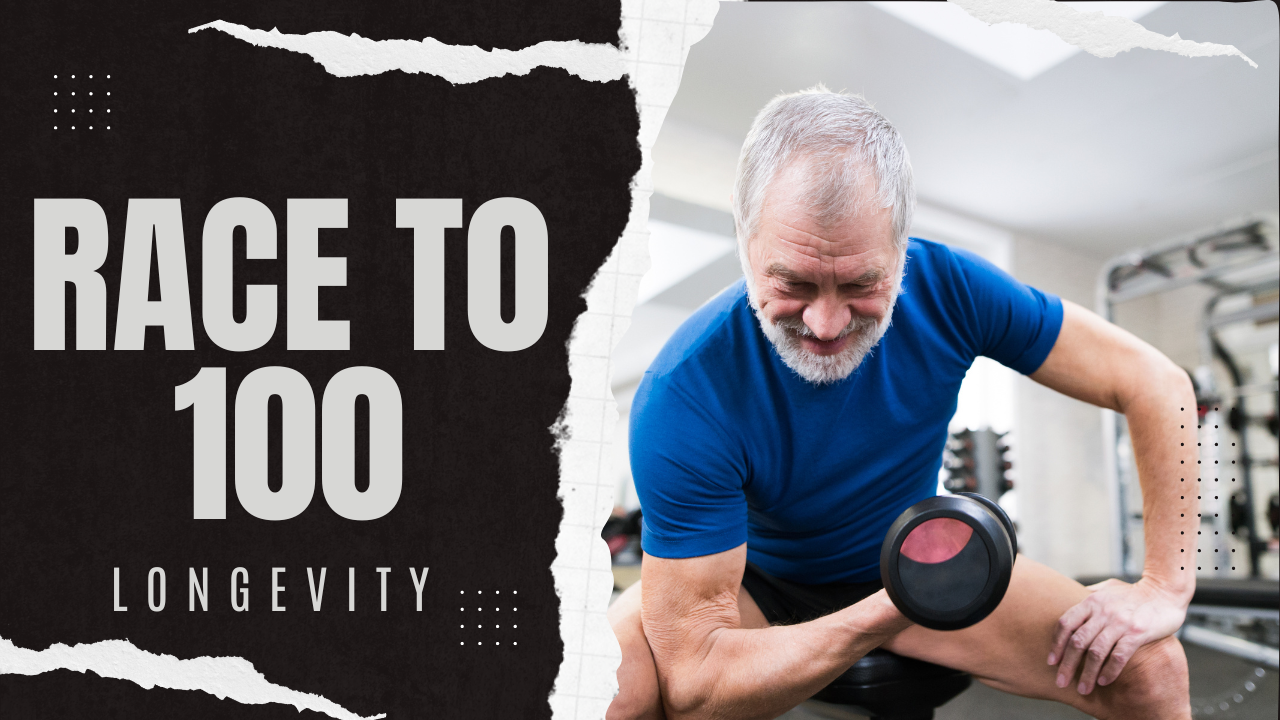
As I explore deeper into self-improvement, I came across a lot of literature written on longevity. I got so fascinated by the idea of people not just reaching their full potential as persons but living as long as they could.
Creating a paradigm to capture the relationship between the constructs “reaching one’s full potential” and “longevity” is a little bit tricky. Will the conceptual model show that the latter is an integral part (or the result) of the former? Which of the following questions should be answered – “Is living as long as a person could a part of reaching the maximum physical capability of their body?” or “Is longevity the result of being able to develop fully as a person?”
I think longevity should be viewed as a product of the efforts of people to reach their full potential. To say that living as long as people could is the result of them giving their physical bodies the maximum care only is tantamount to considering a person as a mere physical specimen. A person has, not just a body, but a mind and a spirit. In psychology, an individual is looked at as a physical, mental, emotional, social, and spiritual being. I believe that only when people are able to strike a perfect harmony among these different aspects of being that they could hope to have a shot at longevity.
The interest that longevity has been drawing from both the scientific community and the general public has seemingly created a new sport which I call “race to 100.” I signed up for the race. I want to celebrate my 100th birthday. It is my desire to be on my feet dancing and probably carrying one of my great-grandchildren (or would it be great great-grandchildren) when that happens. I don’t like to be in a wheelchair struggling to blow out those 100 candles.
Celebrating the 100th birthday is a milestone only a few were able to reach. Those who are lucky to live that long are called centenarians. The United Nation estimated that worldwide there are only more or less 600,000 centenarians. That’s less than 1% of the world’s total population of 8 billion people. Studies have shown that they live in certain locations in some countries which were designated as “blue zones.” Japan has the highest number of centenarians with more than 90,000.
When I told some of my friends about me wanting to be at least 100 years old, they said I am crazy to want to live that long. For them, they would be happy to live a few more years after their retirement. One of the reasons they would not want to go 80 and beyond is the possibility of them becoming weak and sickly and unable to fend for themselves. They are worried that their loved ones might just send them to nursing homes. One of them who happened to have visited an institution for elderly people lately told me that the pitiful physical, mental, and emotional condition of the old people she mingled with seemingly made her dread reaching advanced age.
That’s the most challenging part of the “race to 100” – getting there on your two feet and not aided by a wheelchair. Thus, it should be treated as a serious goal entailing careful planning and execution. It is definitely not a walk in the park. For those intending to join the race, it will help to know the life expectancy in the country where you live. In the whole world, it is currently pegged at 72.98 years. That’s the number of years an earthling can expect to live. Adding 20 or so more years is a tall order.
Genetics and environment play an important role in healthy aging and longevity. Thus, people aspiring to live way beyond their retirement age need to be aware of their family’s health histories for them to know if they have any genetic predisposition that should be addressed as early as possible. They need to ensure as well that they live in a conducive environment that would help them live healthier and longer.
The to-do list for people wanting to live as long as they could is as formidable as it could be. The list includes among other things slowing down aging, avoiding and curing diseases, staying healthy, striking a work-life balance, and keeping a robust wellbeing. All of the said undertakings are not easy to do.
There are procedures and treatments available to slow down aging. Most of them are skin-related. But it’s not only the skin cells that age. The tissues in our muscles, brain, heart, and other bodily organs succumb to the unforgiving hands of time as well. And available are natural and practical ways to slow down (if not reverse) it. What’s on top of the list is not surprising – proper nutrition and regular exercise. Eating the right kinds of foods and staying physically active help us stay healthy. Health experts claim that they contribute also to making us feel and look younger. Activities like getting enough sleep, meditation, and fasting intermittently or fully have been proven to contribute to longevity.
Additionally, it is also important to take a look at one’s lifestyle. Aside from genetics and the environment, how long people live is influenced also by their manner of living. Destructive habits like smoking should be avoided. How many times we have been told that smoking is known to cause illnesses that include heart disease and lung disorders. Scientists also found out that alcohol doesn’t only inflame the liver, it also infuses every cell causing damage to the genes. So, if drinking could not be completely avoided, at least it should be done moderately.
That’s how difficult the race to 100 is. As if those undertakings listed on the to-do list of people wanting to celebrate their 100th birthday are not already difficult, they must also observe self-discipline and sacrifice self-gratifying activities (of course only those that are classified as destructive). What makes joining this race a bit more challenging is the fact that it’s not just a matter of making sure that the physical, mental, emotional, social, and spiritual aspects of your being are in tip-top shape as you march toward the century mark. It also entails financial stability to ensure that at least your basic needs – food, shelter, clothes, medicine, and what-have-you – are met. Part of the planning in racing to 100 is calculating how much money you’ll need.
If you save more than enough to secure all that you need as you run the race to 100 and you have plenty to spare, consider traveling to places you have never been and enjoy life. Enjoy aging, don’t gripe about it. Age gracefully and gratefully. A study concluded that “those who view growing older positively lived seven years longer than those who griped about it.” So, instead of griping and worrying, just prepare for its coming.
Wellbeing of Filipinos in South Korea: A Needs Analysis
The coronavirus pandemic is an unfolding crisis whose extent of damage could be measured only when it finally ends. Suffice it to say that its economic ramifications are devastating. The global economy shrunk. More and more people are unemployed, hungry, and homeless.
But on top of the economic impact of the COVID-19 crisis, its socio-psychological implications should not be taken for granted. Remember that human beings have needs beyond foods, clothes, and shelter. These are only what Maslow classified as basic in the hierarchy of needs. People have higher needs – psychological and self-fulfillment needs – that must be satisfied.
The inevitable changes that took place because of the spread of this coronavirus have created different kinds of challenges and difficulties that left people with no choice but to contend with. They were confronted by circumstances different from what they were accustomed to.
The ongoing health crisis is testing how much a person could endure… how resilient are they. The current reality forged by the deadly pathogen has created different kinds of problems that may lead to uncertainties, grief, anxiety, fear, and loneliness. It would require resilience to overcome these negative emotions.
Resilience as defined by Luthar (2006), is “positive adaptation despite adversity.” It refers to the person’s ability to adjust to change and/or the capacity to recover from unfortunate events or misfortune. It is the capability to tolerate (and effectively cope with) experiences of change and adversity.
How resilient a person is depends on their level of wellbeing. In any study featuring these two constructs, a hypothesis of a direct positive correlation existing between them is very likely to be accepted. It means that the higher the level of a persons’ wellbeing the more resilient they are.
The Oxford dictionary defines wellbeing as the “state of being comfortable, healthy, or happy (Oxford, n.d.). This concept, as Purcell (2018) explained, embraces more than just physical health. It takes into account the entire person, both body and mind. It indicates not just the absence of illness but also the presence of positive mental states, emotions, and moods.”
“Species with useful adaptations to the environment are more likely to survive.” This is what Charles Darwin famously said. Given the current situation, to adapt is the only option people have. And the ability of a person to adapt to the kind of environment the ongoing pandemic created hinges on the level of their wellbeing.
Surviving the pandemic is the goal of adaptation. It is a personal responsibility. It’s not just a matter of steering away from the deadly path of the infectious disease but also coping with the situation that emerged from its trail of destruction and maintaining a strong resolve not to succumb to the challenges and difficulties that come along.
Overcoming the challenges and difficulties the deadly virus spawned requires all forms of toughness – physical, emotional, mental and spiritual. It demands a body and mind in tip-top shape, a holistic wellbeing.
The fear of possibly getting infected by the virus and losing job or working fewer hours (which means lesser pay too) are causing fear and uncertainty among many people. Losing loved ones to the deadly pathogen has left a lot of people grieving too. Coping to changes in lifestyle has caused so much stress as well. All these and other problems would really require toughness to overcome. And if a person is non-resilient, their inability to adapt or recover might lead to some other and worse problems.
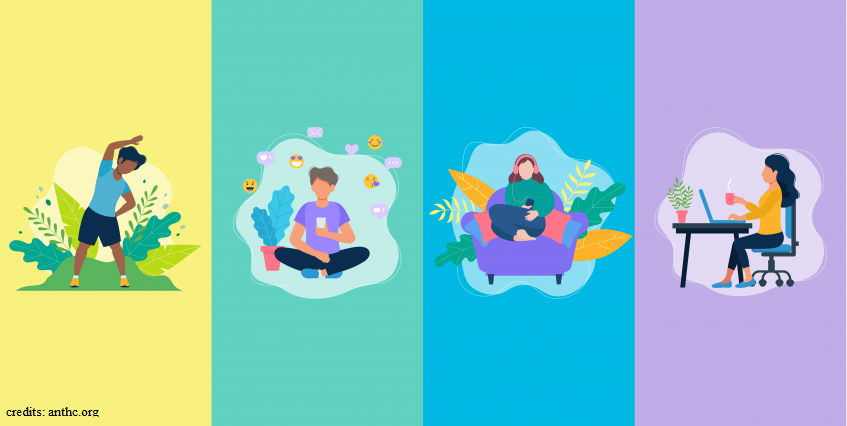
Take into consideration also the directives to stay at home and strictly observe social distancing. Such orders from the authorities may seem inconsequential, but they are not. They do have debilitating effects. While social isolation may have saved a lot of people from getting infected by the virus, it exposed them to another kind of malady – loneliness.
Loneliness is a psychological condition that should not be taken for granted. Wilson et al. (2007) stated that “loneliness is often described as the state of being without any company or in isolation from the community or society. It is considered to be a dark and miserable feeling, a risk factor for many mental disorders like depression, anxiety, adjustment disorder, chronic stress, insomnia or even late-life dementia.”
“Prolonged isolation,” as Cacioppo and Hawkley (2003) argued, “can adversely affect physical and emotional health, altering sleep and nutritional rhythms, as well as reducing opportunities for movement.” Nardone & Speciani (2015) added that “isolation causes the natural channels of human expression and pleasure to become depressed negatively impacting mood and subjective well-being.”
So, social isolation, if not properly handled, may cause both physical and emotional problems. However, it is necessary. Most people would probably choose to bear the problems resulting from social isolation than the one caused by the deadly virus.
Staying at home and socially distancing may not be much of a problem, or not a problem at all, for those who are living with their families. But for people living alone, either by choice or circumstances, it could be. These people are the ones most vulnerable to problems that social isolation brings about.
One particular group that belongs to the category aforementioned expats or people living in foreign countries, mostly as workers or students.
Foreigners in a particular country, just like the citizens of that country, are caught in the same web of problems created by the coronavirus pandemic. They feel or face the same uncertainties, grief, anxiety, fear, and loneliness. But it’s very likely, that the foreigners, being away from their families, are more prone to the dangers of social isolation and other kinds of problems emanating from the ongoing health crisis. Thus, they need all kinds of assistance they could get from whatever support groups their own governments or from private organizations or individuals who are willing to help them.
Click on the link below to continue reading…


 M.A.D. L I G A Y A