Author Archives: M.A.D. LIGAYA
What Do Filipinos Need to Realize (1)
(1st of 4 parts)
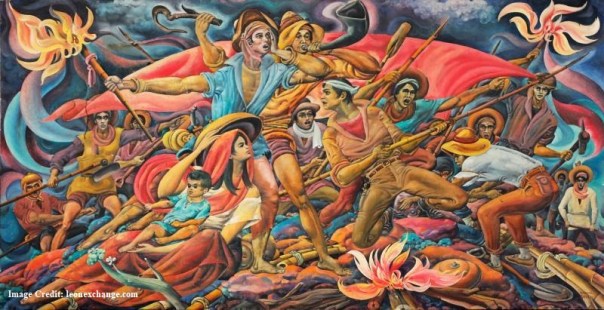
If we, Filipinos, think that our leaders by themselves could deliver us to the proverbial “promised land”, then we are gravely mistaken. If we think that among them is a messiah who could bring about the socio-political and economic reforms needed to make our country progressive and peaceful, then we are hallucinating.
It is not because nobody among them is qualified and capable to lead the Philippine to greatness. It’s just that nation-building doesn’t work the way we think it does – that it can be done single-handedly by whoever we elect as President.
That actually is one (probably the worst) of our major problems as people – the mindset that the leaders we elect have magic wands they can wave to solve all of society’s ills and all of our nation’s problems. This is the prevailing belief among Filipinos. We pin our hopes for a brighter future on our leaders. We expect them – the governors of our provinces, the mayors of our towns and cities, and the captains of our barangays to solve all of our problems. We expect them to weave their magic and cast their spell then when the smoke dissipates we suddenly live a better life. We, think of our congressmen and senators as witches and wizards who through their out-of-this-world powers could make our country a better place to live in. We think that our President is Ironman and the members of the cabinet as the rest of the Avengers who could slay all of our nation’s Thanoses. Well – they are not.
It’s time to wake-up. We need to realize that those elected (and appointed) politicians and leaders manning the executive, legislative, and judicial branches of our government are not superheroes. They don’t have superpowers. They cannot solve all of the nation’s problems by themselves. They need our support as citizens. Each citizen – rich or poor, professional or not – has a role to play. Each of us should contribute to nation-building.
What can ordinary citizens do to help make the Philippines a better nation?
Let us begin by not selling our votes during elections.
We expect too much from our government yet we are not voting for the best and most qualified among those seeking public office during elections. Instead, most of us write in the ballot the names of the candidates who are willing to buy our votes.
Vote-buying is an open secret in our country. It is freaking rampant. It has seemingly become the norm. It’s making the electoral process lost its essence. Leaders are elected not on the strength of their qualifications, abilities, and platform of government but on the power of the money they are capable of paying each voter who would promise to cast their votes for them.
On the eve of an election day, bidding wars begin. Once candidates get the information that their political rivals offer a certain amount for each voter, they will likely double that. Starting price is usually P500. Then candidates will try to maneuver until the price becomes P1000 per vote. The desperate among the politicians would sometimes coughed up P2000 (or even more) for each voter.
Would elected officials admit that they are guilty of vote-buying?Of course not. So, we could only wonder how many percent of our elected officials literally bought the positions they are currently occupying.
Stopping this culture of vote-buying and selling is difficult but it has to be done. One thing that we need to realize is that the leaders we put into office should have the moral ascendancy to lead. It is difficult, if not impossible, to look up to leaders whom we know cheated their way to their offices. They are not credible as leaders. We could not apply the principle of “public office is a public trust” when we know that the persons occupying public offices “bought” their mandate. These scheming politicians feel that the office they are occupying is their “private property” because they paid for it. They can do therefore as they please and their constituents cannot and (shouldn’t) complain because they have been paid.
Those who thought that they duped the politicians by taking the money they offered to them are wrong. They were so happy with that P500 (or P1000… make it P2000) which they received. Such amount is nothing as compared to the millions of pesos they will get when the politicians dip their dirty hands into the coffers of government. The money those politicians use to buy votes are considered an investment. Once they get elected, they would make sure that they will get the return of their investment… with the corresponding interest.
Then we complain about how our government is performing. What kind of performance would we expect from politicians to whom we awarded the mandate to lead not because they are qualified and capable but because they have the money to buy votes?
As Thomas Jefferson puts it, “The government you elect is the government you deserve.”
This is what every Filipino need to realize. Suffrage is not just a right but a moral obligation as well. It’s not for sale. Don’t reason out that you’re selling your votes because someone’s buying. “It takes two to tango.” Both vote-buyers and vote-sellers are guilty of this wrongdoing.
Don’t expect the politicians to stop buying votes. They would never do that. Politicians will do everything to ensure they would get elected and have the power they crave so much to have. It is not public service they are thinking of when they ran for elective positions. Power, as they say, is addicting. They want it so badly and on top of that, they salivate so much for the accruing benefits and the opportunities that they would get once they are in position. And only those who were born yesterday don’t know what benefits and opportunities are those.
Our Fate and Destiny

Much has been written about fate and destiny. Those that I read have varied opinions on whether or not those two concepts are one and the same with some claiming they can be interchangeably used and some arguing that one should not be mistaken for the other.
There are assertions that fate and destiny both refer to what the future holds for us. However, that future, when viewed using the lens of fate, is negative and is positive when seen in the perspective of destiny.
The common thing that the literature I explored on the subjects clearly articulated is that they both allude to the future of a person but fate does so negatively and destiny positively.
Fate is negative because it is a belief that everything that happens to us in the future have already been set in stone. We can not change our fate no matter how a hard we try. Conversely, destiny is positive because it considers the future something that is yet to happen, a story – our story – yet to be written.
Fate and destiny are both considered as predetermined course of events. However, fate is viewed as inevitable which is controlled by an unseen force while destiny is likened to a clay in the hands of a potter – it can be shaped as desired.
Each of us can decide whether to accept that the life we live is tied to threads controlled by the puppeteer called fate or it is a book filled with empty pages and we’re holding the pen and have the chance to write our own stories. We can decide whether we live the fate (which others think are) assigned to us or we create our own destiny.
The danger with subscribing to the idea that events in our lives are determined by the hand that fate dealt to us is it leads to a passive life. Fatalism reduces a person to merely a driftwood on the waves. Believing that success and failure are preordained, people may not be motivated to give their best shot in any endeavor or be afraid to take risks in any way. They would simply wait for their future to unfold. They believe that fate would bring them to where they should be anyway and would make them what they are meant to be. For them there is not much (or nothing) that they could do but wait until their wheel of fortune grinds to a halt pointing at the jackpot, not at the bankrupt.
But innate in us is the capability to chart our own destiny. Living our fate or shaping our own future is a matter of choice. Instead of waiting passively for the future we can lay out a plan to ensure that it unfolds the way we want.
Remember what Albert Camus said – “Life is the sum of all our choices.” “Our life,” as Myles Munroe puts it, “ is the sum total of all the decisions we make everyday.” It is then incumbent upon us to make the right choices all the time. And the first decision we need to make is whether we view ourselves as the master of our fate or its slave.
The fatalistic attitude of people stems from the doctrine of predestination upheld by most of the world’s monotheistic religions (Christianity, Islam and Judaism). The said doctrine maintains that whatever happens has already been determined by God. What if this means that God, omniscient and omnipresent that He is, only knows, and not controls, how our future unfolds based on the decisions we make as individuals? It doesn’t require a scientific mind to figure out that it doesn’t make sense that God gifted mankind with a free will if after all He already preordained everything.
The Buddhists and Hindus believe that our destiny as humans is determined by our actions, thoughts and words. If it is so, it is important to be careful with what we do, think, and say.
Creating our own destiny does not mean denying that certain aspects and events in life are inevitable and unavoidable. For instance, we could not choose the body we want and the physical attributes we desire. We also could not choose the parents we were born to. When finally we face the mirror and contend with our personal realities, we could only wish that we were born to parents who would endow us not only with wealth but with good genes.
Yes, we could not control the circumstances of our birth. There’s no way we could also prevent people around us from making bad decisions that might adversely affect us. However, we can choose how we shall respond to all the limitations and unfavorable conditions that we encounter. We could not afford to be held hostage by them. We should never play the role of a helpless victim.
As Jean-Paul Sartre argued, “Predetermined nature, facticity or essence do not control who or what we are; moreover, one is radically free to choose one’s destiny and it is one’s moral responsibility to do so.”
The moment we become capable of deciding for ourselves and aware of our possibilities, that’s when we start charting our own destiny. We should begin by embracing our limitations and recognizing which aspects of our life were not properly put in place by the people who were in charge of us when we were young and incapable of making decisions for ourselves. Limitations and unfavorable conditions can be overcome if one so desires.
This Rollo May articulated by saying, “Fate is that which cannot be changed about a person, such as gender and race. Destiny is that which can be created from what was given.”
Aside from the circumstances of our birth, the only other thing we have no way of avoiding is death. We don’t know when it would come, except to those who are terminally ill and predicted by doctors to have only a certain time left to live. We’ll never know how long we live and how soon we breathe our last. This presents us with a choice – live our live to the fullest and make every moment count or live in fear trembling at the thought of the Moirae named Atropos coming any moment to cut our life-thread.
Did America Save the Philippines From Spain?

Not so long ago, in our university’s English lounge, I had a discussion with two colleagues about a comparative study on the effects of native and non-native English language teachers on students’ performance in English. When the discussion brought us to the three concentric circles of Englishes, we tried to identify the countries colonized by England and America. Surprisingly, one of them said, “The Philippines (my country) was rescued by the Americans from the Spaniards.” I paused, looked at him and said, “Are you sure you want us to discuss that topic?”
I was ready for a debate. I had the advantage – I am a Filipino. I know my nation’s history (which apparently he knew little or nothing about). Philippine History was also one of the subjects I had taught (quite passionately) in my country and I was ready to teach him a lesson. I was ready to hit him with my historical whip. I even wanted to tell him of the injustice his country (Britain) did to the Sultanate of Sulu and the Philippines by wrongly turning over Sabah to the Malaysian government.
To that question I asked, he just responded with a smile and redirected the discussion to the original topic.
Even if I wanted us to go back to his statement, for I really needed to respond, our time in the English lounge was over. We had to leave. He was saved by the bell.
That desire to respond stayed with me. It tortured my Filipino soul. The Filipino in me could not stand down. I did not stand down when another colleague said some unsavory remarks about Filipinos in his country. I could still recall how irate he was with the things I had to say in response. He was so vexed by the manner I refuted his statements that one time when he got drunk he gave me a mouthful and had to be restrained by his friends.
To that fit of rage from a drunk person, I did not respond. Why would I? But to that statement that “my country was saved by Uncle Sam by the bullies from the Iberian peninsula,” I had to. The only way for me to regain my peace was to respond in any way. So, I decided to write this article hoping that one day that colleague who wrongly thought that the Americans were the Filipinos’ knights in shining armor would be able to read it.
Now, let me answer the question “Did the Americans save the Filipinos from the Spaniards?”
HELL NO!
The Americans extinguished the flames of Filipino nationalism that was just beginning to flicker and deprived the Filipinos of the chance to chart their own destiny as a nation. That’s what they did.
Let me share some excerpts from my on-going study entitled “How Colonialism Shaped the Filipino Character.”
**********
In 1896, the Filipinos staged the biggest and most organized revolt against Spain. Previous attempts by them to overthrow their invaders from the Iberian peninsula were all quelled. According to historians, the reasons those uprisings failed were the following: they were caused by non-encompassing issues; based on limited geographical scales; and they were lacking in national character. The 1896 revolution was different. It started in the capital of the country – Manila – then spread to surrounding provinces and eventually became national in scope. The revolt was driven mainly by the rise of Filipino nationalism.
The Spaniards had their hands full and it was only a matter of time and their more than three centuries rule would have come to an end. Even if the Americans did not come, the Filipinos could have succeeded in ending the Spanish rule.
The Americans duped Emilio Aguinaldo, the leader of the revolt against Spain, into believing that they came to help the Filipinos establish a republic and that they didn’t need any colony.
Then, the Filipinos watched helplessly as the Spaniards, too proud to accept defeat in the hands of the Indios they enslaved for centuries, surrendered to the Americans instead and was paid $20,000,000 for all the improvements they made in the Philippine islands during their colonial rule. That’s one of the conditions set in the Treaty of Paris in 1898 which the two countries concluded without concurring with the Filipino people.
Would the Americans pay the Spaniards that huge amount (which is worth more than half a billion dollars today) and get nothing in return?
HELL NO!
America, then an emerging world power, needed to flex its muscles in the Pacific. The Philippines was the most ideal place for that. Their military strategists probably thought it was necessary for America to have presence in Asia to counter the growing military might of imperial Japan.
So, the Americans, contrary to their promise which Aguinaldo said he naively believed, declared Philippines a territory ceded to them by Spain.
It was a painful experience for the Filipinos. After centuries of struggle against Spain they finally had a chance to chart their own destiny as a nation. But the Americans stood on their way. The Filipinos had to continue their search for that elusive freedom.
So, the Philippines changed hands – from one colonial master to another, from the Spanish yoke to that of the American.
What if the Americans observed the principle that “governments derived their just powers from the consent of the governed” and decided not to stay in 1898 and allow the Filipinos to govern themselves? The Americans should have known better. That principle was the driving force of the declaration of their independence in 1776. It is touted to be the model for the right to self-determination, the very right that they deprived the Filipinos of when they colonized the Philippines. The Americans justified their occupation of the islands by saying that the Filipinos were not ready for self-governance. But how sure were they? And even then, the Filipinos certainly would have preferred to have charted their own destiny as a nation no matter what the consequences maybe. The world will never know what would have happened to the Philippines had the Americans gave them the reins of their own government. While it is not certain that the Filipinos would have succeeded, one thing is clear, neither did the Philippines become a better nation because the Americans occupied it.
It would have been a big boost to the Filipino pride if only they were allowed to continue their war with Spain which they were winning at that time when the Spanish and American strategists connived to stage what would later become known as the “Mock Battle at the Manila Bay” which the Americans purportedly won. That plan was concocted to prevent Manila, the nation’s capital, from falling into the hands of Filipino revolutionaries. Just imagine how big a victory like that would have affected the Filipino psyche. Its character as a nation would have evolved in a much different direction. But it was not meant to be.
The last quarter of the 19th century was perhaps the most significant stage in the development of the Philippines as a nation. It was when nationalism started to fluorish. It took centuries before the natives managed to put up a united front against their colonizers. Like the sun starting to rise from the east spreading it’s golden rays to signal the coming of a new day, the emerging solidarity among the natives became a portent of greater things to come (that never came.)
The most important ingredient for national development was finally manifesting among Filipinos at that time. The seeds of nationalism began to sprout. The influx of liberal ideas from Europe, the rise of the middle class and the martyrdom of Fathers Gomez, Burgos and Zamora (GomBurZa) were among the factors believed to have fan the flames of national unity.
It was a long and arduous journey towards national solidarity made difficult to achieve by a combination of factors…the island nation being geographically fragmented, the people speaking different dialects, and the Spaniards’ employment of “divide-and-conquer” tactics.
The Spaniards succeeded tremendously in employing the “divide-and-conquer” tactic against the colonized people so much so that they reigned supreme for more than 300 years. But when the Filipinos began to develop a cohesive spirit to fill their geographical gaps, when they dismantled the language barriers with their deafening cry for freedom, the days of the Hispanic colonizers became numbered. The colonial masters suffered humiliating defeats from the people they held by the neck for a long time and were forced to retreat to the walled city of Intramuros.
But the next chapter of the Philippine drama unfolded not the way the Filipinos had the script written but the way the directors from Hollywood penned it. And just when the Filipinos were ready to hit the last nail in the coffin of Spanish tyranny, the Americans said, “CUUUTTTT!”
With absolute certainty, the revolution the Filipinos started in 1896 would have finally ended Spanish rule. The natives had them figured out. All they needed was just to march together with their hands tied by the bond of patriotism. The Filipinos were ready to storm Intramuros, the last bastion of Spanish rule but they were stopped on their tracks by the Americans who they wrongly perceived to be an ally in their quest for freedom from Spain. The Filipinos naively thought that the Americans who were waging a war against Spain in Cuba, also a Spanish colony then, came as a friend, not a foe.
Cutting the story short, the Americans occupied the Philippines when the Spaniards left and the Filipinos were forced to wage war against a military far more powerful and more advance in weaponry than their former colonizers.
The natives lost the war and the sprouts coming out from the seeds of nationalism sown by the forebears of the Filipino race was not allowed to grow and bloom. It was forcibly uprooted and trampled upon by the Americans. Historians explained that the new colonial masters extinguished the flames of Filipino nationalism with laws like the Sedition Law (1901) which imposed a death penalty or a long prison term on anyone who advocated independence from the United States even by peaceful means and the Flag Law (1907) which prohibited the display of the Philippine flag in any place.
Filipino nationalism was nipped in the bud. That period in the history of the Filipino people was referred to as the “Era of Suppressed Nationalism.” While the natives were still licking the wounds inflicted by their former Spanish masters, the Americans started whipping them .
And as everybody knows, the justification provided by the Filipinos’ new colonial masters was the natives were not ready for self-governance and it would have been very chaotic had they been left alone to fend for themselves.
They could have been right…or wrong. Nobody would know now? But what critical thinking Filipinos today know was that the Americans had no right to deprive the Filipinos at that time the opportunity to determine their own fate as people. The natives could have been left to face the consequences of their attempt to stand on their feet. They had no right to deprive the Filipinos for that opportunity to raise their arm in victory against Spain. It would have been so meaningful had the colonizer surrendered to the colonized. That would have been a huge moral victory for a people enslaved and deprived of their basic rights and freedom for so long. That would have been a big boost to the morale of the Filipinos. But instead of a boost to their psyche the actions of the Americans wounded the pride of the Filipino and impeded the development of a stronger national character.
The Americans should have taken a page from their history for them to understand how the Filipinos felt at that time. According to historians, the main reason the American colonists fought for independence against Britain in the 1700s was they believed in the unalienable rights of the individual and them being taxed by the British Parliament without any representation is a violation of such rights. They believed that whatever a government does must have the consent of the governed. The Filipinos did not want another foreign power to govern them, they had enough of the Spaniards already. The Americans did not have the Filipinos’ consent to stay in the country and govern them.
But there was nothing the Filipinos could do, no country could come to their succor at that time. The Americans had France to support them in their drive for independence against Britain and perhaps the Filipinos were hoping that America would be doing a France when they came, but it was wishful thinking.
The Filipinos were on their own and the world at the time was a big jungle where the colonial powers were the predators and the weaker nations the helpless preys.
The Filipinos then cannot even invoke any law to contest the legality of the American occupation of the Philippines. Imperialism has its own laws, and is backed by brute force. Because of its armed forces imperial law supersedes international law. Experts argued that “The legality of imperial activity is based largely on the imperial state’s judicial system and its own legal experts.” They added that since Americans championed liberalism, they should know that natural rights are not contingent upon the laws, customs, or beliefs of any particular culture or government, and therefore universal and inalienable.
So, did the America save the Philippines from Spain?
HELL NO.
Here’s some excerpts from one of the speeches delivered by Manuel L. Quezon, president of the Philippines from 1935 to 1944:
“It is true, and I am proud of it, that I once said, “I would rather have a government run like hell by Filipinos than a government run like heaven by Americans.” I want to tell you that I have, in my life, made no other remark which went around the world but that. There had been no paper in the United States, including a village paper, which did not print that statement, and I also had seen it printed in many newspapers in Europe. I would rather have a government run like hell by Filipinos than a government run like heaven by any foreigner. I said that once; I say it again, and I will always say it as long as I live.
But that is not an admission that a government run by Filipinos will be a government run like hell. Much less can it be an admission that a government run by Americans or by the people of any other foreign country, for that matter, can ever be a government run like heaven.”
Make no mistake, the Americans extinguished the flames of Filipino nationalism that was just beginning to flicker and deprived them of the chance to chart their own destiny as a nation.
On Writing Poems
 It’s challenging, to say the least.
For me, the literary genre most difficult to produce is the poem. Putting together the elements of meter, rhyme scheme, sound and imagery is not easy. It would take more than creativity to express thoughts and feelings using the most appropriate figures of speech.
My best poems are written in Filipino. I’ve been trying to write good ones in English but I have to admit that it’s a mighty struggle. I’m not sure if for example the following quatrain makes sense:
Whisper your woes on the flicker
Cover it with dried leaves and twigs
Whisper till the flame grows taller
Let it burn your anguish and grief
I have no problem with free-verse but my dream is to walk gloriously the “rhymed” and “metered” path while holding the hands of either Erato or Euterpe.
One time I tried to mix Greek mythology and poetry and this is what came out:
Writing stories is just as difficult because mixing in a bowl the elements of fiction within the bounds of the plot is not a walk in the park. But fiction writers have the luxury of using a lot of pages to serve their purpose. Leo Tolstoy needed more than half a million words for his novel “War and Peace.”
Conversely, a poet has a single page, sometimes not even the whole of it, to capture vivaciously and vividly the emotions and thoughts pervading within or around him. The Japanese, through their Haiku, would do it in a single-stanza poem with three lines consisting of a total of 17 syllables.
What adds difficulty when poets thread the rhyme zone is that they can not walk the path of sadness while wearing a smile. Neither can they frolic in the lake of happiness while riding the canoe of sadness.
Pain begets pain, joy engenders joy. This is seemingly the prevailing mood in the realm of poetry. Rare are the crying clowns who can masterfully inject sadness into the veins of their poems while they are cracking a joke.
The melancholic lyre sounds best when played by a poet who in one way or another licked some emotional wounds sometime ago in a desolate room. On the other hand, the trumpet of merriment can best be blown by a poet who has journeyed the clouds of ecstasy.
But life is a masterful musician who teaches poets to play both the melancholic lyre and the trumpet of merriment. Life enables a poet to play any of the said instruments at any given time.
If a poet intends to paint his canvas with gloom then he can easily prick an old emotional wound until it bleeds sadness. He can walk down memory lane and revive the pains inflicted by either a person or an event he would rather forget. That’s not masochism but rather a form of sacrifice, the poet ought to feel what he intends to write.
Conversely, it is from the same memory lane where the poet could revisit the happiest moments in his life if it is the lovely colors of joy he wants to be seen in his canvass.
That‘s the beauty of being a poet. Poets can switch with ease to any emotions that they desire. Like an actor in a theater, crying one moment then in a jiffy burst into laughter.
Sometimes poets get misconstrued. When a poem tackles sadness and regret for losing someone the readers would think that the poet still loves and wants that someone back. Worse, the person who felt alluded to may either be excited or feel vindicated.
Lest we forget that poets are men of arts who write for art’s sake. Yes, they draw inspiration from someone or something. They need a motivation in the pursuit of their art. But as it is, the end is the art and the motivation is but the means to achieve that end.
And what is the reward the poet receives for writing a poem? The reward is the poem itself. No reward can be sweeter than a poem that artistically conveys the joys and sorrows of the poet.
As to whether or not the poets who write a poem of gloom and bewail are sad and regretful, only them know. Who knows it may be Melpomene who visited them in their dreams.
Sa Sayawan
 May nagbulong sa akin…
Ika’y nasa sayawan
May kasama ka raw
Magkahawak ang inyong kamay.
Ang bilis.
Noong isang linggo lang eh tayo,
Kamay ko ang hawak mo.
Bakit ganoon?
Ayaw ko sana
Na sa sawayan pumunta
Subalit para mo akong hinihila
Parang gusto kitang muling makita.
Nadatnang tugtog doo’y mabilis… magaslaw
Subalit ‘di ako maenggayong sumayaw
At pilit kitang tinatanaw
Sa gitna ng patay-sinding mga ilaw.
Nang biglang nagliwanag ang paligid
Tumigil ang tugtog na mabilis
Pumalit ay mabagal na himig
Himig ng mga pusong umiibig.
Silang lahat nagsiupo
Humihingal…
Hapong-hapo.
Ngunit kayong dalawa nanatiling nakatayo.
Kayo’y aking pinagmasdan,
Umiindayog kayo ng marahan.
Katawan ninyo’y magkadikit,
Parang kinukurot ang aking dibdib.
Nakahilig ka sa kanyang balikat
Balakang mo nama’y mahigpit niyang hawak.
Hindi mo ako matanaw dahil ikaw ay nakapikit.
Parang nang-aalipusta ang ngiti mong matamis.
At bakit naman ang sumunod pang kanta
Ay ang paborito nating dalawa
Kantang sabay nating inawit
Noon ako pa ang iyong iniibig.
Kanta’y parang ayaw matapos
Halos hininga ko sa panibugho’y malagot.
At nang sa labi siya’y iyong hinagkan,
Masuyong halik mo’y kanyang ginantihan.
Nang marubdob kayong naghalikan
Sayawan ay dagli kong nilisan.
(Mula sa kantang “Dancing on my Own” ni Calum Scott)
Honoring My Parents
(A Personal Essay)

I am so blessed because God gave me the best parents in the world.
My parents are not perfect persons. They are flawed and sinful – like you and me. They were not even the best couple. They eventually decided to dissolve the marriage that produced me and my two siblings. But believe it or not – they are the best parents a son or a daughter could ever dream of having.
I love and respect them both.
Nobody could do what my parents did for me and my elder brother and younger sister. They have done more than what mothers and fathers ought to do for their children. Their sacrifices to ensure that I and my siblings get past the critical stages of infancy was tremendous to say the least. They were there for us as we advance from childhood to early adulthood. They were never remiss of their obligations. They performed their duties as parents, with love and joy. I would never forget how hard they tried to ensure that we would have what we needed to survive until we reached the age when we could already take care of (and decide for) ourselves.
What my parents did for us went way beyond providing our physiological needs. They loved us unconditionally and provided us security and belongingness. And despite their personal imperfections, they did not forget to empower us through the values which they tried to teach us and to model through their examples.
When we were young, my mom, a devout Catholic, strictly required us to be home by 6 o’clock PM so we could recite the Angelus and pray the Rosary together. Failure to do so would be met by painful whips delivered through a long thin bamboo stick. Both of my parent are loving and caring but we’d better tow the lines they have drawn or else we would face dire consequences.
Those bamboo sticks taught me one thing – discipline. When I experienced how painful it was to be struck by them for the first time, I said never again. So, I followed the instructions of my parents to the letter.
We would have dinner after our prayers then my mother would help us do our homework. She would require us to read our books after those tutorial sessions.
That was how we were introduced to the values of prayer, discipline, and education. My mom was chiefly responsible for laying the foundation of my faith and for developing my study habits. She also kindled my competitive spirit through the candies and biscuits she would give to whoever among us siblings could answer her questions from the stories she read to us during the tutorial sessions we had with her.
My dad contributed also in the development of my study habits – particularly the reading part. Every day, a newsboy would deliver him newspapers – one broadsheet in English and two tabloids, one in English and the other one in Filipino. We read those newspapers together and as we did so, my father would speak to me in English. My dad was very good at English, despite completing only Elementary education. Through those conversations in English that I had with him that I started becoming fascinated with the English language. My interest in literature – stories and poems – was I think the result of my mother’s fondness for comics and magazines written in Filipino which I would also read when I am done with my father’s newspapers. These things, later on, would influence my choice for a college degree – Bachelor of Arts in English, a course in the Philippines that focuses on linguistics and literature.
The importance of education was something that both my parents impressed upon me. It was from them that I first heard that “education is the great equalizer.” I believed them. They saw my seriousness in the pursuit of education and they supported me until I completed my tertiary education. My siblings did not fall in love with education the way I had. They took different paths.
The value of faith – that’s what my mom inculcated in me. On the other hand, the values of hard work and patience are my dad’s most important gifts to me. He taught me through his examples to be self-sufficient and to never assume that somebody will serve to me in a silver platter whatever I want in life.
I also tried to emulate my dad’s good communication skills. When I accompanied my father in his business sorties (he was engaged in a buy-and-sell business then), I marveled at his uncanny ability to make people laugh and to convince them to buy.
Later on I realized that the values I learned from my parents are the very things I need in my pursuit to become the best version of me. Those values are the inheritance I received from my parents. They are priceless.
Stored in the hallowed corners of my memory vault are the best times I spent with my mom and dad. The one thing that I could recall in my most distant past was one night I woke up with my chin resting on my dad’s broad shoulder. I lifted my head and saw my mom walking beside us. She gently touched my cheeks then took me from my dad. They alternately carried me until we reached my aunt’s home.
That piece of memory was so precious. It would constantly remind me of the love and affection of my parents. It made me feel important… that I am connected. It helped me develop self-esteem growing up.
I will forever be grateful to my mom and dad. They are the best gifts I received from God.
On Personal Accountability

One of my favorite poems is W.E. Henley’s “Invictus.” I read it for the first time in my literature class way back in college. That was the time when I started to ask a lot of questions about many things – not the way a curious child would but the way a young adult searching for a personal identity ought to. The poem impressed upon me a strong belief. It created a mind-set, a value that helped shaped who I am now – that a person is in-charge of his own destiny. That whatever (or whoever) a person becomes is the sum total of all the decisions he makes.
For me, the day a person says “I am the master of my fate: I am the captain of my soul” is the day that he is embracing personal accountability. Thenceforth he becomes responsible for his words, thoughts, and actions and whatever decisions he makes he ought to own them. If he succeeds and becomes happy as a result of his decisions he will take the full credit and benefits. Conversely, should he fail, should he not succeed in his boldness to take on the challenges of life refusing help from anyone, he knows there’s nobody to blame, not even himself. He acknowledges that being self-sufficient is not a fault. Recognizing that each person has his own mountain to climb and that it is wrong to become an additional burden to anybody is a virtue, not a fault.
It is the person who makes himself a burden to his fellowmen that should be faulted. He should be faulted for not making himself personally accountable for his own life. He should be faulted for thinking that it is the responsibility of his fellowmen to help him. Yes, “no man is an island” but each person should think that nobody could force anyone to offer help. Helping is something that nobody could demand from anyone. It flows naturally from the generosity of a pure heart.
Believe that people know when somebody really needs help. The good-hearted among them would definitely offer a hand. However, they are also wise, they are capable of determining if the problems a person is facing resulted from his unwillingness to embrace personal accountability. They know if a person is stuck in a hole dug by his own laziness and vices. They know that that person does not deserve help. Never assume that generous people are dumb. No person should push himself to the edge because of his irresponsibility thinking that somebody would hold his hand before he falls to the bottom of regrets. Nobody might and he would come crashing down to his certain demise.
The person who acknowledges personal accountability blames neither himself nor anyone when he fails in his undertakings. Instead of falling into the deadly trap of the blame game, he tries to figure out what went wrong and learn from his mistakes. He considers failures as pathways to attainment. He won’t stop until he succeeds, no matter how many times he fails.
On the other hand, a person without it (personal accountability) blames not himself but others for all his failures. For whatever misfortunes he encounters it is always someone else’s fault. When he fails in his relationships, the other party is to be blamed for failing to satisfy the standards he set. When he resigns from his job, it’s because his co-workers and his boss suck. When he could not find a new job, he blames the government. Even for simple matters like coming late for an appointment he would put the blame on someone or something else – like the traffic and the weather.
Heaven forbid that he also blames his parents for their being poor (if his parents are) and their being unable to leave a fortune he could inherit. Heaven forbid that he blames his siblings and relatives, branding them selfish for not sharing their blessings to him.
The list of people and things he blames for his bad luck and adversities is so long but has forgotten to put himself on top of it.
It is not difficult to identify a person who is allergic to personal accountability. He is the one who whines at everything and whinges every time. He is never satisfied. His standards of excellence are so high that it seems none of the geniuses, past or present, could ever earn his approval.
For the person who lacks personal accountability there is always something wrong. The problem is he offers no solution to the wrongs and ills he sees. Compounding the dilemma is his strong sense of entitlement feeling that people around him should find a solution to his own problems. He is not satisfied not helping find solutions to problems, he also wants others to solve his own.
It is not obligatory for any person to offer solutions to all the wrongs and ills – to fight all evils. Voluntarism is a rare virtue. And if you’re not that somebody with a strong sense of personal accountability who would come forward to resolve the problems, if you could not offer a solution to the problems, please don’t add up to the problem. Be not the problem.
At least, each person is being called upon to tread the path of self-sufficiency. Take care of you own problems and don’t bother others for them, directly or indirectly. Self-sufficiency is the starting point to the journey to personal accountability.
 M.A.D. LIGAYA


 M.A.D. L I G A Y A