Category Archives: Phiilppines
How Colonialism Shaped the Filipino Character
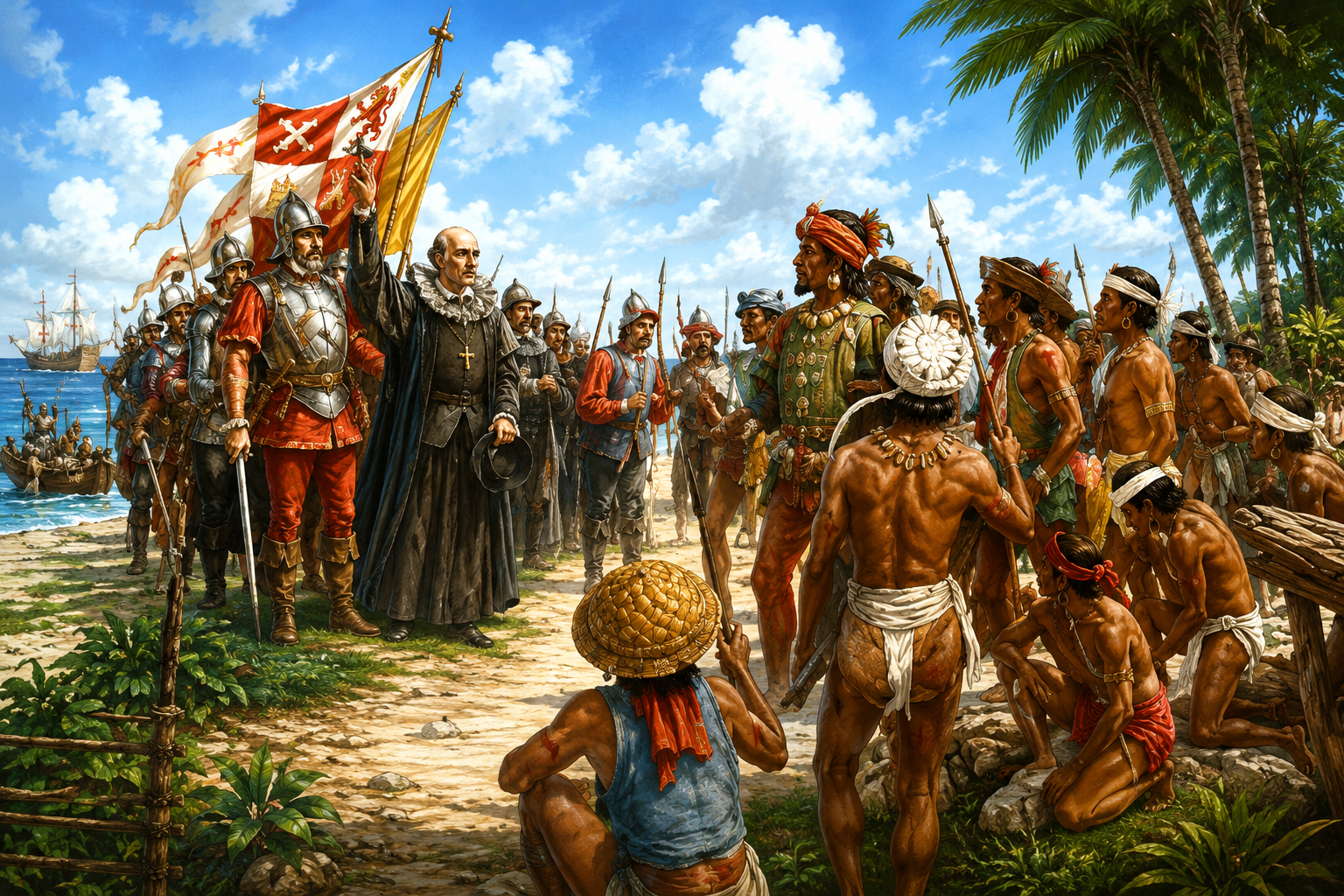
Ask a hundred Filipinos what makes a Filipino a Filipino, and you will likely get a hundred different answers — hospitality, resilience, family, faith, humor, an uncanny gift for finding joy in hardship. Ask a hundred more, and darker answers will surface too: a fatalism that shrugs at misfortune, a habit of measuring themselves against foreigners and coming up short in their own eyes, a suspicion of the next province that borders on hostility. Both sets of answers are true. Neither tells the whole story on its own.
This four-part essay is an attempt to tell that fuller story — not by cataloging Filipino traits as though they simply exist, the way eye color or height exists, but by asking where they came from. A people’s character is not accidental. It is built, layer upon layer, from the specific things that happen to them over specific centuries, under specific rulers. For the Filipino, those centuries were largely colonial ones: 333 years under Spain, nearly half a century more under the United States. To understand the Filipino today without reckoning with those years is to admire a house’s furniture while ignoring the foundation on which it was built.
This essay draws on historical record as much as personal reflection — the documented mechanisms of colonial administration alongside the lived, inherited patterns still visible in Filipino life today. Where the two meet is where this essay lives.
Part One lays that foundation, tracing the Filipino from a people already possessed of their own culture and governance before any galleon arrived, through the long violence of Spanish rule, to the betrayal that followed when a nation Filipinos had mistaken for an ally simply became their next colonizer.
Part Two turns to what survived — and what may have even been strengthened — through all of it: the hospitality, the resilience, the family loyalty and communal spirit that colonization tested but did not break.
Part Three turns to the cost — the fatalism, the regionalism, the colonial mentality that took root during those same centuries, planted deliberately by rulers who profited from a people divided against themselves and unsure of their own worth.
Part Four brings both halves together, arguing that the strength and the wound were never separate stories. They came from the same three hundred years, visited on the same people, and they live on, side by side, in the same national character today.
The writer does not pretend to have the final word on Filipino identity — no single essay could. But for a people whose history has too often been written by outsiders, and too rarely examined by themselves, even an incomplete reckoning is worth attempting. As you read what follows, you might find it useful to ask the same questions of your own family, your own province, your own habits of thought — because the history in these four parts is not abstract. It is, in some quiet way, still writing itself through each of us.
Understanding the wound is the first task. What a Filipino chooses to do with that understanding — for himself, his family, his country — is a separate reckoning, for another time. But understanding why we are the way we are remains the first step toward deliberately deciding who we choose to become next.
What Do Filipinos Need to Realize (1)
(1st of 4 parts)
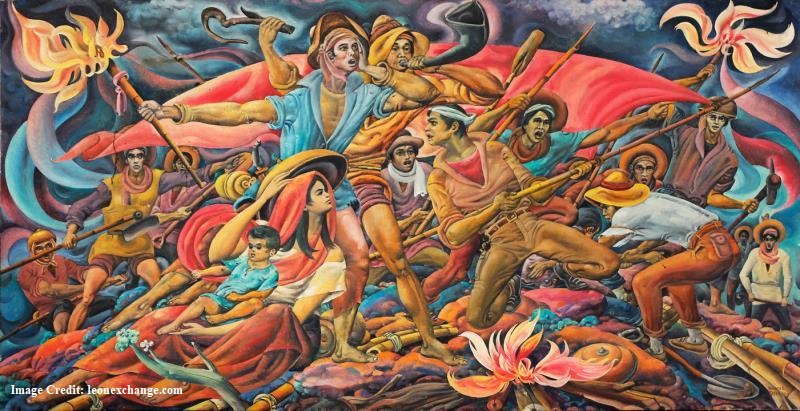
If we, Filipinos, think that our leaders by themselves could deliver us to the proverbial “promised land”, then we are gravely mistaken. If we think that among them is a messiah who could bring about the socio-political and economic reforms needed to make our country progressive and peaceful, then we are hallucinating.
It is not because nobody among them is qualified and capable to lead the Philippine to greatness. It’s just that nation-building doesn’t work the way we think it does – that it can be done single-handedly by whoever we elect as President.
That actually is one (probably the worst) of our major problems as people – the mindset that the leaders we elect have magic wands they can wave to solve all of society’s ills and all of our nation’s problems. This is the prevailing belief among Filipinos. We pin our hopes for a brighter future on our leaders. We expect them – the governors of our provinces, the mayors of our towns and cities, and the captains of our barangays to solve all of our problems. We expect them to weave their magic and cast their spell then when the smoke dissipates we suddenly live a better life. We, think of our congressmen and senators as witches and wizards who through their out-of-this-world powers could make our country a better place to live in. We think that our President is Ironman and the members of the cabinet as the rest of the Avengers who could slay all of our nation’s Thanoses. Well – they are not.
It’s time to wake-up. We need to realize that those elected (and appointed) politicians and leaders manning the executive, legislative, and judicial branches of our government are not superheroes. They don’t have superpowers. They cannot solve all of the nation’s problems by themselves. They need our support as citizens. Each citizen – rich or poor, professional or not – has a role to play. Each of us should contribute to nation-building.
What can ordinary citizens do to help make the Philippines a better nation?
Let us begin by not selling our votes during elections.
We expect too much from our government yet we are not voting for the best and most qualified among those seeking public office during elections. Instead, most of us write in the ballot the names of the candidates who are willing to buy our votes.
Vote-buying is an open secret in our country. It is freaking rampant. It has seemingly become the norm. It’s making the electoral process lost its essence. Leaders are elected not on the strength of their qualifications, abilities, and platform of government but on the power of the money they are capable of paying each voter who would promise to cast their votes for them.
On the eve of an election day, bidding wars begin. Once candidates get the information that their political rivals offer a certain amount for each voter, they will likely double that. Starting price is usually P500. Then candidates will try to maneuver until the price becomes P1000 per vote. The desperate among the politicians would sometimes coughed up P2000 (or even more) for each voter.
Would elected officials admit that they are guilty of vote-buying?Of course not. So, we could only wonder how many percent of our elected officials literally bought the positions they are currently occupying.
Stopping this culture of vote-buying and selling is difficult but it has to be done. One thing that we need to realize is that the leaders we put into office should have the moral ascendancy to lead. It is difficult, if not impossible, to look up to leaders whom we know cheated their way to their offices. They are not credible as leaders. We could not apply the principle of “public office is a public trust” when we know that the persons occupying public offices “bought” their mandate. These scheming politicians feel that the office they are occupying is their “private property” because they paid for it. They can do therefore as they please and their constituents cannot and (shouldn’t) complain because they have been paid.
Those who thought that they duped the politicians by taking the money they offered to them are wrong. They were so happy with that P500 (or P1000… make it P2000) which they received. Such amount is nothing as compared to the millions of pesos they will get when the politicians dip their dirty hands into the coffers of government. The money those politicians use to buy votes are considered an investment. Once they get elected, they would make sure that they will get the return of their investment… with the corresponding interest.
Then we complain about how our government is performing. What kind of performance would we expect from politicians to whom we awarded the mandate to lead not because they are qualified and capable but because they have the money to buy votes?
As Thomas Jefferson puts it, “The government you elect is the government you deserve.”
This is what every Filipino need to realize. Suffrage is not just a right but a moral obligation as well. It’s not for sale. Don’t reason out that you’re selling your votes because someone’s buying. “It takes two to tango.” Both vote-buyers and vote-sellers are guilty of this wrongdoing.
Don’t expect the politicians to stop buying votes. They would never do that. Politicians will do everything to ensure they would get elected and have the power they crave so much to have. It is not public service they are thinking of when they ran for elective positions. Power, as they say, is addicting. They want it so badly and on top of that, they salivate so much for the accruing benefits and the opportunities that they would get once they are in position. And only those who were born yesterday don’t know what benefits and opportunities are those.
Reading Between (and Beyond) the Lines of Espinosa and Dayan
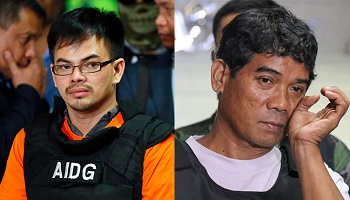 When finally the long arms of the law caught up with them, Kerwin Espinosa, a big-time drug lord from Eastern Visayas, and Ronnie Dayan, Senator De Lima’s driver-lover, were made to appear in the Senate and the House of Representatives, respectively. The upper and lower chambers of the Philippine Congress are currently conducting congressional inquiries related to the government campaign against illegal drugs.
Both Espinosa and Dayan are believed to be holding vital information about the illegal drug trade in the Philippines thus they are regarded as key witnesses in the congressional inquiries. Their eventual capture and appearance in the Congress hearings were considered as welcome developments.
Espinosa testified in the Senate on November 23, 2016 and Dayan in the House of representatives the day after. Both of them opened the proverbial “can of worms.” Many of the things they said may already be common knowledge but hearing them directly making the confirmations was demoralizing, to say the least.
Espinosa, who probably was still smarting over his misfortunes and still trying to cope with the tragic death of his father, named policemen and high ranking PNP officers involved in the illegal drug trade. He provided shocking narratives of how the police in his areas of operation in the Visayas turned a blind eye on his illegal activities in exchange for millions of protection money from him. In addition, he divulged that even the policemen themselves were peddling drugs. But what may be considered as his biggest revelation was Senator De Lima receiving drug money from him.
But while Espinosa was visibly irate for those accused of murdering his father while in prison were also present in the hearing, Dayan was seemingly the opposite. He appeared to be relaxed and was in good spirits. Contributing to that was perhaps the fact that humor was interspersed in the manner that the hearing in the House of Representatives was carried out.
There were two key points made by Dayan in his testimony. Firstly, he confirmed that he was indeed, Senator De Lima’s lover and that they had an affair for 7 years. Lastly, he admitted receiving money from Espinosa in behalf of the senator.
Now, what do we make out of the testimonies made by Espinosa and Dayan? What’s there between (and beyond) the lines of the depositions they delivered?
Reaction to the secrets Kerwin and Ronnie revealed differ. Not surprising anymore is the fact that opinions and views expressed by both the ordinary citizens and their leaders depended on which side of the political fence they are standing.
The so-called “yellow brigade,” members and supporters of the Liberal party and their allies who are perceived to be anti-Duterte and would understandably oppose the programs and advocacies of the incumbent President, came to the rescue of the beleaguered lady-senator.
On the other hand, the ones championing the drive of the government to eradicate the country’s drug problems, find more reasons to grill and subject to unwarranted ridicule the human rights advocate turned senator.
Dayan corroborated Espinosa’s claim that Sen. Delima accepted drug money. That’s the cake. The icing was his full disclosure of their affair that has been circulating in the rumor mill for the past years.
The gossip-hungry nation seemed to have forgotten about the cake and feasted merrily on the icing. The icing was so sweet that it even appeared to have gotten the better of the lawmakers who were conducting the hearing. During the said hearing, the members of the House of Representatives focused so much on the details of the love affair between the lady-senator and her former security aide-driver.
The real issue is how true is it that the former Chairperson of the Commission on Human Rights and Justice Secretary accepted drug money. Serious accusations indeed. That is what really matters and should be the main focus of the inquiry.
As to her culpabilities emanating from her past romantic affairs with Dayan (and a certain Warren Cristobal) is up to the members of the Senate Ethics Committee and the Supreme Court. If found guilty of wrongdoings she could be kicked out from the Senate and might be disbarred on account of immorality. She could even go to jail if adultery can be charged against her.
Those supporting Senator De Lima were quick to bring attention to the inconsistencies in the affidavits executed by Espinosa and Dayan. They mentioned in particular the conflicting dates as to when Espinosa gave Dayan the supposed drug money.
Do inconsistencies in the dates and time in the affidavits of Espinosa and Dayan make their testimony false? When two persons met and they cannot identify the exact time and date they did so does it mean that they did not actually meet?
While the dates may be conflicting, both men acknowledged that money changed hands…that Espinosa gave Dayan a certain amount and Dayan confirmed that he received it…and that the money landed in Senator De Lima’s coffers.
Experts believe that Espinosa and Dayan are holding their cards close to their chests. They have not divulged everything they ought to say for reasons only them know. But as it is, their testimonies have confirmed that drug syndicates have already infiltrated the different branches of the government and the ranks of the Philippine National Police. They have, indeed, corrupted the government officials and police officers.
Espinosa’s testimony in particular have left the following questions mercifully begging for answers.
Why did it take this long before the government addressed the illegal drug trade? What have the governments in the past done to curb the problem?
If any of past governments would claim they have done something then they have to explain why the number of drug-dependent Filipinos have reached more than 3 million and why the number of drug traders increased by the thousands .
The more perplexing question is, “How come that drug dealers could continue with their drug trade even if they were behind bars?” Senator De Lima has a lot of explaining to do. She really need to explain why right under her nose, as Secretary of Justice who’s in charge of Bureau of Corrections, the drug trade flourish in the country’s penitentiary. The senator also needs to disprove the claims made by convicted drug lords that she received money from them.
Conflicting may be are the details in the testimonies of Espinosa, Kerwin and the high-profile inmates in the national penitentiary but what those accusers are saying are too difficult to ignore.
Another question is, “How deep has the drug syndicates penetrated the country’s police force and the different branches of the government? How many police officers, judges, senators, congressmen and local and national officials are protectors of drug syndicates?
General Dela Rosa, the head of the Philippine National Police, cried in exasperation upon realizing during that Senate inquiry how much credibility his organization have lost.
Espinosa’s revelations have shown how complicated the drug problem in the Philippines is and how full is President Duterte’s plate.
If only the government’s drive against drugs be viewed using not only the lens of extra judicial killing.
On The 2016 Elections (last of a series)
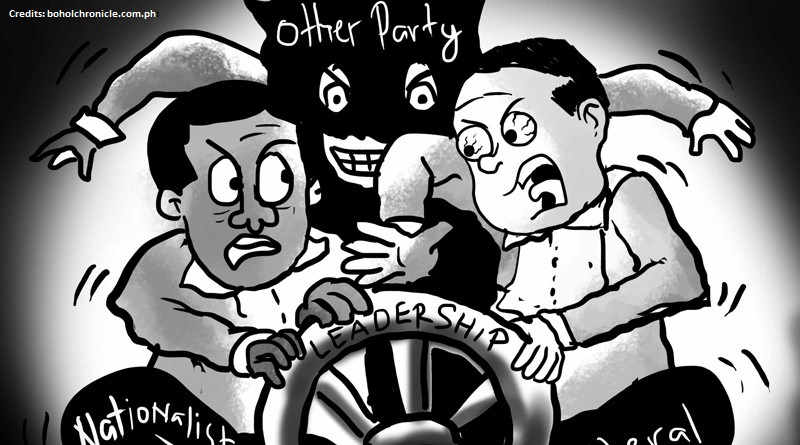
The 2016 Elections presents another opportunity for change. Not that His Excellency President Benigno Aquino III did not do well as a President. It’s just that an election presents a chance for a fresh start, an opportunity to rectify mistakes outgoing leaders may have committed during their incumbency and continue the programs they have implemented which are proven to be beneficial.
Under Noynoy’s watch the Philippines experienced a steady economic growth from 2010 to 2015. The battle the Aquino administration waged against graft and corruption is by all means serious. It resulted to the hospital arrest of a former President, netted the impeachment of a Chief Justice, forced the resignation of an Ombudsman in order to avoid impeachment, and led to the conviction and indictment of high-profile individuals, including three (3) incumbent senators. However, what may go down in history as the best legacy of the current administration are not economic gains nor the weeding out of corrupt government officials but a bold educational reform… the introduction of the K to 12 program.
The Aquino-led government also made miscalculations and had misgivings. It is not perfect, neither were past administrations. History will judge the present administration’s performance, it will decide whether or not Noynoy can be ranked among the best presidents Philippines had.
If the Liberal party (where Noynoy belongs) could have their way they would want their anointed candidate (Roxas) to win the presidential derby so he could continue the programs already in place. But Roxas’ fate, and those of the other candidates, are in the hands of the Filipino electorate.
No matter how great the accomplishments of Noynoy as president it is not a guarantee that the candidate he endorsed (Roxas) would be chosen as his successor. As a matter of fact, Roxas has not topped any of the election surveys held in the past months making many believe that it would be difficult for him to win. If the Filipino voters choose to hold Noynoy accountable for his booboos as president and turn a blind eye on his accomplishments it now becomes a question of whether Noynoy’s endorsement is a bane or a boon to Roxas’ candidacy.
The Filipinos are hard to please. They tend to remember the few mistakes people in position commit and forget about their many accomplishments. The most difficult part is that Filipinos demand too much from their leaders but they fail to perform their civic responsibilities.
So, it’s really time to change…time for Filipinos to change the way they choose leaders and time for them to change their perspectives about nation building. The 2016 elections present an opportune time to do exactly that.
One of the tragic flaws in the Filipino character is pinning their hopes on a leader to make their nation a great one. After all these years they haven’t realized that nation building is a shared responsibility between leaders and the citizenry and that, in reality, the citizens carry the bigger chunk of the burden because they are the ones choosing the leaders who will hold the reins of government.
The Filipinos refuse to be accountable. So, for the forthcoming presidential elections they have the same mind set. They still subscribe to the notion that the president they will elect must singlehandedly solve all the nation’s woes. The Filipinos blindly cling to the belief that the head of the executive branch of the government is a supernatural being who can weave magic and in a snap of a finger eradicate all of their problems and provide everything they need.
Whoever becomes the next president will be considered the anointed messiah who must work the miracles the Filipinos are expecting…no traffic, no power outages, more jobs, higher salaries, lesser taxes, subsidized education, more school buildings, and what-have-you. The elected president must deliver. He/she must curb criminality, end insurgency and eradicate poverty in the shortest possible time.
Who among the presidential hopefuls can do all the aforementioned? No one! Nobody from among Binay, Duterte, Poe, Roxas and Santiago can perform the miracles the Filipinos are expecting…unless they do their part…unless they contribute what they ought to.
A leader may be brilliant but if the citizens will not do their share in nation building then peace and prosperity will remain just a dream. It’s not demanding too much form the citizens. They only need to perform their civic responsibilities. That’s all they need to do.
On The 2016 Elections (2nd of a series)
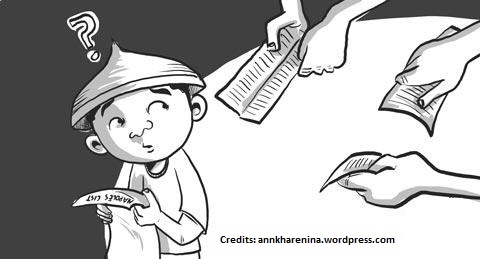
How many of the country’s incumbent local and national officials can come forward and with a head held high say that they did not buy their way to victory?
The painful truth is that elections have turned out to be a business venture. Politicians are like businessmen who if they hope to win must be willing to make an investment.
How much should a politician invest? Do a rough estimate.
According to the Commission on Elections, there are roughly 56.4 million voters in the Philippines for the 2016 elections. Republic Act 7166 allows campaign expenses of P10 per voter for candidates for President and Vice-president and P3 for other candidates. But those who were not born yesterday know that candidates for national and local elections spend way much beyond what the laws allow.
There is a bill pending in the House of Representatives seeking to increase the allowable campaign expenses. If approved, presidential candidates will be allowed to spend P50 (vice-presidential and senatorial bets P35 and local candidates P30) for each voter.
But beyond what the statutes allow, a candidate has to dig deeper into his pocket if he hopes to win. Vote-buying is no longer a secret making this writer say that election now is nothing but a business venture. It is no longer the best and most qualified candidates getting elected but the ones who have enormous financial resources.
A candidate willing to pay at least P500 for every voter is likely to win. The percentage for winning gets higher if the one seeking an elective position has the capacity of making that amount higher…like P1000 for each vote.
Now, do the Math if you wish to know how much a candidate needs to prepare for his election bid. Include the amount needed for campaign advertisement, salaries of campaign leaders per geographical unit (province, town, city, barangay, districts or zones) depending on which position being sought, and other miscellaneous expenses. Don’t forget to add the amount a candidate is willing to pay for each voter (multiplied by the number of voters.)
For the millions of pesos those candidates extricate from their coffers what do they wish to get in return?
It’s not difficult to determine what drives people to run for election. It could be A, B or C with A being a political position is a business venture for which they expect to get returns for their investments and a whole lot of profit (How? Use your imagination!!!), B it being an opportunity to wield power allowing the one who holds it to protect personal and family interests and to advance other personal motives and agenda, and C love for public service.
The citizens who care are hoping it’s the C. For those who sell their votes it doesn’t matter whichever.
How Colonialism Shaped the Filipino Character (1st of 4 parts)
To better appreciate who and what the Filipino is, one has to decipher the Filipino psyche and identify the factors that contributed to its formation. An in-depth analysis of the character of this people would require a thorough examination of their history and racial origins. Filipinos cannot be figured out by leaning on stereotypes or by viewing them through a supremacist lens.
Those who claim to know Filipinos simply by piecing together information from the internet are gravely mistaken. Those who form assumptions after reading a news item or two — without even checking the credibility of the source — should hold their horses.
The pre-colonial Filipino belonged to a race whose culture and gene pool were already a mix of Negrito, Indones, Malay, Arab, Hindu, and Chinese influences, a spirit shaped, for better or worse, by the geography of the islands and their climate. A genetic and cultural identity was already flourishing in this part of Southeast Asia before the Portuguese explorer Magellan and his Spanish expedition landed in Mactan in 1521. A national identity was still evolving when the Spaniards, led by Miguel Lopez de Legazpi, returned in 1565 to establish a stronghold in what the Europeans would later call “Las Islas Filipinas.”
Long before any galleon touched these shores, the islands were already organized into barangays — communities governed by a datu, bound by custom rather than written code, where land and harvest were often held and worked in common. Women held real standing in that world: many served as babaylan, ruling as spiritual and healing authorities in their own right, in a system where leadership did not automatically bypass them the way it would under the friars and the patriarchy they imported. Mutual aid between neighbors — the impulse that would later be called Bayanihan — was already a fact of daily life, not a virtue invented by hardship. The Filipino, in other words, arrived at the colonial encounter already possessing values worth protecting, not empty of them.
The 1989 discovery of the Laguna Copperplate proved — or affirmed what historians had long suspected — that a well-organized form of government based on customary law existed in the Philippines long before the Spaniards arrived [1]. The pre-colonial Filipino was no lost soul waiting to be rescued from the Dark Ages. If anything, it may have been the other way around: the arrival of the Europeans could just as easily have disrupted a culture already on its own path of development, for better or worse. A people was already becoming something, and that becoming veered off course the moment Western colonizers succeeded in subduing them.
For 333 years, the Filipinos lived at the mercy of the Spanish conquistadors. Scattered revolts broke out across the country to overthrow the invaders from the Iberian Peninsula, but each was crushed in turn. The most significant of these was the uprising led by Francisco Dagohoy in Bohol, which lasted more than 80 years (1744–1829). These early attempts to overthrow Spanish rule failed for three reasons: they lacked a unifying national character, were confined to limited geographic areas, and were driven by narrow, localized grievances rather than a shared national cause [2]. It was not until the 1896 revolution that Filipino resistance finally succeeded, leading to the declaration of Philippine independence in 1898.
That mercy, it must be said, was never absolute. Spain’s writ never fully reached the Muslim sultanates of Mindanao and Sulu, nor the highland peoples of the Cordillera — both of whom resisted colonization throughout, and in the case of the Moro sultanates, arguably never fully surrendered at all. What follows in this series, then, is largely the story of the lowland, Christianized Filipino — the majority experience, but not the whole of it. The character traced here is real, but it is not universal, and any honest reckoning with what colonization did to “the Filipino” should say so plainly.
But independence was short-lived.
The Americans, whom the Filipinos believed had come to help them build a republic, had other plans. They persuaded Emilio Aguinaldo, leader of the revolt against Spain, that America had no interest in claiming a colony — that they had come only to free the natives from Spanish rule. In reality, the Treaty of Paris of 1898 saw Spain cede the Philippines to the United States for $20 million, worth well over half a billion dollars today — one of the terms the two powers negotiated and concluded without so much as consulting the Filipino people. The Filipinos watched, powerless, as Spain — too proud to surrender to the very “Indios” it had enslaved for centuries — surrendered instead to the Americans.
Would the Americans really have paid the Spanish that enormous sum and walked away with nothing in return? Hell no — that’s what any geopolitical expert would tell you. America, an emerging world power at the time, needed a foothold in the Pacific, and the Philippines was the ideal prize. So, contrary to the promise Aguinaldo later admitted he had naively believed, the Americans declared the Philippines a territory ceded to them by Spain.
This betrayal was a bitter blow to the Filipinos. After centuries of resisting Spanish domination, they had finally hoped to chart their own destiny as a nation — only to find themselves facing a new colonial master. The search for freedom was far from over.
When the Spaniards withdrew, the Filipinos took up arms against a far more powerful American force. It was David against Goliath — and in this telling, Goliath won. But it did not end for lack of trying: the Filipinos stood their ground and fought as fiercely as they could, gallantly resisting for three long years before losing the Philippine-American War (1899–1902).
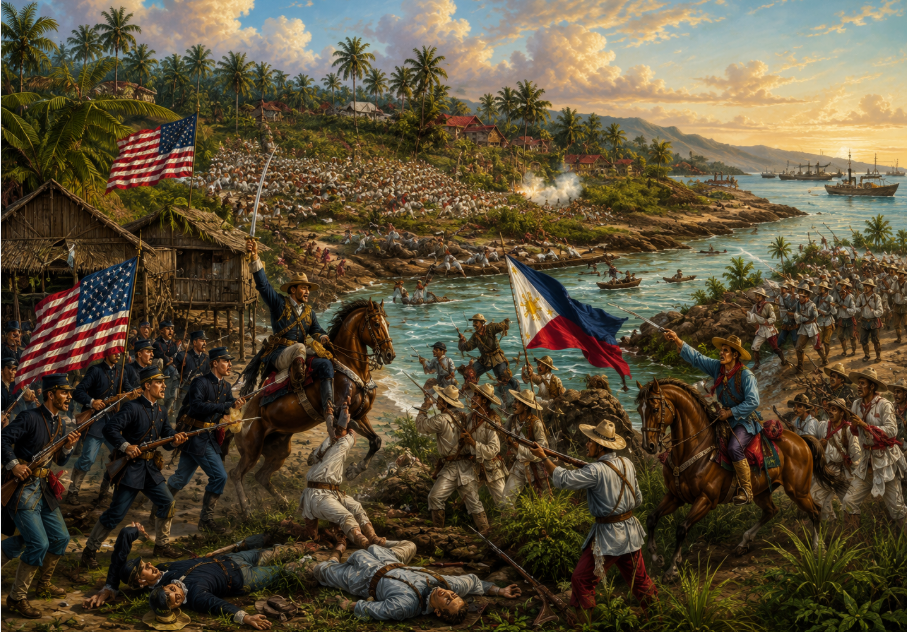
And so the Philippines changed hands once more — from the Spanish yoke to the American.
Once in control, the Americans moved quickly to make sure no second uprising would follow the first. Laws like the Sedition Law of 1901 — which imposed death or long imprisonment on anyone who so much as advocated independence, even by peaceful means — and the Flag Law of 1907, which banned the display of the Philippine flag anywhere in the country, extinguished what little remained of the nationalist fire the revolution had lit [9].
As the Philippines transitioned from Spanish to American rule, elements of both cultures became woven into Filipino society, leaving a deep imprint on the nation’s values, traditions, and even its gene pool. The policies each colonizer enforced in turn undeniably shaped the evolution of the Filipino character.
The 20th century saw the rise of a distinct post-colonial Filipino identity — a fusion of Asian and European influences, shaped by a history of colonization and hardened by resilience in the face of frequent natural disasters. This character continues to evolve even now, blending the past with contemporary influences.
The parts that follow will trace exactly that transformation — the hospitality, resilience, and close family ties that colonization tempered rather than created; the fatalism, regionalism, and colonial mentality it left behind as open wounds; and, in the end, the paradox of a people whose greatest strength and deepest self-doubt trace back to the very same three centuries.
How did these centuries of colonization shape the Filipino character? How did Spanish cruelty and American betrayal mold the values and traits of the Filipino people? These questions remain central to understanding what it means to be Filipino today.
___________________________
[1] philippinestudies.net
[2] asianjournalusa.com
[3] http://www.thefilipinomind.com
Notes: Images used were taken from the following sites:
lifestyle.inquirer.net
angelsinasphere.wordpress.com
http://www.boundless.com
How Colonialism Shaped the Filipino Character (2nd of 4 Parts)



 M.A.D. L I G A Y A