Blog Archives
Of Stories and Storytelling
I was once asked to be one of the judges in a “short film” competition. When the board of judges convened to discuss the results, one member was surprised by my choice of winners. To my chagrin, he asked me this question – “Do you really know what a story is? I was unsure if he was kidding then, especially since his list of winners is completely different from mine.
That question made me reflect. Do I really know what a story is?
Of course, I do.
That surprising comment inspired me to write something about stories and storytelling.
It gave me chills when I got to this part of this article. I imagined Montressor knocking off the neck of a bottle of wine and offering it to Fortunato as they descend to the catacombs of the Montressors with the intention of inebriating the latter so he could consummate a fatal revenge on him because of past insults.
Let me begin by saying that I love stories… like Edgar Allan Poe’s “The Cask of Amontillado,” a part of which I described in the previous paragraph. I am so fascinated by them. Very likely that my having earned the degree Bachelor of Arts in English and my having completed the academic requirements for the degree Master of Arts in English contributed to that. The two main fields of study (major) in both degrees are English language and literature, but more on literature. We studied, among other things, the different forms of literature – prose and poetry, the body of literature of selected countries, literary criticism, philosophy of literature, and creative writing. Just imagine how many stories I had to read when I was enrolled in subjects like Short Stories, Novels, Drama, and Shakespeare. To enhance my understanding of the stories I was reading then, I had to watch their screen adaptation (especially of Shakespeare’s famous plays) if they happened to be available. In short, I became interested in stories, not as a hobby. I studied them. I taught Literature and Literary Criticism when I was teaching in the Philippines. By the way, I also worked so hard to become a writer. I write dramatic monologues, short stories, novels, and plays. Check my website for some of my works – madligaya.com.
I am so fascinated by the art of knitting together the elements of fiction within the frame of a plot – of how to make sure that the most important element of fiction – conflict – is laid down clearly and passes through exposition, complication, crisis (commonly known as climax), falling action, and resolution. Gustav Freitag, a nineteenth-century German critic, laid this down in what came to be known as the Freitag Pyramid. Crisis – or climax – is at the top of the pyramid. The exposition and complication constitute the rising action that ultimately leads to the crisis. Thereafter is the falling action, which leads ultimately to the resolution or the denouement. Some stories (movies) abruptly end when the climax is reached. In cases like this, the crisis implies a resolution. The resolution is left for the readers to deduce.
When a series of events is not laid down in the conflict-crisis-resolution arc, they are but just that – series of events, not a story. Conflict, crisis, and resolution (call them together as a plot) are the necessary features of a story. To be classified as a story, a narrative requires more than setting, character, theme, point-of-view, tone, and style. No matter how short or long a story is, there should be a conflict, conflict that progresses from the time it is revealed (exposition), becomes complicated, reaches a climax (referred to as crisis earlier), slows down to a falling action, and makes a full stop at the juncture called resolution. Am I right? As I articulated earlier, a writer may stop raising the action right after reaching the climax to let readers imagine how it ends or create the kind of ending they desire.
In movies (or films), cliffhanger endings have become so popular. In cliffhangers, it can be argued that the story does not immediately end after the climax but somewhere between the falling action and the resolution. There was no clear resolution. It can be argued also that cliffhanger endings are applicable only in the case of standalone movies, not serialized ones like Star Wars, Avengers, and the like. When for example, Thanos (in Avengers: Infinity War) snapped his fingers, and some of the Avengers were reduced to dust, we were left hanging and wondering why all those heroes we used to see alive and victorious in previous Marvel movies died or disappeared. But it’s not a cliffhanger ending per se because we know that that movie is the 3rd part of the main 4-part Avengers series. We know that the last part of the series is forthcoming. All the Avengers movies and the other standalone Marvel hero movies in previous years are part of one whole story.
You might ask, “Where are the events in Avengers 3 located in the Freitag (plot) Pyramid?” It’s in the complication (or rising action part), far away yet from the climax. Your next question might be – “Which part of Avengers 4 is the climax?” It started when Tony Starks snapped his fingers and said, “I am Iron Man,” culminating at the moment Thanos slowly turned to dust. All the events that followed are parts of a very clear falling action and resolution.
What do you think? Am I right not to consider the endings of serialized stories as cliffhanger endings (because of the imaginary “To be continued”)?
An example of a movie with a climax and a falling action but the resolution was unclear, and the audience needed to decide what to think about it is how the movie “Don’t Breathe” ends. (I hope you have watched that movie, too… and in case you haven’t, I am sorry if this part of my article will now serve as a spoiler. Just skip reading the rest of this paragraph and proceed to the next one, in case you plan to watch the movie.) The climax of that movie came at exactly the 1:20:43 mark. The blind man, after Rocky, hits him repeatedly in the head with a crowbar, falls from the 1st floor of the house to the basement. Part of the falling action shows Rocky coming out of the house alive with the blind man’s money. Later she could be seen with her sister leaving Detroit for California. The movie ends showing that the blind man is alive. He survived. And I was left formulating my own resolution… or is a sequel (or a prequel) being planned?
I used to teach Literature, Creative Writing, and Literary Criticism in the Philippines. One of my students asked this question: Should all stories conflict?
If you were me then, how would you answer?
Can a series of events stitched up together in any form be considered a story without a central conflict?
From Janet Burroway’s “Writing Fiction: A Guide To Narrative Craft”:
“And the story is a form of literature. Like a face, it has necessary features in a necessary harmony… Every face has two eyes, a nose between them, a mouth below; a forehead, two cheeks, two ears, and a jaw. If a face is missing one of these features, you may say, ‘I love this face in spite of its lacking nose,’ but you must acknowledge that in spite. You can’t simply say, ‘This is a wonderful face.’
The same is true of a story. You might say, ‘I love this piece even though there’s no crisis action in it.’ You can’t say, ‘This is a wonderful story.’
Fortunately, the story form’s necessary features are fewer than a face’s. They are conflict, crisis, and resolution.
Conflict is the first encountered and the fundamental element of fiction, necessary because, in literature, only trouble is interesting.”
Let the foregoing paragraphs be my answer to the question, “Should all stories have conflict?”
If a narrative has no conflict, don’t call it a story. Call it a face without any part that should be there – eyes, nose, mouth, cheeks, or forehead.
On Writing Poems
 It’s challenging, to say the least.
For me, the literary genre most difficult to produce is the poem. Putting together the elements of meter, rhyme scheme, sound and imagery is not easy. It would take more than creativity to express thoughts and feelings using the most appropriate figures of speech.
My best poems are written in Filipino. I’ve been trying to write good ones in English but I have to admit that it’s a mighty struggle. I’m not sure if for example the following quatrain makes sense:
Whisper your woes on the flicker
Cover it with dried leaves and twigs
Whisper till the flame grows taller
Let it burn your anguish and grief
I have no problem with free-verse but my dream is to walk gloriously the “rhymed” and “metered” path while holding the hands of either Erato or Euterpe.
One time I tried to mix Greek mythology and poetry and this is what came out:
Writing stories is just as difficult because mixing in a bowl the elements of fiction within the bounds of the plot is not a walk in the park. But fiction writers have the luxury of using a lot of pages to serve their purpose. Leo Tolstoy needed more than half a million words for his novel “War and Peace.”
Conversely, a poet has a single page, sometimes not even the whole of it, to capture vivaciously and vividly the emotions and thoughts pervading within or around him. The Japanese, through their Haiku, would do it in a single-stanza poem with three lines consisting of a total of 17 syllables.
What adds difficulty when poets thread the rhyme zone is that they can not walk the path of sadness while wearing a smile. Neither can they frolic in the lake of happiness while riding the canoe of sadness.
Pain begets pain, joy engenders joy. This is seemingly the prevailing mood in the realm of poetry. Rare are the crying clowns who can masterfully inject sadness into the veins of their poems while they are cracking a joke.
The melancholic lyre sounds best when played by a poet who in one way or another licked some emotional wounds sometime ago in a desolate room. On the other hand, the trumpet of merriment can best be blown by a poet who has journeyed the clouds of ecstasy.
But life is a masterful musician who teaches poets to play both the melancholic lyre and the trumpet of merriment. Life enables a poet to play any of the said instruments at any given time.
If a poet intends to paint his canvas with gloom then he can easily prick an old emotional wound until it bleeds sadness. He can walk down memory lane and revive the pains inflicted by either a person or an event he would rather forget. That’s not masochism but rather a form of sacrifice, the poet ought to feel what he intends to write.
Conversely, it is from the same memory lane where the poet could revisit the happiest moments in his life if it is the lovely colors of joy he wants to be seen in his canvass.
That‘s the beauty of being a poet. Poets can switch with ease to any emotions that they desire. Like an actor in a theater, crying one moment then in a jiffy burst into laughter.
Sometimes poets get misconstrued. When a poem tackles sadness and regret for losing someone the readers would think that the poet still loves and wants that someone back. Worse, the person who felt alluded to may either be excited or feel vindicated.
Lest we forget that poets are men of arts who write for art’s sake. Yes, they draw inspiration from someone or something. They need a motivation in the pursuit of their art. But as it is, the end is the art and the motivation is but the means to achieve that end.
And what is the reward the poet receives for writing a poem? The reward is the poem itself. No reward can be sweeter than a poem that artistically conveys the joys and sorrows of the poet.
As to whether or not the poets who write a poem of gloom and bewail are sad and regretful, only them know. Who knows it may be Melpomene who visited them in their dreams.
Ashed
The fire ceased to burn –
Doused with indifference
Drenched in disregard
I sifted through the fireplace
I lovingly built in your heart
Combed it for dying embers
I sifted through and through.
Hoping to find a flicker,
Hoping to blow upon it a whisper
And cover it with dried leaves and twigs.
Hoping the flame grows taller,
And burn my anguish and grief.
I sifted more and more.
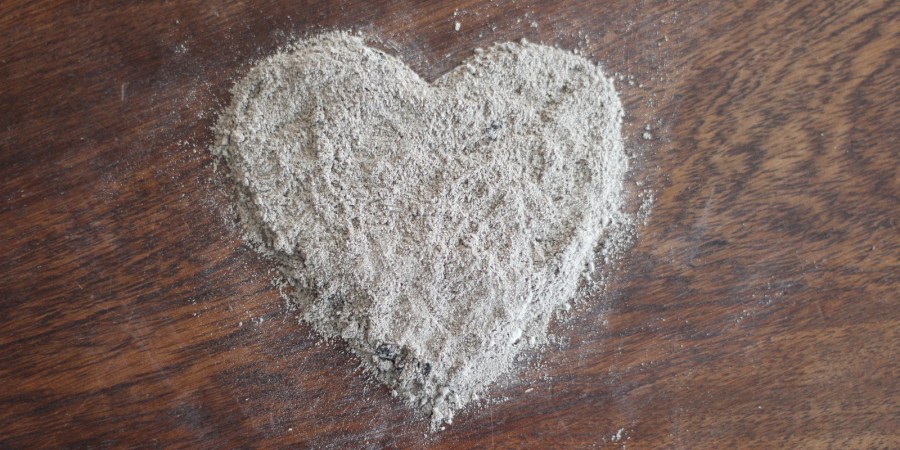
There was nothing but ashes –
Ashes of guilt and regrets –
Ashes that the wind refuse to blow away.
Hindi Magmamaliw
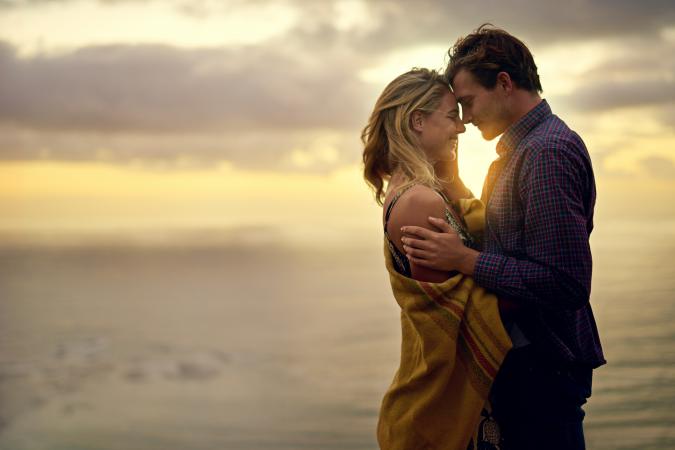 Taludturan ay muli kong lalakbayin
Pintig ng puso’y pagtutugma-tugmain
Talinhaga nito pilit mong talusin
Sa kanyang kariktan sarili’y lunurin
Mga saknong sa tayutay hahabiin
Maraming pagwawangis dito’y gagamitin
Hindi dahil nais isip mo’y guluhin
Nang ito’y maarok puso ang gamitin
Damdaming dumaloy sa bawat taludtod
Ay laman ng pusong sa pantig tumibok
Kung isip ang gagamitin ‘di mo maaarok
Tanging sa puso damdami’y iindayog
Mata mo sana’y ipikit aking giliw
Sumayaw tayo sa kumpas ng aliw-iw
Sabihin man nilang ako’y isang baliw
Pag-ibig sa iyo’y hindi magmamaliw
AKO’Y LAYUAN
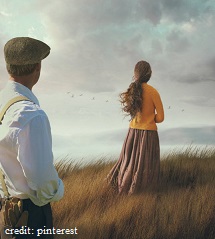
Humakbang kang palayo sa akin
Kinabukasan mo’y h’wag sirain
Pag-ibig mo sana’y h’wag sayangin
Mahalin ka’y ‘di ko pwedeng gawin
Ang maging tayo’y isang pangarap
Na ‘di kaylan man pwedeng matupad
Ang ibigin kita’y ‘di marapat
Dahil sa dusa ka masasadlak
H’wag kang lumuha, h’wag mong damdamin
Nais ko ma’y ‘di pwedeng pilitin
Masakit ma’y dapat na tanggapin
Hindi ka pwedeng hagka’t yakapin
Bakit nang dumating ka’y huli na
Hindi na malayang ibigin ka
Kung noon sana tayo nagkita
Kuwento nati’y naging masaya
H’wag ka nang sa aki’y magpaalam
Baka kasi kita pa’y pigilan
Humayo ka na’t ako’y layuan
Pagsikapan mong ako’y kalimutan
Paglayo mo’y aking daramdamin
Pagluha’y mahirap na pigilin
Matapos kasing ako’y ibigin
Tinulak kang palayo sa akin
(Mula sa kantang “Walk Away” ni Matt Monro)
ORAS
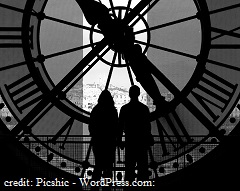
Ikaw nga ba ang simula at hangganan
Daang puno’t dulo’y hindi matanawan
Dagdag pa’y bugtong kang walang kasagutan
Napakahiwaga mong palaisipan
Ang mga paham pinilit kang sukatin
Bawat galaw mo segundo kung tawagin
Ikaw nga ba talaga’y pwedeng bilangin
Isa ka bang daanan na pwedeng lakbayin
May tangkay kang patuloy paiikutin
Pag-ikot na ‘di namin pwedeng pigilin
Pag-ikot na dapat ay aming habulin
Tunay ngang kami’y kawawa mong alipin
Sa kamay mo kagandaha’y kumukupas
Inuubos mo ang taglay naming lakas
Buhay ma’y parang dahon mong nilalagas
Sa itinakda mo’y wala kaming ligtas
Bakit kasi nagtakda ka ng hangganan
Dapat bang ang lahat ay may katapusan
Pagikot ng kamay mo minsa’y pigilan
Saya’y h’wag palampasin sa kasukdulan
Paglipas mo ay pwede bang pabagalin
Kabataa’y h’wag agad palilipasin
Kabantuga’y pagtagalin mo ang ningning
Ganda’t lakas h’wag kagyat pakukupasin
Pabalik sa balag mo kami’y pagapangin
Panahong nagdaan aming dadalawin
Mga maling nagawa ay buburahin
Masasayang sandali muling nanamnamin
Bintana ng bukas sana’y iyong buksan
Nang ang mangyayari aming matanawan
Malungkot na tadhana’y maiiwasan
Hayaang buhay sa saya matuldukan


 M.A.D. L I G A Y A