Author Archives: M.A.D. LIGAYA
Having More Time Than We Think

A dilemma confronting expatriates like me as we work and live in another country is what to do with our free time. We must decide how to spend the extra hours at our disposal, whether to use them effectively or squander them. Free time can either be an opportunity or a temptation. It presents a chance to be productive, doing something worthwhile that contributes to achieving our personal and professional goals, or it can lead us astray, luring us into mindless distractions or unfulfilling pursuits.
Understandably, the hours we spend not working are moments when homesickness or boredom could set in. Those not equipped with a coping mechanism against boredom and that intense yearning for home and beloved ones, resort to anything that can help them relax and overcome loneliness and emptiness. They find solace in entertainment, socializing, or, sometimes (and unfortunately), vices. More often than not, resorting to vices to overcome homesickness leads to more problems.
Finding a way to be productive with our extra hours is a protection against temptation and homesickness. Admittedly, that isn’t easy to do. Neuroscience and evolutionary psychology reveal that our brains are wired to seek pleasure and avoid pain. Thus, it is much more convenient for some to go out with friends and have a good time during non-working hours. The mind’s circuitry gravitates towards rewarding tasks instead of exerting more effort to do something else.
Being productive means looking for ways to use the time when we’re not working for worthwhile endeavors. Some of us use them to find a second job to earn extra income, while others use them to pursue a rewarding hobby. There are also those of us who utilize our free time for self-improvement. Of course, some expatriates also seek gratification when they are off duty. Let me clarify that using our free time constructively doesn’t mean depriving ourselves of enjoyment. We are entitled to a day off from time to time to breathe fresh air. For our overall well-being as expatriates, we need to strike a balance between work and life. But we need to draw the line between having fun and going wild.
Expatriates have different ways of using their free time effectively and efficiently, either for productivity’s sake, to protect themselves against temptations, or to overcome homesickness. Based on what I have gathered, most of my colleagues would flock to the capital city for socialization. During long weekends, a few of them would travel. Those with their families with them, of course, would spend their free time with their loved ones. But I would lie if I said that none of us unnecessarily indulged in some forms of vices, particularly gambling and drinking.
What about me? How do I spend my free time? Imagine this: I have 168 hours a week. As I sleep an average of 6 hours a night (42 hours a week), I am awake for 126 hours. My contract requires me to work 19 hours a week, spread over 4 weekdays. Let me add 3 hours to evaluate and assess my student’s performance. That still leaves me a little more than 100 hours a week. If I spend 3 hours daily on meals and snacks, that’s only 14 hours a week. Which means I still have a lot of free time. What Laura Vanderkam said in her book “168 Hours” is true: “You have more time than you think.”
I have more time than I thought. So, what do I do with it? If I am not communicating with my loved ones in my country of origin, I am either in the gym working out or outside walking. I spend an average of one hour a day connecting with my family, with longer sessions during weekends and holidays. On the other hand, I engage in all the physical activities I mentioned five times a week, each lasting at least an hour.
After doing all the other things I must, I figured I have an average of 50-60 hours a week of free time, sometimes more. Additionally, I have more free time during winter and summer breaks when the university does not require me to work, except for attending two-hour meetings at the end of a semester or when one begins. We are also required to attend graduation ceremonies two weeks before the start of each semester.
There came a time when I faced the dilemma of determining how to spend those excess hours. It wasn’t a question of whether to use them effectively or squander them. I know that I must walk the path of productivity during my free time and ensure that I don’t succumb to the enticement of a good life. That’s my mindset. I consider my extra hours an opportunity for growth, not an invitation to waste my resources and self-destruct. Expatriates, particularly those who don’t have their families with them like me, are prone to different kinds of temptations and vices.
And how specifically do I spend my free time?
Spending nights in the bar, particularly during weekends, is not my thing. I don’t enjoy wine and beer. I consider it illogical to drink a lot and then suffer from a hangover the following day. Besides, I know how much damage alcohol inflicts on human cells. I need to stay healthy, for it is difficult for expatriates like me to get sick and be hospitalized. So, I would rather stay home, read books, listen to audiobooks, or watch movies. That lifestyle appears boring, but with the many things that I could do, I have no time to be bored. No, I am not allergic to interaction. Quite the contrary, I love mingling with people, discussing anything under the sun with them. I am what psychologists refer to as an ambivert. I can switch any of my personality’s introvert and extrovert buttons as needed. I do socialize occasionally, but only with a few friends. We go out for dinner and coffee. I go to a noraebang with the same group on special occasions. But there are times when I need to switch to lonewolf mode.
I spend the majority of my free time pursuing my passion for writing. There is no better way to be productive with my extra hours than writing.
Writing has become a sanctuary for me, not just a way to pass the time, but a space where I can thrive emotionally, intellectually, and creatively. It is a refuge that protects me from the challenges of working and living abroad, allowing me to grow and reflect. In the pages of my writing, I have found peace, a workshop for my mind, and a shelter from the storms of life. Those pages shelter me from external and internal noise and help me find clarity.
There were times when writing protected me from my internal struggles. Through it, I could confront my demons and fears and transform them into meaningful and constructive expressions. I release my pain, anger, disagreement, and disappointments by writing about them. Whatever emotions boil within me, I express them creatively, through prose and poetry.
Making writing my sanctuary has not only fueled my productivity and creativity but also become a source of additional income.
Ultimately, how we choose to spend our free time plays a significant role in shaping who we are and how we grow, especially as expatriates navigating the complexities of life away from home. The hours we have at our disposal are a precious resource, allowing us to either build our lives or let them slip unnoticed.
For me, writing has become a powerful tool for personal development, a sanctuary that provides both protection and growth. But regardless of the path we choose—whether through physical activity, self-improvement, or connecting with others—the key is to make the most of every moment. We have more time than we think; with that time, we can either invest in our future or squander it. The choice is ours, and it is up to us to ensure that we walk the path of productivity, growth, and purpose, rather than succumb to temptations that may lead us astray and broke.
Stolen Kiss
This poem delves into the intoxicating power of a stolen kiss, where passion ignites a series of events that sweep both the heart and mind into an uncontrollable frenzy. The imagery builds from the subtle softness of a simple kiss to the overwhelming intensity of love’s embrace, teetering on the edge of danger and surrender. Through the thief and the captive, the poem explores the thrilling descent into the depths of desire, where the heart is both captive and free.
Edge of the Fall (Part 4)

(A Short Novel)
Light greeted my waking. It hurt my eyes. I closed them again. I felt my body aching all over. When I breathed, there was pain around my ribs.
I turned to my side and opened my eyes again, slowly.
I’m still alive. I’m not in heaven or hell, not in that mountain. I’m in a hospital room.
Two needles were stuck in my hand. Those are for the IV fluids that were hanging over the bed. I had an oxygen mask on, and it made me feel uneasy. I lifted it to check if I still needed it. When I realized I could breathe comfortably without it, I decided to take it off.
My arms were covered in bruises, and I was pretty sure my body and legs were too.
When I looked toward my feet, I noticed a woman with her head resting on the bed where I lay. It seemed she was watching over me. I wondered who it could be.
I tried to sit up, but my ribs hurt a lot. Could one or two of them be broken?
My movements awoke the woman.. She stood up and looked at me.
I knew the woman. I couldn’t be mistaken. She was the woman from the mountain. Without any hesitation, she hugged me. I was surprised, especially when she started crying unabashedly. It was awkward. I didn’t know whether to push her away or hug her back.
She was the reason I got beaten. She put me in harm’s way. Should I blame her?
Her hug tightened. At that moment, I suddenly remembered my sister. She would hug me tightly and cry, the way a woman does, whenever I confronted her about her wrong decisions.
“Dangsin-i sal-a gyesim-eul gamsadeulibnida.”
She thanked God that I was still alive. Should I also thank her for having survived the beating I got from her compatriots? Or blame her for being unable to push through with my plans.
“Jeongmal mianhae. Geugeos-eun modu nae jalmos-ieossda.”
The woman apologized, admitting that what had happened was her fault.
If you think about it, who was to blame for the beating I got? Could I blame the men who hit me, thinking I was assaulting their fellow citizen and a woman? If I had stumbled upon such a scene—a woman screaming, desperately trying to escape a man holding her tightly as they wrestled on the ground—what would I have done?
But is it my fault that it all happened because I stopped the woman from jumping? Was it right for me to try to stop her from taking her own life? The questions swirl inside me like a bitter winter wind, numbing any clarity I might have had. Yet, beneath the cold, like a hesitant bud breaking through the frost, I wonder if there’s any chance for warmth—if I did the right thing or if I’ve just trapped us both in an endless winter. Because of what I did, we continue to live. But does that mean we’ll also continue to feel the pain caused by those who neglected their promise to love us?
“How stupid of me. I put you in danger.”
She could speak English.
“Okay… okay… Just wait a moment! Let go of me first. I can’t breathe.”
She broke free from the hug. To my surprise, she knelt.
“Please forgive me.”
“Wait… wait… Please stand up. Don’t do that.”
The woman didn’t move. Her knees remained glued to the floor as she held my thigh.
I tried to stand. My legs and joints were in pain, but I managed. I placed my hands on her shoulders and gently lifted her.
“I am not blaming you for what happened to me.”
She stood up and hugged me again.
“Thank you. Thank you. But I’m sorry.”
After saying that, she gently sat me back down on the bed.
“Just sit down. You’re still weak. You are badly injured.”
I heeded her advice. I sat back on the edge of the bed.
“You might want to know. The doctors said all you have are bruises and contusions. None of your bones are broken.”
She pulled a chair and sat right in front of me. I couldn’t help but notice how comfortable she seemed doing all those things, as if we had known each other for a long time.
“By the way, I’m Su Jin.”
“Oh, and I’m…”
“Joseph! You’re Joseph. You’re from the Philippines. I’m sorry. I opened your wallet. I had to get information about you when I brought you here.”
I paused for a moment.
“Well, I think you had no choice but to do that. It’s okay.”
She took my cell phone and wallet from her bag and handed them to me.
“Here. Oh… I have your other personal belongings in my car.”
“Thanks. By the way, how long have I been here?”
“This is the second night.”
“How were you able to bring me to this hospital… from the mountain?”
“Those men helped me. I explained to them what happened. They’re very sorry. They were drunk at that time.”
Then I remember how I almost died in the hands of those men.
Ah, by the way, they’re paying for your hospitalization. They’re hoping you would not sue them and settle things amicably.”
Should I file a lawsuit? It doesn’t seem like it. If I were in their position, I might have done the same. It’s enough that they helped bring me to the hospital.
“I told them that they should pay you also for damages, especially if you decide not to work for some time because of what happened. They agreed. I’ll call them later so they can come and talk to you.”
It’s nice to think that she seems to have arranged everything. And she speaks English well. That’s not common among them. Unlike most of her countrymen, she must have graduated from university overseas or studied English seriously.
“How come you can speak English so well?”
“I studied in the US for almost 10 years. I just completed my Master’s there recently.”
That explains it.
“I was also able to contact your family in the Philippines.”
“Really? How?”
“Through your embassy. Your sister is coming to pick you up. She said you need to go home and take a break. By the way, Joseph…”
“Yeah?”
Su Jin hesitated. She seemed to want to say something, but was shy about it.
“Ah… Your sister told me your story.”
“What do you mean?”
“I know what happened.”
I didn’t know whether to be upset or not. My sister was so nosy.
“Is that so?”
She nodded and said, “We’re on the same boat.”
When I heard that, I couldn’t help but laugh a little. Su Jin laughed too. I don’t know why remembering what Jinky and my brother did to me didn’t bring any more bitterness.
Then she added, “They broke our hearts.”
I nodded, then said, “You wouldn’t believe this.”
“What?” Su Jin asked.
“I was on that mountain that afternoon to commit suicide.”
Su Jin froze.
“You want me to believe that!”
“But that’s the truth. Believe it or not.”
“Stop it, Joseph! I don’t believe you. You didn’t go there to die. You were there to save me. And you did.”
I just kept silent and listened to what she said. Who would believe that I went there to commit suicide? But instead of death, I found a new lease of life. But who was there for whom? Me for her or her for me. Perhaps we were there for each other. We were there to put an end to the harsh winter we experienced. We provided each other a spring of hope.
She took my hand. Her palms were so soft. She smiled and looked at me. Then, I realized how beautiful and sweet her face was, like the first bloom of spring pushing through the stubborn frost.
“”I owe you my life. You saved me. You are a very good man.”
I gently squeezed her hands in response, not knowing what to say. After all, was she the only one saved when I stopped her from jumping? I got saved as well.
“Thank you, too, Su Jin.”
She nodded and smiled and slowly bowed her head.
I don’t believe in fate. Everything that happens in a person’s life is the product of their collective decisions. But before I established my own belief system, informed by the things I learned and experienced, as well as the ideas I read and decided to embrace, my father told me when I was a boy that there are times when God intervenes in human affairs. Subconsciously, I sometimes revert to what my father said, rather than clinging to my new belief about fate. Additionally, he stated that everything happens for a reason.
So, how should I put it? Was it the will of God that I climbed the mountain that day to prevent Su Jin from jumping? But who prevented whom from jumping? It’s hard to believe that God would will Jinky and my brother to commit that treachery against me so that I would go to the mountain and eventually meet Su Jin. I think I met her on the mountain because we both decided to go there for personal reasons. But whatever it may be, it’s no longer important.
“By the way, aren’t you hungry?” That was Sujin breaking the silence as she let go of my hands.
“I brought some food.” She pointed to the table.
“Yeah, actually, I’m starving. Is there coffee available?”
“I’m afraid not, but there’s a café nearby. I’ll buy us coffee. What do you want?”
“Is it okay?”
“Of course!”
“Can you get me a caramel macchiato, please?”
“Sure! I’ll be back in a few minutes.”
“Wait!” I opened my wallet.
“No please. It’s on me.”
Before she left the room, Su Jin looked back at me. She smiled again.
“Don’t go anywhere, okay? Don’t run away from me.”
I laughed at what she said. Su Jin had a sense of humor.
I thought about her words before she left. It was funny, but honestly, I’d feel regret and sadness if she didn’t come back. It felt like she was filling some gap in my life at that moment. Did she feel the same way?
After a while, the door opened.
“Oh, you’re still here. I am glad you didn’t try to escape.” She said as she handed me the coffee.
“You’re funny.”
“Am I?”
She took a piece of bread from the table and gave it to me.
“By the way, your sister invited me to visit the Philippines. I’d like to. May I go with you and your sister? PLEASE. I need a little break.”
I looked at her and smiled.
“Chincha?”
I asked if she was serious. She looked like she was.
“Ne!.. Boo ta kam ni da!”
She retook my hands. She squeezed them tightly. It felt like she was warning me that if I disagreed, she’d twist my hands.
When I nodded, I saw how her face lit up with happiness.
“Yes! Gomabseubnida!”
Su Jin thanked me, and in her joy, she hugged me again. I hugged her back and rested my head on her shoulder. She allowed it. In that moment, the warmth of her embrace felt like the first rays of spring breaking through my heart’s long, harsh winter, offering a glimpse of renewal I hadn’t dared to hope for.
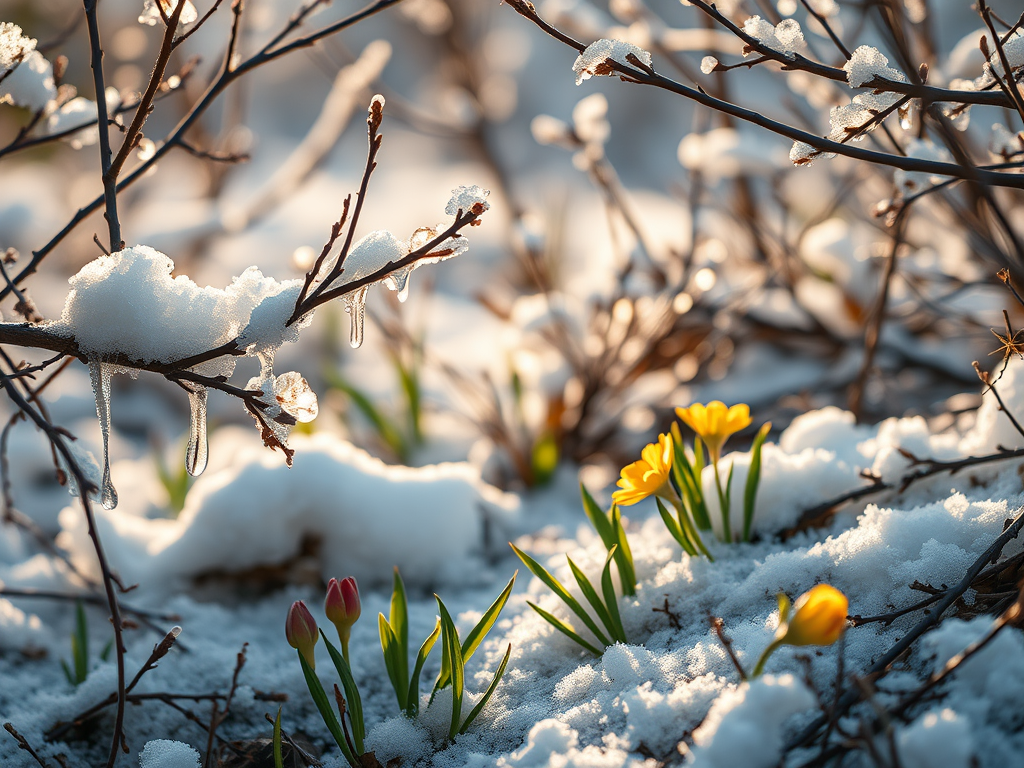
As for my mother, elder brother, and Jinky, I think I would eventually learn to forgive and forget, like the last snow of winter thawing and finally giving way to the soft bloom of spring.
Edge of the Fall (Part 3)

(A SHORT NOVEL)
I was about to start eating when someone arrived.
A woman.
I felt disappointed. Somebody had seen me. Our eyes met for a few seconds when she looked in my direction. It was the last thing I wanted to happen, for I didn’t want to leave even the slightest hint of my impending disappearance. She could possibly see my photo as a missing person when I finally hide lifeless at the bottom of this mountain. She could potentially provide a clue to my whereabouts.
I just hoped she’d leave quickly so I could dive into the ocean of rocks at the bottom of the mountain after I eat and finish my drink.
The woman was alone. I did not see anybody following her. Her brow was furrowed, her face set in a frown, and her eyebrows knitted together. Yet, even beneath the frown, her beauty remained undeniable, like the first flowers of spring pushing through the frost, fragile yet full of life.
She walked right past me, ignoring my presence. She was dressed in baggy jeans and a red hoodie, the vibrant color accentuating her fair skin. The soft breeze seemed to carry a hint of spring with it, the scent of blooming flowers—though the chill of winter still lingered in the air.
I followed her with my eyes. She stopped and sat on top of a rock. She had her back to me. She held her cell phone up to her ear. I wasn’t sure if she was receiving a call or making one. All I knew was that she was talking to someone and sounded like she was arguing with them.
Instead of eating, I watched her, hoping she’d leave quickly. Inadvertently, I eavesdropped on their conversation. Admittedly, she succeeded in distracting me from the very reason I was there.
The woman took the cell phone away from her ear, and it seemed like the conversation was over. I was startled when the woman suddenly screamed.
“Neohui dul-eun jiog-e gal su-iss-eo.”
I didn’t catch everything she said, just the words ‘hell’ and ‘two.’ Maybe she was telling the person she was talking to and anyone else involved to go to hell.
Then she stood up and repeatedly slammed the cell phone against the nearest pine tree to me.
Smash!
Some pieces of the broken cell phone even landed at my feet.
The woman sat down on the ground, sulking. She looked like a child who had been robbed of a toy.
“Salanghae! Geuleona wae?”
Apparently, her boyfriend had left her. She was crying. She sobbed like a child. Did I do the same? What a shame that the answer is yes. I cried a river upon learning that the woman I was about to marry was impregnated by no less than my brother.
I felt pity for her, understood her, and could relate. I stood up to give her a tissue.
As the saying goes, “Misery loves company.”
I slowly approached her. Just as I was about to hand her the tissue, she suddenly stood up and stepped over the rope blocking the way. She stopped right at the edge of the mountain. One wrong step, and death awaited her.
It seemed like she wanted to jump to her death… just like me. The difference is mine is planned, hers was a spontanneous decision.
I stepped over the rope, too.
She turned to look at me. Her eyes looked furious.
“Deo isang dagaoji mal-ayo.”
I understood what she said. She didn’t want me to approach her.
I stopped. But as she was about to jump, I quickly grabbed her arm.
She struggled to break free as I pulled her from the mountain’s edge. I was like winter, holding her back. Like the spring desperately trying to emerge but unable to break my frozen grip on her. When she kicked me in the thigh, I let go of her, but she didn’t manage to jump. Instead, I hugged her tightly from behind and lifted her away from the edge, keeping her from the precipice, like the last bit of warmth trying to push through the bitter cold.
“Naleul noh-ajwo!!!”
She wants me to let her go, but I didn’t. She was screaming and struggling until we both fell and rolled down the ground, luckily away from the edge of the mountain. She elbowed me several times. Cursed at me.
Then suddenly I heard something.
“GEUNYEOLEUL NAEBEOLYEODWO!”
That was a man’s voice.
It seemed like there was someone else.
And there was… and not only one.
A group of men suddenly arrived and saw us in that state.
They ran towards us. One pulled the woman away from my grip, and the others grabbed me. Three of them were holding me. They were reeking of liquor.
Everything happened so fast. A pair of slaps landed on my cheeks. Followed by a powerful punch in the stomach that put me to my knees.
I gagged from the pain.
They took turns slapping me. One of them was even pulling my hair. My ears rang from the force of the slaps that hit me.
While I was kneeling, I looked up at the men surrounding me. I held onto one of their knees.
“Please…”
“Dakcho!!! Shibalnoma!”
One of them cursed and even spat on my face.
“Let me explain,” I said in broken Korean.
But they wouldn’t let me. I received an endless barrage of punches and kicks… to my face… to my stomach… to my thighs.
I think my eyes were the only parts of my body that didn’t get hit.
While I tried in vain to parry the punches and kicks of my assailants, I managed to gaze at the woman still being held by the man who had pulled her away. She said something to the men, but I couldn’t understand her words. She was desperately trying to break free from the man’s hold.
Blood was dripping from the wounds they inflicted on me, but they wouldn’t stop. Their punches and kicks were like the unforgiving chill of winter—cold, relentless, and numbing, cutting through my body just as the frost cuts through the warmth of spring. One cut me off when I ran toward the mountain’s edge, hoping to jump and still achieve what I came here for. I fell to my knees again.
It wasn’t jumping off the mountain that was going to kill me; it was the merciless beating from these men. I didn’t intend to go that way
I regret not jumping as soon as I got there. I should not have planned to have a last supper. Instead of the food I brought, I ate painful punches and kicks and had their swearing and cursing as my side dishes. Should I’ve just let the woman do as she wished and followed her to the bottom of the mountain? It would’ve been just a flash of pain. Maybe I wouldn’t even feel it. Unlike the beating from these men, which was slowly killing me with pain, like the bitter cold of winter, it was relentless. I thought of spring—of the warmth and the possibility of change—but it felt as distant as a dream I couldn’t reach. I couldn’t even imagine it, not when I was trapped in this frozen moment, slowly succumbing to the cruelty of my assailants.”
Before I lost consciousness, I saw the woman managing to free herself from the clutches of the man who had grabbed her earlier. She ran toward me. She was trying to stop the men from beating me. I felt her body pressing against mine, her warmth a brief, fleeting contrast to the cold fury of the men beating me. As she tried to shield me from the relentless anger of her countrymen, it felt like the first sign of spring pushing through a long, unyielding winter. But it was too brief, too fragile, just like the hope I barely dared to feel. I struggled to stay awake, but my eyes just shut. Everything went dark.
To be continued…
Edge of the Fall (Part 2)
(A SHORT NOVEL)

“Okay… okay, son.”
My mother broke the icy silence, her voice trembling, like the first sign of spring struggling to push through the stubborn grip of winter, unwilling to fully embrace the warmth.
“Ah… Joseph. Son, are you still with me?”
It was the last thread of patience and respect I had for my mother that made me still answer her.
“What is it this time, Mom?”
“Well, you see…”
I anticipated what my mother was going to say.
“Your brother is here. I want you two to talk. I’m begging you.”
The last thread of patience I had snapped. I didn’t respond to my mother’s supplications. I ended the call. That could never happen again – for me to talk to my mother’s eldest son. If, by some miracle, my bones and skull had not been crushed when I hit the rocks and I survived hypothermia thereafter, I would never shake the hands of my mother’s favorite son ever again. If I get to survive the plunge, we’d never reconcile.
It would have been easier to accept what happened if he hadn’t been involved. If it was another man who stole Jinky away from me, I wouldn’t be as devastated as I am now. But of all the people, why my brother? The brother who once promised, when we were little, that he would always have my back. Yeah, he had my back—just long enough to stab me in it.
My mother tried several more times to call, but I decided to disregard them all. If I weren’t waiting for any other call, I would have turned off my phone and thrown it away. The silence felt colder than the buzzing phone in my hand, like a winter storm that refused to let up, relentless and unforgiving.
I had no one on my side. Of course, my mother would favor her favorite child. Maybe my friends understand me. I’m sure they know what happened. It’s very unlikely they have not heard about what happened. Many of them were invited to my wedding, which was supposed to happen today. But instead of tying the knots with the woman I love and celebrating, here I am walking by my lonesome, unable to understand what was happening despite my best efforts. What Jinky and my brother did to me was beyond comprehension, beyond forgiveness. The winter may eventually give way to spring, but never will this hatred that I have for them.
There have been calls and texts from my country. Some are even sending me private messages on Facebook. My Messenger and email are flooded with messages, but I have not responded to one of them. The advice and opinions of my well-meaning friends will not be able to console my grieving soul. They don’t know what it’s like to feel stranded alone on a desolate island in the middle of an unyielding winter, with no warmth and no escape from the cold.
Whatever they say, it’s still me who will decide for myself. This is my life. I think no one can help me. No one can change what has happened.
What about God? Could He change everything that happened? If only He could. But I know that’s not how my Creator works. He doesn’t interfere. He doesn’t take sides. As I understand it, He lets people make their own decisions and face the consequences of their actions.
When a person is born, the wheel of their fate begins to turn. Sometimes, they’ll get caught in that wheel. It’s too bad if they can’t avoid it and get crushed. Trapped. Crushed. Just like me now. Crushed. Completely crushed. It’s the weight of winter, bearing down, suffocating, unrelenting. No spring in sight to soften the blow, no light to cut through the darkness.
Is what happened to me a consequence of my past mistakes? Has karma come to collect my debt? I admit to committing sins in the past; I am not a saint. But this is unfair. I was made to pay more than what I owe.
I can’t wait to get to the top of the mountain. I just want to slam my head against the rocks repeatedly until my skull breaks.
**********
I continued my farewell walk.
I estimate I’m halfway there. I started drinking the beer. I want to get drunk. I should be inebriated by the time I reach the summit. I need the courage that alcohol lends, so I will not have second thoughts about doing what I came here for. There’s no more turning back. I needed to be intoxicated so I would not listen to that little voice inside my head that started whispering to accept what happened and just move on. I even thought in the convenience store earlier that if it weren’t illegal and they had cocaine, I might buy it. Not because I want to feel high before I die, but I want to be high enough to think I’m a bird and not hesitate to jump.
When I finished the second can of beer, my phone rang again. This time, it wasn’t my mother. It was Luis, my lawyer friend. That’s the call I was waiting for.
“Hey, how are you?”
I didn’t answer right away. I could hear him clearly, but so many things were racing through my mind.
“Hello… Joseph?”
“Yeah.”
“You sound like you’re out of breath.”
“I’m walking.”
“Where?”
“That doesn’t matter.”
“I was just checking in. Are you okay?”
“Why is everyone asking about my condition? Why do you still need to ask? If you were me, how would you feel today? Would you be okay?”
“Okay… okay… wait… relax. You seem a little hot-headed. Simmer down, brother. I’ll call you later.”
Then he was gone. He hung up the phone. I felt a strong urge to throw my phone away, but I held my horses. I took a deep breath. Something remained from the motivational videos I’d watched. You’re supposed to breathe deeply when you’re angry or confused. Sudden anger and confusion indicate that your brain is running low on oxygen.
After a few deep breaths, I called Luis back.
“Luis, I am so sorry brother. I’m just really carrying too much of a heavy load right now. You know that. Sorry… my bad.”
“It’s okay, Josep. I understand what you’re going through. This day should be a happy one for you, but…”
“Please, let’s not talk about it.” I politely cut him short.
“Okay… okay. By the way, I already asked about the house and lot. You don’t have any claim on it. The land title is in Jinky’s name. Oh, Luis, you should have at least included yourself as owner of the propery.
I didn’t answer. I couldn’t answer. I don’t know what to say.
“Your only hope now is if she voluntarily surrenders it to you. And brother, about the joint account, the money was withdrawn three days ago. Apparently, your fiancée has kept a blank withdrawal slip that bears your signature.”
I felt that the world was caving in on me.
“… and Joseph. I was able to comfirm through your mother that indeed Jinky is pregnant, and your elder brother is the father.”
I couldn’t make sense of anything else said. My mind went blank. The words just… didn’t reach me. Suddenly, I realized I wasn’t talking to him anymore. I don’t know if he or I ended the conversation. My thoughts were completely scattered, lost in a fog of disbelief, like I was trapped in the deep freeze of winter, unable to feel anything but the cold. I took a few more deep breaths, tried to steady myself, and took a few more steps—like the faintest hint of spring pushing against the harshness of winter, only then did I feel the ground under my feet again.
Turns out, I’m just really stupid.
“I’M SO STUPID!”
I shouted that over and over. I don’t even know how many times.
I called out my fiancee’s name, my brother’s name, and cursed them… many times.
I continued walking toward the top of the mountain. I want to end it all. I don’t want to experience another night alone in my room. I’ll just stare blankly into nowhere and drown myself in alcohol until I’m gasping from being drunk.
I opened the bottle of Korean wine. I drank while walking. My steps weren’t staggered yet. They were still steady. The path hadn’t tilted. The beer didn’t affect me, so I decided to go hard instead.
Before, when I’d climb this mountain, I’d drink water while walking. I’d take selfies here and there. I’d listen to my favorite songs by a Filipino band called Eraserheads while humming along, making my way up the trail. And when I’d hear the song “Ligaya,” I’d sing along from beginning to end.
I played the songs again. But I couldn’t sing along from beginning up to the end of the songs, except for a few lines.
“Ilang awit pa ba ang aawitin o giliw ko… gagawin ko ang lahat pati ang thesis mo…”
(“How many more songs will I sing, my love… I’ll do everything, even your thesis…”)
That darn person made me do her master’s thesis. When I jokingly said I’d only do Chapter 3 once we were a couple, she immediately said yes. That’s how we started our relationship. When I said jokingly that I’d finish up to Chapter 5 only if she slept with me, she gave in right away. At that time, I wondered how many of their university’s graduates paid someone else to do their thesis or dissertation. Did they pay with money or their dignity, or both, just to get a Master’s or a PhD.
“…At ang galing-galing mong sumayaw. Mapa boogie man o cha cha. Ngunit ang paborito ay ang pagsayaw mo ng El Bimbo. Nakakaindak…nakakaaliw…nakakatindig balahibo.”
(…And you’re really great at dancing. Whether it’s boogie or cha-cha. But my favorite is when you dance the El Bimbo. It’s so infectious… so entertaining… it gives me goosebumps.)”
And my favorite lines from all of Eraserheads’ songs…
“Magkahawak ang ating kamay at walang kamalay-malay. Na tinuruan mo ang puso ko na umibig ng tunay.”
(“Our hands are held together, and we’re unaware. That you taught my heart to love for real.”)
For the first time, I took a woman seriously, and for the first time, I truly loved someone. Yet, this is what happened.
“F_ _ K YOU!!!
It feels so good to curse.
“F_ _ K YOU!!!
Cursing sounds so much sharper when you shout it.
I kept listening to the songs while finishing the wine as I walked. By the time I was hoarse and the bottle was empty, I was near the top of the mountain. Only a few more steps, and I’d reach my final destination.
I felt a mix of fatigue and dizziness, and my vision seemed to spin a bit. It was time to rest again. I chose to lie on the ground, surrounded by a few scattered dry leaves, rather than lean against a tree. I don’t know; I just felt like it.
From that position, I saw that it was a bright, sunny day, with only a few cloud formations dotting the sky.
**********
A few minutes passed before I stood up and started walking again.
Finally, I reached the top. I had reached my personal Golgotha… I had successfully carried the cross of my Calvary to its final destination. I was still wearing my crown of filth. I was about to crucify myself. I was going to pierce my side with a spear.
That part of the mountain was open. There were benches and a small hut for resting. Large rocks and some pine trees lined the side, with thick ropes blocking the way. There were warning signs in Korean saying not to cross the rope. That area of the mountain was steep and slippery, making it dangerous.
That very danger was what I wanted to challenge. I crossed the rope. I walked toward the edge of the mountain. One more step, and there would be no ground beneath me.
But I wasn’t ready to jump yet.
I had a ceremony to do first. Like the Japanese samurai before, they performed “hara-kiri,” when they’d rather kill themselves than be captured by the enemy. But for me, instead of slicing open my stomach, I would fill it with food.
It was a deep fall. Rocky and filled with pine trees. I marked a spot where there were fewer trees. That’s where I’ll perform my leap, not of faith, but of death. I just hoped I wouldn’t get caught on those trees so that I could be sure I’d die. Even if I did get caught in the trees, I’d be sure to break my bones, and eventually, I’d die. It wouldn’t be noticed that there was a body there. Especially once the trees had leaves again.
I found the nearest flat rock and laid out the remaining beer, wine, and food I had brought.
I was about to start eating when someone arrived.
A woman.
To be continued…
Edge of the Fall (Part 1)
(A SHORT NOVEL )

I started traversing the trail up the mountain, which I often visit whenever I want to be alone to meditate or contemplate. Sometimes, I come here to read a book, and because I always bring a pen and a notebook, there have been times when I have journaled. This mountain is where I retreat whenever I need to make a significant decision, just as I did today.
I travel for an hour by bus to get here. It will take almost 2 hours of walking at a normal pace to reach the mountain’s highest point. No one knew that I had gone to this mountain. Anyway, I never told anybody that I come here occasionally. That is intentional. It’s my hideaway, so I kept it secret. Even this climb, no one knows. I haven’t told anyone that I’m going anywhere… and I won’t be coming back.
I’ve been walking for quite a while now, and it’s already past noon. But I only feel a few sweat drops on my forehead and cheeks. I don’t even feel any dampness at the back of my shirt. Even though my backpack is heavy, it is filled with food and drink for my last supper. It could be because my steps are small. It’s like the walk of those joining a funeral march to bring someone to their resting place. It’s like the walk of someone about to be executed, needing to be pushed and coerced by those escorting them to the gallows. Or perhaps I’m not sweating much because it’s only late March, and the stubborn winter refuses to give way to spring, much like the emotional winter that still grips my heart and mind, refusing to melt away. The cold still lingers, just as my pain does, and the promise of renewal feels as distant as the warmth of spring.”
The cherry blossoms are starting to bloom in the few trees along my trail, and the leaves are beginning to sprout on the branches of some trees and plants. Under some trees are shrubs of forsythia with their buds of flowers, giving a glimpse of their yellow color. The flowers will bloom to their fullest in just a few days to bring life and color to the surroundings made barren by the scorching chill of the past winter. Yet, even as spring begins to reveal its beauty, I can’t help but feel indifferent. Like the stubborn winter that clings to the earth, my heart refuses to acknowledge the warmth, the hope, and the promise of renewal that is slowly pushing through the cold. The world may be awakening, but it’s still winter inside for me, and I can’t shake the cold rooted deep in my soul.
It’s too bad I won’t be around to witness the full bloom of the flowers as spring unfolds. The trail I’m walking on will be one I won’t descend again. Spring, with its promise of life and renewal, seems so distant, as though it belongs to a world I can no longer be part of. The flowers will bloom, the trees will bud, and life will return to the earth, but it feels as though my winter is too deep to let that warmth reach me. Death, like the last bite of cold in winter, feels inevitable now, and I cannot bring myself to see the beauty of spring when my heart remains frozen in this endless, unyielding chill.
No one knows what will happen when I climb this mountain again. I can’t say I’ll leave it all to fate when I reach the top. Fate is a myth. I don’t believe when they say “It is written.” That is not true. The book of life has nothing but empty pages. I subscribe to the notion that life is the sum of our decisions. We hold the pen and we’re responsible in writing our story in the empty pages of the book of life.
And I have already made up my mind. I will write the last sentence of my storyten at the end of the day. Everything’s planned already. I’ll get to the summit and sit in my favorite spot there to finish a dozen beers and two bottles of Korean wine. I won’t leave any of the fried chicken I brought, except the bones. The peanuts and some kimchi I packed, I’ll gobble them all up, too. They are the last foods I’ll taste. At least I’ll be full and drunk when I die. It’s not just the ones about to be executed who are given what they want to eat before their sentence is carried out. Even those who are about to take their own life should have their last but sumptuous meal.
This should have been one of the happiest days of my life. I prepared for it and spent a lot of money. I should have been in my own country now. But everything got messed up. Where did I go wrong?
Where did I fall short? I can’t figure it out.
I’ve reached the rocky part of the mountain. Only now did I realize that this part of the mountain looked like a cemetery during such times. There are no trees, and the large rocks resemble tombstones. The plants that haven’t yet sprouted leaves resemble crosses and grave markers.
In any case, the mountains here are often used as burial grounds. Every time I climb this mountain, I pass by a few graves that, without any markers or tombstones, would look like ant hills.
I’ll also lie down here on this mountain. Unfortunately, I won’t be buried properly.
I still have a long way to go, but I don’t want to speed up my steps. I’m not in a rush to die. I just need to carry out my plan at the top of the mountain. I’m ready. By this afternoon, before the sun sets, the story of my life will be over.
If only I could, to avoid the tiring climb, I would just let myself get run over by a truck. If only I could, I would use a gun or a knife. I’ve thought about doing any of those. But where will I get a gun? I don’t like to knife myself to death, for I think it’s a painful way to die. Even drinking poison. But I don’t want to die that way either. Another thing is, the poison I might buy might not even work. I want to be sure that my breath will stop when I do what I planned to do. If I let myself get run over by a truck, my body would be smashed to pieces, and anyone who picks up my scattered bones and flesh would be disgusted. They’ll swear, for sure. Instead of sympathy, they’ll curse me, and my soul may not find eternal repose. Then I paused, having recalled that, indeed, my soul will be damned in hell, for I am taking away my own life. That’s what my religion taught me. But what’s the difference between the hell afterlife and the hell I am in now?
Above all, the last thing I want is to be a bother to anyone. I don’t want to be found dead and cause trouble for others. I even thought about jumping in front of a subway train. But I don’t wish my country’s name to be dragged into it when the media finds out that the crazy person who got hit by the train was a citizen of my country.
Well, suicide news is pretty common here. If what I read is true, over twenty people commit suicide in this country every day. I will be part of those statistics tomorrow. So, even if they hear about my death, they probably won’t care. And that’s what I want. I don’t want anyone to notice what I’m going to do. The only one who should know that someone jumped from the highest part of this mountain is the dead person who landed in the rocky, overgrown section of it. But I certainly won’t live to tell the tale. Dead men tell no tales.
Of course, my loved ones, friends, colleagues, embassy officials, and the authorities here will look for me. But they won’t think my corpse is here, in the steep mountain section covered with trees and grass. I even made sure to enter the section of the trail with no CCTV cameras earlier, so there’s no proof that I climbed this. I have been here many times and memorized where those security cameras are installed. That’s part of my planning. When they eventually suspect I could have come here and looked for me, the wild animals that I know roam this area have already filled their stomachs with my flesh, and the worms would have feasted on their leftovers. My bones could be scattered in different places, but the dirt and dry leaves would have already concealed them. They won’t find any of my clothes either because I’ll burn them, and I’ll jump to my death naked. So, if my skull is rigid and doesn’t break when I jump, I’ll surely die from hypothermia. I provide myself with no escape.
That’s how detailed my plan is. I just don’t have a suicide note because I don’t want anyone to know what I’m about to do. And for me, leaving a suicide note is corny.
I decided to take a break for a while. It felt like my legs no longer wanted to move. I sat on a large rock, leaning against a tall pine tree.
The surroundings were quiet. Was it just a coincidence that today, there were no chirping birds in the trees like I used to hear when I came here? Do they know what I am about to do, and in sympathy, they are keeping quiet and watching me from the branches of the trees?
I also didn’t meet anyone on the way up. That was fine, for it meant no one could claim to have seen someone who looked like that person in my photo, which they would surely show when they came searching for me. And I hope there won’t be anyone when I reach the top. I want to jump as soon as I finish all the food I brought, so it can all be over quickly.
While resting, I lit a cigarette. I coughed a bit when I inhaled the smoke. It was my first time smoking. I suddenly decided to do it when I bought a lighter at a convenience store before climbing. I wasn’t afraid of getting lung cancer anymore. It was the fear that prevented me from becoming a smoker. That fear has lost its fangs, for in just a few hours, I’ll be closing the book of my life. At the convenience store, I ensured that the hood of my jacket covered my head, and I was also wearing a face mask that I usually use for protection against yellow dust, so no one would recognize me if they checked the CCTV, in case they started searching for me.
Before I could finish the cigarette, my phone suddenly rang.
It was my mother calling. I didn’t want to answer, but I wanted to give her the courtesy of hearing my voice one last time.
“Joseph… son, are you okay?”
I could feel my mother’s sympathy for me as she said that. And that’s what I hated the most – being pitied. That’s why I didn’t want to answer her call.
“Don’t worry about me, Mom. I’m okay.”
“Are you sure, son?”
I felt a little bit annoyed with my mother.
“How many times do I need to tell you, Mom?”
“Sorry, I just want to make sure. Son, I hope you still come home, no matter what happened. We miss you. It’s been months since we last saw you.”
It felt like my brows furrowed when I heard that. If I were looking in the mirror, I’d probably see my forehead wrinkled like a tangled pile of noodles. I had no face to show anyone after everything, yet my mother still wanted me to come home! For what? To be pitied or laughed at? To be a topic of conversation among rumor mongers. And if I did go back to the country, I wouldn’t want to go to our house. I’m sure something bad will happen. If I’m not the one getting badly hurt or killed, maybe I’ll be the one to hurt somebody badly or worse, take that someone’s life. Actually, two lives. The idea of going home feels like trudging back into the dead of winter, cold and suffocating, as if the chill will never melt away.
“Sorry, Mom. My boss gave me an urgent task at the hagwon. My contract entails me to abide by it.”
“But aren’t you on leave because supposedly you and Jinky…”
“Mom… STOP… PLEASE.”
Another reason I didn’t want to go home was that event. It was the only thing they would repeatedly talk about. Every time I thought about it, it felt like needles were piercing through my heart and mind, like the sharp, unforgiving frost of winter that cuts through any warmth that might try to reach me. You can call me dramatic, but anyone who has gone through what I did would have their world collapse and come to a halt. I couldn’t even allow myself to believe in the possibility of spring, of things changing, when all I felt was the numbness of winter and the certainty that nothing would ever thaw.
For the first time, I yelled at my mother. When I said those words, I felt like my eyes were about to pop out. It was as if I were talking to my youngest sister.
It took a while before I heard my mom’s voice again.
“Son, if you need someone to talk to, just call me, okay? Or we can Skype.”
“Yes, Mom. I’m sorry. Just let me be for now.”
“By the way, her parents came here earlier. They wanted to…”
“AHHH… MOOOMMMMMM!!! DON’T YOU UNDERSTAND WHAT I AM SAYING? IS IT THAT HARD TO UNDERSTAND WHAT I WANT TO HAPPEN? I WANT ALL OF YOU TO LEAVE ME ALONE.”
“I yelled again at my mother. It felt like my throat was going to explode as I said that. If I were talking to anyone else, not my mother, those words would have been interlaced with a lot of cussing and cursing.
What followed was silence, a heavy pause that seemed to stretch endlessly, like the cold between winter and spring—an unspoken tension, the space where anger and regret collide, where something could change but refuses to thaw.”
“Okay… okay, son.” My mother broke the icy silence, her voice trembling, like the first crack of thawing ice that still clings to the cold, unwilling to fully give way to warmth.
“Ah… Joseph. Son, are you still with me?”
It was the last thread of patience and respect I had for my mother that made me still answer her.
“What is it, Mom?”
“Well, you see…”
I already knew what my mother was going to say.
“Your brother is here. I want you two to talk. I’m begging you.”
The last thread of patience I had snapped. I didn’t respond to my mother’s supplications. I ended the call. That could never happen again – for me to talk to my mother’s eldest son. If by some miracle, my bones and skull weren’t crushed when I hit the rocks and the cold didn’t take my breath away, and I survived, we’d never reconcile.
“It would have been easier to accept what happened if he hadn’t been involved. But of all the people, why my brother? The brother who once promised, when we were little, that he would always have my back. Yeah, he had my back—just long enough to stab me in it.”
My mother kept calling. I didn’t answer. If I weren’t waiting for any other call, I would have turned off my phone and thrown it away. The silence felt colder than the phone buzzing in my hand, like a winter storm that refused to let up, relentless and suffocating.
I had no one on my side. Of course, my mother would favor her favorite child. Maybe my friends understand me. I’m sure they know what happened. It’s hard to believe they haven’t heard. Many of them were even invited to my wedding that was supposed to happen today. There are calls and texts from the country. Some are even sending me private messages on Facebook. My Messenger is flooded with messages, as is my email. Not one of them have I responded to. Their advice and opinions would only make things more complicated. They don’t know what it’s like to feel like you’re stranded alone on a desolate island in the middle of an unyielding winter, no warmth, no escape from the cold.
Whatever they say, it’s still me who will decide for myself. This is my life. I think no one can help me. No one can change what has happened.
What about God? Could He change everything that happened? If only He could. But I know that’s not how God works. He doesn’t interfere. He doesn’t take sides. As I understand it, He lets people make their own decisions and face the consequences of their actions.
When a person is born, the wheel of their fate begins to turn. Sometimes, they’ll get caught in that wheel. It’s too bad if they can’t avoid it and get crushed. Trapped. Crushed. Just like me now. Crushed. Completely crushed. It’s the weight of winter, bearing down, suffocating, unrelenting. No spring in sight to soften the blow, no light to cut through the darkness.
I can’t wait to get to the top of the mountain. I just want to slam my head against the rocks repeatedly until my skull breaks.
To be continued…
The Self-Improvement Paradigm
This video explains my proposed self-improvement paradigm. This conceptual model served as my guide in writing the book “A Paradigm For Self-Improvement.”
https://www.amazon.com/dp/B0DT4RGQ9H