Blog Archives
Foreword to My Book on Self-Improvement
Aside from the values of faith and self-belief my mother instilled in me, one key element of personal growth and development that was embedded in me long before I joined the self-improvement bandwagon was lifelong learning. My parents taught my siblings and me the value of education, the importance of learning new things and skills, and the need to always strive to be the best and strongest we could be to fulfill our dreams and ambitions.
I believed them to the point that when I had already acquired the degrees I wanted, I looked for a new jar of knowledge where I could dip my fingers. I pushed it further when I realized I had been doing much to improve my health and acquire new skills. I decided to focus on personal growth and development.
At first, my affair with self-improvement was just a fling. I thought it was enough that I read self-help books. However, I was not satisfied. I thought adding positive thinking to my faith, self-belief, and lifelong learning was enough. I was wrong. I wanted more.
Then, the unexpected happened. My romance with self-improvement took a serious turn after I watched a film entitled “The Secret.” I saw the movie’s DVD by accident. The store owner mixed it with other genres of film. When I bought it, I had no idea what it was. There was no synopsis or a brief note explaining anything about it. That was it. Everything was what the title suggests—SECRET.
I wondered whether it was a mystery-thriller or a sci-fi movie. When I played it, I discovered it was a “self-help” film—technically a documentary.
I must admit that I initially considered the ideas presented to be preposterous. Things
from the beginning of the film, what I saw and heard seemed lifted straight from the pages of a science fiction book, but they also tickled my curiosity, perhaps because I love science fiction.
I continued watching, tried to be open-minded, and considered the information in the film as tips for personality development. I have always considered anything that advocates positive change worth my time and effort. I watched it a second time and rewatched some interesting segments a few more. After that, I began applying the valuable tips I had learned from the movie. I even shared the ideas I discovered with my students whenever I saw a connection to the topic’s content.
Then I decided to do an Internet search for one of the speakers, the one who spoke first in the movie – Bob Proctor. That Internet search led me to his motivational videos on YouTube and links to information and videos of other motivational speakers such as Jim Rohn, Wayne Dyer, Les Brown, Joe Dispenza, John Assaraf, Brendon Burchard, Brian Tracy, Zig Ziglar, Tony Robbins, Simon Sinek, Tom Bilyeu, John Maxwell, Jordan Peterson, Jay Shetty, Andrew Huberman and Mel Robbins. I heard them mention Napoleon Hill, Earl Nightingale, and Earl Shoaff, which led me to find them online.
They were all my professors at VU (Virtual University). I religiously watched the videos they posted on their social media platforms, and they taught me well. I consider them my mentors in personal growth and development. Through them, I learned much about constructs related to self-improvement and Positive Psychology—goal-setting, planning, decision-making, time management, well-being, mindset, personal accountability, lifelong learning, good thinking, positive thinking, self-discipline, and more.
I consider them my mentors. They taught me valuable lessons I never learned in school. Thanks to them, I realized that in striving to be the best I can be, as my parents instructed, there are attitudes and beliefs I must pursue and possess, skills and abilities I must learn and acquire, and practices
and activities I must carry out and perform. I realized how essential they are for achieving one’s full potential and becoming the best.
Seeing how personal growth and development have benefited me personally and professionally, and recognizing that, as a teacher, I can help my students and influence my loved ones and dear friends to experience the same, I have embraced self-improvement as an act of advocacy. I am committed to promoting it. There may be those my mentors from VU could not reach, but whom I may be able to. I strive to do so in my humble ways.
To the best of my ability, I aim to plant seeds of motivation and inspiration in others, encouraging them to recognize their potential and embrace the transformative power of self-improvement. I believe that each interaction, no matter how small, has the potential to spark a profound change in someone’s life. Whether through teaching, writing, or engaging in meaningful conversations, I see every opportunity as a chance to leave a positive imprint on those I encounter.
In doing so, I am trying to carry forward the legacy of my mentors, whose wisdom and guidance have shaped my journey. Their influence reminds me that advocacy is not confined to grand gestures but is often reflected in our quiet, consistent efforts to uplift those around us.
My mission is to reach individuals who may feel unseen or undervalued and empower them to believe in their capacity to grow and succeed.
In my classes, I actively seek opportunities to instill the value of striving to improve. I do the same in informal discussions with friends, loved ones, and sometimes strangers. Whenever I have the chance to discuss self-improvement, I seize it without hesitation.
My approach is grounded in the belief that the desire to grow and evolve is universal, and all it often takes is a spark—a meaningful word, a shared experience, or a heartfelt conversation—to ignite that desire in someone.
It reminds me of how those simple compliments from a couple of teachers in high school inspired me to study harder.
I also write essays on personal growth and development, which I post on my websites and social media accounts. When I realized how much I had already written on the subject, the idea of writing a self-improvement book emerged. I decided to compile and interconnect everything I had written about personal growth and development into a book.
My motivation for writing this book is clear: I want to offer a guide that could help readers like you achieve their full potential, be the best and strongest version of themselves, and attain fulfillment by achieving what they desire. I also had my students in mind when I began working on this book. I hope they and other young people like them will read this book like you.
It is not luck or chance that gets you to the fulfillment of dreams and desires—it is learning the right strategies and applying the focus, determination, and passion you need to pursue your personal and professional endeavors. The future is yours to take.
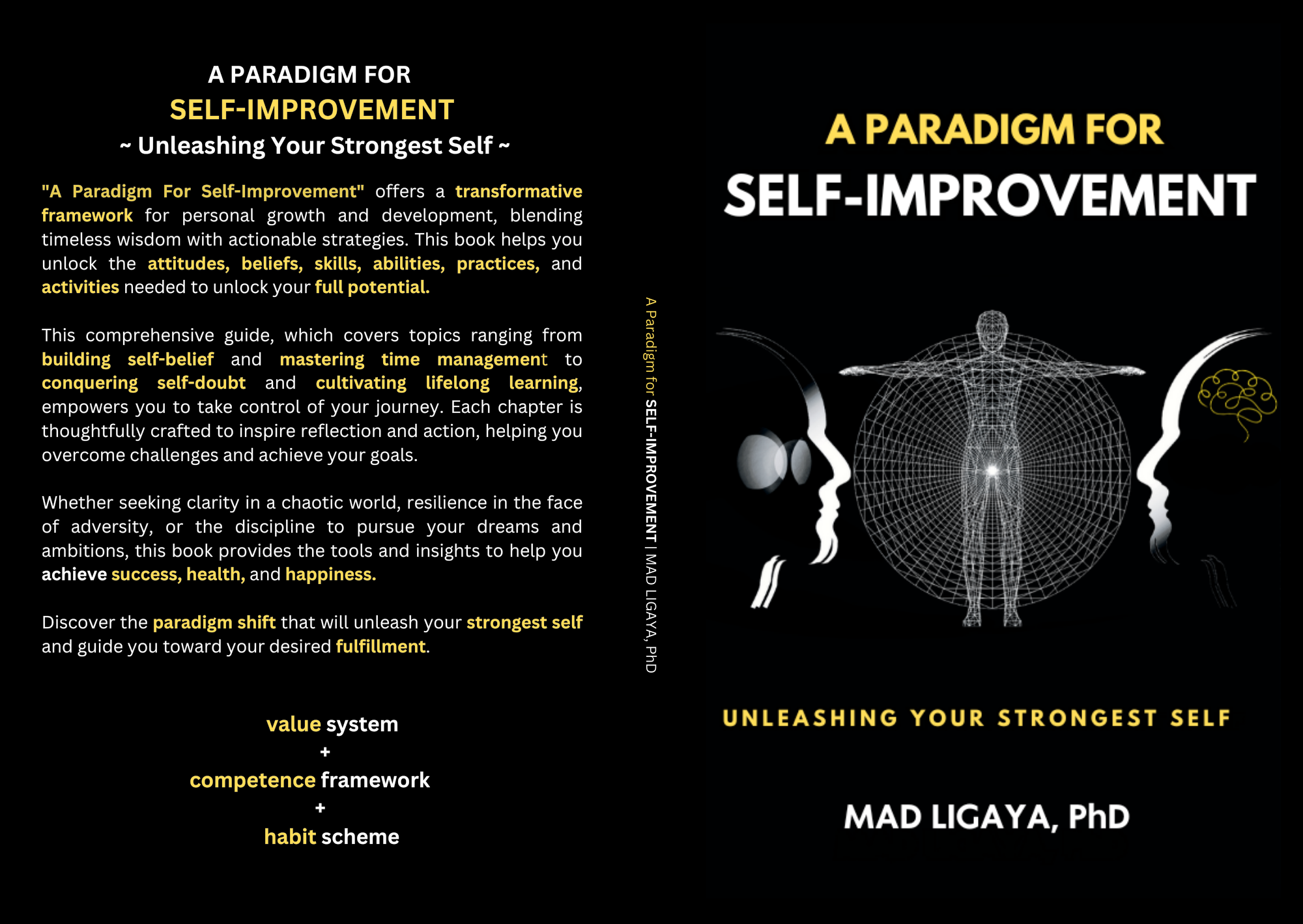
My book is divided into three parts, each focusing on different aspects of self-improvement. In Part I, I discuss beliefs and attitudes; in Part II, I cover skills and abilities; and in Part III, I examine practices and activities.
I collectively refer to beliefs and attitudes as a value system, skills and abilities as a competence framework, and practices and activities as a habit scheme.
The world needs people willing to rise to their full potential, lead purposefully, and contribute to something greater. I believe you are one of those people.
As you read through the following pages, I hope you will find the encouragement, insight, and tools you need to take the next step in your journey. My goal is to inspire you to view your personal and professional goals not as impossible dreams, but as inevitable outcomes that await your dogged determination to succeed.
This book is both a reflection of my journey and an invitation to join me on the path to unlocking the greatness within you. I do not feel like I am already the best version of myself. Thus, my journey towards unlocking my full potential has not ended yet. If you have not started with yours, now is the time to begin.
—–
This foreword is only the beginning. If you wish to go deeper into the ideas shared here, my book on self-improvement is available on Amazon. May it serve as a companion in your own journey.
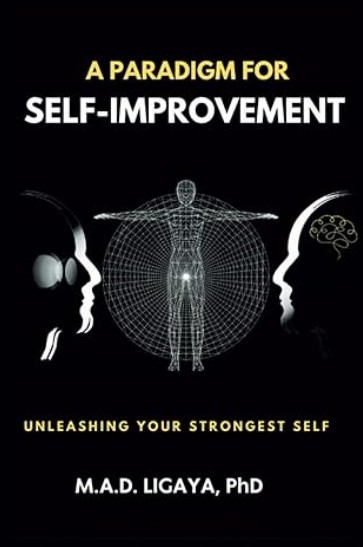
A Paradigm For Self-Improvement: Unleashing Your Strongest Self
This is my book, which has been officially published by Amazon. Please check it out. https://www.amazon.com/dp/B0DT4RGQ9H
To GOD be the GLORY!

__________
FOREWORD
Aside from the values of faith and self-belief that my mother effectively inculcated in me, one key element of personal growth and development embedded into my system even long before I joined the self-improvement bandwagon was lifelong learning. My parents kept telling my siblings and me the value of education, the need to learn new things and skills, and the importance of always striving to be the best and strongest we could be to fulfill our dreams and ambitions.
I believed them to the point that when I had already acquired the degrees I wanted, I looked for a new jar of knowledge where I could dip my fingers. I pushed it further when I realized I had been doing much related to improving my health and acquiring new skills. I decided to focus on personal growth and development.
At first, my affair with self-improvement was just a fling. I thought it was enough that I read self-help books. However, I was not satisfied. I thought adding positive thinking to my faith, self-belief, and lifelong learning was enough. I was wrong. I wanted more.
Then, the unexpected happened. My romance with self-improvement took a serious turn after I watched a film entitled “The Secret.” I saw the DVD of the movie only by accident. The store owner mixed it with other genres of film. When I bought it, I had no idea what it was. There was no synopsis or a brief note explaining anything about it. That was it… everything was what the title suggests—SECRET.
I wondered if it was a mystery thriller or a sci-fi movie. When I played it, I discovered it was a “self-help” film—technically a documentary. I must admit that I first considered the ideas presented preposterous. From the beginning of the film, what I saw and heard appeared as if lifted straight from the pages of a science fiction book, but they also tickled my curiosity, perhaps because I love science fiction.
I continued watching, tried to be open-minded, and thought of the information in the film as tips for personality development. I have always considered anything that advocates positive change worth my time and effort. I watched it a second time, and some exciting segments were a few more. After that, I started using valuable tips I learned from the movie. I even shared the ideas I discovered with my students whenever I saw a connection to the contents of our topic.
Then I decided to do an Internet search for one of the speakers, the one who spoke first in the movie – Bob Proctor. That Internet search led me to his motivational videos on YouTube and links to information and videos of other motivational speakers such as Jim Rohn, Wayne Dyer, Les Brown, Joe Dispenza, John Assaraf, Brendon Burchard, Brian Tracy, Zig Ziglar, Tony Robbins, Simon Sinek, Tom Bilyeu, John Maxwell, and Mel Robbins. I heard them mention Napoleon Hill, Earl Nightingale, and Earl Shoaff, which led me to find them online.
They were all my professors at VU (Virtual University). I religiously watched the videos they posted on their social media platforms, and they taught me well. I consider them my mentors in the field of personal growth and development. Through them, I learned much about constructs related to self-improvement and Positive Psychology—goal-setting, planning, decision-making, time management, well-being, mindset, personal accountability, lifelong learning, good thinking, positive thinking, self-discipline, and more.
I consider them my mentors. They taught me valuable lessons I never learned in school. Thanks to them, I realized that in striving to be the best I can be, as my parents instructed, there are attitudes and beliefs I must pursue and possess, skills and abilities I must learn and acquire, and practices and activities I must carry out and perform. I realized how essential they are for achieving one’s full potential and becoming the best.
Seeing how personal growth and development have benefited me personally and professionally and recognizing that as a teacher, I can help my students and influence my loved ones and dear friends to experience the same, I have embraced self-improvement as an advocacy. I am committed to promoting it. There may be those my mentors from VU could not reach but whom I may be able to. I strive to do so in my humble ways.
To the best of my ability, I aim to plant seeds of motivation and inspiration in others, encouraging them to recognize their potential and embrace the transformative power of self-improvement. I believe that each interaction, no matter how small, has the potential to spark a profound change in someone’s life. Whether through teaching, writing, or engaging in meaningful conversations, I see every opportunity as a chance to leave a positive imprint on those I encounter.
In doing so, I am trying to carry forward the legacy of my mentors, whose wisdom and guidance have shaped my journey. Their influence reminds me that advocacy is not confined to grand gestures but is often reflected in our quiet, consistent efforts to uplift those around us.
My mission is to reach individuals who may feel unseen or undervalued, empowering them to believe in their capacity to grow and succeed.
In my classes, I actively seek opportunities to instill the value of striving to improve. I do the same in informal discussions with friends, loved ones, and sometimes strangers. Whenever I have the chance to discuss something related to self-improvement, I seize it without hesitation.
My approach is grounded in the belief that the desire to grow and evolve is universal, and all it often takes is a spark—a meaningful word, a shared experience, or a heartfelt conversation—to ignite that desire in someone.
It reminds me of how those simple compliments from a couple of teachers in high school inspired me to study harder.
I also write essays on personal growth and development, which I post on my websites and social media accounts. When I realized how much I had already written on the subject, the idea of writing a book on self-improvement emerged. I decided to compile and interconnect everything I had written about personal growth and development into a book.
My motivation for writing this book is clear: I want to offer a guide that could help readers like you achieve their full potential, be the best and strongest version of themselves, and attain fulfillment by achieving what they desire. When I began working on this book, I also had my students in mind. I hope they and other young people like them will read this book like you.
You have dreams and ambitions, but uncertainty can sometimes keep you stuck. You doubt your ability to achieve them. Sometimes, your challenges feel larger than life, your dreams out of reach, and self-doubt gets the best of you. However, I still believe that you have the power to become the highest version of yourself, manifest your dreams, and flourish into becoming the best you.
It is not luck or chance that gets you to the fulfillment of dreams and desires—it is learning the right strategies and applying the focus, determination, and passion you need to pursue your personal and professional endeavors. The future is yours to take.
This book is divided into three parts, each focusing on different aspects of self-improvement. In Part I, we will discuss beliefs and attitudes; in Part II, skills and abilities; and in Part III, practices and activities.
Henceforth, I will collectively refer to beliefs and attitudes as a value system, skills and abilities as a competence framework, and practices and activities as a habit scheme.
The world needs people willing to rise to their full potential, lead purposefully, and contribute to something greater. I believe you are one of those people.
As you read through the following pages, I hope you will find the encouragement, insight, and tools you need to take the next step in your journey. My goal is to inspire you to look at your personal and professional goals not as impossible dreams but as inevitable outcomes that await your dogged determination to succeed.
This book is both a reflection of my journey and an invitation to join me on the path to unlocking the greatness within you. I do not feel like I am already the best version of myself. Thus, my journey towards unlocking my full potential has not ended yet. If you have not started with yours, now is the time to begin.
The Tree That You Are and The Fruits That You Bear
Water the fruit trees, and don’t water the thorns.”
– Rumi

“No good tree bears bad fruit, nor does a bad tree bear good fruit.”
That one was from St. Luke, and it’s only one of the many quotes where trees and fruits are used figuratively to bring beauty to an idea that a writer or speaker wishes to convey, emphasize, and clarify.
Obviously, the “tree” in that bible verse refers to you and me. And what about the fruits? They are our thoughts, words, and actions and their outcomes. Could there be other fruits? I believe there’s none. The things we think, say and do and their eventual consequences or results are the fruits of the tree that we are. There’s nothing else that would come from us through which we can be judged or valued as a person.
We think (consciously or subconsciously) first before we say or do something. I refer to it as the “think-say-do” process. After processing an idea or a situation (or any other kind of stimulus) in our minds, we decide what actions to take or words to say thereafter. That’s our response. You may call it a decision.
“Each tree is recognized by its own fruits.” Thus, you should be careful of what you think and the decision you make afterward. They are manifestations of the kind of person you are… and have consequences or results. I don’t know if there can be an argument against that assertion.
You have first-hand knowledge of how you think and decide. You are aware of the kind of fruits you produce. What about their outcomes? The fruits you bear result in the reputation you build for yourself in the community where you belong and among your colleagues, peers, friends, and loved ones. Imagine reputation as the basket where your fruits – the decisions you made in the past – are stored. What people say (and think) about you is your reputation. Your reputation is the consequence of your speech and actions.
Sometimes, even if you say and do good and always try your best to make the right decisions, some people will treat you negatively. Don’t mind them. Their reactions are boomerangs that would harm them, not you.
Whatever you have accomplished at this stage in your life are also consequences of your past decisions. Your resume is also a basket of the fruits you produced. If people would scrutinize your resume, what would they see? What they see are your fruits. Success is one big and ripe apple in the apple tree. It is the end goal of all our personal and professional pursuits.
But there’s a fruit sweeter than success – happiness. That’s what simple people with simple dreams who don’t have a curriculum vitae to show try to grow in their tree. You would even hear people with grand dreams say they aim for success because they want to be happy. Their success is the source of their happiness, while for the simple folks I mentioned earlier, the simplicity of their life and desires makes them happy.
Reputation, success, and happiness – the products of the decisions you make – are the fruits of the tree you become.
The kind of fruits you would bear depends on the kind of tree you grow into. Good fruits will spring out of your branches and twigs if you are a good tree.
Bear in mind that you have control of the process of becoming who you are. Yes, no one else is in control of it. We call that process self-improvement. The tree that would sprout from that transformation is your “best self.”
Only when you become your “best self” that you will start bearing the good fruits.
The journey into becoming your “best self” begins with one simple step – rejecting any excuse to not become the tree you wish to be and bear the fruit you desire.
Education comes next. We nourish the tree called “self” through education. And it’s going to be long and tedious. It’s actually lifelong. Remember what Aristotle said, “The roots of education are bitter, but the fruit is sweet.” But with education, I don’t mean just formal schooling. Schools are not the only place where learning can be had. Learning comes in many shapes and forms.
Learning makes you better than you were yesterday.
Sometimes we feel discouraged when all the efforts we put into self-improvement seemingly do not bear fruit. We need to be patient. Rousseau tells us that patience is bitter, but the fruit is sweet. Moliere added, “The trees that are slow to grow bear the best fruit.”
There’s one more fruit that your tree will eventually bear – wisdom. You know it’s there when you realize that growing the tree is more exciting than harvesting its fruits. What you will become – your best self – is beyond your reputation, more glittery than success, and more overwhelming than happiness.
The Road To Self-improvement: The Road Not Taken
The road to self-improvement is either not taken or the one less traveled because it is easier, if not intuitive for people, to be complacent. Well, according to scientists, we should blame our brains for this. (And this is where we’re good at – putting the blame on someone or something else.) They (the scientists) say that we are naturally wired to prefer either lying on the couch or sleeping. We are naturally lazy. We hate getting out of our comfort zones. We want things to be given to us on a silver platter…
SELF-DOUBT: The 8th Deadly Sin
Here’s my latest YouTube video…
This video is an exposition of the nature of self-doubt and its negative effects.
Developing Self-Discipline

“The first and the best victory is to conquer self.”
– Plato
Self-discipline is a simple concept, very easy to define and explain but difficult to practice.
It is reasonable to surmise that you know what self-discipline means, but I am hesitant to presume you possess this ability. Do I have it? I am still determining. However, if, at this point in your (and my) life, we have achieved some measure of success in both our personal and professional undertakings, then perhaps it is not too much to assume that we have practiced or have been practicing self-discipline to a certain extent. But if our needle of success has not moved a bit, if we have not accomplished anything significant that we can be proud of, then something needs to be fixed with how we live and manage our affairs. Could the culprit be the lack of self-discipline?
One of the most probable reasons people realize their dreams and ambitions, get what they want, and become what they wish to be is by practicing self-discipline. How successful or unsuccessful you are corresponds to the degree of self-discipline that you as a person have. I don’t need to cite studies to prove my assertion because even the simplest of minds would tell you that there is a direct correlation between success and self-discipline. As Lou Holtz said, “Without self-discipline, success is impossible, period.”
What comes to mind when self-discipline is mentioned? For me, there are three things – sacrifice, hard work, and focus. To some, those words make self-discipline synonymous with punishment and boredom. They conjure images of long work and study hours, self-deprivation, delayed self-gratification, and strict adherence to specific standards.
In short, self-discipline is not fun. It’s not fun to sacrifice or deny yourself of life’s pleasures. It’s not fun to work hard. Instead, You would go out with friends and party during your free time rather than pursue lifelong learning and self-improvement activities. It’s not fun to focus. It’s difficult with all the forms of distractions this modern world has to offer.
But self-discipline is the key to those who want their names written in the list of people who achieved great things and attained fulfillment. The potent mix of sacrifice, hard work, and focus is the elixir you need to drink to bolster your chances of succeeding.
Specific knowledge and skills are required to pursue whatever it is you want to achieve. You must wait to acquire and develop them overnight. There are no shortcuts, no magic pills. The process will be long and hard, and the question is – Are you willing to sacrifice time and effort to possess them?
You want to be like the athletes, artists, leaders, and personalities you idolize. You want to be like somebody you know who has accomplished great things. You want to become as successful and accomplished as they are. But are you willing and able to walk the paths they walked to get there? Do you have the perseverance to spend months, if not years, dedicated study and training to learn what you need? Those people you admire made it to the top by their sacrifices.
Sometimes, you would feel like giving up because you are seemingly not progressing. But you have to learn to hold on. The process of holding on is an essential component of self-discipline. An online dictionary defines self-discipline this way – “The ability you have to control and motivate yourself, stay on track, and do what is right.”
It would be best if you were willing to put in the hard yards when you want to achieve something. Don’t expect somebody to deliver your dreams and ambitions on a silver platter. We are naturally wired to prefer either lying on the couch or sleeping. That’s according to neuroscientists. But to become a winner, you must overcome that natural laziness. It will be a mighty struggle; only a self-disciplined person can overcome this hurdle. “Self-discipline (as defined by another online dictionary) is “the ability to control one’s feelings and overcome one’s weaknesses; the ability to pursue what one thinks is right despite temptations to abandon it.”
In pursuing your dreams and ambitions, you need to be able to focus too. Keep sight of your goals, of the things you want to accomplish.
Focusing entails avoiding distractions that could derail you from achieving what you want. Distractions are the people, vices, and activities that (or which), instead of helping, might hinder you from accomplishing your goals. You have to choose between them and your dreams.
To stay focused, you must also lay down a definite plan of action for everything you set to accomplish. Focusing is avoiding all kinds of distractions and ensuring that you have a map that will guide you as you navigate your way toward success.
The main objective of focusing is to become single-minded, driven by the pursuit of your personal and professional endeavors. It is putting together all your resources towards fulfilling your purpose and setting aside whatever may hinder you from achieving them.
To sacrifice, work hard, and focus are things that are easier said than done. It’s like doing what we don’t like and going where we don’t want to go. It’s asking us to get out of our comfort zones. And the problem is we are not comfortable being uncomfortable.
Sometimes, we are confronted with the dilemma of choosing between reading a book and binge-watching movies or our favorite TV shows…. going to a karaoke bar or a gym… between eating healthy or keeping the diet that made us gain weight. We would likely end up picking the choices after the “or.” That’s how we are wired – to take the easier route.
The choices we make determine the quality of our self-discipline. It’s hard to control our desires and habits. We usually need help to make the best choices. And we realize that we made the wrong decisions only when we already suffer from the consequences of what we chose to do.
We should bear in mind that self-discipline is correlated not only to success but to our overall well-being. Merriam-Webster defines well-being as “The state of being happy, healthy, or prosperous.” Now ask yourself – “How happy, healthy, and prosperous am I?” Only you know the answer.
If, in the aspects of happiness, health, and wealth, your needle is not also moving, how much of that can be attributed to a lack of self-discipline? How much of that can be attributed to your unwillingness to sacrifice, to work hard, and to focus?



 M.A.D. L I G A Y A