Blog Archives
When Students Don’t Learn

One morning, I witnessed how an English teacher masterfully discussed the intricacies of the English language. It would take me a paragraph or two to explain in detail the things he talked about. Let me just say that he is every inch a native English speaker. His knowledge of the phonemes, morphemes, lexemes, syntax, and context is impeccable. He dissected the language so skillfully, and the way he did it almost made me envious. I was reduced to being a listener, uncertain whether I just wanted to make sure not to miss anything new (something I don’t know yet) from what he was saying or I had nothing more to share because he had everything covered about what he was discussing. I wasn’t really sure what prevented me from saying anything. Maybe I was intimidated by his mastery of grammar, semantics, and pragmatics, or I did not like to gatecrash into his moment to showcase his brilliance. Stealing someone’s thunder is not my cup of tea.
That teacher held court in his impromptu lecture. He had the attention of everybody present. It was difficult to judge the intentions of my colleagues whenever they (unsolicitedly) shared their expertise like that. Was it to impress upon us (their co-teachers) that they know that much, or they simply would (good-naturedly) like to help us learn more about the subject (English) we’re teaching.
Later that day, I changed upon a student who had attended my English class in a previous semester. That student was one of the best in my class. Like me, he was heading out of the campus. After the exchange of greetings, I asked, “Who’s your English teacher this semester?” The student had already started responding before I recalled that I had previously made a promise to myself never to ask any of my former students that question for the reason that a few of my previous attempts led to the opening of “a can of worms.”
But it already happened – I asked that stupid question again.
The student named the teacher – he was the one I heard deliver an impromptu lecture about the English language earlier that day. After that, the student heaved a sigh and said, “We could hardly understand what he was teaching.”
I looked at him seriously, and all I could say was, “Really!?”.
He nodded and said, “He is also very serious.”
Before he could open that “can of worms,” I told my former student to give that teacher more time to adjust since the semester is still a long way to go. Then, I quickly redirected our conversation to another topic after that.
What’s amazing is the occurrence – of one day hearing a colleague deliver a brilliant impromptu lecture, but later that same day (or within the week), I would meet one of his students (who used to be my student also) claiming that they, in the class, could hardly understand what he is teaching – did not happen only once. If my memory serves me right, that’s the fourth time.
It finally made me reflect. That’s the reason I wrote something about it.
It made me wonder (again) how my former students rate my performance as a teacher. What do they think (and how they feel) about me as their teacher? What would they say to a colleague or fellow students when asked about me?
Students evaluate the performance of their teachers every semester. It’s hard to tell how reliable and valid the results of such evaluation are. Whether or not the results are a reflection of the true professional and personal qualities of the teachers is a matter of debate.
But valid or not, reliable or otherwise, it’s hard to ignore what students say about the performance and behavior of their teachers. Teachers get to read what students write in their evaluations. They could either agree or disagree with the results of their evaluation. But what the teachers would not know is what students say about them in informal discussions. Only the most naïve among teachers don’t know that students talk about their teachers.
In gatherings, teachers talk (or should I say gossip) about their students – their performance and behavior in the class. Conversely, students do the same. They talk (or gossip) about their teachers. There are only two possibilities – they either praise or curse their teachers.
One of the most unacceptable things that students could say about a teacher is that they do not (or they could hardly understand) what he/she is teaching.
Witnessing firsthand an English teacher discuss with ease the complexities of the English language and hearing a student claim that he and his classmates could hardly understand what that teacher was teaching is quite paradoxical.
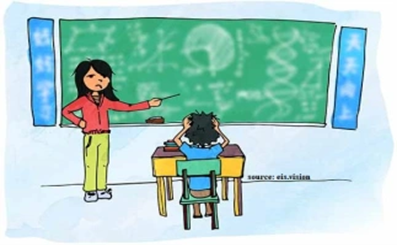
So I asked myself this question that night – Which is true… my impressions about that English teacher or that of his students?
What could have gone wrong?
My former student said that their current English teacher is very serious. Is that the problem – good rapport does not exist between him and the students? It is no secret that a teacher’s personality is correlated to students’ academic performance.
I tried to think of other reasons.
Then I recalled my teaching demonstration when I was applying for a job right after my graduation. When the high school principal called me to her office to discuss the results, she told me I did great. But she said there was a problem – I explained things in a way that only students enrolled in a graduate program could understand.
Could that be the reason?
If that teacher carried out discussions in the class in the same way he explained the grammar topic to us in that gathering earlier that day then that exactly is the problem. You cannot discuss a grammar point with students trying to learn the language the way you would with teachers teaching that language. I think that is not rocket science.
There are two things I learned before I officially began my teaching career – adapt my strategies and materials to students’ levels and simplify my language.
The problem is there are teachers who have a “one-size-fits-all” mentality, thinking that educational processes and approaches to teaching and learning are standard and cannot be tailored to meet individual needs. They wouldn’t buy into the idea of differentiated learning and teaching.
They will never accept responsibility when their students don’t learn.
Their standards are as immovable and high as Mt. Everest. The students have no choice but to climb that “Mt. Everest.”
For them, it’s the fault of the students when they fail.
The Jokers In The Academe
(A Personal Essay)

I have been a teacher since Seoul hosted the Summer Olympics. It has been a long journey filled with ups and downs, joys and sorrows. I don’t regret anything I have undergone as a teacher, and I could say that I triumphed over all the difficulties and pains because I wouldn’t have lasted this long in the academe if not.
I worked in 8 schools in the Philippines, 6 as a full-timer and 2 as a part-timer. Here in South Korea, where I teach now, is my second university. I stayed a year in the first one, and now I’m on my way to completing my tenth year, where I transferred.
Return to the previous paragraph and count the academic institutions I worked in.
How many?
That’s two short of a dozen.
In those schools, I met different kinds of students, administrators, and – teachers… the best and the worst.
This essay deals with teachers I call “jokers in the academe.” But just to be clear – the majority of those I worked with are professionals who love and respect the profession of teaching. It was a pleasure working with them. The jokers I am referring to are the few rotten ones in a crate of apples.
My experience with the “jokers” taught me to have a great deal of patience. There were times when I lost that patience and locked horns with them. During my first few years here in South Korea, I tried to keep quiet for a couple of years, just watching these recipients of the fallacy that “if you’re good at English, you can be a teacher of English.” Yes, you need to be patient when encountering jokers among your colleagues. They aren’t funny at all. They are annoying. But in one meeting, my thread of patience snapped. I said enough is enough. I started telling colleagues who were unnecessarily noisy to shut up.
I am not saying I am a perfect teacher; far from it. I still have lots to improve. At least I have been trying my best to conform to the evolving professional standards for teachers.
Most importantly, I am not a joker. I would never be. As an expat teacher, I feel like being appraised not only as a teacher but as a citizen of my country. I don’t like to be the reason people ask – “Is this the kind of teacher Teacher Education Institutions in the Philippines produce?”
In this personal essay, I would play BATMAN and let me unmask the “JOKER.”
Who might these jokers be?
One of those that I classify as jokers is the “super dependents.”The “super dependents” are teachers who will not solve their problems. They expect their colleagues to do that for them. They are the ones who hate exerting extra effort to find a solution to whatever bugs them. Their sense of entitlement is so strong that they think it is the duty of people around them to help them escape a difficult situation.
What these jokers consider as problems are not problems to begin with.
For example – the school requires teachers to apply new technology in the classroom. That, for them, is a contentious issue. They would try to dip their hands deep into their bag of reasons to justify their non-compliance.
You would hear the lamest excuses like “My training as an educator did not include applying those technologies.”
Really!?
Another excuse, lame also, is “It’s labor-intensive.”
They want things to be given to them on a silver platter. They would never go the extra mile.
They are like square pegs in round holes. No explanation would make them buy the idea that being a 21st-century teacher teaching 21st-century learners would require learning 21st-century skills.
These jokers don’t understand that part of their responsibility as educators – if they really consider themselves educators – is to retool and retrain, if necessary, to cope with the demands of what has become a technology-driven pedagogy used by 21st-century teachers.
They should not subscribe to the idea that “old dogs can’t learn new tricks” because they are not dogs. They’re human beings who are supposed to be rational.
Are they?
Anyway, let’s talk about dogs.
They bark, right?
Some of the jokers in the academe are like dogs. They bark a lot.
I call them the “barkers.”
These jokers bark about their disagreement with school policies and what they perceive as incompetence among the “people upstairs.” They are the eternal fault-finders who see nothing but negative in the organization. They live to seek the “tiny black in an ocean of white.” For them, nothing is right. Everything is wrong.
They complain day and night, but not when they go to the ATM during payday.
Do they deserve their pay? Are they doing their job? Only they and their students could tell.
Yes, there are times when they have valid reasons to disagree. But what is frustrating is that they bark up the wrong tree. They don’t address their concerns to the right people at the right place and time. They grandstand during meetings wasting their colleagues’ precious time. They force them to listen to their misguided eloquence. Sometimes they also write long unsolicited e-mails where they express their grievances. They don’t understand that not everybody in the organization shares their opinion about the policies and their school administrators.
The funny thing is these jokers bark, but they don’t bite.
They do nothing about their complaints except bark about them. But when the administrators responsible for implementing the policies they disagree with are present in meetings, they are very quiet, silent in one corner of the room, wagging their tails.
These jokers curse the school and their administrators at every opportunity they have. They tell everybody that the school where they are is the worst place to be. Yet at the end of the school year, they (let me use these words again) wag their tails as they sign their names on the dotted lines for a contract extension.
See… they whine and whing at every opportunity about policies, imperfections of the organization, and what have you. Still, the following school year, I saw them again, and as usual, whining and whinging.
They say in broad daylight, “This organization sucks.” But they remain. Why? Is it because they have no other place to go? That’s just a guess. Another guess… they won’t be able to find another university that pays as much as where we are working now.
I may be wrong.
I call the next category of jokers “Don Quixotes.”
Don Quixote, in case you’ve forgotten (or have not heard or read about him), is a fictional character introduced to the world by the Spanish author Miguel de Cervantes through his epic novel, “The Ingenious Gentleman Don Quixote of La Mancha.”
The “Don Quixotes” are the ones who do not understand that when changes are implemented and policies get tweaked by employers, the employees should not take it personally. Changes in the workplace happen when they are due. It is something inevitable. It is frustrating when the jokers cannot or refuse to understand if the management wants to exercise their prerogatives; whether the people downstairs want it or not, they could and would.
When in one meeting, a colleague stood and gave a long speech against a policy our university was about to implement, I felt obliged to cordially beg him to stop his litany because whatever he was saying then would all be in vain. Additionally, I told him that he was just unnecessarily prolonging the meeting and wasting my time and that of those uninterested in what he was saying. I also advised him that if he wanted, he should set an appointment with the university officials and tell them about his protestations… or sue the university. That Don Quixote did not realize they could not force anybody to join their cause, especially those who consider changes necessary and inevitable. What they were trying to do at that time was force everybody in the room (and sometimes in group chats) to listen to (and read) their whinges and whines.
Expat teachers who think they could dissuade their employers who hired them from making the changes the former wants to implement are as delusional as Don Quixote. We could possibly do it in our own countries. But in a country where we are foreigners and work on a contractual basis, it’s a QUIXOTIC endeavor. It’s like “fighting the windmills.”
These “Don Quixotes” thought that their braggadocio was admirable. It is not. It’s irritating. What makes it more irritating is, just like the jokers called “barkers,” they kept accepting the extension of contracts the university offered them. They keep serving the institution whose policies they don’t find acceptable. Why? Can you guess? Why can’t they just keep quiet, do their work, and enjoy the “dough.”
The last category of jokers in my list are those who applied (and luckily got hired) as teachers, even if they are not “really” qualified and trained for the profession.
They are the ones I call the “pretenders.”
Yeah, they pretend to be teachers.
These jokers applied as teachers because there were no other jobs available, especially in the countries where they come from. Given their qualifications and capabilities, I doubt it very much if they will get hired as teachers in their own countries. They are very fortunate (and the students are unfortunate) that they hurdled interviews in Asian countries and were recommended for hiring. That’s why I do not like the “no teaching demo” approach to hiring teacher applicants.
Among these jokers are English teachers who thought they could be English teachers because they can speak the language. In one of my essays, I emphasized that it doesn’t mean that when you know something, you can already teach it. “If you know it, you can teach it” is a fallacy.
Knowing a subject matter is different from knowing how to teach it. The former is only one of the many requirements for the latter.
“Real teachers,” those not pretending to be one, know what it takes to be a teacher. Teaching is not parroting the contents of the book. It’s not delivering a monologue in front of the students.
Teachers must choose the best strategy to use in the class from various available strategies. They have to set objectives and test if those objectives are met. They need to differentiate the levels of their students and identify the corresponding techniques and activities suitable for those levels.
“Real teachers” know what philosophy would inform whatever they do and say in the class. They know which sociological, psychological, historical, and legal foundations they would base all their decisions on as teachers.
It means that a teacher’s job is so complicated that “not just anybody” should be allowed to teach. And when a school commits the mistake of hiring applicants who are not trained to be teachers, expect them to become the jokers in the academe.
In the academe, most of those who complain a lot – those who create a lot of trouble – are the ones who are not really trained to become teachers. These jokers are the ones who seemed to be lost in the wilderness, not knowing what to do and how to do things in the academe. They are the ones who would blame others when they encounter difficulties and can’t figure out how to deal with them.
The common trait among these jokers is that they want everything given to them on a silver platter. You need to explain to them in detail (and repetitively) how to perform tasks that teachers are supposedly trained to do. Sometimes they would even require their colleagues to do things for them. They would not bother learning how to do it.
Beware of the jokers in the academe. They’re not funny.
These jokers could be many or but a few in schools everywhere.
A voice within kept telling me not to mind the jokers in the academe. I did so, but not for long. It became too difficult for me to hold my horses when I heard the “non-performing” barkers whine and whing so persistently. It’s so difficult to just turn a blind eye (and a deaf ear) to what they are doing (and saying) all the time. I had to say my piece – through this personal essay.
What’s dangerous is that they are contagious. They contaminate the working environment. They have the ability to flip the organizational climate from positive to negative.
So, beware of the jokers. Avoid them like a plague.
These crying babies are not cute. Don’t babysit them.
On Passing and Failing Students

The current semester of the school year 2021 is drawing to a close. Teachers will soon make a decision – pass or fail their students.
To pass, or not to pass… that is the dilemma that confronts teachers when the performance of some students during an entire term is below par and their total grades go south of the passing mark.
What should the teachers do – pass or fail the students?
Is passing students in a subject or course mandatory on the part of the teachers?
It’s a different story if a student fails due to absences. The student failed by default. But what if a student is regularly attending classes?
There are possible repercussions should teachers fail their students. When they fail students they had better be ready to answer possible queries from the students themselves or from their parents. Usually, complaints of students, most especially when they are accompanied by their parents, would also lead to school authorities investigating the teachers concerned. It’s not only a matter of being ready to answer questions but the teachers should also prepare class records and other documents that could prove beyond reasonable doubt that the students did not perform well and deserve to get a failing mark.
There are times that teachers thought that they have exhausted all possible means to help the students perform better but to no avail… that they have tried different strokes for different folks, but none of the strokes they applied worked.
But the painful truth is that there are also teachers who would not walk an extra mile to help students improve on their academic performance.
Now, granting that the teachers have done everything they possibly could to help the students pass but their efforts proved futile, would failing the students be considered justifiable already?
Should teachers be applauded when they take the moral high ground and say that schools are committed to excellence and passing failing students would be tantamount to promoting mediocrity?
Failing students is not a simple decision to make. Whether or not to pass students is a path that teachers have to tread carefully. There are a lot of things to be considered before making the final decision. There are questions that the teachers need to answer very clearly. Questions that would lead to more questions.
Do the grades teachers give truly reflect the abilities of the students? Let’s say that the answer is yes. The next question would be, “Were the tests the teachers made valid? Did the teachers make sure that their tests measured what they intended to measure?
There are more questions – Were the tests the teachers designed congruent with the strategies they used when they presented their lessons? What informed the strategies that they have selected? What foundation of learning and teaching did they stand upon when they delivered their lessons? Did they consider the abilities of their students when they designed the activities in the class? Or is it a matter of whatever decisions they make as teachers are contingent upon their personal comfort?
Yes, the role of the teacher is that complicated. That’s why the decision to pass or not to pass students is actually an examination of the teachers’ conscience. It is answering the ultimate question – “Did I really do my job as a teacher?”
Ask teachers if they are really doing the things expected of them and their response would be an unequivocal yes.
Really?
So here is another question – “Why would students fail if teachers are doing their job well?”
The question above leads us to the next question – “When students fail does it mean they did not learn?”
Students failing means they did not pass the majority (if not all) of the tests (short or long, oral or written) the teachers gave during the entire term. All of those tests are meant to evaluate learning that was supposed to have taken place when the teachers discussed their lessons and did all the activities they designed for the class. So, if the students failed the tests it would mean they did not learn.
Why did the students not learn? What happened? Did the teachers bother to know why? Could there be something wrong with their strategies? Like their strategies probably did not work or something could be wrong with their methods of testing. Yet, they did not bother to adjust and allowed the accumulation of failed tests on the part of the students.
Only the teachers who are pedagogically trained would be able to detect when something is not right with what they are doing. If they are true to their calling as teachers, they would do something about it. They will make the necessary adjustments. If they don’t care then may God bless the students. It’s much worse when those hired to teach are not really trained as teachers. They don’t have the pedagogical skills to understand what is really happening. For them, it’s just a matter of when the students don’t get the scores required they fail. That’s it.
Let’s bring back one of the questions posed earlier – “When students fail does it mean they did not learn?”
If the answer to this is yes it means that the grades of the students reflect not only their performance but that of their teachers as well.
How true is it that “it’s not teaching if there’s no learning.” Can the teachers claim they did their job as teachers even if their students fail?”
When students fail the tests meant to evaluate learning then the activities designed and strategies selected fail to help achieve the objectives. It is the responsibility of the teachers to make sure that their objectives are attainable and the corresponding activities and strategies are effective. It is their responsibility to make sure that their students would succeed. It is as simple as that. A philosophical mind is not needed to grasp that… just common sense would do.
The worst thing that can happen to students is to have teachers whose view of education is myopic – teachers who judge students according to the numbers they crunch during tests and recitations. The students are much more valuable than those numbers.
Education transcends all statistical data that teachers collect during a school term. Yes, there are written rules. There are policies and regulations. But they are not absolute. Education cannot be confined to a box. It is more than black and white. It is as colorful as the rainbow. Teachers should lead their students to the proverbial end of that rainbow where a pot of gold – a good future – awaits them
The Extra Mile Teachers Walk

Search any site on the Internet for the highest paid professions in the world and you will not find “teachers” in the top 30. Expand your search and look for the list of professions in different countries where the practitioners receive the best compensation packages and you will find out that teaching is not among them. You will not find a country where teachers are ranked among the highest money-earners.
Teaching not classified among the highest paying jobs, of course, is not surprising. That has been the case since time immemorial and it is not expected to change anytime soon. However, insufficient remuneration does not deter teachers from performing the role they have embraced. Such is only one of the steps in the extra mile that teachers need to walk when they have accepted that teaching is not merely a profession but a vocation. It is not merely a job to perform but an obligation to carry out.
Acknowledging that teaching is not merely a job but an obligation to carry out is what makes teachers go the extra mile, to do what is more than required in the performance of their tasks, including sacrificing personal resources…sometimes happiness. Teachers know the nature of the responsibility that they agreed to fulfill when they signed up for the job. They know it’s not easy. How in the world would one consider being responsible for the education of other people, especially the young ones, easy? When did it become easy to facilitate the acquisition of knowledge and values and the development of skills of your fellow human beings?
If only pay would be commensurate to how significant is one’s job in the enlightenment of the soul, the preservation and enhancement of the fabric of society, and the socio-economic development of a nation then teachers would get paid handsomely.
But it is what it is. Teaching is not a profitable profession. Realities teachers confront in the academe could really make them say a lot of things in the “present unreal conditional” form. There are times that they couldn’t also help but make a “wish-statement” like “I wish that I were a health care professional.”
Why?
Health care professionals (physicians, surgeons, anesthesiologists, dentists, etc.) consistently round out the top 10 in the lists of highest-paid professionals.
What they (the medical practitioners and their fellow health workers) do, maintenance and restoration of good health is very important. For that, they deserve the pay they get, most especially during this time that the coronavirus pandemic is still raging. But nurturing the human spirit…helping a person achieve holistic development is as equally important, if not more important. What professional endeavor could be more meaningful than helping your fellow men achieve their full potential for them to become responsible human beings and productive members of society?
And not only are the teachers not getting the pay commensurate to the importance of the work they do and the effort they need to exert when doing their job, but they don’t also get the recognition they deserve.
American society, for example, does not generally view teachers in the same way, as they view other professionals; the belief that “anyone can teach” is not found in other professions (i.e., not just anyone can play professional baseball, or be an accountant or engineer, or practice law or medicine.)1
Such is the indifference teachers, as professionals, are getting.
How true is the contention that “anyone can teach?” Those who know what it takes to become a teacher would say it is a fallacy.
Education is not just a matter of whether you can teach or not but also whether or not you can make the students learn. Even if a person is an expert in a field of learning it is not a guarantee that he can teach what he knows. Knowing something is different from knowing how to teach it.
Hiring just anyone to become a teacher would be a huge mistake. Hiring somebody to teach a language just because he or she could speak that language is a huge mistake. It takes a lot to become a teacher. Teachers undergo rigid training for them to hone their pedagogical skills. They read a lot knowing that teaching and learning are both grounded on Philosophy, Psychology, Sociology and other related fields. They know they need to be familiar not only in their field of expertise but with different principles and strategies to effectively deliver learning and teaching. They know that when they are done teaching they still have to evaluate the learning.
The list of the things that teachers need to know and to do is long. At the end of that long list are two characteristics that teachers need to develop if they wish to succeed in the profession – PASSION for their work and COMPASSION for the students.
How then in the world it becomes possible that just “anyone can teach?”
Be that as it may, teaching will forever be a NOBLE PROFESSION! Nothing can diminish its intrinsic value.
One thing is for sure, all successful professionals in the world – business executives, lawyers, architects, engineers, surgeons, physicians, dentists, nurses, brokers, etc. – know that their teachers contributed a thing or two into whatever they have become.
———-
1 Tichenor M.S., Tichenor, J.M. (2005). Understanding teachers’ perspectives on professionalism. ERIC.
What Teachers and Students Expect From One Another

Teachers do talk about their students. They share among themselves their best and worst experiences in the classroom and compare their students’ performance and behavior. This they do either in meetings or just informally during lunch and coffee breaks.
Students do the same – they also talk about their teachers. When they are not within hearing distance of the educators, they discuss about them. Students tell each other (and their parents) how good or bad their teachers are – how much they like or abhor them.
It’s not only the teachers who could express satisfaction over good performance of students or show discontent for the students’ lack of effort in their studies. The students could do the same. They would show approval for the good effort put up by their teachers and convey disdain when they feel they are being shortchanged.
Both teachers and the students expect each other to perform well when they come to class. They both demand excellence. The teachers assume that their students have studied their lessons and have done their assignments. On the other hand, the students believe that the ones leading the learning process, their teachers, are prepared whenever they stand in front of them – that they have a lesson plan and they know how to execute it.
The most foolish assumption that teachers could make is to think that their students wouldn’t notice if they come to class unprepared. Students know if a teacher is not doing his or her job properly. It’s not only the teachers who could distinguish excellence from mediocrity.
Teachers require students to participate in discussions and other class activities. For that, they need to do their part. The teachers should never forget that there is a prerequisite to requiring the students to participate – motivation. Students expect their teachers to make them interested in the subject and to ask questions that make them think. They expect them to explain clearly and give sufficient examples for them to be ready to participate.
Such are among the pedagogical skills that teachers are expected to manifest if they hope to succeed in making students participate actively in their classes.
Students expect their teachers to be competent. The worst mistake educational managers could do is to not strictly screen applicants or blindly disregard hiring procedures and standards for whatever reasons and end up entrusting to somebody mediocre – to somebody not trained to be a teacher – the education of students. Knowledge coupled with the required pedagogical skills are what constitute competence among teachers.
Interestingly, competence and their correlates are not the ones that came out on top of the list of what students perceive as qualities of effective teachers. In studies conducted to determine what students consider as the best characteristics of quality teachers, those that relate to personality, not pedagogical skills, were the ones that consistently top the list.
In one of the said studies, among what emerged as the top five qualities of effective teacher as perceived by students, “the ability to develop relationships with their students” received the highest score.1 Of the four remaining, only “engaging students in learning” (ranked 5th) is related to pedagogy. “The ability to develop relationships with their students,” “patient, caring, and kind personality,” and “knowledge of learners” were ranked, 2nd, 3rd, and 4th, respectively.
Students and teachers differ in their perception of the characteristics of effective teachers. In a study that explored student and teacher beliefs on good teaching,2 teachers rated constructs related to their abilities as teacher much higher than those related to their personality. For the students, it’s the opposite. They gave preference to constructs related to the personality of teachers. Students who participated in the study rated “caring,” “content knowledge,” “safe environment,” “dependable,” “prepared” and a “teacher-student relationship” as most important when describing what makes a good teacher.
Again, emerging on top of the list, as viewed on the perspective of students, is a quality related to the personality of the teacher – “caring.” Note that “content knowledge” and “prepared” are related to pedagogy, the rest to the attitude and behavior of the teachers.
A very interesting topic for research is who can best answer the question “What are the qualities of an effective teacher, the students or the teachers?”.
Who is the better judge of what constitutes quality teaching – the students or the teachers themselves?
Teachers also expect respect from the students. That is something not difficult to elicit from young people like the students who are (supposedly) taught by their parents to respect people in authority. But even if parents were remiss of their duties to inculcate among their children that value, the teachers are always in a position to be accorded respect. The teachers, however, have to understand that respect is a two-way street. Students also expect to be respected. Their being the persons in authority don’t give them the right to embarrass the students either directly or indirectly.
In a study on students’ perceptions of effective teaching in higher education,3 “respectful” and other correlated descriptors were mentioned by students in a number of times significantly more than any of the other characteristics, including “knowledgeable” (which got the second highest mark). Student-respondents said that they appreciate teachers who are compassionate and understanding of the unique and challenging situations that students sometimes experience.
One of the proven ways of ensuring successful learning is for the teacher to ensure that a good rapport between them and their students exist. And the best way to do it is by not only telling the students what they expect from them but by knowing also what the students expect from the teachers.
References:
My Essays on Education
 The year South Korea hosted the Summer Olympics was the year I started my journey as a teacher. That was 1988.
Those many years I spent in the academe, 24 years in the Philippines and 6 years here in South Korea, taught me a lot about the teaching profession – more than those that I learned from undergraduate and graduate schools. My experiences as a classroom teacher and as a school administrator enabled me (and they still do) to look at issues, problems, and disputes using the lens of the one teaching and that of the one formulating and implementing school policies. My having been in the position of both made me understand how it feels to be in-charge of students and to be in-charge of both the teachers and students.
Those 30 years in 10 different schools in 2 different countries made the following very clear to me: that it is not easy to wear the hat of a teacher; that teaching is not just another job; that teaching is not just a means of livelihood but a way to serve; and that everything schools, from the simplest activities to the most complicated policies, should be student-centered because the students are the reasons schools exist.
There were many times that I reflected on teaching as a profession and education in general. Those reflections resulted to essays and research works.
This is where I put them (essays I wrote on education and some of the research works I have completed here in South Korea) together. I added also in this section the dissertation and thesis I wrote as requirements for my PhD and Master’s degrees, respectively.
In the university where I completed my PhD and Master’s, the research papers students are required to complete are called differently – dissertation for PhD and thesis for Master’s.
The other studies listed in the subsections identified below (with links) include those that I presented in international conferences and were subsequently published in SCOPUS-indexed international journals. Papers published in international journals are usually longer that the versions presented in international conferences.
The following is my most recent research work:

I presented this in an international conference in Manila earlier this year and is currently waiting approval for publication in an SCOPUS-indexed international journal.
Links to the international journals where some of the articles were published as well as links to the websites of the conferences where they were presented are provided on the pages allotted for the papers.
This part of my website is divided into the following subsections:
Papers Presented in Conferences
My website also features the following section:
Most of the articles found in this section are my very personal reflections on education.
On To My Seventh Year in South Korea
(A Personal Essay)
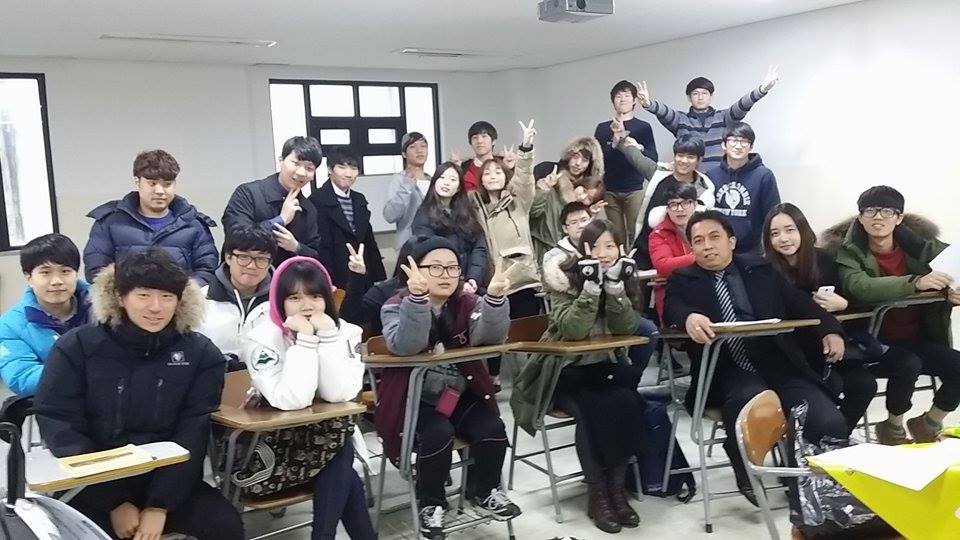
This year (2019) marks my seventh year here in South Korea. I am forever grateful to God for this opportunity, to Gyeoungju University where I taught in 2013, and to Hanseo University where I have been teaching since 2014.
When I decided to accept a job offer from a university here in South Korean way back in 2013, I was ready mentally, emotionally, physically, and spiritually – and of course professionally. I majored in English and I am licensed teacher. I didn’t come here not knowing what to expect and what to do.
I calculated the benefits I and my family would get from my being employed here (in South Korea) and weighed them against the challenges and sacrifices I need to face and make. There’s no measuring scale to determine if getting all those benefits was worth all the difficulties and hardships I could be contending with and the fact that I would be away from the warm embrace of my wife and son.
Some of my friends and loved ones considered my move as risky personally and professionally. I had a flourishing career as a school administrator and I might start from scratch again should my working in South Korea not turn out well.
I was aware of such risks but I know how to play my cards well. What I consider as my strongest suits are my strong faith in myself and in God. I fully know what I am capable of doing and I know how amazing is God’s grace. I never doubted my abilities, more so His grace.
What made my resolve to work here strong (aside from the personal reasons I mentioned in an essay where I explained why I decided to work in this country) was when I read the contract sent to me after passing the interview. It indicated a working period that is approximately 60% less than what is required in the Philippines yet the pay is (approximately) 300% higher than my pay at that time. More than the salary though was the difference in the number of hours that I would be required to render work – 12 hours of teaching and 4 hours of office. I could use the extra 24 hours (on top of the weekend) to pursue my other interest – writing.
But the downside was – I was not used to being away from my loved ones. I was not used to not seeing my wife and my son for a very long period of time. I also couldn’t cook and I hated doing the laundry and cleaning the house.
I was also told that homesickness and boredom could kill me.
But the die has been cast. My resignation as principal of that school at that time was irrevocable and so was my decision to pursue a teaching career overseas. Even the tears of my wife could not drown my resolve to accept the job offer of Gyeongju university.
And here I am… on to my seventh year as an ESL teacher here in South Korea. There’s no trace of regrets whatsoever for the decision that I made in 2013 to come over. I can say that I have gained tremendous personal and professional growth since that time. True enough I was able to use the spare time to write not only stories, poems, and essays but research works as well. I had the studies I conducted presented in international conferences and published in “indexed” journals.
Now I am maintaining two websites – Hardpen’s Portfolio and Mukahang Poet – where I publish my works in both English and Filipino. Had I not worked here, I doubt if I could have written those studies I completed and created and maintained my two websites.
I also learned to cook and I have no choice but do my own laundry and house cleaning.
What about homesickness and boredom?
I am too busy with my work and my writings that I could not find time to be bored. And when I am not working or writing, I either go to the gym or hike in the mountain or watch movies and NBA games.
And why would I feel homesick when upon waking up in the morning I would call my wife, either through Facebook messenger or Skype, and we talk all day and night when I am not busy working and during weekends. Even if we have nothing more to talk about we don’t end the video chat. That way I could see her and my son moving around our home while I also do what I ought to be doing. I could hear them talking, my dogs barking, and our neighbors’ roosters crowing and hens clucking. Hearing all the sounds in our neighborhood that I got accustomed to make me feel as if I’m home.
Consider this – we have approximately a total of 5 months off between the two semesters. That allows me to visit my family in the Philippines after every 4 months and two weeks and stay with them for at least 40 days. I just have to make sure that I would be able to attend the spring and fall commencement exercises. We’re paid for 12 months in a year which means that even during semestral breaks we receive salaries. That’s a huge blessing.
For those considering ESL teaching in countries like South Korea, Japan, and China, you wouldn’t regret should you try. Just make sure that you really are qualified to teach. It is a disservice to the teaching profession should you assume that because you could speak English you could teach it even if you are not trained to be a teacher.



 M.A.D. L I G A Y A