The Eulogy
(A Dramatic Monologue)
I promised not to cry. That is if I could help it. But should the people notice tears cascade from my eyes…should they hear my voice crack…should I suddenly break into tears… I know they will excuse me. I know they understand. I know that they share the grief that I and the rest of my family feel.
Now I must tell them what I need to say…
We are all grieving for in that casket lies the body of a husband, father, friend and leader. Lifeless that he is now but he remains alive in our hearts and in our minds.
Should you ask me to extol the qualities of that man as a husband, father and friend I could tell a thousand reasons why he is so beloved. But how is he as a leader? Ask me not for I am his son, what do you expect me to say. So, be the judge.
I dare you speak in this gathering now. Tell me. Divulge in this assembly. Has he done anything that tarnished the supposedly good image of a public servant? Has he accepted any bribe from anyone of you? Have you received five hundred pesos or a thousand from him so you would write his name in the ballot? Don’t be silent. Tell me that my father lied when the night before he died he assured us that never has he committed any act that will ruin the good name of our family.
I have to admit that there were many times when I was young that I begrudged his being a leader. Why? Him wanting to serve you took away a lot of quality time from us. I’m sorry. I was selfish. I did not like to share my father’s love and attention.
I begrudged the fact that the families of my father’s fellow public servants have gone from rags to riches…instant millionaires. Their houses became bigger while we remained in the old house that my mother inherited from her parents. They have new cars while my father kept driving his old owner-type jeep. Their children graduated from prestigious universities while I had to endure the rigors of being a scholar and a working student in our state university. How I almost hated my father when he refused the offer of the university president that I become a scholar without taking any examination. He said that just like everybody else I have to go through the process. It’s a scholarship. I must have it only if I deserve it.
One time when my family faced a severe financial crisis, I confronted my father and said, “I heard about that bidding for that road project. Why don’t you just accept a commission from one of the bidders so our problem will be solved. Just once dad!” The only response I got from him was a slap in the face. I would have gotten more had my mother not intervened.
Then from being the head of this town your urged him to lead the whole province. He accepted the challenge. Then he rocked the boat. What he did in our town he promised to do to the province…rid it of illegal gambling, drugs and corruption…stop the quarrying being done in the mountains and rivers…bring our province back to the map of significance.
The latest surveys show him leading by a mile. His opponents got very nervous.
Then a week ago, while talking to some supporters, a visitor came to our house, a man accompanied by a slew of bodyguards. One of them was carrying a large travelling bag. He wanted us to just call him Mr. Chua. The supporters of my father went out when the talk started. I stayed. I was requested to open the travelling bag and there I saw bundles of crispy thousand bills.
“Withdraw from the race and you’ll have all of these. There’s another travelling bag in my van, if that is not enough. Refuse it and you know what will happen.” Mr. Chua said.
My father looked at me. He stood and approached Mr. Chua then slapped him. “How dare you bribe me in my house and in front of my son.”
As Mr. Chua wiped the blood from his lips he said, “You made your choice.”
The visitors left with their money.
The following day, while delivering a talk in a meeting… what I considered inevitable… what I feared was certain to happen… came to past. My father met his tragic end. A hail of bullet reportedly from two gunmen killed him.
Now we are grieving. Crying. Lost. A flock left by a shepherd. You asked me if I could continue my father’s fight. I told you that my father asked me never to follow in his footsteps.
But for the first time in my life that I will go against my father’s desire. Forgive me father…but I feel obliged to continue what you started. They killed you but the flame of change which you kindled will not be extinguished by the bullet they sprayed on you. Your blood spilled is not a water doused on that flame but a gasoline that will keep it burning.
My father will not bring to his grave the reforms he sought. His visions for a better life for all of us in this province will not die with him.
The Challenges of Online Teaching – 2
(The Challenges of Online Teaching – 1)

My second semester of online teaching is about to end. With the 3rd wave of coronavirus onslaught happening here in South Korea, our university might decide to still not hold face-to-face classes for at least during the spring term of the next school year. Yes, there’s a light at the end of the dark Covid-19 tunnel – immunization is on its way. Pharmaceutical companies have announced the successful development of a vaccine. However, the distribution of the said vaccine to different parts of the world may still take months.
Online classes are more challenging than conducting actual classes in the classroom. This was my (indirect) response when asked whether I prefer remote learning over teaching in person. The difficulties are not too much on pedagogy for remote or face-to-face, teaching is teaching. The things you do as a teacher are pretty much the same and they boil down into the following – planning, instruction, and assessment. As I pointed out in another essay, “Online or otherwise, when you are a teacher, you should teach. You ought to find a way to achieve the objectives of the course/s you are teaching, cover the topics enumerated in the syllabus, motivate your students, discuss the lessons, give assignments, and evaluate learning.”
Why then that I consider online teaching more challenging than actual teaching in the classroom? After almost two semesters of doing online classes, there’s much I can share about it.
First and foremost, it forced me to account for how much I have invested in learning technology, especially those that relate to teaching. Well, I may have not taken any computer and information technology-related courses but I have taken advantage of the free access I have to the libraries and computer laboratories of the schools where I taught and learned what I needed to learn. Google and YouTube taught me a lot as well. In short, using the application and technology required to carry out online classes for me is not, generally speaking, a rocket science. There were some things I learned on the fly and there were other things that I learned by not hesitating to ask the help of a friend and colleague when I had to.
As I pointed out in another article, “With or without COVID-19, the ability to use technology in the classroom – to apply all available technology resources to education – is something that teachers should have trained themselves to do a long time ago. The use of technology has become an integral part of being a 21st-century teacher. There’s no way out of it. Schools should have made it a basic requirement for the teachers they hired. The abilities to create, evaluate, and effectively utilize information, media, and technology are required 21st-century skills. Teachers are expected to possess them.”
Secondly, online teaching would challenge teachers’ creativity and resourcefulness to the hilt. The one thing I missed so much about holding classes in the classroom is using the blackboard/whiteboard. I write a lot of examples when I explain grammar points and discuss vocabulary. Using the “annotate function” of the Webex screen while doing a PowerPoint presentation would allow only a few examples to be written. I resolved this by not clicking the slide show of the PowerPoint and split the screen into two where on one side is the PowerPoint slide that contains the information I am discussing and on the other a blank Microsoft Word document where I write the examples I want to write while discussing.
The students also need participation points which they could get by answering the questions I asked while I was doing my presentation. Calling on just one student (or a few) to answer a particular question would not give other students an equal opportunity to answer thus depriving them of a fair chance to earn participation points. This I resolved by asking the students to answer my questions using the “chat text box” of Webex. I would pause for a few seconds after asking my questions to give everybody an equal opportunity to answer and after the class, I check their answers and record their points.
I also created an electronic portfolio for each of my students and had to improvise with my assessment methods. I explained the aforementioned in detail here.
Lastly, with online teaching, I have to stretch my patience.
I require my students to turn their video cameras on during my online classes. Failure to heed would mean expulsion from the class. This I did when I got an assurance from our supervisor that doing so does not constitute any violation of university guidelines or existing laws of the country. I am not violating students’ privacy when I require them to turn their video cams on.
What’s the use of attending online classes if the students’ video cams are off? You will not somehow be able to monitor if they are really there and what are they doing. Yes, I can randomly call their names to check but should they respond how sure I am that it was really them responding and not someone else. And do I have to stop instruction once in a while just to randomly call names?
But there were also a variety of problems I encountered when their video cams are on. Some would have the ceiling or wall of their rooms shown instead of their faces. Some I would see obviously talking to someone else in their room or doing something else instead of paying attention to what I was discussing. They know my policy as their teacher. They know that if they do things that I deem inappropriate, they will be “moved to the lobby.” I would accept them back should they request so.
What I consider the weirdest when doing classes online is that sometimes I feel like instead of teaching I was delivering a monologue. Thus, I make sure that I ask questions not only to elicit their participation but also to re-establish my connection to my students in case that after I talked for (probably) too long, their mind veered away.
It is really difficult to know how many of the students are really listening during online classes. It is hard to know if some of them were actually watching a movie while I was teaching. I tried requiring them to turn their microphones as well while our online class was ongoing to discourage them from playing music or watching movies but the noise coming from different sources is just unbearable for all of us. Besides, they can simply use earphones if they don’t like me to hear the video of whatever they are playing while we’re having our online classes. So, I stopped requiring them to turn their microphones on.
I would tell my students once in a while that I am aware of the realities of online teaching and I have fully embraced them. I just have to do my part as their teacher and I would do no less. They are adults and they have a choice of whether they do their part as students or not.
At least in each of my classes, a few would be regularly answering my questions either by “raising a hand” or by using the “chat text box” to write their answers. The majority may be quiet most of the time but it does not mean they are not interested. Thinking that there are students like them expecting me to deliver is what keeps me going.
Ako’y Alipin Mo

Ika’y pintig na sa puso ko’y tumibok
Lakas na sa mundo ko’y nagpapaikot
Ngunit ang ngiti mo sa akin ang dulot
Isang laksang saya’t labis-labis na lungkot
Ikaw ay kaligayahang dapat damhin
Gayon ma’y mabigat ka ring suliranin
Ika’y kayamanan kung aking ituring
At kabayarang dapat na balikatin
Ika’y amihang ginhawa sa tag-init
Hatid mo ri’y init pag gabi’y malamig
Kandungan mo’y itinuturing kong langit
Bilangguan nang inaliping pag-ibig
Ang ibigin ka’y parusa kung ituring
Ngunit takda ko’y maging iyong alipin
Hagupit ng pagmamahal tatanggapin
Kung ito ay sa puso mo manggagaling
Talinghaga kang mahirap na arukin
Palaisipang ‘di ko kayang sagutin
Magkaganun man ikaw ay mamahalin
Magpakaylan man ‘di kita lilimutin
Pangako mo ma’y mahirap panghawakan
Madali mang sa iyo na ako’y iwanan
Ang mahalin mo kahit panandalian
Dulot ay ligayang walang katapusan
Notwithstanding Covid-19
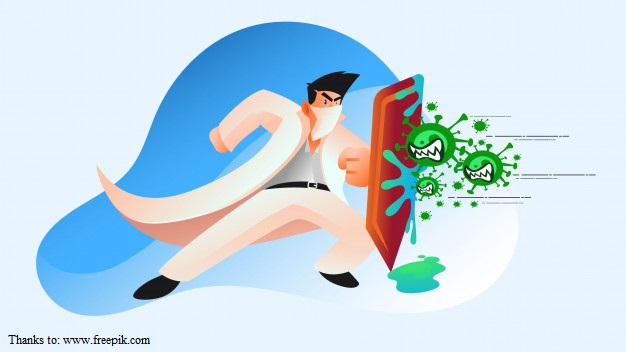
Life goes on, with or without Covid-19.
Don’t misconstrue that statement as taking the deadly pathogen for granted. We can’t (and should not) do that. We can’t disregard the coronavirus. Many did and I don’t think I still need to tell you what happened to them and where are they now. May I just share the most current worldwide statistics: almost 62 million cases and 1.5 million deaths (as of November 28th).
We will never know how many of those cases and deaths resulted from complacency and stubbornness and how many more will be added because of the same?
There are pharmaceutical companies who have reportedly developed the vaccine and are a few weeks away from distributing IT. It may take months before the vaccine could be distributed worldwide. We just have to stretch our patience a little bit more. What we have to deal with and endure during the past months is fatiguing. We have no choice but to hang on.
We have survived the first 11 months of the onslaught of this pestilence and we have to continue taking the necessary precaution in order for us to stay alive and safe until the vaccine gets rolled out to every continent in the world.
In the meantime – life should go on. We cannot afford to stop living because of the ongoing pandemic. We should not stop with our worthwhile personal and professional pursuits. We don’t have to stop dreaming. We should not cease doing what we ought to be doing in order to improve our lives.
While we should not disregard the dangers that the Covid-19 brings forth, we could not afford to cower in fear as if the world has already ended. The last time I checked, the earth is still rotating in its axis and continue to revolve around the sun.
Consider this pandemic as the middle of the night, it’s eerie and quiet as the Grim Reaper called coronavirus walks around piling corps to a wagon. But the sun will soon rise again with its rays bringing hope.
While we mourn the lives lost, we should not forget that there are people still alive and maybe counting on us. While we sympathize with those who either lost their jobs or closed their shops, the wheels of the economy should keep turning and we have to do our part. We need to perform our duties or essay the roles assigned to us.
We could not bring back the lives lost, but those alive among us still have the chance to find another job and re-open their shops. When this storm hovering above us now eventually disappears, we can sift through the debris and start from there.
We would be presented with the opportunity to evaluate what happened during the pandemic and shortly before it for the purpose of learning from our mistakes and be ready should another pandemic comes along. Let’s make sure that next time (which we hope wouldn’t come), we wouldn’t be caught with our pants down.
Hope springs eternal. But you have to make a choice between expecting that tomorrow is better than today or it’s worse. That’s a decision only you can make. You have a choice, just like when you are asked to wear a mask, stay at home, and observe personal hygiene and social distancing. You can choose not to follow because you are a free man. But remember that there is something more valuable than freedom – LIFE.
On Self-doubt

“Our doubts are traitors and make us lose the good
we oft might win, by fearing to attempt.”
– William Shakespeare
Lust, gluttony, greed, sloth, wrath, envy and pride are referred to in Christian teachings as the “seven deadly sins.” These, to the Roman Catholics, are the cardinal sins. If a person commits any of them, he is believed to be cut off from God’s grace.
Actually, the Bible does not specifically mention the concept “seven deadly sins.” But in Galatians 5: 16-19, fifteen acts of the sinful nature are identified – sexual immorality, impurity, debauchery, idolatry, witchcraft, hatred, discord, jealousy, fits of rage, selfish ambition, dissensions, factions, envy, drunkenness, and orgies. Perhaps St. Gregory the Great, during his reign as Pope (590 – 640 AD), wanting to be concise, shortened that long list of capital vices.
All Christian faithful are being called upon to not commit those acts of the flesh. St Paul said that believers are free but he implored them not to use their freedom to indulge the flesh. That, definitely, is easier said than done.
I think St. Paul (who wrote the Galatians) and St. Gregory may have overlooked another human frailty that should have been added to the list of sins. There exists another spiritual infirmity that I believe should be considered as equally harmful as any of the deadly sins. It’s called self-doubt.
My proposition (that self-doubt be classified also as sin) may not be considered seriously. Many might even say it’s preposterous.
Is it?
Is self-doubt just an ordinary flaw in a person’s character? Is it really a bit too much to consider it a sin? Is it not a serious offense – something that when committed could ruin a person’s life?
Allow me to argue my assertion that self-doubt is a sin. For those who do not believe in the concept of religion, think of self-doubt not as a sin but an injury you inflict upon yourselves.
In this article, we will define self-doubt, strictly, as “the feeling of not having confidence in yourself or your abilities.” The concept of doubt being discussed here does not refer to that philosophical function “to cast doubt.”
The definition above (the one before the disambiguation) makes self-doubt sound harmless – not something immoral or demonic that would make the moralists and bible scholars (both past and present) look at it as a sin. That’s probably the reason no religious movement, Christianity included, classified such human inadequacy as a sin. You might also refuse to accept that it is an injury you inflict upon yourself.
Self-doubt, however, is not as simple as it seems. This impotence of the human spirit has grave consequences not only to the person having it but to the family where he belongs and to the society where he lives. A person plagued by it will be less-productive or not productive at all and is definitely not going to contribute anything to his family and society.
In arguing that self-doubt is a sin (or a self-inflicted injury) it is important to review the nature of sin from a philosophical standpoint.
“Sin is said to be a moral evil” (O’Neil, 1912). This brings us to another question – what is evil? St. Thomas defines the word (evil) as a privation of form or order or due measure. “Evil implies a deficiency in perfection.”
Self-doubt is clearly an imperfection. It indicates the absence of confidence which is considered essential for a person’s well-being and is a requirement in the pursuit of what Abraham Maslow refers to in Psychology as “self-actualization” or achieving one’s full potential. Sin is a diversion from the perceived ideal order of human living (Hyde, 2018). A person doubting his capabilities veers away from becoming the best that they can be and reduces their chance of living life to the fullest.
It could be argued that there are a lot of other negative human characters that may indicate imperfections. But none is as damaging to the person as self-doubt. Something is wrong with a person if he lacks confidence and has a very low (or no) feeling of self-worth. These are conditions that may lead to failure and unhappiness.
In addition, philosophical or moral sin is a human act not in agreement with rational nature and right reason. (Hyde, 2018).
It is not considered reasonable to doubt one’s capabilities. It is a person’s moral obligation to believe in themselves. It is not right to think one would fail even without really trying. A person needs to have faith not only in God (if he happens to believe in one) but also in themselves.
Allowing self-doubt to reign is depriving the self of discovering one’s potentials. When a person decides to doubt themselves, they eradicate their ability to fulfill their goals and to achieve their dreams.
Failures are indeed impossible not to happen. But even if one fails in several attempts to succeed they should decide not to stop trying. There’s a long list of famous personalities (like Albert Einstein, Abraham Lincoln, J.K. Rowling, Bill Gates, Walt Disney, and Henry Ford) who had their share of failures but never gave up.
But is self-doubt a self-inflicted injury?
“Sin, also, wounds the nature of man.” This is what the Catholic teachings assert.
“Self-doubt destroys the heart, mind, body, and soul. It is one of the major obstacles to living the life that people truly deserve. This unhealthy food for the soul drags down a person’s spirit, crushes his ambitions, and prevents him from achieving all that he can (Thalk, 2013).
Doubt impedes a person’s development. It is the biggest roadblock to self-actualization. Self-doubt prevents people from becoming the best they could be, from realizing their full potentials, and from achieving their dreams. Shakespeare stressed, “Our doubts are traitors, and make us lose the good we oft might win, by fearing to attempt.” Doubt could possibly kill more dreams than failure ever did.
Some degree of self-doubt is generally held to be normal. It can be helpful in some cases, as it often leads to introspection and enhanced performance. But it may require medical help when it becomes debilitating, affects daily function, or impedes performance at work or school (Self-doubt, n.d.).
There’s no immorality committed when one doubts himself. Why should it be then considered a sin?
This brings me to the last among my arguments to convince you that self-doubt is a sin.
A sin may either be a sin of commission or a sin of omission. Sins of commission are sins we commit by doing something we shouldn’t do and sins of omission are sins we commit by not doing something (Sins of Commission vs Sins of Omission, 2015). The seven deadly sins are all sins of commission except sloth.
Sloth – extreme laziness or the failure to act and utilize one’s talents – is considered a sin of omission. I think self-doubt belongs to that category. If sloth made it to the list of the deadly sins, self-doubt should be there also.
“Self-doubt,” is just as damaging (perhaps more damaging) to a person than this sin called “sloth.” Actually, in some instances, a person’s failure to use his innate talents starts with his inability to believe what he is capable of doing.
I hope that the arguments I presented above about self-doubt are convincing enough that from this point on you would move as far away from it as possible.
Conquer your self-doubt and start to nurture self-belief which I think is the key component of the value system of the few men and women who scaled the heights of success.
References:
Hyde, J. (2018). The book of sin: How to Save the World, UK: Soul Rocks Books
O’Neil, A.C. (1912). Sin. In The Catholic Encyclopedia. New York: Robert Appleton Company. Retrieved October 24, 2020 from New Advent: http://www.newadvent.org/cathen/14004b.htm
Self-Doubt (n.d.). Retrieved from https://www.gootherapy.org/learn-about-therapy/issues/self-doubt/
Sins of commission vs sins of omission (2015) Retrieved from https://www.revelation.co/2015/07/21/sins-of-commission-vs-sins-of omission/
Thalk, C. (2013). Self-doubt destroys the heart, mind, body and soul. Retrieved from https://www.huffpost.com/entry/self-doubt_b_2960936
HOW COVID-19 AFFECTED MY FAITH
(A Personal Essay)
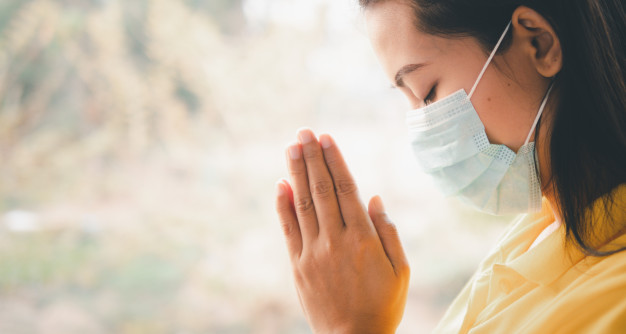
Everybody in the world is affected by the COVID-19 pandemic. Either directly or indirectly, people have felt (and are still feeling) the effects. The directive of authorities to stay at home and to observe social distancing when going out may seem to be very simple orders. But they are not. The socio-economic impact of those directives is huge. And yes, they have psychological effects too.
Personally, I felt (and still feeling) the effects. Gatherings in all kinds of establishments are either limited to only a few people or none at all. Even places where people are known to congregate – like churches – are either closed or could operate but not to full capacity.
With churches either closed or could accept church-goers limitedly, spiritual growth has become one of the casualties of the coronavirus. For people pursuing a religious life, that’ a big deal.
My mother and my grandmother, both devout Catholics, taught me and my sibling the value of faith. I was a teacher for a total of 11 years in 2 Catholic colleges in the Philippines where faith, obviously, is an integral part of their culture. I don’t know if that made me a religious person. What I am sure of is this – it strengthened my faith in God.
My religious life, in one way or another, was affected by the ongoing pandemic. For a certain period of time that gatherings, especially in large groups, were not allowed in all kinds of institutions, including religious ones.
Consequently, the clergy decided to hold church services online. The faithful were asked to join. I did. It was different. I could not feel the solemnity of the ceremony. There were plenty of distractions. It was difficult to focus on worship.
Then came the time when government authorities allowed small group gatherings. After that, the church announced the resumption of the holding of masses.
Admittedly, I wasn’t very enthusiastic about attending face to face masses. Yes, I consider it essential to go to church not only to honor my spiritual obligations but also to listen to the words of God and commune with fellow-believers. But with COVID-19 perilously hanging over our heads like the sword of Damocles, I consider it too risky to travel and to be with other people inside any place notwithstanding all the precautions being instituted to ensure the safety of everyone.
But there were Sunday nights, after not attending a mass, when I questioned myself. Did I choose not to go to church because of fear that I might get infected by the virus or am I using the virus as an excuse not to honor my spiritual obligation? Am I really afraid of the virus or is it a case of my desire to worship God waning? Has my faith got infected also by the coronavirus?
The COVID-19 seems to be deadlier than how it was projected by our scientists and epidemiologists. It does not only compromise our immune system but seemingly it could also weaken us psychologically. There are now known and recorded cases of emotional and mental breakdowns caused by the virus. And the worst – it could also penetrate our souls down to the very foundations of our faith. If I am not going to be aware of this, I may end up alive when this health crisis is over but my faith could be dead.
The ongoing pandemic is fiercely challenging the indomitability of the human spirit. It has put my spirituality to a test – a test that I should not fail. Overcoming the difficulties and challenges we are now facing require all form of toughness – physical, emotional, mental, and spiritual. I know that for me to survive I need to strongly believe in myself and more importantly in God. I have to keep the flames of my faith burning so I may have the light that will guide me as I walk the path darkened by the current challenges and hardships humanity is experiencing because of the COVID-19.
I noticed how the coronavirus is attacking the foundations of my spiritual life – how it is trying to erode my faith. How it effectively instilled in me the fear of getting infected thus I am either hesitant or afraid to venture outside of my home. Some may say this is totally understandable (and it should be what each of us really needs to do) because science is telling us how unpredictable this virus is. The church where I go maybe safe because of the precautions being undertaken by both the clergy and the lay helping them in managing the place of worship. But what about the distance that I have to cover to get to the church? The places I need to pass through, the buses I take (because I don’t have a private vehicle), and the people I meet along the way – am I safe from them (and them from me)? Is my face mask enough to protect me (and them)?
When I thought of all the foregoing, I had to ask myself – Am I not just trying to justify my failure to perform my spiritual obligation – my duty to worship Him in His holy house?
The Church is some kind of an umbilical cord that connects the faithful to God and the coronavirus is seemingly threatening to cut it. Shall I allow this to happen? There were times that as a believer I went to the extreme of thinking that COVID-19 is being used by the devil to create a wall between me and my God.
But one time, after hearing more horrible news about the coronavirus, I tried to re-examine my life. I was surprised with what I have noticed is happening to me. Somehow, this pandemic has also done something good to my spiritual life. Let me explain.
The coronavirus may have made me hesitant, if not afraid, to go to church but it pushed me to seek God more than the way I used to before the pandemic. I became more prayerful. I did not just pray more frequently but also the nature of my prayers changed. Before, I would only pray for myself and my family. But since the coronavirus started its reign of terror, I learned to pray for my friends as well, for my neighbors, and for my countrymen, and for all my fellowmen.
COVID-19 taught me not only to pray unselfishly but to become more cognizant of the pains and sufferings of my fellowmen – especially those who are infected by the virus and those whose livelihood suffered because of the measures government officials in all the countries affected by the pandemic had to implement in order to curb the spread of the virus.
The pandemic taught me to care. But the more I cared the more I felt helpless because I realized there is nothing I could do for them, for those who are suffering… except to pray. The only thing I could do for my friends, neighbors, countrymen, and my fellowmen is to implore God, to ask Him to forgive us for our sins – if it is our sinfulness that caused this contagion to come down upon us so fiercely and unrelenting. All I can do is to pray that may the good Lord embrace us once more with His infinite mercy and love and put an end to this ongoing health crisis.
I probably have never prayed any harder and I have never cared more for my fellow human beings the way that I do now. The more I prayed to God for everybody affected directly or indirectly by the COVID-19 pandemic, the stronger my empathy towards my fellowmen grew. That while I may be thankful to God that all of my beloved ones are safe and healthy, my heart is bleeding because the virus continues to wreak havoc in different parts of the world infecting millions and killing thousands. That while I am thankful that I continue to be employed and have a steady source of income, I deeply sympathize with all my brothers and sisters in different parts of the world who lost their jobs or closed their businesses because of the ongoing pandemic.
How cruel and disheartening it is to see children getting orphaned, people going hungry and helpless, and dreams getting shattered. How painful it is to know that I could do nothing for them but to pray that may God put an end to all these miseries in the soonest possible time.
It took a pandemic for my spiritual life to take this very significant turn. Aside from learning to pray harder and to care for others, and to have empathy for other people it made me more introspective. I have never reflected on life the way that I have been doing it nowadays.
It seems that I have joined a retreat since the pandemic turned from bad to worst. I reflect on life. Seeing vibrant and healthy people suddenly succumbing to death has reminded me of how fragile life is. Only God knows when am I going to breathe my last. So, I have to live life to the fullest. I have to live it in a way He would see my faithfulness and allow all my hair to grow gray before I see my last sunset.
The other thing that the current pandemic made me take notice of are the things I have been taking for granted. I was never remiss of my duties as a father to my children, husband to my wife, and a son to my parents. I always send them the money they need. But I am not sure if I am making them feel loved. It was only during this pandemic that I took time to make a conscious effort to talk to them longer, to make them feel that I long for their presence. It has become easier for me now to say that I love them and that I care.
This is one of the great things that resulted from the coronavirus scare – families becoming closer. During the times that people couldn’t (and shouldn’t) go out, family members had a chance to talk to each other longer. And the best part is this – they also learned to pray together.
It reminded me of my mother who required me and my siblings when we were kids to be home for Angelus at 6:00 PM every day. After the Angelus, we would be praying the rosary. Faith in God is perhaps the best value my mother instilled in me.
When after a long time I decided to attend mass again, it was a wonderful experience. I felt a surge of enthusiasm when we started singing the hymns. I experienced rejuvenation as I hear the scriptures being read and the homily being delivered.
When the priest delivered his final blessings, I felt a different kind of joy that is hard to explain.
After all, we can choose to view the COVID-19 pandemic using a positive perspective. Some good things came out of it. Remember Romans 8:28, “We know that God is always at work for the good of everyone who loves him. They are the ones God has chosen for his purpose.”
Why Your Value System Matters
“Our value is the sum of our values.”
– Joe Batten
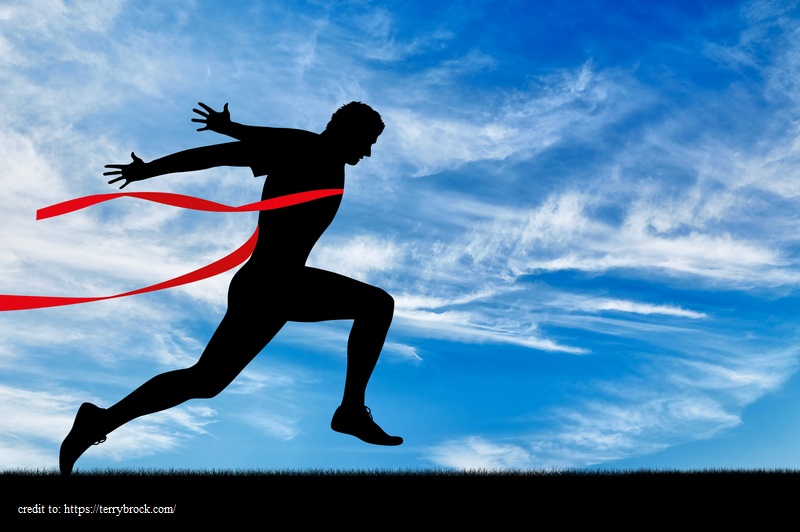
We call the men and women who realized their dreams and ambitions, accomplished great things, and left an indelible mark in their chosen fields of endeavors in different ways – winners, achievers, successful people, distinguished individuals, people who achieved renown and wealth, extraordinary and great men and women, and exceptional and remarkable ladies and gentlemen. I don’t know if there are other ways to call them. The one thing I know for sure is that there are only a few people like them in the world.
Why did they succeed? Why only a few people would end up standing on the winner’s podium?
Aside from their obvious dogged determination to get what they want and become who they want to be, what else do you think is common among them? Here’s my take – a strong value system.
Let me refer to value system as the collection of a person’s attitudes and beliefs.
How important is a person’s value system? Does it correlate with success?
Your attitudes and beliefs inform the decisions you make and control the way you live your life in general. Thus, you have to be aware and critical of your own value system – of the attitudes you possess and the beliefs you uphold. If you haven’t yet, you need to evaluate your value system as objectively as possible. The following should be the goals of your evaluation: to strengthen the good ones that you have; and to identify which ones are sabotaging your pursuits and endeavors.
Moise (2104) explained that “beliefs are about how we think things really are and tend to be deep-set. They represent mainly assumptions that everyone makes about [themselves], about others, and about different phenomena that are occurring in their own environment. Attitudes, on the other hand, can be considered as the response that individuals have to others’ actions and external situations, ways of conduct that people have learned having certain beliefs and values.”
Beliefs and attitudes are byproducts of our education and the accumulation of experiences since childhood. The attitudes and beliefs we possess constitute our conditioning or programming which in turn influences our perception and reactions to whatever happens around us. They inform the way we talk, behave, and think. They are the foundations upon which every decision we make stands.
Accept it or not, your attitudes and beliefs will dictate whether you succeed or fail, whether you live a happy life or a miserable one. There’ no limit when it comes to success and greatness. You can have and become whatever you want. But as Zig Ziglar once said, “Your attitude, more than your aptitude, will determine your altitude.” You also need to evaluate your beliefs. “Beliefs have the power to create and the power to destroy,” says Tony Robbins.
“The beliefs that accumulate in the minds of people as they get older become the rules that govern their actions and way of thinking. The beliefs and evaluations people hold about themselves determine who they are, what they can do, and what they can become (Burns, 1982).”
Who you are, what you can do, and what you can become are things that are not foreordained or predetermined as what advocates of the doctrine of predestination would want you to believe. They are results of the decisions you made and will be making. How far you climb the ladder of success and greatness depends on the quality of the decisions you make.
Your decision-making mechanisms are wired to your value system. That’s how critically important it (value system) is. The soundness of your decisions therefore is hinged on your attitudes and beliefs. Whether or not you would end up joining extremely successful people at the top depends on your willingness to develop the same value system that brought them there.
And what is the nature of their value system? What attitudes and beliefs do achievers have?
Part of my daily routine is reading literature and watching videos on personal growth and development. This allowed me to evaluate the value system of people who made succeeding a hobby. In talks and guestings, some of them openly discuss the specific attitudes and beliefs that made them who (and what) they are.
I chose the following as the most important attitudes and beliefs that constitute their value system: Self-belief; In control; Personal Accountability; Positive Thinking; Positive Perspective; Positive Mindset; Passionate; Purposive; and Grateful.
These achievers have faith in themselves. They are in control of their destiny. They are personally accountable. They think positively. They look at things using a positive perspective. They have a positive mindset. They are purposive and passionate about everything they think, say, and do. They are grateful.
The distinguished individuals in our midst strongly believe in themselves and never doubt their ability to succeed (or to eventually succeed.) Not that they never failed. They did, sometimes multiple times like J.K. Rowling whose first Harry Potter book was rejected by 12 publishers. But she kept trying until Bloomsbury published her first Harry Potter novel (J.K. Rowling, n.d.). The rest, as they say, is history.
What if J.K. Rowling stopped trying after those many failures? She would have not become one of the highest-paid authors of this generation earning millions of dollars a year. What if Henry Ford and Soichiro Honda, (founders of motor companies that bear their names); Bill Gates and Steve Jobs (of the Microsoft and Apple fame); and Winston Churchill and Abraham Lincoln (giant political figures in their respective countries) all succumbed to their initial failures? But they did not. They have (and had) faith in their capabilities and in their dreams. They did not quit. They knew that eventually, they would reap the fruits of the hard work they sowed.
People who achieved renown and wealth got what (and where) they wanted because they willed it. Instead of becoming hostage to the notion that men get to live their assigned fate, they took control of their own lives and charted their own destiny. They also consider themselves personally accountable for whatever happens to them and what they become. They make their own decisions and live their lives on their own terms. They take it incumbent upon themselves to ensure that they succeed, with or without the help of anybody. They don’t rely on anyone but themselves. They would appreciate any kind of help but these people prefer to climb their own way to the top. Their character is that strong and their heart and mind focused on their goals that no matter what, they would reach the summit of any mountain they wanted to climb. That’s how they got there. And that’s how you’ll get to the top and rob elbows with them. That is if you are willing to emulate them, to follow in their footsteps.
Despite the skepticism thrown against positive thinking (or any of its equivalent constructs), achievers embrace it for they know and are smart enough to acknowledge that it is more beneficial to think positively rather than negatively. They practiced positive thinking and I don’t mean that they just imagined themselves becoming successful then they became successful. They used positive thinking only as a springboard.
Those who bothered to study positive thinking before judging its worth do acknowledge that it is not the be-all and end-all of personal growth and development. As I said previously – it’s a springboard. It is better to have hope – which is what positive thinking gives – than none at all. But as John Maxwell puts it, “hope is not a strategy.” This they know. Thus, they did not stop after thinking positively. They acted after thinking. They carried out their plans.
Thoughts have power in themselves. They affect a person’s health and wellbeing. But you will not bring your dreams and ambitions to fruition by just thinking and not doing anything. “Act is the blossom of thought and joy and sufferings are its fruits.” It was James Allen who said that.
The few extraordinary and great men and women among us view things, events, and issues using a different lens. They have the propensity to look at them at a positive vantage point. What ordinary people consider an adversity is for them an opportunity. This Jim Rohn illustrated succinctly through an anecdote about two salesmen who, one day, experienced a storm. One of them looks out and says “Wow, what a storm! With weather like this, they can’t expect you to go out and make sales. He stays home. Same morning, the other guy looks out – same rain, same storm – and says “Wow, what a storm! With weather like this, what a great day to go out and make sales! Most everybody will be home – especially the salesmen!”
That’s the kind of lens that those people who succeeded possess. They see opportunity amidst adversity. What about you? They refuse to be drowned by the unstoppable waves of challenges. They surf through them. They are the ones who look at failure as a teacher that tells them what didn’t work thus they perform better when they try again. These people would simply refuse to dwell on the negative.
Their positive perspective is part and parcel of another important construct called “positive mindset.” Others view perspective and mindset as similar concepts. I construe them differently – the former is a component of the latter. Mindset refers to the general attitudes of people, not only the way they think about things and issues. There is something else to mindset aside from the ability to put things, events, issues, and what-have-you in a positive frame. That something is what Carol Dweck (2006) dichotomized into “fixed mindset” and “growth mindset.” She (Dweck) refers to it as self-perception or self-theory that people hold about themselves.
Needless to say that the winners who raised their hands in the podium of success possess a positive (or growth) mindset. They believe that a person should continuously hone their skills and abilities. It is what successful people do – dedicate themselves to lifelong learning. They worked hard maintaining the notion that intelligence and talents are something that they are not born with but something they have to acquire and nurture. Even if many of them are innately intelligent and talented, they never assume that they are. They are determined to learn what they want to learn and acquire the skills they must develop in the pursuit of their dreams and ambitions.
Achieving goals has seemingly become natural for these exceptional and remarkable ladies and gentlemen because in addition to all the aforementioned beliefs and attitudes embedded in their value system, they are also passionate and purposive. They display tremendous passion in their personal, professional, and business pursuits. They know what they want and would not leave a stone unturned until they get it.
Certainly, these people whom we look up to because of their tremendous accomplishments and exploits are not whiners and whingers. They are satisfied and grateful. And why not? Why would they complain when they have everything they want and they are exactly where they want to be. They are enjoying the fruits of their labors. As the old saying goes – “You reap what you sow.”
It is hard to tell as to how many of these people who have accomplished so much have the humility to recognize that in the process of them becoming and getting what they wanted, there was an unseen force that guided and helped them. Those who do call that unseen force different names. I call it GOD.
It is my personal belief that what will glue together our attitudes and beliefs into a stronger value system is faith in GOD.
References:
Burns, R. (1982) Self Concept Development and Education. Dorset Press, Dorchester.
Dweck, C.S. (2006). Mindset: The New Psychology of Success. New York: Ballantine Books.
J.K. Rowling. (n.d.) In Wikipedia. https://en.wikipedia.org/wik/J._K._ Rowling#Remarriage_and_family
Moise, C. (2014). Importance of beliefs, attitudes and values in the frame of human resource motivation. Annals of Spiru Haret University Economic Series. 14.17.10.26458/1422
 M.A.D. LIGAYA

 M.A.D. L I G A Y A