Category Archives: Faith in God
The Half-Truth Before Ecclesiastes
A Reflective Essay
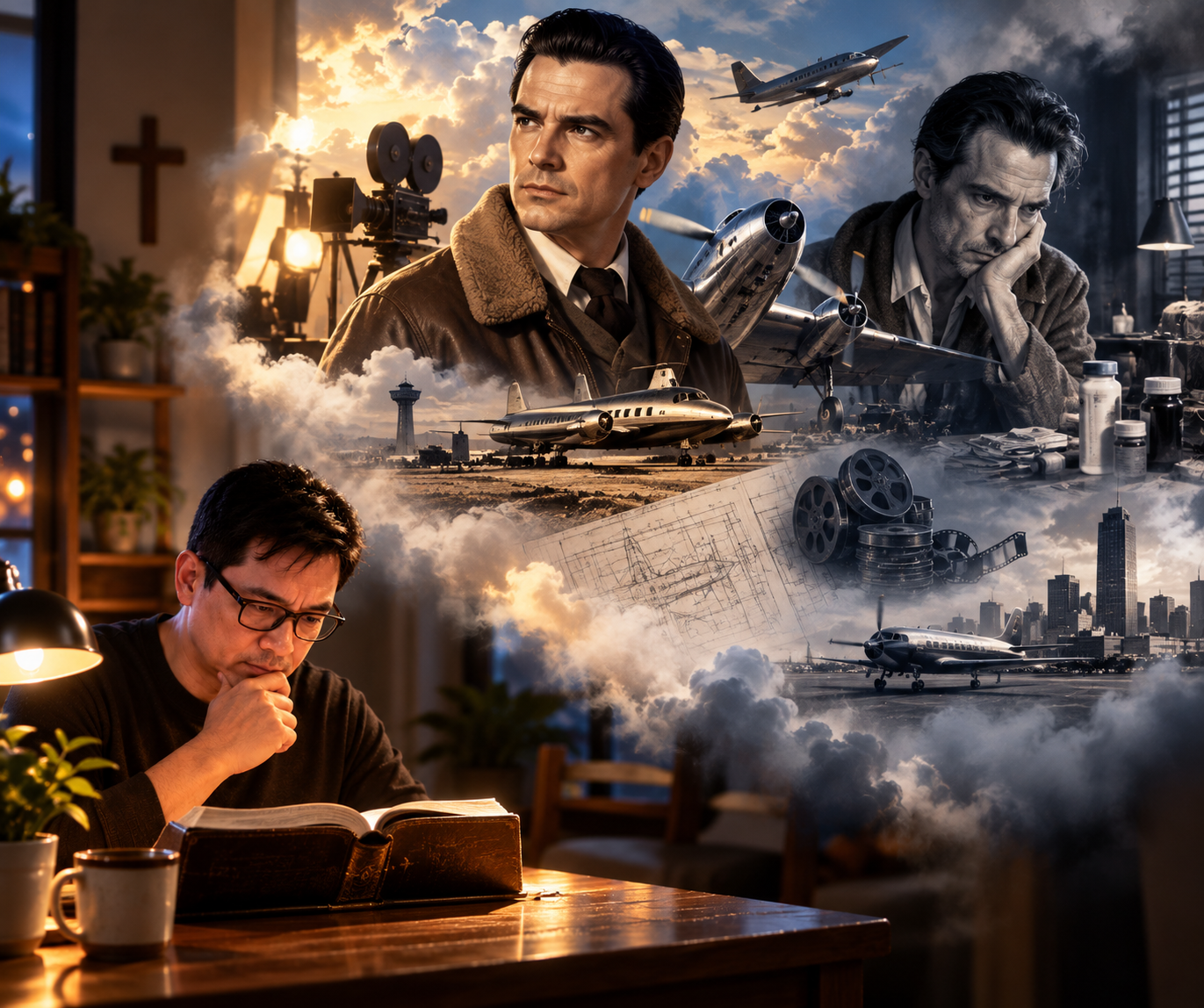
I usually dedicate the first 60 minutes of my waking hours to a strict daily routine: make my bed, perform the usual bathroom rituals, drink lukewarm water with Himalayan salt, meditate and pray, exercise lightly for 10 to 15 minutes with Gospel songs playing in the background, and then, for the final activity, read for at least 10 minutes—or whatever remains of that first hour.
Phones and other gadgets are off-limits.
Yesterday morning, I reached for my 30-year-old Bible and read Ecclesiastes. It is a Devotional Study Bible, New International Version, that a pastor friend gave us as a wedding gift. I even brought it with me when I came to South Korea in 2013.
I opened the Bible to page 569. Before the first chapter of Ecclesiastes was a two-page introduction. I intended to skip it and go directly to the first verse, but its title ambushed my attention:
“When Life Seems Senseless.”
So I read on.
One paragraph told Howard Hughes’s story. It contrasted the poor who imagine that more money would make them happy with Hughes, one of the richest men in the world, who eventually withdrew from society and spent his later years secluded in darkened hotel rooms. It described his long hair and beard, overgrown fingernails, and emaciated body.
Honestly, in that instant, I could not recall anything about Howard Hughes. For a moment, I even wondered whether he was a fictitious character used simply to illustrate the lesson.
My curiosity got the better of my gadget-free morning rule. I had to know who this man was.
So I reluctantly reached for my phone and asked Gemini:
“Is Howard Hughes a fictitious character?”
Gemini promptly doused my ignorance with a bucketful of information. For a moment, I felt as though the AI application were telling me:
How can you know nothing about this great man, you stupid moron?
Then something clicked.
The Aviator.
Leonardo DiCaprio. Howard Hughes.
Suddenly, I remembered. I had actually watched the movie, and some of my students had even used it for their movie reviews in my literature class back in the Philippines.
The Martin Scorsese film starring Leonardo DiCaprio was based on Hughes’ life. Suddenly, the miserable recluse described in my Bible’s introduction acquired another identity: aviator, filmmaker, businessman, engineer, risk-taker, record-setter—a complicated and extraordinarily accomplished human being. The man I had wondered about only moments earlier might be a fictitious character, but he suddenly emerged as an almost larger-than-life figure. Hughes had set aviation records and contributed to aircraft development long before he became best known for the eccentricity and isolation of his final years.
And then another question occurred to me:
What happened between those two Howard Hugheses?
The introduction had told me about his enormous wealth at the beginning and his miserable condition near the end. But it had said almost nothing about the road between them.
That omission bothered me.
Perhaps the writer simply wanted Hughes to illustrate one of the central themes associated with Ecclesiastes: worldly wealth, achievement, and pleasure cannot guarantee meaning or happiness. Hughes certainly makes a powerful example. He possessed extraordinary wealth and accomplishment, yet neither protected him from suffering.
But a human life becomes dangerously easy to moralize when we remove its middle.
In 1946, while test-flying the experimental XF-11 reconnaissance aircraft, Hughes crashed into a residential area in Beverly Hills. He was pulled from the wreckage in critical condition. The accident was only one part of a complicated life, but it was no trivial footnote.
His later years were marked by worsening isolation, poor nutrition, heavy drug use, and deteriorating physical and psychological health.
Does the crash explain everything that happened to Howard Hughes afterward?
Probably not.
And this is precisely where I must be careful not to commit the same mistake I am criticizing. It would be unfair to replace one simplified Howard Hughes with another—to turn “the miserable billionaire” into “the great man destroyed entirely by one accident.”
Human beings are rarely that simple.
Hughes had his flaws. His psychological difficulties were complex. His wealth, power, personality, physical suffering, medications, relationships, choices, and circumstances all belonged to the same human story.
But that is exactly the point.
The whole story matters.
The introduction reduced that complicated story to an effective contrast: a man had tremendous wealth and nevertheless ended his life miserably.
As a sermon illustration, it works.
As an account of a human being, it leaves me uneasy.
There is a difference between saying something untrue and telling only the part of the truth that serves our argument. The passage about Hughes may not have lied about him. But by omitting important context, it made his decline appear almost like the inevitable moral consequence of wealth itself.
And perhaps that teaches a lesson quite different from the one the writer intended.
When we use real people’s lives to illustrate moral or spiritual truths, we owe those people fairness—even when they are long dead.
Their suffering should not become merely a convenient prop for our argument.
This realization also changed the way I looked at the pages in front of me.
I had initially thought: How ironic that a Bible should contain something I find so incomplete.
But then I realized that I needed to make another distinction.
The introduction was not Ecclesiastes.
It was not Scripture.
It was commentary written by a human being to help readers approach Scripture. Like every piece of human commentary—including this essay—it carries the writer’s choices, limitations, interpretations, and assumptions.
Perhaps that is another reason we should read carefully.
Not cynically.
Not suspiciously.
But carefully.
Faith does not require us to surrender critical thought. If anything, a commitment to truth should make us more reluctant to accept a convenient story simply because it supports a conclusion we already agree with.
And ironically, learning more about Hughes did not weaken the message of Ecclesiastes for me.
It deepened it.
Howard Hughes possessed things most people spend their lives pursuing: money, fame, influence, achievement, adventure. He flew aircraft others would not dare fly. He made movies. He built businesses. He broke records. Yet none of those things could make him invulnerable.
But perhaps the lesson is not simply:
Look at Howard Hughes. He was rich, and still he was miserable.
Perhaps the more compassionate lesson is:
Look at Howard Hughes. He was powerful, accomplished, wealthy—and still painfully human.
Money could not protect his body from injury.
Achievement could not guarantee peace.
Power could not make him immune to illness, dependency, isolation, or mortality.
And neither can ours.
That, to me, is closer to the haunting wisdom of Ecclesiastes.
Not that achievement is worthless.
Not that wealth inevitably corrupts.
Not that ambition makes life meaningless.
But that none of them can bear the weight of becoming the meaning of life itself.
Yesterday morning, I opened my old Bible intending simply to read Ecclesiastes.
Instead, before reaching its first verse, I found myself reading about Howard Hughes, reluctantly reaching for my phone despite my gadget-free rule, consulting artificial intelligence, remembering The Aviator, investigating a plane crash, questioning a Bible commentary, and eventually questioning my own first conclusions.
Quite a detour before Chapter 1.
But perhaps not a meaningless one.
Because before Ecclesiastes could remind me that life is complicated, Howard Hughes already had.
Grace In A Foreign Land
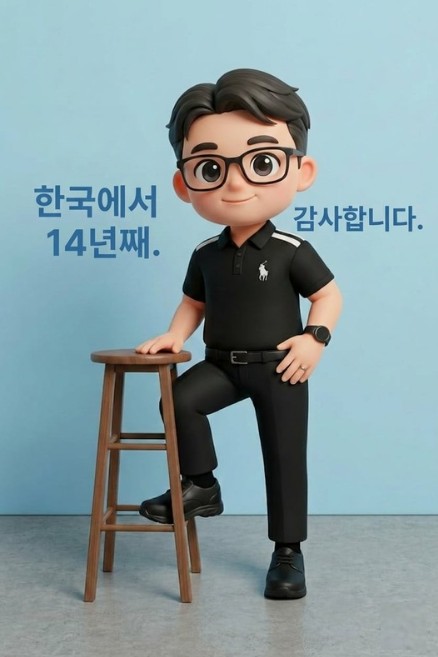
Today, I begin my 14th year here in South Korea.
Fourteen years ago, I boarded a plane carrying more than luggage. I carried questions. I carried fear. I carried unfinished conversations with the people I loved. And yet, above all, I carried conviction — the kind that whispers, Go. There is more waiting for you.
Time has a way of softening distances and turning foreign places into familiar ground. What was once unknown has become part of my story. What once felt like exile became expansion. And in all these years, I have come to understand that certain decisions do not merely change your address — they change your direction.
South Korea did not simply become my workplace; it became a refining ground. Here, I grew not only as an educator but as a thinker, a writer, and a man of faith. The classrooms sharpened my discipline. The solitude deepened my introspection. The unfamiliar culture stretched my perspective. This land became the platform on which I learned to rebuild, rediscover my purpose, and pursue excellence beyond the limits of my former comfort zone.
I thank the Lord for sustaining me through every season — through doubt, through growth, through silent battles no one else saw. And I thank this country for serving as the backdrop to one of the most defining chapters of my life.
But every long journey has a beginning. Every transformation has a first trembling step.
And mine began with a single day — a day marked by cold air, empty rooms, unanswered calls, unexpected kindness, and a faith that refused to collapse.
That first day in South Korea is something I will never forget.
It was in the early dawn of March 2, 2013 when I left the Philippines aboard Asiana Airlines. Around eight in the morning, the plane landed at Busan International Airport. At that time, Mr. Kenn Lachenal was with me. We were both headed to South Korea to teach English at Gyeongju University.
I admit that during that time, I was overwhelmed — not because of drugs, but because of the many thoughts about my loved ones and the anxiety over the new challenge I had chosen to face.
It was against my will to leave my loved ones behind, but it was necessary. I also did not want to step away from the school I had served as Principal for almost a year. Yet I have always refused to be ruled by my emotions. I did not want to avoid a decision simply because I surrendered to feelings. I carefully thought through my decision to go to South Korea to teach. It was not impulsive. It was part of my plans — a long-considered intention whose time had finally come. I would not allow my emotions to stop me.
It was not the desire for a higher salary that drove me abroad. I was already earning well as a principal. On top of that, I was working as an academic consultant at a technical school and as a part-time college instructor. Financially, I was stable. I had even built a house. The problem was this — I was no longer comfortable in my comfort zone.
I had grown weary of supervising teachers and employees. It felt stagnant — no longer challenging. Something was missing — something I longed to find. Personal issues that needed resolution did not help either. It became clear to me that I needed a radical change in my life if I wanted to preserve my sanity. I had to go somewhere new for a fresh beginning.
I felt as though I was at a dead end — yet I knew there was a world beyond dead ends. That was the world I wanted to reach… to explore.
As Jake Sully, the main character in Avatar, once said, “Sometimes your whole life boils down to one insane move.” Like Jake, though I felt fear, I was certain of my decision before I jumped to wrestle and tame my own “Toruk.”
I brought only two things with me to South Korea — self-confidence and faith in God. That combination has always been my shield against trials and my hook for reaching whatever I aspire to achieve.
I was not seeking luck in this country; I do not believe in luck. I believe that “God gives mercy, but man must act.” My purpose was to write a new chapter of my life here — a new phase in the destiny I believe I must draw for myself.
It was my first time traveling abroad, and I was fortunate to be with Mr. Lachenal. Aside from being helpful, he was experienced in overseas travel. Since we were both headed to Gyeongju University, I was confident I would not get lost.
When we arrived at Busan International Airport, I was shocked by the cold. It pierced through my jacket. I had assumed that since winter had ended and spring was beginning, the weather would be like Baguio. Thankfully, the bus we took to Gyeongju-si had its heater running. Though I was sleepy, I could not fall asleep during the ride. I kept looking at every place we passed. I said to myself, “Here I am in South Korea.”
After nearly two hours, we arrived in Gyeongju-si. Mr. Mark Celis welcomed us. He brought us to the apartments where we would stay — Mr. Lachenal to the “white house,” and me to the “blue house.” Not the White House of Washington D.C., nor any political residence in Seoul — those were simply the names given to the apartments provided by Gyeongju University for foreign professors. They were named after their paint colors. There was also a “yellow house” and a “green house.”
Before leaving, Mr. Celis ensured that my unit was in order and introduced me to another Filipino professor at Gyeongju University — Dr. Randy Tolentino, who also lived in the “blue house.”
When I entered my room, I felt for the first time what it truly meant to be alone — far from loved ones, in an unfamiliar place. I simply stood there, unsure of what to do first.
After regaining composure, I opened my suitcase and slowly arranged my belongings.
The surroundings were silent. I heard nothing but my own footsteps. I could even hear my heartbeat and the sound of my swallowing. After arranging my clothes and things, I suddenly felt the intense cold again — and hunger. The refrigerator was empty. There was a gas stove, but nothing to cook. I made do with the biscuits I had brought from the Philippines.
Then I remembered I needed to call my loved ones to inform them I had arrived safely. When I reached for my cellphone, I realized I had not activated roaming on my SIM card. I felt foolish. I cursed under my breath. I could not call anyone; my phone was nothing more than a music player.
I admit that at that moment, deep sadness overwhelmed me. I was still hungry despite finishing almost all my biscuits. I was shivering from the cold. The silence felt deafening. I was alone, with no one to talk to. I also worried that my loved ones were already anxious, waiting for news from me.
In that moment, I understood the true meaning of HOMESICKNESS — just hours after landing in South Korea.
But amid that sadness, I looked up to heaven and remembered that I had prayed many times for the chance to come to this country. I do not know why, but as far as I know, He has never ignored my prayers. I even wrote a poem about it in English — seven syllables only:
He answers.
Just wait.
Have faith!
I was about to lie down to drown my hunger and sadness in sleep when I heard knocks at my door. It was Randy.
He came in and talked with me. He was from Iloilo. At least I had someone to speak with now. While we talked, he looked at my stove and showed me how to operate it. He must have noticed I was cold, because he also taught me how to use the floor heater. I felt somewhat relieved by his help. He opened the kitchen drawers and found a few cans of food left behind by the previous tenant. He left briefly and returned with packs of noodles and some 3-in-1 coffee.
I was surprised by the generosity Randy showed, whom I would later call Sir Randy. It was as though he had known me for years. He stepped out again and returned, saying, “Come on, bro, my girlfriend has cooked. Let’s eat.”
I followed him to his unit. I was surprised, but I did not hesitate — not because I was desperately hungry, but because I felt the sincerity of his invitation. It would have been embarrassing to refuse.
The food was warm, but warmer still was the care shown to me by Sir Randy and his girlfriend, Nikki, who was from China. I was about to take my first bite when Sir Randy offered a prayer of thanksgiving. My respect for him deepened at that moment. At my first bite, tears welled up in my eyes — moved by their kindness and by how God answers prayers. When the couple looked at me, I casually said I must be catching a cold — that was why my eyes were watery. I do not know if they believed me.
After dinner, Sir Randy walked me back to my unit, carrying some cooked food. I said, “This is more than enough, bro!” He smiled and explained they were leaving for Daejeon and just wanted to make sure I had food until the next day. He then returned to his unit and brought me a pot, a pan, a kettle, and some coffee sticks. I did not know what to say. I wanted to hug him for all the help he was giving.
His kindness did not end there. When he learned I could not use my SIM card, he lent me one of his smartphones and his iPod before they left, and he kept his Wi-Fi open so I could use the internet. Our units were only meters apart, so I could access his connection from my room.
I had no words left. “Thank you” felt worn out from repetition. I wanted to hug him, but he was in a hurry to leave. After he stepped out of my unit, I simply closed my eyes and silently thanked Him. I am not a good person. I am weak and sinful. It is simply that the Lord is gracious and loving to those who call on Him.
I am truly fortunate that on my very first day in South Korea, I met friends like Randy and Nikki. They are more than friends — they are siblings from different wombs. They are the reason my first day in South Korea is so special.
Randy and Nikki are living testimonies of God’s goodness.
HOW COVID-19 AFFECTED MY FAITH
(A Personal Essay)
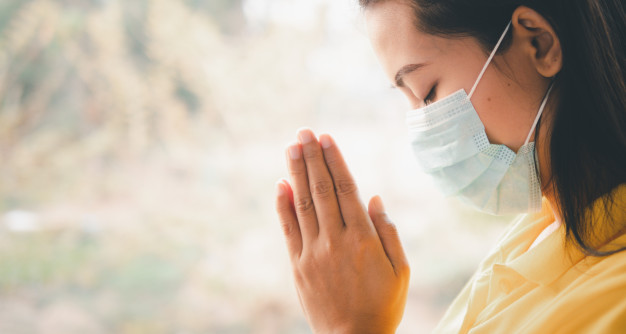
Everybody in the world is affected by the COVID-19 pandemic. Either directly or indirectly, people have felt (and are still feeling) the effects. The directive of authorities to stay at home and to observe social distancing when going out may seem to be very simple orders. But they are not. The socio-economic impact of those directives is huge. And yes, they have psychological effects too.
Personally, I felt (and still feeling) the effects. Gatherings in all kinds of establishments are either limited to only a few people or none at all. Even places where people are known to congregate – like churches – are either closed or could operate but not to full capacity.
With churches either closed or could accept church-goers limitedly, spiritual growth has become one of the casualties of the coronavirus. For people pursuing a religious life, that’ a big deal.
My mother and my grandmother, both devout Catholics, taught me and my sibling the value of faith. I was a teacher for a total of 11 years in 2 Catholic colleges in the Philippines where faith, obviously, is an integral part of their culture. I don’t know if that made me a religious person. What I am sure of is this – it strengthened my faith in God.
My religious life, in one way or another, was affected by the ongoing pandemic. For a certain period of time that gatherings, especially in large groups, were not allowed in all kinds of institutions, including religious ones.
Consequently, the clergy decided to hold church services online. The faithful were asked to join. I did. It was different. I could not feel the solemnity of the ceremony. There were plenty of distractions. It was difficult to focus on worship.
Then came the time when government authorities allowed small group gatherings. After that, the church announced the resumption of the holding of masses.
Admittedly, I wasn’t very enthusiastic about attending face to face masses. Yes, I consider it essential to go to church not only to honor my spiritual obligations but also to listen to the words of God and commune with fellow-believers. But with COVID-19 perilously hanging over our heads like the sword of Damocles, I consider it too risky to travel and to be with other people inside any place notwithstanding all the precautions being instituted to ensure the safety of everyone.
But there were Sunday nights, after not attending a mass, when I questioned myself. Did I choose not to go to church because of fear that I might get infected by the virus or am I using the virus as an excuse not to honor my spiritual obligation? Am I really afraid of the virus or is it a case of my desire to worship God waning? Has my faith got infected also by the coronavirus?
The COVID-19 seems to be deadlier than how it was projected by our scientists and epidemiologists. It does not only compromise our immune system but seemingly it could also weaken us psychologically. There are now known and recorded cases of emotional and mental breakdowns caused by the virus. And the worst – it could also penetrate our souls down to the very foundations of our faith. If I am not going to be aware of this, I may end up alive when this health crisis is over but my faith could be dead.
The ongoing pandemic is fiercely challenging the indomitability of the human spirit. It has put my spirituality to a test – a test that I should not fail. Overcoming the difficulties and challenges we are now facing require all form of toughness – physical, emotional, mental, and spiritual. I know that for me to survive I need to strongly believe in myself and more importantly in God. I have to keep the flames of my faith burning so I may have the light that will guide me as I walk the path darkened by the current challenges and hardships humanity is experiencing because of the COVID-19.
I noticed how the coronavirus is attacking the foundations of my spiritual life – how it is trying to erode my faith. How it effectively instilled in me the fear of getting infected thus I am either hesitant or afraid to venture outside of my home. Some may say this is totally understandable (and it should be what each of us really needs to do) because science is telling us how unpredictable this virus is. The church where I go maybe safe because of the precautions being undertaken by both the clergy and the lay helping them in managing the place of worship. But what about the distance that I have to cover to get to the church? The places I need to pass through, the buses I take (because I don’t have a private vehicle), and the people I meet along the way – am I safe from them (and them from me)? Is my face mask enough to protect me (and them)?
When I thought of all the foregoing, I had to ask myself – Am I not just trying to justify my failure to perform my spiritual obligation – my duty to worship Him in His holy house?
The Church is some kind of an umbilical cord that connects the faithful to God and the coronavirus is seemingly threatening to cut it. Shall I allow this to happen? There were times that as a believer I went to the extreme of thinking that COVID-19 is being used by the devil to create a wall between me and my God.
But one time, after hearing more horrible news about the coronavirus, I tried to re-examine my life. I was surprised with what I have noticed is happening to me. Somehow, this pandemic has also done something good to my spiritual life. Let me explain.
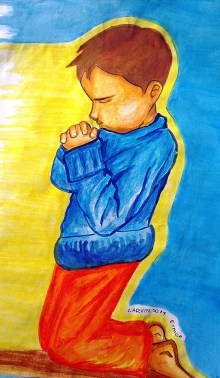
The coronavirus may have made me hesitant, if not afraid, to go to church but it pushed me to seek God more than the way I used to before the pandemic. I became more prayerful. I did not just pray more frequently but also the nature of my prayers changed. Before, I would only pray for myself and my family. But since the coronavirus started its reign of terror, I learned to pray for my friends as well, for my neighbors, and for my countrymen, and for all my fellowmen.
COVID-19 taught me not only to pray unselfishly but to become more cognizant of the pains and sufferings of my fellowmen – especially those who are infected by the virus and those whose livelihood suffered because of the measures government officials in all the countries affected by the pandemic had to implement in order to curb the spread of the virus.
The pandemic taught me to care. But the more I cared the more I felt helpless because I realized there is nothing I could do for them, for those who are suffering… except to pray. The only thing I could do for my friends, neighbors, countrymen, and my fellowmen is to implore God, to ask Him to forgive us for our sins – if it is our sinfulness that caused this contagion to come down upon us so fiercely and unrelenting. All I can do is to pray that may the good Lord embrace us once more with His infinite mercy and love and put an end to this ongoing health crisis.
I probably have never prayed any harder and I have never cared more for my fellow human beings the way that I do now. The more I prayed to God for everybody affected directly or indirectly by the COVID-19 pandemic, the stronger my empathy towards my fellowmen grew. That while I may be thankful to God that all of my beloved ones are safe and healthy, my heart is bleeding because the virus continues to wreak havoc in different parts of the world infecting millions and killing thousands. That while I am thankful that I continue to be employed and have a steady source of income, I deeply sympathize with all my brothers and sisters in different parts of the world who lost their jobs or closed their businesses because of the ongoing pandemic.
How cruel and disheartening it is to see children getting orphaned, people going hungry and helpless, and dreams getting shattered. How painful it is to know that I could do nothing for them but to pray that may God put an end to all these miseries in the soonest possible time.
It took a pandemic for my spiritual life to take this very significant turn. Aside from learning to pray harder and to care for others, and to have empathy for other people it made me more introspective. I have never reflected on life the way that I have been doing it nowadays.
It seems that I have joined a retreat since the pandemic turned from bad to worst. I reflect on life. Seeing vibrant and healthy people suddenly succumbing to death has reminded me of how fragile life is. Only God knows when am I going to breathe my last. So, I have to live life to the fullest. I have to live it in a way He would see my faithfulness and allow all my hair to grow gray before I see my last sunset.
The other thing that the current pandemic made me take notice of are the things I have been taking for granted. I was never remiss of my duties as a father to my children, husband to my wife, and a son to my parents. I always send them the money they need. But I am not sure if I am making them feel loved. It was only during this pandemic that I took time to make a conscious effort to talk to them longer, to make them feel that I long for their presence. It has become easier for me now to say that I love them and that I care.
This is one of the great things that resulted from the coronavirus scare – families becoming closer. During the times that people couldn’t (and shouldn’t) go out, family members had a chance to talk to each other longer. And the best part is this – they also learned to pray together.
It reminded me of my mother who required me and my siblings when we were kids to be home for Angelus at 6:00 PM every day. After the Angelus, we would be praying the rosary. Faith in God is perhaps the best value my mother instilled in me.
When after a long time I decided to attend mass again, it was a wonderful experience. I felt a surge of enthusiasm when we started singing the hymns. I experienced rejuvenation as I hear the scriptures being read and the homily being delivered.
When the priest delivered his final blessings, I felt a different kind of joy that is hard to explain.
After all, we can choose to view the COVID-19 pandemic using a positive perspective. Some good things came out of it. Remember Romans 8:28, “We know that God is always at work for the good of everyone who loves him. They are the ones God has chosen for his purpose.”



 M.A.D. L I G A Y A