Category Archives: COVID-19 Pandemic
The Challenges of Online Teaching – 2
(The Challenges of Online Teaching – 1)

My second semester of online teaching is about to end. With the 3rd wave of coronavirus onslaught happening here in South Korea, our university might decide to still not hold face-to-face classes for at least during the spring term of the next school year. Yes, there’s a light at the end of the dark Covid-19 tunnel – immunization is on its way. Pharmaceutical companies have announced the successful development of a vaccine. However, the distribution of the said vaccine to different parts of the world may still take months.
Online classes are more challenging than conducting actual classes in the classroom. This was my (indirect) response when asked whether I prefer remote learning over teaching in person. The difficulties are not too much on pedagogy for remote or face-to-face, teaching is teaching. The things you do as a teacher are pretty much the same and they boil down into the following – planning, instruction, and assessment. As I pointed out in another essay, “Online or otherwise, when you are a teacher, you should teach. You ought to find a way to achieve the objectives of the course/s you are teaching, cover the topics enumerated in the syllabus, motivate your students, discuss the lessons, give assignments, and evaluate learning.”
Why then that I consider online teaching more challenging than actual teaching in the classroom? After almost two semesters of doing online classes, there’s much I can share about it.
First and foremost, it forced me to account for how much I have invested in learning technology, especially those that relate to teaching. Well, I may have not taken any computer and information technology-related courses but I have taken advantage of the free access I have to the libraries and computer laboratories of the schools where I taught and learned what I needed to learn. Google and YouTube taught me a lot as well. In short, using the application and technology required to carry out online classes for me is not, generally speaking, a rocket science. There were some things I learned on the fly and there were other things that I learned by not hesitating to ask the help of a friend and colleague when I had to.
As I pointed out in another article, “With or without COVID-19, the ability to use technology in the classroom – to apply all available technology resources to education – is something that teachers should have trained themselves to do a long time ago. The use of technology has become an integral part of being a 21st-century teacher. There’s no way out of it. Schools should have made it a basic requirement for the teachers they hired. The abilities to create, evaluate, and effectively utilize information, media, and technology are required 21st-century skills. Teachers are expected to possess them.”
Secondly, online teaching would challenge teachers’ creativity and resourcefulness to the hilt. The one thing I missed so much about holding classes in the classroom is using the blackboard/whiteboard. I write a lot of examples when I explain grammar points and discuss vocabulary. Using the “annotate function” of the Webex screen while doing a PowerPoint presentation would allow only a few examples to be written. I resolved this by not clicking the slide show of the PowerPoint and split the screen into two where on one side is the PowerPoint slide that contains the information I am discussing and on the other a blank Microsoft Word document where I write the examples I want to write while discussing.
The students also need participation points which they could get by answering the questions I asked while I was doing my presentation. Calling on just one student (or a few) to answer a particular question would not give other students an equal opportunity to answer thus depriving them of a fair chance to earn participation points. This I resolved by asking the students to answer my questions using the “chat text box” of Webex. I would pause for a few seconds after asking my questions to give everybody an equal opportunity to answer and after the class, I check their answers and record their points.
I also created an electronic portfolio for each of my students and had to improvise with my assessment methods. I explained the aforementioned in detail here.
Lastly, with online teaching, I have to stretch my patience.
I require my students to turn their video cameras on during my online classes. Failure to heed would mean expulsion from the class. This I did when I got an assurance from our supervisor that doing so does not constitute any violation of university guidelines or existing laws of the country. I am not violating students’ privacy when I require them to turn their video cams on.
What’s the use of attending online classes if the students’ video cams are off? You will not somehow be able to monitor if they are really there and what are they doing. Yes, I can randomly call their names to check but should they respond how sure I am that it was really them responding and not someone else. And do I have to stop instruction once in a while just to randomly call names?
But there were also a variety of problems I encountered when their video cams are on. Some would have the ceiling or wall of their rooms shown instead of their faces. Some I would see obviously talking to someone else in their room or doing something else instead of paying attention to what I was discussing. They know my policy as their teacher. They know that if they do things that I deem inappropriate, they will be “moved to the lobby.” I would accept them back should they request so.
What I consider the weirdest when doing classes online is that sometimes I feel like instead of teaching I was delivering a monologue. Thus, I make sure that I ask questions not only to elicit their participation but also to re-establish my connection to my students in case that after I talked for (probably) too long, their mind veered away.
It is really difficult to know how many of the students are really listening during online classes. It is hard to know if some of them were actually watching a movie while I was teaching. I tried requiring them to turn their microphones as well while our online class was ongoing to discourage them from playing music or watching movies but the noise coming from different sources is just unbearable for all of us. Besides, they can simply use earphones if they don’t like me to hear the video of whatever they are playing while we’re having our online classes. So, I stopped requiring them to turn their microphones on.
I would tell my students once in a while that I am aware of the realities of online teaching and I have fully embraced them. I just have to do my part as their teacher and I would do no less. They are adults and they have a choice of whether they do their part as students or not.
At least in each of my classes, a few would be regularly answering my questions either by “raising a hand” or by using the “chat text box” to write their answers. The majority may be quiet most of the time but it does not mean they are not interested. Thinking that there are students like them expecting me to deliver is what keeps me going.
Notwithstanding Covid-19
Life goes on, with or without Covid-19.
Don’t misconstrue that statement as taking the deadly pathogen for granted. We can’t (and should not) do that. We can’t disregard the coronavirus. Many did and I don’t think I still need to tell you what happened to them and where are they now. May I just share the most current worldwide statistics: almost 62 million cases and 1.5 million deaths (as of November 28th).
We will never know how many of those cases and deaths resulted from complacency and stubbornness and how many more will be added because of the same?
There are pharmaceutical companies who have reportedly developed the vaccine and are a few weeks away from distributing IT. It may take months before the vaccine could be distributed worldwide. We just have to stretch our patience a little bit more. What we have to deal with and endure during the past months is fatiguing. We have no choice but to hang on.
We have survived the first 11 months of the onslaught of this pestilence and we have to continue taking the necessary precaution in order for us to stay alive and safe until the vaccine gets rolled out to every continent in the world.
In the meantime – life should go on. We cannot afford to stop living because of the ongoing pandemic. We should not stop with our worthwhile personal and professional pursuits. We don’t have to stop dreaming. We should not cease doing what we ought to be doing in order to improve our lives.
While we should not disregard the dangers that the Covid-19 brings forth, we could not afford to cower in fear as if the world has already ended. The last time I checked, the earth is still rotating in its axis and continue to revolve around the sun.
Consider this pandemic as the middle of the night, it’s eerie and quiet as the Grim Reaper called coronavirus walks around piling corps to a wagon. But the sun will soon rise again with its rays bringing hope.
While we mourn the lives lost, we should not forget that there are people still alive and maybe counting on us. While we sympathize with those who either lost their jobs or closed their shops, the wheels of the economy should keep turning and we have to do our part. We need to perform our duties or essay the roles assigned to us.
We could not bring back the lives lost, but those alive among us still have the chance to find another job and re-open their shops. When this storm hovering above us now eventually disappears, we can sift through the debris and start from there.
We would be presented with the opportunity to evaluate what happened during the pandemic and shortly before it for the purpose of learning from our mistakes and be ready should another pandemic comes along. Let’s make sure that next time (which we hope wouldn’t come), we wouldn’t be caught with our pants down.
Hope springs eternal. But you have to make a choice between expecting that tomorrow is better than today or it’s worse. That’s a decision only you can make. You have a choice, just like when you are asked to wear a mask, stay at home, and observe personal hygiene and social distancing. You can choose not to follow because you are a free man. But remember that there is something more valuable than freedom – LIFE.
HOW COVID-19 AFFECTED MY FAITH
(A Personal Essay)
Everybody in the world is affected by the COVID-19 pandemic. Either directly or indirectly, people have felt (and are still feeling) the effects. The directive of authorities to stay at home and to observe social distancing when going out may seem to be very simple orders. But they are not. The socio-economic impact of those directives is huge. And yes, they have psychological effects too.
Personally, I felt (and still feeling) the effects. Gatherings in all kinds of establishments are either limited to only a few people or none at all. Even places where people are known to congregate – like churches – are either closed or could operate but not to full capacity.
With churches either closed or could accept church-goers limitedly, spiritual growth has become one of the casualties of the coronavirus. For people pursuing a religious life, that’ a big deal.
My mother and my grandmother, both devout Catholics, taught me and my sibling the value of faith. I was a teacher for a total of 11 years in 2 Catholic colleges in the Philippines where faith, obviously, is an integral part of their culture. I don’t know if that made me a religious person. What I am sure of is this – it strengthened my faith in God.
My religious life, in one way or another, was affected by the ongoing pandemic. For a certain period of time that gatherings, especially in large groups, were not allowed in all kinds of institutions, including religious ones.
Consequently, the clergy decided to hold church services online. The faithful were asked to join. I did. It was different. I could not feel the solemnity of the ceremony. There were plenty of distractions. It was difficult to focus on worship.
Then came the time when government authorities allowed small group gatherings. After that, the church announced the resumption of the holding of masses.
Admittedly, I wasn’t very enthusiastic about attending face to face masses. Yes, I consider it essential to go to church not only to honor my spiritual obligations but also to listen to the words of God and commune with fellow-believers. But with COVID-19 perilously hanging over our heads like the sword of Damocles, I consider it too risky to travel and to be with other people inside any place notwithstanding all the precautions being instituted to ensure the safety of everyone.
But there were Sunday nights, after not attending a mass, when I questioned myself. Did I choose not to go to church because of fear that I might get infected by the virus or am I using the virus as an excuse not to honor my spiritual obligation? Am I really afraid of the virus or is it a case of my desire to worship God waning? Has my faith got infected also by the coronavirus?
The COVID-19 seems to be deadlier than how it was projected by our scientists and epidemiologists. It does not only compromise our immune system but seemingly it could also weaken us psychologically. There are now known and recorded cases of emotional and mental breakdowns caused by the virus. And the worst – it could also penetrate our souls down to the very foundations of our faith. If I am not going to be aware of this, I may end up alive when this health crisis is over but my faith could be dead.
The ongoing pandemic is fiercely challenging the indomitability of the human spirit. It has put my spirituality to a test – a test that I should not fail. Overcoming the difficulties and challenges we are now facing require all form of toughness – physical, emotional, mental, and spiritual. I know that for me to survive I need to strongly believe in myself and more importantly in God. I have to keep the flames of my faith burning so I may have the light that will guide me as I walk the path darkened by the current challenges and hardships humanity is experiencing because of the COVID-19.
I noticed how the coronavirus is attacking the foundations of my spiritual life – how it is trying to erode my faith. How it effectively instilled in me the fear of getting infected thus I am either hesitant or afraid to venture outside of my home. Some may say this is totally understandable (and it should be what each of us really needs to do) because science is telling us how unpredictable this virus is. The church where I go maybe safe because of the precautions being undertaken by both the clergy and the lay helping them in managing the place of worship. But what about the distance that I have to cover to get to the church? The places I need to pass through, the buses I take (because I don’t have a private vehicle), and the people I meet along the way – am I safe from them (and them from me)? Is my face mask enough to protect me (and them)?
When I thought of all the foregoing, I had to ask myself – Am I not just trying to justify my failure to perform my spiritual obligation – my duty to worship Him in His holy house?
The Church is some kind of an umbilical cord that connects the faithful to God and the coronavirus is seemingly threatening to cut it. Shall I allow this to happen? There were times that as a believer I went to the extreme of thinking that COVID-19 is being used by the devil to create a wall between me and my God.
But one time, after hearing more horrible news about the coronavirus, I tried to re-examine my life. I was surprised with what I have noticed is happening to me. Somehow, this pandemic has also done something good to my spiritual life. Let me explain.
The coronavirus may have made me hesitant, if not afraid, to go to church but it pushed me to seek God more than the way I used to before the pandemic. I became more prayerful. I did not just pray more frequently but also the nature of my prayers changed. Before, I would only pray for myself and my family. But since the coronavirus started its reign of terror, I learned to pray for my friends as well, for my neighbors, and for my countrymen, and for all my fellowmen.
COVID-19 taught me not only to pray unselfishly but to become more cognizant of the pains and sufferings of my fellowmen – especially those who are infected by the virus and those whose livelihood suffered because of the measures government officials in all the countries affected by the pandemic had to implement in order to curb the spread of the virus.
The pandemic taught me to care. But the more I cared the more I felt helpless because I realized there is nothing I could do for them, for those who are suffering… except to pray. The only thing I could do for my friends, neighbors, countrymen, and my fellowmen is to implore God, to ask Him to forgive us for our sins – if it is our sinfulness that caused this contagion to come down upon us so fiercely and unrelenting. All I can do is to pray that may the good Lord embrace us once more with His infinite mercy and love and put an end to this ongoing health crisis.
I probably have never prayed any harder and I have never cared more for my fellow human beings the way that I do now. The more I prayed to God for everybody affected directly or indirectly by the COVID-19 pandemic, the stronger my empathy towards my fellowmen grew. That while I may be thankful to God that all of my beloved ones are safe and healthy, my heart is bleeding because the virus continues to wreak havoc in different parts of the world infecting millions and killing thousands. That while I am thankful that I continue to be employed and have a steady source of income, I deeply sympathize with all my brothers and sisters in different parts of the world who lost their jobs or closed their businesses because of the ongoing pandemic.
How cruel and disheartening it is to see children getting orphaned, people going hungry and helpless, and dreams getting shattered. How painful it is to know that I could do nothing for them but to pray that may God put an end to all these miseries in the soonest possible time.
It took a pandemic for my spiritual life to take this very significant turn. Aside from learning to pray harder and to care for others, and to have empathy for other people it made me more introspective. I have never reflected on life the way that I have been doing it nowadays.
It seems that I have joined a retreat since the pandemic turned from bad to worst. I reflect on life. Seeing vibrant and healthy people suddenly succumbing to death has reminded me of how fragile life is. Only God knows when am I going to breathe my last. So, I have to live life to the fullest. I have to live it in a way He would see my faithfulness and allow all my hair to grow gray before I see my last sunset.
The other thing that the current pandemic made me take notice of are the things I have been taking for granted. I was never remiss of my duties as a father to my children, husband to my wife, and a son to my parents. I always send them the money they need. But I am not sure if I am making them feel loved. It was only during this pandemic that I took time to make a conscious effort to talk to them longer, to make them feel that I long for their presence. It has become easier for me now to say that I love them and that I care.
This is one of the great things that resulted from the coronavirus scare – families becoming closer. During the times that people couldn’t (and shouldn’t) go out, family members had a chance to talk to each other longer. And the best part is this – they also learned to pray together.
It reminded me of my mother who required me and my siblings when we were kids to be home for Angelus at 6:00 PM every day. After the Angelus, we would be praying the rosary. Faith in God is perhaps the best value my mother instilled in me.
When after a long time I decided to attend mass again, it was a wonderful experience. I felt a surge of enthusiasm when we started singing the hymns. I experienced rejuvenation as I hear the scriptures being read and the homily being delivered.
When the priest delivered his final blessings, I felt a different kind of joy that is hard to explain.
After all, we can choose to view the COVID-19 pandemic using a positive perspective. Some good things came out of it. Remember Romans 8:28, “We know that God is always at work for the good of everyone who loves him. They are the ones God has chosen for his purpose.”
TEACHING DURING THE PANDEMIC: A PERSONAL EXPERIENCE
(A Personal Essay)
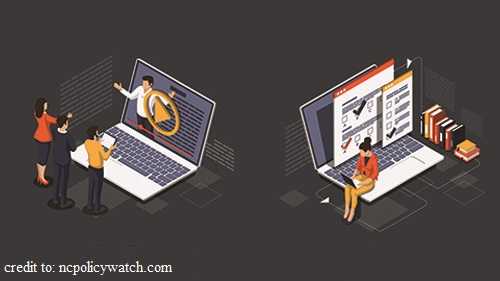
The COVID-19 pandemic is continuously rearranging socio-political and economic structures forcing us to tinker with our existing programs and practices. In order to adapt to the present realities which the virus forced down upon our throats, we are left with no choice but to either modify or completely reconfigure time-tested paradigms that have guided human affairs and activities in the past. Consequently, we are now witnessing a lot of changes in the different spheres of human life – social, political, economic, and what have you. More changes are forthcoming. These changes are inevitable and they are happening rapidly in the national, institutional, and personal levels.
Governments are restructuring in a hurry making all the necessary legislations in response to the ongoing pandemic. Both public and private organizations, from the biggest ones to the smallest, are rewriting their policies and guidelines. They are either amending existing protocols or creating new ones.
All of these changes have to be done because the socio-political and economic wheels have to continue turning. There are basic services and needs that ought to be delivered notwithstanding the COVID-19 situation. Education is among them.
Schools need to find a way to carry out their sacred oath – educate people, particularly the youth.
But we understand that students, academic and non-academic personnel, and school officials should not be rushed back to the campuses and unnecessarily expose them to possible infections. It is almost impossible to implement “social distancing” protocols in campuses where there are hundreds to thousands of students.
Schools in some countries (like South Korea) who are succeeding in flattening their COVID-19 curves have decided to resume academic operations. How are they doing it?
They are doing it online. There’s no other way.
The only platform which schools could use to deliver education to their studentry without putting them unnecessarily at risk is online. Online education is not a new platform. It has been existing for years now. The difference is that it used to be just an alternative done mostly on “one teacher-one student basis.” Now, it’s whole classes, with varying sizes, whose members one teacher should be teaching online all at the same time. It’s a mass online education.
This is the way that the university where I am currently teaching here in South Korea is doing it. The spring semester started on the 3rd week of March (online) and we were supposed to meet our students face-to-face starting the 1st week of April. But that was postponed to after two more weeks after the South Korean government pleaded to extend further the “social distancing” period. Eventually, our university officials deemed it necessary to postpone indefinitely the return of the students to the campus.
When I heard that we’ll be teaching online, I thought immediately that I will be playing a different ballgame the rules of which I am not quite familiar with. I am entering unchartered territory. I have never done a single minute of online teaching in the past. Of course I am using technology in the classroom and I am fond of trying whatever application is available to make my teaching better and appealing to my students who are all digital natives. I also use applications that make my work as a teacher easier. But I never had the opportunity to teach online in the past. Finally, the time has come for me to experience it.
Then came the training day organized to prepare us to play what I called a new ballgame – “online teaching.”
For the first two weeks of the spring semester, we were instructed to prepare videos of our lectures and give our students assignments. We were told to upload the videos and assign the homework using the E-Class provisions of the university’s portal. I asked myself, “Is that it?” That’s how we would be engaging with our students and guide them in the process of learning? Create (and upload) the videos then mark/check assignments. Is that online teaching?
That sounded easy – just create a weekly learning video and give one homework and your work is done. Then you can laugh your way to the ATM during payday, to collect your HARD EARNED dough.
I am not saying that it’s easy to create video presentations. It entails hard work, specially to people like me who had no training in creating videos. But to think that the video we will be uploading to E-Class will replace all the functions we as teachers need to perform in the class is quite disconcerting. I am not saying too that marking/checking the assignments of the students would be easy. It’s just that I am not comfortable giving an assignment based on a particular topic that I did not actually discuss. It’s like evaluating without teaching. As far as I know. That’s not how education works.
At that time, I consoled myself with the thought that that arrangement would only be for two weeks. So, I thought of just exerting extra effort to make up for what I may not be able to discuss to them during the first two weeks.
Until I saw very clear writings on the wall that it may take more than two more weeks before the university would allow classes to be held in the classrooms. True enough, (as I previously mentioned) we were told that we have to carry out online teaching to at least two more weeks until eventually, the university advised us that on-campus classes are postponed indefinitely.
The very first day of (online) classes, I received a call from one of my students. The student asked – “Are we not going to have an online class through Cisco Webex?” It appeared to me that their Korean professors are meeting them online. Otherwise, that student wouldn’t be asking that question.
Aside from the E-Class, the university provides us with another platform to perform our duties as teachers and deliver learning to our students online. That is Cisco Webex, a platform for video conferencing and online meetings. The E-Class have been there long before the COVID-19 crisis happened although it was optional on our (the teachers) part to use it. In the past, I used it rarely to upload course materials and give my students reminders related to our course. Yes, rarely did I use it. The reason being – students check on the E-Class less than rarely. Now, the current situation will force them to do it regularly.
To ensure that my students get the necessary course materials and information, I had an alternative. I created a Kakao chatroom for each of my classes to serve as a conduit between me and them. They would less likely miss anything passed to them through Kakao. The Kakao chatroom for each of my classes is exclusively for members of the class and strictly for the course materials and information I need to pass to them. They could message me in the chatroom only for questions related to our course. I don’t allow them to use it for online socialization.
Now, let me go back to the present concern. As I already explained, the minimum requirement for us is to create weekly learning videos (and the corresponding assignments) based on the contents of the prescribed textbook. We need to cover the contents of a whole unit for the weekly videos we’re creating. Teachers are required to have these videos and assignments uploaded to the E-Class. Meeting our students through Cisco Webex is not mandatory. The university left it to the discretion of expat teachers, like me, whether or not to use it.
Let me go back to that call from my student. Before our conversation ended, I made up my mind. I told the student that starting the 2nd week (and if ever we won’t be allowed to meet in the classroom for a long time), we will regularly meet online.
I figured posting weekly videos and giving them assignments through E-Class is insufficient. I wasn’t comfortable with that arrangement. Thus, even if it is not mandatory, I felt obligated to meet my students online through Cisco Webex.
That night I started watching YouTube videos on how to conduct online classes/meetings using Cisco Webex. I was lucky too to have a friend and colleague who was more than willing to teach me everything he knows about the platform. Like me, he considered just posting videos and giving meaningless assignments a disservice to our students (and I think other expat teachers have realized this also and may have been using the Cisco Webex too). So, he taught me how to use it that night. A couple of hours with him was all I needed.
With the help of my friend-colleague, I invited my students to the Cisco Webex meetings I set. I didn’t wait for the 2nd week of the semester. The day after I made the promise, I started holding classes online.
I did not hide from my students the fact that that was my first time, not only to use the Cisco Webex platform, but to teach online as well. It was exciting but challenging. What carried me through the difficulties and jitters of doing an online class for the first time were my being a natural speaker and the fact that I presented the same things I have been discussing during first days of classes for many years now. So, notwithstanding the minor technical glitches, which I found ways of resolving, my very first online class was fun. There was an element of excitement because I was experiencing something new. Somehow, the monotony of doing the same things in the classroom during regular classes on campus for so many years was suddenly broken.
I requested another session with that same friend and colleague who helped me the previous night and described to him the problems I encountered in my first two online classes. He explained to me what I needed to know and gave me some more tips about using Cisco Webex making me more confident and better-equipped in the next online classes I held.
That brought me back on track. The decision to conduct online classes through Cisco Webex erased the worry that I would be shortchanging my students had I chosen to just create videos of my lectures and upload them to E-Class and do nothing else.
Most of our credit courses are conversational English classes whose primary objective is to develop the speaking skills of our students. Yes, of the four macro language skills, the focal point is speaking. How do we hope to achieve that objective if we would only be providing the students with weekly videos that we assume (with our fingers crossed) that they would watch from beginning to end and try to learn from them? How would the teachers help the students develop that confidence to speak when there’s nobody with them when watching those videos? There would be no interaction at all between students and teachers and between students themselves. With online classes, minimal it may be, there is interaction. I discovered that. I could ask questions and call on specific students to answer. I could make them talk. The speaking activities provided in the book could be carried out. Students who want to earn participation points could actively participate. And with me explaining to them how important is their participation in getting the highest grade they want, I was able to make my online classes a two-way communication channel, and not me delivering a monologue just parroting the contents of the textbook from beginning up to the end of the online class.
Yes, teachers could create the best video presentations but what’s the guarantee that the students would intently watch them from beginning to end and perform the corresponding activities they are being directed to perform. They could play the video in the confines of their bedrooms, leave that room after starting the video to do something else somewhere, then comeback when time expires so the E-Class would give them credit for attendance for watching the video. They could also opt to sleep or watch TV while waiting for the video to finish. The E-Class system is not programmed to detect whether or not the students are in front of the laptop (or any other devices) they are using in the entire duration that the video is being played.
There’s one big challenge teachers face with online teaching – the marking/grading of assignments, quizzes, and tests. How could it be done in a timely and efficient manner?
Actually, the E-Class has functions to cater to the submission of assignments and other graded course requirements and the corresponding marking/grading of the same. I tried to check one of the assignments of my students during the first week of (online) classes. Going through the many steps to open, mark/check, and grade each assignment took very long. With me handling more than 140 students and if each of them, in a particular week, will have an assignment or two, checking them would be time-consuming. It would be better and easier if the students write their assignments using MS Word. The MA Word has the “Insert-Comment” function which can be used conveniently for marking/checking the assignments and other requirements.
So, I asked my students to use MS WORD only when answering their assignments – no HWP, no PDF.
After that, I asked the students to send their assignments to me through email instead of directly answering them in the assignment section of the E-Class. That proved to be a nightmare too. During the first week, my G-mail account was flooded with emails from students and I found it very difficult to organize the assignments of my students and sort them per class.
Then I recalled that my friend-colleague (yes, the same one who helped me learn to use Cisco Webex) sent to me some documents before through Google Drive. I called him and asked if it is possible to share with a person a Google Drive folder/subfolder and both of us (only) could access that folder/subfolder. The answer was yes… and my problem was solved.
I created a Google Drive folder for each of the classes assigned to me this (spring) semester then created individual subfolders for each member of the class. It was tedious but it is the best way I could organize the assignments (and other requirements) of my students. I had to require them to create Gmail accounts so creating (and accessing) the Google Drive folder would be easier. As a result, starting the second week of the semester, they were not sending their assignments to my email anymore. The flood of e-mails in my G-mail account subsided. All they need to do is to open their Google Drive folder and drag and drop to the subfolder we are sharing whatever I require them to submit.
If they want to know their scores and whatever feedback I had for them regarding their assignments, all they need to do is to open the subfolder (we are sharing) in their Google Drive folder. I realized then that I just created an electronic student portfolio.
In my (face-to-face) classes, I require students to maintain a portfolio. I asked them to submit to me a folder (South Korean students call it “file”), with their name, student number, and class code. In those folders, they keep the results of their quizzes, exercises, tests, and other graded activities. I keep in my office those folders and bring them to class when we meet so they could monitor their own performance. It enables them to track their own progress in the course. They can literally determine weekly how many of the 100 grade points they need for the course they already have because at the beginning of each semester I would give my students a grade checklist/guide and transmutation tables and teach them how to compute their own grades. So, I make sure that I mark/check whatever I require them to submit before our next meeting. If I also need to communicate something (related to our course) to specific students, I would insert notes in their individual folders.
With the Google Drive folder/subfolder, my portfolio system just turned digital.
Another reason I consider just posting videos of weekly lecture materials insufficient is this – the way our grading system is designed would require much more than just posting learning videos and giving assignments. Assessment is an integral part of the teaching-learning process. Aside from assignments, which is actually only one of the graded activities that teachers could give for the students to generate their participation points (which is 20% of their final score), there are other forms of assessment that must be done – quizzes (10% of their final score), midterm and final written tests (10%), midterm and final listening tests (10%), and midterm and final speaking tests (20%). That’s a total of 70% of the students’ final score. How would teachers who just uploaded videos of their lectures, and did not teach them, evaluate whether or not course objectives are met and then assess learning through those aforementioned quizzes and the long tests? Will they try to measure the effectiveness of their teaching by creating test items based on the assumption that their students watched their lecture and were responsible enough to understand? Would the results of the quizzes and tests be valid and reliable?
I, and those who have training in pedagogy, those who were really trained and groomed to become teachers and was not just plucked from certain geographical locations in the world to pose as teachers, know the answer to the questions raised in the two preceding paragraphs.
So, after hurdling the first two major obstacles – learning to hold online classes through Cisco Webex platform and marking/grading assignments and other requirements properly – I next tried to figure out how to give those quizzes and tests. Of course, online also. But the challenge is how to make the results of such quizzes and tests valid and reliable given the fact that it would be very easy for the students to open their notes while taking quizzes and tests because I am not there beside them to watch what they are doing.
Easy (but hard) – create test items that require comprehension and analysis. Avoid creating questions or test items whose answers they could easily give by simply glancing at their review guides. The quizzes and tests should prompt the students to apply what they learned and not simply write down in their answer sheets things they have memorized.
I initially thought of giving the quizzes and tests through the Survey Monkey, the online survey tool that I am using whenever I conduct online surveys for my research works. The tool (Survey Monkey) would do the checking and all I need to do is generate a summary report for the scores – the same things I did when I want to get the summary results of the surveys I conducted in the past. But during the 2nd week of classes I had an epiphany that I could actually give quizzes and tests through Cisco Webex but had to require them to immediately drag and drop their answer sheets to their Google Drive folder/subfolder to maintain the integrity of the testing. It’s a process simpler and more practical than what I thought doing through Survey Monkey.
I tried it. I gave my first quiz through Cisco Webex. Through the “shared screen” of the application’s environment, I opened the PowerPoint file that contains the items for my first quiz. I jokingly told myself then that it was something historical – it was my first quiz in the COVID-19 era. I gave them 10 minutes to finish the 10-item vocabulary quiz. That’s the same amount of time we give our students for their quizzes during regular classes. That’s a very long time for my “advance” students but just enough for the “not-so-advance” among them. For the dragging and dropping of the answer sheet to their Google Drive folder, I gave them an additional 3 minutes, although I know that the process of dragging and dropping files to a Google Drive folder could be done in a minute or less. It was a trial of sort, so I was a little bit generous with the time allotment. And yes… it was a success.
Then later on I discovered that things will be easier for me and lesser would be the possibility of cheating on the part of the students if I create my quizzes, tests and exercises using the Google Forms and the add on formLimiter. It saved me a lot of time in the checking/marking. What I consider as the drawback of using the Google Forms is that the students wouldn’t be able to see an actual test (quiz or exercise) paper. They wouldn’t be able to see again the actual questions/items together with their answers (and the corrections to the wrong answers they gave) the way they would be able to should I use the method I previously explained.
With all these experiences, I came to realize that online teaching is still teaching. It’s not some kind of a play that we are using to keep the students entertained while we are waiting for the COVID-19 crisis to dissipate. It should not be treated as a band-aid solution to the problem of not being able to meet the students face-to-face in the campus. We have no way of knowing how soon the pandemic would end. What if the current situation drags on not only for months but years?
It’s obvious that schools will now rely heavily on technology to carry out their sacred oath to educate. Schools need to adapt. They have no choice.
Governments who, in the past, were wise to have invested in improving the information technology capability, including Internet connectivity, of their country’s educational system, will have no problem meeting the demands of “mass online education.” Private schools owners who slowly built up the information technology infrastructure of their schools have just realized how wise was that decision.
If the schools need to adapt, the teachers could do no less. They have to learn to play the new ballgame called “online teaching.” The question is this: “How prepared are teachers to this sudden transition to online learning?”
The truth is, with or without COVID-19, the ability to use technology in the classroom – to apply all available technology resources to education – is something that teachers should have trained themselves to do long time ago. The use of technology has become an integral part of being a 21st century teacher. There’s no way out of it. Schools should have made it a basic requirement for teachers they hire. The ability to create, evaluate, and effectively utilize information, media, and technology are required 21st century skills. Teacher are expected to possess it.
The COVID-19 pandemic forced educational institutions to teach online – to rely heavily on information, media, and technology. What will now happen to teachers who are not adequately equipped for online teaching – who did not bother to acquire the necessary skills and know-how related to it when they had the chance?
On COVID-19 and What Is It Teaching Us
I don’t find it necessary anymore to describe how devastating and horrifying the COVID-19 is. All known media platforms broadcast almost every minute nothing but the horrors the Corona virus has brought upon humanity in every corner of the world. Almost everybody knows almost everything about this deadly pestilence. Ask anybody any question about it and very likely that you’ll get a satisfactory response. But there is one question, the one that matters most, that nobody could answer – When will this pandemic end?
Nobody knows when will the contagion stop. Only God knows (that is if, like me, you believe in His existence). Scientists are racing against time the to find a definitive cure. Reportedly, there exists old drugs intended to cure other diseases that could help those infected. There were even some unconfirmed reports that actually, China has already found the cure but they are keeping it from the world. People are desperate in their search for protection against the virus.
Home remedies and false cures circulated in different countries – inhaling the steam of sea salt and orange peelings, lemon in hot water, cocaine and bleach-like solution, colloidal silver, chlorine disinfectant, etc. Some attempts to try all these unproven methods to fight the virus resulted to both injuries and deaths. The Iranian media reported that nearly 300 people have been killed and more than a thousand got sick because of methanol which they wrongly believed could cure the disease.
For those who managed to steer clear from the destructive and murderous path of COVID-19, they had better keep that distance or walk further away. Stay away from that path as far as possible. We ought to take all the necessary precautions because the vaccine will take long to develop – 12 to 18 months. That’s according to credible and reliable sources. Don’t pin your hopes on the claims of armchair experts (quoted by undiscerning social media users who excitedly post just about anything on their social media accounts without cross-checking and verifying) that a vaccine is coming out very soon or has already been developed.
Taking all the necessary precautions is different from becoming paranoid. We cannot afford to be too anxious and worried. We may be saving ourselves from the contagion but we might die of other illnesses resulting from emotional and mental distress. We can still live a normal life while observing the established protocols set to prevent the spread of the virus.
We really have reasons to be alarmed, but we ought to be rational.
And this is really a cause for alarm – only 20 years into the 21st century and we have already been stricken by 5 severely infectious and deadly diseases – Swine Flu, Ebola, MERS, SARS, and COVID-19. When I googled it (and hopefully all the information I got are accurate), I found out that that’s already the total number (5) of epidemics/pandemics for the entire 20th century. Google also told me that should you combine all these pestilences during the first two decades of the current century and the whole of the preceding century – and they are 10 all in all – that would already equal all of the fatal contagions that plagued the human species from 1800s down to time immemorial.
We can be consoled somehow by the fact that all known pandemics – from the distant past to the modern times – had their reign of terror ending at a certain juncture in history. Although a few, like the Bubonic plague (the deadliest in terms of number of fatalities), did comeback and continued its murderous rampage. Some of those pestilences would still afflict some people sporadically at certain periods in history, including the modern times. BBC reported in 2013 that a boy died of the Bubonic plague in Kyrgyzstan. But lest we forget that one of these viruses is still silently (and effectively) afflicting millions of people around the world – HIV. As reported by WHO in 2018, there are 37.9 million people around the world suffering from AIDS.
We are all hoping (and praying) that the COVID-19 crisis would end very soon. A few epidemiologists expressed fears though that even when the new corona virus contagion gets contained, it may, God forbid, come back to haunt us during the annual flu season. Thus, getting inoculated against the virus is a must. But, the vaccine could be available February next year at the earliest.
With a specific medicine that could nip the virus in the bud and not just alleviate the sufferings of severely infected patients yet to be discovered and the vaccine still in the process of development, our best bet for survival is heeding directives given by health authorities. They know better than the armchair experts and the skeptics around us.
And most people in COVID-19 stricken areas are heeding the advice of their duly-constituted authorities – to wear masks whenever they venture outside of their homes, to frequently wash their hands, and to strictly observe “social distancing.” Most people, nowadays, are learning to be obedient. If in the past they blatantly disregarded existing rules, now they toe the lines and do exactly what their leaders are saying. If in the past they would march to the streets whenever their civil liberties are violated, now they have willingly surrendered some of them. They allowed themselves, for their own sake anyway, to be incarcerated in their own homes to venture out only at designated times of the day to buy whatever they need or transact very urgent business matters. Most people in most countries are quarantined for a certain period of time. This, of course, are done only in countries where total lockdowns were declared.
Only a handful of the countries where the COVID-19 is wrecking havoc did not implement lockdowns and it remains to be seen how such would affect their management of the contagion. But the epidemiologists are unequivocal in asserting that to effectively stem the further spread of the contagion “social distancing” is a must. With big cities and urban areas being densely populated, quarantining people in their own homes is seemingly the only way to effectively implement “social distancing.” There are already countries who did not impose lockdowns realizing this rather belatedly, and the results are regretful. The South Korean government ensured the even if they did not declare lockdowns, especially in areas most affected by the virus, their citizens would strictly observe “social distancing.” They did. The South Koreans obeyed resulting to incidents of viral infections gradually abating
The reason citizens in countries where lockdowns were implemented embraced their fate and agreed to the stringent measures being put up by their governments is that they understand that these are not ordinary times and that there is only one right that counts now – the right to live. People are beginning to trust their leaders.
Conversely, people in leadership positions are showing more resolve in enforcing the necessary measures to ensure the safety and well-being of their constituents. They seem to be more sincere in what they say and do. The novel corona virus have brought the governments and their people closer. Covid-19 have also broken the walls that divide the ruling party and the opposition. Politicking is being set aside. They both need to sing the same tune and dance coordinately to that tune.
In dire situations like this that governments need to assure their people that they are on top of the situation. And indeed leaders of the different countries affected by the current crisis should tighten their grip, not only to ensure that they could provide the assistance they are capable of giving to their citizens but also in making sure that the adventurists would not take advantage of the situation.
There are certain values also that most societies in different parts of the world have neglected that are slowly re-emerging. One of them is civic responsibility. Governments know that when they enforced lockdowns, economic activities ground to a halt. Consequently, businesses are closed and people could not work for they ought to be staying at home. So, the governments felt obliged, to extend all kinds of assistance for their citizens. But some countries have limited resources. They are incapable of helping their citizens sufficiently, especially if the COVID-19 crisis will last long. So, citizens who have the capability are offering help. From out of their own pockets they are donating either cash or in kind to organizations giving relief goods to the needy. We see some of the wealthy people becoming instant philanthropists.
These are the silver linings amid all the horrors we are witnessing.
Because of the COVID-19, people are learning to care for each other. They are willingly sharing whatever they could for their fellowmen, helping them in any way they could. We are rediscovering the meaning of community. We are seeing people expressing their support and appreciation for the efforts of the doctors, nurses, and volunteers who are unselfishly putting their own lives in the line to try to save the lives of or at least alleviate the sufferings of the those who were infected by the virus.
The COVID-19 crisis is also making us realize what really are the basic essentials of life, the very basic things we need – food, simple clothes and shelter. What’s the use now of all our extra possessions – nice cars, expensive jewelry, and designer’s clothing?
The COVID-19 is reminding us as well of our mortality. It’s forcing us to rethink how are we treating our bodies. Are we taking good care of it to the point that we are eliminating disease as the possible cause of our untimely demise? This deadly virus is telling us that whatever are our pursuits and endeavors in life, we cannot afford to disregard our health.
Lockdowns enforced by governments reunited families. Yes, forcing us to stay at home brought us back to our family. We have never been closer to our loved ones than nowadays. Perhaps most of us finally realized that at the end we only have each other to rely on. The COVID-19 scare made us embrace our loved ones tighter than never before.
And there is one more that the current pandemic rekindled – spirituality. The COVID-19 brought us back not only to our family but also to God. The faith community have never prayed so hard supplicating Him to end the crisis. We have never seen believers praying unselfishly, praying not only for themselves and their loved ones and friends but for the rest of humanity… praying that may God give the leaders of all nations the wisdom and resolve to lead and protect their citizens in these critical times… praying that may He help the scientists and medical experts find in the soonest possible time the cure and develop the vaccine against this pestilence… praying that may He protect and strengthen the health professionals in hospitals and care homes helping the victims of the virus… praying that may He help the COVID-19 patients recover… praying that may He grant eternal repose to the souls of those who died because of the virus.
It’s sad that it is only in times of tragedy that we remember Him.
We know that God’s love and mercy for humanity abound. He will listen to our prayers… in His own time.
The one thing that we should not forget – it’s not the end of the world. It has not stopped spinning.
We have a life to live, with or without COVID.
COVIDized
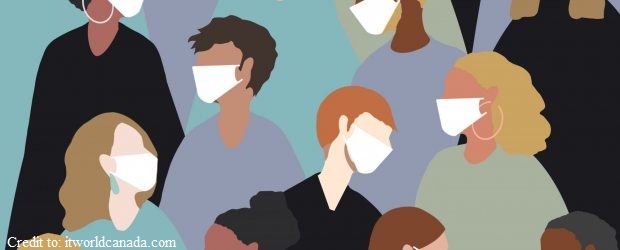
A new word may soon be added to the English vocabulary – “covidized.” Should it happen, it might end up as the word of the year and even of the current decade. Very likely that lexicographers would classify it as a participial adjective and assign the following meaning to it: infected, affected, or influenced by COVID-19.
We may say that persons are covidized if it is confirmed that they are infected by the virus. For those who find the expressions “COVID-19 positive” or “infected by COVID-19” too long, “covidized” is a good alternative, especially for writers who may no longer wish to hit the “caps lock” on their keyboards to capitalize the letters C – O – V – I – D and to not move a little bit higher anymore certain fingers to hit the hyphen and the numbers 1 and 9.
Instead of saying that “the COVID-19 pandemic has affected many parts of the world”, we may simply say that “the whole world has been covidized” (Yes, except Antartica). Some countries are more affected by the pandemic than the others. And now that the US has more cases than any other country in the world, we may say “US is currently the most covidized country in the world.” That is if confirmed number of cases is the basis for determining which country is most covidized. Should the criterion be number of deaths, the dubious distinction “most covidized country in the world” would belong to… the US also. But the title “the first covidized country in the world” belongs to China. The last country to be covidized remains unknown. North Korea, reporting only one case (as of the 26th of July, 2020), is the “least covidized country” in the world.
Most of the current policies and decisions governments of countries, corporations, companies, and organizations are formulating and implementing are all covidized. Meaning that those policies and decisions are influenced by present and emerging social, political, and economic realities and trends brought forth by the onslaught of the COVID-19 pandemic.
The world economy has been covidized and experts warned that we are facing global recession that may be worse than that one triggered by the global financial crisis in 2008. Because of the lockdowns imposed by many of the countries that were covidized, almost all economic activities ground to a halt. Most people couldn’t work to earn a living. Governments are now providing all forms of assistance they could offer to their citizens. But not all countries have vast resources that would enable them to help their people for a long period of time should the COVID-19 crisis drags on for months or, God forbid, years.
Even if we are not infected by the virus, we are all covidized in one way or the other. Our way of life drastically changed since the COVID-19 wreaked havoc. We are encouraged to wash our hands frequently, to wear masks wherever we go, and to strictly observe “social distancing.” We need to abide by these directives for our own sake. We are also told to stay inside our homes and avoid large gatherings as much as possible. Consequently, most people have not attended church services for a long time now. Church leaders responded by providing their members church services online.
People are advised also to avoid going to theatres, internet cafés, and videoke bars. Their main sources of entertainment nowadays are the Internet, TV, and radio. And since fitness centers are included among the places that people should avoid, they either exercise using whatever equipment they have at home or not exercise at all. In some countries where total lockdowns and curfews are observed, people are forced to stay at home and are not allowed to go out at night and to travel even just to the next town or village during daytime.
These covidized advisories are all necessary for our survival. If we don’t follow them, we are endangering our own lives and may be compromising the safety of our loved ones and other people as well.
We should bear in mind that anyone could be covidized. The virus spares no one. Even the richest and the most powerful are not immune to the disease. It doesn’t respect age as well. We know that the elderly people are more vulnerable to it but this should not make the members of the Gen Y and the Gen Z complacent. They could get infected also if they are stubborn and careless. Even the healthiest of athletes who are known for their ultra-healthy lifestyle are susceptible to COVID-19. So, nobody is safe. Anybody could be covidized at any given time.
We now live in a covidized world. We have no choice but to embrace covidized realities and move on.



 M.A.D. L I G A Y A