THE NATION WE CREATED (Part 1)

“The darkest places in hell are reserved for those who maintain
their neutrality in times of moral crisis.”
– Dante Alighieri –
(A PERSONAL ESSAY)

In my fourteen years of living in South Korea, I have often meditated on the delicate architecture of a nation’s soul. As an author, I tend to see the world through the lens of structure and foundation—much like the Garamond 12pt type and 5×8 margins I meticulously set for my books—and I’ve come to believe that a country’s destiny is held up by only two pillars: the integrity of its leaders and the responsibility of its people.

To me, these aren’t just political concepts; they are the boundary lines between peace and chaos. When both are strong, the nation feels like a paradise. When one falters, we drift into a restless purgatory. But when both fail, as I sometimes fear they have back home, the descent into a collective hell becomes almost inevitable.

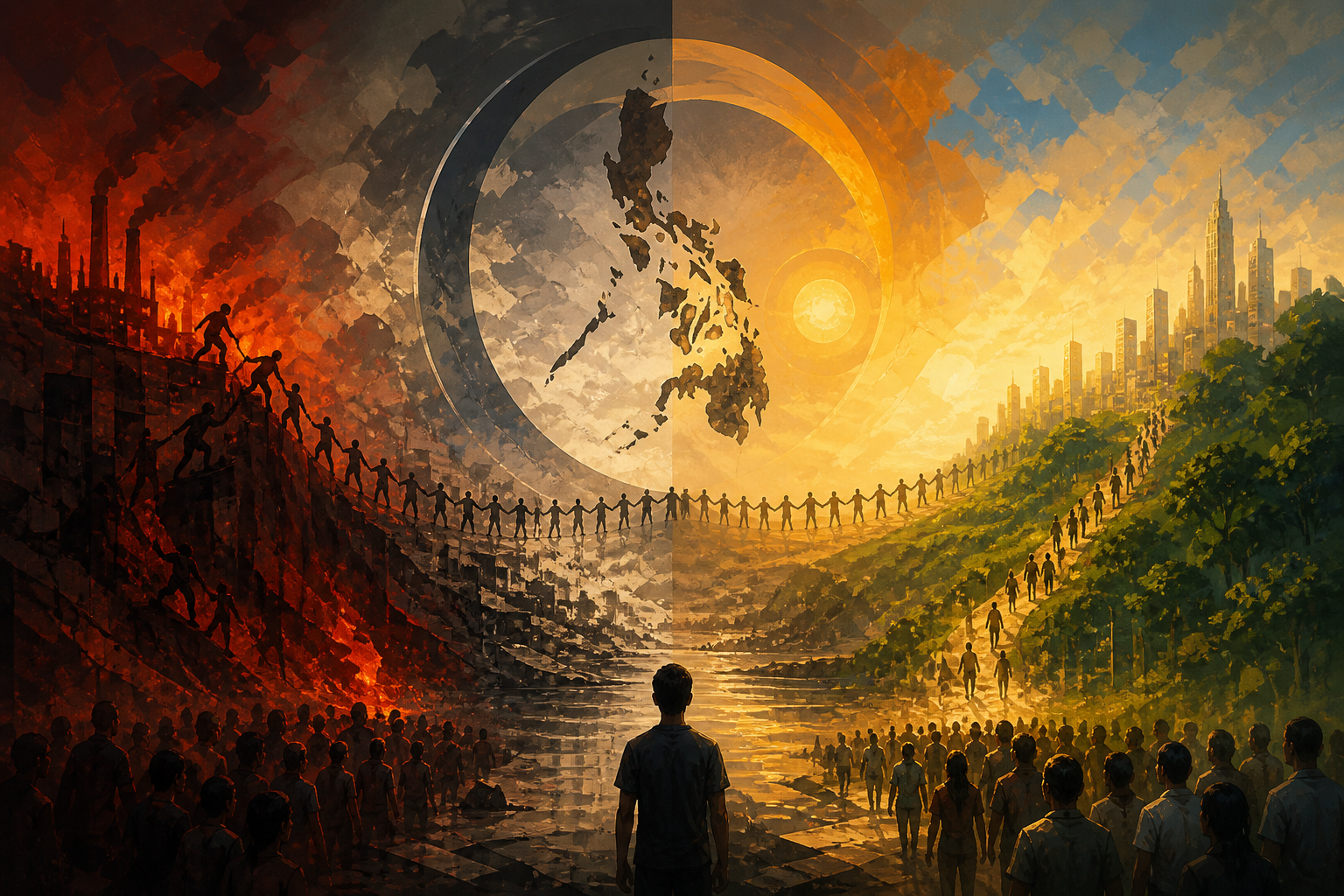
Over the fourteen years I have lived in South Korea, I have come to view the condition of a nation not as a static map, but as a journey—a long, winding movement shaped by the weight of our collective choices. As an author, I find myself drawn to the structure of the Divine Comedy, where Dante must descend through the depths of Hell before he can even hope to see the light of Paradise. It’s a lens that helps me process our own national reality: we are not stuck in a fixed state, but are moving through a landscape defined by our actions. 

From this perspective, three questions have begun to haunt my thoughts, demanding to be addressed:

Do we have a good government? 

Are we a responsible citizenry? 

Where do we stand as a nation—paradise, purgatory, or hell? 

**********

DO WE HAVE A GOOD GOVERNMENT

The answer to the first question, as painful as it is to write, feels unequivocal to me.

We are governed by a dysfunctional government.

In my time writing about self-improvement and the shadow of our choices, I’ve seen how corruption acts as a plague on our institutions, siphoning away the very resources meant for our growth. It is heartbreaking to realize that the funds intended for our children’s schools or our farmers’ roads are so often lost to dishonesty. Tools that should be used for our collective progress instead become narrow paths for personal gain, turning our public coffers into the private piggy banks of those in power. 

In my observations, these practices reveal something far deeper than a simple institutional breakdown; they expose the raw, ethical flaws that I often explore in my own writing—where greed is allowed to prioritize personal gain over the public good, and pride stands like a wall against accountability. These are the same vices I find echoed in the great literary traditions I study, yet they are not confined to the pages of a book; they manifest in the very way our daily lives and institutions function. 

I’ve seen how this dysfunction slowly erodes the foundation of our society and lowers the bar for what we expect from one another. As corruption becomes common, integrity feels less like a standard and more like a rare exception. I worry that we have begun to tolerate dishonesty, normalizing inefficiency until we are trapped in a cycle: weak systems create passive citizens, and our passivity, in turn, allows that weakness to persist. 
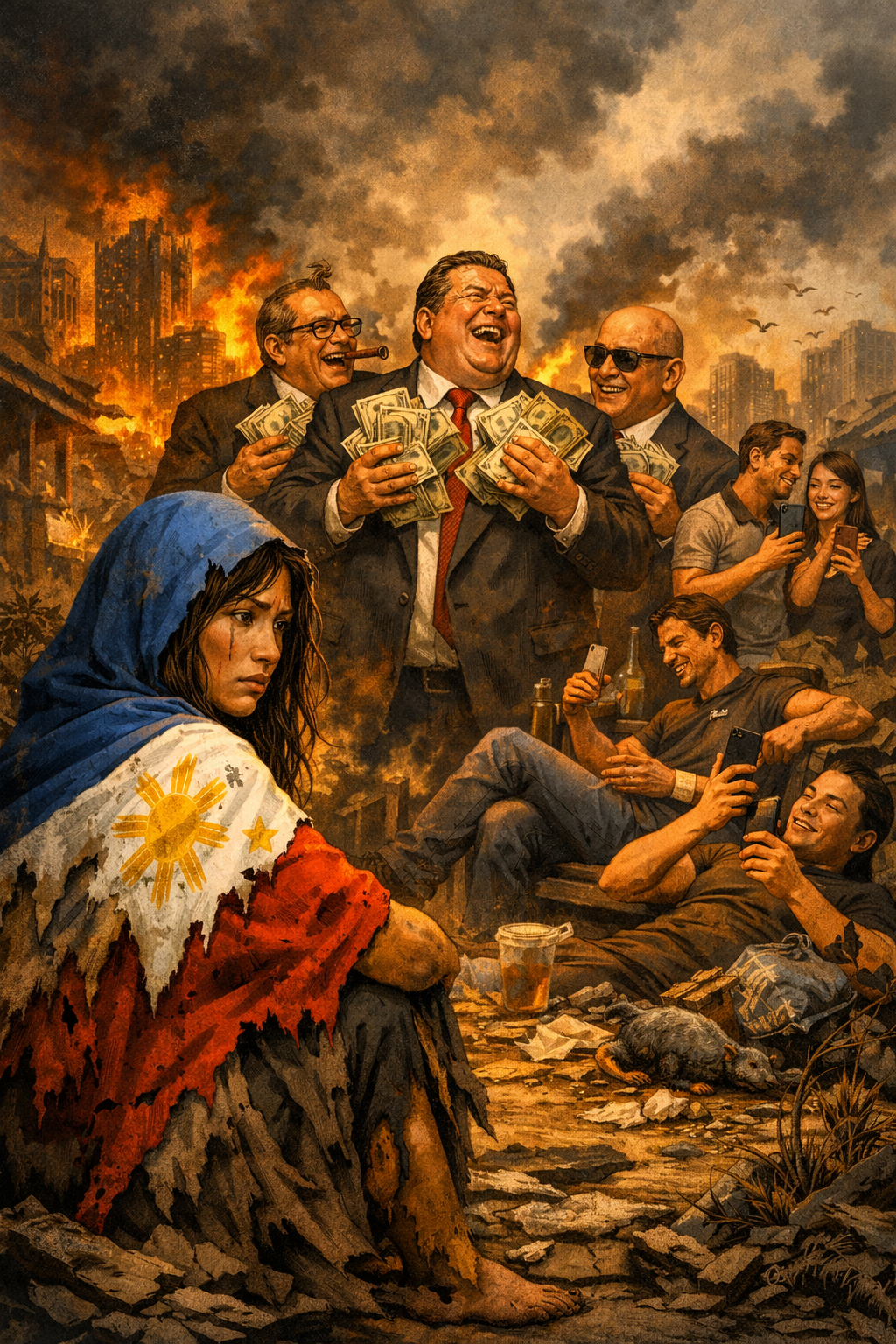
More concerning to me is the resignation this environment breeds. It’s easy to start believing that change is impossible, but that belief only serves to normalize corruption. It silences the critical voices and weakens our collective will to demand something better. When I see hope being lost, I realize that our withdrawal from civic engagement is the very thing that prevents reform from taking root. 

I often think of Dante’s vision, where the morally indifferent—those who refuse to take a stand—are denied entry even into Hell. They are condemned not for their actions, but for their silence. In much the same way, I feel that our own inaction allows this dysfunction to continue, unchallenged and uninterrupted.

It reminds me of what Dante portrayed as sloth: not just simple idleness, but a moral passivity that allows injustice to endure through quiet tolerance. Like the inscription at the gates of Hell—“Abandon all hope, ye who enter here”—too many of us have accepted this state as permanent, surrendering the very hope that could spark change and, instead, enabling the very actors who thrive in this dysfunction.

As I watch from afar, the political theater back home often feels less like a debate and more like a spectacle of mudslinging between rival groups. It is a pattern I find deeply unsettling, reflecting not a reasoned disagreement but a descent into raw hostility, in which the pursuit of truth is sacrificed for the sake of division. Instead of the meaningful dialogue and collaboration I advocate for in my own reflections on self-improvement, we witness a cycle of endless accusations and personal attacks.

It resembles a tragicomedy—absurd, disquietingly humorous, yet undeniably tragic. What strikes me most is how we, as citizens, often become unwitting participants in these divisions, defending rival factions even when the conflict yields no real benefit to our lives. The energy I believe should be devoted to substantive governance and personal growth is instead consumed by these political theatrics. 

Watching this from afar, I am reminded of Shakespeare’s Troilus and Cressida, a problem play in which the pursuit of truth is buried beneath ego and partisan hostility, leaving the characters mired in a stalemate that mirrors our own national stagnation.

I find it even more troubling to see the persistent failure to hold erring officials accountable. Even when scandals capture our attention, I’ve seen justice delayed or diluted until it is effectively denied. It seems to me that accountability has become selective, fueled by partisan loyalties: rigorous when applied to an adversary, but met with a heavy silence when it concerns an ally. In my view, this selective justice only strengthens a culture of impunity in which misconduct is not just ignored but effectively tolerated because the consequences never seem to match the actions. 

Taken together, these realities paint a picture for me of a government struggling to fulfill its basic duties—not because we lack solutions, but because the system itself feels compromised.

 It leads me to wonder: if we lack a good government, does that place us in Purgatory?

In my heart, the answer is “not quite,” because I’ve come to realize that the failure of a government never exists in isolation; it is a mirror that reflects and reinforces the shortcomings we carry as a people. 

**********

ARE WE A RESPONSIBLE CITIZENRY?

This is an uncomfortable question—one that demands honesty.

Unfortunately, the answer is no. To claim otherwise would be to deny a truth we often avoid.

In my fourteen years of living abroad, I have come to realize that we cannot attribute our failure to reach our full socio-political and economic potential solely to the government. In many ways, we ourselves contribute to the very condition we lament—more often than we are willing to acknowledge. The consequences we face as a nation are a mirror of our own choices. I see this as our own national contrapasso—the principle from Dante’s vision where the punishment perfectly fits the nature of the sin. 

I believe we often fail in our most fundamental civic duty: we do not choose our leaders wisely. From my perspective as an author who values the precision of every choice, it is painful to see elections reduced to popularity contests or questionable standards. When we elevate individuals who are unqualified or driven by self-interest, we are essentially drafting the very chapters of the dysfunction we later complain about. 

This failure is most evident to me in the persistent cycle of vote-buying and vote-selling. It breaks my heart to see the sacred right of suffrage treated as a transaction rather than a responsibility. This is the contrapasso of the ballot: on the eve of elections, when an envelope changes hands for a day’s relief, it sets a narrative in motion. Years later, those same hands wait again for a change that never comes. 

When we sell a vote for a single meal, we shouldn’t be surprised when we are governed by those who treat public office as a commodity to be exploited for years of profit. We are not simply victims of a corrupt system; I’ve come to realize that we are often the architects of our own deprivation. We are bound by a cycle where the short-term relief of a bribe becomes the long-term chains of our national poverty, and leadership is no longer measured by the integrity I strive for in my own life, but by the capacity to buy an advantage. 

This dynamic feels like a modern staging of Shakespeare’s Coriolanus, where the titular general’s contempt for the public makes the process of seeking the people’s voice a hollow, transactional performance. In that chasm between a detached leader and a manipulated citizenry, the entire nation is swallowed.

In my view, what makes this cycle so destructive is how it fundamentally warps the meaning of representation. I’ve observed that when someone assumes office through monetary influence, they stop seeing their role as a public trust; instead, it becomes a private investment to be recovered—and, more often than not, multiplied.

In my own creative work, I strive for a “Holistic Approach” where every element serves the whole, but in this distorted system, governance becomes about the “return” on that investment. Decisions are no longer formed by the actual needs of the people, but by a desperate desire to recoup the costs of acquiring power. It makes me realize that corruption isn’t just an unfortunate accident in our story; it is embedded in the manuscript from the very first page. 

Faced with this reality, I feel that our duty goes far beyond simply refusing to sell a vote; we must practice a deep, intentional discernment when choosing those we entrust with office. As someone who carefully evaluates every line of a poem or every margin of a 5×8 layout, I believe the right to vote is not just a procedure—it is a moral responsibility that demands our best judgment. We have to set personal standards that exceed the bare minimums of the law, evaluating candidates on their competence, their integrity, and their actual capacity to serve. Without these standards, I fear our voting becomes nothing more than an empty ritual, rather than the meaningful contribution to nation-building I know it can be. 

This responsible exercise of our right is even more vital in a culture where we so easily mistake popularity for competence. I’ve often reflected that public office is not an extension of fame, and it shouldn’t be treated as a platform built on recognition alone. True leadership, like the mastery required for complex writing, demands the ability to understand intricate issues and make sound decisions in the public’s best interest. When we let popularity become our primary yardstick for success, I believe we inevitably diminish the very standards of governance we rely on to survive. 

Worse still, I see us continuing to recycle the same traditional politicians or replacing them with members of their political dynasties, yet somehow expecting different results from these same tired choices. In doing so, we reinforce a system in which power remains concentrated within a limited circle, which I believe restricts opportunities for genuine reform and perpetuates the very conditions we claim to oppose. 

What I often find overlooked, however, is that these political dynasties do not sustain themselves—they are maintained by our repeated electoral support. Leadership within these families persists not just because of their ambition, but because we, the electorate, continually permit it. In this sense, I’ve realized that dynasties are not simply imposed upon us; they are reproduced through our collective decisions. 

As I watch positions of power pass from one family member to another, I feel governance becoming less about public trust and more about the perpetuation of control. This tendency narrows the variety of perspectives in our leadership and makes significant change feel increasingly out of reach. When I see the same names dominating our political landscape decade after decade, my expectations for a different outcome grow increasingly detached from reality. 

Recognizing this reality highlights a profound personal responsibility for me. I know the means to make informed choices are within our reach; we can examine track records, assess qualifications, and critically evaluate platforms. To me, the ability to choose wisely doesn’t require extraordinary expertise—it only requires us to be attentive, thoughtful, and responsible with our votes. 

Beyond how we vote, I see a mindset of misplaced expectations, in which we believe the government is solely responsible for solving every societal problem. We often view our relationship with the state through a lens of entitlement, demanding benefits and services without fully recognizing our own vital role in nation-building. In many ways, our national psyche has become a staging of Samuel Beckett’s Waiting for Godot, where we sit by the side of the road, suspended in a state of ‘what could have been,’ waiting for a savior who never arrives. We remain rooted in place, expecting the government to deliver a transformation that can only be authored by our own hands.

I’ve noticed that this belief is often accompanied by a dangerous expectation: that those in power can single-handedly deliver national transformation, as if progress were the work of political saviors rather than a shared responsibility. In my own reflections on self-improvement, I see how such expectations reinforce patterns of dependence that go beyond mere perception and begin to actively shape our behavior. 

This mindset is further reinforced by what we often call the ayuda mentality, reflecting a growing dependence on government assistance as a primary means of survival. While I recognize that aid is absolutely necessary during crises, it becomes deeply problematic when it fosters long-term reliance rather than empowerment. 

Instead of being seen as temporary relief, I see assistance being regarded as an entitlement, which inevitably weakens our drive for self-reliance and personal initiative. Over time, this erodes the very values I believe are necessary for a responsible citizenry—hard work, discipline, and accountability. Even more concerning to me is how this assistance becomes entangled with political interests. Rather than serving as a mechanism for public welfare, I’ve seen it dangled as a reward for political favors, votes, and loyalty. This practice transforms aid from a tool of empowerment into an instrument of influence, reinforcing our dependency while distorting the democratic process I hold dear. 

For me, this cycle of dependency mirrors Dante’s Third Circle, where the gluttons lie in a foul-smelling slush, eternally drenched by cold, ceaseless rain. Our gluttony is not for food, but for the ease of reliance. The contrapasso is evident: by choosing the temporary comfort of a handout over the challenging path of self-reliance, we condemn ourselves to remain in the mud of national stagnation. We are left perpetually waiting for a rain of ayuda that neither cleanses nor empowers, but keeps us mired in a situation of our own making. 

The more we rely on external provision without cultivating self-reliance, the more we reinforce the very conditions that make such reliance necessary. It becomes a quiet echo of the same moral logic found in Dante’s vision, where consequences reflect the choices that give rise to them.

THE NATION WE CREATED (PART 2)

Unknown's avatar

About M.A.D. LIGAYA

I am a teacher, writer, and lifelong learner with diverse interests in prose and poetry, education, research, language learning, and personal growth and development. My primary advocacy is the promotion of self-improvement. Teaching, writing, and lifelong learning form the core of my passions. I taught subjects aligned with my interests in academic institutions in the Philippines and South Korea. When not engaged in academic work, I dedicate time to writing stories, poems, plays, and scholarly studies, many of which are published on my personal website (madligaya.com). I write in both English and my native language, Filipino. Several of my research studies have been presented at international conferences and published in internationally indexed journals. My published papers can be accessed through my ORCID profile: https://orcid.org/0000-0002-4477-3772. Outside of teaching and writing, I enjoy reading books related to my interests, creating content for my websites and social media accounts, and engaging in self-improvement activities. The following is a link to my complete curriculum vitae: https://madligaya.com/__welcome/my-curriculum-vitae/ TO GOD BE THE GLORY!

Posted on May 4, 2026, in Accountability, Expat Teachers in South Korea, My Personal Experiences, National Character, National Development, Nationalism, Personal Accountability, Responsible Citizenship and tagged , , , , , . Bookmark the permalink. Leave a comment.

Leave a comment