Author Archives: M.A.D. LIGAYA
Ang Good News ni Misis
 “Matutuwa ka sa ibabalita ko!”
Ang wika sa text ng kabiyak ni Pedro
Kaya’t nang matapos ang kanyang trabaho
Buong pananabik na umuwi ito
“Honey ano ba ang ibabalita mo?”
Ang kaagad na tanong sa misis nito.
At ang sagot – “Magiging tatlo na tayo.”
At Pedro’y sumigaw, “Yes tatay na ako!”
“Teka muna sweetie, ika’y maghinay-hinay.
I don’t mean na ikaw na’y magiging tatay
Tayo’y magiging tatlo dito sa bahay
Kasi dito titira ang aking nanay.”
Why Do I Write?


Why do I write?
Is it to impress?
I don’t write to impress. I’m well aware of the fact that my skills in writing are nowhere near excellent. I am not even halfway my journey to excellence in writing. I am not sure if I’ll get there before I breathe my last. I have a long long way to go. Perhaps I may need a dozen of lifetimes (or more) in order to surpass the accomplishments of the likes of William Shakespeare, Elizabeth Browning, George Bernard Shaw, Leo Tolstoy and the likes.
So, why do I write then?
Do I write in the hope that I earn money and become famous?
Not even!
Fame and money are not my primary motivations for writing. Of course I need money. It’s hypocritical to say that I don’t like to have additional numbers to the farthest north of the first digit in my bank…
View original post 1,361 more words
Makulit na Mister
 Isang gabing maulan… ubod ng lamig,
Ang kawawang mister… hindi nakatiis
Ang buntis na misis biglang kinalabit –
“Honey, gising, alaga ko’y nangungulit.”
“Naku sweetie, iyong ipagpaumanhin.”
Ang sagot ng misis na malambing.
“Bukas kasi OB-Gyne ko’y dadalawin,
Dyahe kapag may naiwan doong something.”
Bumangon ang mister inis na inis,
Pinilit mag-relax at siya’y nag-isip,
Bumalik sa kama at tinanong ang misis,
“Bukas ba honey pupunta ka sa dentist?”
Kumpareng Baby
 “Sino itong Baby na nagte-text sa ‘yo?”
Tanong ng GF sa BF na palikero.
“Aking giliw, lalaki ‘yan, kumpare ko.”
Sagot ng BF sa GF na nagtatampo.
“Si pareng Baby ‘yan, kabarong barako.”
Ang paliwanag ng batikang bohemyo
“Alam mo namang ikaw lang ang mahal ko,
Ako giliw ay pagkatiwalaan mo.”
“O ano nga pala ang isasagot ko?”
Ang tanong ng GF sa BF nito.
“Kasi ‘di na daw tuloy ang lakad ninyo,
Biglang nagka-mens ang kumpareng Baby mo.”
What Teachers and Students Expect From One Another
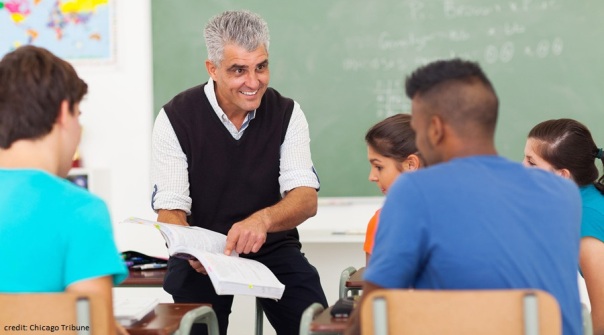
Teachers do talk about their students. They share among themselves their best and worst experiences in the classroom and compare their students’ performance and behavior. This they do either in meetings or just informally during lunch and coffee breaks.
Students do the same – they also talk about their teachers. When they are not within hearing distance of the educators, they discuss about them. Students tell each other, their parents too, how good or bad their teachers are – how much they like or abhor them.
It’s not only the teachers who could express satisfaction over good performance of students or show discontent over their lack of effort in their studies. The students could do the same. They would show approval for the good effort put up by their teachers and convey disdain when they feel they are being shortchanged.
Both teachers and the students expect each other to perform well when they come to class. They both demand excellence. The teachers assume that their students have studied their lessons and have done their assignments. On the other hand, the students believe that the ones who will lead the learning process, their teachers, are prepared whenever they stand in front of them – that they have a lesson plan and they know how to execute it.
The most foolish assumption that teachers could make is to think that their students wouldn’t notice if they come to class unprepared. Students know if a teacher is not doing his or her job properly. It’s not only the teachers who could distinguish excellence from mediocrity.
Teachers require students to participate in discussions and other class activities. For that, they need to do their part. The teachers should never forget that there is a prerequisite to requiring the students to participate – motivation. Students expect their teachers to make them interested in the subject and to ask questions that make them think. They expect them to explain clearly and give sufficient examples for them to be ready to participate.
Such are among the pedagogical skills that teachers are expected to manifest if they hope to succeed in making students participate actively in their classes.
Students expect their teachers to be competent. The worst mistake educational managers could do is to not strictly screen applicants or blindly disregard hiring procedures and standards for whatever reasons and end up entrusting to somebody mediocre – to somebody not trained to be a teacher – the education of students. Knowledge coupled with the required pedagogical skills are what constitute competence among teachers.
Interestingly, competence and their correlates are not the ones that came out on top of the list of what students perceive as qualities of effective teachers. In studies conducted to determine what students consider as the best characteristics of quality teachers, those that relate to personality, not pedagogical skills, were the ones that consistently top the list.
In one of the said studies, among what emerged as the top five qualities of effective teacher as perceived by students, “the ability to develop relationships with their students” received the highest score.1 Of the four remaining, only “engaging students in learning” (ranked 5th) is related to pedagogy. “The ability to develop relationships with their students,” “patient, caring, and kind personality,” and “knowledge of learners” were ranked, 2nd, 3rd, and 4th, respectively.
Students and teachers differ in their perception of the characteristics of effective teachers. In a study that explored student and teacher beliefs on good teaching,2 teachers rated constructs related to their abilities as teacher much higher than those related to their personality. For the students, it’s the opposite. They gave preference to constructs related to the personality of teachers. Students who participated in the study rated “caring,” “content knowledge,” “safe environment,” “dependable,” “prepared” and a “teacher-student relationship” as most important when describing what makes a good teacher.
Again, emerging on top of the list, as viewed on the perspective of students, is a quality related to the personality of the teacher – “caring.” Note that “content knowledge” and “prepared” are related to pedagogy, the rest to the attitude and behavior of the teachers.
A very interesting topic for research is who can best answer the question “What are the qualities of an effective teacher – the students or the teachers?”.
Who is the better judge of what constitutes quality teaching – the students or the teachers themselves?
Teachers also expect respect from the students. That is something not difficult to elicit from young people like the students who are (supposedly) taught by their parents to respect people in authority. But even if parents were remiss of their duties to inculcate among their children that value, the teachers are always in a position to be accorded respect. The teachers, however, have to understand that respect is a two-way street. Students also expect to be respected. Their being the persons in authority don’t give them the right to embarrass the students either directly or indirectly.
In a study on students’ perceptions of effective teaching in higher education,3 “respectful” and other correlated descriptors were mentioned by students in a number of times significantly more than any of the other characteristics, including “knowledgeable” (which got the second highest mark). Student-respondents said that they appreciate teachers who are compassionate and understanding of the unique and challenging situations that students sometimes experience.
One of the proven ways of ensuring successful learning is for the teacher to ensure that a good rapport between them and their students exist. And the best way to do it is by not only telling the students what they expect from them but by knowing also what the students expect from the teachers.
References:
Salamin
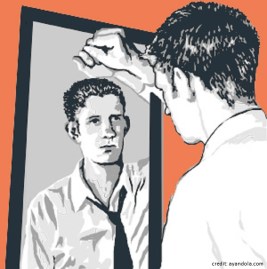 Aking salaming nakasabit sa dingding,
Samo ko ay laging ibulong sa akin,
Na dungis ng iba bago ko punahin,
Uling sa mukha ko muna ang linisin.
Turuan mo nga akong maghunos-dili,
Na h’wag perpekto kung tignan ang sarili.
Pagsabihan ako na h’wag magmapuri,
Isiping ako ma’y pwedeng magkamali.
Sabihin mong wala akong karapatan
Na kapwa ko tao ay aking pulaan,
Dahil ako ma’y maraming kakulangan –
Pagkatao ko’y tadtad sa kapintasan.
Sa tuwing kita’y lalapitan sa dingding,
Paalalahanan ako oh salamin
Na sariling buhay ko’y dapat ayusin
At h’wag buhay ng may buhay ang punahin.
Sana’y tulungan mo akong unawain,
Na oras akin lamang sasayangin
Kung kakulangan ng iba’y laging papansinin
At pagkakamali nila ang laging hahanapin.
Pilitin mo namang ituro sa akin
Na galit sa puso’y hindi ko kimkimin,
Na inggit sa limot lagi kong ilibing,
Na kapwa-tao’y lagi kong unawain.
Oh salamin ako’y paalalahanan
Na dapat saliksiki’y tamang katwiran
Na kung tamang landas… aking dadaanan
Panginoong Diyos ako’y gagabayan.
Huli Na Ang Lahat
(Mula sa kantang “When I Was Your Man” ni Bruno Mars)

Kamang higaan ko biglaang lumuwag
Walang katabi’t sa aki’y yumayakap
Kanta natin noon na dulot ay galak
‘Pag ngayon nadinig ako’y naiiyak
Tuwing pangala’y sumasagi sa isip
Magugunita naglaho mong pagibig
Walang magagawa kundi ang pumikit
Luha’y aagos lugami ang dibdib
Kung yakap sa iyo’y aking hinigpitan
Kung panahon ko sa iyo’y inilaan
Kung ng bulaklak kita ay hinandugan
Baka sakaling ako’y ‘di mo iniwan
Nakalimutang kita’y pahalagahan
Pinabayaa’t hinayaang masaktan
Natiis na magdusa’t mata’y luhaan
Kaya’t nagpasya ka na ako’y iwanan
Nang mawala ka kita’y pilit hinanap
Ninais kong sa iyo’y magpaliwanag
Nanalanging hindi pa huli ang lahat
Tanggapin muli ako at mapatawad
Sa pasyalan natin kita’y pinuntahan
Nagbakasaling doo’y matagpuan
Sa nasumpungan labis akong nasaktan
Yakap ka ng iba’t masuyong hinahagkan
 M.A.D. LIGAYA


 M.A.D. L I G A Y A