Author Archives: M.A.D. LIGAYA
Lebron’s Greatness and Skip Bayless

For Skip Bayless of Fox Sports 1, Lebron’s 35-15-9 (points-rebounds-assists) performance when the Cavs defeated the Celtics to capture the 2018 NBA Eastern Conference finals was not great because of his 8 turnovers in the game. That’s typical of the said sports columnist – to always try to find a way to discredit the 4-time MVP. Bayless has seemingly made a living from bashing the Cavs’ superstar.
Plain and simple – Bayless hates Lebron so much that there is nothing the latter could do to appease him. Don’t tell that sports commentator that Lebron is the “greatest basketball player of all time” because he could give perhaps a million of reasons to prove otherwise. I am not even sure if he would concede that Lebron could be ranked at least as one of the greatest.
For me, Lebron is a great basketball player. He is undoubtedly one of the greatest. Only the blind can’t see that. I don’t like to compare him to any of the other “greats.” Identifying the basketball’s GOAT (greatest of all time) is a very subjective issue and it is not the intention of this article to weigh in on the discussion.
All I wish to do is to appreciate Lebron’s greatness. I am not an “honorable expert” in basketball like Skip Bayless, but unlike him I have lots of common sense. I am but an ordinary basketball fan who appreciates the fact that the Eastern conference Game 7 between Cleveland and Boston was the 100th game that Lebron played for the ongoing season. He played in all of the Cavs’ 82 games during the regular season. He played 7 playoff games each against the Pacers and the Celtics and 4 against the Raptors. Would you not marvel at that given the fact that Lebron is already 33 years old and playing in his 15th NBA season?
If that is not great then what could it be? That for me is an achievement in itself which can not be negated by anything – not even by the Cavs not possibly winning the NBA championship this year.
Would you question the greatness of a player who led a team that had to go through a lot of changes and drama during the regular season all the way to the Eastern Conference Finals and win it? You would if you have a mindset like Skip Bayless’.
It’s so funny to hear an expert like Skip Bayless say that the Pacers and the Celtics were destined to fail against the Cavs because both were young teams then argue that the Raptors, a team with veteran players with playoff experiences, lost to Cavs simply because they were afraid of Lebron.
Now, don’t dare tell Skip Bayless that this is Lebron’s 8th straight NBA Finals because I am almost certain he would point out that the Cavs superstar lost 4 times in his last 7 attempts to win the NBA crown. I am afraid he would even add that Lebron is about to experience the 5th time he would fail when the Cavs face the Warriors yet again.
My standards for greatness are not as high as Skip Bayless’… or shall I say I know a little of appreciative inquiry and I have decided to apply the said principle in a personal level. I want to search for what is best in people. Instead of being negative and critical, I chose to be appreciative of what other people accomplish.
Why will I count the number of times my fellowmen fail when it is better to take into account the number of times they succeeded. It’s their success I celebrate.
What makes Lebron endearing as a competitor is no matter how many times he failed he kept trying. That for me is “greatness.” The kind of example Lebron has been showing – the way he competes, the way he takes care of his body, the way he lives his life – is worth emulating. Lebron transcends basketball. He inspires a lot of people… except Skip Bayless.
Whether Skip Bayless likes it or not, the 4 times Lebron James failed to win the NBA trophy can never erase all that he has accomplished as a basketball player and as a person.
For the fourth straight season that Lebron and the Cavs will slug it out with the heavily-favored Warriors for the NBA crown. Oddsmakers and experts are unanimous in saying that Golden State will repeat as champions. Should that happen, I will choose to remember Lebron James as the leader of the Cavs team who overcame a seemingly insurmountable 1-3 deficit to become the 2016 NBA Champions at the expense of the Warriors themselves. That I consider as Lebron James’ greatest achievement… of course Skip Bayless would disagree.
Perhaps Skip Bayless is hating Lebron on purpose – to draw attention to himself. It could be his only way to be significant as a sports analyst.
Ang Larawan Ni Ama

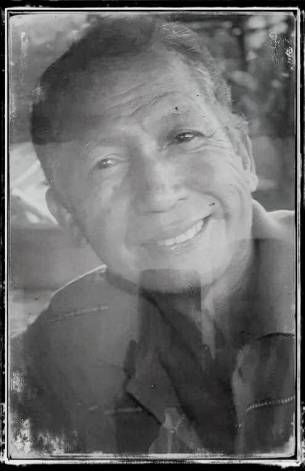 Mahaba ang byahe. Hindi ko na binilang kung ilang oras bago ko narating ang maliit na baryong sinilangan ng aking ama. Nadadagdagan kasi ang inip ko ng yamot tuwing tumitingin ako sa relo kaya’t idinaan ko na lamang sa tulog. Nakadalawang bus at isang jeep ako pero kinaylangan ko pang sumakay ng tricycle. Sanay naman ako sa matagalang byahe kaso nga lang ay tag-ulan kaya’t maputik at mahirap ang magpalipat-lipat ng sasakyan. Kaya nga’t nagpasya akong hindi na lamang isama si misis sa lakad kong iyon. Mahihiluhin at mainipin siya sa byahe. Natyempo pa namang may paparating na bagyo kaya’t medyo mabagal ang tinakbo ng aking mga sinakyan.
Sumablay pa ng kaunti ang huling yugto ng byahe kong iyon. Nakalimutan yata ng tricycle driver ang kanyang trapal, o kaya’y tinamad siyang ilagay ito kaya’t ginamit ko na lamang ang dala kong payong na panangga sa ulan upang hindi mabasa ang…
View original post 4,791 more words
The Day One of My Students Cried

While my students were working on a graded exercise I gave after discussing a grammar point, I noticed that one of them was crying. It was apparent that the seatwork I gave was the reason.
The task was simple – from a set of paired sentences, they will write new sentences using the comparative form of adjectives (followed by than). In each pair of sentences, the same adjective is used to describe two different things.
I know I discussed the topic sufficiently. In addition, shown on screen while they were doing the exercise was the slide on my PPT that explains in detail what to do. There were examples too.
I wanted to approach her but I realized that it might unnecessarily draw the attention of the whole class to her which might make her uncomfortable. So, I asked them to stop writing for a while and allow me to give one more example. I noticed that the student seated nearest to her was trying to help her understand what I was explaining. Despite all those, she was unable to finish the exercise.
Knowing her level (A2), I was not surprised that she found that exercise difficult. What was surprising were those tears. It bothered me to say the least.
Why?
I love teaching. I do use humor in the classroom but I take my profession seriously. Teaching for me is more than just a means of livelihood. I have been doing this for the past 30 years. It has become an integral part of my life.
As a teacher, everything I do in the class is guided by one of the philosophies I subscribe to – “The student is the reason I am teacher.” Thus, I care about what the students say about the way I teach. I care whether my students learn or not. I care about how my students feel.
I was sure that I did not say or did anything to offend the student who cried. One of the things I tried so hard to avoid is to make my students feel disrespected. To ensure that, I studied their culture, especially during my first months here in South Korea. I kept in mind the tips given to me by my compatriots who have been teaching here longer than I do. I don’t like to offend my students either directly or indirectly. I’m particularly careful with my language and the kind of humor I use in the class. As a teacher, I know how important it is to establish a good rapport with my students and that begins with me acknowledging that they deserve respect.
So, I was wondering what triggered her to cry. It made me contemplate about my overall performance in the class. It made me think if I was performing as a teacher the way I ought to.
I asked myself – Am I an effective teacher? Am I doing the right things in the class? Am I using the proper strategies to motivate my students and help them learn? Are those tears caused by my inability to sufficiently differentiate instruction to cater to the different proficiency levels of my students?
Have I become a “mercenary expat teacher” who cares for nothing but run to the ATM during paydays?
The only consolation I had was the thought that the student seemed to care about whether she learns or not so much so that when she wasn’t able to do the exercise it made her so frustrated prompting those tears to well out of her eyes.
When the class ended, I sent that student a text message asking her, only if she was comfortable doing so, to visit me in my office anytime both of us are available so I could explain to her further the grammar point I discussed that day. I also promised to give her a chance to redo the exercise.
That’s the reason the university requires us to serve three hours of office a week. We use that in case students need help or they want to practice conversation.
The following day, the student came, with that classmate seated nearest to her and who happened to be her best friend (whose language level is B2). She asked her friend to accompany her just in case she needs a translator.
As soon as they got settled in my office, I ask my student why she cried. She explained in Korean and her classmate translated it to English.
She cried because she felt she was so stupid for she could hardly understand English. She thinks her IQ is very low because she could not speak English well.
I told her that the things she said are actually fallacies in language learning. A language learner should not be considered stupid just because she could hardly understand the new language that she is trying to learn. I pointed this out not because I wanted her to feel better but because it is what I believe.
I explained to her (and to her friend) that people who speak multiple languages could do so because they dedicated their time and resources to study the languages they know. Another possible reason they attained speaking and writing proficiency in a language or several languages is because since birth they were exposed to those languages.
I cited myself as an example. I could speak three dialects in my country (Tagalog, Ibanag, and Ilocano) because those are the languages of my parents. And how did I learn English? My parents used the language too when communicating and in my country (the Philippines), the medium of instruction in our schools (from Basic Education to Tertiary, even in Graduate School) is English. In addition, I told them I have a Bachelor of Arts degree in English.
As a clincher for my monologue, I asked my two visitors a question, “Am I stupid because I don’t speak Korean well?” I was happy they both said “no.”
Then I asked my student who cried how long has she been studying English and how serious were her efforts to learn the language. Her response – “Not too long and she was not serious with her efforts.”
I told her that that is the problem. I added that that is also the reason I could not speak Korean well – I was not serious with my efforts to learn the language. After hearing that she said something in Korean to her friend. I asked her friend what was it. This was what my student said – “I will teach sir Korean and he’ll teach me English.” Then we had a laugh.
I spent around 10 minutes in explaining to her the comparative form of adjectives and how to rewrite two sentences with the same adjective into one sentence using the comparative form of the said adjective. Then I gave her as much time she needed to finish the exercise – the exercise that made her cry. She finished the exercise with no tears but smiles.
Before they left I explained the other fallacy that my student who cried said – that her IQ is very low because she could not speak English well. I told her that the English language has nothing to do with a person’s intelligence quotient. IQ tests in a country are written in that country’s native language. Verbal comprehension is only one of the several aspects tested in IQ tests and that verbal comprehension is not verbal comprehension in English but in the language in which the IQ test is written.
I told my students that when people could speak English fluently it does not mean that their intelligence quotient is high. Proficiency in English has never been and will never be used as the sole basis in measuring a person’s intelligence. That people who could speak English are more intelligent than those who could not is a fallacy.
“Mukhang Poet”
 Mukhang “poet” lang po ako pero hindi ko masasabing bihasa ako sa pagsulat ng tula. Ang totoo nga po’y hindi naman ako taal na Tagalog. Ang aking ama’y isang Batangueño at ang ina ko nama’y Ilocana-Ibanag.
Libangan ko lang talaga ang paghabi ng tula. Mahilig lang akong sa taludtura’y maglaro’t maglakbay at pilit na mga pintig ay tinutugma’t pinapantay. Minsan naman ay sa dalampasigan ng malayang taludturan ako bumabaybay.
Hindi po talaga ako makata. Mahilig lang akong gumamit ng mga talinghagang ang babasa’y kayang talusin hindi upang sila’y lituhin kundi upang sa kariktan ng tula’y sa lugod sila’y lunurin.
Natuto lang ako ng kaunti kung papaanong ang mga saknong sa tayutay ay habiin. Kahit naman papano ang pagwawangis ay kaya kong gawin. Natutuhan ko rin naman kahit kaunti kung papaano pagapangin ang aking damdamin sa bawat taludtod at hayaang laman ng puso ko’y sa pantig tumibok.
Kahit naman papaano’y nakakasulat ako ng tula at pinipilit kong aralin ang mga dapat kong matutuhan sa larangang ito umaasang balang araw ay hindi na akong magmukhang “poet” lamang kundi tawagin na akong totoong makata.
Hindi pa ako tapos sa aking pag-aaral. Ang nasa kong matuto’y hindi magmamaliw hangga’t puso ko’t isipan ay kayang sabay na umindak sa kumpas ng aliw-iw.
— 0 —
Karahimihan sa mga tula ko’y “lalabindalawahin” at ang mga saknong ay apat na linya. Gumagamit din ako ng malayang taludturan, walang sukat pero sinisikap kong lagyan ng tugma sa dulo.
Pinagsama-sama ko ang aking mga tula ayon sa mga kategoryang pinili ko. Ang mga tula kong may temang pag-ibig ay aking inipon sa pahinang may pangalang TIBOK habang ang mga tulang tumatalakay sa bayan, pagkamamamayan at mga isyu patungkol sa pulitika ay sa BAYAN MUNA.
Ang mga paboritong kong love songs sa English eh ginagawan ko rin ng tula at mababasa ang mga ito sa TINULANG KANTA. Paano ba naman, ang mga kaybigan ko, tuwing ako’y naririnig kumanta sa English ay naririndi at sinasabing tulain ko na lang.
Sumulat din ano ng mga tula tungkol sa kung ano-anong bagay at mga isyu o mga paksa na hindi tumatalakay sa pag-ibig at sa bayan. Pinagsama-sama ko ang mga ito sa SAMOT SARING TULA.
May mga sinulat rin akong satirikong tula na bumabatikos sa mga sa palagay ko’y ugaling ‘di maganda ng mga taong nakapaligid sa akin at ng mga taong nakakasama ko sa trabaho. Ang mga tulang ito ay parunggit ngunit hindi ako nagmamalinis dahil maaaring angkin ko rin ang mga ugaling hindi ko nagugustuhan sa iba kaya’t kapag nababasa ko ang mga tulang ito’y nagbubulay-bulay din ako. Pinagsama-sama ko ang mga tulang ito sa pahinang pinangalanan kong SA PILING NG MGA HAYOP. Bahala na ang babasa kung ano sa tingin nila ang kahulugan ng salitang HAYOP sa pangalan ng pahinang ito.
Lumikha rin ako ng pahina para sa mga tula kong sinulat habang ako’y nakasakay sa jeep o insipired ng mga experiences ko sa pagsakay sa jeep. Matatagpuan ang mga tulang ito sa pahinang binansagan kong HETO NA ANG JEEP.
May mga sinulat rin akong APATANG TALUDTOD (Quatrains). Nag-eksperimento rin ako sa isang uri ng tula na tinawag kong PAKWELANG TALUDTURAN na sa unang tatlong taludtod ay parang seryoso ang tinatalakay subalit sa pang-apat (clincher) ay ang sundot na patawa. At dahil mahilig din akong magpatawa eh gumawa ako ng mga tulang ang layon ay magkwento ng nakakatawa. Ang mga tulang naturan ay nasa TINULANG JOKES.
May mga tula rin akong nagpapahayag ng pagkilala sa ating Dakilang Lumikha. Pinangalang kong PAGNINILAY ang sulok na ito ng aking website.
SELF DOUBT: The Unknown Sin

Lust, gluttony, greed, sloth, wrath, envy and pride are referred to in Christian teachings as the “seven deadly sins.” These, to the Roman Catholics, are the cardinal sins. If a person commits any of them, he is believed to be cut off from God’s grace.1
Actually, the Bible does not specifically mention the concept “seven deadly sins.” But in Galatians 5: 16-19, fifteen acts of the sinful nature are identified – sexual immorality, impurity, debauchery, idolatry, witchcraft, hatred, discord, jealousy, fits of rage, selfish ambition, dissensions, factions, envy, drunkenness, and orgies. Perhaps St. Gregory the Great, during his reign as Pope (590 – 640 AD), wanting to be concise, shortened that long list of capital vices.
All Christian faithful are being called upon to not commit those acts of the flesh. St Paul said that believers are free but he implored them not to use their freedom to indulge the flesh. That, definitely, is easier said than done.
I think St. Paul (who wrote the Galatians) and St. Gregory may have overlooked another human frailty that should have been added in the list of sins. There exists another spiritual infirmity which I believe should be considered equally harmful as any of the deadly sins. It’s called self-doubt.
My proposition (that self-doubt be classified also as sin) may not be considered seriously. Many might even say it’s absurd.
Is it?
Is self-doubt just an ordinary flaw in a person’s character? Is it really a bit too much to consider it a sin? Is it not a serious offense – something that when committed could ruin a person’s life?
Allow me to argue my assertion that self-doubt is a sin.
For the purpose of this essay, we will define self-doubt, strictly, as “the feeling of not having confidence in yourself or your abilities.”2 The DOUBT being discussed here does not refer to that philosophical function “to cast doubt.”3
The definition above (the one before the disambiguation) makes self-doubt sound harmless – not something immoral or demonic that would make the moralists and bible scholars (both past and present) look at it as a sin. That’s probably the reason no religious movement, Christianity included, classified such human inadequacy as a sin.
Self-doubt, however, is not as simple as it seems. This impotence of the human spirit has grave consequences not only to the person having it but to the family where he belongs and to the society where he lives. A person plagued by it will be less-productive or not productive at all and is definitely not going to contribute anything for his family and society.
In arguing that self-doubt is a sin it is important to review the nature of sin in the philosophical standpoint.
Sin is said to be a moral evil.4 This brings us to another question – what is evil? St. Thomas defines the word (evil) as a privation of form or order or due measure. Evil implies a deficiency in perfection.4
Self-doubt is clearly an imperfection. It indicates the absence of confidence which is considered essential for a person’s well-being and is a requirement in the pursuit of what Abraham Maslow refers to in Psychology as “self-actualization” or achieving one’s full potential. Sin is a diversion from the perceived ideal order of human living.5 A person doubting his capabilities veers away from becoming the best that he can be and reduces his chance of living life to the fullest.
It could be argued that there are lot of other negative human characters that may indicate imperfections. But none is as damaging to the person as self-doubt. Something is wrong with a person if he lacks confidence and has very low (or no) feeling of self-worth. These are conditions that may lead to failure and unhappiness.
In addition, philosophical or moral sin is a human act not in agreement with rational nature and right reason.5
It is an offense against reason, truth, and right conscience. 6 It is unreasonable to doubt one’s capabilities. It is a person’s moral obligation to believe in himself. It is not right to think one would fail even without really trying. He needs to have faith not only in God (if he happens to believe in one) but also in himself.
Allowing self-doubt to reign is depriving the self of discovering one’s potentials. When a person decides to doubt himself, he eradicates his ability to fulfill his goals and to achieve his dreams.
Failures are indeed impossible not to happen. But even if one fails in several attempts to succeed he should decide not to stop trying. There’s a long list of famous personalities (like Albert Einstein, Abraham Lincoln, J.K. Rowling, Bill Gates, Walt Disney and Henry Ford) who had their share of failures but never gave up.
Sin, also, wounds the nature of man.6
Thalk emphasizes that self-doubt destroys the heart, mind, body and soul. It is one of the major obstacles to living the life that people truly deserve. This unhealthy food for the soul drags down a person’s spirit, crushes his ambitions, and prevents him from achieving all that he can.7
Doubt impedes a person’s development. It is the biggest roadblock to self-actualization. Self-doubt prevents people from becoming the best they could be, from realizing their full potentials, and from achieving their dreams. Shakespeare stressed, “Our doubts are traitors, and make us lose the good we oft might win, by fearing to attempt.” Suzy Kassem added that doubt kills more dreams than failure ever did.
Some degree of self-doubt is generally held to be normal. It can be helpful in some cases, as it often leads to introspection and enhanced performance. But it may require medical help when it becomes debilitating, affects daily function, or impedes performance at work or school.8
There’s no immorality committed when one doubts himself. Why should it be then considered a sin?
This brings me to the last among my arguments to convince you that self-doubt is a sin.
A sin may either be a sin of commission or a sin of omission. Sins of commission are sins we commit by doing something we shouldn’t do and sins of omission are sins we commit by not doing something.9 The seven deadly sins are all sins of commission except sloth.
Sloth, which is excessive laziness or the failure to act and utilize one’s talents,10 is considered a sin of omission. I think self-doubt belongs to that category. If sloth made it to the list of the deadly sins, self-doubt should be there also.
“Self-doubt,” is just as damaging (perhaps more damaging) to a person than this sin called “sloth.” Actually, in some instances, a person’s failure to use his innate talents starts with his inability to believe what he is capable of thinking.
*****
In overcoming self-doubt, it is important that a person traces the root causes. He should know what factors trigger his self-doubts and learn how to overcome them. If it is lack of knowledge and skills then he must exert efforts to learn and acquire those that he perceives he lacks. There is a possibility that the ones causing him to doubt himself and his capabilities are people… sometimes his own friends. Then by all means avoid them. Equally important it that he must surround himself with people who bring the best in him.
It may be easier said than done but it is important that a person maintains a positive outlook and thinks that there is nothing he cannot achieve or do if he wills it.
———-
References:
- http://www.deadlysins.com
- http://www.macmillandictionary.com/dictionary/british/self-doubt
- http://rebirthofreason.com/Articles/Rowlands/Philosophy_as_Doubt.shtml
- http://www.newadvent.org/cathen/14004b.htm
- https://en.wikipedia.org
- http://www.vatican.va/archive/ccc_ccs/archive/cathecism/p3s1c1a8.htm
- http://www.huffingtonpost.com/dr-cynthia-thaik/self-doubt_b_2960936.html
- http://www.goodtherapy.org/learn-about-therapy/issues/self-doubt
- http://www.revelation.co/2015/07/21/sins-of-commission-vs-sins-of-ommission
- http://www.bibleinfo.com/en/questions/what-are-seven-deadly-sins
Pagpupugay Sa Aking Mahal Na Ina

Kung ano ako ngayon, kung ano man ang narating ko, ay ipinagpapasalamat ko ng malaki, una sa Maykapal, pangalawa sa aking mga magulang – sa aking ama at ina.
At dahil nga sa araw ng mga NANAY ngayon, nais kong ilaan ang sanaysay na ito para sa aking INA.
Walang sinomang makakahigit sa mga sakripisyong ginawa para sa akin ng aking mga magulang – lalong-lalo na ng aking ina na ang sinanapuna’y pinaglagakan ng mga semilyang binuklod ng Panginoon upang pagsimulan ng buhay kong pahiram Niya sa akin.
Sino ba ang pwedeng makahigit sa ginawa ng aking ina na siyam na buwang hinayaang ako’y maging bahagi ng kanyang katawan. Ang sinapupunan niya’y ang unang mundong aking ginalawan. At nang dumating ang panahon na kaylangan ko nang lumabas patungo sa isang bagong mundo ay ibinuwis niya ang kanyang buhay.
Tiniis niya ang sakit upang ako’y mailuwal. Napakalaki ng ginawa niyang sakripisyo, katuwang ng aking ama, sa pagpapalaki at pag-aruga sa akin. Hindi ko pwedeng kalimutan iyon. At iyo’y hindi pagtanaw ng utang na loob. Iyon ay bunga ng itinanim niyang pagmamahal. Hindi ba’t nakatakda nating anihin ang alin mang ating itanim. Mabuti man o masama.
Nagtanim ang aking ina – ganoon din ang aking ama – ng pagmamahal na tumubo sa aking puso’t isip. Hindi ba matatawag na pagtatanim ng pagmamahal ang ginawa nilang pag-aalaga sa akin mula ako’y isang sanggol na walang kamalay-malay hanggang sa punto ng buhay ko na kinaya ko nang tumayo sa aking sariling mga paa. Inaani nila ngayon ang bunga ng pagmamahal na iyon at hindi nila ito kaylangang sungkitin, kusa itong lumalaglag patungo sa kanila.
Isang milyong beses mang magkamali ang aking ina ay hindi ko siya pwedeng talikuran. Katulad ng hindi ko pagtalikod sa aking ama noong siya’y nabubuhay pa. Simple lang ang dahilan – mahal ko siya. Hindi pwedeng burahin ng anomang depekto sa pagkatao ng aking ina ang pagmamahal ko sa kanya.
Ang dalawang pinakamahahalagang aral sa buhay na natutuhan ko ay hindi galing sa mga guro ko sa eskwelahan. Ang mga aral na naturan na nagsilbi kong gabay upang mamuhay ng tama ay galing sa aking mga magulang.
Ang una – ang itinuro sa akin ng aking ama’y huwag akong umasa sa ibang tao. Dapat daw ay matuto akong tumayo sa aking sariling mga paa. Simpleng tao lamang ang aking ama at pilit akong nagsikap at nagsusumikap pa dahil batid kong ang buhay na meron ako’t ang daang tinatahak ko ay ang katuparan ng kanyang pangarap.
Pangalawa’t huli – tinuruan ako ng aking ina na magdasal at magkaroon ng matibay na pananampalataya sa Panginoon. Ang pananampalatayang iminulat niya sa akin ay panghahawakan ko upang huwag akong maligaw ng landas. Hindi man perpekto ang buhay na tinahak ng aking ina ay tiniyak niyang maituro sa akin ang daan patungo sa aking kaligtasan.
Sa Duyan Ng Gunita
 Duyan ng gunita’y umugoy… marahan
Nakaraa’y nagbukas ng tarangkahan
Bago pumasok kita’y aanyayahan
Sa pamamasyal doon ako’y samahan
Hayaang kamay mo’y muli kong hawakan
Na muli ng halik labi mo’y dampian
Sa duyan ng gunita ako’y hayaang
Mahimbing umidlip sa iyong kandungan
Pag-ugoy ng duyan huwag mong pipigilin
Hayaang gunita nakaraa’y lakbayin
Doon na lamang kita pwedeng dalawin
Doon pwede kitang hagkan at yakapin
Dahan-dahan sanang umihip ang hangin
Umawit ito at duyan ay uguyin
Hayaang nakaraa’y aking lakbayin
Hanggang rurok ng ligaya’y aking marating
 M.A.D. LIGAYA


 M.A.D. L I G A Y A