Blog Archives
DAHIL SA BIGAS, NOODLES, AT SARDINAS
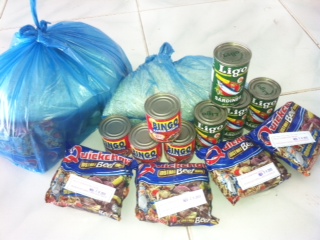 Kung noong may pagkakataon kang magsikap
… pagkakataong mag-ipon
Eh nag-ipon ka.
Nagtabi.
Kung noong tag-araw
Sa halip na sa ilog naligo’t nagtampisaw
Ikaw sana’y namingwit.
Ang nahuli mong isda…
hindi lahat kinain.
Ang iba sana’y ginawa mong daing.
Kung noon ika’y nagsuksok
Ngayon sana ika’y may madudukot.
Ngayon sana’y hindi ka parang kawawa
Nagmumukhang timawa.
Aasa ka ngayon sa ibibigay
ng munisipyo… ng barangay.
At kapag hindi ka nabigyan…
Sa ano mang kadahilanan
Magagalit ka.
Ika mo…
MGA WALANGHIYA KAYO!!!
NASAAN ANG BIGAS KO…
ANG DE-LATA KO…
ANG NOODLES KO?
Nagkakandalaiti ka.
Halos sumabog ang iyong ngala-ngala.
Halos malagot ang lahat ng litid mo sa lalamunan.
Isinumpa mo ang pamahalaan.
Nanakot ka pa na hindi mo na iboboto si mayor… si kap.
Susme.
Eh ‘di huwag!
Ika mo pa…
YOU”RE SO UNFAIR KAP!
WALA KANG KUWENTA!
Bakit sila meron, ako wala?
Eh ano ang gagawin kung naubos na.
Hindi lahat mabibigyan.
Sa dami ng nangangaylangan.
Maghintay ka lang.
Baka sa susunod ikaw naman.
At FYI mare… pare
Hindi isang karapatan
ang bigyan.
Ang tanong kasi –
Bakit kaylangang mong manghingi?
Bakit kaylangan mong bigyan?
Bakit kaylangan mong iaasa ang iyong buhay
sa limos, sa donasyon, sa bigay?
Walang-wala ka ba talaga?
Sobrang gipit?
Sa gutom mamimilipit
Kapag walang relief?
Eh bakit nagkaganoon?
Bakit hindi mo ito pinaghandaan?
Bakit sa halip na ikaw ang tumulong
eh ikaw pa ang dapat tulungan?
Bakit ang pagkaing ihahandog mo sa hapag…
Ang kanin at ulam na isusubo ng asawa mo’t mga anak.
Eh kaylangan mong iaasa kay mayor o kay kap?
Noon kasing wala pang COVID…
Noon kasing wala pang krisis…
Ano ang ginawa mo? Papetiks-petiks.
Painom-inom… patong-its tong-its.
Kaya hayan tanging ang pag-asa mo ngayon eh relief.
Makikapagkagalit ka
dahil sa ilang piraso ng noodles at sardinas,
dahil sa ilang kilo ng bigas.
Nasaan ang iyong dignidad?
Paano kung ang krisis matagal matapos?
Paano kung ang gobyerno wala na sa iyong ilimos?
Paano kung wala nang magbigay ng noodles at sardinas?
Paano kung wala nang magpamudmod ng bigas?
Ano na?
Game over ka!
Nganga!!!
At iyon namang ilang tao diyan
Na alam nating may mapagkukunan
Bakit pati kayo eh gusto pang maambunan?
Bakit pati kayo eh kaylangan pang tulungan?
Mare… pare
Ikaw na de-kotse
Wala na ba kayong bigas?
Talaga lang ha.
Sawa ka na ba sa baka at salmon
Sawa ka na ba sa hamon
Sa sobra bang sarap ng ulam ninyo
kaya sa noodles at sardinas nasabik kayo?
Pain’s But a Myth
 Tricked by Eros, I was brokenhearted.
In anguish and torment oh my soul screamed.
“Journey to my dreamland,” Hypnos muttered,
“Drown your misery in the lake of dreams.”
Dionysus countered, “Visit my vines
There feast upon my sweet magical grapes
Submerge your anguish in the lake of wine
Let the spirits engulf all of your cares.”
Aphrodite said, “I will bring Helen
She can kiss your anxieties away,
Play with her in Dionysus’ haven
While I’m holding Menelaus at bay.”
And when Thanatos arrived he whispered,
“Down there anxieties have no domain
Now, hold tight my hands, waiting is Hades
Let death vanquish all your distress and pain.”
Rhea came last, took my hand and she smiled.
Oh her turret crown beamed comfort and ease.
On her laps I just cuddled like a child.
Then she whispered, “My child… pain’s but a myth.”
Halik Sa Pisngi

Nagpaliwanag.
Humingi ng tawad.
On Writing Poems
 It’s challenging, to say the least.
For me, the literary genre most difficult to produce is the poem. Putting together the elements of meter, rhyme scheme, sound and imagery is not easy. It would take more than creativity to express thoughts and feelings using the most appropriate figures of speech.
My best poems are written in Filipino. I’ve been trying to write good ones in English but I have to admit that it’s a mighty struggle. I’m not sure if for example the following quatrain makes sense:
Whisper your woes on the flicker
Cover it with dried leaves and twigs
Whisper till the flame grows taller
Let it burn your anguish and grief
I have no problem with free-verse but my dream is to walk gloriously the “rhymed” and “metered” path while holding the hands of either Erato or Euterpe.
One time I tried to mix Greek mythology and poetry and this is what came out:
Writing stories is just as difficult because mixing in a bowl the elements of fiction within the bounds of the plot is not a walk in the park. But fiction writers have the luxury of using a lot of pages to serve their purpose. Leo Tolstoy needed more than half a million words for his novel “War and Peace.”
Conversely, a poet has a single page, sometimes not even the whole of it, to capture vivaciously and vividly the emotions and thoughts pervading within or around him. The Japanese, through their Haiku, would do it in a single-stanza poem with three lines consisting of a total of 17 syllables.
What adds difficulty when poets thread the rhyme zone is that they can not walk the path of sadness while wearing a smile. Neither can they frolic in the lake of happiness while riding the canoe of sadness.
Pain begets pain, joy engenders joy. This is seemingly the prevailing mood in the realm of poetry. Rare are the crying clowns who can masterfully inject sadness into the veins of their poems while they are cracking a joke.
The melancholic lyre sounds best when played by a poet who in one way or another licked some emotional wounds sometime ago in a desolate room. On the other hand, the trumpet of merriment can best be blown by a poet who has journeyed the clouds of ecstasy.
But life is a masterful musician who teaches poets to play both the melancholic lyre and the trumpet of merriment. Life enables a poet to play any of the said instruments at any given time.
If a poet intends to paint his canvas with gloom then he can easily prick an old emotional wound until it bleeds sadness. He can walk down memory lane and revive the pains inflicted by either a person or an event he would rather forget. That’s not masochism but rather a form of sacrifice, the poet ought to feel what he intends to write.
Conversely, it is from the same memory lane where the poet could revisit the happiest moments in his life if it is the lovely colors of joy he wants to be seen in his canvass.
That‘s the beauty of being a poet. Poets can switch with ease to any emotions that they desire. Like an actor in a theater, crying one moment then in a jiffy burst into laughter.
Sometimes poets get misconstrued. When a poem tackles sadness and regret for losing someone the readers would think that the poet still loves and wants that someone back. Worse, the person who felt alluded to may either be excited or feel vindicated.
Lest we forget that poets are men of arts who write for art’s sake. Yes, they draw inspiration from someone or something. They need a motivation in the pursuit of their art. But as it is, the end is the art and the motivation is but the means to achieve that end.
And what is the reward the poet receives for writing a poem? The reward is the poem itself. No reward can be sweeter than a poem that artistically conveys the joys and sorrows of the poet.
As to whether or not the poets who write a poem of gloom and bewail are sad and regretful, only them know. Who knows it may be Melpomene who visited them in their dreams.
Sa Sayawan
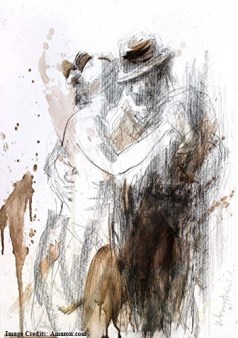 May nagbulong sa akin…
Ika’y nasa sayawan
May kasama ka raw
Magkahawak ang inyong kamay.
Ang bilis.
Noong isang linggo lang eh tayo,
Kamay ko ang hawak mo.
Bakit ganoon?
Ayaw ko sana
Na sa sawayan pumunta
Subalit para mo akong hinihila
Parang gusto kitang muling makita.
Nadatnang tugtog doo’y mabilis… magaslaw
Subalit ‘di ako maenggayong sumayaw
At pilit kitang tinatanaw
Sa gitna ng patay-sinding mga ilaw.
Nang biglang nagliwanag ang paligid
Tumigil ang tugtog na mabilis
Pumalit ay mabagal na himig
Himig ng mga pusong umiibig.
Silang lahat nagsiupo
Humihingal…
Hapong-hapo.
Ngunit kayong dalawa nanatiling nakatayo.
Kayo’y aking pinagmasdan,
Umiindayog kayo ng marahan.
Katawan ninyo’y magkadikit,
Parang kinukurot ang aking dibdib.
Nakahilig ka sa kanyang balikat
Balakang mo nama’y mahigpit niyang hawak.
Hindi mo ako matanaw dahil ikaw ay nakapikit.
Parang nang-aalipusta ang ngiti mong matamis.
At bakit naman ang sumunod pang kanta
Ay ang paborito nating dalawa
Kantang sabay nating inawit
Noon ako pa ang iyong iniibig.
Kanta’y parang ayaw matapos
Halos hininga ko sa panibugho’y malagot.
At nang sa labi siya’y iyong hinagkan,
Masuyong halik mo’y kanyang ginantihan.
Nang marubdob kayong naghalikan
Sayawan ay dagli kong nilisan.
(Mula sa kantang “Dancing on my Own” ni Calum Scott)
The Lonely Boat
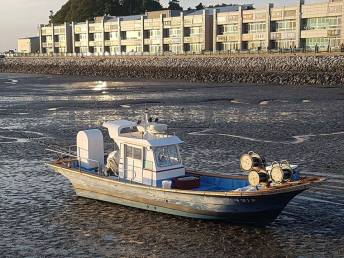
“What am I without you?”
The boat says to the sea.
“Bring back the tide,
make me alive.
I beseech thee.”
Bring back the tide
Let me ride your waves
Toss me to and fro
Throw me up high
Then splash me down hard into your waiting arms.
Bring back the tide,
Pull me out of the dock!
I’d rather face the peril
of being whipped
by the mighty waves of your love
Than left alone moored in the lonely sands of memory.
Ingliserang Tsiks ni Mang Teban
 Gabi’y lumalim wala pa si mang Teban
Kaya’t si misis kunsumido nanaman
“Tawagan mo nga tatang mo,” ani kay Juan
“Baka nasa kanto’t nakikipag-inuman.”
Tinawagan ni Juan hetong si mang Teban
At nang may sumagot tila nagulantang
Pagkatapos niyon ina’y nilapitan
“O nakausap mo ba ang iyong tatang?”
Inakbayan ni Juan inang inis na inis
“Naku nanay, huwag ka sanang magalit.”
Tawag ko kay tatang ang sumagot ay tsiks
Mukhang sosyal, magaling mag-English.”
“Naku lintek talaga iyang tatang mo
Pag-uwi niyan tiyak babambuhin ko
Hindi nanaman tumupad sa pangako
Na titigil sa pambabae ang loko.”
At nang pumasok sa bahay si mang Teban
Kagyat na misis siya ay binatukan
“Aray…aray… O darling bakit nanaman?”
“Naku Teban, huwag kang magmaang-maangan.”
“Tumawag si Juan… ang sumagot iyong tsiks
Ani Juan tsiks mo daw magaling mag-English
Ano nga Juan ang sabi ng Ingliserang bitch?”
Sagot ni Juan – “The subscriber cannot be reached.”
 M.A.D. LIGAYA


 M.A.D. L I G A Y A