Category Archives: Mythology
Beyond the Billions: Who Really Deserves the Box-Office Crown (Part 1)
An evidence-based comparison of Avatar 1 and Avengers: Endgame
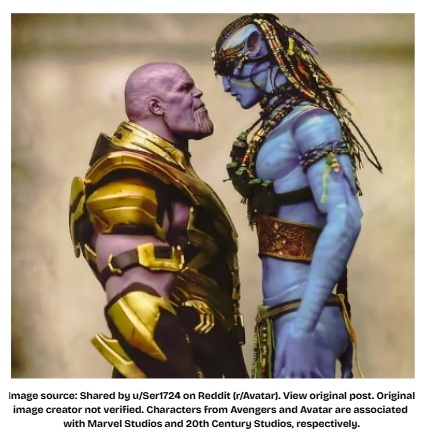
The Avengers: Endgame rerelease is still underway. Having watched the original film three times already, I decided to see it once more. With the release of Avengers: Doomsday on the horizon, I wanted to revisit the story and see whether I could connect a few more dots in the ever-expanding Marvel multiverse. Besides, there was the promise of something in the post-credits scene that I was particularly eager to see.
The rerelease certainly seems well-timed to rekindle excitement for Doomsday. But let’s be honest—could a rather petty subplot also be unfolding behind the scenes? Perhaps another battle is being fought, one that has nothing to do with superheroes saving the universe: the race to reclaim the No. 1 spot at the all-time worldwide box office. And should Endgame close the gap on James Cameron’s original Avatar, the Marvel–Disney machine might just pull off another spectacular comeback.
Would James Cameron eventually retaliate by rereleasing the original Avatar, perhaps under the convenient pretext of promoting the franchise’s fourth installment, while quietly plotting to wrest the crown back from the Avengers? Well, that remains to be seen. As they say, the plot thickens! And with Spider-Man web-swinging toward the top of the leaderboard, the plot might thicken even more.
Now, if I were to decide the winner purely on sentimental grounds, the verdict would be easy. As a big fan of Iron Man—and being a “Tony” myself, just like Tony Stark—I would gladly hand the crown to Avengers: Endgame without a second thought. But the researcher in me refuses to let personal attachment dictate the outcome. He insists that I set aside my superhero loyalties, put sentiment on the sidelines, and examine the evidence through a set of reasonably objective and measurable criteria. After all, if I am going to crown a champion, I had better make sure that my judgment is guided by more than my admiration for the man inside that red-and-gold suit.
Sorry, Tony Stark. This time, even your genius, billionaire, playboy, philanthropist credentials won’t earn you extra points.
But jokes aside, who truly deserves the cinematic crown if we look beyond the staggering mountains of cash these movies have accumulated? To answer that question, I developed a multidimensional framework to evaluate these box-office titans on a more level playing field. After all, the final box-office gross is not the be-all and end-all of cinematic success. There is much more to the story than the billions printed on the scoreboard.
So, let the cinematic showdown begin.
PART TWO
Ragnarok: When Gods Become Human
A REVIEW
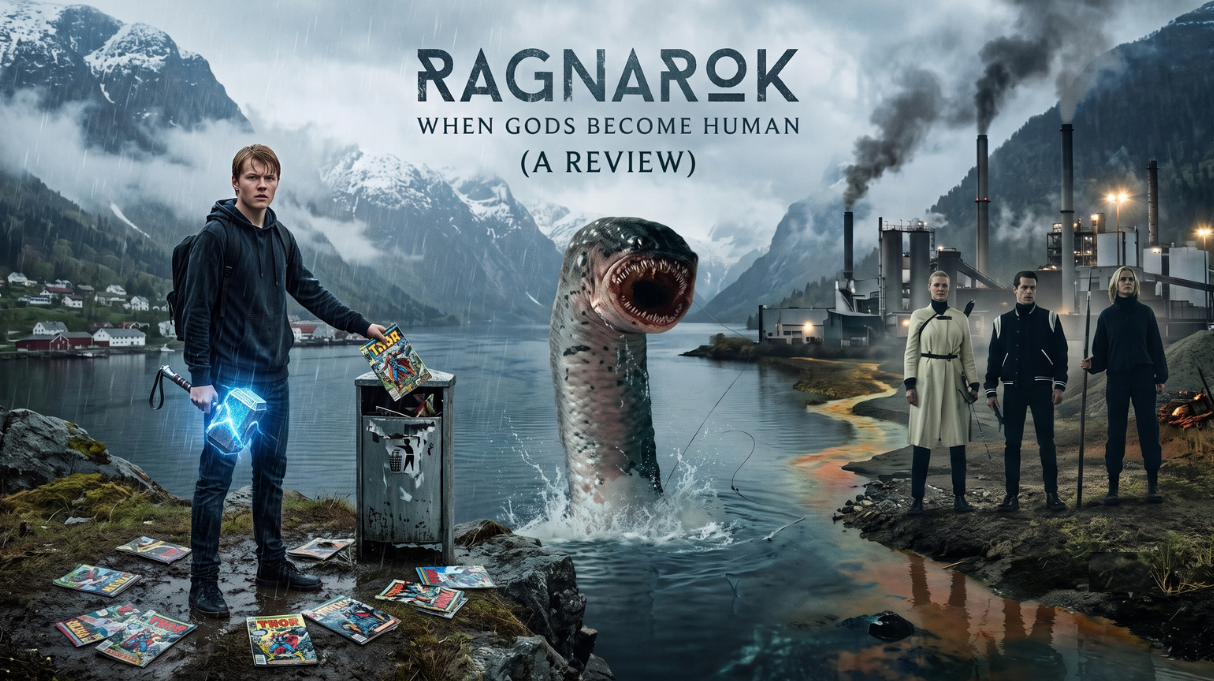
Three days ago, I was looking for a movie to watch on Netflix while eating my brunch. The first one I saw in the gallery was Ragnarok.
I clicked “Watch,” turned my back on the TV, and started eating.
By the time I realized that it wasn’t actually a movie but a series, it was too late. I was already so hungry that taking my first bite seemed more important than looking for something else to watch.
As much as possible, I avoid watching series. I know myself too well. Once I start with the first episode and like what I am seeing, my strange disease of not wanting to stop until I get to the end kicks in. Before I know it, my behind is glued to the couch and whatever plans I had for the day begin negotiating for survival.
And true enough, within the first fifteen minutes of Episode 1, the storyline beginning to emerge had already tickled my curiosity.
It reminded me of an essay I had written years ago about “reconfiguring mythology.” The series I had accidentally started watching seemed to be doing exactly that—retelling Norse mythology in a way I had never seen before.
I was in trouble.
I did not plan to binge-watch the three-season Netflix series Ragnarok, which ended in 2023.
In fact, I did not even plan to give it my full attention.
Over the next three days, I placed my phone at the bottom of my computer monitor and watched the series while doing what I call “light work.” I watched while eating, while taking breaks from work, and even while exercising. It was supposed to be something playing in the background while I went about my usual routine.
Then the damned story ambushed my attention.
Somewhere along the way, Ragnarok moved from the bottom of my computer monitor to the front of my mind.
And I do not regret a minute of it.
For three days, the series recharged my creative batteries in two of the areas in which I have always been deeply invested: literature and literary criticism. I found myself thinking about mythology, power, love, family, identity, environmental destruction, social inequality, war, and the eternal human tendency to become the very thing we once despised.
Not bad for something I intended to watch while doing other things.

PART 1

PART 2

PART 3

Pain’s But a Myth
 Tricked by Eros, I was brokenhearted.
In anguish and torment oh my soul screamed.
“Journey to my dreamland,” Hypnos muttered,
“Drown your misery in the lake of dreams.”
Dionysus countered, “Visit my vines
There feast upon my sweet magical grapes
Submerge your anguish in the lake of wine
Let the spirits engulf all of your cares.”
Aphrodite said, “I will bring Helen
She can kiss your anxieties away,
Play with her in Dionysus’ haven
While I’m holding Menelaus at bay.”
And when Thanatos arrived he whispered,
“Down there anxieties have no domain
Now, hold tight my hands, waiting is Hades
Let death vanquish all your distress and pain.”
Rhea came last, took my hand and she smiled.
Oh her turret crown beamed comfort and ease.
On her laps I just cuddled like a child.
Then she whispered, “My child… pain’s but a myth.”
Reconfiguring Mythology

(I wrote this essay a few years ago after watching the first ‘Avengers’ movie and before the showing of “Prometheus.” Screenwriters and movie producers have mined the pages of Mythology and Legend for their movie projects. Both Marvel and DC (and their partners) keep coming out with movies where their resident superheroes either make friends or clash with mythological and legendary characters and creatures. Watch “Wonder Woman” and you’ll see how elements of “Greek Mythology” were fused into the movie. Go watch the latest “Transformers” movie next and find out whether Merlin, King Arthur and the knights of the round table sided with the Autobots or with the Decepticons.)
Recent movies I watched (“Clash of the Titans”, “Thor” and the “Avengers”) have brought me endless amazement. Amazed because my favorite characters in classic literature come alive in fresh story lines stuffed with visual and sound effects that are breathtakingly outstanding and astounding.
But more than the amazement, the said movies also inspired me to revisit the subject in Literature that I have always considered most interesting – Mythology.
Of course we know that the Titans are entities from Greek Mythology. Seemingly, movie producers are casting their lots on the Titans nowadays. “Prometheus” (which is the title of the movie that soon I will be watching) himself is another Titan. What remains to be seen is whether or not in the movie Prometheus plays out his role of stealing the heavenly fire for the benefit of humanity.
Conversely, Thor and Loki, who appeared in both “Thor” and “The Avengers” are both characters in Norse Mythology.
Generally, script writers and movie producers are seemingly mining the pages of Mythology for their movie projects.
Movies similar to the aforementioned clearly show how enormous advancement in technology benefited Mythology. There’s nothing now that creative writers can’t describe in their narratives that 3D and 4D computer graphics can’t project unto the silver screen.
The unbelievable visual effects made possible through Computer Graphics Imagery (CGI) thrill movie goers and startle them no end. This is one of the best ways to present Mythology. All those imaginary creatures, out-of-this world settings and incredible circumstances would no longer be left for the audience to imagine but for their eyes to feast upon.
What would be the educational implications of this modern rendition of Mythology?
Teaching the said subject has become easier and learning on the part of the students become more fun. For teachers, the movie versions (or even just a few clips) of stories from the pages of Mythology may serve as their audio-visual materials. Discussions during classes will be greatly augmented by the visuals students see in the movies. Lest we forget that the current generation of learners are visual. The better they learn when presented with images, pictures and colors. With the right movies, they learn while having fun.
It could be true that the movie versions of Mythology may make students disinterested with reading but one thing we should bear in mind is that the learning landscape has changed. Through viewing learning could be achieved as well. Viewing, just like reading , has lately been classified as a macro skill in language also.
These reminds me of the suggestion made by one of my students in Creative Writing before. She said that to make sure that the students would read the original story and not just rely on the movie version one activity that could be designed is ask them to find the portions of the original story modified in the movie version.
Could it be that learning Mythology becomes more effective through “viewing” than through “reading?” This is not saying that today’s generation of learners should no longer be encouraged to read. For each area of knowledge there is a corresponding macro skill most applicable. Methinks that for Mythology it is “viewing.”
However, teachers need to pay attention to the discrepancies between the original story and the movie versions. They have to warn the students about such.
For instance, in the movie “Troy”, the Trojan war took place in less than a month. In the original story (Homer’s Iliad), the war ended after ten years. The movie also shows Paris killing Menelaus which is not the case in the original story. The foregoing are but a few of the many discrepancies.
The teachers have to be on the lookout for possible changes to the original story. They themselves need to recognize the changes so the students get to be informed.
Perhaps the movie producers needed to tinker with the original storylines of the “classics” to make the movie versions more cinematic. Understandably, not all the details in the original stories can be included but at least the brains behind the movie production be sensible enough not to change significant details in the story.
Another thing that teachers should be ready for are questions like “Are the Hulk and the Iron Man mythological characters?”
“Myth” is traditionally defined as a story about gods, heroes or imaginary animals which has been handed down from one generation to another from primitive times and is usually of a religious nature. Additionally the purpose of myths is to explain some belief or natural phenomenon.
Should the foregoing definition be considered, the Hulk and the Iron Man are not mythological characters. In the movie “The Avengers” only Thor and Loki fall in that category.
Experts differ in opinion as to whether or not the companions of Thor and Loki in “The Avengers” be classified as mythological characters. Others contend that they are simply fictional characters or superheroes that appear in comic books. Their stories do not bear the prerequisites for a myth.
Some are saying that stories in the comic books are part of “modern mythology.” It is not. In a strict sense the term “modern mythology” is delivering classic mythology using as medium the modern technology available nowadays.
What could really be considered as modern version of mythology are the “urban legends.” “Batman,” also a famous character from the comic books is said to be part of urban legend. Thus, if the comic book character Batman, technically, is a Mythological character, urban legends being a modern version of Mythology, what about the rest of the comic book characters?
Then, the discussion goes in full circle again.
But who knows, with characters from Mythology and comic books finally brought together either as friends cooperating or enemies locking horns in the movie “The Avengers” a redefinition of the term MYTH may follow.
Source: Reconfiguring Mythology
PAIN’S BUT A MYTH

Venomous pain the Algea injected
In anguish and torment my soul screamed
“Journey to dreamland” Hypnos muttered
“Drown misery in my lake of dreams”
But Dionysus countered “Visit my vines
Feast upon my sweet magical grape
Submerge anguish in the lake of wine
Dream not in languor but while awake”
Aphrodite said “I’ll bring Helen
She can kiss your anxieties away
Frolic with her in Dionysus’ haven
While I hold Menelaus at bay”
When Thanatos arrived he whispered
“Down there anxieties have no domain
Hold tight my hands waiting is Hades
Let death vanquish distress and pain”
Rhea came last took my hand and smiled
Her turret crown beamed comfort and ease
On her laps I cuddled like a child
Then she told me “Pain’s but a myth”
———–
Image source: http://www.flickr.com