When Students Don’t Learn
 One morning, I witnessed how an English teacher masterfully discussed the intricacies of the English language. It would take a paragraph or two should I explain in details the things he talked about. Let me just say that he is every inch a native English speaker. His knowledge of the phonemes, morphemes, lexemes, syntax and context is impeccable. He dissected the language so skillfully and the way he did it almost made me envious. I was reduced to being a listener uncertain whether I just wanted to make sure not to miss anything new (something I don’t know yet) from what he was saying or I have nothing more to share because he had everything covered about what he was discussing. I wasn’t really sure what prevented me from saying anything. Maybe I was intimidated by his evident mastery of grammar, semantics, and pragmatics or I just did not like to gatecrash into his moment to showcase his brilliance.
That teacher held court in his impromptu lecture. He had the attention of everybody present. It was difficult to judge the intentions of my colleagues whenever they (unsolicitedly) share their expertise like that. Was it to impress upon us (their co-teachers) that they know that much or they simply would (good-naturedly) like to help us learn more about the subject (English) we’re teaching.
Later that day, I changed upon a student who attended my English class in a previous semester. That student was one of the best in my class. Like me, he was heading out of the campus. After the exchange of greetings, I asked “Who’s your English teacher this semester?” The student already started responding before I recalled that I have previously made a promise to myself never to ask any of my former students that question for the reason that a few of my previous attempts led to the opening of “a can of worms.”
But it already happened – I asked that stupid question again.
The student named the teacher – he was the one I heard deliver an impromptu lecture about the English language earlier that day. After that, the student heaved a sigh and said, “We could hardly understand what he’s teaching.”
I looked at him seriously and all I could say was “Really!?”.
He nodded and said one more thing, “He is also very serious.”
Before he could open wider that “can of worms,” I told my former student to give that teacher more time to adjust since the semester is still a long way to go. Then I quickly redirected our conversation to another topic after that.
What’s amazing is that the occurrence – of me one day hearing a colleague deliver a brilliant impromptu lecture but later that same day (or within the week) I would meet one of his students (who used to be my student also) claiming that they, in the class, could hardly understand what he is teaching – did not happen only once. If my memory serves me right, that’s the fourth time.
It finally made me reflect. That’s the reason I wrote something about it.
It made me wonder (again) how my former students rate my performance as a teacher. What do they really think (and how they feel) about me as their teacher? What would they say to a colleague or their fellow students when asked about me?
Students evaluate the performance of their teachers every semester. It’s hard to tell how reliable and valid are the results of such evaluation. Whether or not the results is a reflection of the true professional and personal qualities of the teachers is a matter of debate.
But valid or not, reliable or otherwise, it’s hard to ignore what students say about the performance and behavior of their teachers. Teachers get to read what students write in their evaluation. They could either agree or disagree with the results of their evaluation. But what the teachers would not know is what students say about them in informal discussions. Only the most naïve among teachers don’t know that students talk about their teachers.
In gatherings, teachers do talk (or should I say gossip) about their students – their performance and behavior in the class. Conversely, students do the same. They talk (or gossip) about their teachers. There are only two possibilities – they either praise or curse their teachers.
One of the most unacceptable things that students could say about a teacher is – they do not (or they could hardly understand) what he/she is teaching.
Witnessing first hand an English teacher discuss with ease the complexities of the English language and hearing a student claim that he and his classmates could hardly understand what that teacher is teaching is quite paradoxical.
So I asked myself this question that night – Which is true… my impressions about that English teacher or that of his students?
What could have gone wrong?
My former student said that their current English teacher is very serious. Is that the problem – good rapport does not exist between him and the students? It is no secret that teacher’s personality is correlated to students’ academic performance.
I tried to think of other reasons.
Then I recalled my teaching demonstration when I was applying for a job right after my graduation. When the high school principal called me to her office to discuss the results, she told me I did great. But she said there was a problem – I explained things in a way that only students enrolled in a graduate program could understand.
Could that be the reason?
If that teacher carry out discussions in the class in the same way he explained the grammar topic to us in that gathering earlier that day then that exactly is the problem. You cannot discuss a grammar point to students trying to learn the language the way you would to teachers teaching that language. I think that is not a rocket science.
There are two things I learned before I officially began my teaching career – adapt my strategies and materials to students’ levels and simplify my language.
The problem is there are teachers who have a “one-size-fits-all” mentality thinking that educational processes and approaches to teaching and learning are standard and could not be tailored to meet individual needs. They wouldn’t buy into the idea of differentiated learning and teaching.
They will never accept responsibility when their students don’t learn.
Their standards are as immovable and high as Mt. Everest. The students have no other choice but to climb their Mt. Everest.
For them, it’s the fault of the students when they fail.
How Much and Why Do I Love Teaching?
(A Personal Essay)

How much do I love teaching?
It’s so hard to describe in a sentence or two the love affair between me and teaching. Let me just tell you how many years have I been in this romance – 30 years.
Yes, I have been a teacher for three decades now. I began my teaching career at a basic education institution in the Philippines in 1988 and served my 30th year in the academe at a university here in South Korea. I have been in this country since 2013 and if given the chance (and God willing) I would love to stay here until at least 2025.
Despite the not-so-good comments I heard about teaching as a profession when I was young, I embraced it and I don’t regret having done so.
It is both surprising and amusing how lowly teaching is regarded by some people. It is one of the least popular jobs anywhere in the world.
Parents in the culture where I grew up would tell their children graduating from high school, that is once they find out that their children are of average intelligence (or even lower), to just take up an Education course and be a teacher.
To some professionals, teaching plays second fiddle. Teaching is their last resort. They would seek positions in the academe as teachers when in their chosen fields they could not get job offers. They would enroll in crash courses for teachers thinking that pedagogic skills could be acquired in so short a time. Some native speakers of English who had difficulty finding jobs in their own countries are working as ESL teachers in countries like Japan, China, and South Korea. Luckily for them, even if they are not graduates of Education courses, or they were not trained to become teachers, there are schools who would hire them for reasons that only those who hire them know. I consider this a disservice to the teaching profession.
I love teaching and I do take my job as a teacher seriously. I sought employment in the academe upon completion of my bachelor’s degree knowing that I am qualified to be a teacher. I became a teacher not because I have no other choice. I became one by choice.
I know that teaching as a profession requires a lot and I made sure I am apt to the task. I passed the licensure examination for teachers. I went to graduate school, attended conferences and seminars, took certificate courses (like TESOL), and studied by myself the application of technology to education. I also keep reading books and journals related to both my subject area and pedagogy. All of the aforementioned I did (am doing) in order to ensure that I could cope up with the demands of the profession and to give nothing but the best to my students. This is my way of respecting my profession as a teacher.
Why do I love teaching?
Search for the 25 best-paying jobs (or make that 50… or 100) and it’s very unlikely that teaching is included. This is what makes the teacher’s job not-so appealing. Teachers get paid low and on top of that – they are overworked. They work way beyond office hours. Such is the reality that I fully accepted. I never whined about it.
But for me, it’s never been the pay. It’s the happiness and the sense of fulfillment that teaching gave me. That’s what I love about this profession.
I enjoy doing the things that teaching requires me to do. Teachers need to read and write a lot. And those are my hobbies. Teachers have to do a lot of talking and leading and I so happen to love public speaking. I love the feeling of being in front of people… talking to them, making them laugh, and leading them to action.
Teaching allowed me do the things I love doing. It actually honed my skills and improved my knowledge in the areas where I could excel. It developed in me values that guide me both personally and professionally.
Teaching challenged me to strive for excellence and pushed me beyond my abilities. It became my way of serving other people. It made me believe in myself and it strengthened my faith in God as well.
As Jim Rohn said, “True happiness is not contained in what you get, happiness is contained in what you become.”
What I have become because of teaching is just amazing.
And the rewards for becoming what I have become are equally amazing.
The rewards – both intrinsic and extrinsic – are just awesome.
Don’t tell me that teaching is not financially rewarding. Teachers can be paid handsomely if they play their cards well and push the right buttons. It’s a matter of how they handle their career in the academe, how they build up their reputation, and what stuffs do they have in their professional portfolios.
Here is my advise to teachers like me, most especially to the young ones – don’t teach for the money. Don’t be a mercenary teacher. Become first what you ought to become. Be the best teacher you could be. Don’t be contended with your Bachelor’s degree. Aspire to have a doctorate. Attend all the seminars and training you could attend. Be certified in your field. Invest on yourself… not on gadgets and other material possessions. Plan well your career in the academe and make the right decisions.
If teachers would love their job and treat it with utmost respect, they will get the rewards they richly deserve.
In teaching you serve. And when you serve well, you will be rewarded.
How Different Are Teachers From One Another
 No two teachers use the same lens when they view teaching as a profession. Even if teachers are made to use similar lens, they would still look at their job (as teachers) differently. They have perspectives, educational and personal, that are uniquely theirs – or some of them may have none at all.
Teachers don’t have the same set of knowledge, skills, attitudes, and values either. Like their fingerprints, their mindsets, tendencies and other personal qualities are very unlikely to be identical.
When given the same course syllabus, we should not expect them to map out their daily lesson plans in the same manner. They would design learning activities and deliver or carry them out in ways they see fit. Some would not bother to plan anything
The work attitudes of teachers are also not the same.
There are those who are so conscious about the number of hours they are required to serve as stipulated in their contracts. You could not expect them to go overtime and do extra job – unless you give them extra pay or service credits.
Conversely, there are teachers who are willing to go the extra mile. They assist their students beyond their assigned teaching hours and volunteer for tasks and do things not written in their job description, expecting nothing in return.
Of course, the worst are those teachers who either come to class late or dismiss their classes earlier than expected – or both. For reasons only they know, they do not perform their assigned tasks the way they ought to. They submit required paperwork either late or not at all.
If you are a teacher reading this, here is a question for you, “In which of the three groups do you belong? Of course, only you know. At the very least, be not the one described in the paragraph right above this one.
There are teachers who are eternal fault-finders always trying to find something wrong – either with the policies being implemented or with their colleagues and administrators. And should they succeed in finding one, they would either whine or gossip about it, or both.
Teachers also differ in the way they treat their students.
Some teachers would set standards that are difficult to achieve while others know how to calibrate their standards to give even the slowest of learners a chance to succeed. There are teachers who have a “one-size-fits-all” mentality thinking that educational processes and approaches to teaching and learning are standard and cannot be tailored to meet individual needs. Conversely, they have counterparts who understand that students have different learning styles, abilities, and personal backgrounds. They know that they must recognize the uniqueness of each student (or groups of students) and differentiate their methods and strategies as teachers. These teachers don’t believe that standards are absolute.
Describing how teachers are different from one another could boil down to the following statements: 1. There are teachers who display both passion and compassion – they are passionate about their job and compassionate to their students; 2. There are teachers who have only one of the two; and 3. There are teachers who do not have both.
And again, if you are a teacher reading this, here is another question for you, “Which of the three statements in the paragraph above applies to you?”
If it’s the third one, you could be in the wrong profession. Think about it.
Now, let’s try to find out why teachers are not the same.
In doing so, let’s answer the following questions:
“Why do teachers view their profession (or approach teaching) differently?”
“Why do they have different work attitudes?”
“Why are some passionate about their job and compassionate to their students while others are not?”
Before we answer those questions, it is important to note that there are only two ways to classify the way teachers perform – effective or ineffective; two ways to label their work attitude – good or bad; and two ways to view the way they treat their students – fairly or poorly.
What could be the reason teachers treat their students the way they do? Some teachers are perceived by their students as mean, unfair, and inconsiderate. Is it because these teachers were not taught by their parents the values of kindness and fairness during their formative years? Did their experiences in life make them rude? Or were they treated in the same way by their former teachers and they are thinking that being mean, unfair, and inconsiderate to students is nothing but normal.
Teachers need to be reminded of the importance of establishing a good rapport with the students. In several studies conducted, what emerged as among the top qualities of effective teachers as perceived by students include “the ability to develop relationships with their students” and a “patient, caring, and kind personality.”

As Andrew Johnson puts it, “Teaching starts with a relationship. Until then, you are just a dancing monkey standing up in front of your students performing tricks.”
The hardest stone that school authorities could pick up and hit their heads with is if they would decide to hire a “nonteacher” to be a teacher. There are teachers in (some, a few, or is it many?) schools who are not really teachers by profession. They either have non-Education degrees or did not receive any kind of teacher training but were lucky to be hired for whatever reasons only those who hired them know.
How could a “nonteacher” be effective and passionate in a job completely alien to him/her?
Being a math wizard doesn’t give one the right to become a Math teacher. Having a perfect accent and impeccable grammar in English doesn’t make one qualified to teach English. These are things I emphasized in one of my essays about teaching. It doesn’t mean that if you know it, you can teach it.
How do we expect somebody who has no training in pedagogy to be effective in preparing a lesson plan – to set objectives, to choose the strategies and methods appropriate for a lesson and the levels of students, to motivate students before delivering the lesson, and to create tests intended to measure and evaluate learning.
Do you really think that teaching is just another job?
How do we expect a “nonteacher” to understand what kind of work attitude teachers should have and to agree with Ben Orlin who sees teaching as an act of self-sacrifice, as a hard path undertaken for the greater good?
So, when colleagues in the academe are not performing and behaving the way a teacher should, check their academic background. They could be “nonteachers.” (And excuse me for using the word “nonteacher.” It’s not in any dictionaries I checked online, except for one – http://www.yourdictionary.com.) I just can’t think of a word that could best label professionals in the academe that were allowed to teach even if their degrees are not related to education or they did not have any training as a teacher at all.
But a more serious concern in the academe is this – Why are there teachers who were trained to be teachers who act as if they themselves are “nonteachers”?
The way teachers perform is dictated by the personal educational philosophy they developed when they got exposed to the many isms they studied while pursuing their education degree. Such philosophy would evolve through time as they accumulate actual teaching experiences. Teachers also have personal belief systems that inform whatever decision they make. Or their decisions are influenced by the colleague they surround themselves with.
The way teachers behave and talk reflects the kind of personal educational philosophy they have (or the absence of it). The way they conduct themselves as professionals depends on whether they adhere (or not) to the code of teacher professionalism.
When teachers act and speak strangely, it is possible that they don’t know that there exists a code of professionalism created so teachers would be guided accordingly. Or they chose to ignore it.
But even if let’s say teachers are not aware of the existence of such a code of professionalism, common sense would tell them that they ought to be careful with whatever they say or do or else they will be charged with conduct unbecoming to a teacher.
That is if they care and it’s not only the paycheck they are after.
The Difference in English Proficiency Between Tourism and Engineering Students of Two Asian Universities
The paper we presented at an international conference earlier this year (January, 2019) just got published in an SCOPUS-indexed international journal.
Click to access B10410782S619.pdf
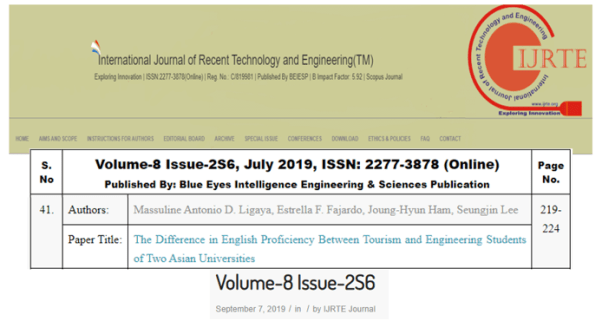
(To God be the glory!)
The corrections I asked the publisher to make were not reflected in the final copy of the journal.
Here’s the corrected version.
Overcoming Homesickness
 (A Personal Essay)
Longing for home – that’s the simplest way to explain what homesickness is. It is the feeling of sorrow that results from leaving behind loved ones and friends to go somewhere far, usually overseas, for a long period of time
Well, a lot have been written about the subject. The loneliness one feels when away from home is the theme of many essays, stories, and poems. There are also movies about homesickness and plenty of books and speeches sharing tips on how to overcome it are available.
As an expat working here in South Korea (since 2013), I can say that I am no stranger to homesickness. I am so familiar with this emotional experience. I know how it feels to be hundreds of miles away from the comfort of home and the warm embrace and assuring presence of friends and loved ones. I know how discomforting it is to be in an unfamiliar territory where almost everything is different from what one was accustomed to.
There are people claiming to have never experienced homesickness. Well, good for them. What about me?
I waged a battle against this emotional discomfort during my first weeks here in South Korea. I thought that mentally preparing for a departure from my comfort zone would be enough to help me overcome whatever challenges that await me in this country, including homesickness.
While waiting for the day I would fly to this country, I tried to prepare for it mentally by accepting that I would not be with my family for a long time and that my wife who takes good care of me and prepares everything I need wouldn’t be there to help. I thought that somehow I could also prepare emotionally for a life away from my country and my family by simply accepting that it would soon be my reality. I was wrong.
Excitement overwhelmed me when I came out of the plane at the Gimhae International Airport. I was so happy seeing South Korea for the first time and thinking of my good fortune for being given the opportunity to teach here. But the euphoria was short-lived. Upon entering the apartment the university provided, the reality that I was by my lonesome in a faraway place, something that I thought I have already fully embraced when I departed home, seemed like tiny needles starting to prick my emotions.
When I began unpacking, I recalled the conversation I had with my wife and my son while they were helping me stuff all those things in my luggage. I remember how the lady of my house tried unsuccessfully to control her tears. I remembered also the phone calls I made to my parents. It was less than a day of being separated from my family and I was already missing them. Just that and all of a sudden my first episode of homesickness kicked in. Sadness crept in slowly. The early spring weather giving me a chilly welcome exacerbated it.
I tried to dismiss the thought of me feeling homesick by thinking that I was just tired, hungry, and cold at that time. But the feeling lingered in the next days notwithstanding the heater in my room, the multiple layers of clothes in my body, and the hot and spicy foods on my table.
I dreaded the coming of night and the weekend for it meant being alone in my room. At least when in the workplace I have the company of my colleagues and my students and the work made me preoccupied.
During my first two weeks here in South Korea, I was in a funk and I knew I couldn’t afford to stay that way or else my job performance would be adversely affected. So, I resolved to eradicate the problem. I know I have in my repertoire of skills something that I could summon to help me figure out how to get out of the said funk – my ability to bounce back from adversity.
The first thing I did was stop denying that I was longing for home. I stared homesickness in the eyes. I treated it as a problem so I would be able to have the mindset that it could be resolved.
And much that I was missing home and my family, I tried to see if Skyping my loved ones in the Philippines longer than usual would help. Thank God It did. I pushed it further by requesting my wife as well that when we’re done talking she should not cut the Skype connection. I even told her to bring the laptop in any place in the house where I could see her and our son. That worked more wonders for me. Seeing my wife and my son moving around our house in the Philippines doing what they usually do and hearing the songs they listen to and other familiar sounds – the roosters crowing, the dogs barking, the horns of vehicles honking – was emotionally comforting.
It’s hard to believe but I had homesickness figured out within my first month here in South Korea. Thanks to Skype and Facebook Messenger. Thanks also to South Korea’s fast internet connection that allows me to make a video call with my family practically anytime and wherever I am – home, office, or even in the mountain when I was hiking.
I and my family could Skype as long as we want. But it couldn’t be for 24/7. There are times as well that my wife or my son have pressing concerns and other things to attend that makes connecting with them impossible.
Those are the times when I pursue my other passion – writing. I write stories, essays, poems, and research papers. I write in both English and Filipino. It’s only a hobby. Yes, sometimes I get paid for the things I write but I am doing it primarily for the immense joy and sense of satisfaction it gives me.
I have a lot of free time here in South Korea that I was able to create and maintain my own website (M.A.D. LIGAYA). The said website serves as repository for my writings.
Maintaining my website and creating its contents have been making me super busy so much so that I could no longer find time to be homesick.
There were times that I could not even Skype my family because I was busy attending to my website.
Nowadays, whenever people ask me how I got through homesickness I already have a definite response – through “Skyping” my family and writing.
Anyway, there are other activities that I do after work not only to keep homesickness away but to achieve work-life balance – watch movies and the sports I love, go to the gym, read books, and watch videos on personal growth and development. You may say I have a boring routine. But it works for me. Of course, I go out with a very few selected friends during special occasions. But basically, I am a lone wolf. That is by choice for I wanted to avoid vices, troubles, and negative conversations.
The Lonely Boat
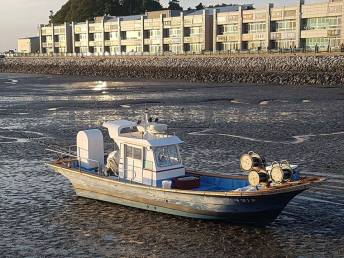
“What am I without you?”
The boat says to the sea.
“Bring back the tide,
make me alive.
I beseech thee.”
Bring back the tide
Let me ride your waves
Toss me to and fro
Throw me up high
Then splash me down hard into your waiting arms.
Bring back the tide,
Pull me out of the dock!
I’d rather face the peril
of being whipped
by the mighty waves of your love
Than left alone moored in the lonely sands of memory.
Huwag Kang Lilingon – Chapter 1

Chapter 1
“Sa Pinagmulang Dalampasigan“
Hindi ko na mabilang kung ilang beses tumingin sa kanyang relo si Daniel at pagkatapos ay bubuntong hininga. Wala na siyang sigarilyong masindihan pero patay-sindi pa rin ang ginagawa sa hawak na lighter. Matagal nang ubos ang laman ng kaisa-isang pakete ng sigarilyo na binili niya sa terminal ng bus bago kami bumiyahe. Ako nama’y nang magsawang makinig sa mga paborito kong kantang naka-download sa cellphone ko’y pinanood ko na lamang ang mga bankang inuugoy ng mga alon malapit sa pampang habang nagbabalik-tanaw ako sa aking kamusmusang ginugol ko sa tabing-dagat sa bayang aking sinilangan.
Nabaling ang aking atensyon kay Tomas. Nakatayo pa rin siya sa may rampa na parang tuod. Habang kami ni Daniel ay umiiwas sa tilamsik ng tubig-alat na hatid ng along humahampas ng paulit-ulit sa aming kinapupuwestuhan ay hinahayaan lamang niyang mabasa siya nito. Taog na kasi at medyo may kalakasan pa ang hangin kaya maalon. Mukhang may bagyong paparating.
Si Tomas ay nakatingin sa direksyon ng araw na malapit nang lunurin ng dagat. Mahirap hulaan kung inaabangan ba niya ang paglubog ng araw na bahagyang ikunukubli ng balumbon ng ulap o mayroon kung ano mang nakatago sa likod ng ulap na pilit niyang inaaninag. Kapansin-pansin ang paminsan-minsang niyang pagyuko upang hagurin ang kanyang mga hita. Marahil ay nangangalay na siya sa tagal ng kanyang pagkakatayo. May mga pagkakataon na ikinukuyom niya ang kanyang mga kamay. Animo’y mayroon siyang gustong hawakan na hindi mahagilap ng kanyang mga kamay.
Halatang hindi mapakali si Tomas. Labis siguro niyang iniisip si Evelyn, o Eve kung aming tawagin. Ako ma’y ganoon din, hindi rin mawala sa isip ko si Eve. Ang pagkakaiba marahil eh si Tomas ay nag-aalala lang sa kanya. Bukod sa pag-aalala, ay may mas malalim pa akong dahilan — sabik akong makita siya.
Pinipilit kong itago ang nararamdaman ko kay Eve. Hindi ito puwedeng malaman ni Tomas at lalong hindi puwedeng mabisto ni Daniel. Bakit? Dahil ba sa kapatid siya ng aming kasanggang-dikit at ayaw kong isipin niyang sinasamantala ko ang pagkakaybigan namin? Minsan ding narinig ko ang aking ina sinabing hindi maganda sa paningin na taluhin mo ang kapatid ng matalik mong kaybigan.O torpe lang talaga ako.
Ang daming pagkakataon na gusto kong hawakan ang mga kamay ni Eve. Gusto kong sabihing may pagtangi ako sa kanya. Subalit tuwing ibubuka ko na ang aking bibig ay walang salitang lumalabas dito.
Ang pag-mumuni-muni kong iyon ay pinutol ng isa nanamang buntong-hininga ni Daniel. Ang medyo masungit na panahon ay tila sinasalamin ang magkakahalo alalahanin at isipin namin sa pagkakataong iyon.
Magkatabi kami ni Daniel na nakaupo sa isang baytang ng hagdanan ng parola na nasa dulo ng konkretong breakwater. Medyo may kalakasan nga ang hangin galing mula sa nilulubugan ng araw dahilan upang umalon ng katamtaman lang naman ang taas at iugoy ang mga bankang nakahimpil malapit sa hilera ng mga puno ng talisay sa tabing-dagat. Nagpapaligsahan rin sa pag-indak sa saliw ng hangin ang mga dahon ng hagonoy at kugon na tumubo sa kahabaan ng dalampasigang iyon.
Mababa lang ang parolang iyon sa breakwater. Sa tantiya ko ay higit-kumulang na 10 talamapakan lang ang taas. Isang malaking bombilya ang nakalagay sa ibabaw nito na nakapaloob sa isang lagayang yari sa makapal na salamin. Gabay iyon ng mga mandaragat upang malaman nila kung saang banda ang pampang kapag madilim ang gabi, lalo na kung masama ang panahon. Bukod sa nadaanan naming malaking bahay na napapalibutan ng mataas na bakod na ang bawat sulok ay may mga CCTV, ang dalawang solar panel sa ibabaw ng lagayan ng bombilya ang tanging palatandaan na umabot na sa lugar na ito ang kabihasnan.
Si Daniel ay may takip na panyo sa ilong. Halatang hindi sanay sa amoy na isinisingaw ng dagat at ng buhanginang nagsisilbing libingan ng mga patay at nabubulok na lamang-dagat. Pablihasa nga ako’y isinilang sa lugar na malapit sa aplaya kaya sanay na ang ilong ko sa amoy ng tubig-alat na itinuturing ni Daniel na mabaho at malansa. Para sa akin, di-hamak na mas mabaho ang amoy ng sigarilyong kumapit sa suot niyang t-shirt at mas malansa ang hininga niyang may halong amoy ng nikotina.
May isang luma na’t sira-sirang rampa na yari sa magkahalong kahoy at kawayan na nakadikit sa breakwater. Doon nga nakatayo si Tomas. Sa tinging ko’y nagsisilbing daungan ng mga bangka at siguro ay babaan rin ng mga isda at iba pa mga lamang-dagat na nahuhuli ng mga mangingisda kapag kati at hindi makatuloy sa pampang ang kanilang mga bangka.
Kahalintulad ito ng daungan sa bayan namin. Dalawang baytang rin na hagdanang yari sa kahoy ang nakapagitan sa rampa at breakwater. Malamang na yari rin sa kongkreto o malaking kahoy ang nagsisilbing poste ng rampang iyon. Hindi ko makita sa dahilang taog nga noon.
“Anong oras ba talaga darating ang bangkang sasakyan natin,” ang tanong ni Daniel kay Tomas. “Aba’y makapananghalian pa tayo naghihintay dito ah.” Ang mga kunot sa noo ni Daniel ay parang kanal na dinadaluyan ng kanyang pawis.
“Oo nga naman bro, hayan papalubog na ang araw o,” ang dugtong ko.
“Aywan ko ba,” ang sagot ni Tomas. “Ang sabi niyong kakilala ko na kapag wala na ang araw at lalatag na ang dilim eh saka pa lamang daw darating ang bankang naghahatid sa mga gustong pumunta sa isla. Akala ko nagbibiro lang siya kaya hindi ko na ito binanggit sa inyo. Pero mukha yatang totoo ang sinabi niya.”

Pailing-iling na tumingin sa akin si Daniel. Pagkatapos niyo’y tumingin sa kawalan at bumuntung-hininga. Hindi iyon nalingat kay Tomas.
“Pasensya na mga ‘tol,” ang wika ni Tomas. “Nadamay pa kayo sa problema ko. Kung gusto na ninyong umuwi eh okay lang. Ako na lang ang maghahanap sa kapatid ko.”
Nanahimik na lamang kami matapos iyon sabihin ni Tomas. Kung puwede ko lang sanang sabihin na responsibilidad ko ring hanapin si Eve. At marahil ay mas masidhi ang pagnanais kong makita ang kanyang kapatid kaysa sa kanya.
Maya-maya pa’y sabay kami halos ni Daniel na bumaba sa rampa upang lapitan si Tomas.
“Bro, sorry, hindi ka naman namin pwedeng iwanan dito,” wika ko sabay akbay sa aming kaybigan. “Kami naman ang nagpumilit sumama sa iyo dito ‘di ba. Wala tayong iwanan. Mula noon ganyan tayo.”
“Nakakainip lang kasi ‘tol, dalawang oras pa halos ang biniyahe natin patungo dito kanina,” ang dagdag ni Daniel. “Tapos mahigit isang oras pa tayong naglakad papunta dito. Sumakit ang mga paa ko dito sa suot kong sapatos.”
Eh engot ka kasi eh,” ang sabi ko. “Alam mo namang dagat ang pupuntahan natin at sasakay pa tayo ng bangka eh nag-leather shoes ka. Dapat kasi rubber shoes, tsinelas o sandals ang sinuot mo. Tapos naka-trousers ka pa.”
“Nakalimutan ko nga na bibyahe tayo sa dagat,” ang sagot ni Daniel. “Hay naku, akala ko’y naiwan ang nanay kong sermon nang sermon. Kasama ko pala”
“Ganyan ka kapag napapansin ang kaengotan mo,” ang tugon ko. “Hindi ka kasi nag-iisip bago gumawa ng desisyon. Ilang beses ka na bang nagka-problema sa ugali mong ganyan. Pabigla-bigla. Napaka-impulsive mo.”
“Oo na… oo na. Ikaw na magaling.” Ang wika ni Daniel sabay sipa sa isang maliit na bato nasa aming paanan.
Tinampal ko sa balikat si Daniel. Lumayo siya sa akin ng kaunti. Parang nagtatampo.
“Patience Daniel… patience.” Ang sagot ko sa kanya.
“Pagod na, gutom pa. Napakalayo pa naman ng mga bahayan na nadaanan natin kanina. Wala man lang mabilhan ng pagkain at mahingan ng kahit tubig man lang na maiinom. Tapos iyon pang mga mangingilang-ngilang bahay na nadaanan natin kanina eh nagsasara ng mga bintana at pinto kapag malapit na tayo.”
Napansin ko rin iyon pero inisip ko na lang na marahil ay nag-iingat lamang ang mga may-ari ng bahay sa dahilang kami ay mga dayo.
“Ah basta… gutom na ako.”
“Magtigil ka nga Daniel,” wika ko. “Ayos lang na naglakad tayo ng malayo at wala tayong pagkain para pamin-minsan eh nakakapag-exercise ka at nakakapag-diet. Tignan mo nga iyang tiyan mo oh, parang tambol na ah.”
“Kung makapagsalita ka Willy eh parang ke payat-payat mo,” ang sagot ni Daniel sa akin.
Tumawa ako’t tinampal ko nanaman sa balikat si Daniel sabay sabing, “Joke lang bro. Pero tignan mo… di hamak na mas malaki ang tiyan mo sa akin. At tignan mo oh… kahit kaunti may mga muscles na ako.” Wika ko sabay pakita ng aking biceps. “Sumama ka na kasi sa amin mag-gym.”
“Oo na… oo na… next time sasama na ako sa inyo.”
“Gusto mong maging pulis ‘di ba? Eh baka hindi mo abutan ang mga hahabulin kung may bitbit kang tambol.”
Pagkasabi ko niyon eh binuksan ko ang aking dalang backpack. “O heto tubig. Kundi ka ba naman talaga engot. Ni tubig ‘di ka man lang nagbaon.”
“Eh tumakas nga lang ako ‘di ba.”

“O heto pa biscuit, isaksak mo sa ngala-ngala mo para matigil ka sa kakareklamo.”
Padabog na kinuha ni Daniel ang mga iniabot ko.
“Hindi ko kasi natanong doon sa nakausap ko kung may mga karinderya o tindahan dito. Pasensya na mga tol.”
Tumingin ako kay Daniel, sinimangutan ko ito’t sinenyasang manahimik.
“Ang tigas kasi ng ulo ni Eve. Pinagbawalan ko siyang sumama sa mga kaybigan niyang mag-night swimming eh hindi nakinig.”
“Eh mukhang lahi yata talaga kayo ng matitigas ang ulo tol,” ang hindi ko malaman kung nanunuya o nagbibirong sabi ni Daniel. “Baka naman nagtanan na si Eva at si Jeff kaya hindi pa umuuwi.”
“Magtigil ka nga.” Ang inis na bulalas ko kay Daniel. Para kasing kinurot ako ng selos nang sabihin niya iyon. Ayaw kong isipin na tuluyan nang mawawalan ako ng pag-asa kay Eve. Iyon ang mangyayari kung nagtanan nga sila ni Jeff.
“Sigurado akong hindi ganoon ang nangyari.” Nahimasmasan ako ng sabihin iyon ni Tomas.
“Hinahanap nga siya ni Jeff sa bahay kagabi si Eva kaya nalaman ng nanay namin na wala pala siya sa bahay. Pilit ko siyang pinagtakpan pero bistado kami. Masyado nang nag-aalala si nanay kaya pinapasundan na sa akin. Aywan ko ba. Kinakabahan talaga ako. Sa lahat pa naman ng mapipiling puntahan eh bakit sa islang pang iyon.”
“Bakit Tomas? ang tanong ni Daniel. “Anong meron sa islang iyon?”
“Ha… eh, wala naman tol,” ang sagot ni Tomas.
Pakiramdaman ko’y may gustong sabihin si Tomas. Pinagmasdan ko siya at nang magkasalubong ang aming tingin eh ngumiti siyang pilit.
“Ano iyon ‘tol?” ang tanong ko kay Tomas.
Kilala ko si Tomas. Meron siyang dapat sabihin sa amin. High school pa lang eh magkakabarkada na kaming tatlo. Nagdesisyon din kaming pumasok sa iisang kolehiyo at pare-pareho pa ang kursong kinuha namin. Nagkataon namang pare-parehong Criminology ang gusto naming tapusin. Halos araw-araw eh magkakasama kami. Sabado man o Linggo eh kung hindi sa amin eh doon kami tumatambay kina Daniel o kina Tomas. Parehong firing range din ang pinupuntahan namin para magsanay sa paghawak ng baril.
Wika nga’y kabisado namin ang likaw ng bituka ng bawat isa. Wala kaming itinatagong sikreto—bukod marahil sa tunay kong damdamin para kay Eve. Pilit ko itong inilihim. Nahihiya akong malaman ito ng dalawa.
Hindi mahirap gustuhin si Eve dahil sa kagandahan niyang taglay. Lalong hindi siya mahirap mahalin dahil sa mga magaganda nitong katangiang. Matalino rin siya at napakalambing.
Wika nga’y gustuhin si Eve at hindi ako magtataka kung maging si Daniel man ay may gusto rin sa kanya. Baka nga kung totong may mga anghel, demonyo, at maligno ay maaring mapa-ibig niya.
Pinutol ni Daniel ang pagiisip ko kay Eve. “Bro, ano na? Ano ba talaga ang meron sa islang iyon?”
 M.A.D. LIGAYA



 M.A.D. L I G A Y A