“If You Know It, You Can Teach It”
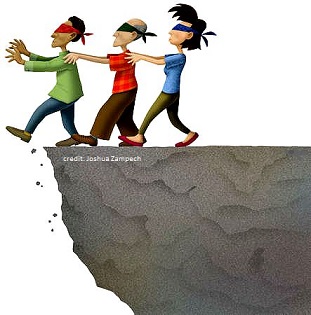
That’s a fallacy.
The scary thing is that many people seem to have embraced this idea — and some of them are now standing in classrooms, calling themselves TEACHERS.
Being a Math wizard doesn’t make one a Math teacher. Having a perfect accent and impeccable grammar in English doesn’t make one an English teacher.
Teaching is more than “mastery of the subject matter.” One may accumulate knowledge or possess a special skill, but that’s no guarantee he can effectively transfer that knowledge and skill to a recipient — the LEARNER. “Knowing something” is different from “knowing how to teach what you know.”
If teaching were an iceberg, “mastery of the subject matter” would be just the tip — and arguably just half the tip, since teaching is only one side of the coin we call Education. The other side is learning.
To say “If you know it, you can teach it!” is essentially to say that just about anyone who knows something could be a teacher.
Being a teacher requires not just knowing what to teach but, more importantly, how to teach it. Being good at Math doesn’t automatically mean you can teach it. Knowing a language doesn’t mean you can teach it either. Being knowledgeable and skillful in a subject is just one cornerstone of effective teaching — learning isn’t even in that equation yet.
Becoming a teacher is a tedious process. “Knowing what to teach” and “knowing how to teach it” are merely the icing on a multi-layered function of what a teacher does. While mastering a field of specialization, a would-be teacher must also study the nature of the learner. While memorizing the “A to Z” and the “one to infinity” of a subject, anyone who wishes to embrace this vocation — or call it a profession — must understand the intricacies of the learning process. A teacher should be concerned not only with teaching, but also with learning.
Those who think knowledge and skill in their field are enough to qualify them as teachers need to think again. Teaching and learning are grounded in Philosophy, Psychology, Sociology, and many other disciplines. One needs to learn principles and strategies to deliver teaching and learning effectively — methods that keep the classroom from becoming a case of “the blind leading the blind.”
None of this can be learned overnight. It’s a tedious process, as mentioned. That’s why well-intentioned professionals from other fields who want to become teachers enroll in crash courses before applying for positions in the academe. And when educational administrators hire non-education professionals — because they see in them the promise of becoming good teachers — they ensure those hires undergo rigorous pedagogical training before being deployed in classrooms.
If one lacks the time or resources for a crash course, there are books on teaching and learning worth reading, and vast amounts of material available online. The only drawback to this route is the absence of actual practice teaching and hands-on training in preparing lesson plans and learning modules.
So — if you know it, don’t teach it yet. First, learn how to teach it.



 M.A.D. L I G A Y A