Category Archives: Proper Perspective
Proper Perspective
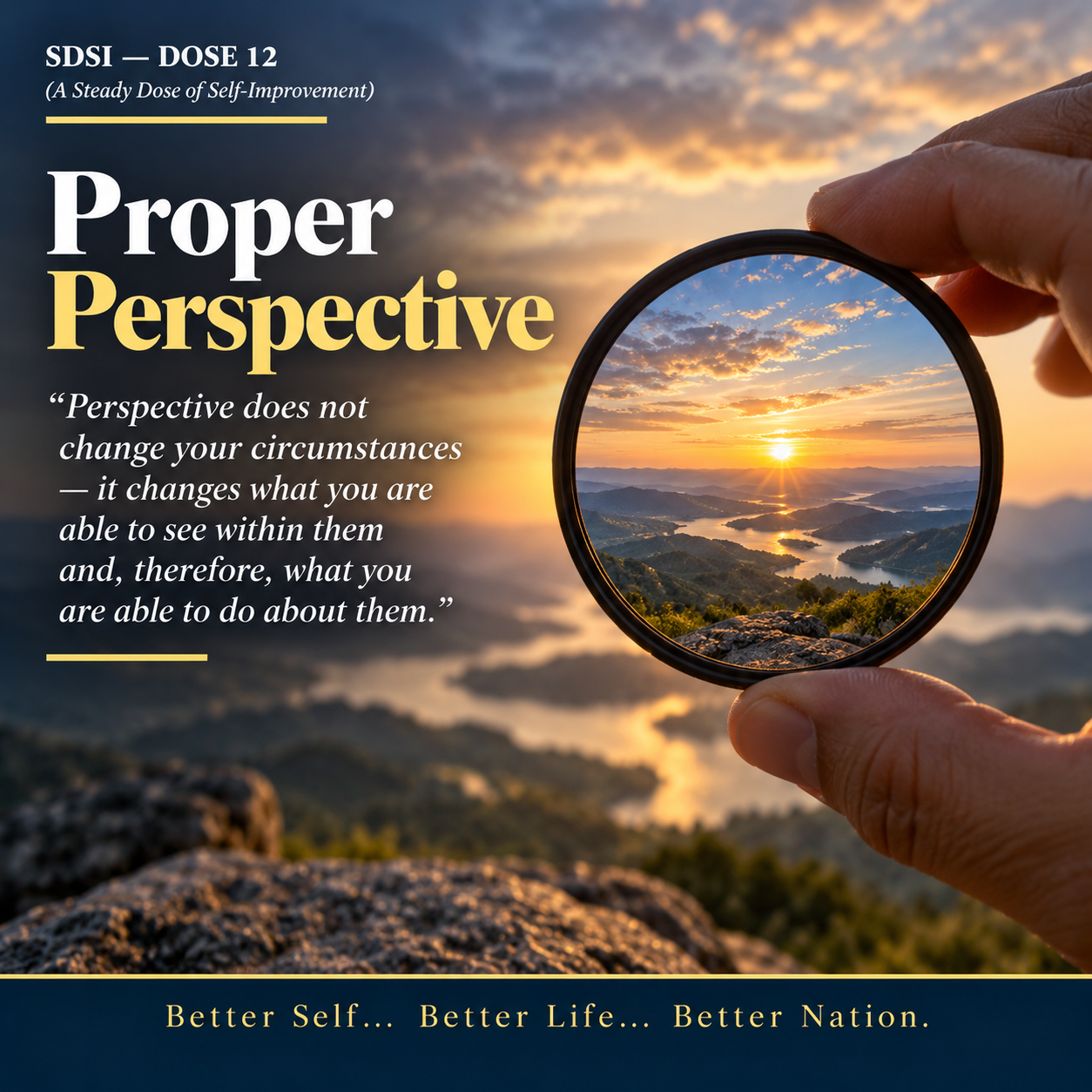
Perspective does not change your circumstances—it changes what you are able to see within
them and, therefore, what you are able to do about them.

A friend of mine is often mistaken for me. When he asked, half-offended, “Do I look as old as you?” I told him, “No—I look as young and handsome as you.”
My friend and I teach at the same university. We have similar builds and similarly rounded faces, so people occasionally mistake him for me.
One day, visibly bemused, he asked, “Why would they think I am you? Do I look as old as you?”
I paused, smiled, and replied, “No. I look as young and handsome as you.”
As he laughed, I realized that our contrasting reactions to the same situation illustrated perspective in miniature. He initially viewed the comparison as an unfavorable comment about his age. I treated it as a flattering comment about mine. Nothing about the situation changed—only the position from which we viewed it.
Proper perspective, however, does not mean forcing every unpleasant experience into a cheerful interpretation. It means looking at something truthfully, completely, and proportionately. A negative interpretation can be as incomplete as an unrealistically positive one. Sometimes we stand too close to a problem and allow one unpleasant detail to fill our entire field of vision.
I once spoke with a colleague who was frustrated about his salary as an expatriate university teacher. He compared his annual income with that of a truck driver back home and concluded that the driver was better compensated.
His dissatisfaction may have been legitimate, but the comparison was incomplete. I asked him to consider the driver’s actual working hours, physical demands, time spent away from home, and working conditions. We then considered the teacher’s lighter schedule and extended periods away from the classroom while continuing to receive a regular salary. Once those factors were included, the comparison became far less straightforward.
The purpose was not to tell him that he had no right to want better compensation. It was to help him evaluate his situation using the whole picture rather than one number.
Viktor Frankl wrote about preserving an inner freedom even amid circumstances of unimaginable cruelty. His reflections did not deny suffering or pretend that pain was good. They recognized that when a situation could no longer be changed, a person could still decide how to respond to it. As he wrote, “When we are no longer able to change a situation, we are challenged to change ourselves.”
Sometimes proper perspective reveals a hidden advantage. Sometimes it exposes a genuine injustice that must be addressed. In either case, it helps us respond more wisely because we are no longer reacting to only one fragment of reality.
Perspective does not erase the problem. It brings the rest of the picture into view.
Pause and Reflect
What frustration in your life might look different if you stepped back and examined the fuller picture?
Are you overlooking facts that challenge your present interpretation?
One Step Forward
Choose one situation bothering you today. Write down your current interpretation, then list two relevant facts you may have overlooked. Revise your interpretation only if the fuller evidence justifies it.
Explored more fully in Part 2 — Section I — Chapter 5, “Proper Perspective,” of A Holistic Approach to Self-Improvement.
Better Self… Better Life… Better Nation.
A Holistic Approach To Self-Improvement

Self-improvement is often treated as a collection of isolated goals—building confidence, learning new skills, developing better habits, or becoming more disciplined. But lasting transformation requires something more. It requires a holistic approach.
This book presents a practical framework that brings together the essential dimensions of personal growth into one integrated system. Rather than focusing on a single aspect of development, it shows how genuine and lasting change occurs when your beliefs, abilities, habits, and actions work together.
Through this book, you will discover how to:
• Build a strong value system that shapes your character and guides your decisions.
• Develop the competencies needed to navigate life’s personal and professional challenges.
• Establish a habit scheme that transforms good intentions into consistent action.
• Cultivate the self-discipline that binds every element into a sustainable way of life.
• Pursue lasting health, success, happiness, and fulfillment through balanced personal growth.
Grounded in research yet written in a clear and practical style, this book combines timeless principles, scientific insights, reflective exercises, self-assessments, and real-life examples to help you understand not only what to improve, but how meaningful transformation actually happens.
Whether you are a student, educator, professional, leader, entrepreneur, or simply someone seeking a more purposeful life, A Holistic Approach to Self-Improvement offers a complete roadmap for becoming your best self—one intentional step at a time.
Grow with purpose. Live with meaning.