Category Archives: Positive Thinking
A Holistic Approach To Self-Improvement

Self-improvement is often treated as a collection of isolated goals—building confidence, learning new skills, developing better habits, or becoming more disciplined. But lasting transformation requires something more. It requires a holistic approach.
This book presents a practical framework that brings together the essential dimensions of personal growth into one integrated system. Rather than focusing on a single aspect of development, it shows how genuine and lasting change occurs when your beliefs, abilities, habits, and actions work together.
Through this book, you will discover how to:
• Build a strong value system that shapes your character and guides your decisions.
• Develop the competencies needed to navigate life’s personal and professional challenges.
• Establish a habit scheme that transforms good intentions into consistent action.
• Cultivate the self-discipline that binds every element into a sustainable way of life.
• Pursue lasting health, success, happiness, and fulfillment through balanced personal growth.
Grounded in research yet written in a clear and practical style, this book combines timeless principles, scientific insights, reflective exercises, self-assessments, and real-life examples to help you understand not only what to improve, but how meaningful transformation actually happens.
Whether you are a student, educator, professional, leader, entrepreneur, or simply someone seeking a more purposeful life, A Holistic Approach to Self-Improvement offers a complete roadmap for becoming your best self—one intentional step at a time.
Grow with purpose. Live with meaning.
Dissecting Positive Thinking
“Pessimism leads to weakness, optimism to power.”
– William James

Some people say that positive thinking is nothing but a delusion. It is… to them. Yes, only to them. To those who think that positive thinking is just a fantasy, it is. What we think things are – they are. Our thinking shapes our truth. It is the brush we use to paint our reality. It doesn’t mean though that what we think about something is correct and is the absolute truth. The reality that our brush called thinking painted doesn’t apply to everyone.
To those who think positive thinking doesn’t work, it won’t. They’d better not try it because their efforts are deemed to fail. It’s unlikely though they would try, given the kind of mindset that they have.
Those who consider positive thinking as crap also think of people who embrace it as not attuned to reality. Reality? Whose version of reality have the positive thinkers failed to tune in to? Have the idealists, realists, pragmatists, and existentialists (insert more “ists” here) already settled their disputes as regards the nature of reality? What I know is that the debates on whether reality is absolute or relative have not ended conclusively yet.
It’s so tempting to ask the question, “Is reality real?” Well, I just did but I will no longer explore that topic. Let me just share how Ran Zilca describes reality. He said, “Reality is not outside of you. It only exists in your mind, and you view it through your own unique lens, filtered by your senses, your memories, your mood, and your thoughts. A different person would look through his or her own perspective, and may describe a vastly different reality, as if the two of you are at not all in the same place and time.”
So, nobody should force on anyone the version of reality informed by his or her personal experiences and created by his or her own brand of thinking.
But is it really necessary to run the gamut from classical to contemporary philosophies to discuss and argue the essence of positive thinking? That is tantamount to analysis paralysis. Positive thinking is not an issue to be resolved but a decision to be made. Accept it if you think it works. If not – reject it.
There is no need to argue the rightness and wrongness of positive thinking because it is not a moral issue? Positive thinking does not involve a difference of belief but it is a matter of preference. There’s no moral dispute.
If for example, I chose to be optimistic, hopeful , and cheerful, I am not disagreeing with the pessimists. I am merely exercising my right to decide which mindset I would bear. My decision to embrace positive thinking would not affect the pessimists. It would not harm them. Would it harm me? How in the world could a mental attitude that expects good results and successful future harm the person having it?
Critics better not say that positive thinking has no academic credibility, that no empirical evidence could be provided to prove that it works. It is not true that the proponents of positive thinking have nothing but anecdotal evidence to prove that it works. The critics simply ignoring the latest findings in the field of brain science and are not seeing how practices related to positive thinking, like meditation and mindfulness, have been gaining wide acceptance. There are lots of studies conducted to establish a scientific foundation for this idea.
In an article I wrote on positive thinking, I cited the works of Marc Guidi and Hans Villanueva as examples of studies that have been helping positive thinking develop academic credibility.
Evidence proving that positive thinking works are difficult to ignore unless the critics are intentionally turning a blind eye. A website called “The Pursuit of Happiness” published an article entitled “Review of Key Studies on Mindfulness and Positive Thinking.” The said article is a list of links to several studies conducted in the areas mentioned in the title (of the said article).
Simply type “studies on positive thinking” in any search engine and you’ll find a lot of articles and studies conducted about it.
Positive thinking is more than the “Law of Attraction” – the basic idea of the controversial 2006 documentary film “The Secret.” The principle “like attracts like” is not the be-all and end-all of positive thinking. The former is only one of the many ideas associated with the latter.
One strategy that advocates of positive thinking suggest is “fake it till you make it.” The critics call it absurd. But what if it works… the way a placebo drug does. Let people try anything that would get them out of a funk. Anyway, the said strategy is only one of the many strategies available for those who want to try positive thinking. If it doesn’t work – abandon it and try other available methods. Anyway, there’s nobody who really knows it works or not. There’s no harm if one tries it. Remember that Alfred Adler, the Austrian medical doctor and psychotherapist who founded the school of Individual Psychology, developed a therapeutic technique that he called “acting as if,” a strategy that gave his clients an opportunity to practice alternatives to dysfunctional behaviors.
The one thing that is difficult for me to comprehend sometimes is why some motivational speakers are discrediting positive thinking. The only reason I could think is probably they are trying to sell another self-improvement method and the only way they could get the attention they need is to say something negative about positive thinking.
The more we really try to dissect the essence of positive thinking using all the isms of intelligent people as lens the fuzzier it becomes. It is but a simple concept.
In Psychology they simply call it dispositional optimism.
Let’s simplify it further in a way that even the modest of minds could understand. Let’s call it hope.
It is as simple as this – Positive thinking is expecting that good things, rather than bad things, will happen… that success is attainable. Positive thinking is always trying until you get (and you become) what you want. It is a refusal to have limiting beliefs. It is deciding to choose only the positives in the different frames of perspectives.
Don’t get me wrong though. Yes, I have asserted (a few paragraphs back) that positive thinking is a simple concept. But making it work is difficult.
Positive thinking has been misconstrued as just that – thinking. It is not. It is not as simple as you close your eyes, take a deep breath, think about the things you want – money, good health, good relationship, peace of mind and what have you – think you have them, as hard as you could then when you open your eyes you’ll have them in front of you served hot in a silver platter. NO! It doesn’t work that way. That is not positive thinking but rather wishful thinking.
Positive thinking is just a springboard. Nothing happens if a person just thinks and doesn’t act. Isn’t that common sense?
In another article I wrote about positive thinking, I posited, “Positive thinking without positive action won’t work.” A plan of action is required – a plan of action that should be executed and vigorously pursued.
Thinking precedes action. People are (supposed to be) rational beings and whatever decisions they make, whatever course of action they take, they should think about it first. And which would be a better launching pad for the decisions we make and corresponding actions we take – a positive frame of mind or a negative one?
Believing that good things are bound to happen and that success is attainable would lead people to know their purpose in life. If people have no limiting beliefs they will be prompted to define clearly their goals and frame a plan of action to attain them. The process will help them develop self-discipline and become self-sufficient, organized, and focused.
Positive thinking is not as simple as it seems. Let me reiterate that for it to work, a corresponding plan of action is required. And that would entail a lot of hard work, dedication, and discipline.
Actually, the believers and critics of positive thinking are both correct. It works and it doesn’t. Confused? Consider this – “Whether you believe you can do a thing or not, you are right.” That’s from Henry Ford. And here’s from Virgil… “Possunt quia posse videntu” (“They can because they think they can.”)
Cultivating A Positive Mindset

Mindset refers to the general attitudes of people and the way they think about things. It is what informs whatever decisions they make (or don’t make). It controls what they say and do. Their mindset is also the lens they use when evaluating the issues and events happening around them.
Mindset affects the way a person looks at things and issues. Let me share an experience as an illustration.
I once had a conversation with a colleague about salaries and working conditions. He bewailed the fact that a truck driver in his country earns more than what he is earning in a year as an expat teacher. After listening to his litany, I told him to pause for a while and dig deeper into his comparison and consider other factors like the number of required work hours and the physical demands for the job. When computing the number of hours, I reminded him that we as teachers are not actually working during winter and summer breaks but we get paid in full by the university as stipulated in our contracts. That’s a total of four months when we practically do almost nothing related to work but get paid. On the other hand, that truck driver needs to grind it out winter, spring, summer, and fall to earn every single penny he is earning.
He realized at the end that his pay per hour is actually higher than the truck driver and his working conditions are much better.
A positive mindset allows a person to have a broad perspective enabling them to see the bigger picture. That’s what my colleague failed to see – the bigger picture. Big-picture thinking is one of the components of what Dr. John Maxwell referred to as “good thinking.” Dr. Maxwell explained that successful people reached the pinnacle of success because they cultivated “big-picture thinking.” We can choose to do the same.
Factors related to family, school, and environment are considered determinants of the kind of mindset that people possess. How such elements affect them as they grow older could be gleaned from the way they behave, think, and talk.
Mindset could be affected by the culture people have grown into and it could either be positive or negative. Studies done on mindset have established a strong correlation between mindset and achievement and happiness. Needless to say that people with a positive mindset are more successful and live a stress-free life. They have either a flourishing business or a rewarding career (or both) and their personal lives are amazing.
A positive mindset can be cultivated if anyone wants to. But it’s easier said than done. It would take a very strong commitment and determination for it to happen. It will entail hard work. The rewards people with a positive mindset are reaping are not being handed to them in a silver platter. Those are the fruits of the seeds of hard work they have sown.
Dr. Carol S. Dweck, a Stanford psychologist, made a comprehensive study of mindset. Dr. Dweck coined the words “fixed mindset” and “growth mindset.” She explained that “In a fixed mindset students [people] believe that their abilities, their intelligence, their talents, are just fixed traits. In a growth mindset, students [people] understand that their talents and abilities can be developed through effort, good teaching, and persistence.”
We need to make a choice between having a “fixed mindset” or a “growth mindset.”
Learning is a lifelong process. We should never stop acquiring the knowledge, skills, attitude, and values we need.
We never cease to be students. But which kind of student are we – the one with a fixed mindset or with a growth mindset?”
As explained by Dr. Dweck, because people with a “fixed mindset” believe that intelligence and other human traits are static, they avoid challenges, give up easily, and see the exertion of extra efforts as fruitless and futile. Conversely, people with a “growth mindset” are convinced that human intelligence and other traits can be developed which would lead them to embrace challenges, persist in the face of setbacks, and see effort as the path to mastery. People with a “fixed mindset” ignore useful negative feedback and feel threatened by the success of others while those with a “growth mindset” learn from criticism and find lessons and inspiration in the success of others.
It’s time to evaluate which of the two mindsets you possess. Whether you change it or not is a decision only you can make.
I have been trying to cultivate a positive mindset. It is an ongoing process and I am happy with the results. How I wish I have started doing this when I was younger.
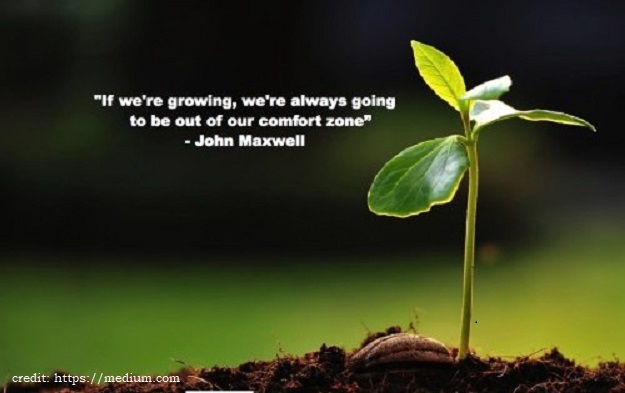
My journey to changing my mindset for the better was not easy. It made me completely overhaul my way of thinking that was programmed by the environment I have grown into and the kind of education and experiences I had. It is equivalent to getting out of my comfort zone because I have to change the habits and routines that I got accustomed to. But it’s worth a try.
The Road To Self-Improvement: A Collection of Essays

I gathered in this part of my website the essays I have written about personal growth and development. I want to share the lessons and insights I learned from motivational speakers whose books (and videos on YouTube) have given me the blueprint on how best I could restructure my way of thinking so I could make better decisions in the different areas of my life.
I have been experiencing amazing changes in my life that I started regretting why didn’t I dig into these personal development stuffs when I was younger. I have heard a lot about “positive thinking” and related ideas before but I did not pay attention. But as the saying goes, “better late than never.”
I came to realize that “positive thinking” is but the first step in a person’s journey to a better self and a better life. It’s not the be-all-end-all of personal growth and development. But it all begins in setting a positive mindset. Positive actions should follow. People are in a better position to succeed when they break free from limiting beliefs and debilitating attitudes.
My goal in writing these essays and have them put together in this corner of my website is to help promote awareness on personal growth and development. I am not (yet) an expert in this field. I just want to share the little things I have learned so far and to say that I am so happy with the results I am getting.
**********
Cultivating a Positive Mindset
ON PERSPECTIVE

I do have a friend who would usually be mistakenly identified as me. There were many instances that people in the university where both of us are teaching called me by his name and him by mine. Why? I am not a dead ringer for him but very likely that our similar built, height and rounded face would make people commit that mistake.
Seemingly bemused, he asked me one time, “Why would they think I am you? Do I look as old as you are?” I paused for a while, smiled then told him jokingly, “No, I think I just look as young and handsome as you are.”
As my friend laughed at my response, I thought that the contrasting way we looked at the issue has opened an opportunity for me to revisit the topic “perspective.”
That (perspective) is one of the most amazing things about us humans – our tendency to look at the same thing differently.
Anything in this world can be viewed from different perspectives. We get to decide at what angle we would look at circumstances, problems, events and even objects using lenses that are uniquely ours. We tend to measure the value of those things using our own sets of standards and label and define them according to our beliefs. Those standards and beliefs are shaped by the way we were raised by our parents, trained by our teachers, influenced by the people around us, and conditioned by our culture.
The sum total of the experiences we accumulated since birth and the amount and quality of information we gathered through the years from different sources are the factors that contribute to the kind of perspectives we develop as persons. Our way of viewing things depends on the belief system that those experiences and information impressed upon us.
Each person is entitled to embrace a particular attitude towards something. There are no specific measurement to determine the rightness and wrongness of perspectives. Only the consequences of a person’s action (or the lack of it) as a result of embracing certain perspectives could perhaps be labeled as right or wrong.
When we are about to take a perspective it’s like we’re positioning ourselves in the number scale and decide whether to go north or south. We can either be positive or negative with our perspective. Those are the only directions we could take when we look at issues and circumstances confronting us. It’s a matter of choice.
Perspective is said to be like a coin, it only has two sides. We flip the coin and choose either “head” or “tail.”
Our perspectives affect the decisions we make. They inform the things we think, say and do. Thus, while we are entitled to have any kind of perspective, in the same manner that we are entitled to our own opinions, we have to understand that we will bear whatever consequences there may be for embracing the perspectives we take.
We also need to understand that we could not assume that what we believe or see is definitive. Different people have different ways of looking at things. The perspective of the world that dictates the lens through which we see it is not the same for everybody. We need to develop the ability to see things from another’s viewpoint.
Perspectives can either be broad or narrow.
Having a broad perspective means being able to see the bigger picture. `
I once had a conversation with another friend about working conditions. He bewailed the fact that a truck driver in his country earns more than what he is earning in a year as an expat teacher. After listening to his litany, I told him to pause for a while and dig deeper into his comparison and consider other factors like number of required work hours and the physical demands for the job. When computing the number of hours, I reminded him that we as teachers are not actually working during winter and summer breaks but we get paid in full by the university as stipulated in our contracts.
He realized at the end that his pay per hour is actually higher than the truck driver and his working conditions are much better.
It is not really hard to train the mind to look at the bigger picture. It is easy to look beyond the obvious if only we’re open-minded. It does not require a special kind of training. All we need is common sense.
There are a lot more that could be explored in the discussion of perspective. At the end, the thing that matters is the answer to the question, “How do our perspectives affect the way we live?”
If the lenses we are using to view the world have brought us success and happiness, why change them. We’ve been told many times, “If it ain’t broke, don’t fix it.” But what about if those lenses are seemingly broken and have caused us nothing but failure and misery? Is it time to visit an OPTIMIST?
On Self-Doubt
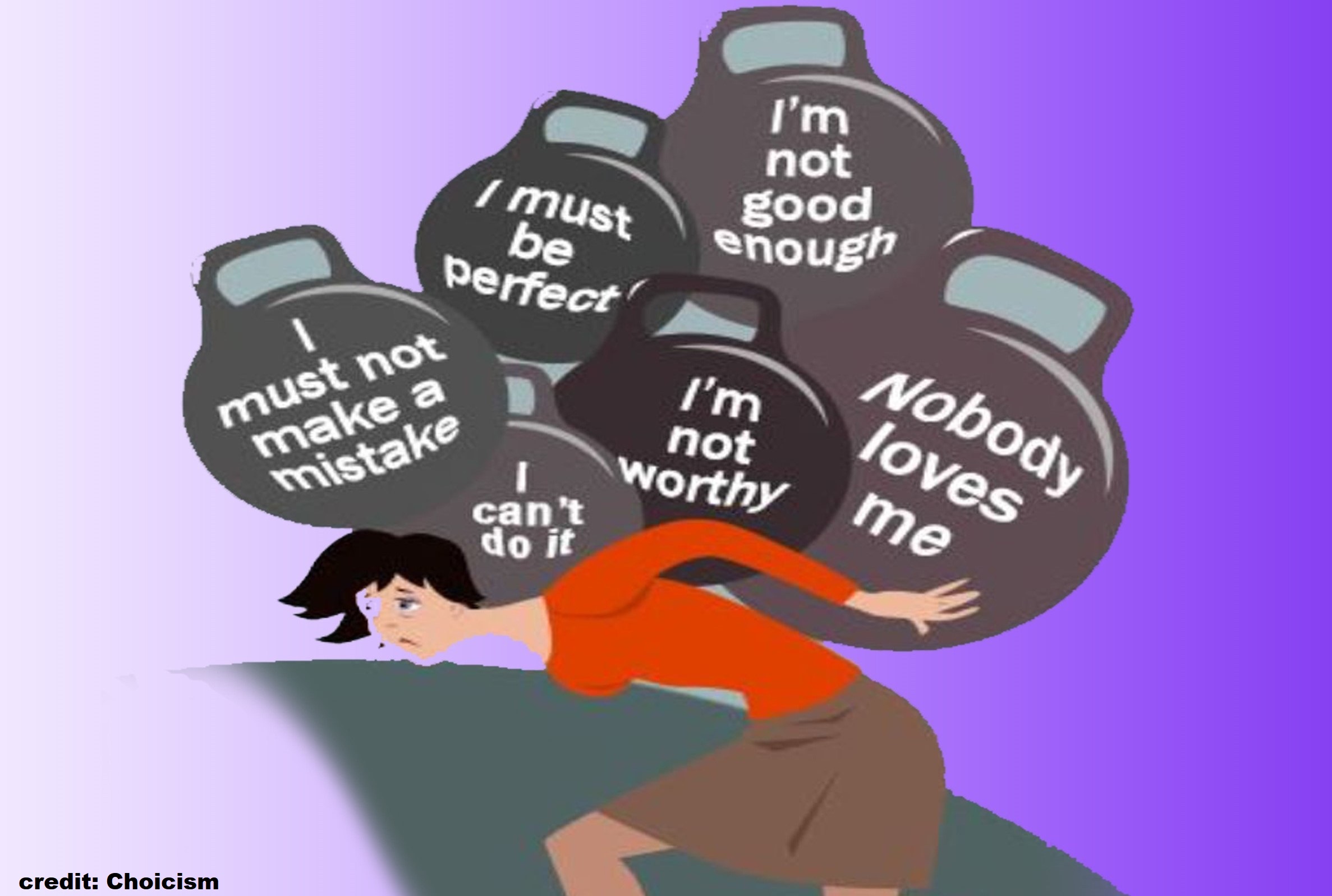
“Our doubts are traitors, and make us lose the good
we oft might win, by fearing to attempt.”
– William Shakespeare
Lust, gluttony, greed, sloth, wrath, envy and pride are referred to in Christian teachings as the “seven deadly sins.” These, to the Roman Catholics, are the cardinal sins. If a person commits any of them, he is believed to be cut off from God’s grace.
Actually, the Bible does not specifically mention the concept “seven deadly sins.” But in Galatians 5: 16-19, fifteen acts of the sinful nature are identified – sexual immorality, impurity, debauchery, idolatry, witchcraft, hatred, discord, jealousy, fits of rage, selfish ambition, dissensions, factions, envy, drunkenness, and orgies. Perhaps St. Gregory the Great, during his reign as Pope (590 – 640 AD), wanting to be concise, shortened that long list of capital vices.
All Christian faithful are being called upon to not commit those acts of the flesh. St Paul said that believers are free but he implored them not to use their freedom to indulge the flesh. That, definitely, is easier said than done.
I think St. Paul (who wrote the Galatians) and St. Gregory may have overlooked another human frailty that should have been added in the list of sins. There exists another spiritual infirmity which I believe should be considered equally harmful as any of the deadly sins. It’s called self-doubt.
My proposition (that self-doubt be classified also as sin) may not be considered seriously. Many might even say it’s preposterous.
Is it?
Is self-doubt just an ordinary flaw in a person’s character? Is it really a bit too much to consider it a sin? Is it not a serious offense – something that when committed could ruin a person’s life?
Allow me to argue my assertion that self-doubt is a sin. For those who do not believe in the concept of religion, think of self-doubt not as a sin but an injury you inflict upon yourselves.
In this book, we will define self-doubt, strictly, as “the feeling of not having confidence in yourself or your abilities.” The concept of doubt being discussed here does not refer to that philosophical function “to cast doubt.”
The definition above (the one before the disambiguation) makes self-doubt sound harmless – not something immoral or demonic that would make the moralists and bible scholars (both past and present) look at it as a sin. That’s probably the reason no religious movement, Christianity included, classified such human inadequacy as a sin. You might also refuse to accept that it is an injury you inflict upon yourself.
Self-doubt, however, is not as simple as it seems. This impotence of the human spirit has grave consequences not only to the person having it but to the family where he belongs and to the society where he lives. A person plagued by it will be less-productive or not productive at all and is definitely not going to contribute anything for his family and society.
In arguing that self-doubt is a sin (or a self-inflicted injury) it is important to review the nature of sin in the philosophical standpoint.
“Sin is said to be a moral evil” (O’Neil, 1912). This brings us to another question – what is evil? St. Thomas defines the word (evil) as a privation of form or order or due measure. “Evil implies a deficiency in perfection.”
Self-doubt is clearly an imperfection. It indicates the absence of confidence which is considered essential for a person’s well-being and is a requirement in the pursuit of what Abraham Maslow refers to in Psychology as “self-actualization” or achieving one’s full potential. Sin is a diversion from the perceived ideal order of human living (Hyde, 2018). A person doubting his capabilities veers away from becoming the best that he can be and reduces his chance of living life to the fullest.
It could be argued that there are lot of other negative human characters that may indicate imperfections. But none is as damaging to the person as self-doubt. Something is wrong with a person if he lacks confidence and has very low (or no) feeling of self-worth. These are conditions that may lead to failure and unhappiness.
In addition, philosophical or moral sin is a human act not in agreement with rational nature and right reason. (Hyde, 2018).
It is not considered reasonable to doubt one’s capabilities. It is a person’s moral obligation to believe in himself. It is not right to think one would fail even without really trying. He needs to have faith not only in God (if he happens to believe in one) but also in himself.
Allowing self-doubt to reign is depriving the self of discovering one’s potentials. When a person decides to doubt himself, he eradicates his ability to fulfill his goals and to achieve his dreams.
Failures are indeed impossible not to happen. But even if one fails in several attempts to succeed he should decide not to stop trying. There’s a long list of famous personalities (like Albert Einstein, Abraham Lincoln, J.K. Rowling, Bill Gates, Walt Disney and Henry Ford) who had their share of failures but never gave up.
But is self-doubt a self-inflicted injury?
“Sin, also, wounds the nature of man.” This is what the Catholic religion assert.
“Self-doubt destroys the heart, mind, body and soul. It is one of the major obstacles to living the life that people truly deserve. This unhealthy food for the soul drags down a person’s spirit, crushes his ambitions, and prevents him from achieving all that he can (Thalk, 2013).
Doubt impedes a person’s development. It is the biggest roadblock to self-actualization. Self-doubt prevents people from becoming the best they could be, from realizing their full potentials, and from achieving their dreams. Shakespeare stressed, “Our doubts are traitors, and make us lose the good we oft might win, by fearing to attempt.” Doubt could possibly kill more dreams than failure ever did.
Some degree of self-doubt is generally held to be normal. It can be helpful in some cases, as it often leads to introspection and enhanced performance. But it may require medical help when it becomes debilitating, affects daily function, or impedes performance at work or school (Self-doubt, n.d.).
There’s no immorality committed when one doubts himself. Why should it be then considered a sin?
This brings me to the last among my arguments to convince you that self-doubt is a sin.
A sin may either be a sin of commission or a sin of omission. Sins of commission are sins we commit by doing something we shouldn’t do and sins of omission are sins we commit by not doing something (Sins of Commission vs Sins of Omission, 2015). The seven deadly sins are all sins of commission except sloth.
Sloth – extreme laziness or the failure to act and utilize one’s talents – is considered a sin of omission. I think self-doubt belongs to that category. If sloth made it to the list of the deadly sins, self-doubt should be there also.
“Self-doubt,” is just as damaging (perhaps more damaging) to a person than this sin called “sloth.” Actually, in some instances, a person’s failure to use his innate talents starts with his inability to believe what he is capable of doing.
I hope that the arguments I presented above about self-doubt are convincing enough that from this point on you would move as far away from it as possible.
Conquer your self-doubt and start to nurture self-belief which I think is the key component of the value system of the few men and women who scaled the heights of success.
References:
Hyde, J. (2018). The book of sin: How to Save the World, UK: Soul Rocks Books
O’Neil, A.C. (1912). Sin. In The Catholic Encyclopedia. New York: Robert Appleton Company. Retrieved October 24, 2020 from New Advent: http://www.newadvent.org/cathen/14004b.htm
Self-Doubt (n.d.). Retrieved from https://www.gootherapy.org/learn-about-therapy/issues/self-doubt/
Sins of commission vs sins of omission (2015) Retrieved from https://www.revelation.co/2015/07/21/sins-of-commission-vs-sins-of omission/
Thalk, C. (2013). Self-doubt destroys the heart, mind, body and soul. Retrieved from https://www.huffpost.com/entry/self-doubt_b_2960936
Where Has “Positive Thinking” Brought Me?
“Positive thinking” as a concept is like a narrow street that seemingly leads to nowhere. When you embrace it and take the first few steps forward, it would make you feel like you’re not going anywhere.
Consider that normal. When you venture into the unknown and leave your comfort zone, it’s normal to feel iffy. It is your old negative mental programming taking control of your thought processes. As you take a few more steps forward, doubts would start to set in and you’ll be tempted to go back where you came from. That temptation to abandon the journey just beginning would become stronger when people around you start saying how crazy you are to even believe that “positive thinking” works. But should you succeed in conquering all the negative chatters and take the courage to just keep on walking you would soon hit the main road.
The main road that narrow street called “positive thinking” leads to is “personal growth and development.” That was what I personally discovered.
When I decided to dive deeper into “positive thinking,” I realized that it is but the tip of the iceberg. “Positive thinking” is not the main thing. “Personal growth and development” is.
My journey to “positive thinking” started with my accidental discovery of a “self-help” film. I stopped by a stall selling old (pirated) DVDs of old movies. The label (title) of the one of the DVDs – “The Secret” – caught my attention. It intrigued me. So, I picked it up thinking that it’s either a mystery-thriller or a sci-fi movie.
I described in full that encounter with “The Secret” in my essay entitled “Beyond Positive Thinking.”
It is that “self-help” film that got me into positive thinking. For me, anything that advocates positive change is worth my time and worth trying. I though I had nothing to lose but everything to gain when I decided to give it a try.
When I watched that film for the second time, I took off my “critic’s hat” and emptied my mind of all those philosophies that tried to filter all the information the film conveyed and was leading me to analysis paralysis. Anyway, all of those philosophies – all of those isms – which I previously learned were seemingly not leading me to what I want to be and what I want to achieve. Honestly, at that point in my life, I was not even so certain of what I really wanted to be and what I really wanted to achieve. That “self-help” film offered me an option, an opportunity to try another system of beliefs that might help me have clarity of purpose.
I really thought then that my PhD would transform me into the best version of myself. I was wrong.
So, I took a leap of faith and embraced “positive thinking.” I walked down that narrow street that seemingly led to nowhere. I struggled but succeeded in overcoming doubts, in shooting down skepticism, and in turning a deaf ear to the internal and external negative chatters.
And I don’t regret that decision I made.
Then I probed deeper. I read existing literature about “positive thinking” and watched lots of videos about it. That’s how I came to discover that it (“positive thinking”) is the narrow street that leads to the main road called “personal growth and development.”
“Positive thinking” is the springboard to “personal growth and development.” The former is the key to unlocking the latter. I strongly believe that only when a person develops dispositional optimism, when that person expects good things to happen, and when that person hopes that he/she could be a better person and live a better life that he/she would become open to the idea of undertaking the necessary steps to venture seriously into growing and developing further as a person.
When I reached the end of that narrow street of “positive thinking” and got to the main road of “personal growth and development,” I confirmed that indeed it (“positive thinking”) is just the beginning of the journey. The road ahead is long and winding. There’s much to be done. After the “thinking” comes the “doing.”
I discovered that in order to experience meaningful growth and development as a person, it would take more than “positive thinking.” There are other requirements aside from having a positive mindset. There are other things that ought to be done and these are what the gurus of “personal growth and development” commonly describe as the practices and habits that made extremely successful people who and what they are. These people became the best versions of themselves and had found the happiness, good health, and wealth they sought because of such practices and habits.
These practices and habits are actually very practical ones. They are not magical and out of this world stuffs. They are as follows: knowing your whys; embracing a solid belief system; goal setting; short and long-term planning; managing time effectively; developing self-discipline; practicing mindfulness; being purposive; becoming self-sufficient; and living a balanced life.
These are the things that Brendon Burchard, Tom Bilyeu, Jim Rohn, Wayne Dyer, Les Brown, Joe Dispenza, Brian Tracy, Zig Ziglar, Tony Robbins, Simon Sinek, John Maxwell, Mel Robbins, and the like, recommend to people intending to maximize their potentials.
The above-mentioned experts in the field of “personal growth and development” pointed out also that extremely successful people have a common hobby – reading. They also practice meditation.
What I consider as the most significant among those practices or habits of people who reached the pinnacle of success in their fields of endeavors is “living a balanced life.”
“Balanced life” is a concept difficult to define definitively. It is so because people have different priorities and live different kinds of life.
But when I sifted through the works of advocates of “personal growth and development” I saw a common pattern about living a “balanced life” that made me understand what the concept is. And it is not rocket science.
Firstly – as people work hard to achieve what they want in life – money, degree, fame, and what have you – they should not disregard their health and relationships. Not disregarding health means eating the right food, getting enough rest, and exercising regularly. Not disregarding relationships means not forgetting that you have a family and friends needing your attention too.
Secondly (and lastly) – become a well-rounded person. Becoming a well-rounded person means bearing in mind that you are a physical, intellectual, emotional, and a social being (insert spiritual if you happen to believe in God). You should strive to develop in all these areas.
This is how far “positive thinking” brought me – to the discovery of these “personal growth and development” practices and habits. They seem to be simple, but believe me, they are easier said than done – especially if you have a fixed mindset and you keep looking at life and the world using a negative perspective.