Blog Archives
Strong Self-Belief
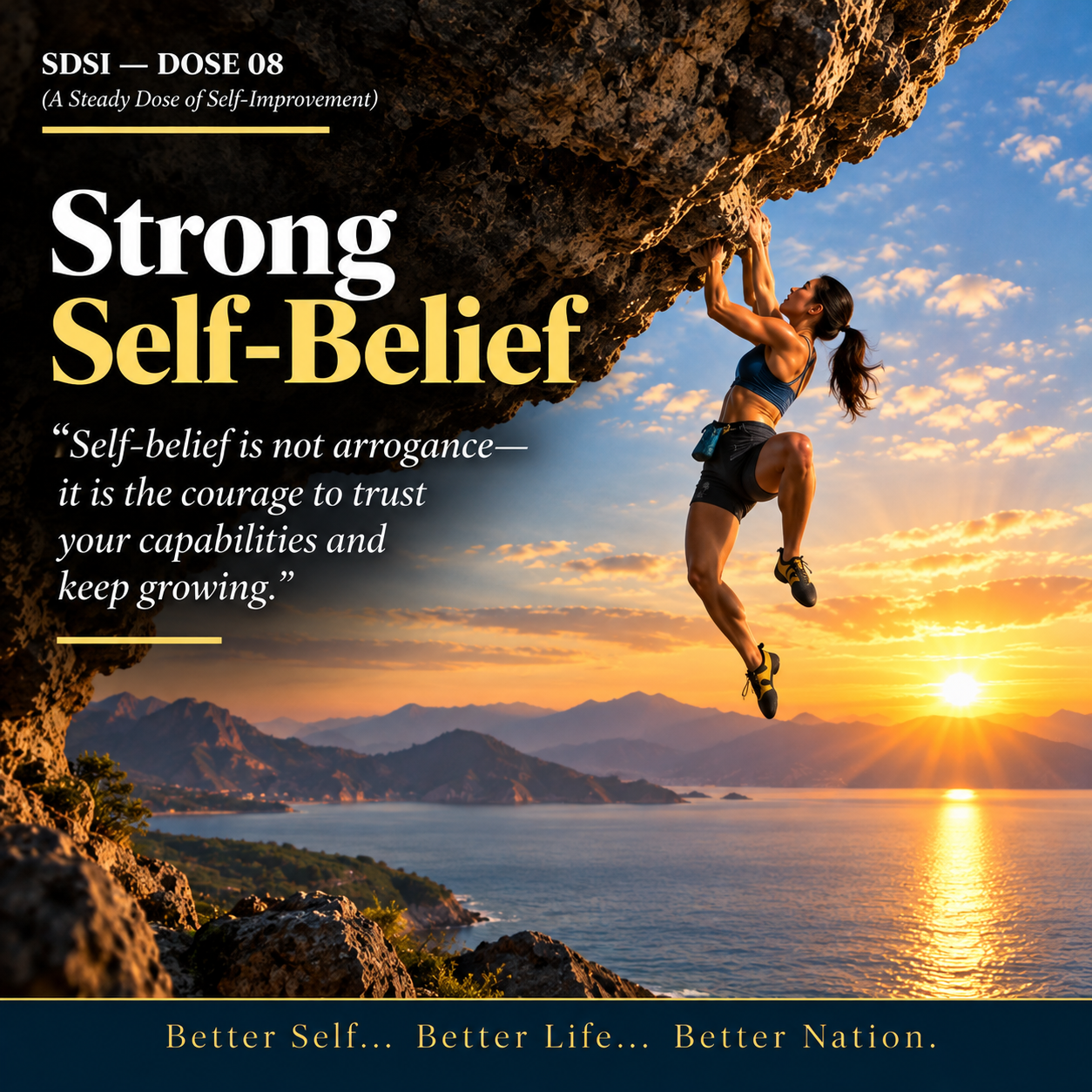
Self-belief is not arrogance—it is an honest recognition of your capabilities and the courage
to move forward while continuing to improve.

Other people’s disbelief does not kill a dream. It is the self-doubt that follows it home.
One image from the Gospel of Mark has stayed with me: “No one pours new wine into old wineskins, or the wine will burst the skins.” In its biblical context, the passage speaks of the incompatibility between the new and the old. But it also offers a powerful metaphor for personal growth.
The knowledge, skills, and habits we acquire through self-improvement are like new wine. Yet when we try to contain them within an old identity built on fear, inadequacy, and self-doubt, our growth becomes difficult to sustain. We may receive opportunities but feel unworthy of them. We may develop new abilities but remain afraid to use them. We may know what must be done but still believe we are incapable of doing it.
Strong self-belief provides room for growth.
This does not mean pretending that we can do everything. Self-belief is not self-conceit, nor is it blind confidence. It is the grounded conviction that says: I know what I can do. I recognize what I still need to learn. I trust that through effort, preparation, and persistence, I can become more capable than I am today.
Sometimes, self-belief comes before action and gives us the courage to begin. At other times, it develops after we act, struggle, learn, and discover evidence of our own capability. We do not need absolute confidence before taking the first step. We need only enough belief to take it—and then allow each honest effort to strengthen that belief.
Michael Jordan offers a familiar example. As a sophomore, he did not make his high school’s varsity basketball team. He could have accepted that disappointment as a final judgment of his ability. Instead, he trained harder, improved, and eventually became one of basketball’s greatest players. His confidence was not merely something he declared. It was strengthened through disciplined work, repeated failure, and measurable improvement.
This is what separates self-belief from wishful thinking. Wishful thinking says, I will succeed because I want to. Self-belief says, I can learn, prepare, persevere, and become capable of succeeding.
People will sometimes question your plans, underestimate your abilities, or judge your future according to your present limitations. Their disbelief may hurt, but it does not have the power to end your dream—unless you carry it home, make it your own, and allow it to become self-doubt.
Listen to criticism when it contains truth. Learn what you still need to learn. But do not surrender your future to someone else’s limited view of what you can become.
Believe enough to begin. Work enough to produce evidence. Then let that evidence teach you to believe even more.
Pause and Reflect
When has someone’s reaction caused you to question something you genuinely wanted to pursue?
What evidence from your own life shows that you are more capable than you sometimes believe?
One Step Forward
Write one sentence affirming a capability for which you have real evidence—and identify one action you will take today to strengthen it further.
Explored in full in Part 2 – Section I – Chapter 1 ( Strong Self-Belief) of A Holistic Approach to Self-Improvement.
BETTER SELF… BETTER LIFE… BETTER NATION.
A Holistic Approach To Self-Improvement

Self-improvement is often treated as a collection of isolated goals—building confidence, learning new skills, developing better habits, or becoming more disciplined. But lasting transformation requires something more. It requires a holistic approach.
This book presents a practical framework that brings together the essential dimensions of personal growth into one integrated system. Rather than focusing on a single aspect of development, it shows how genuine and lasting change occurs when your beliefs, abilities, habits, and actions work together.
Through this book, you will discover how to:
• Build a strong value system that shapes your character and guides your decisions.
• Develop the competencies needed to navigate life’s personal and professional challenges.
• Establish a habit scheme that transforms good intentions into consistent action.
• Cultivate the self-discipline that binds every element into a sustainable way of life.
• Pursue lasting health, success, happiness, and fulfillment through balanced personal growth.
Grounded in research yet written in a clear and practical style, this book combines timeless principles, scientific insights, reflective exercises, self-assessments, and real-life examples to help you understand not only what to improve, but how meaningful transformation actually happens.
Whether you are a student, educator, professional, leader, entrepreneur, or simply someone seeking a more purposeful life, A Holistic Approach to Self-Improvement offers a complete roadmap for becoming your best self—one intentional step at a time.
Grow with purpose. Live with meaning.