Category Archives: Thinking First
That Space Between Stimulus and Response
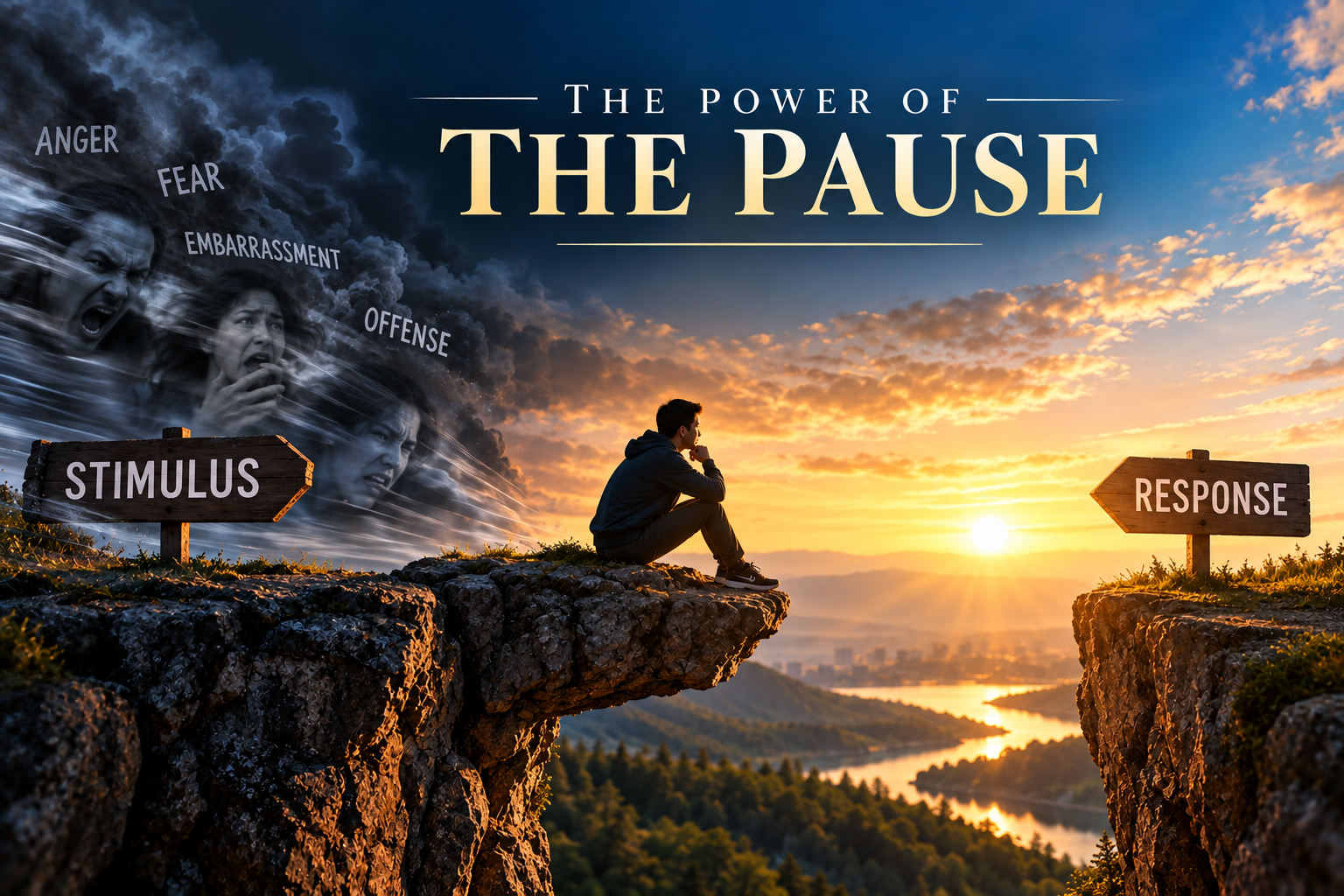
Had I known earlier that there is a space between stimulus and response, I might have saved my younger self a great deal of pain and trouble.
Think of that space as a stopover—a brief opportunity to collect ourselves before deciding how to respond to something that happens to us. It offers us the luxury of stopping, even for a split second, before allowing our emotions to take the driver’s seat.
But then again, can we really call a split second a luxury? How much thinking can we possibly do in such a fleeting moment? Unless, of course, we happen to be Flash, the comic-book superhero who can accomplish extraordinary things in the blink of an eye. Unfortunately, most of us do not possess his superhuman speed. ^^
That space has a name: the pause.
It has always been there, quietly waiting to be recognized and used. Yet many of us go through life without realizing its significance.
When something makes us angry, frightened, embarrassed, or offended, our emotions can rise faster than our thoughts. Before we fully understand what has happened, harsh words may have already escaped our lips, and regrettable actions may have already been committed. Words we would never utter and actions we would never consider when we are at our best suddenly become part of a moment we wish we could undo.
And yes, how we wish we could be Flash, if only to give ourselves enough time to think before our tongues get us into trouble or our actions leave us with consequences we must live with.
But perhaps we do not need superhuman powers after all.
As I articulated in a related article, Thinking First, we are not helpless victims of our emotions. Emotional reactions may arise almost instantly, but they do not necessarily have to dictate what happens next. We can learn to recognize our feelings without immediately acting on them. We can develop the habit of pausing, however briefly, to allow reason to catch up with emotion.
A statement often associated with Viktor Frankl describes the space between stimulus and response as the place where our freedom to choose resides. Although the exact wording cannot be reliably attributed to Frankl, the underlying principle reflects one of his central teachings: circumstances may influence us, but we retain some freedom in choosing how we respond to them.
And therein lies the power of the pause.
It may not always be long enough for deep reflection, but it can be enough to stop an angry word, reconsider an impulsive decision, or prevent an action we might later regret. With practice, that seemingly insignificant moment can become a powerful instrument of self-control.
We cannot always control what happens to us. We cannot always prevent emotions from arising. But we can learn to exercise greater control over what we do with those emotions.
Perhaps growing wiser is not simply about learning what to say or do. Sometimes, it is about learning when not to say or do anything at all.
Remember this:
Every word you have regretted saying and every action you have wished you could take back probably began the same way: you reacted before you thought.
And perhaps, between the next stimulus and your response, you will find that little space where a better choice is waiting to be made.
Thinking First
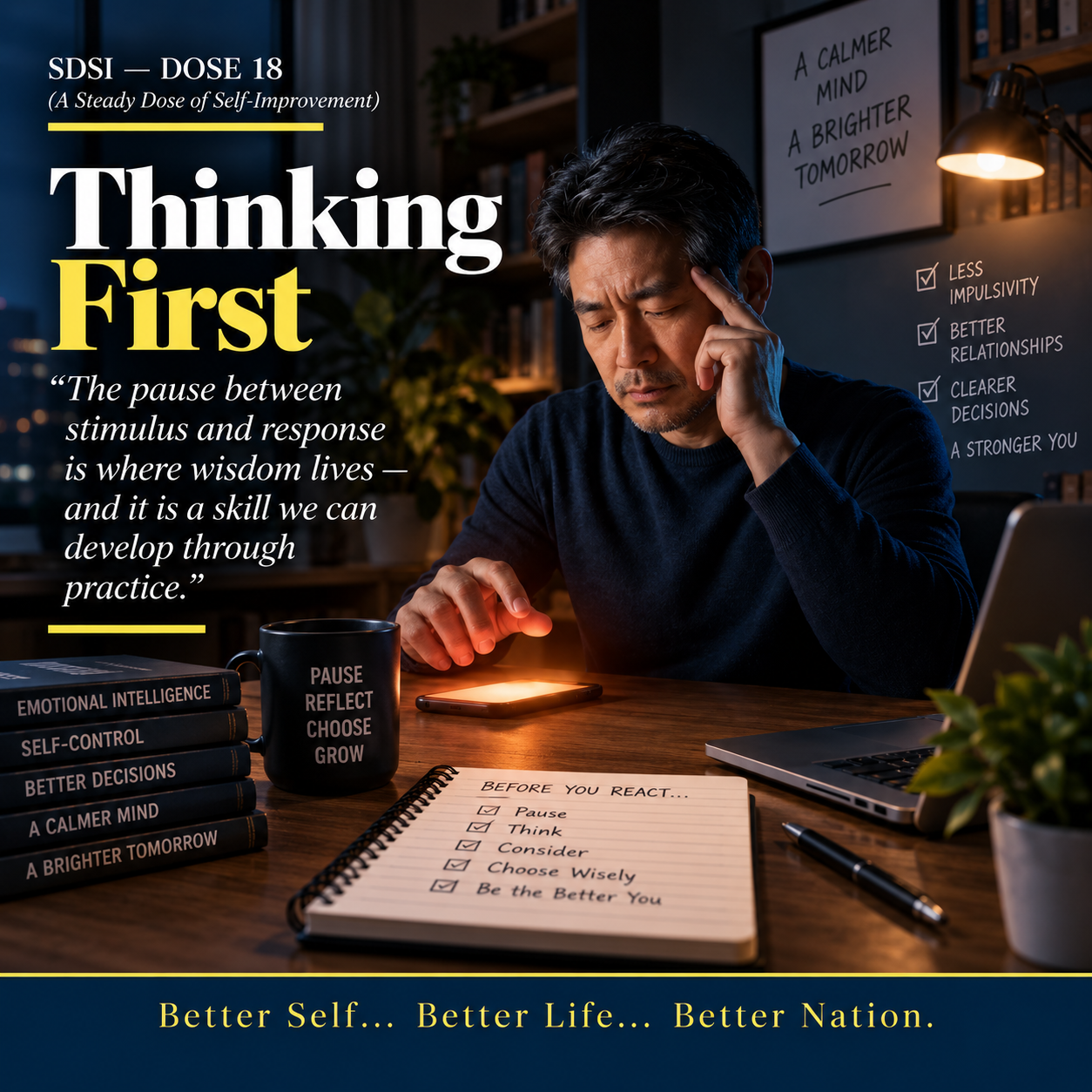
The pause between stimulus and response is where wisdom lives—and it is a skill we can develop through practice.

Every word you have regretted saying and every action you have wished you could take back probably began the same way: you reacted before you thought.
When something angers, frightens, embarrasses, or offends us, emotion can rise with remarkable speed. Before we have fully understood what happened, harsh words may already have escaped our lips, an impulsive message may have been sent, or an action may have been taken that cannot easily be undone.
This does not mean that we are helpless victims of our emotions. Emotional reactions may come quickly, but they do not always have to determine what happens next. We can learn to create a small but crucial space between what we feel and what we do.
A statement often associated with Viktor Frankl describes this space as the place where our freedom to choose resides. Although the exact wording cannot be reliably traced to Frankl, the principle reflects one of his central teachings: circumstances may influence us, but we retain some freedom in choosing how we respond to them.
Even a brief pause can allow us to consider what an impulsive reaction might overlook: Did I understand the situation correctly? Will my words solve the problem or worsen it? Am I responding to what actually happened—or merely to what I felt?
Abraham Lincoln understood the value of such restraint. When deeply angered or disappointed, he sometimes wrote what became known as “hot letters.” He poured his frustration onto the page but did not immediately send what he had written. One famous example was his strongly worded letter to General George Meade after the Battle of Gettysburg. Lincoln placed it aside, and it remained unsigned and unsent. The letter released his anger without letting it control his final action.
We may never write to generals or make decisions affecting an entire nation, but we face smaller versions of Lincoln’s choice every day. We decide whether to answer an insulting remark, send an angry message, confront someone immediately, or wait until we can speak with greater clarity.
Thinking first does not mean suppressing emotion or refusing to defend ourselves. It means giving reason enough time to join the conversation. Sometimes two seconds will be enough. At other times, we may need two minutes, two hours, or even two days.
The important thing is to build the habit while the stakes are low. Then, when the stakes are high, the pause will already be there.
Pause and Reflect
Think of the last thing you said that you wish you could take back. What might have changed if you had paused before saying it?
One Step Forward
The next time you feel a strong reaction rising, pause and count slowly to two before responding. Notice whether your first reaction still feels like your best response.
Explored in full in Chapter 10 — Thinking First of A Holistic Approach to Self-Improvement.
Better Self… Better Life… Better Nation.
A Holistic Approach To Self-Improvement

Self-improvement is often treated as a collection of isolated goals—building confidence, learning new skills, developing better habits, or becoming more disciplined. But lasting transformation requires something more. It requires a holistic approach.
This book presents a practical framework that brings together the essential dimensions of personal growth into one integrated system. Rather than focusing on a single aspect of development, it shows how genuine and lasting change occurs when your beliefs, abilities, habits, and actions work together.
Through this book, you will discover how to:
• Build a strong value system that shapes your character and guides your decisions.
• Develop the competencies needed to navigate life’s personal and professional challenges.
• Establish a habit scheme that transforms good intentions into consistent action.
• Cultivate the self-discipline that binds every element into a sustainable way of life.
• Pursue lasting health, success, happiness, and fulfillment through balanced personal growth.
Grounded in research yet written in a clear and practical style, this book combines timeless principles, scientific insights, reflective exercises, self-assessments, and real-life examples to help you understand not only what to improve, but how meaningful transformation actually happens.
Whether you are a student, educator, professional, leader, entrepreneur, or simply someone seeking a more purposeful life, A Holistic Approach to Self-Improvement offers a complete roadmap for becoming your best self—one intentional step at a time.
Grow with purpose. Live with meaning.