Category Archives: Purposeful Decision Making
That Space Between Stimulus and Response
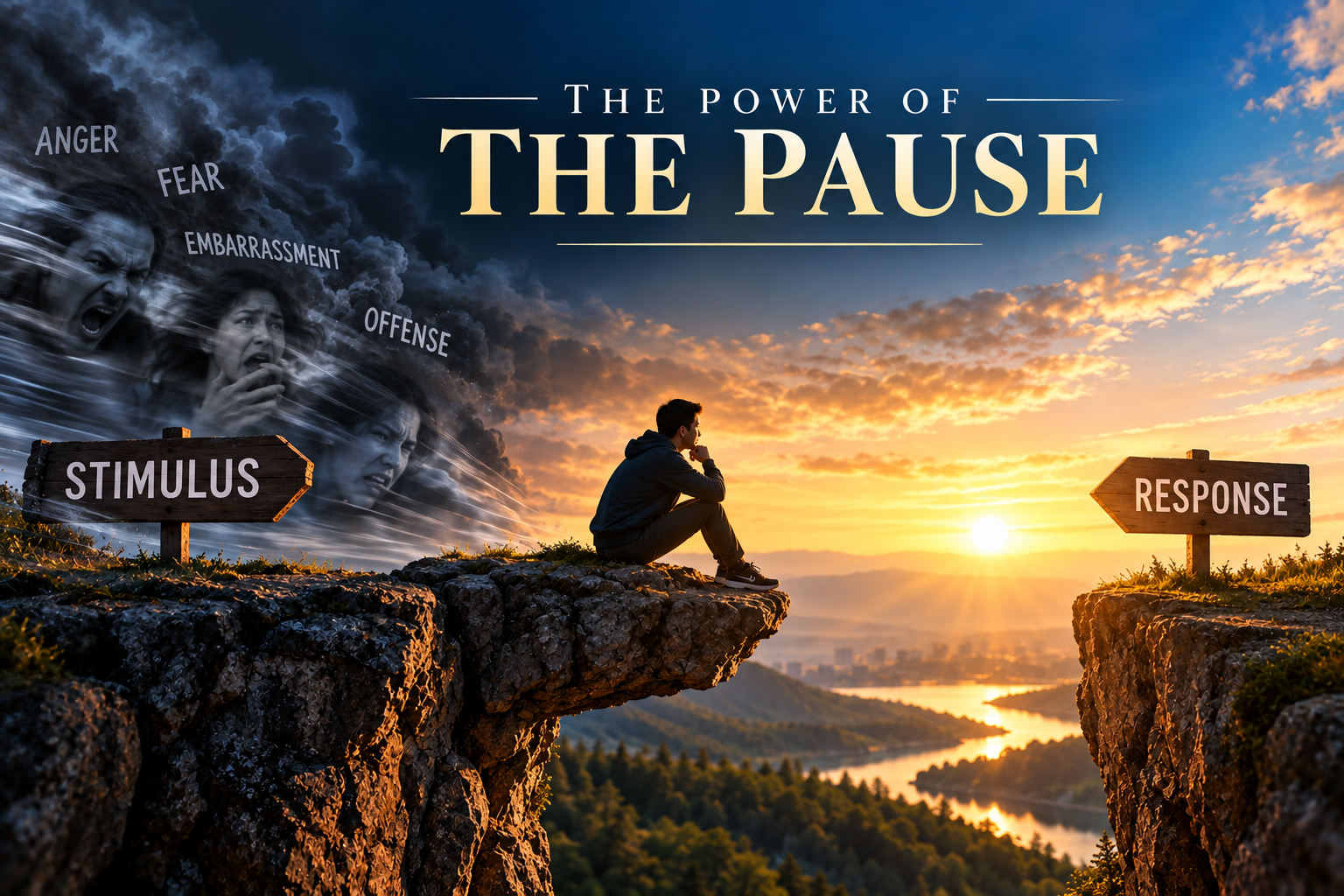
Had I known earlier that there is a space between stimulus and response, I might have saved my younger self a great deal of pain and trouble.
Think of that space as a stopover—a brief opportunity to collect ourselves before deciding how to respond to something that happens to us. It offers us the luxury of stopping, even for a split second, before allowing our emotions to take the driver’s seat.
But then again, can we really call a split second a luxury? How much thinking can we possibly do in such a fleeting moment? Unless, of course, we happen to be Flash, the comic-book superhero who can accomplish extraordinary things in the blink of an eye. Unfortunately, most of us do not possess his superhuman speed. ^^
That space has a name: the pause.
It has always been there, quietly waiting to be recognized and used. Yet many of us go through life without realizing its significance.
When something makes us angry, frightened, embarrassed, or offended, our emotions can rise faster than our thoughts. Before we fully understand what has happened, harsh words may have already escaped our lips, and regrettable actions may have already been committed. Words we would never utter and actions we would never consider when we are at our best suddenly become part of a moment we wish we could undo.
And yes, how we wish we could be Flash, if only to give ourselves enough time to think before our tongues get us into trouble or our actions leave us with consequences we must live with.
But perhaps we do not need superhuman powers after all.
As I articulated in a related article, Thinking First, we are not helpless victims of our emotions. Emotional reactions may arise almost instantly, but they do not necessarily have to dictate what happens next. We can learn to recognize our feelings without immediately acting on them. We can develop the habit of pausing, however briefly, to allow reason to catch up with emotion.
A statement often associated with Viktor Frankl describes the space between stimulus and response as the place where our freedom to choose resides. Although the exact wording cannot be reliably attributed to Frankl, the underlying principle reflects one of his central teachings: circumstances may influence us, but we retain some freedom in choosing how we respond to them.
And therein lies the power of the pause.
It may not always be long enough for deep reflection, but it can be enough to stop an angry word, reconsider an impulsive decision, or prevent an action we might later regret. With practice, that seemingly insignificant moment can become a powerful instrument of self-control.
We cannot always control what happens to us. We cannot always prevent emotions from arising. But we can learn to exercise greater control over what we do with those emotions.
Perhaps growing wiser is not simply about learning what to say or do. Sometimes, it is about learning when not to say or do anything at all.
Remember this:
Every word you have regretted saying and every action you have wished you could take back probably began the same way: you reacted before you thought.
And perhaps, between the next stimulus and your response, you will find that little space where a better choice is waiting to be made.
Purposeful Decision-Making
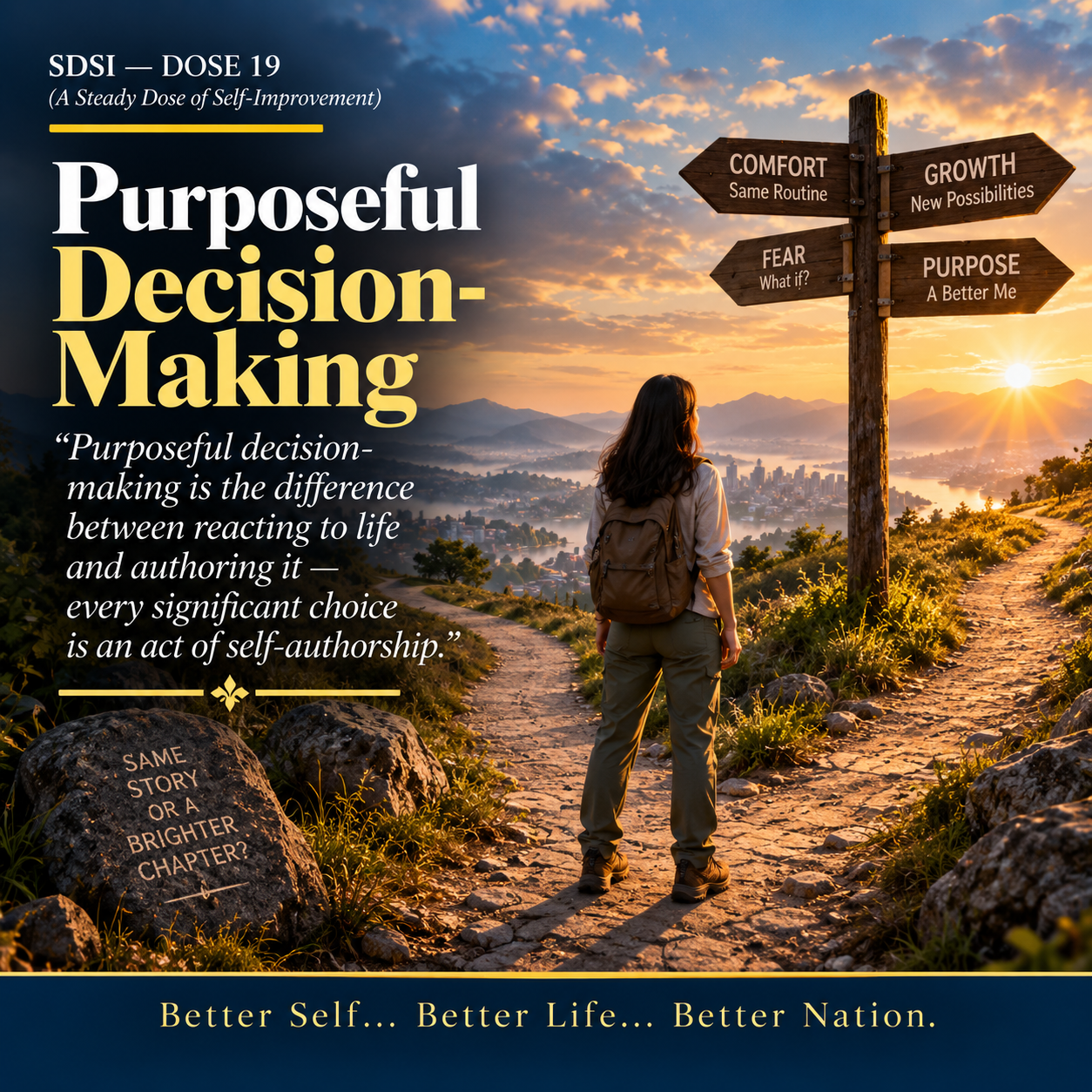
Purposeful decision-making is the difference between reacting to life and authoring it —
every significant choice is an act of self-authorship.

Are you where you are by design, or by default?
Your life is the product of the chain of decisions youUve made since you began taking control of it. Every choice, from the inconsequential to the life-altering, has shaped the person you are today. And every decision from this moment forward will continue shaping who you become.
Purposeful decision-making is the practice of making choices consciously aligned with your values, goals, and long-term vision, rather than choices driven by habit, fear, or the path of least resistance. It is the difference between reacting to life and authoring it. Pause and look honestly at where you are. Are you there by design, or by default?
In the year before I decided to leave the Philippines to teach ESL in South Korea, I found myself in what I can only describe as my own version of Chuck Noland’s deserted island in Cast Away — stranded in positions that, despite their prestige, were draining rather than fulfilling. I had served as a school principal and a dean. I chose not to stay, because I had no peace of mind and knew I would not grow.
My loved ones considered it reckless. I had a good position, a decent salary, other income. Some cited an upcoming government post with job security. But I applied for ESL positions abroad anyway, faced rejection from three Middle East universities, learned what I was missing, obtained a TESOL certificate, and was eventually hired in South Korea. That single decision, made in early spring of 2013, reshaped everything.
It was not an impulsive leap. It was a calculated risk, made with full awareness of what I was putting on the line and faith in my preparation and values. Mel Robbins was right: I was one decision away from a completely different life. And I made that decision on purpose. As the character Socrates says in Peaceful Warrior: ‘Life is a choice. You can choose to be a victim or anything else you would like to be.’ I chose. And I have no regrets.
Pause and Reflect
Is there a decision you’ve been avoiding that you know, deep down, needs to be made? What’s holding you back?
One Step Forward
Write down one decision you’ve been putting off. List what you’re afraid of, and one small first step you could take this week regardless.
Explored in full in Chapter 12 — Purposeful Decision-Making of A Holistic Approach to Self-Improvement.
Better Self… Better Life… Better Nation.
A Holistic Approach To Self-Improvement

Self-improvement is often treated as a collection of isolated goals—building confidence, learning new skills, developing better habits, or becoming more disciplined. But lasting transformation requires something more. It requires a holistic approach.
This book presents a practical framework that brings together the essential dimensions of personal growth into one integrated system. Rather than focusing on a single aspect of development, it shows how genuine and lasting change occurs when your beliefs, abilities, habits, and actions work together.
Through this book, you will discover how to:
• Build a strong value system that shapes your character and guides your decisions.
• Develop the competencies needed to navigate life’s personal and professional challenges.
• Establish a habit scheme that transforms good intentions into consistent action.
• Cultivate the self-discipline that binds every element into a sustainable way of life.
• Pursue lasting health, success, happiness, and fulfillment through balanced personal growth.
Grounded in research yet written in a clear and practical style, this book combines timeless principles, scientific insights, reflective exercises, self-assessments, and real-life examples to help you understand not only what to improve, but how meaningful transformation actually happens.
Whether you are a student, educator, professional, leader, entrepreneur, or simply someone seeking a more purposeful life, A Holistic Approach to Self-Improvement offers a complete roadmap for becoming your best self—one intentional step at a time.
Grow with purpose. Live with meaning.