Category Archives: General
EVERLASTING (Part 1)

(Short Story / 1st of 5 Parts)
It was halfway through the century, my grandma’s 60th birthday. My parents were making sure that it would be a very memorable celebration. The services of a caterer and an event coordinator were acquired to ensure that the nitty-gritty details of the affair would be taken care of.
Our family compound was bustling with so much activity. People were all over. Most were in our sprawling front yard pitching tents, positioning tables and chairs, and decorating a makeshift stage. A few were in the lounge and the terrace for curtains and decorations, while others were in the kitchen cooking. In the backyard, the butchers worked on pig and cow carcasses, making the place messy and smelly. Thanks for the pig being roasted in an adjacent vacant lot. Its delectable aroma countered the nauseating smell of blood and uncooked meat.
It was not, however, with the big celebration that I was excited about but rather with my grandma’s promise that she would show me the blogs posted by one of the many men who fell crazy for her when she was still young. How did blogs look like when my grandma was still young? But more than that was the curiosity developed by my grandma’s constant mention of the man who she never thought would profess so much affection for her, more than the appreciation showered to her by anyone. But whenever I would ask if she also loved the man, my grandma would only smile but refuse to answer. No matter how adamant I would be in pressing for an answer, she would just stare at me and smile. And when I asked why she did not marry the man, she retorted, “Better if you just read later what he wrote for me in his blogs!” How frustrated I would be if she stated the same line for whatever questions I asked about her mysterious adorer.
She told me about the man and his blogs five years ago, after my grandpa died. Grandma said that Grandpa did not know about it. And since then, my curiosity about the man and his blogs has grown enormously. My grandma promised to finally show me what her mysterious adorer wrote about her in his blogs only when she turned 60, and that was that night. Five years of waiting would be over.
Like most blogs, the adorer’s blogs were purely personal, not interconnected or socially networked in the blogosphere. Those blogs were even classified as “private”; thus, they could not be read by anyone but the blogger himself. That was according to my grandma. But before that man left to pursue a career overseas, so my grandma could access his blogs, he left her a note containing the blog’s account name, the corresponding password, and a short message. Grandma kept that note carefully. She mounted it on a cardboard and carefully wrapped it with a plastic cover. She gave me a glimpse of it after my grandpa’s death but did not allow me to read the message. I tried to sneak into her room several times and wanted to find it, but Grandma was so clever. She kept it so tightly that, presumably, even my grandfather did not see it.
Nothing seemed to interest me that night, but when Grandma finally revealed everything to me. Not even the seemingly endless stream of food and drinks and the presence of relatives and friends would distract me from wanting to know more about my grandma’s adorer. I wished the celebration would be finished early, if not abruptly ended.
Anxiously that I waited until the last of the visitors went out. It was almost midnight when the caterers left, hauling their materials and equipment with them. Even my dead-tired parents proceeded to the bedroom and took their well-deserved rest.
My most awaited moment came. I proceeded to the gate, but an old car stopped before I could close it. That old car looked familiar, for many times that I have seen it in the past. It was a Mercedes Benz car. It would always roll off slowly whenever it passed by our house. It was for the first time that it made a stop. It was my intention not to mind whoever was in the car, fearing that the one driving may be a visitor who would require the attention of my grandma, thereby unnecessarily prolonging my agony of waiting for the realization of grandma’s promise.
To my surprise, the driver disembarked and walked towards the gate. I tried to walk away, pretending not to have seen him. But much to my chagrin, he called me out.
“Hey, young man. May I have a moment with you?”
With a heavy heart, I approached him. The driver was an old man. It’s hard to determine his age. I wasn’t good at that, but I think he’s older than my grandmother. However, he looked trim and healthy. His shoulders were broad, and his biceps and chest muscles were well-defined. His physique suggests that he could have worked out regularly when he was young, or he might still be doing it. I have been seeing a lot of senior citizens in the gym where I go once in a while.
“Good evening, hijo,” he said, “please give this to your grandma. My apologies for the bother!”
“No worries, sir! You are welcome! I replied.” It was an old-fashioned birthday card that the old man handed me. I didn’t realize that such stuff still exists.
“Thank you. Good night!” said the old man. He gave me a tap on the shoulder, went back to his car then rolled off slowly. As I closed the gate, I noticed the car parked on a nearby roadside under a bright light post in front of a newly-built bungalow.
When finally, nothing stood between me and the fulfillment of my grandma’s promise, excitedly that I searched for her. Grandma was nowhere to be found, not in the garden or the living room. I suspected she could be in her bedroom dozing off already, for indeed, it was a tiring birthday celebration she had had.
My “Reconfigured” YouTube Channel
My primary goal with this channel is to appeal to viewers to embrace self-improvement to reach their full potential. I believe people will succeed, have good overall health, and find happiness only when they become their best version. To strive to be the best is a perfect duty toward oneself.
This channel also features my creative and academic works in English and Filipino. It is also one of the platforms I am using to share my expertise as a teacher and my experiences as an expat working and living here in South Korea. I have three passions – teaching, writing, and learning.
I am a Filipino currently residing and teaching in South Korea. I blog and vlog the things I write. I have three websites and two YouTube channels where I publish my works in my areas of interest. I also use Wattpad and Pinterest to publish my creative works. I am into research as well. Some of my articles were presented at conferences and published in indexed journals.
TO GOD BE THE GLORY!
__________
Please check my websites also:
https://chingligaya.wordpress.com/
You can read some of my stories here:
https://wattpad.com/user/madligaya
You can see the PINS of the poems I have written here:
SA PAGBUHOS NG ULAN
(Spoken Poetry in Filipino)

Tuwing bubuhos ang ulan
Kagyat kang papasok sa aking isipan
Kaya paano kita makakalimutan
Hindi ito mangyayari, gustuhin ko man.
Sa dahilang hindi ko kayang pigilin
Ang pagpatak ng ulan
Uulan kung kaylan nakatakdang umulan
Kung puwede lang ipanalangin na sana tag-araw na lang palagi
Para kahit kaylan ay hindi na bumuhos ang ulan
Kung puwede sana na laging may araw
Lalabas ako kahit katanghaliang-tapat
At hayaang sunugin nito
Hindi lamang ang aking balat
Kundi ang bawat hibla ng iyong ala-ala sa aking isipan
Gusto ko itong masunog… maging abo… at hipan ng hangin palayo sa akin
Ang ala-ala mo kasi’y parang tinik na dinuduro ang bawat bahagi ng pagkatao ko
Tuwing makikita ko na may namumuong kaulapan sa langi
Ay kasabay nitong mamumuo rin ang kalungkutan sa aking isip
At kapag ang hangin na ay umihip
At magbabadya nang umulan
Maghahanap na ako ng masisilungan
Sa dahilang kapag bumuhos na ang ulan
Bubuhos na rin ang mga ala-ala ng nagdaan
Kapag bumuhos na ang ulan
Bubuhos nanaman ang mga ala-ala ng nagdaan
Ala-ala ng iyong karupukan
Ala-ala ng gabing yakap ka ng iba doon
sa karimlan
Mga katawan ninyo’y umiindayog sa saliw ng kataksilan
Humihiyaw ka sa tindi ng kasiyahan
Hanggang marating ninyo ang rurok ng kaliluhan
Bakit kasi noo’y akin pang naisipan
Sorpresa kang dalawin sa iyong tahanan
Kapag bumuhos na ang ulan
Bubuhos nanaman ang mga ala-ala ng nagdaan
Ala-ala ng kung papaanong parang gamit ako na iyong pinalitan
Ala-ala ng kung papaanong para akong pusang iniligaw at itinapon kung saan
Kapag bumuhos na ang mga ala-ala ng nagdaan
Babahain ng lungkot ang aking kabuuan
At hindi ito huhumpay
Hanggat hindi ako nalulunod sa lumbay
Kapag bumuhos na ang mga ala-ala ng nagdaan
Wala akong puwedeng silungan
Ala-ala mo’y parang pilat… nakamarka sa aking balat
Ala-ala mo’y parang anino na lagi akong sinusundan
Aninong kahit walang araw aking nababanaag
Ayaw akong pakawalan
Lalo na kapag umuulan
Isipan ko’y parang bubong na may butas
At ang ala-ala mo’y parang tubig-ulan
Pilit nitong hahanapin ang butas na iyon
Para pasukin
Upang sa lungkot at pighati ako’y lunurin.
Wala akong magagawa kundi hintayin
Ang pagtila ng ulan at ipanalangin
Na sa muling pagsikat na araw
Ala-ala mo sa aking isip ay sunugin
Abuhin
At sana’y hipan ng hangin
Palayo sa akin
At ang marubdob kong panalangin
Sana kapag muling bumuhos ang ulan
May lumapit sa akin
Bitbit ay payong
Sa ilalim nito magkasama kaming sisilong
Doon sa bisig niya ako’y magkakanlong
Hanggang ang sugat sa puso ko’y maghilom
Reunion
(A Short Story in Filipino)

Dalawampu’t limang taon bago muling nagkita-kita ang magkakaybigang sina Jay, Chris, Mario at Mon. Masaya sila sa dahilang muli silang nagkasama-sama. Sila’y buong sabik na nagkumustahan at nagkuwentuhan.
Katulad ng dati ay nandoon ang kantiyawan at tawanan. At siyempre, hindi naiwasan na mapag-usapan din nila ang mga seryosong bagay – ang mga pagsubok at mga alalahanin, ang kanilang mga kabiguan at tagumpay, at ang kinahinatnan ng kanilang mga pangarap sa buhay.
At kadalasang pagkatapos ng reunion o pagkikita ng mga magkakaybigan o magka-klase ay malalaman kung sino sa kanila ang totoong nagtagumpay. At papaano ba susukatin ang tunay na tagumpay? Ano ang batayang gagamitin mo para sabihing nagtagumpay sa buhay ang mga kaybigan at mga kaklase mo?
ONLINE TEACHING IS STILL TEACHING
 Teachers like me should understand this – online teaching is still teaching. It’s not a magic trick that we are using to keep the students entertained while we are waiting for the COVID-19 crisis to dissipate. It should not be treated as a band-aid solution to the problem of not being able to meet the students face-to-face in the campus.
Online or otherwise, when you are a teacher, you should teach. You ought to find a way to achieve the objectives of the course/s you are teaching, cover the topics enumerated in the syllabus, motivate your students, discuss the lessons, give assignments, and evaluate learning. This is the time to use your creativity and resourcefulness.
Be reminded of the three major activities teachers do – planning, instruction, and assessment. Pedagogy – the art, science, or profession of teaching – remains the same, with or without COVID-19. The virus is not an excuse for you not to perform to the fullest your duties and responsibilities as a teacher.
The most important part of the planning process is the setting of learning objectives. Whatever you do as a teacher, online or otherwise, should be grounded on the objectives of the course. There are course objectives and there are unit objectives (or goals). You should know this if you are really trained to be a teacher (and was not just plucked from certain geographical locations of the world to pose or as a teacher). Supposedly, you should also know that for every topic you present to your students you also have objectives (or goals), right?
It is only when you are well-grounded on the objectives (course-unit-topic) that you should begin teaching – online or otherwise. You’d better not teach if not because you will become the embodiment of “the blind leading the blind.”
So, online or otherwise, you should be guided by the objectives of the course and of the specific units listed in the syllabus. There are times that even the objectives (goals) for each topic under specific units are provided by the school where you are teaching. If not, then it is your duty as a teacher to create them. Don’t whine, it’s part of your job. You signed up for it. And come on, creating learning objectives (goals) is not a rocket science.
After setting the learning objectives (and planned other teaching-learning activities), what should you do? I know that you know (hopefully) what comes next after the planning – instruction. Simply putting it – after the setting of objectives – you TEACH.
In case you have forgotten let me remind you of the definition of instruction – “the purposeful direction of the learning process.” The main aim of instruction, online or otherwise, is learning. Don’t forget that. So, whether your meet your students “face-to-face” or through any of the different platforms online, you have to teach them purposefully. We have different views. Rest assured that I respect yours. But for me, just uploading videos is not (online) teaching, no matter how sophisticated are the videos you create. Videos cannot carry out the multi-faceted role of the teacher. Videos, at best, are just supplementary learning materials.
After setting the objectives, you teach. After that, what comes next?
Answer – assessment. Call it testing to make it simple.
After teaching, online or otherwise, you need to determine whether or not your students learned through quizzes, exercise, assignments, tests, and other methods of assessment. But don’t forget that like instruction, assessment should also be purposeful. You don’t dump in the laps of your students all those academic works for the purpose of making them busy and simply to comply with course requirements. Education doesn’t work that way. You will use their scores in whatever you require them to do or submit to measure the extent of their learning, to evaluate how efficient are your teaching methods and strategies, and to determine if the course/unit/topic objectives are met.
There are two more important reminders for those who are teaching online. Firstly, don’t forget that you are not supposed to give your students assignments and tests on topics you did not discuss and thoroughly explained. And secondly, make sure to mark/grade each of your students’ tests and assignments. All marked/graded course requirements should be returned to the students. They need to be given feedback on their performance.
So, online or otherwise, when you are a teacher, be a teacher. Set your objectives, teach, and assess. Even if you’re holding the class online, you still need to motivate your students and elicit their participation. Do all those things purposefully.
**********
The biggest challenge I faced in online teaching is the marking/grading of assignments, projects, quizzes, and tests.
TEACHING DURING THE PANDEMIC: A PERSONAL EXPERIENCE
(A Personal Essay)
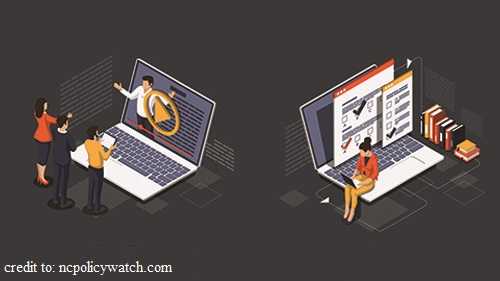
The COVID-19 pandemic is continuously rearranging socio-political and economic structures forcing us to tinker with our existing programs and practices. In order to adapt to the present realities which the virus forced down upon our throats, we are left with no choice but to either modify or completely reconfigure time-tested paradigms that have guided human affairs and activities in the past. Consequently, we are now witnessing a lot of changes in the different spheres of human life – social, political, economic, and what have you. More changes are forthcoming. These changes are inevitable and they are happening rapidly in the national, institutional, and personal levels.
Governments are restructuring in a hurry making all the necessary legislations in response to the ongoing pandemic. Both public and private organizations, from the biggest ones to the smallest, are rewriting their policies and guidelines. They are either amending existing protocols or creating new ones.
All of these changes have to be done because the socio-political and economic wheels have to continue turning. There are basic services and needs that ought to be delivered notwithstanding the COVID-19 situation. Education is among them.
Schools need to find a way to carry out their sacred oath – educate people, particularly the youth.
But we understand that students, academic and non-academic personnel, and school officials should not be rushed back to the campuses and unnecessarily expose them to possible infections. It is almost impossible to implement “social distancing” protocols in campuses where there are hundreds to thousands of students.
Schools in some countries (like South Korea) who are succeeding in flattening their COVID-19 curves have decided to resume academic operations. How are they doing it?
They are doing it online. There’s no other way.
The only platform which schools could use to deliver education to their studentry without putting them unnecessarily at risk is online. Online education is not a new platform. It has been existing for years now. The difference is that it used to be just an alternative done mostly on “one teacher-one student basis.” Now, it’s whole classes, with varying sizes, whose members one teacher should be teaching online all at the same time. It’s a mass online education.
This is the way that the university where I am currently teaching here in South Korea is doing it. The spring semester started on the 3rd week of March (online) and we were supposed to meet our students face-to-face starting the 1st week of April. But that was postponed to after two more weeks after the South Korean government pleaded to extend further the “social distancing” period. Eventually, our university officials deemed it necessary to postpone indefinitely the return of the students to the campus.
When I heard that we’ll be teaching online, I thought immediately that I will be playing a different ballgame the rules of which I am not quite familiar with. I am entering unchartered territory. I have never done a single minute of online teaching in the past. Of course I am using technology in the classroom and I am fond of trying whatever application is available to make my teaching better and appealing to my students who are all digital natives. I also use applications that make my work as a teacher easier. But I never had the opportunity to teach online in the past. Finally, the time has come for me to experience it.
Then came the training day organized to prepare us to play what I called a new ballgame – “online teaching.”
For the first two weeks of the spring semester, we were instructed to prepare videos of our lectures and give our students assignments. We were told to upload the videos and assign the homework using the E-Class provisions of the university’s portal. I asked myself, “Is that it?” That’s how we would be engaging with our students and guide them in the process of learning? Create (and upload) the videos then mark/check assignments. Is that online teaching?
That sounded easy – just create a weekly learning video and give one homework and your work is done. Then you can laugh your way to the ATM during payday, to collect your HARD EARNED dough.
I am not saying that it’s easy to create video presentations. It entails hard work, specially to people like me who had no training in creating videos. But to think that the video we will be uploading to E-Class will replace all the functions we as teachers need to perform in the class is quite disconcerting. I am not saying too that marking/checking the assignments of the students would be easy. It’s just that I am not comfortable giving an assignment based on a particular topic that I did not actually discuss. It’s like evaluating without teaching. As far as I know. That’s not how education works.
At that time, I consoled myself with the thought that that arrangement would only be for two weeks. So, I thought of just exerting extra effort to make up for what I may not be able to discuss to them during the first two weeks.
Until I saw very clear writings on the wall that it may take more than two more weeks before the university would allow classes to be held in the classrooms. True enough, (as I previously mentioned) we were told that we have to carry out online teaching to at least two more weeks until eventually, the university advised us that on-campus classes are postponed indefinitely.
The very first day of (online) classes, I received a call from one of my students. The student asked – “Are we not going to have an online class through Cisco Webex?” It appeared to me that their Korean professors are meeting them online. Otherwise, that student wouldn’t be asking that question.
Aside from the E-Class, the university provides us with another platform to perform our duties as teachers and deliver learning to our students online. That is Cisco Webex, a platform for video conferencing and online meetings. The E-Class have been there long before the COVID-19 crisis happened although it was optional on our (the teachers) part to use it. In the past, I used it rarely to upload course materials and give my students reminders related to our course. Yes, rarely did I use it. The reason being – students check on the E-Class less than rarely. Now, the current situation will force them to do it regularly.
To ensure that my students get the necessary course materials and information, I had an alternative. I created a Kakao chatroom for each of my classes to serve as a conduit between me and them. They would less likely miss anything passed to them through Kakao. The Kakao chatroom for each of my classes is exclusively for members of the class and strictly for the course materials and information I need to pass to them. They could message me in the chatroom only for questions related to our course. I don’t allow them to use it for online socialization.
Now, let me go back to the present concern. As I already explained, the minimum requirement for us is to create weekly learning videos (and the corresponding assignments) based on the contents of the prescribed textbook. We need to cover the contents of a whole unit for the weekly videos we’re creating. Teachers are required to have these videos and assignments uploaded to the E-Class. Meeting our students through Cisco Webex is not mandatory. The university left it to the discretion of expat teachers, like me, whether or not to use it.
Let me go back to that call from my student. Before our conversation ended, I made up my mind. I told the student that starting the 2nd week (and if ever we won’t be allowed to meet in the classroom for a long time), we will regularly meet online.
I figured posting weekly videos and giving them assignments through E-Class is insufficient. I wasn’t comfortable with that arrangement. Thus, even if it is not mandatory, I felt obligated to meet my students online through Cisco Webex.
That night I started watching YouTube videos on how to conduct online classes/meetings using Cisco Webex. I was lucky too to have a friend and colleague who was more than willing to teach me everything he knows about the platform. Like me, he considered just posting videos and giving meaningless assignments a disservice to our students (and I think other expat teachers have realized this also and may have been using the Cisco Webex too). So, he taught me how to use it that night. A couple of hours with him was all I needed.
With the help of my friend-colleague, I invited my students to the Cisco Webex meetings I set. I didn’t wait for the 2nd week of the semester. The day after I made the promise, I started holding classes online.
I did not hide from my students the fact that that was my first time, not only to use the Cisco Webex platform, but to teach online as well. It was exciting but challenging. What carried me through the difficulties and jitters of doing an online class for the first time were my being a natural speaker and the fact that I presented the same things I have been discussing during first days of classes for many years now. So, notwithstanding the minor technical glitches, which I found ways of resolving, my very first online class was fun. There was an element of excitement because I was experiencing something new. Somehow, the monotony of doing the same things in the classroom during regular classes on campus for so many years was suddenly broken.
I requested another session with that same friend and colleague who helped me the previous night and described to him the problems I encountered in my first two online classes. He explained to me what I needed to know and gave me some more tips about using Cisco Webex making me more confident and better-equipped in the next online classes I held.
That brought me back on track. The decision to conduct online classes through Cisco Webex erased the worry that I would be shortchanging my students had I chosen to just create videos of my lectures and upload them to E-Class and do nothing else.
Most of our credit courses are conversational English classes whose primary objective is to develop the speaking skills of our students. Yes, of the four macro language skills, the focal point is speaking. How do we hope to achieve that objective if we would only be providing the students with weekly videos that we assume (with our fingers crossed) that they would watch from beginning to end and try to learn from them? How would the teachers help the students develop that confidence to speak when there’s nobody with them when watching those videos? There would be no interaction at all between students and teachers and between students themselves. With online classes, minimal it may be, there is interaction. I discovered that. I could ask questions and call on specific students to answer. I could make them talk. The speaking activities provided in the book could be carried out. Students who want to earn participation points could actively participate. And with me explaining to them how important is their participation in getting the highest grade they want, I was able to make my online classes a two-way communication channel, and not me delivering a monologue just parroting the contents of the textbook from beginning up to the end of the online class.
Yes, teachers could create the best video presentations but what’s the guarantee that the students would intently watch them from beginning to end and perform the corresponding activities they are being directed to perform. They could play the video in the confines of their bedrooms, leave that room after starting the video to do something else somewhere, then comeback when time expires so the E-Class would give them credit for attendance for watching the video. They could also opt to sleep or watch TV while waiting for the video to finish. The E-Class system is not programmed to detect whether or not the students are in front of the laptop (or any other devices) they are using in the entire duration that the video is being played.
There’s one big challenge teachers face with online teaching – the marking/grading of assignments, quizzes, and tests. How could it be done in a timely and efficient manner?
Actually, the E-Class has functions to cater to the submission of assignments and other graded course requirements and the corresponding marking/grading of the same. I tried to check one of the assignments of my students during the first week of (online) classes. Going through the many steps to open, mark/check, and grade each assignment took very long. With me handling more than 140 students and if each of them, in a particular week, will have an assignment or two, checking them would be time-consuming. It would be better and easier if the students write their assignments using MS Word. The MA Word has the “Insert-Comment” function which can be used conveniently for marking/checking the assignments and other requirements.
So, I asked my students to use MS WORD only when answering their assignments – no HWP, no PDF.
After that, I asked the students to send their assignments to me through email instead of directly answering them in the assignment section of the E-Class. That proved to be a nightmare too. During the first week, my G-mail account was flooded with emails from students and I found it very difficult to organize the assignments of my students and sort them per class.
Then I recalled that my friend-colleague (yes, the same one who helped me learn to use Cisco Webex) sent to me some documents before through Google Drive. I called him and asked if it is possible to share with a person a Google Drive folder/subfolder and both of us (only) could access that folder/subfolder. The answer was yes… and my problem was solved.
I created a Google Drive folder for each of the classes assigned to me this (spring) semester then created individual subfolders for each member of the class. It was tedious but it is the best way I could organize the assignments (and other requirements) of my students. I had to require them to create Gmail accounts so creating (and accessing) the Google Drive folder would be easier. As a result, starting the second week of the semester, they were not sending their assignments to my email anymore. The flood of e-mails in my G-mail account subsided. All they need to do is to open their Google Drive folder and drag and drop to the subfolder we are sharing whatever I require them to submit.
If they want to know their scores and whatever feedback I had for them regarding their assignments, all they need to do is to open the subfolder (we are sharing) in their Google Drive folder. I realized then that I just created an electronic student portfolio.
In my (face-to-face) classes, I require students to maintain a portfolio. I asked them to submit to me a folder (South Korean students call it “file”), with their name, student number, and class code. In those folders, they keep the results of their quizzes, exercises, tests, and other graded activities. I keep in my office those folders and bring them to class when we meet so they could monitor their own performance. It enables them to track their own progress in the course. They can literally determine weekly how many of the 100 grade points they need for the course they already have because at the beginning of each semester I would give my students a grade checklist/guide and transmutation tables and teach them how to compute their own grades. So, I make sure that I mark/check whatever I require them to submit before our next meeting. If I also need to communicate something (related to our course) to specific students, I would insert notes in their individual folders.
With the Google Drive folder/subfolder, my portfolio system just turned digital.
Another reason I consider just posting videos of weekly lecture materials insufficient is this – the way our grading system is designed would require much more than just posting learning videos and giving assignments. Assessment is an integral part of the teaching-learning process. Aside from assignments, which is actually only one of the graded activities that teachers could give for the students to generate their participation points (which is 20% of their final score), there are other forms of assessment that must be done – quizzes (10% of their final score), midterm and final written tests (10%), midterm and final listening tests (10%), and midterm and final speaking tests (20%). That’s a total of 70% of the students’ final score. How would teachers who just uploaded videos of their lectures, and did not teach them, evaluate whether or not course objectives are met and then assess learning through those aforementioned quizzes and the long tests? Will they try to measure the effectiveness of their teaching by creating test items based on the assumption that their students watched their lecture and were responsible enough to understand? Would the results of the quizzes and tests be valid and reliable?
I, and those who have training in pedagogy, those who were really trained and groomed to become teachers and was not just plucked from certain geographical locations in the world to pose as teachers, know the answer to the questions raised in the two preceding paragraphs.
So, after hurdling the first two major obstacles – learning to hold online classes through Cisco Webex platform and marking/grading assignments and other requirements properly – I next tried to figure out how to give those quizzes and tests. Of course, online also. But the challenge is how to make the results of such quizzes and tests valid and reliable given the fact that it would be very easy for the students to open their notes while taking quizzes and tests because I am not there beside them to watch what they are doing.
Easy (but hard) – create test items that require comprehension and analysis. Avoid creating questions or test items whose answers they could easily give by simply glancing at their review guides. The quizzes and tests should prompt the students to apply what they learned and not simply write down in their answer sheets things they have memorized.
I initially thought of giving the quizzes and tests through the Survey Monkey, the online survey tool that I am using whenever I conduct online surveys for my research works. The tool (Survey Monkey) would do the checking and all I need to do is generate a summary report for the scores – the same things I did when I want to get the summary results of the surveys I conducted in the past. But during the 2nd week of classes I had an epiphany that I could actually give quizzes and tests through Cisco Webex but had to require them to immediately drag and drop their answer sheets to their Google Drive folder/subfolder to maintain the integrity of the testing. It’s a process simpler and more practical than what I thought doing through Survey Monkey.
I tried it. I gave my first quiz through Cisco Webex. Through the “shared screen” of the application’s environment, I opened the PowerPoint file that contains the items for my first quiz. I jokingly told myself then that it was something historical – it was my first quiz in the COVID-19 era. I gave them 10 minutes to finish the 10-item vocabulary quiz. That’s the same amount of time we give our students for their quizzes during regular classes. That’s a very long time for my “advance” students but just enough for the “not-so-advance” among them. For the dragging and dropping of the answer sheet to their Google Drive folder, I gave them an additional 3 minutes, although I know that the process of dragging and dropping files to a Google Drive folder could be done in a minute or less. It was a trial of sort, so I was a little bit generous with the time allotment. And yes… it was a success.
Then later on I discovered that things will be easier for me and lesser would be the possibility of cheating on the part of the students if I create my quizzes, tests and exercises using the Google Forms and the add on formLimiter. It saved me a lot of time in the checking/marking. What I consider as the drawback of using the Google Forms is that the students wouldn’t be able to see an actual test (quiz or exercise) paper. They wouldn’t be able to see again the actual questions/items together with their answers (and the corrections to the wrong answers they gave) the way they would be able to should I use the method I previously explained.
With all these experiences, I came to realize that online teaching is still teaching. It’s not some kind of a play that we are using to keep the students entertained while we are waiting for the COVID-19 crisis to dissipate. It should not be treated as a band-aid solution to the problem of not being able to meet the students face-to-face in the campus. We have no way of knowing how soon the pandemic would end. What if the current situation drags on not only for months but years?
It’s obvious that schools will now rely heavily on technology to carry out their sacred oath to educate. Schools need to adapt. They have no choice.
Governments who, in the past, were wise to have invested in improving the information technology capability, including Internet connectivity, of their country’s educational system, will have no problem meeting the demands of “mass online education.” Private schools owners who slowly built up the information technology infrastructure of their schools have just realized how wise was that decision.
If the schools need to adapt, the teachers could do no less. They have to learn to play the new ballgame called “online teaching.” The question is this: “How prepared are teachers to this sudden transition to online learning?”
The truth is, with or without COVID-19, the ability to use technology in the classroom – to apply all available technology resources to education – is something that teachers should have trained themselves to do long time ago. The use of technology has become an integral part of being a 21st century teacher. There’s no way out of it. Schools should have made it a basic requirement for teachers they hire. The ability to create, evaluate, and effectively utilize information, media, and technology are required 21st century skills. Teacher are expected to possess it.
The COVID-19 pandemic forced educational institutions to teach online – to rely heavily on information, media, and technology. What will now happen to teachers who are not adequately equipped for online teaching – who did not bother to acquire the necessary skills and know-how related to it when they had the chance?