Category Archives: General
On COVID-19 and What Is It Teaching Us
I don’t find it necessary anymore to describe how devastating and horrifying the COVID-19 is. All known media platforms broadcast almost every minute nothing but the horrors the Corona virus has brought upon humanity in every corner of the world. Almost everybody knows almost everything about this deadly pestilence. Ask anybody any question about it and very likely that you’ll get a satisfactory response. But there is one question, the one that matters most, that nobody could answer – When will this pandemic end?
Nobody knows when will the contagion stop. Only God knows (that is if, like me, you believe in His existence). Scientists are racing against time the to find a definitive cure. Reportedly, there exists old drugs intended to cure other diseases that could help those infected. There were even some unconfirmed reports that actually, China has already found the cure but they are keeping it from the world. People are desperate in their search for protection against the virus.
Home remedies and false cures circulated in different countries – inhaling the steam of sea salt and orange peelings, lemon in hot water, cocaine and bleach-like solution, colloidal silver, chlorine disinfectant, etc. Some attempts to try all these unproven methods to fight the virus resulted to both injuries and deaths. The Iranian media reported that nearly 300 people have been killed and more than a thousand got sick because of methanol which they wrongly believed could cure the disease.
For those who managed to steer clear from the destructive and murderous path of COVID-19, they had better keep that distance or walk further away. Stay away from that path as far as possible. We ought to take all the necessary precautions because the vaccine will take long to develop – 12 to 18 months. That’s according to credible and reliable sources. Don’t pin your hopes on the claims of armchair experts (quoted by undiscerning social media users who excitedly post just about anything on their social media accounts without cross-checking and verifying) that a vaccine is coming out very soon or has already been developed.
Taking all the necessary precautions is different from becoming paranoid. We cannot afford to be too anxious and worried. We may be saving ourselves from the contagion but we might die of other illnesses resulting from emotional and mental distress. We can still live a normal life while observing the established protocols set to prevent the spread of the virus.
We really have reasons to be alarmed, but we ought to be rational.
And this is really a cause for alarm – only 20 years into the 21st century and we have already been stricken by 5 severely infectious and deadly diseases – Swine Flu, Ebola, MERS, SARS, and COVID-19. When I googled it (and hopefully all the information I got are accurate), I found out that that’s already the total number (5) of epidemics/pandemics for the entire 20th century. Google also told me that should you combine all these pestilences during the first two decades of the current century and the whole of the preceding century – and they are 10 all in all – that would already equal all of the fatal contagions that plagued the human species from 1800s down to time immemorial.
We can be consoled somehow by the fact that all known pandemics – from the distant past to the modern times – had their reign of terror ending at a certain juncture in history. Although a few, like the Bubonic plague (the deadliest in terms of number of fatalities), did comeback and continued its murderous rampage. Some of those pestilences would still afflict some people sporadically at certain periods in history, including the modern times. BBC reported in 2013 that a boy died of the Bubonic plague in Kyrgyzstan. But lest we forget that one of these viruses is still silently (and effectively) afflicting millions of people around the world – HIV. As reported by WHO in 2018, there are 37.9 million people around the world suffering from AIDS.
We are all hoping (and praying) that the COVID-19 crisis would end very soon. A few epidemiologists expressed fears though that even when the new corona virus contagion gets contained, it may, God forbid, come back to haunt us during the annual flu season. Thus, getting inoculated against the virus is a must. But, the vaccine could be available February next year at the earliest.
With a specific medicine that could nip the virus in the bud and not just alleviate the sufferings of severely infected patients yet to be discovered and the vaccine still in the process of development, our best bet for survival is heeding directives given by health authorities. They know better than the armchair experts and the skeptics around us.
And most people in COVID-19 stricken areas are heeding the advice of their duly-constituted authorities – to wear masks whenever they venture outside of their homes, to frequently wash their hands, and to strictly observe “social distancing.” Most people, nowadays, are learning to be obedient. If in the past they blatantly disregarded existing rules, now they toe the lines and do exactly what their leaders are saying. If in the past they would march to the streets whenever their civil liberties are violated, now they have willingly surrendered some of them. They allowed themselves, for their own sake anyway, to be incarcerated in their own homes to venture out only at designated times of the day to buy whatever they need or transact very urgent business matters. Most people in most countries are quarantined for a certain period of time. This, of course, are done only in countries where total lockdowns were declared.
Only a handful of the countries where the COVID-19 is wrecking havoc did not implement lockdowns and it remains to be seen how such would affect their management of the contagion. But the epidemiologists are unequivocal in asserting that to effectively stem the further spread of the contagion “social distancing” is a must. With big cities and urban areas being densely populated, quarantining people in their own homes is seemingly the only way to effectively implement “social distancing.” There are already countries who did not impose lockdowns realizing this rather belatedly, and the results are regretful. The South Korean government ensured the even if they did not declare lockdowns, especially in areas most affected by the virus, their citizens would strictly observe “social distancing.” They did. The South Koreans obeyed resulting to incidents of viral infections gradually abating
The reason citizens in countries where lockdowns were implemented embraced their fate and agreed to the stringent measures being put up by their governments is that they understand that these are not ordinary times and that there is only one right that counts now – the right to live. People are beginning to trust their leaders.
Conversely, people in leadership positions are showing more resolve in enforcing the necessary measures to ensure the safety and well-being of their constituents. They seem to be more sincere in what they say and do. The novel corona virus have brought the governments and their people closer. Covid-19 have also broken the walls that divide the ruling party and the opposition. Politicking is being set aside. They both need to sing the same tune and dance coordinately to that tune.
In dire situations like this that governments need to assure their people that they are on top of the situation. And indeed leaders of the different countries affected by the current crisis should tighten their grip, not only to ensure that they could provide the assistance they are capable of giving to their citizens but also in making sure that the adventurists would not take advantage of the situation.
There are certain values also that most societies in different parts of the world have neglected that are slowly re-emerging. One of them is civic responsibility. Governments know that when they enforced lockdowns, economic activities ground to a halt. Consequently, businesses are closed and people could not work for they ought to be staying at home. So, the governments felt obliged, to extend all kinds of assistance for their citizens. But some countries have limited resources. They are incapable of helping their citizens sufficiently, especially if the COVID-19 crisis will last long. So, citizens who have the capability are offering help. From out of their own pockets they are donating either cash or in kind to organizations giving relief goods to the needy. We see some of the wealthy people becoming instant philanthropists.
These are the silver linings amid all the horrors we are witnessing.
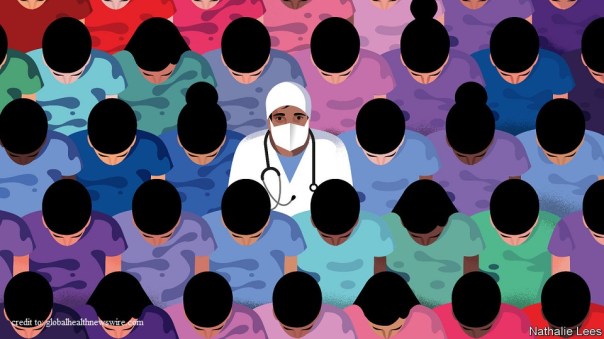
Because of the COVID-19, people are learning to care for each other. They are willingly sharing whatever they could for their fellowmen, helping them in any way they could. We are rediscovering the meaning of community. We are seeing people expressing their support and appreciation for the efforts of the doctors, nurses, and volunteers who are unselfishly putting their own lives in the line to try to save the lives of or at least alleviate the sufferings of the those who were infected by the virus.
The COVID-19 crisis is also making us realize what really are the basic essentials of life, the very basic things we need – food, simple clothes and shelter. What’s the use now of all our extra possessions – nice cars, expensive jewelry, and designer’s clothing?
The COVID-19 is reminding us as well of our mortality. It’s forcing us to rethink how are we treating our bodies. Are we taking good care of it to the point that we are eliminating disease as the possible cause of our untimely demise? This deadly virus is telling us that whatever are our pursuits and endeavors in life, we cannot afford to disregard our health.
Lockdowns enforced by governments reunited families. Yes, forcing us to stay at home brought us back to our family. We have never been closer to our loved ones than nowadays. Perhaps most of us finally realized that at the end we only have each other to rely on. The COVID-19 scare made us embrace our loved ones tighter than never before.
And there is one more that the current pandemic rekindled – spirituality. The COVID-19 brought us back not only to our family but also to God. The faith community have never prayed so hard supplicating Him to end the crisis. We have never seen believers praying unselfishly, praying not only for themselves and their loved ones and friends but for the rest of humanity… praying that may God give the leaders of all nations the wisdom and resolve to lead and protect their citizens in these critical times… praying that may He help the scientists and medical experts find in the soonest possible time the cure and develop the vaccine against this pestilence… praying that may He protect and strengthen the health professionals in hospitals and care homes helping the victims of the virus… praying that may He help the COVID-19 patients recover… praying that may He grant eternal repose to the souls of those who died because of the virus.
It’s sad that it is only in times of tragedy that we remember Him.
We know that God’s love and mercy for humanity abound. He will listen to our prayers… in His own time.
The one thing that we should not forget – it’s not the end of the world. It has not stopped spinning.
We have a life to live, with or without COVID.
On To My Seventh Year in South Korea

(A Personal Essay)
This year (2019) marks my seventh year here in South Korea. I am forever grateful to God for this opportunity, to Gyeoungju University where I taught in 2013, and to Hanseo University where I have been teaching since 2014.
When I decided to accept a job offer from a university here in South Korean way back in 2013, I was ready mentally, emotionally, physically, and spiritually – and of course professionally. I majored in English and I am licensed teacher. I didn’t come here not knowing what to expect and what to do.
I calculated the benefits I and my family would get from my being employed here (in South Korea) and weighed them against the challenges and sacrifices I need to face and make. There’s no measuring scale to determine if getting all those benefits was worth all the difficulties and hardships I could be contending with and the fact that I would be away from the warm embrace of my wife and son.
Some of my friends and loved ones considered my move as risky personally and professionally. I had a flourishing career as a school administrator and I might start from scratch again should my working in South Korea not turn out well.
I was aware of such risks but I know how to play my cards well. What I consider as my strongest suits are my strong faith in myself and in God. I fully know what I am capable of doing and I know how amazing is God’s grace. I never doubted my abilities, more so His grace.
What made my resolve to work here strong (aside from the personal reasons I mentioned in an essay where I explained why I decided to work in this country) was when I read the contract sent to me after passing the interview. It indicated a working period that is approximately 60% less than what is required in the Philippines yet the pay is (approximately) 300% higher than my pay at that time. More than the salary though was the difference in the number of hours that I would be required to render work – 12 hours of teaching and 4 hours of office. I could use the extra 24 hours (on top of the weekend) to pursue my other interest – writing.
But the downside was – I was not used to being away from my loved ones. I was not used to not seeing my wife and my son for a very long period of time. I also couldn’t cook and I hated doing the laundry and cleaning the house.
I was also told that homesickness and boredom could kill me.
But the die has been cast. My resignation as principal of that school at that time was irrevocable and so was my decision to pursue a teaching career overseas. Even the tears of my wife could not drown my resolve to accept the job offer of Gyeongju university.
And here I am… on to my seventh year as an ESL teacher here in South Korea. There’s no trace of regrets whatsoever for the decision that I made in 2013 to come over. I can say that I have gained tremendous personal and professional growth since that time. True enough I was able to use the spare time to write not only stories, poems, and essays but research works as well. I had the studies I conducted presented in international conferences and published in “indexed” journals.
Now I am maintaining two websites – Hardpen’s Portfolio and Mukahang Poet – where I publish my works in both English and Filipino. Had I not worked here, I doubt if I could have written those studies I completed and created and maintained my two websites.
I also learned to cook and I have no choice but do my own laundry and house cleaning.
What about homesickness and boredom?
I am too busy with my work and my writings that I could not find time to be bored. And when I am not working or writing, I either go to the gym or hike in the mountain or watch movies and NBA games.
And why would I feel homesick when upon waking up in the morning I would call my wife, either through Facebook messenger or Skype, and we talk all day and night when I am not busy working and during weekends. Even if we have nothing more to talk about we don’t end the video chat. That way I could see her and my son moving around our home while I also do what I ought to be doing. I could hear them talking, my dogs barking, and our neighbors’ roosters crowing and hens clucking. Hearing all the sounds in our neighborhood that I got accustomed to make me feel as if I’m home.
Consider this – we have approximately a total of 5 months off between the two semesters. That allows me to visit my family in the Philippines after every 4 months and two weeks and stay with them for at least 40 days. I just have to make sure that I would be able to attend the spring and fall commencement exercises. We’re paid for 12 months in a year which means that even during semestral breaks we receive salaries. That’s a huge blessing.
For those considering ESL teaching in countries like South Korea, Japan, and China, you wouldn’t regret should you try. Just make sure that you really are qualified to teach. It is a disservice to the teaching profession should you assume that because you could speak English you could teach it even if you are not trained to be a teacher.
English Proficiency of Tourism and Engineering Students In Two Asian Universities: A Comparative Study
The study I conducted on English proficiency, my first for 2019, was recently accepted for presentation in an international conference in Manila, Philippines.


Link to the study:
Having and Losing Mark Andrei
(THIS IS A TRUE STORY)

“Life is like a roller coaster ride.” I couldn’t agree more to whoever said that.
Yesterday, you saw people beaming with so much happiness laughing so contagiously and shaking hands or exchanging high fives with everybody around them. Today, the same people maybe crying a river in a desolate room smarting from the pains inflicted by something or someone. Tomorrow, what will it be? Nobody knows! They would have licked their emotional wounds and will emerge from that desolate room, learn to smile again and gradually laugh their way out of whatever bad experiences they had. If not, then we could surmise that they may have decided to stay in the shell of their grief and to plummet deeper in the unfathomable depths of despair.
Perhaps everything may depend on whatever twists and turns that were laid down by the grand designer of the tracks where our personal roller coasters run. We may desire all that we want to alter the course of our roller coasters and wriggle out of the undesirable whirls in the switchbacking tracks. But that’s impossible.
Eventually at a certain age, whether we like it or not, we begin to take control of our lives. That’s when the ride starts. Choose a car in the coaster train. There’s no turning back. All that we can do is to make sure that we’re buckled up. Expect the turns, ups and downs. Be ready to be twizzled and twined. Accept that you could not avoid the spirals and the slammers.
Generally, the way my roller coaster zipped through the tracks have both enthralled and frightened me. There were times, when I was younger, that I wished the joy I was experiencing wouldn’t end. There were moments also when I thought I would not be able to wiggle out of the depths of despair and sadness but my faith in God (that I believe exists) and my unwillingness to succumb to challenges kept me afloat.
One of the most difficult parts of my journey in the tracks happened a few days ago. (I wrote this in 2009, just two weeks after IT happened.) Those days in my life were both exciting and frightening. Perhaps that stage of my ongoing roller coaster ride – that chapter in my life – could have been the most emotionally draining and exhilaratingly suspenseful.
It happened when an angel dropped from the clouds and gave me the privilege of becoming his father (and my wife his mother) for seven days. That’s right – seven days only. I wanted it longer. But from up there in the roller coaster tracks where my car was (and up there I felt enormous joy). I was pulled down. That was a very steep slope. Then I felt passing through a twist and a turn and when my roller coaster made a sudden stop – the angel was gone.
What happened in those seven days?
Let me share what happened in each day.
Day 1: https://madligaya.com/2013/03/19/father-son-for-just-seven-days-1st-of-7-parts/
Day 2: https://madligaya.com/2013/03/22/father-son-for-just-seven-days-2nd-of-7-parts/
Day 3: https://madligaya.com/2013/03/23/father-son-for-seven-days-3rd-of-7-parts/
Day 4: https://madligaya.com/2013/03/28/father-son-for-seven-days-4th-of-7-parts/
Day 5: https://madligaya.com/2013/03/31/father-son-for-seven-days-5th-of-7-parts/
Day 6: https://madligaya.com/2013/04/03/father-son-for-seven-days-6th-of-7-parts/
Day 7: https://madligaya.com/2013/04/04/father-son-for-seven-days-last-of-7-parts/
Love At First Bite
I am a foodie. The extra pounds around my waist is a testament to that. So, when I came here (South Korea) I was excited to finally try the dishes which I saw only on television shows and in movies in my country.
The first food I ate here in South Korea was (drum roll, please)… biscuits from the Philippines. I wasn’t able to eat anything Korean immediately when I and sir Kenn (a fellow professor from the Philippines) arrived at the Busan International Airport. I was not thinking of food at that time. I was looking for at least a cup of coffee then, not because of hunger nor my usual craving for caffeine. I just wanted to feel something warm in my hands which started to go numb. It was freezing cold that morning and hunger was the least of my worries. The only thing I wanted was to reach our destination at Gyeoungju-si and wrapped myself up with the thickest of blanket I could find there.
My jacket wasn’t thick enough for my body to enjoy the early spring weather trying to give me an icy cold welcome. I didn’t have time to open my travelling bags because we had a bus to catch. It was my fault to believe what some friends back home told me that it’s not that cold here during spring. For a body used to either a hot or a VERY HOT weather, experiencing a negative two for the first time was literally a chilling experience.
As soon as I reached the apartment reserved for me by 경주 대학교 (Gyeoungju University), the first school where I worked here, I immediately unpacked and got myself another jacket. It was only when I was warm enough that I started to feel hungry and realized that I was actually a time zone away from my family. Back home, my wife would make sure that whenever hunger strikes there’s food I could grab from either the fridge or the table.
I waited for another day to officially get introduced to Korean dishes that I had the chance to see only on TV through the Korean dramas that Filipinos like me are so fond of watching. I found it amusing that aside from wishing me well for the Korean adventure I was about to embark on, my family and friends kept telling me that finally I would have a chance to try the legendary 김치 (kimchi).
Then finally the day came that something Korean would travel my digestive tract. I got that chance during the orientation for the university students held at the Concorde Hotel (Bomun Lake Resort, Bodeok-dong, Gyeongju-si, Gyeongsangbukdo). Of course, I was excited to meet my fellow professors from other countries and have my first encounter with Korean university students. But I was, I think, more excited to have my first dining experience in South Korea. What made it more exciting was the fact that after that night, the taste of kimchi would no longer be a mystery to me.
Right after the orientation, I joined the foreign professors and university officials and we all headed to the restaurant of the hotel. As we approached the dining hall, the ambrosial smell characteristic of hotel lobbies was replaced by a savory waft that was unlike any combination of aroma my sense of smell was used to. It made me hungrier and more excited.

There were four of us who shared one of the tables reserved. Already there (on the table) before we sat down were lots of 반찬 (banchan), or side dishes, mostly vegetables, including Korea’s “most-talked-about” kimchi.
I dived in. The first Korean food I tried was (drum roll again, please)… kimchi.
Despite my struggles with the chopsticks, I managed to pick a small chunk of this famous fermented cabbage. The smell, as I expected, was biting and pungent. Its tanginess was nothing new to me because in the Philippines there are items in our cuisine that I could say are perhaps more biting and more pungent than kimchi. What about the taste? It’s garlicky, salty and of course spicy. The first one I tried then had a combination of sweetness and spiciness. I was told that there are more than 100 known varieties of kimchi.
After my first bite, I immediately wanted more of it. Yes, I came to like kimchi. I don’t know why, let me just say that it was “love at first bite.” It is so hard to explain as to why I would consider meals incomplete without a serving of this side dish.

The main meal served was a kimchi-based dish called 김치 찌개 (kimchi-jjigae). Kimchi-jjigae is kind of stew where kimchi (preferably older or more fermented) is mixed with pork, seafood and diced tofu. I could handle spicy foods like this one. There are two problems though when I eat them. First, I sweat too much. Second and last, I probably would have up to two orders of extra rice. I was a little overweight when I came to South Korea. One of the things I set as goal when I came here was to get rid of the “belt bag.” With foods like kimchi-jjigae, I realized that night that losing weight is an impossible dream.
I completely abandoned my weight concerns when sir Randy, also a fellow professor from the Philippines, told me that the following day he would make me try 삼겹살 (samgyeobsal).
Ang Tatay Ni Juan
 Excited si Juan nang ama’y kinausap –
“Itay, sa wakas ay aking nang nahanap
Iibigin, ko’t pakakasalang dilag
Bukod sa maganda’y ubod pa ng sipag.”
Nangiti si mang Pedro anak niyakap
“Yes! Magkakaapo na ako sa wakas.”
At tinanong ng ama ang kanyang anak –
“Eh Juan, sino ba itong bago mong sweetheart?”
“Siya po’y si Helen anak ni aling Bebang
Sila’y nakatira sa kabilang kanto lang.”
“Anak, si aling Bebang bang nagpapakwan?”
“Opo itay… ‘yong madalas ninyong bilhan.”
“Naku anak, ako sana’y iyong sundin
Iyang si Helen ‘di mo pwedeng ibigin”
“Bakit po itay? Inyo ngang liwanagin.
“Anak si Helen… sa akin din nanggaling.”
“Itay… si Helen pala’y aking kapatid!
Talagang sa babae kayo’y malupit.
Si aling Bebang kayo ang nakabuntis,
Di ka nasindak sa mister niyang pulis.”
“Si Helen ay pilit kong kakalimutan
Si Joy na lang po ang aking liligawan
Mukha’y maamo’t maganda ang katawan
Siya’y anak ng kumpare ninyong si Teban.”
“Hep! Hep! Hep! Ikaw nga anak eh tumigil
Anak… kay Joy eh huwag ka sanang mang-gigil
Bunga din s’ya nang aking pagtataksil
Nang si kumare ay hindi ko napigil.”
“Ang liligawan ko na lang eh si Gracia,
Nag-iisang anak ni aling Maria.”
“Naku hijo, sorry, pero pasensya na,
Si Gracia’y galing rin sa aking semilya.”
Naglasing ng todo ang dismayadong Juan
Mga kapatid kasi ‘di pwedeng ligawan
Kaya’t ang nanay niya’y kanyang nilapitan.
“Inay…ako po ba’y pwedeng pagpayuhan?”
“Tatlong dilag… aking pinagpipilian
Isa sa kanila nais kong ligawan
Ngunit si itay ako ay pinigilan
Siya daw ang tatay ng mga naturan.”
“Inay si itay ika’y pinagtaksilan
Kataksilang aking pinagdudusahan.”
“Tama na anak pag-iyak ay tigilan
Itong sasabihin ko’y iyong pakinggan.”
“Si Helen at Gracia pwede mong ligawan
Tanging si Joy lang ang dapat mong iwasan.”
Eh bakit po inay? Pwede bang malaman?
“Anak… tunay mong ama’y si pareng Teban.”