Category Archives: Teaching in South Korea
Grace In A Foreign Land
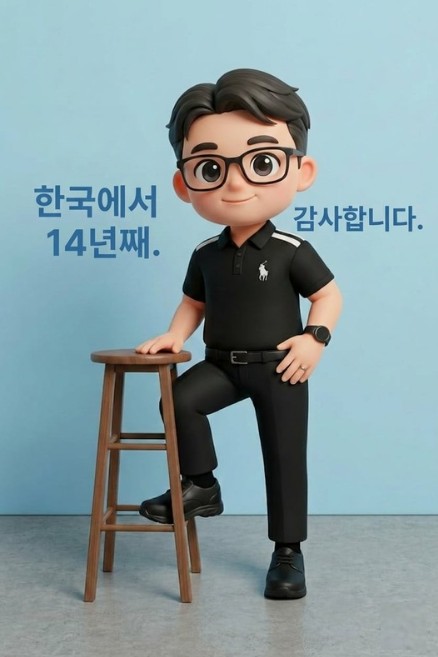
Today, I begin my 14th year here in South Korea.
Fourteen years ago, I boarded a plane carrying more than luggage. I carried questions. I carried fear. I carried unfinished conversations with the people I loved. And yet, above all, I carried conviction — the kind that whispers, Go. There is more waiting for you.
Time has a way of softening distances and turning foreign places into familiar ground. What was once unknown has become part of my story. What once felt like exile became expansion. And in all these years, I have come to understand that certain decisions do not merely change your address — they change your direction.
South Korea did not simply become my workplace; it became a refining ground. Here, I grew not only as an educator but as a thinker, a writer, and a man of faith. The classrooms sharpened my discipline. The solitude deepened my introspection. The unfamiliar culture stretched my perspective. This land became the platform on which I learned to rebuild, rediscover my purpose, and pursue excellence beyond the limits of my former comfort zone.
I thank the Lord for sustaining me through every season — through doubt, through growth, through silent battles no one else saw. And I thank this country for serving as the backdrop to one of the most defining chapters of my life.
But every long journey has a beginning. Every transformation has a first trembling step.
And mine began with a single day — a day marked by cold air, empty rooms, unanswered calls, unexpected kindness, and a faith that refused to collapse.
That first day in South Korea is something I will never forget.
It was in the early dawn of March 2, 2013 when I left the Philippines aboard Asiana Airlines. Around eight in the morning, the plane landed at Busan International Airport. At that time, Mr. Kenn Lachenal was with me. We were both headed to South Korea to teach English at Gyeongju University.
I admit that during that time, I was overwhelmed — not because of drugs, but because of the many thoughts about my loved ones and the anxiety over the new challenge I had chosen to face.
It was against my will to leave my loved ones behind, but it was necessary. I also did not want to step away from the school I had served as Principal for almost a year. Yet I have always refused to be ruled by my emotions. I did not want to avoid a decision simply because I surrendered to feelings. I carefully thought through my decision to go to South Korea to teach. It was not impulsive. It was part of my plans — a long-considered intention whose time had finally come. I would not allow my emotions to stop me.
It was not the desire for a higher salary that drove me abroad. I was already earning well as a principal. On top of that, I was working as an academic consultant at a technical school and as a part-time college instructor. Financially, I was stable. I had even built a house. The problem was this — I was no longer comfortable in my comfort zone.
I had grown weary of supervising teachers and employees. It felt stagnant — no longer challenging. Something was missing — something I longed to find. Personal issues that needed resolution did not help either. It became clear to me that I needed a radical change in my life if I wanted to preserve my sanity. I had to go somewhere new for a fresh beginning.
I felt as though I was at a dead end — yet I knew there was a world beyond dead ends. That was the world I wanted to reach… to explore.
As Jake Sully, the main character in Avatar, once said, “Sometimes your whole life boils down to one insane move.” Like Jake, though I felt fear, I was certain of my decision before I jumped to wrestle and tame my own “Toruk.”
I brought only two things with me to South Korea — self-confidence and faith in God. That combination has always been my shield against trials and my hook for reaching whatever I aspire to achieve.
I was not seeking luck in this country; I do not believe in luck. I believe that “God gives mercy, but man must act.” My purpose was to write a new chapter of my life here — a new phase in the destiny I believe I must draw for myself.
It was my first time traveling abroad, and I was fortunate to be with Mr. Lachenal. Aside from being helpful, he was experienced in overseas travel. Since we were both headed to Gyeongju University, I was confident I would not get lost.
When we arrived at Busan International Airport, I was shocked by the cold. It pierced through my jacket. I had assumed that since winter had ended and spring was beginning, the weather would be like Baguio. Thankfully, the bus we took to Gyeongju-si had its heater running. Though I was sleepy, I could not fall asleep during the ride. I kept looking at every place we passed. I said to myself, “Here I am in South Korea.”
After nearly two hours, we arrived in Gyeongju-si. Mr. Mark Celis welcomed us. He brought us to the apartments where we would stay — Mr. Lachenal to the “white house,” and me to the “blue house.” Not the White House of Washington D.C., nor any political residence in Seoul — those were simply the names given to the apartments provided by Gyeongju University for foreign professors. They were named after their paint colors. There was also a “yellow house” and a “green house.”
Before leaving, Mr. Celis ensured that my unit was in order and introduced me to another Filipino professor at Gyeongju University — Dr. Randy Tolentino, who also lived in the “blue house.”
When I entered my room, I felt for the first time what it truly meant to be alone — far from loved ones, in an unfamiliar place. I simply stood there, unsure of what to do first.
After regaining composure, I opened my suitcase and slowly arranged my belongings.
The surroundings were silent. I heard nothing but my own footsteps. I could even hear my heartbeat and the sound of my swallowing. After arranging my clothes and things, I suddenly felt the intense cold again — and hunger. The refrigerator was empty. There was a gas stove, but nothing to cook. I made do with the biscuits I had brought from the Philippines.
Then I remembered I needed to call my loved ones to inform them I had arrived safely. When I reached for my cellphone, I realized I had not activated roaming on my SIM card. I felt foolish. I cursed under my breath. I could not call anyone; my phone was nothing more than a music player.
I admit that at that moment, deep sadness overwhelmed me. I was still hungry despite finishing almost all my biscuits. I was shivering from the cold. The silence felt deafening. I was alone, with no one to talk to. I also worried that my loved ones were already anxious, waiting for news from me.
In that moment, I understood the true meaning of HOMESICKNESS — just hours after landing in South Korea.
But amid that sadness, I looked up to heaven and remembered that I had prayed many times for the chance to come to this country. I do not know why, but as far as I know, He has never ignored my prayers. I even wrote a poem about it in English — seven syllables only:
He answers.
Just wait.
Have faith!
I was about to lie down to drown my hunger and sadness in sleep when I heard knocks at my door. It was Randy.
He came in and talked with me. He was from Iloilo. At least I had someone to speak with now. While we talked, he looked at my stove and showed me how to operate it. He must have noticed I was cold, because he also taught me how to use the floor heater. I felt somewhat relieved by his help. He opened the kitchen drawers and found a few cans of food left behind by the previous tenant. He left briefly and returned with packs of noodles and some 3-in-1 coffee.
I was surprised by the generosity Randy showed, whom I would later call Sir Randy. It was as though he had known me for years. He stepped out again and returned, saying, “Come on, bro, my girlfriend has cooked. Let’s eat.”
I followed him to his unit. I was surprised, but I did not hesitate — not because I was desperately hungry, but because I felt the sincerity of his invitation. It would have been embarrassing to refuse.
The food was warm, but warmer still was the care shown to me by Sir Randy and his girlfriend, Nikki, who was from China. I was about to take my first bite when Sir Randy offered a prayer of thanksgiving. My respect for him deepened at that moment. At my first bite, tears welled up in my eyes — moved by their kindness and by how God answers prayers. When the couple looked at me, I casually said I must be catching a cold — that was why my eyes were watery. I do not know if they believed me.
After dinner, Sir Randy walked me back to my unit, carrying some cooked food. I said, “This is more than enough, bro!” He smiled and explained they were leaving for Daejeon and just wanted to make sure I had food until the next day. He then returned to his unit and brought me a pot, a pan, a kettle, and some coffee sticks. I did not know what to say. I wanted to hug him for all the help he was giving.
His kindness did not end there. When he learned I could not use my SIM card, he lent me one of his smartphones and his iPod before they left, and he kept his Wi-Fi open so I could use the internet. Our units were only meters apart, so I could access his connection from my room.
I had no words left. “Thank you” felt worn out from repetition. I wanted to hug him, but he was in a hurry to leave. After he stepped out of my unit, I simply closed my eyes and silently thanked Him. I am not a good person. I am weak and sinful. It is simply that the Lord is gracious and loving to those who call on Him.
I am truly fortunate that on my very first day in South Korea, I met friends like Randy and Nikki. They are more than friends — they are siblings from different wombs. They are the reason my first day in South Korea is so special.
Randy and Nikki are living testimonies of God’s goodness.
My Continuing Journey In South Korea
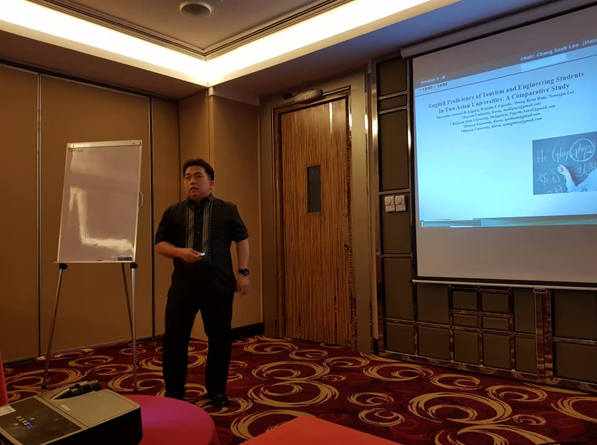
When I quit my job as a school administrator in Bulacan to pursue ESL teaching in South Korea, my loved ones and friends strongly advised me to reconsider. They reminded me that I already had a solid career in the academe in the Philippines, and the pay was decent. But as Jake Sully says in the movie Avatar, “Sometimes your whole life boils down to one insane move.”
So, in 2013, I flew to South Korea. But it wasn’t an insane move, rather a calculated risk. I have no regrets, as coming here was one of the best decisions I’ve made in my life. Working here has been an enormous blessing. This country is a beautiful place to live. When I arrived, I could confirm the impressions created by the Korean dramas and movies I had watched. Indeed, South Korea is progressive and beautiful, and its citizens are competitive, hard-working, and health-conscious.
Beyond providing financial stability for me and my family, my time in South Korea has fostered tremendous personal and professional growth. The working conditions at the university where I am currently employed are excellent. At first, I could hardly believe that I only needed to work less than 20 hours over four days. We must work only seven months but are paid for the entire year. This arrangement has given me ample time to connect virtually with my family and pursue my other passion—writing. Additionally, our university offers performance points and cash incentives for research projects, further enhancing my love for writing.
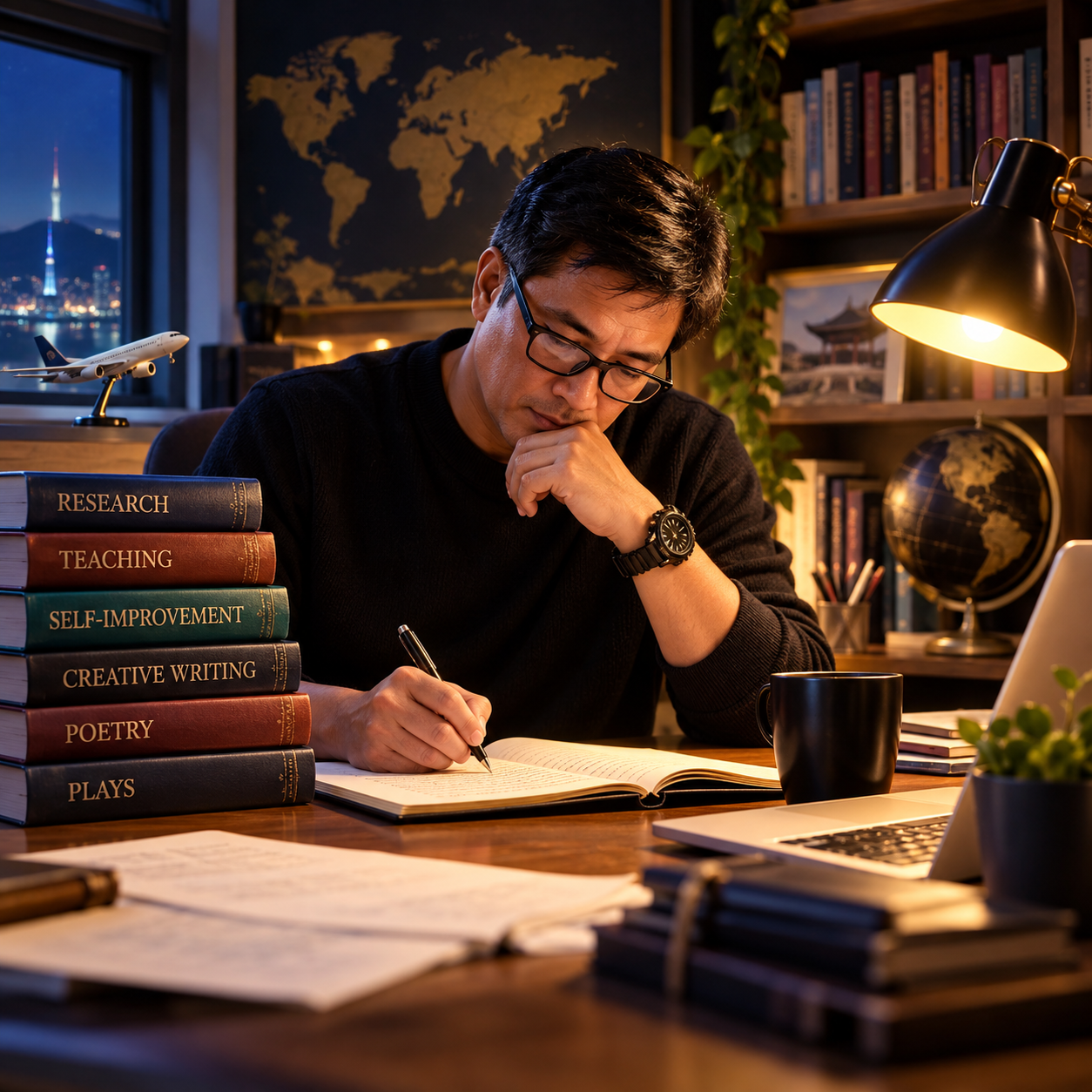
I mainly teach English subjects. There have been semesters when I was asked to teach at the graduate school and serve as an adviser to graduate students working on their dissertations. When I’m not engaged in academic work, I dedicate time to writing stories, poems, plays, and scholarly studies, many of which are published on my personal website. Several of my research studies have been presented at international conferences and published in internationally indexed journals. I have genuinely found fulfillment as a writer in this country.
I can’t imagine having any other “job cum hobby” besides teaching and writing. You may ask why. As Seth Godin said, “Do what you love and love what you do.” What I do and love is teaching, and what I love and do is writing. I use the expression “job cum hobby” because, when I engage in these activities, I don’t feel like I’m working; it feels more like pursuing hobbies.
My greatest challenge as a teacher is overcoming the cultural barrier between myself and my Korean students. I address this by building a good rapport with them and diligently fulfilling my responsibilities. Being a Filipino in ESL/EFL teaching places me and my fellow countrymen at a disadvantage. There is a common misconception that only native English speakers can teach the language, and even some of our Korean students believe this. It is something that Filipino English teachers like me must work to dispel. If I were to identify my most significant contribution as a Filipino in my profession, it would be demonstrating to the academic community in South Korea that one doesn’t need to be a native English speaker to be an effective ESL/EFL teacher.
I can’t think of anything negative about my current job; I have nothing but gratitude. I enjoy a harmonious relationship with my coworkers, both Korean and foreign. Although I occasionally clash with fellow foreigners over policy matters and work attitudes, we adhere to the principle of disagreeing without being disagreeable, which helps us maintain mutual respect.
My best advice for my fellow Filipinos working in South Korea is to work hard and respect everyone. Hard work leads to success as expat workers, while respect for others, regardless of citizenship, helps them stay out of trouble. It’s also important to abide by the laws of our host country.
Reflecting on my 12 years here, I see that what began as a leap into the unknown has become the most fulfilling chapter of my life. Teaching and writing—my two greatest passions—have flourished in this country. Embracing new challenges reminds me why I took that “calculated risk” in 2013. South Korea has provided me with opportunities to improve my overall well-being and has reaffirmed my belief that staying true to what you love leads to rewarding outcomes.
South Korea: Celebrating My 10th Year
On to my 10th year here in South Korea. This country has been a huge… huge blessing to me, personally and professionally.
Thank you Lord. To You be the glory!
This video shows a few glimpses of my 10 years in this country.
South Korea: In the Eyes of an Expatriate (3)
(Last of 3 parts)

I really tried hard to figure out what happened. What went wrong for my country and conversely, what did the South Koreans do correctly? To think that in the 1950s, while my country was soaking in the glory of being Asia’s second strongest economy, the Korean peninsula plunged into a devastating war.
I tried to probe deeper into this nation’s history to find the answer to the following questions: 1. How were the South Koreans able to slay the ghosts of a bitter colonial past?; 2. How did they survive the devastation wrought by the Korean war?; and 3. How did they triumph over internal political turmoil while at the same trying to ward off a belligerent neighbor in North Korea?
How were the South Koreans able to accomplish all of the aforementioned then eventually catapult themselves to their current lofty position in the global community?
Then I found out what the South Koreans did in 1998 at the height of the Asian financial crisis. They willingly donated their gold – jewelry (including their personal wedding rings), medals and trophies, good luck keys, and what have you. This they did to save their economy during that crisis. The collective weight of the gold they donated may not be that much. But more significant than the corresponding monetary value of their donation was the willingness of the South Koreans to make a personal sacrifice for their country. I call that nationalism. If it’s not then I don’t know what is. It is the same sense of nationalism that emboldened them to resist one military junta after another… to sacrifice their lives and limbs to lay the democratic foundations of this country which eventually became a fertile ground that nurtured the economic prosperity they are currently enjoying.
I also learned about the collectivist culture of these people. They think first of the general welfare over and above their personal interests. This I witnessed first-hand when I saw how the South Koreans willingly obeyed the restrictions set by their government during the early onslaught of Covid-19. There was no need for their leaders to implement a “hard lockdown,” the way other countries did, including mine. The citizens just strictly wore their masks, observe social distancing, and avoided leaving their homes unless it was necessary. They are willing to sacrifice for the greater good.
I think I found the answer to what enabled the South Koreans to attain prosperity and stability – the combination of their nationalism and collectivist culture. I may be wrong but I could not really see any other possible reasons for their success as a nation. There is nothing more potent of a mix for nation-building than the combination of the two. And if they keep using this formula, the future of this nation is secured.
Other expatriates living in this country may not see things here the way I am seeing them. To them the observations I made may not be a big deal. To me, given the situation in my country now, they are.
If only my countrymen would consider including the South Korean model of nationalism and collectivism among the things from this country that we allow ourselves to be influenced by. We should try to find out if we could also propel our own native land to greatness if we would try to emulate the way South Koreans profess their love for their country. We need to see if we could also make our country better if like them we would put the greater good over and above our personal interests.
We copied hook line and sinker (Or was it forced down our throats?) the socio-political and economic models of our colonizers and we are not getting desirable results. Obviously, our needle of success as a nation is barely moving. We have been trying to fit our colonizers’ square peg into our round hole. It’s not working. It’s time for us to rethink our strategies for nation building. Why don’t we try the South Korean model? Let’s see what will happen if we embrace, not only K-dramas, K-pop, and kimchi but also the values that brought the South Koreans to where they are now.
South Korea: In the Eyes of an Expatriate (2)
(2nd of 3 parts)

I started mingling with real Korean people – real men and women and not fictional characters. I dined with them, drank their wine and beer, ate their kimchi and their delicious dishes, and spoke (a little) of their language.
I witnessed their way of life and even adopted some parts of it. I saw what’s inside their houses, their theatres, their bars, restaurants, and coffee shops. I have entered their museums, strolled in their parks, and hiked in their mountains.
Through daily encounters with my Korean students, colleagues, and friends, I was also able to probe into their character. I confirmed that just like what I saw in their dramas, South Koreans fall in love, get angry, feel sad and happy, and suffer from anxiety and stress. In short, just like me or any average human being from any part of the world, they also ride the roller coaster of emotions. They do have strengths and weaknesses too. They are not faultless… like me. Anyway, nobody is. They also have fears and uncertainties. But just like me and anyone else, they have dreams and ambitions. They have plans and a vision of a good life in the future for themselves and their families.
I discovered more. I found out that their prosperity is not a myth. Those things I saw in Korean dramas and movies that indicate how progressive and modernized their country is are not fictitious. Their provinces, cities, and towns are effectively interconnected by impressive highway systems that how I wish we could also have in my country of origin. How I wish that our telecom companies could provide us with internet connectivity as fast as South Korea’s.
With everything that I have seen and experienced, I could not help but compare this country to mine. I could not help but be envious of the South Koreans for what they have accomplished as a nation. As I stayed here longer, my “How I wish!” list grew longer. How I wish that in my country, packages could be left in front of our doors, even for days, not fearing that somebody would steal them. How I wish we could also send to prison our politicians who would be found guilty of wrongdoings without fearing that when a political ally would become the next president they would be granted a pardon. How I wish we would take research as seriously and meticulously as the Koreans do.
Whatever metrics I used for the comparison, it was a mismatch with this country always ending up on top after all the comparative analyses I performed except for this – my country has a younger population where the median age is less than 26 years. For this country, it’s more than 40 years. I will no longer be citing other statistics like those of life expectancy, GDP, and international ranking of universities. South Korea’s numbers are far more superior to my country’s.
In addition, South Korean students perform better in Math and Science as compared to the youth of my country. If there is any consolation though, I and my countrymen scored higher in English proficiency.
But does it matter if we in our country are better at English? Does it make my country better than South Korea? The answer is obvious – NO. There is no direct correlation between a country’s English proficiency and its economic performance. If there is, then why does this country, as of 2021, rank as the world’s 10th biggest economy while mine barely made it to the list of newly-industrialized countries?
Don’t get me wrong, I am not putting my country down while I am seemingly extolling South Korea. I love the country where I was born and I am proud to be its citizen. I am just wondering how come this country has gone this far leaving my native land way behind in the race to prosperity and stability.
My desire to figure that out led me to read more about the history of this country. In the process, I discovered certain uncanny similarities between our historical experiences. Both South Korea and my native land are colonized nations and earned independence after the second world war. Both countries embraced the democratic form of government thereafter. Additionally, just like in my country, the development of democracy here in South Korea was interrupted by military takeovers, and what a coincidence that martial law in our countries was declared both in 1972. Was it also a coincidence that powerful military leaders in both countries were removed via popular revolt in the mid 1980s?
Unfortunately, the similarities in the historical development of this nation and mine stop there. We took different paths in building our nations from the ashes of colonization, the second world war, and military juntas.
South Korea: In the Eyes of an Expatriate (1)
(1st of 3 parts)
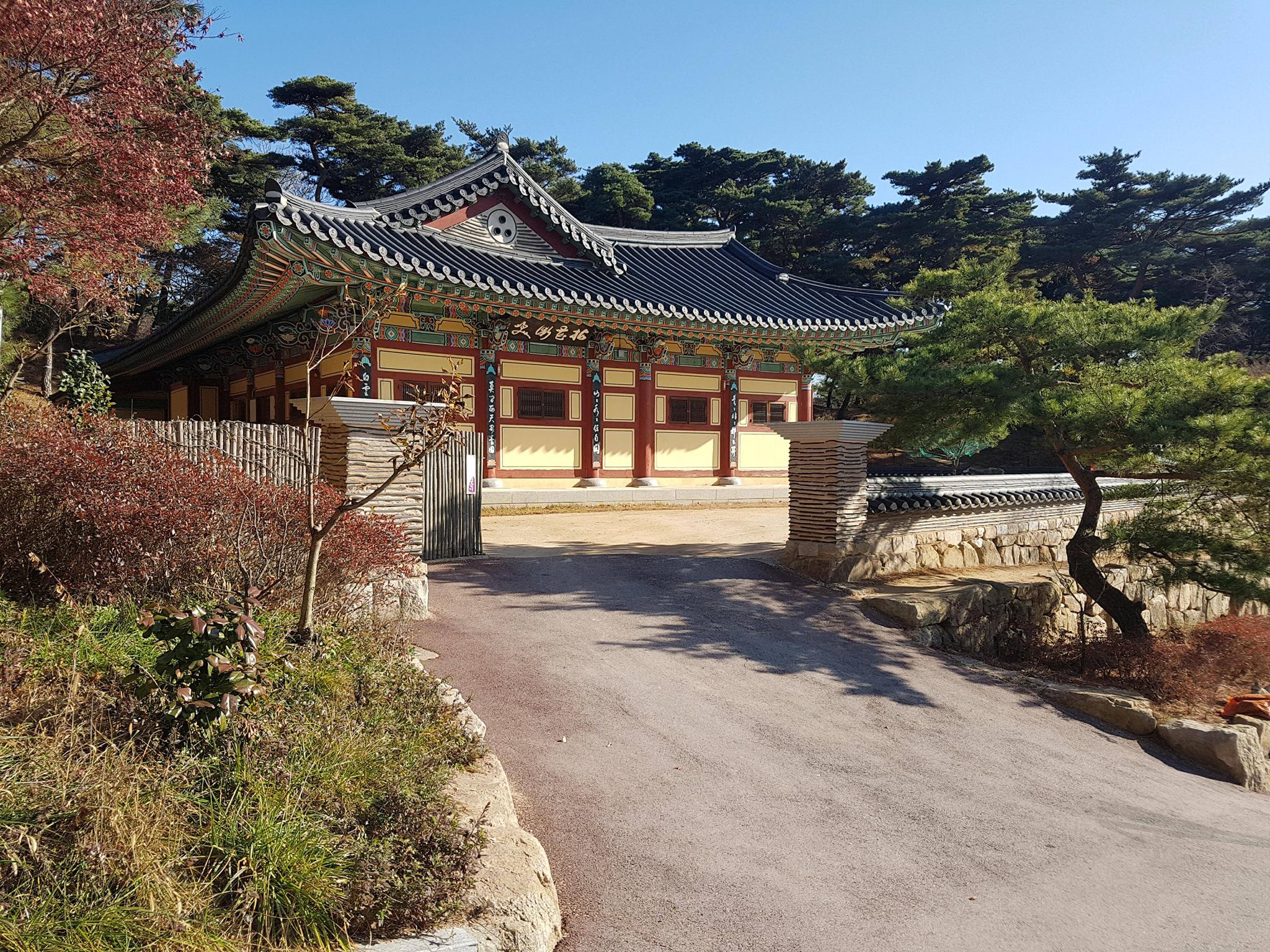
South Korea entered my consciousness through Hallyu – a term that when translated to English means Korean Wave. And yes, when that cultural wave reached our shores, South Korean dramas, movies, and music drowned the country’s airwaves. Local magazines and the entertainment sections of newspapers regularly featured K-pop artists and other Korean TV and movie personalities. Before long, other aspects of Korean culture – food, fashion, lifestyle, and what have you – started to deeply influence me and my countrymen.
Before the Korean Wave came, I knew not much about South Korea. I remember checking the encyclopedia for information about the Korean war when I took World History when I was a college student. It was only then that I found out that my country was one of those which sent troops to help this country to ward off the Communist invasion from north of its borders.
Just imagine how dreadful a picture of the war-torn Korean peninsula the things that I read created in my mind. It was horrible, to say the least. The death and destruction were too much to bear.
But before I graduated, I had another chance to check the encyclopedia for more information about South Korea when the country hosted the 1988 Summer Olympics. Because of the said sporting event, South Korea was all over the news. That triggered my curiosity thus I checked the encyclopedia to once again read something about the said nation.
I saw a country different from what those pages about the Korean war presented to me. I found out that the nation called “Land of the Morning Calm” rebounded from the horrors of the Korean war and eventually became very progressive. Then I wondered at that time and asked – “What did the South Koreans do that enabled them to, like the legendary Phoenix, rise from the ashes of a horrendous war at that time and even became only the second country in Asia to host the world’s biggest sporting event?”
As years passed, I learned more and more about South Korea, not only through traditional media but more from the Internet (which became more accessible than when I was in college). I got to see more and more Korean dramas. It made me, just like many of my countrymen, want to visit the country so bad. I wanted to visit the places in the country that I got to see only on TV programs and movies. I wanted to try soju and maekju and when the two are combined – somaek. I wanted to taste kimchi and eat Korean dishes prepared and served by Koreans. I wanted to try bibimbap, pyo haejangguk, and kalguksu served with plenty of banchan in a restaurant in South Korea, not in a Korean restaurant in my native land. I wanted to meet real Korean people. In short, I wanted to have an authentic Korean experience. I personally call that my “Korean dream.”
That urge became stronger when I enrolled in the program Teaching English to Speakers of Other Languages (TESOL). South Korea was mentioned by the program coordinator as one of the countries considered as premiere destination for ESL teachers. Thus, since teaching overseas is an option in the career path I set for myself, I thought that if I would teach abroad, why not in South Korea? My “Korea dream” suddenly expanded – I no longer just wanted to have an authentic Korean cultural experience but to live and work in this country.
Then I did what I had to do for that “Korean dream” to come true. I left no stone unturned.
My persistence and hard work eventually paid off. My wish was granted. I was given the opportunity to live that dream when a university hired me as a teacher. So, off to South Korea, I flew.
As soon as I exited Gimhae Airport, I started having that authentic Korean experience. The early spring weather giving me an icy cold welcome got it going.
As days and weeks passed, I gradually immersed myself into the country’s culture. I was no longer just watching the people of this land from the television set, the silver screen, and the World Wide Web. It’s no longer a Korean drama I was watching but it’s real Korean life I was experiencing… from reel to real. I got what I wanted.
Why Did I Decide To Come To South Korea?
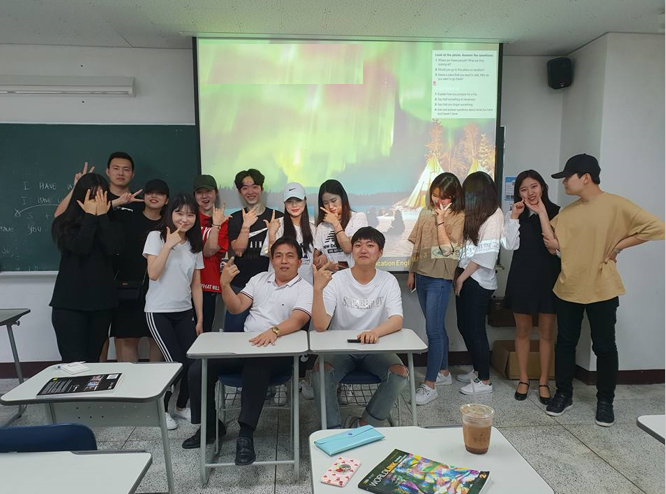
As my 9th year here in South Korea started a few days ago, I tried to recall what made me want to come to this part of the world. It was not fate that brought me here. It was a conscious decision made after many nights of contemplation and prayers.
So, why did I travel to the Land of the Morning Calm?
The reason I decided to venture into ESL teaching here in South Korea was not that there were no teaching jobs available in the Philippines. As a matter of fact, I had to cut short my work in my country back in 2013 to come here. At that time, I was employed as Principal of a basic education institution. To earn extra, I also worked as a part-time college instructor and as an academic consultant in another school.
I had no problem finding jobs in the Philippines.
So, what made me decide to teach here?
Firstly, I suffered from severe “job burnout”. I got so tired of being a school administrator and a teacher at the same time. I desired to go back to full-time teaching.
I started doing supervisory works in 1994 at a technical-vocational institution. I resigned in 2002 then moved to another school, a Catholic tertiary institution, where I was offered a supervisory position – head of the Education program. From there I became a college dean in another school then principal in a basic education institution. From 1994 to early 2013 I was a school administrator and a teacher at the same time.
I really got tired of supervising people and doing administrative works. I felt sick about it. I felt sick with the politics involved in supervising and managing employees. My last two years as a school administrator were terrible and horrible, particularly the penultimate one. How I wish I could go into details.
I wanted to go back to just being a teacher. That’s the reason I applied for a teaching job in South Korea. I was hired. My getting hired also proved that the notion “that only native speakers of English could (and should) teach ESL in South Korea” is but a myth. The truth is some of them could not and should not teach.
It was that “job burnout” that got me seeking for a job opportunity overseas. Not that I wanted a greener pasture. I would be branded a hypocrite if I say I don’t need higher pay. But I was somewhat satisfied with the salary I was receiving at that time. It was good enough that I and my wife could save then, later on, buy a small parcel of land and had a house built. My family and I could even enjoy some of the luxuries in life, travel if we wanted.
Of course, I was (and more so now) happier and more satisfied with my monthly pay in this country when I came. Who wouldn’t be? It’s roughly 75% higher than what my Pakistani employers paid me in the Philippines and with me having to work 60% less in terms of hours. Do the math. That basic (K to 12) education school where I was Principal is owned by Pakistanis operating a vast network of schools (The City School) in Pakistan and some parts of Asia.
At that time I felt that I was at the crossroads of my career. I have to admit that there was some kind of dissatisfaction within me. Burnout torched my soul and I was really unhappy. There was something missing.
Then came the opportunity to teach here.
When I got settled, I finally figured out what was missing. Because I was so busy with my administrative functions and was teaching at the same time, I was not able to attend to my other passion…WRITING.
In the Philippines, being a school administrator and teacher at the same time require that you stay in the workplace, officially, for 8 hours a day. But most of the time, I would stay way beyond that, even if I wasn’t required to. It was just something that I felt I ought to do. Sometimes I would even go to my office on Saturdays and Sundays. With that hectic schedule, I could hardly find time to write poems, essays and stories… much less do research.
That’s what makes teaching in South Korea different (and a blessing) for me. It allowed me to have a lot of spare time which I could use to write. I was even able to write papers for presentations in international conferences and for publication in international journals. Something that, unfortunately, I couldn’t do in the Philippines. Back there I would be lucky if in a month I could write even just a single poem. Here, after 8 years, I have written a lot, as in hundreds of them. I had them published in my two websites (madligaya.com and chingligaya.wordpress.com). I even found time to pursue my interest in personal growth and development. And that worked more wonders for me.
ESL teaching is part of the career-path I paved for myself. I really trained and prepared for this. As early as 2009, I was already thinking of coming to this country to become an English teacher. I applied also to schools in the Middle East but it was my dream that I would be given the opportunity to do ESL teaching here. After my rejections by 2 universities in the Middle East, I didn’t lose hope of eventually landing a job as an English teacher overseas. True enough, in 2013, a university here in South Korea, believed that I have the necessary qualifications to teach English.
I did not become an English teacher overnight or by accident. I did not teach because there are no other jobs available. I chose to be a teacher.
I am a licensed English teacher in the Philippines. I passed the Licensure Examination for Teachers 2003. I was required by the RVM sisters to take it (and I am thankful that they did.) Then in 2010, notwithstanding my busy schedule, I enrolled in a certification class in TESOL (Teaching English to Speakers of Other Languages).
My second (and last) reason for deciding to try teaching here (South Korea) has nothing to do with my career. At that time I was journeying to midlife. Midlife crisis is a real thing. It isn’t a myth. There were some personal demons that I had to slay. It’s too personal to share. Let me just say that I am not proud of those decisions I made during those times. Suffice it to say that I needed space. I needed that entire space between the Philippines and South Korea to really get my bearings back… to bring back sanity to my existence. Let me just concude this paragraph with this… Romans 8:28.
Then my efforts paid off and my prayers answered. I was hired by a South Korean university in 2013.
God is really good. I got what I wanted… just teach and no more supervisory works. That gave me a lot of time to write. I was also able to squeeze myself out of that personal crisis and take the road to self-improvement more seriously. I wouldn’t have not done so had I opted to just stay in that principal’s office in the Philippines.
My journey as a teacher continues. This is my 33rd year as a teacher – 24 years in the Philippines and on to my 9th year here in South Korea.
As Seth Godin said, “Do what you love and love what you do.”
What I do that I love is writing and what I love that I do is teaching.
To God be the Glory!


 M.A.D. L I G A Y A