“Love at First Bite”

What’s the first food I ate here in South Korea? It’s biscuits (Skyflakes). No! I’m not kidding. I wasn’t able to eat any Korean food immediately when I and sir Ken (a fellow professor from the Philippines) arrived at the Busan International Airport. I was not thinking of food at that time. I was looking for at least a cup of coffee then, but neither because of hunger nor thirst. I wanted to feel the heat of the cup of coffee on my hands which started to go numb. It was freezing cold that morning on the 2nd of March, 2013 and hunger was the least of my worries. The only thing I wanted was to reach our destination at Gyeoungju-si and wrapped myself up with the thickest of blanket I could find there.
My jacket was not thick enough to minimize the effects of the early spring weather trying to give me an icy cold welcome. It was my mistake to believe what some friends back home told me that it’s not that cold here during Spring. For a body used to either hot or VERY HOT weather, experiencing a – 2 for the first time was literally a chilling experience.
As soon as I reached the apartment reserved for me by 경주 대학교, the first university where I worked, I immediately unpacked and got myself another jacket. It was only when I was warm enough that I started to feel hungry and realized that I was actually a time zone away from my family. Back home, my wife makes sure that whenever I’m hungry there’s food I could grab from either the fridge or the table. When I flew here, she stuffed my travelling bags with lots of food. So, officially, the first food I ate when I got here were biscuits.
I waited for another day to get introduced to Korean dishes that I had the chance to see only on TV through the Korean dramas that Filipinos like me are so fond of watching. I found it amusing that aside from wishing me well for the Korean adventure I was about to embark on, my family and friends keep telling me that finally I would have a chance to try the legendary kimchi.
Then finally the day came that something Korean would travel my digestive tract. I got that chance during the orientation for the university students held at the Concorde Hotel (Bomun Lake Resort, Bodeok-dong, Gyeongju-si, Gyeongsangbukdo). Of course, I was excited to meet my fellow professors from other countries and at least have a glimpse at how Korean university students look like and how they behave and talk. But I was, I think, more excited to have my first dining experience in South Korea. What made it more exciting was the fact that after that night, the taste of Kimchi would no longer be a mystery for me.
Right after the orientation, I joined the foreign professors and university officials and we all headed to the restaurant of the hotel. As we approached the dining hall, the ambrosial smell characteristic of hotel lobbies was replaced by a savory waft that was unlike any combination of aroma my olfactory receptors were used to. It made me hungrier and more excited.

There were four of us who shared one of the tables reserved. Already there (on the table) before we sat down were lots of 반찬 (banchan), or side dishes, mostly vegetables, including Korea’s “most-talked-about” – 김치 (kimchi). Yes…the first Korean food I tried was kimchi.
Despite my struggle with the chopsticks, I managed to lift a small chunk of this famous fermented cabbage to my mouth. The smell, as I expected, was biting and pungent. The tanginess was nothing new to me because in the Philippines there are items in our cuisine which I could say are perhaps more biting and more pungent than kimchi. What about the taste? It’s garlicky, salty and of course spicy. The first one I tried then had a combination of sweetness and spiciness. I was told that there are more than 100 known varieties of kimchi.
After my first bite, I immediately wanted more of it. Yes… I fell in love with kimchi. I don’t know why, let me just say that it was “love at first bite.” It is so hard to articulate as to why each time I eat I want a serving of this side dish.
The main meal served was a kimchi-based dish called 김치 찌개 (kimchi-jjigae). Kimchi-jjigae is kind of stew where kimchi (preferably older or more fermented) is mixed with pork, seafood and diced tofu. I could handle spicy foods like this one. There are two problems though when I eat them. First, I sweat too much. Second and last, I probably would have up to 2 orders of extra rice. I was a little overweight when I came to South Korea. One of the things I set as goal when I came here was to get rid of the “belt bag.” With foods like kimchi-jjigae, I realized that night that losing weight is an impossible dream.
I completely abandoned my weight concerns when Randy, one of my fellow professors from the Philippines, told me that the following day he would introduce me to 삼겹살 (samgyeobsal).
Oh C.M.
 Oh C.M.
You’re strong,
but sweet.
You lift me up.
You make my heart beat fast…
You gave me sleepless nights.
They say you’re no good for me.
Thus I tried hard to avoid you,
against my will.
I succeeded!!!
But just briefly,
Because one day… that familiar scent,
Shattered the promise I made,
To never fall again under your addicting spell.
So down I went to the coffee shop,
Where I first met you.
I was excited oh C.M.,
To have my soul,
Enslaved again by your fullness…
Twisted by your sweetness.
There in the coffeehouse
I told the server
“C.M. please!”
“And what’s that sir?” She asked.
“Caramel Macchiato!!!” I replied.
Source: Oh C.M.
On Being A Poet

It’s not easy.
For me, the literary genre most difficult to produce is the poem. Imagine putting together the elements of meter, rhyme scheme, sound and imagery… weaving your words together metaphorically and figuratively.
My best poems are written in Filipino. I’ve been trying to write good ones in English but I have to admit it’s a mighty struggle. I’m not sure if for example the following quatrain makes sense:
Whisper your woes on the flicker
Cover it with dried leaves and twigs
Whisper till the flame grows taller
Let it burn your anguish and grief
I have no problem with free-verse but my dream is to walk gloriously the “rhymed” and “metered” path while holding the hands of either Erato or Euterpe.
One time I tried to mix Greek mythology and poetry and this is what came out:
Writing stories is just as difficult because mixing in a bowl the elements of fiction within the bounds of the plot is not a walk in the park. But fiction writers have the luxury of using a lot of pages to serve their purpose. Leo Tolstoy needed more than half a million words for his novel “War and Peace.”
Conversely, a poet has a single page, sometimes not even the whole of it, to capture vivaciously and vividly the emotions and thoughts pervading within or around him. The Japanese, through their Haiku, would do it in a single-stanza poem with three lines consisting of a total of 17 syllables.
What adds difficulty when poets thread the rhyme zone is that they can not walk the path of sadness while wearing a smile. Neither can they frolic in the lake of happiness while riding the canoe of sadness.
Pain begets pain, joy engenders joy. This is seemingly the prevailing mood in the realm of poetry. Rare are the crying clowns who can masterfully inject sadness into the veins of their poems while they are cracking a joke.
The melancholic lyre sounds best when played by a poet who in one way or another licked some emotional wounds sometime ago in a desolate room. On the other hand, the trumpet of merriment can best be blown by a poet who has journeyed the clouds of ecstasy.
But life is a masterful musician who teaches poets to play both the melancholic lyre and the trumpet of merriment. Life enables a poet to play any of the said instruments at any given time.
If a poet intends to paint his canvas with gloom then he can easily prick an old emotional wound until it bleeds sadness. He can walk down memory lane and revive the pains inflicted by either a person or an event he would rather forget. That’s not masochism but rather a form of sacrifice, the poet ought to feel what he intends to write.
If it is the rainbow needed in his canvass then exactly the opposite of the foregoing he must be doing.
That‘s the beauty of being a poet. Poets can switch with ease to any emotions that they desire. Like an actor in a theater, crying one moment then in a jiffy burst into laughter.
Sometimes poets get misconstrued. When a poem tackles sadness and regret for losing someone the readers would think that the poet still loves and wants that someone back. Worse, the person who felt alluded to may either be excited or feel vindicated.
Lest we forget that poets are men of arts who write for art’s sake. Undoubtedly, they draw inspiration from someone or something. They need a motivation in pursuance of their art. But as it is, the end is the art and the motivation is but the means to achieve the end.
And what is the reward the poet receives for writing a poem? The reward is the poem itself. No reward can be sweeter than the poem that the poet chisels into perfection.
As to whether or not a poet who writes a poem of gloom and bewail is sad and regretful, only he knows. Who knows it may be Melpomene who visited him in his dreams.
Source: On Being A Poet
Kabilin-bilinan ng lola…

Heto na ang mga matalinhagang payo ni lola na pinadaloy sa apatang taludturan. Patula kang pagpapayuhan ng lola. Sundin mo ito kung ayaw mong mahagupit sa puwit gamit ang mabilog at mahabang sanga ng bayabas.
Simulan mong basahin…patikim-tikim. Pilitin mong gustuhin… ang mga payo ni lola. Hangga’t ang mga payo n’ya sa isip mo humukay ng malalim… hangga’t mahirapan ka nang tanggalin. Parang bisyo. Hala sige… LAKLAK na.
————————————————
 INGGIT NA EH GALIT PA…
————————————————
Pakawalan mo na ang kimkim na galit
Iya’y anay na sumisira ng isip.
Ibuga sa hangin nalanghap mong inggit
Lason iyang papasikipin ang dibdib.
_____
H’wag manibugho sa kapitbahay na mayaman,
H’wag piliting sumabay sa kanyang pamantayan.
Gumasta ka’t pumorma ayon sa kakayahan –
Sa biyayang meron ka matutong masiyahan.
_____
Pababa ang paa nila’y h’wag hilahin,
Bagkus kamay nila’y pataas batakin.
Inggit at galit sa limot ay ilibing,
Tagumpay pwedeng sabay ninyong abutin.
_____
Galit parang naglalagablab na uling,
Kapag ‘di bibitiwan puso’y papasuin…
Kapag sa dibdib patuloy na kinimkim,
Katahimikan ng isip tutupukin.
_____
Kapag ang kapatid may biyayang nakamit,
Nanggagalaiti ka ba mata’y naniningkit?
Nagdadabog ka ba dibdib ay naninikip?
Sa ganyan ang tawag ay… matingding inggit!
_____
Ang inggit ay parang batong nakadagan sa isip.
Galit nama’y parang tinik… nakabaon sa diddib.
Mga ito’y hadlang upang ikaw ay matahimik…
Kapag ‘di maiwaksi ligaya’y ‘di makakamit.
_____
Maging masaya, kapag kapwa mo ay nagtagumpay
Magalak na narating, pangarap nilang pinanday
Huwag dahil sa inggit, sa sahig ika’y maglupasay
Bumangon ka at mangarap, pilitin ring magsikhay.
————————————————
SA MAKAKATING DILA…
————————————————
May isang hayop mailap at mabangis.
Ito’y dila mong nasa loob ng bibig.
Kontrolin mo yan… itali ng mahigpit
Nang hindi magulo, buhay mong tahimik.
_____
Dila nati’y matalas parang patalim,
Napakadaling manugat ng damdamin.
Kaya nga’t anuman, ang nais sabihin
Pag-isipang mabuti, bago bigkasin
_____
Bakit kapintasan laging sisilipin –
Kung may maganda namang pwedeng purihin.
Bakit pagkukulang pilit hahanapin –
Ngunit ang kabutihan ayaw pansinin.
_____
Kawikaang kapag makikitid ang utak…
Tao ang paksa kapag sila ay nag-usap,
Sa saliw ng tsismis sila’y umiindak,
Makakating dila’y makasira ang hanap.
_____
Bakit parang ikaw ay nasisiyahan?
Kung ang kapwa-tao mo’y sinisiraan.
Bakit parang ika’y naliligayahan?
Kapag iba’y nakalasap ng kabiguan.
————————————————–
IKAW NA PERFECT…!
————————————————–
Mataas mang antas sa buhay narating…
Ilan mang kurso kinaya mong tapusin…
Matalino ka man maganda o magaling…
Wala kang karapatang kapwa ay hamakin!
_____
Sariling kahinaan bakit ayaw tanggapin,
Ikaw na ang nagkulang ayaw mo pang umamin.
Kadalasan kasi na sa sarili ang tingin,
Ay walang bahid-dungis at walang kasing-galing.
_____
Aming salaming nakasabit sa dingding,
Samo ko ay laging ibulong sa amin,
Na dungis ng iba ay bago punahin…
Uling sa mukha nami’y dapat linisin.
———————————————
KAYBIGAN BA KAMO?…
———————————————
Bulong ng kaybigan bago paniwalaan,
Kabilang panig iyo munang pakinggan.
Gamiting maayos timbangan ng katwiran,
Kung sino ang tama iyon ang panigan.
_____
Kaybigan mo ay matamang kilatisin,
Tunay na pagkatao dapat alamin,
H’wag papanigan masama n’yang gawain,
Kabuktutan niya’y tulungang baguhin.
————————————————
PALASIMBA PALA HA…
————————————————
Salita ng Lumikha ay dapat nating gamitin
Upang Siya ay pasalamatan at purihin
Huwag gamitin upang husgahan at sindakin
Mga kapwa mo taong hindi kayang mahalin
——————————————————-
MANGARAP KA’T MAGSIKAP…
——————————————————
Nakataas na ang iyong layag
Sagwa’y handa nang muling isikad
Lalakbayi’y malawak na dagat
Sisisirin pangarap na perlas
_____
Gaano man katayog pangarap natin
Matarik man ang bundok na aakyatin
Bukod pa sa anking talino at galing
T’yak ang tagumpay kapag nanalangin
_____
Sa sariling hulmahan pangarap ay hubugin
Ukitin ang tagumpay, at sa Diyos manalangin
Huwag umasa na swerte ay kusang darating
Magpagal at magsikhay, pangarap ay tuparin
_____
Upang maabot minimithing pangarap
Magsikap ka at piliting makalipad
Iyong ikampay sariling mga pakpak
Sa bumbunan ng iba ay huwag yayapak
_____
Mahirap akyatin matarik na bundok
Pawis tagaktak manginginig ang tuhod
Subalit kapag nakarating sa tuktok
Tanawi’y lulunurin matinding pagod
_____
Mataas pa ang bundok na aakyatin
Maraming pagsubok pa ang susuungin
Matindi mang panganib ika’y subukin
Patuloy ka lamang sanang manalangin
_____
Hindi magugutom and taong masipag
Tiyak ang tagumpay kapag nagsisikap
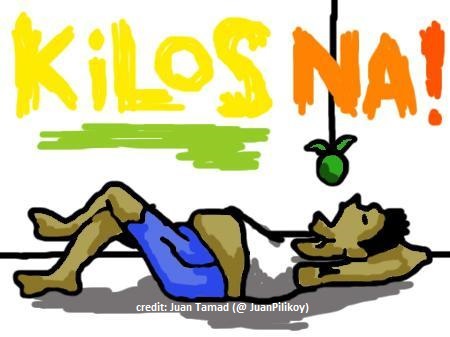
Ngunit kung ika’y kalahi ni Juan tamad
Buhay mo ay babaon sa dusa at hirap
_____
Hindi kasalanan ang maging mahirap
Ang kasalanan ay ang hindi magsikap
Swerte mo’y hindi nakaguhit sa palad
Perlas itong dapat ay sisirin sa dagat
_____
Walang maghihirap kung walang tamad
Kapag batugan ka’y hindi ka uunlad
Kaya’t kung sa buhay ay nais umangat
Magbanat ng buto at laging magsikap
_____
Bangka mo’y patuloy naglalakbay sa dagat
Katig ay matibay unos man ay humampas
Ang sagwan mo’y ikampay hangga’t may lakas
Hintayin mo hanging iihip sa layag
———————————————
MANGARAP, PERO…
———————————————
H’wag gumapang sa balag ng alanganin
H’wag kakapit sa punyal na ubod talim
Paninindigan dapat na pagtibayin
Tatahaking daan dapat ay tuwirin
_____
Kapag sa Panginoon mananalangin
Kapag ng biyaya ikaw ay humiling
H’wag kang tumunganga’t milagro’y hintayin
Pagpaguran biyayang nais tanggapin
_____
Sa tala’y h’wag ibulong ang iyong hiling
Wala itong tenga upang ika’y dinggin
Kakahinatnan h’wag sa baraha silipin
Buhay ay ‘di sugal, h’wag mong balasahin
———————————————
TAGUMPAY…
———————————————
Sa timbangan mo tagumpay ay sukatin
H’wag panukat ng iba ang gagamitin
Sa sariling hulmahan pangarap buuin
Iukit mo sa bato h’wag sa buhangin
_____
Panuntunan ng iba ay h’wag gagamitin
Kung ang tagumpay ay nais mong sukatin
Matarik man ang bundok na dapat akyatin
Dapat mong iukit landas na tatahakin
_____
Bunga ng tagumpay ay ubod ng tamis
Kung puno’y dinilig ng dugo mo’t pawis.
Ang lasa nito’y parang apdong kay pait
Kung luha ng kapwa ginamit mong pandilig
_____
Sa ano mang tagumpay na iyo nang narating
Magbulay-bulay ka nga’t sarili ay tanungin
Langgam ka bang nagsikhay sa liwanag at dilim
O dili kaya’y lintang kumapit sa patalim
_____
Tagumpay ay hindi pwedeng namnamin
Kung nanlamang ka kaya mo narating
Milyon-milyon ay madaling gastahin
Kung sa pagnanakaw ito nanggaling
_____
Kay tamis ng tagumpay kapag nakamtan
Nang walang taong ginamit o tinapakan
Masarap magtampisaw sa karangyaan
Kung salaping gamit ay pinagpaguran
_____
Tamis ng tagumpay bago mo lasapin
Magbulay-bulay at sarili’y tanungin
Saan ba tumapak nang tagumpay sungkitin
Sa bumubunan ba ng kapwa-tao natin?
———————————————
KAPAG SINUBOK…
———————————————
Ngiti mo ay ‘di maikubli ang kalungkutan
Sa mata’y banaag sakit na nararamdaman
Kung ang luha ay dadaloy hayaan mo lamang
Araw mo’y sisikat din matapos ang tag-ulan
_____
Bagwis sana ay patuloy lang na ikampay
Salubungin man ng unos ay h’wag maglulubay
Ibuhos ang lahat-lahat h’wag manlupaypay
Sa dulo ng bahaghari ginto’y naghihintay
_____
Malakas man ang bagyo humuhupa rin
Tiyak hihinto malakas nitong hangin
Tikatik nitong ulan pagtila’y hintayin
Panibagong araw ay tiyak na darating
_____
Sa pagkalugmok ay bumangon kang pilit
Muling ikampay ang nabali mong bagwis
Liparin ang malawak na himpapawid
Sariling tadhana sa langit iguhit
_____
Sanga-sangang daan man aking lalakbayin
Panganib at pagsubok tiyak susuungin
Kwento ng buhay hindi pwedeng pigilin
Maraming kabanata pa ang susulatin
———————————————
HETO PA IBA…
———————————————
Ang isipa’y parang kulay na ‘di kukupas
Kapag ginamit lalo itong tumitingkad
Ang isip mangangalawang na parang itak
Kapag ‘di ginamit mawawala ang talas
_____
Likas ang pagtulong ng pusong busilak
At walang kapalit itong hinahangad
Hindi nagbibilang hindi nanunumbat
Hangal ang hindi dito’y magpasalamat
_____
Respeto’t pasalamat ay magkatulad
Mga ito’y kusang-loob igagawad
Ibinibigay lang kung karapat-dapat
At kung ayaw naman ay h’wag manunumbat
———————————————
TANDAAN…
———————————————
Kay sarap ng buhay na tahimik at payak
Lalo na kung puso’t isipan ay panatag
Landas ay ituwid patuloy na magsikap
Saya’y lubos kapag mithi’y natutupad
_____
Ang palagian natin sanang isipin
Ano man ang gawin at ating sabihin
Ang mga ito’y nagsisilbing salamin
Ng taglay at tunay na pagkatao natin
_____
Kung kapwa mo tao ika’y iniiwasan
Nagsisilayo mabubuting kaybigan
Panahon na upang iyong pag-isipan
Ano ba ang iyong naging pagkukulang
_____
Matagumpay ka man at sobra-sobrang magaling
Paa sa lupa’y lagi mo sanang pasasayarin
Huwag kang lilipad at umikot na parang hangin
Ipo-ipong malilikha ‘di mo kakayanin
Source: Kabilin-bilinan ng lola…
Filipinos and the English Language

Why is the Philippines included in the discussion about which country is the world’s BPO/Call Center capital?
Filipinos have many positive qualities that make their country an attractive business outsourcing destination. This article, however, focuses only on what could possibly be on top of that list – their good command of the English language.
There were a few netizens from some parts of the world who, in videos, made fun of the ability of Filipinos to speak in English. Whatever people, through the Internet, have seen in such videos makes them think that it is the truth about the Filipinos’ ability to communicate in English. There were also foreigners who experienced conversing with drivers, vendors, and bystanders in the streets of Manila or in far-flung tourist destinations in the countryside. They thought the “broken English” they heard from these common people represented the Filipinos’ English proficiency. It is not.
What kind of English do you expect from taxi and jeepney drivers in the Philippines? Do you expect street and sidewalk vendors and bystanders, who might not have even completed elementary education due to financial constraints, to speak impeccable English?
Those common people, not well-educated as they are, at least, can carry out a conversation in English, “broken” it may be. They understand what native English speakers tell them. They can give the latter information and directions they need. You are barely scratching the surface of Filipino English proficiency when you talk to them. You need to dig deeper. One has to visit the halls of the academic community of the Philippines and stay in the lounges of the country’s business sector in order to have a more informed evaluation of the speaking, writing, reading, and listening skills of the inhabitants of the island country.
It is safe to assume that the English proficiency level of the Filipinos occupying the lower stations in society is from “low intermediate” to “high intermediate.” The higher the level of proficiency of the Filipinos become when they at least finish high school. Once they receive a college diploma, they have acquired lower and higher-order English thinking skills. They can remember and understand materials written in English. They can apply what they learned, analyze, and evaluate them. In terms of language, they can create… write sentences, paragraphs, and essays. Students in the tertiary level in the Philippines are required to write reaction papers and term papers in English while pursuing their degree, and, in most universities and colleges, before they are allowed to graduate, they need to present a thesis.
It is no longer surprising that Filipinos perform well in surveys conducted to test proficiency (of non-native English speakers).

For example, in a survey held (among countries not considered native English speaking) 2016, the Philippines ranked 7th in the world (1st in Asia) in workforce English proficiency.
The Philippines also received a strong rating in another 2016 survey among countries best at English as a second language. The Philippines is 13th overall and 3rd in Asia, where first and second placers are Singapore and Malaysia.1
The fact that Filipinos are good at English is hard to dispute.
How do you think would English being the official language in Philippine schools (from pre-school to tertiary levels… including graduate school) affect their proficiency in the language? (I chose not to expound on this but leave the analysis to you.)
Filipino children, as early as the age of 5 or even younger, start their training in the English language. And if their parents are professionals or belong to wealthy families, they would hear English and Filipino sounds even before they go to school. Even in the simplest neighborhoods in the Philippines, it is not surprising to hear people speaking in households in English. Having been a former colony of the USA, English has assimilated deep into Filipino culture.
The Filipinos are bilingual and multilingual people. Filipino and English are the two official languages. Ninety-two percent (92%) of the 103 million Filipinos can speak English as a second language.2
Filipinos start to write and speak in English at an early age. English is heard and read everywhere in the Philippines. As mentioned earlier, it is the language used in schools. Almost all subjects are taught in English. Even the business community has it as the official language. It is in English that all communication in business and government is done. Most of the newspapers (all major broadsheets actually) are also written in the said language.
That is the kind of exposure to the English language that Filipinos are getting. It started more than a century ago when the United States of America annexed the Philippines and made it their colonial outpost in the Pacific. The Americans established the public education system in the island country and used English as the medium of instruction to gradually supplant Spanish as the second language of Filipinos.
Some netizens and self-proclaimed language experts usually make fun of the Filipino accent in English.
It is hard to understand why there are some who make accents a big deal. In communication, it is the pronunciation that counts, not the accent.
“Pronunciation can be good or bad, but the accent is accent, and there isn’t a good or bad accent really.”3
There’s no such thing as a right or wrong accent.

A recent study (Putting accent in its place: Rethinking obstacles to communication) explored the relationships among accentedness, comprehensibility, and intelligibility.4 The study concludes that accent, comprehensibility, and intelligibility are partially independent constructs and that simply altering accent will not necessarily affect the other two. In fact, communication obstacles are often based on things other than accent, but because of its extreme salience, accent is given more weight than it deserves.
On the contrary, there is evidence coming out that accent itself could be a barrier to effective communication.
An article entitled “Native English speakers are the world’s worst communicators” asserted, “…often you have a boardroom full of people from different countries communicating in English and all understanding each other, and then suddenly the American or Brit walks into the room, and nobody can understand them.”5
The article also explains that “Native speakers are at a disadvantage when you are in a lingua franca situation, where English is being used as a common denominator. It’s the native English speakers that are having difficulty understanding and making themselves understood.”
What makes native English speakers difficult to understand? Is it their accent? So, is ACCENT getting in the way of INTELLIGIBILITY and COMPREHENSIBILITY?
It’s great that the Filipino’s English accent is (as generally described) neutral.
This could be one reason the Philippines is fast becoming if not yet, the world’s BPO/Call Center capital. They can be clearly understood by both native and non-native English speakers.
The main goal of communication is understanding, not to sound fancy by copying somebody else’s accent. But if Filipinos want to mimic somebody’s way of producing vowel and consonant sounds and diphthongs, they can easily do it. What works in favor of Filipinos in terms of learning English is that they are no strangers to the language.
_____
- https://www.weforum.org/agenda/2016/11/which-countries-are-best-at-english-as-a-second-language
- http://www.k-international.com/blog/countries-with-the-most-english-speakers/
- Gordon Scruton (http://gordonscruton.blogspot.kr/2012/11/accent-vs-pronunciation.html)
- https://www.cambridge.org/core/journals/language-teaching/article/putting-accent-in-its-place-rethinking-obstacles-to-communication/11D7A6BB87C915E074F50DE01FB7995F
- http://www.bbc.com/capital/story/20161028-native-english-speakers-are-the-worlds-worst-communicators
On Teaching English In South Korea
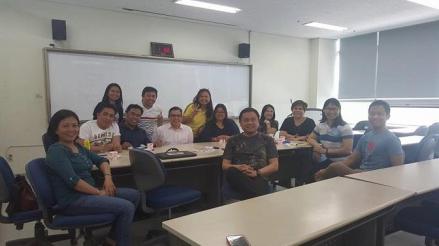
Filipino professors attending a meeting of the AFEK
Most universities here in South Korea (and other Asian countries) prefer to hire English teachers from countries where English is the native language. That is a matter of policy but it does not follow that the best English teachers are the ones coming from those countries… they could be somewhere else just waiting to be given an opportunity to prove their mettle in ESL teaching.
There are only a few tertiary institutions in this country who employ Filipino teachers to teach English. These are the universities who believe that teaching English is not a monopoly of the teachers labeled as “native speakers” coming from the following countries: USA, UK, Canada, Australia, New Zealand, South Africa, Ireland.
If the statistics gathered in 2013 by the AFEK, Association of Filipino Professors in Korea, is accurate then there are more or less 100 teachers from the Philippines in this part of the Korean peninsula. Reportedly, there are more in elementary and secondary schools and academies (hagwon). This, the organization (AFEK) came to know when they launched in May, 2017 the program “Skills Enhancement for Filipino Teachers Teaching English in Korea.” Several of the attendees were Filipino women married to South Koreans and are employed as English teachers. The Philippine Embassy in Seoul, however, doesn’t have an official record as to how many Filipinos are teaching in the basic education schools and academies here.
Filipino professors are not limited to teaching English subjects only. They are E-1 visa holders and are allowed to teach content subjects depending on their fields of specialization.
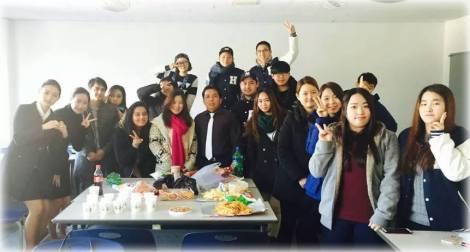
E-2 visa holders are allowed by the Ministry of Education here to teach strictly English subjects only. One advantage of hiring Filipino professors, because theirs is E-1 visa, is they can be asked to teach content subjects related to their fields especially if the curriculum requires that the content subjects are should be taught in English. Currently, in the university where this writer is teaching, three teachers from the Philippines, are also teaching, aside from English subjects, content subjects in the university’s Graduate School.
I wouldn’t say that Filipino professors in universities in South Korea are lucky to have been hired. Why? They have to go through the proverbial eye of the needle to have a chance of getting hired. They applied alongside teachers who are native speakers of English who have the upper hand because of their geographical roots.
Most of the Filipino professors here are PhD degree holders. The minimum requirement FOR THEM is Master’s.
To the universities who opened the opportunity for Filipino professors, the applicants needed to prove that they are as equally capable as their counterparts from the native English-speaking regions of the world. When they got hired, it was because they are qualified and had proven that they have what it takes to be English teachers. It wasn’t luck.
Filipino teachers are trained in the Philippines to both know what to teach and know how to teach what they know.

Modesty aside, the Philippines have a very good education curriculum implemented through the Commission on Higher Education which closely monitors TEIs (Teacher Education Institutions) to ensure strict compliance. Thus, Education graduates from the Philippines can be relied upon not only in terms of the knowledge, skills, attitude and values in their field of specialization but also in pedagogy and in research. Filipino teachers are good in both instruction and research.
One of the best features of Teacher training in the Philippines is teachers are made to understand that the most important stakeholder in a school is the STUDENT, not the TEACHER. Filipino teachers adhere to the philosophy that the teaching-learning process should be student-centered.
One reason, if not the main and only reason, most universities in Asian countries (like South Korea, Japan and China) prefer to hire teachers from those seven countries is ACCENT.
Filipinos are good at English. It (English) is the medium of instruction in the Philippines from kindergarten to college – even in the graduate school. Filipinos, at an early age, write and speak English. They hear and read it everywhere. It is also the the official language of communication in the Philippines. All business and government transactions are done in English. The country also has the 3rd largest group of English speakers in the world. Their accent is not bad. Philippines wouldn’t be the BPO/Call Center capital of the world if so. But notwithstanding all the aforementioned, still the said universities prefer native English speakers and not include Filipino teachers in their lists of preference.
But there are two things that would make hiring a Filipino teacher a wise investment – two things far more important than ACCENT… their PASSION for teaching and COMPASSION for the learners.
It is not difficult for a teacher to improve his accent. It is easy to train the tongue to mimic somebody’s way of producing vowel and consonant sounds and diphthongs. What is hard is to convince a teacher to be passionate about the job and to be compassionate to the students…. especially if he/she is not really trained to be one and was only forced to accept the teaching job for lack of better options.
PAKWELANG TALUDTURAN

Nag-eksperimento ako sa isang uri ng tula. Sinubukan kong gumawa ng tulang apatang taludtod (quatrains sa English) na ang unang tatlong linya ay animo’y seryoso ang tinatalakay subalit ang pang-apat (ang tinatawag na clincher) ay sundot na patawa. Tinawag ko itong “pakwelang taludturan.” Hindi ko lang alam kung may dati nang gumawa ng ganito.
Meron din naman akong ilang mga apatang taludtod dito na straight-forward na patawa at walang parteng seryoso.
Mahirap gawin. Wika nga nila, ang pagpapatawa ay isang seryosong bagay. Sana nga lang ay matawa kayo.
———————————————
 HETO ANG PANIMULA!
———————————————
Pakwelang taludturan ay pausuhin
Simulang seryoso sa biro’y tapusin
Tagiliran ng babasa’y susundutin
Ngiti nila’t utot ating palabasin
———————————————
YUCKY…!
———————————————
Habang nakapikit ako’y may nalanghap
Ito ay samyo ng hinog na bayabas
Natakam…kaya’t mata ko’y iminulat
“Ay sus!”Katabi ko… braso’y nakataas
_____
Bakit ako’y hirap na ika’y tanggihan
Hindi mapakali kapag ika’y nagparamdam
Kapag tumawag ka lahat iiwanan
Hahanapi’y inidorong mauupuan
_____
Pinipigilan ma’y lumalabas kang pilit
Doon ka dumadaan kung saan masikip
Kapag lalabas ka na ako’y alumpihit
Baka may makaamoy o makadinig
———————————————
YUMMY…!
———————————————
Namumulang kutis oh katakam-takam
Ako’y nanggigil, nanginig ang kalamnan
Tumulo ang laway…sila’y nilapitan
Grilled chicken sa kaliwa…lechon sa kanan
———————————————
CAFFEINATED…!
———————————————
Nangakong kita’y kakalimutan
Nangakong ‘di ka na babalikan
Pangako’y ‘di ko mapanindigan
O kape kay hirap mong iwasan
———————————————
HI SEXY…!
———————————————
May seksing sa jeep nakatapat ng upuan
Aba’t labi ko matamang pinagmamasdan
Tumabi sa akin at ako’y binulungan
“Brod! Mugmog mo sa nguso iyong punasan!”
_____
Sa mata n’yang kay pungay ako’y natingin
Sa nakita’y nabagabag ang damdamin
Di ko napigilang pabulong na sabihin
“Miss may mutang sa kilay mo lumambitin.”
_____
Dalagang nakatayo sa harapan ko
Aba’y tumitingin sa aking pundiyo
Ngumiti’t lumapit…binulungan ako
“Ay kuya…bukas ang zipper ng lonta mo.”
_____
Bebot sa parke… ako ay nginitian
Umakbay sa akin nang aking tabihan
Sa kanyang ibinulong ako’y gulantang
“Cellphone mo!” Kung hindi kita’y gigripuhan.”
_____
Kutis mo’y makinis malambot parang bulak
Mahubog na katawan mo’y nakakagulat
Nang kita’y lapitan at ikaw ay humarap
Tinutubuan ka pala ng bigote’t balbas
———————————————
BILBILING STRUGGLES…
———————————————
Mahirap man ay dapat ko nang aminin
Masakit man ay dapat ko nang tangapin
Sinikap ko ngunit ano man ang gawin
Bilbil ko ay hindi na kayang tanggalin
_____
Pilit pumupulupot sa aking baywang
Habang buhay yata akong didikitan
Kahit anong gawin ayaw akong iwan
O BILBIL pakiusap ako’y tantanan
_____
Di nga ba’t tayong dalawa’y nagsumpaan
Na magpakaylanman ay walang iwanan
Sa kabilang buhay man ika’y susundan
Akong BILBIL mo’y h’wag nang ipagtabuyan
———————————————
PAUTANG NGA…!
———————————————
Nakabuntot ka’t lagi akong sinusundan
Halos oras-oras kung ako’y tawagan
Pangako sa iyo sana’y panghawakan
Pautang mong 5-6 aking babayaran
_____
H’wag kang mawawalay sa aking paningin
Kung mawawala ka’y pilit hahanapin
Susundan ka kahit saan makarating
Hangga’t ‘di bayad ang utang mo sa akin
———————————————
PILLOW TALK…!
———————————————
Nanabik sa gabi na ako ay yakapin
Hinahanap ka kapag dumatal na ang dilim
Sana naman ako ay lagi mong dalawin
Pakiusap ANTOK ako’y iyong pansinin
_____
Higpit ng yakap ko’y ‘di mo tinanggihan
Dulot mo’y ginhawa sa pagal kong katawan
Sa lungkot at ligaya ako’y sinamahan
H’wag ka sanang mawala mahal kong UNAN
_____
Ikaw ang kanlungan ko kapag tag-lamig
‘di pinagdamot ang kaylangan kong init
Maging mga luha ko’y iyong pinapahid
Giliw kong kumot ika’y kagamit-gamit
———————————————
TOOTH FAIRY …!
———————————————
Wala kang awa nuknukan ka ng lupit
Sobra-sobra ang dulot mong pasakit
Gabi’t araw ako ay naghihinagpis
Isusumbong na kita sa aking dentist
———————————————
FAIRY TALE…!
———————————————
Si Sleeping Beauty dati’y may insomnia
At si Cinderella ay may alipunga
Si Snow White nama’y gumamit ng Gluta
Hetong si Rapunzel may balakubak pala
———————————————
HAIRY TALES!
———————————————
Napaka-cute mo at ubod pa nang lambing
Gustong-gusto mong sa aki’y lumambitin
Balbon ka’t maputi kay sarap haplusin
Sana lang oh tuta h’wag akong kagatin
__________
Bakit sa akin lagi kang bumubuntot
Kahit saan magpunta kita’y kasunod
Didikit ka pa’t katawan mo’y ihahagod
“Halika na BROWNIE h’wag ka nang malungkot.”
———————————————-
FIREWORKS DISPLAY …!
———————————————
Kung sa bagong taon bawal ang paputok
Di sige tayo na lang ay manorotot
Hala iangat kili-kiling maantot
Tapos sabay-sabay tayong mag-siutot
_____
Ang wika ni Brod Pete ay may nasusulat
Na paputok daw pala dala ay malas
Kasi espiritung gumagala sa labas
Sa bahay n’yo papasok kapag nagulat
———————————————
THANKS ANDREW E. …!
———————————————
Kay Andrew E. ang pasalamat ay labis
Heto nga’t sasabihin ko na kung bakit
Kay daming dilag kasi ako’y inibig
Nang mauso ang “Humanap Ka Ng Pangit”
Source: PAKWELANG TALUDTURAN
 M.A.D. LIGAYA


 M.A.D. L I G A Y A