Why Do I Write?

Why do I write?
Is it to impress?
I don’t write to impress. I’m well aware of the fact that my skills in writing are nowhere near excellent. I am not even halfway my journey to excellence in writing. I am not sure if I’ll get there before I breathe my last. I have a long long way to go. Perhaps I may need a dozen of lifetimes (or more) in order to surpass the accomplishments of William Shakespeare, Elizabeth Browning, George Bernard Shaw, Leo Tolstoy and the like.
So, why do I write then?
Do I write in the hope that I amass a fortune and become famous?
Not even!
Fame and money are not my primary motivations for writing. Of course I need money. It’s hypocritical to say that I don’t like to have additional numbers to the farthest north of the first digit in my bank account. With a family and a mother to support, with siblings asking for financial help once in a while, and with the projects I intend to embark on, I need additional sources of income.
“There’s no money in writing.” That is a cliche but that’s the truth. Writing is not very financially rewarding. Unless you are a script writer of one of the popular TV networks or movie outfits in your own country or a novelist who belongs in the league of the likes of J.K. Rowling, Dan Brown, and Stephen King.
Of course I am receiving extra cash for some of the stuffs I have written. For example, the university that employs me currently (2014 – present) gave me monetary incentives for my research works that were published in international journals. I would also get the same whenever I contribute an article for the university’s English publication. However, it’s not those extra cash that made (or is making) me write.
The rewards that writing gives, for me, are hard to quantify. Such rewards are transcendental. That’s not me trying to sound philosophical. That’s just the way I feel about it.
What about fame? What about the accolades? Are those the the things that inspire me to write?
NOPE!
As a matter of fact, when I write and allow people to read my works I am unnecessarily putting myself under the microscope. Instead of accolades I may get negative comments instead. This is the reason a friend said he would never write for any publication or post any writings on any of the social networking sites. He is afraid he may not be able to take negative comments. He added he fears committing errors in grammar. He considers it embarrassing to be corrected for such mistakes.
In my case, criticisms and corrections are welcome. As a matter of fact, I have already received a lot of those. I didn’t mind. I never felt offended. I have to admit that I have some works, both in English and Filipino, where my grammar leaves much to be desired. Such is the reason I keep rereading my stuffs in this website – to check for errors in grammar and word choice.
Somebody once gave the reason the eraser was invented – because nobody’s perfect.
People may read or disregard what I write. If they do read, a million thanks. If not – no hard feelings.
I may have received some good comments from my friends for some of my writings in the past. But of course, those comments may have been either meritorious or simply generous. Sometimes there are people who give positive and encouraging compliments.
But aside from good comments some of my works have also angered some individuals who, in one way or another, were offended. Writing sometimes is a magnet for trouble. I remember quite well when I wrote a satirical poem in Filipino (about a wolf in sheep’s clothing) when I was working in a Catholic tertiary institution. The parish priest who felt alluded to (and I was really alluding to him) reportedly asked the Sister-President of the college, my superior, to summon me to the latter’s office so he could talk to me. However he was dissuaded from pursuing his request. But even if he was able to convince the President and the College Dean then, I wouldn’t see him. Why? That poem I wrote and my act of writing it had nothing to do with my employment. My being a writer has no personality and office that could be connected to any of the lines that run vertical and horizontal in our organizational chart. In short, the priest had not authority over me. The priest never bugged me again but I wrote another poem for him (Habit and Habit).
My quatrains (in Filipino) are the ones that brought me some colorful moments. I have lost a friend or two (or is it three… perhaps more) for the quatrains I have posted in a social networking site. I once wrote a quatrain and a friend liked it. Almost a year later, I re-posted the same quatrain and surprisingly the same person who previously liked it was angered and gave me a mouthful. We’re very good friends so we talked about it. He understood, apologized, and we both forgot about it since then.
Also, my writings where my political beliefs are in full display had me losing very dear friends. This is the reason I stopped writing commentaries about politics in the Philippines. I have not written one since the last quarter of 2017.
So, why do I write then?
Is it for the “likes,” “reactions,” and compliments I get when I have those poems, stories, and essays posted in my social networking accounts or in this website? Not also. Of course those things make me happy and I am so thankful for those friends who take time to read my works then reacted and commented on them.
Then, why? Why do I write?
It’s hard to explain. It’s something like a combination of the answers to the following questions: Why do people need to eat when they are hungry? Why do they need to drink when they are thirsty? Why do they need to take medicine when they are sick? Why do they laugh? Why do they cry?
There is a kind of hunger within me that only writing can satisfy. There’s an insatiable thirst in my soul that would go away only when I read what I write. I suffer from a very mysterious illness that goes away only when I write in sentences or verses the equivalent words of the thoughts and feelings that drown me during quiet moments in my life.
Writing is my endorphin.
I must release my pain, anger and disagreement by writing about them or else they will haunt me endlessly. When I feel wronged I have to respond, not by violent means. I respond in a creative manner – through poems – sometimes satirical. I do it usually using anthropomorphism.
If the spirits of William Shakespeare and Elizabeth Browning I could not summon through the glass to inspire me to express in poetry whatever I wish to say then I turn to Francis Bacon and Michel de Montaigne’s way of capturing into words – essays – whatever it is that I wish to convey. if I don’t wish to be so direct with my points and would like to hide my feelings and thoughts between lines and behind symbolism then I walked the path that Edgar Allan Poe and Guy de Maupassan paved. I write stories.
I just don’t keep quiet when I notice human follies, especially if displayed by my friends and co-woorkers. Again I resort to anthropomorphism. I use animals to represent their irrationality. It may hurt them and make them angry but the truth may be bitter but sweeter than the sweetest lie. VERO NIHIL VERIUS. Nothing is truer than the truth.
This is not saying that I am a perfect human being. I am as imperfect as anyone else and may have, perhaps, done more terrible things. Thus, the satires I wrote are like boomerangs. They hit me also.
Pain is like a prison cell. It is by writing that I break free from that hell. As my heart churns out the words, I go through the pain, feel it, not escape from it. And as I write the final sentence or verse, as I put the final punctuation mark, the pain vanishes.
Even my happiness and satisfaction wouldn’t be complete if I do not write about them. I need to capture in either prose or poetry those moments so I can feel more deeply the joy they bring. I do write about them so I can relive those moments any time I wish to.
I need neither material rewards nor accolades for what I have written (and will be writing.) The poems, essays and stories I create are themselves the rewards. I love and treasure them.
I write not to impress but rather to express my thoughts, feelings and ideals. Writing is my freedom, my happiness.
SCRIBO, ERGO SUM. I write, therefore I am.
Source: Why Do I Write?
Why “MIXED BAG”?

Leading to the official announcement for my website, I have spent a lot of time thinking what would be the best site title (or name) for a website that features a collection of poems, essays, stories and research works. The search for the title of the site goes back to 2013, the year I started using WORDPRESS. That was the year (2013) I slowly started from the ground up in developing this website.
Coming out with a website of my own was not an easy thing to do because I have no background, as in zero, in developing websites. The CSS and HTML codes are all Greek to me. But I have a “mixed bag” with me all the time. It contains very priceless items. Items extremely valuable… patience, determination, resourcefulness and willingness to learn. Here I am, after three long years, I now have my official personal website.
By the way, HARDPEN is my nom de plume. It’s not HARDEN. I have been using HARDPEN long before James Harden’s offensive prowess and beard made him a popular NBA player. Besides, he’s not on top of my list, it’s the other James I consider my favorite – Lebron James.
I actually have different names and pseudonyms.
The first site title I used was actually Hardpen’s Journal. But I don’t find it appealing. Then I saw some site titles using the word HUB and others LOG. I changed Hardpen’s Journal to Hardpen’s Hub. Later it became Hardpen’s Log. They are both good for a site title but the point is that they are not original… not mine. I was not comfortable using them.
I thought of using other words like “collections’ and “portfolio but I eventually dropped the idea also. They are very common just like “journal.”
I also considered “creative juices.” It sounds cute but goes a little bit off on a tangent.
Then I recalled using the term “mixed bag” when I was discussing diversity in my Multicultural Education class in the Graduate school at the beginning of the semester. I checked for the definitions in online dictionaries and they all refer to one thing – “different or a diverse assortment of things or people.” Having “mixed bag” in the site title fits my website because here you can see a mixture of academic and literary writings… here you can read my research works and the poems, essays, and stories I have written in both English and Filipino.
A couple of definitions of “mixed bag” pointed to something negative also, something like “having both positive and negative qualities or aspects. I consider that also fitting for my website for admittedly, some of my writings maybe considered bad… depending on who is reading and depending on the perspectives the readers take when reading my works.
For now my goal is to make my website a bag full of prose and poetry… of fiction and non-fiction.
So officially, my website becomes HARDPEN’S MIXED BAG.
Whenever you have free time please open this BAG and pick up a thing or two to read. In one pocket of this bag you can also leave your comments and suggestions. Openness to constructive criticism is a key to improving one’s craft.
Peace!
Defining Happiness
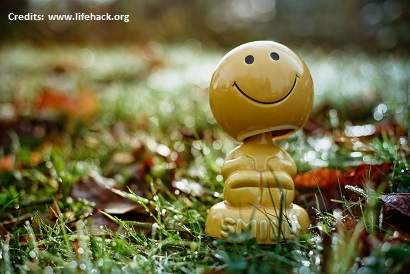
What may be considered as the most encompassing definition of happiness was provided by the great Greek philosopher Aristotle. He said, “Happiness is the meaning and the purpose of life, the whole aim and end of human existence.” The Dalai Lama seemed to have concurred when he said that the very purpose of life is to seek happiness.
Life indeed is an endless quest for happiness. People always seek for things that gives them pleasure and enjoyment. They do whatever it takes for them to attain contentment and satisfaction. They enjoy the moments when they feel untroubled, delighted and satisfied.
Happiness may come from different sources. It can be put this way also…that happiness is an effect resulting from different causes. It depends on a person’s beliefs and perspectives. People define happiness in different ways thus they tread different directions when pursuing it. They differ in opinion as to what brings joy and meaning to one’s existence.
Since time immemorial people have been debating whether or not money can buy happiness. The question commonly asked is “Are wealthy people really happy and those who are not unhappy?”
Democritus articulated,“Happiness resides not in possession, and not in gold, happiness dwells in the soul.” In disagreement Albert Camus had this to say, “It’s a kind of spiritual snobbery that makes people think they can be happy without money.”
Which of the two contentions would hold water in a world driven by materialism, Democritus’ or that of Camus? Can people be happy without money? Does happiness reside on the things that a person’s wealth would allow him to buy and to own…clothes, jewelry, gadgets, cars?
However a person responds to the questions aforementioned is grounded on his perspectives about life. Whatever a person does to his life is his own prerogative. Believing that money dictates happiness would not make a person bad. And if believing so would make him focus on amassing wealth then fine. People do whatever makes them happy. As Aristotle said, “Happiness depends on ourselves.” How a person gets the money is another question.
Oscar Wilde once said, “When I was young I thought that money was the most important thing in life; now that I am old I know that it is.” Believe that or would you rather take it from Benjamin Franklin who said, “Money has never made man happy, nor will it, there is nothing in its nature to produce happiness.” He also added that the more of it (money) one has the more one wants.
Here’s another one from Henry David Thoreau… “Wealth is the ability to fully experience life.” In response, Dennis Waitley explained, “Happiness cannot be traveled to, owned, earned, work or consumed.” In addition, he argued that “happiness is the spiritual experience of living every minute with love, grace and gratitude.”
The downside of embracing Thoreau’s thoughts can be summed up in the following question: What happens if you don’t have wealth? Would it mean that those who do not have money cannot fully experience life?
Not everybody can be rich so much so that they can buy beyond what is necessary. Many are content with having just enough. Many live modest lives and they do not complain.
There are people who earn just enough to buy the basic things they need yet they are happy. They live in modest houses, not big mansions and not all of them have cars yet they are satisfied and contended. Why? They don’t have lots of money but perhaps they have love. They chime to George Sand’s idea that there is only one happiness in this life, to love and be loved or sing along with The Beatles who, in one of their songs said, “For I don’t care too much for money, for money can’t buy me love.”
There are people whose happiness lies not in the material things the world offers. Some people find happiness by helping others. They believe that there is more happiness in giving than in receiving (Acts 20:35). They embrace the idea “Happiness never decreases by being shared (Buddha).”
Some feel ultimate joy when they bask in the glory of their achievements, when they finally get what they have worked so hard to achieve. As Franklin D. Roosevelt puts it, “Happiness lies in the joy of achievement, in the thrill of creative effort.”
However a person wants to achieve happiness is entirely up to him. But as Zig Ziglar pointed out, “Until your are happy with who you are, you will never be happy with what you have.”
We don’t only chart our own destiny but we also define our own happiness. It starts from within. It should not be contingent on anything nor dictated by terms set by other people.
Happiness is a decision we make. “Most folks,” according to Abrham Lincoln, “are as happy as they make up their minds to be.”
So, heed Leo Tolstoy’s advise, “If you want to be happy, be.” Remember what Buddha said, “Happiness does not depend on what you have or who you are; it solely relies on what you think.”
Source: Defining Happiness
The Search
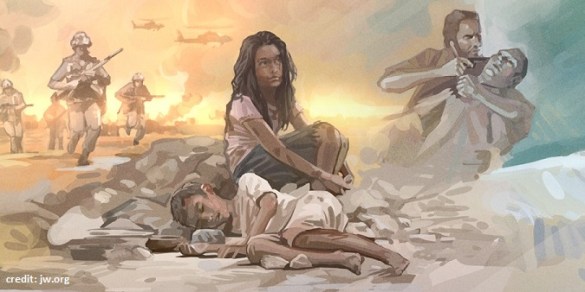
Find me a country.
One not disputing anything with another,
Where people are not running scared
Either to the south
Or to the north of the border.
Find me a country.
One where people are not on a killing spree
Where no violence could erupt,
Bomb explode
Or a four-wheeled might just run amok.
Find me a country.
One where nobody thirsts for a mayhem
And for no reason but insanity
Spray bullets on everybody.
Find me a country.
Where there are no drug addicts
No extremists,
Who, when under the influence of drugs
Or their beliefs,
Rape, steal
And would have you killed
Find me a country.
One whose military, police and the leaders
Are not the devil’s apprentices,
Whose power they use
To abuse and oppress!
Is there any country
Where people embrace diversity,
Where there’s no poverty,
No war
No calamity?
Find me a country.
One whose inhabitants
Could rest assured,
And say
We’re safe and secured.
Is there any country,
A haven of hope, a sanctuary
Where we could go –
To hide
Before… or when the dreaded mushroom grow?
Find me that country.
Tell me where.
Please take me there.
Hinog Na
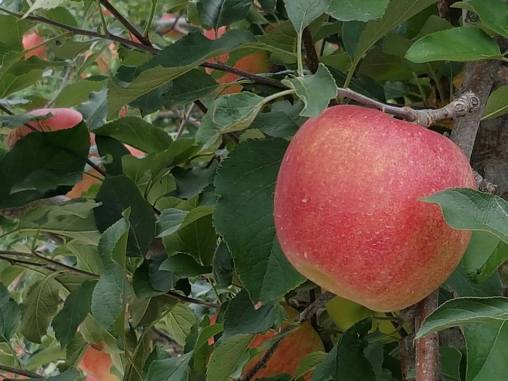
Ika’y nagbantay,
Matyagang naghintay.
Sa wakas, ako’y nahinog.
Hinog na hinog!
Pagmasdan mong mabuti ang aking alindog.
Hayaan mo munang mata mo’y mabusog.
Ika’y lumapit.
Di ba’t ako’y walang kasing-kinis?
Batid mo nang ako’y ubod tamis.
Batid mo ring ako’y makatas…
na ako’y walang kasing-sarap.
Halina.
Lapit pa.
Hawakan mo ako.
Hinay-hinay lang.
Ako’y hinog na.
Hinog na hinog.
Ako’y haplusin,
Dahan-dahang pitasin.
Amuyin…
Kagatin…
Gutom mo’y iyo nang pawiin.
Where Is It Safe?

Since I started working here in South Korea in 2013, friends and relatives back in the Philippines keep asking me if it is safe to work here. They questioned my decision of leaving a good position in a peaceful region in my country in favor of a teaching job in a foreign land that at any time might plunge into an armed conflict with its neighbor. They asked me if the better job opportunities I have here is worth the trouble that I could get myself into if the North Korean military decide to cross the 38th parallel line and invade the Southern part of the peninsula.
Well, I understand they are worried about me. I thanked them for their concern but I assured them that I can take care of myself. I know exactly what to do (and where to go) should hostilities between the countries resume. That’s the way we should say it – “resumption of hostilities” – because technically the two Koreas are still at war. The Korean Armistice Agreement signed in 1953 called only for the cessation of hostilities until a final peaceful settlement is agreed. That final peaceful settlement, unfortunately, remains elusive.
I told them that when I decided to work here I was well aware of what the situation is and what could happen. I am ready for that. But I argued at the same time that a full-scale armed conflict will not happen. I said that Kim Jong Un is not “completely insane” to use the North’s nukes to bomb any country. If he does so, it would give the USA and her Western allies, the reason to use the full might of their military, including nuclear weapons, against North Korea. And the result will be very catastrophic for them.
I also made my friends understand that they should not worry too much about the situation here because China, and perhaps even Russia, will do everything to prevent North Korea from going too far. Beijing knows too well that a nuclear conflict in the Korean peninsula will have devastating effects to them also. I added that Kim Jong Un, will just keep on testing the missiles, and might continue to develop a nuclear arsenal if they will not be convinced to discontinue it, only as a defensive posture. I insisted that that North Korea’s will continue doing what it has been doing for as long as the US military keeps its presence in South Korea.
They used the word provocation to describe Kim Jong Un’s acts. I replied by saying that it’s hard to determine who is provoking who pointing out that as far as I know the tension here gets extremely high during the months that US, South Korea and Japan conduct their annual military exercises. It is then that North Korea would behave in the way they have been doing as if trying to send a message across the DMZ that they are ready in case they get attacked.
They asked also if staying here is worth the risk? It is! It’s not because the pasture here is a lot greener than in the Philippines. Professionally and personally, I have made tremendous improvement since I came here. Being here in South Korea allowed me to pursue my other passion – writing. It gave me the opportunity to do research for presentation in international conferences and publication in international journals. I even had extra time to read and… go to the gym.
Then they averred. Still, it’s not safe!
My response was, “Where is it safe anyway?”
The question is – “Is there any place, any country in the world, where people can rest assured that they will survive the night and see the light of day?
Here is another question… “What’s the difference living in a country where an armed conflict might erupt anytime and in one where people who own automatic rifles might just decide to pull the trigger for no reason at all?”
If your country is safe… no conflict with any of its neighbors… no bomb might explode anytime… nobody might just spray you with bullets… no stranger might just suddenly stab you… no vehicle might just run you over… no drug addicts might steal from you and kill you afterward… and your politicians, policemen, and military are not apprentices of the devil… you’re so lucky. Or perhaps, you’re only dreaming… for such country doesn’t exist.
So, where is it safe?
Tell me if you know the answer.
The Runner-up
(A DRAMATIC MONOLOGUE [DECLAMATION])

Thrice that I tried, thrice that I failed. That, in a nutshell, is the story of my attempts to represent our school in the annual extemporaneous speech competition. Had I won first place in the contest I should have been the school’s bet for that event. But as usual, I ended up the runner-up and my friend Athena the winner. She really is an excellent orator. Whatever I can do, she can do better. It is what it is. That’s it. Perhaps next year, I’ll just try declamation so I wouldn’t compete against her anymore.
“I was just lucky Christian!” That was Athena trying to console me after the contest.
“It has nothing to do with luck. You’re really a good speaker.” You deserve to win. Good luck to the speech competition.”
After saying “thank you,” Athena embraced me. Well, that’s my consolation prize, I got a hug from my friend.
Then the day of the competition came. I went to the school hosting the cultural contests to watch the different events. As soon as I reached the campus of the host school, my phone rang. It was Mrs. Simon, our school principal. She asked me to see her immediately so we could talk. Sensing the urgency in her voice, I headed hurriedly to the library of that school where she said she would wait for me.
“Christian… Athena is in the hospital now, she had an accident on her way here. She wouldn’t make it to the contest. Having won second place in our elimination you ought to substitute for her. You will be our contestant for the extemporaneous speech. The officers of the event allowed it.”
I was dumbfounded…speechless! She talked fast as if not wanting to give me the opportunity to say no. That’s vintage Mrs. Simon… direct to the point, firm and wouldn’t take NO for an answer. No ifs, no buts. I didn’t know what to say then. I was worried about the fact that I’m joining a competition in so short a notice…but I was more worried about Athena.
“The contest starts in less than two hours. Do this not for yourself, not even for the school. Do this for your friend Athena. PLEASE!” Mrs. Simon implored.
I accepted the challenge and started preparing mentally. It’s good that I was familiar with the criteria for judging and the theme was the same one we used for our school competition. The only problem was the specific topic.
When Ms. Cruz, Athena’s coach arrived, we had a discussion about the contest rules and the possible specific topics the judges might give.
Then finally, the contest started. And as if having only less than two hours to prepare is not challenging enough, I even picked no. 1 in the drawing of lots making me the first contestant.
In a room adjacent to the contest venue, I was handed a piece of paper containing the specific topic written in a question form.
“What can you do to make Philippines a better nation?”
“Oh my God!” I exclaimed. That’s not one of the possible questions I practised with Ms. Cruz.
I had three minutes to prepare my speech…three minutes to think of how can I make my country better. Are the judges kidding me? They are giving me just a few minutes to solve the problems that bedeviled this nation for God knows how long.
Look! How many presidents took turns in running the show in Malacañang? How many years did each of them have to make this nation great? Did they succeed? NOOO!!! And here are the judges asking me to perform a miracle… make Philippines a great nation… and I only have what… 3 minutes!!! Those presidents even had the help of the honorable senators and congressmen and here I am…just an ordinary boy… by my lonesome! What can I do?
Wait…wait…! Calm down Christian….calm down…this is just a contest…take the competition seriously and not the question…it’s only a question…it’s hypothetical. Don’t take it personal! Take a deep breath. Come on! Inhale….exhale…
I want to stop the hands of time. Every movement of the minute hand is like a knife slicing my mind, shredding to pieces my composure.
Until the last few seconds, nothing came out my mind. Then Ms. Cruz came telling me it’s time. I closed my eyes and whispered, “Dear Lord, please help me.”
Deliberately that I walked slowly towards the next room. Then I passed by one student standing on the hallway his head swaying to the music he’s playing on his cell phone. I know the song. It’s Michael Jackson’s “Man In The Mirror.” Then that part of the song I heard as I passed by the student was like electricity that lightened a bulb in my head.
That was one of my “aha moments.” God heard my plea.
“I am but a young man. Still struggling to get an education. I don’t have much to give… no brilliant ideas to share… to make Philippines a better nation. I don’t have the power, the money, the influence to make any meaningful contributions in our society. But there is one thing I can do that might just be what this nation needs. In one of his songs, the king of Pop, the late Michael Jackson, said that if I want to make this world a better place, I have to take a look at myself then make a change. That exactly is what I intend to do. I cannot change the system of our government. I cannot change your ways of thinking and of doing things. I cannot change you…but I can change me. I have the power to transform me. I can change my attitude in life. I can change my perspectives. I can be the best me. If only each of us can change for the better, Philippines might be a better nation.”
That I supposed was the best part of my 3-minute speech. I did not stay in the contest venue after I delivered my impromptu speech. I went out and proceeded immediately to the hospital where Athena was brought. I was happy to see her okay sustaining just minor injuries.
While in the hospital, I got a call from Mrs. Simon informing me of the results of the contest. Guess what! NO! I did not win 1st place. I was again a runner-up. At least, along with the winner, I will represent the district in the provincial competition.
Source: The Runner-up
 M.A.D. LIGAYA


 M.A.D. L I G A Y A