My Essays on Education
 The year South Korea hosted the Summer Olympics was the year I started my journey as a teacher. That was 1988.
Those many years I spent in the academe, 24 years in the Philippines and 6 years here in South Korea, taught me a lot about the teaching profession – more than those that I learned from undergraduate and graduate schools. My experiences as a classroom teacher and as a school administrator enabled me (and they still do) to look at issues, problems, and disputes using the lens of the one teaching and that of the one formulating and implementing school policies. My having been in the position of both made me understand how it feels to be in-charge of students and to be in-charge of both the teachers and students.
Those 30 years in 10 different schools in 2 different countries made the following very clear to me: that it is not easy to wear the hat of a teacher; that teaching is not just another job; that teaching is not just a means of livelihood but a way to serve; and that everything schools, from the simplest activities to the most complicated policies, should be student-centered because the students are the reasons schools exist.
There were many times that I reflected on teaching as a profession and education in general. Those reflections resulted to essays and research works.
This is where I put them (essays I wrote on education and some of the research works I have completed here in South Korea) together. I added also in this section the dissertation and thesis I wrote as requirements for my PhD and Master’s degrees, respectively.
In the university where I completed my PhD and Master’s, the research papers students are required to complete are called differently – dissertation for PhD and thesis for Master’s.
The other studies listed in the subsections identified below (with links) include those that I presented in international conferences and were subsequently published in SCOPUS-indexed international journals. Papers published in international journals are usually longer that the versions presented in international conferences.
The following is my most recent research work:
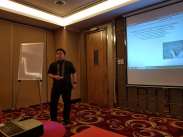
I presented this in an international conference in Manila earlier this year and is currently waiting approval for publication in an SCOPUS-indexed international journal.
Links to the international journals where some of the articles were published as well as links to the websites of the conferences where they were presented are provided on the pages allotted for the papers.
This part of my website is divided into the following subsections:
Papers Presented in Conferences
My website also features the following section:
Most of the articles found in this section are my very personal reflections on education.
Pananagutan Sa Sarili
 Kapag ba late kang dumating sa trabaho, sa isang okasyon, oh sa klase, kanino mo ibinubunton ang sisi? Siyempre pa eh ‘di sa walang kamalay-malay na traffic. Kapag masama ang panahon at maulan, baha naman ang may sala kaya hindi ka sumipot sa takdang oras. Sa mga sumunod na pagkakataon na na-late ka nanaman, dahil gasgas na ang dahilang “Traffic eh!” at hindi naman umuulan para sabihin mong “Baha kasi!” eh ang sinisi mo naman ay ang alarm clock – hindi gumana. Tama ba?
Noong nagkahiwalay kayo ng karelasyon mo o nagkagalit kayo ng kamag-anak, kaybigan, o kapitbahay mo, sino ang may kasalanan? Eh di siyempre hindi ikaw. Halos nakakatiyak akong sa kabilang partido mo ibinunton ang sisi. Kesyo masama ang ugali niya o nila, hindi marunong makisama, walang pinag-aralan, at bastos.
Ang punto eh hindi ka nauubusan ng pagbubuntunan ng sisi. Napakahaba kaya ng listahan mo ng mga dapat sisihin. Basta may nangyaring hindi maganda sa buhay mo o may pangyayaring hindi sumasangayon sa iyong kagustuhan, eh pilit mong hahanapin kung sino ang dapat managot kung bakit nagkaganoon?
Naalaala ko tuloy ang kuwento ni Jim Rohn, isang kilalang personalidad sa larangan ng “personal growth and development”. Isang araw daw eh tinanong siya ng kanyang mentor na si Earl Shoaf, “Jim, curious lang ako, bakit hanggang ngayon eh parang hindi ka pa umaasenso?” Para daw huwag naman siyang magmukhang parang walang kadiska-diskarte sa buhay, ang ginawa ni Jim eh inilista niya sa isang papel ang mga may kagagawan kung bakit hindi niya maiangat ang kanyang kalagayan sa buhay.
Heto ang mga isinulat ni Jim Rohn sa kanyang listahan – pamahalaan, ekonomiya, panahon, traffic, pamamalakad ng kumpanya nila, mga walang kwentang kamag-anak at kapitbahay, at mga taong nakapaligid sa kanya.
Sino ang madalas sinisisi ng mga taong hindi makahanap ng trabaho? Eh ‘di siyempre ang pamahalaan. Tungkulin daw ng mga nasa poder ng kapangyarihan na tiyakin na ang mga mamamayan ay magkaroon ng oportunidad na makapagtrabaho.
Tama naman sila. Pero meron bang bansa sa alin mang bahagi ng mundo na kayang bigyan ang bawat mamamayan nila ng trabaho? Meron bang bansa na kung saan ang mga pribadong kumpanya at negosyo, maliit man o malaki, ay kayang i-hire ang lahat ng gustong magtrabaho?
Sa pagkakaalam ko’y wala. Mahirap tanggapin pero iyan ang katotohanan.
Balikan natin ang uapan nina Jim Rohn at Earl Shoaf.
Matapos daw basahin ni Jim ang listahan ng kung sino (at ano) ang dapat sisihin kung bakit hindi siya umaasenso eh tinanong siya ni Earl – “Bakit wala ang pangalan mo sa listahan?” Ang ibig sabihin ni Earl ay bakit tila yata sa hindi pag-angat sa buhay ni Jim noong panahong iyon eh ni katiting eh parang wala siyang pagkukulang.
Ikaw ba? Hindi mo ba kahit kaylan naisip na maaring ikaw mismo ang dahilan kung bakit hindi ka umaasenso at kinakaharap mo ang mga problemang meron ka?
Bakit mo sinisisi ang traffic at baha sa hindi mo pagsipot sa takdang oras sa lugar n na dapat mong puntahan? Tapos sasabihin mo nanaman na inutil ang mga lider ng bansa dahil hindi nila magawan ng paraan na solusyonan ang problema sa traffic. Sige nga, sagutin mo ito – “Sino ba ang nagluklok sa pwesto sa mga taong nasa poder ng kapangyarihan ngayon?” Ah… hindi mo sila ibinoto. O sige, eh iyon bang mga ibinoto mo noon, ano ang nagawa nila para sa bayan? Nawala ba ang traffic at baha noong panahon ng mga politikong sa tingin mo eh mas magaling at matino kaysa sa mga nakaupo ngayon?
At teka, kaninong ugali ba talaga ang hindi maganda kaya nakagalit mo ang taong kagalit mo ngayon? Sila ba talaga?
Sa palagay mo, ano ang ginawa ni Jim Rohn matapos sabihin iyon ni Earl Shoaf? Heto ang ginawa niya – nilamukos niya at itinapon sa basurahan ang listahan ng mga sinisi kung bakit hindi maganda ang itinatakbo ng pamumuhay niya. Gumawa siya ng bagong listahan. Isa na lamang ang isinulat niya – kanyang pangalan. Tinanggap niyang siya, at tanging siya lamang, ang dahilan kung bakit hindi umaasenso ang kanyang buhay. Siya ang may pagkukulang. Tinanggap niyang hindi puwedeng iaasa kahit kanino ang ating tagumpay. Noon nagsimulang maging maayos ang takbo ng kanyang buhay.
O ngayon, sagutin mo ito – bakit hindi ka makahanap ng trabaho? Naghanap ka bang talaga? Baka naman ang gusto mo eh ikaw ang hanapin ng trabaho? Baka naman kaya wala kang mapasukan eh masyado kang maselan. Tanggapin mo kung anong trabaho ang nababagay sa iyong kakayahan o tinapos.
Tandaan mo rin sanang may kompetisyon. Katulad mo, marami ding iba na naghahanap ng pagkakakitaan. Sa isang trabahador o empleyado na kaylangan eh maaring dalawa, tatlo, o higit pa kayo na pinagpipilian. Kung ikaw ang pinakamagaling, ikaw tiyak ang mapipili. Kaya’t pananagutan mo sa iyong sarili na iangat ang iyong kaalaman at kakayahan sa napili o kinabilangan mong karera o larangan para magkaroon ka ng bentahe sa iba.
Huwag mong ikahiya kung pagsasaka, o pangingisda, o pagakakarpintero, o pagtitinda ang siyang napili o kinaya mong gawing pagkakakitaan. Hindi naman kasi lahat ng tao eh makakapagtapos ng pagaaaral at magiging propesyonal. Pero hindi nangangahulugan na tanging ang mga nakapagtapos lang ng pagaaral ang puwedeng magtagumpay sa buhay. Ayon sa isang pagaaral, tatlo sa bawas sampung bilyonaryo ay hindi nakapagtapos ng kolehiyo. Kasama diyan ang mga pinakasikat na college dropouts na sina Mark Zuckerberg (CEO ng Facebook) at Bill Gates (founder ng Microsoft). Kung meron kang skill o talent, pagyamanin mo. Maaring iyan ang magiging tuntungan mo para matupad ang mga pangarap mo sa buhay
Meron ding mga tao na ayaw talagang mamasukan, may pinag-aralan man sila o wala, dahil mas gusto nilang magtayo ng sariling negosyo. Bakit hindi mo subukan?
Kung ayaw mo namang magnegosyo at wala kang makitang trabaho sa Pilipinas bakit hindi mo subukan ang mangibang-bansa? Kanya-kanya tayo ng diskarte o pamamaraan para pagandahin ang kalagayan natin sa buhay. May makikita kang trabaho o pagkakakitaan kung maghahanap ka.
Pananagutan sa sarili na humanap ng paraan upang mabuhay ng matiwasay at maunlad. Responsibilidad mo na tiyakin na magkakaroon ka ng kaalaman at kakayahan upang itaguyod mo ang iyong sarili at pamilya. Huwag mong iasa sa mga ibinoto mong kandidato, o kahit kanino pa man, ang iyong kinabukasan. Huwag kang magmaktol dahil mahirap ang mga magulang mo kaya hindi ka nakapagaral. Marami kayang nakapagtapos ng pag-aaral sa kolehiyo na hindi umaasa sa kanilang mga magulang na batid nilang wala namang kakayahang pinansyal. Huwag kang magdamdam sa mga kamag-anak mong mapepera na ni singkong duling eh hindi ka maabutan. Hindi nila responsibilidad na tulungan ka. Magpasalamat ko kung may tutulong sa iyo. Pero kung wala eh ganoon lang talaga ang buhay.
O, ano na ang balak mong gawin sa listahan ng mga tao at bagay na sinisisi mo sa hindi pagbuti ng kalagayan mo sa buhay? Lamukusin mo na iyan at itapon.
Dapat mong malaman na ano man ang estado mo ngayon sa buhay, ang lahat ng iyan ay ikaw ang may kagagawan. Huwag mong isisi kahit kanino. Ang tagumpay mong naabot o kabiguang pasan… ang maganda mong kalusugan o sakit na iniinda… ang kaligayahan mong nararamdam o lungkot na sa puso mo dumadagan – lahat ng iyan ay resulta ng mga ginawa mong tama at maling desisyon sa buhay. Hindi ka batang paslit para hindi mo malaman kung ano ang kakahinatnan ng mga bagay na ginawa at hindi mo ginawa.
Katulad ng madalas nating sabihin, “Nasa Diyos ang awa, nasa tao ang gawa.”
How Different Are Teachers From One Another
 No two teachers use the same lens when they view teaching as a profession. They don’t have the same set of knowledge, skills, attitudes, and values either. Like their fingerprints, their mindsets, tendencies and other personal qualities are very unlikely to be identical.
Even if teachers are made to use a similar lens, they would still look at their job (as teachers) differently. They have perspectives, educational and personal, that are uniquely theirs – or some of them may have none at all.
When given the same course syllabus, we should not expect them to map out their daily lesson plans in the same manner. They would design learning activities and deliver or carry them out in ways they see fit. Some would not bother to plan anything
The work attitudes of teachers are also not the same.
There are those who are so conscious about the number of hours they are required to serve as stipulated in their contracts. You could not expect them to go overtime and do extra job – unless you give them extra pay.
Conversely, there are teachers who are willing to go the extra mile. They assist their students beyond their assigned teaching hours and volunteer for tasks and do things not written in their job description, expecting nothing in return.
Of course, the worst are those teachers who either come to class late or dismiss their classes earlier than expected – or both. For reasons only them know, they do not perform their assigned tasks the way they ought to. They submit required paperwork either late or not at all.
If you are a teacher reading this, here is a question for you, “In which of the three groups do you belong? Of course, only you know. At the very least, be not the one described in the preceding paragraph.
There are teachers who are eternal fault-finders always trying to find something wrong – either with the policies being implemented or with their colleagues and administrators. And should they succeed in finding one, they would either whine or gossip about it, or both.
Teachers also differ in the way they treat their students.
Some teachers would set standards that are difficult to achieve while others know how to calibrate their standards to give even the slowest of learners a chance to succeed. There are teachers who have “one-size-fits-all” mentality thinking that educational processes and approaches to teaching and learning are standard and could not be tailored to meet individual needs. Conversely, they have counterparts who understand that students have different learning styles, abilities, and personal backgrounds. They know that they must recognize the uniqueness of each student (or groups of students) and differentiate their methods and strategies as teachers. These teachers don’t believe that standards are absolute.
Describing how teachers are different from one another could boil down to the following statements: 1. There are teachers who display both passion and compassion – they are passionate about their job and compassionate to their students; 2. There are teachers who have only one of the two; and 3. There are teachers who do not have both.
And again, if you are a teacher reading this, here is another question for you, “Which of the three statements in the paragraph above applies to you?”
If it’s the third one, you could be in the wrong profession. Think about it.
Now, let’s try to find out why teachers are not the same.
In doing so, let’s answer the following questions:
“Why do teachers view their profession (or approach teaching) differently?”
“Why do they have different work attitudes?”
“Why are some passionate with their job and compassionate to their students while the others are not?”
Before we answer those questions, it is important to note that there are only two ways to classify the way teachers perform – effective or ineffective; two ways to label their work attitude – good or bad; and two ways to view the way they treat their students – fairly or poorly.
What could be the reason teachers treat their students the way they do? Some teachers are perceived by their students as mean, unfair and inconsiderate. Is it because these teachers were not taught by their parents the values of kindness and fairness during their formative years? Did their experiences in life make them rude? Or were they treated in the same way by their former teachers and they are thinking that being mean, unfair, and inconsiderate to students is nothing but normal.
Teachers need to be reminded of the importance of establishing a good rapport with the students. In several studies conducted, what emerged as among the top qualities of effective teachers as perceived by students include “the ability to develop relationships with their students” and “patient, caring, and kind personality.”
As Andrew Johnson puts it, “Teaching starts with a relationship. Until then, you are just a dancing monkey standing up in front of your students performing tricks.”
The hardest stone that school authorities could pick up and hit their heads with is if they would decide to hire a “nonteacher” to be a teacher. There are teachers in (some, a few, or is it many?) schools who are not really teachers by profession. They either have non-Education degrees or they did not receive any kind of teacher-training but were lucky to be hired for whatever reasons only those who hired them know.
How could a “nonteacher” be effective and passionate in a job completely alien to him/her?
Being a math wizard doesn’t give one the right to become a Math teacher. Having a perfect accent and impeccable grammar in English doesn’t make one qualified to teach English. These are things I emphasized in one of my essays about teaching It doesn’t mean that if you know it, you can teach it.
How do we expect somebody who has no training in pedagogy to be effective in preparing a lesson plan – to set objectives, to choose the strategies and methods appropriate for a lesson and the levels of students, to motivate students before delivering the lesson, and to create tests intended to measure and evaluate learning.
Do you really think that teaching is just another job?
How do we expect a “nonteacher” to understand what kind of work attitude teachers should have – to agree with what Ben Orlin said that he sees teaching as an act of self-sacrifice, as a hard path undertaken for the greater good.
So, when colleagues in the academe are not performing and behaving the way a teacher should, check their academic background. They could be “nonteachers.” And pardon me using the word “nonteacher.” It’s not in any dictionaries I checked online, except for one – http://www.yourdictionary.com. I just can’t think of a word to label professionals in the academe that were allowed to teach even if their degrees are not related to education or they did not have any training as a teacher at all.
But a more serious concern in the academe is this – Why are there teachers who were trained to be teachers who act as if they themselves are “nonteachers”?
The way teachers perform are dictated by the personal educational philosophy they developed when they got exposed to the many isms they studied while pursuing their education degree. Such philosophy would evolve through time as they accumulate actual teaching experiences. Teachers also have personal belief systems that inform whatever decision they make. Or their decisions are influenced by the colleague they surround themselves with.
The way teachers behave and talk reflect the kind of personal educational philosophy they have (or the absence of it). The way they conduct themselves as professionals depends on whether they adhere (or not) to the code of teacher professionalism.
When teachers act and speak strangely, it is possible that they don’t know that there exists a code of professionalism created so teachers would be guided accordingly. Or they chose to ignore it.
But even if let’s say teachers are not aware of the existence of such code of professionalism, common sense would tell them that they ought to be careful with whatever they say or do or else they will be charged with conduct unbecoming to a teacher.
That is if they care and it’s not only the paycheck they are after.
SELFIE (Playing With Words)
 “Language is a wine upon the lips.”
I am so drunk with words that I could not recall the one who said that.
So, let’s just drink to SELFIE, till drunkenness do us part. Better yet, let’s play with the word SELFIE with wild abandon. Let’s take a shot, not of ourselves as what we do in SELFIE but at the word SELFIE itself.
SELFIE can also be spelled as SELFY. But people are more familiar with the variant SELFIE.
The term SELFIE is not new at all. The word was said to have been minted by Jim Krause in 2005 although Richard Holden, online editor for Oxford Dictionaries, said that they found out that they have been using the word in Australia as far back as 2002. The Wikipedia explains that “a SELFIE is a genre of self-portrait photograph, typically taken with a hand-held digital camera or camera phone.” Generally, self-portraiture dates back to ancient times.

SELFIE was The Oxford Dictionary’s 2013 word of the year. Then came USSIE (US-SELFIES) which could be called differently depending on the number of participants – TWOFIE (two people) THREEFIE (three people) and so forth. Well, others call these variations as GROUFIE, and rarely do we hear or read USSIE.
I think WEFIE is better than GROUFIE.
Now, let’s frolic in the playground of language. Let’s play with the word SELFIE. Let’s see what derivatives can we squeeze out of it.

- SELFIENATIC – a person who loves to take his self-portrait photos
- SELFIEISM – the desire to take one’s self-portrait photos
- SELFIEDOM – the sense of satisfaction a person feels after taking self-portrait photos
- SELFIESTIC – describes an artistically-taken self-portrait photo
- SELFIEGENIC – looking attractive in selfies
- SELFIESTICATED – looking elegant in selfies
There are new fields of studies born out of SELFIE (of course you know I am just making this up) namely SELFIEGRAPHY and SELFIETHERAPY. The former is the art of taking self-portrait photos and the latter is the process of eradicating stress by taking self-portrait photos.
Now, if you try to convince other people to try SELFIGRAPHY then SELFINIZE them.
So, if you intend to join the SELFIENATICS, if suddenly you develop SEFIEISM then you will have to undergo SELFINIZATION…the process of initiating oneself into SELFIEGRAPHY.
If ever a person has never taken even just a single self-portrait photo, then he is SELFIELESS.
If a person looks negatively at SELFIE or they have fear of self-portrait photographs then they may be suffering from SELFIETY.
Those people who are courageous in taking self-portrait photos and have fun doing it can be said to have high SELFIESTEEM.
Neither the people SELFIETYING nor those who have high SELFIESTEEM deserve condemnation. As the saying goes…”To each his own.”
To SELFIE or not to SELFIE is a personal call. If there are people who desire not to take their self-portrait photographs, that is within the bounds of their personal freedom. Conversely, those people who are having fun taking self-portrait photos be allowed to express themselves in a manner they see fit. But citizens of SELFIELANDIA need to exercise discretion. Bear in mind existing ethical standards. There should be a limit to the amount of skin that should be exposed. “Private properties” should remain private. Just a friendly (or is it fatherly?) advice. You may take it… or completely forget that I said it.
For the uninitiated, there is an 11th commandment: “Thou shall not commit SELFIETY.”
Come on! Take a SIP (self-inflicted photograph)! Check your SELFIESTEEM.
Citizens of SELFIELANDIA, who may also be referred to as SELFIETIANS, do not forget the 12th commandment: “Thou shall not rest until the whole world is SELFIENIZED.
_____
First published on August 21, 2013:
https://madligaya.com/2013/08/21/selfie-playing-with-words/
A Learning Experience
 (A Personal Essay)
I had an experience during my vacation in the Philippines that made me revisit the issue of self-sufficiency – of not expecting anybody to help you when you’re in dire straits – of not assuming that all those that you think are your friends would help you.
Anyway, the situation I was in at that time was not really a matter of life and death. I did not do anything messy or put myself in a difficult situation that necessitated rescuing. I just needed a little assistance, one that would not require those that I approached to spend a significant amount of time – not money. I was just requesting for information.
I was then about to travel to a certain place in the Philippines with my family and some friends during the winter break. Something I am not fond of doing is travelling, local or international. In short, the travel bug have yet to bite me. I have extra budget to spend should I decide to be a “Dora the Explorer” but it is not on top of my priority list at the moment.
What’s my point in emphasizing that I don’t have that itch to travel? That because of it, I am not familiar with some of the nitty-gritty details involved in travelling – except those that involve travelling to and from South Korea because I have been doing it for the past 6 years. But even those travels that I did from Manila to South Korea would just be from the airport to my workplace. Most of the time I was alone and I had to fend only for myself and I would always opt to sleep in one of the available benches at the Incheon International Airport if I had to wait the following day for the next bus that would take me to my destination. I consider as impractical letting go of a “Benjamin” or two for a few hours in a hotel.
So, for the first time (in my life) that I would be travelling with a group of people and I would be in charge of everything – including securing a place where we could stay overnight. I never had such a task before so I needed some help to ensure that I don’t mess things up. That was when I thought of the two friends residing in that place where we were intending to go.
The reason I took the courage to bother them was I know they are familiar with the place and I presumed that they may have relatives or some friends who own transient houses there. Of course I know I could do some online booking for hotels but I was trying to save as much money as I could that time and staying in any of the popular hotels in that place would make my expenses double if not triple.
One of them responded but that friend told me of a name of a hotel that sounds like it’s expensive.
The other one I asked help from did not bother to answer back when I expressed my purpose. Honestly, that caught me by surprise. Hearing from that friend something like “Sorry, but I can’t help you because…” would have been better. I may be a little sensitive but I did not expect that kind of non-response from that friend.
It was my fault to expect something from somebody. Momentarily that I have forgotten that it is not the moral obligation of anybody to respond to my requests. I forgot that I should not feel entitled.
But I am a person who could always take NO (or SORRY) for an answer. I would also say the same when I have to.
Still, I gave that friend time to respond. I know that that friend was able to read the message I sent through Facebook messenger. After one day, there was nothing.
It was then that I realized that my very reliable friends – Facebook and Google – could probably help me find transient houses in the place we wanted to visit. I was right and how stupid of me not to have thought of that before I tried to bother other people for that very simple problem. I was so wrong to think that only the expensive hotels could think of using the Internet to advertise their business. I discovered that even the cheapest transient houses in that place do the same. But I was more wrong to think that that person would be kind enough to respond to a simple request for an information.
Anyway, I got what I wanted – a not-so-expensive but a tidy and comfy transient house.
After I closed the deal with the owner of the transient house through a phone call, I informed that friend who kindly responded to me that I had already found one. I thanked that friend and he wished me, my family, and my friends a happy vacation – which we had.
Then, I messaged my other friend who decided to disregard me. I apologized to that friend for the bother I caused. That friend did not also respond to my apology.
I am not judging that person who I thought considers me a friend. Perhaps I was also wrong in presuming that we were friends.
So, I decided to put it down to experience. Lesson learned. I should thank that friend for reminding me to be completely self-sufficient – for reminding me that rare are friends who would help us when we are really in need.
Rare are friends who would help us when we are really in need. Treasure them and never abuse their generosity and kindness. They will not demand it but reciprocate their good deeds if and when we could.
On Political Dynasties in the Philippines
 A politician, let’s say a mayor, could no longer run for re-election due to term limits, what would the honorable gentleman do? Turn his back on politics? Of course not! Power is so addicting. So many of those who experienced to be at the helm of either local or national politics (and enjoyed the benefits, including those “passed under the table”) would not just quit politics nor pass the torch to another person.
So, what would happen?
His wife would run for the position he previously held. Then that politician would run for another post – as governor perhaps. Assuming both the politician and his wife win and luckily get re-elected until they reach their term limits, would it be the end? Would their thirst for power (and the so-called “benefits”) be finally satiated?
Not by a long shot!
They are just starting to build a political dynasty.
The couple would ask their son or daughter (or a grandson – or a granddaughter – or an in-law) to run for the positions they would vacate. The shocking thing (and you might not believe it), there are times that siblings, or even husbands and wives, would not give way to the other and so member of the same family would slug it out in the political arena. Anyway, this article is not about family member squabbling in the political arena – this is about the political dynasty their families created.
Let’s continue then.
Let’s go back to the mother who just reached her term limit as mayor? Would she go back to being a full-time mother and wife. I think you know the answer. She would run for the post vacated by the husband-politician. The husband would then aim for a higher position – run either as congressman or even senator. In case all family members win then for years that the power will change hands within the same family. The son (or daughter) is a mayor, the mother a governor and the father either as congressman or senator. When term limits are reached then they will just run for the position that a family member would vacate. Some siblings, and even in-laws, in the family are also occupying minor positions in the geographical units where they reside.
That’s political dynasty.
What’s my beef with political dynasties? Let me answer that question with the following questions:
“How (did they perform) are they performing as leaders?”
“What is the current economic, social and political condition of the country?”
“Is the Philippines marching towards progress with them holding the reins of government?”
Of course you know the answers to the questions aforementioned.
How many of the available positions in the Philippine government, local and national, are held by the same families who have been the gods and goddesses of Philippine politics since time immemorial? Most of them are offspring of the peninsulares who survived America’s power grab at the turn of the 20th century. Eventually they stayed in the country and reaped the dividends for doing so. And it’s not only the politics that they dominate. With the enormous fortune they inherited from their Spanish parents/grandparents, they also control the country’s economy. That’s why Filipinos would sometimes jokingly ask – “Did the Spanish rule really end?”
Only the pure-blooded Filipinos and foreign expatriates of Chinese origin who became wealthy when the Americans took their turn to colonize the Philippine had the financial resources to challenge the Spanish mestizos for political supremacy in the Philippines, especially after the American granted the Filipinos their independence after the World War 2 . Some of them succeeded and when they experienced how intoxicating power is, they themselves established their political dynasties.
It is no longer surprising to know that politicians occupying national positions have one, or two (I hope not all) family members and in-laws occupying seats in the local government.
You might ask – “When would having the same people from the same families passing the reins of leadership to each other in both the national and local governments after elections end?”
It might not!
Why?
It would require for a candidate to have sacks (if not truckloads) of money to win in an election in the Philippines.
You were probably born yesterday if you don’t understand what I mean.
Rare are real public servants getting elected in the Philippines. The ones in position, usually, are the rich and powerful – those who could buy votes. Politicians buy votes because most (I’m not saying all) Filipino voters sell their votes to the highest bidders.
Midterm election in the Philippines is on May, 2019.
Will the Filipinos sell their votes again?
Will the political dynasties continue their reign?
Only God knows!
Kay Hirap Paniwalaan
(Mula sa kantang “Never Thought” ni Dan Hill)

Giliw…
Puwede bang hawakan kita?
Upang matiyak ko na totoo ka
Para kasing panaginip ka lamang
Panaginip na tumapos…
nagsilbing tuldok sa aking mga bangungot.
Pangarap na tumapos sa lahat ng aking mga bangungot.
Hindi ako inakalang ako’y magmamahal
Nang kasing-sidhi ng pagmamahal ko sa iyo.
Mahirap paniwalaan, ‘di ba?
Pero iyan ang totoo.
Labis ko ring pinagtatakhan
Kung bakit sobra-sobra kitang kaylangan.
Mahal na mahal kita.
Bakit nga ba?
Giliw… puwede ba kitang hawakan?
Puwede bang makitang muli ang mga ngiti mo
Ngiting parang mga tala
Talang nagbigay liwanag sa dating madilim kong mundo.
Pahintulutan sana akong masdan
Ang taglay mong kagandahan
Kagandahang walang salitang makakapaglarawan.
Akalain mong nagmahal ako ng ganito.
Kay hirap paniwalaan
Pero totoo!
Ikaw ang tibok sa aking puso
Ikaw ang dahilan kung bakit ako buhay.
Hangarin kang naisakatuparan
Labis-labis kitang kaylangan
Mahirap paniwalaan
Di ba!
Pero iyan ang katotohanan.
 M.A.D. LIGAYA



 M.A.D. L I G A Y A