Blog Archives
When Do We Wake Up?
(LAST OF 4 PARTS)
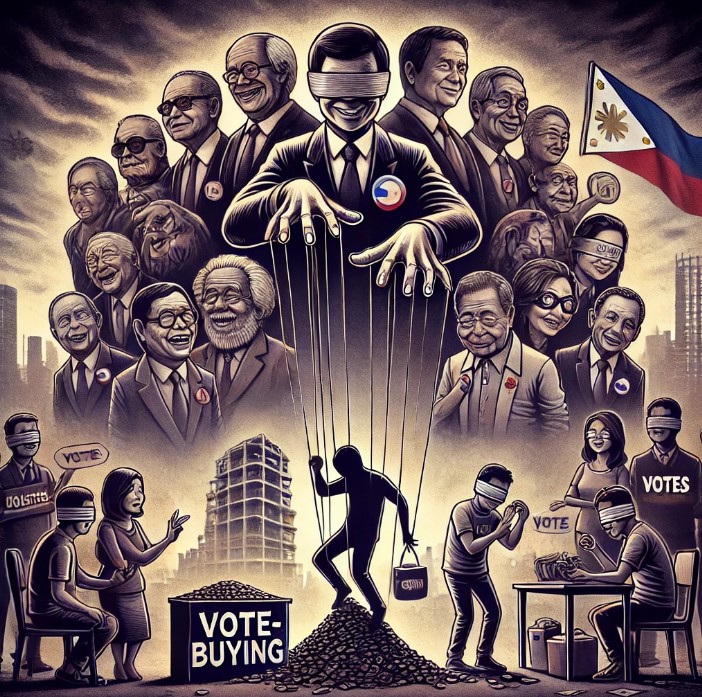
FILIPINOS’ HAMARTIA
The first three parts of this series of articles identified our serious faults as Filipinos—we sell our votes, we use questionable standards when choosing leaders, we treat elections as if they are popularity contests, allowing immensely popular but inexperienced and incompetent celebrities to win, and we either keep restoring the same traditional politicians from the “recycle bin” or replace them with family members. It is a “hamartia” (or tragic flaw) in our character as a nation.
Our inability to choose the right leaders clearly prevents us from reaching our full socio-political and economic potential as a nation.
We know the government is essential in leading all efforts to make our country progressive. We need the best leaders if we really want to become a “developed nation.” We as citizens are responsible for selecting the best ones to hold the reins of government. Unfortunately, we keep failing to do so.
The funny thing is that after we put them into power—the politicians who won because they had the money to buy votes, celebrities-turned-politicians who are inexperienced and incompetent, “recycled politicians” and the members of their political dynasties—we expect them to perform well. After every election, we expect a better-performing government.
And why would we expect a different government – a more effective one – when we know that we keep electing the same politicians or use the same old rotten standards when choosing new leaders?
Let us revisit Albert Einstein’s definition of insanity: “Doing the same thing repeatedly and expecting a different result.”
But assuming that one day we restore our sanity and finally refuse to sell our votes—finally, we learn to elect the most deserving and qualified candidates into office—would the wheels of national development start rolling?
Not quite yet!
There’s one more problem, a problem more serious than our failure to vote wisely and conscientiously. The more serious problem of Filipinos, as mentioned in the first part of this series, is the mindset that the leaders we elect are solely responsible for solving all of our society’s ills and the nation’s problems.
We view our relationship with the state from the vantage point of “self-entitlement.” We think that our leaders must give us “this and that.” We say the government should do “this and that” for us. We expect too much from leaders whom we don’t even choose using the best and most appropriate standards.
Is it the duty of the government to provide each citizen with food, clothes, and shelter?
There goes another problem among us Filipinos. We answer “yes” to the foregoing question, and we seem to have embraced another dangerous tendency—the “ayuda mentality.”
The government’s general functions are to formulate, implement, and enforce the laws of the land, build infrastructure, ensure peace and order, and create economic and other opportunities that help its citizens enjoy the conveniences of life, have the best chance to get a good education, and find or create means of livelihood.
It is also not the duty of the government to provide everybody with a job.
One of the functions of the government is to create an environment that promotes economic growth. They have to ensure that businessmen would be encouraged to invest and initiate business activities, thus creating job opportunities. But jobs are not given on a silver platter. We have to search for job openings, apply, and ensure that we have the required qualifications for the jobs we want. Getting ourselves ready for employment is a personal responsibility. The government will not deliver to our doorsteps the jobs that we want.
The government is also an employer but cannot possibly provide each citizen with a job. It is also impossible for the private sector to employ everybody. That’s just the reality—harsh as it may be. Those who don’t get employed or do not want to work for others because they have better plans for themselves could perhaps succeed as entrepreneurs.
Not everybody would get a college degree. Not everybody is trained and destined to be in a workplace – either in the corporate world or the academe. Some of us will be factory workers, sales clerks, farmers, fishermen, plumbers, drivers, gardeners, or what-have-you. It doesn’t matter what jobs we have, as long as they are decent and they allow us to earn a living honestly.
Don’t reason out that you came from a poor family and your parents could not send you to school to get a good education and have a better chance for a better life.
Unfortunately, this is how we are wired. When we encounter failure, when things don’t turn the way we expect them to, when we are not doing well in the different areas of our personal lives, we are always ready to check our “blame list” to find somebody or something to put the blame on. And our favorite whipping boy – the government. When we are done accusing our leaders for not doing their job well, causing us to become losers, we next vent our ire on our parents, saying that they did not work hard enough to ensure that we live a good life when we become adults.
We need to throw away that “blame list” because, whether we like it or not, we are personally responsible and accountable for our successes and failures. There comes a time in our lives when we should become self-sufficient, when we, not the government nor our parents, decide for ourselves and take complete control of our destiny.
We Filipinos must realize that without recognizing our faults and changing, this country will never become progressive and “developed.” We will never gain the respect of the community of nations if we remain the way we are now.

John F. Kennedy said something we should reflect upon: “Ask not what your country can do for you—ask what you can do for your country.”
We Filipinos need to realize that there are two requirements for a country to become progressive and developed: good government and responsible citizens. Remove one, and a nation is doomed. The citizens and their leaders need to work harmoniously towards achieving national goals. There’s no other way. Both of them need to work hard. They have to work hand in hand. And in case you did not notice, we as citizens control both requirements – we can decide to become responsible as citizens and also choose in whose hands we should put the reins of government.
When Do We Wake Up?
(THIRD OF 4 PARTS)
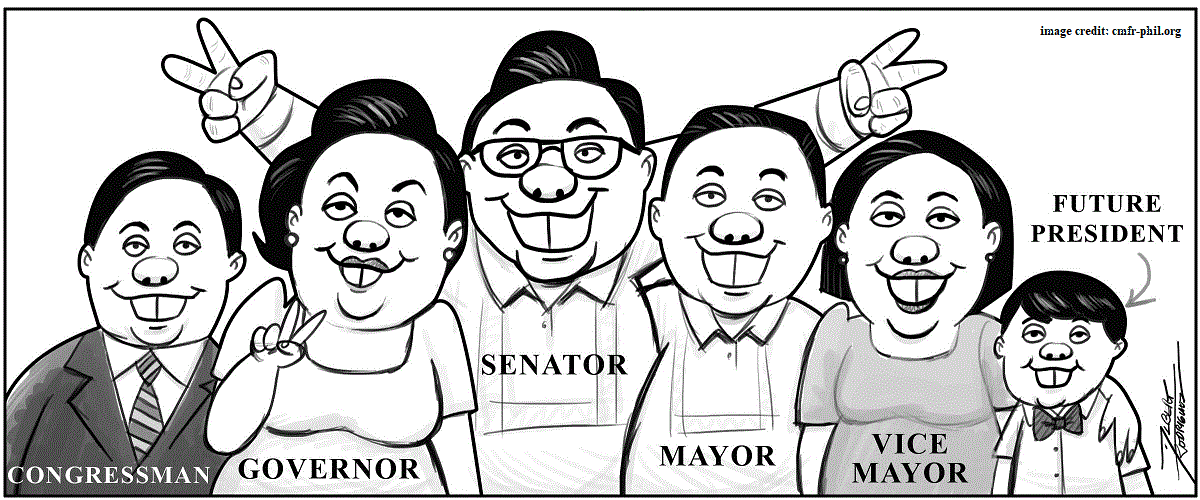
SAME POLITICIANS… SAME RESULTS
We’re complaining about political dynasties, right? But haven’t we realized we are guilty of creating the political dynasties in the Philippines? Yes, we have to admit it. We allowed the same politicians and their family members to lord it over in the Philippine political landscape.
When a politician, let’s say a mayor, could no longer run for re-election due to term limits, what would the honorable gentleman do? Turn his back on politics? Of course not! Power is so addicting. So many of those who experienced being at the helm of either local or national politics (and enjoyed the benefits, including those “passed under the table”) would not just quit politics or pass the torch to another person.
So, what would happen?
His wife would run for the position he previously held. Then that politician would run for another post – as governor, perhaps. Most of the time, Filipino voters would allow them to win, and usually, they would be able to mesmerize (or buy) the voters to luckily get re-elected until they reach their term limits. Would it be the end? Would their thirst for power (and the so-called “benefits”) be finally satiated?
You know the answer… a resounding NO.
The couple would ask their son or daughter (a grandson, a granddaughter, or an in-law) to run for the positions they would vacate. The shocking thing (and you might not believe it) is that there are times when siblings, or even husbands and wives, do not give way to the other, and so members of the same family slug it out in the political arena.
Anyway, this is not about family members squabbling in the political arena but about the political dynasties their families created.
Let’s continue, then.
Let’s return to the mother who just reached her term limit as mayor. Would she go back to being a full-time mother and wife? You were born only yesterday if you don’t know the answer to that question. Yes – she would run for the post vacated by the husband-politician. The husband would then aim for a higher position – run as congressman or senator. If all family members win, then for years, the power will change hands within the same family. The son (or daughter) is a mayor, the mother a governor, and the father either a congressman or senator. When term limits are reached, they will just run for the position a family member would vacate. Some siblings, and even in-laws, in the family also occupy minor positions in their geographical units.
Did that family create their political dynasty? No! We did it. We Filipinos created the political dynasties in the Philippines.
Now, answer these questions – “How (did they perform) are they performing as leaders?” “What is the country’s current economic, social, and political condition?” “Is the Philippines marching towards progress with them holding the reins of government for God knows how long?”
Of course, you know the answers to the foregoing questions.
How many of the available positions in the Philippine government, local and national, are held by the same families who have been the gods and goddesses of Philippine politics since time immemorial? Most of them are offspring of the peninsular who survived “America’s power grab” at the turn of the 20th century. Eventually, they stayed in the country and reaped the dividends. And it’s not only the politics that they dominate. With the enormous fortune they inherited from their Spanish parents/grandparents, they also control the country’s economy. That’s why Filipinos sometimes jokingly ask – “Did the Spanish rule really end?”
Only a few pure-blooded Filipinos and foreign expatriates of Chinese origin who became wealthy when the Americans took their turn to colonize the Philippines had the financial resources to challenge the Spanish mestizos for political supremacy in the Philippines, especially after the Americans granted the Filipinos their independence after the World War II. Some of them succeeded, and when they experienced how intoxicating power is, they (and their offsprings) kept running, and we kept electing them as if nobody else were qualified.
It is no longer surprising that politicians holding national positions have one or two family members and in-laws holding seats in the local government.
Filipinos might ask, “When would the same people from the same families pass the reins of leadership to each other in national and local governments after elections end?”
That’s up to the Filipino voters.
So, we should not wonder why the World Bank still classifies the Philippines as a “developing country.”
According to Albert Einstein, “insanity” is doing the same thing repeatedly and expecting a different result.
Why do we expect a better-performing government when we keep electing the same politicians?
When Do We Wake Up?
(SECOND OF 4 PARTS)
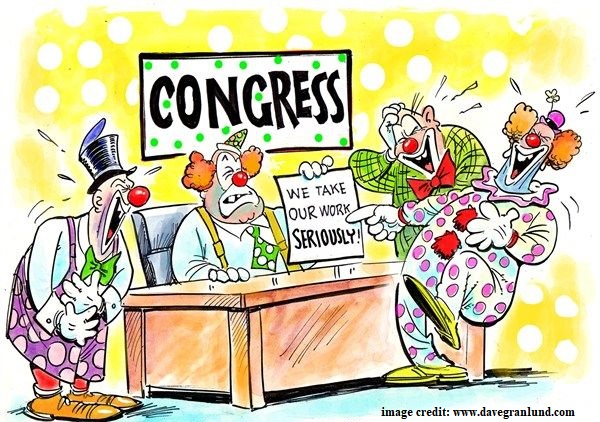
CLOWN-GRESS
We also need to exercise our right to vote seriously. Refusing to sell our votes is only the first step. It’s about time that we set specific standards that candidates should measure up to before we write their names on the ballot—standards that go above and beyond the qualifications set by our Constitution for candidates seeking a particular public office.
It’s time for us to realize that some personalities are venturing into politics not because they want to serve the people but because they think they are popular enough and could get a seat in the government through it. They know their popularity could easily catapult them into public office. Power, like fame, is also addicting. Some of these famous people running for elective positions want to have both.
An interesting question is, “How many showbiz and sports personalities holding public office now were elected not because they are both qualified and capable but because they are popular?”
There are other questions that we need to answer as honestly as we should – “What did those actors, actresses, singers, TV personalities, basketball players, boxers, and other celebrities who used their popularity to win contribute to the improvement of the quality of life in the localities where they were elected?” Those among them who were lucky to become President, Vice President, Senators or Congressmen (or were given cabinet posts), did they contribute anything to national development?” “What good, if any, did their ‘star power’ bring to politics and governance in the Philippines?”
Suppose all those seasoned and veteran politicians with master’s and doctorate degrees in law, economics, political science, public administration, and business administration who have been in public service all their lives could hardly move the needle forward on socio-economic development. What do we expect from showbiz, media, and sports personalities who suddenly turned into politicians only because they are immensely popular and they know that Filipino voters could easily be deceived? Do they honestly think the skills and knowledge needed to run a public office can be acquired by taking crash courses in leadership and management?
Sadly speaking, this is how politicians and celebrities-turned-politicians think of Filipino voters – they can not only be bought, but they are also unintelligent. Most of those running for public office consider the Filipino voters cheap and ignorant – cheap because they are willing to sell their votes for a small amount of cash and ignorant because they don’t know how to choose the right candidate for a position.
Choosing the most qualified and capable candidates is not rocket science. We can evaluate their qualifications to match the position they are seeking. We can check their track record. We can hear them talk during the campaign in person and through any form of media. We can determine who among them is eloquent and can articulate their government platform and who is dumb and merely banking on their popularity so they could get the support of unsuspecting voters or have truckloads of money to buy votes. If we find those celebrities truly qualified, capable, and sincere in their desire to serve this country, and they are the best candidates vying for an elective position, we should vote for them. But if, upon examination of their credentials and background,d you find nothing but their popularity, you’ve got to make the right decision – vote for the most qualified.
We have to separate the wheat from the chaff. We must be diligent in distinguishing the qualified and capable candidates from the pretenders. Electing leaders unto whom we give the mandate to lead – unto whom we pin our hopes for a better nation – is not a game. Elections are not popularity contests.
Governance is a serious business and should be done full-time. A public servant cannot be a part-timer who attends to her/his duties and obligations only when there are no shooting sessions for movies and TV shows or practices or games to play as an athlete in any sport.
We should never entrust a public office to clowns.
PART ONE (THE CURSE OF VOTE BUYING)
When Do We Wake Up?
(FIRST OF 4 PARTS)
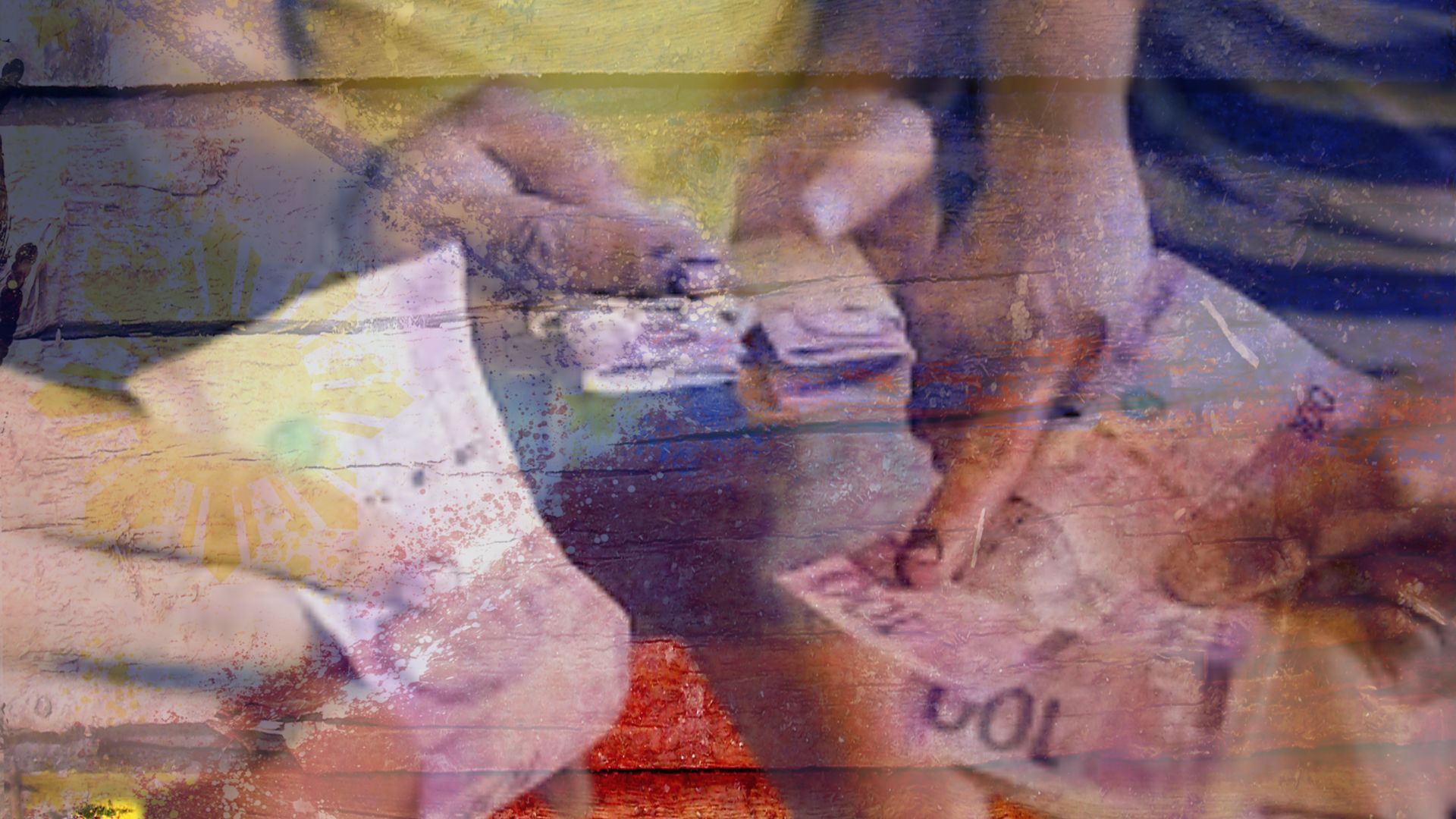
THE CURSE OF VOTE BUYING
If we think our leaders alone can deliver us to the proverbial “promised land,” we are gravely mistaken. If we believe that among them is a messiah who can bring about the socio-political and economic reforms needed to make our country progressive and peaceful, then we are having a dream, or more fittingly, a nightmare, and it’s time to wake up.
It is not because nobody among them is qualified and capable of leading our country to greatness (but I won’t blame you if you think so). It’s just that nation-building doesn’t work the way we think—that it can be done unilaterally by those we elect to occupy the seats in the executive and legislative branches of government. We believe our only role is voting, which we even fail to do responsibly.
That is one (probably the worst) of our major problems as people – the mindset that the leaders we elect have magic wands they can wave to solve all of society’s ills and all of our nation’s problems. It is the prevailing belief among us. We pin our hopes for a brighter future on our leaders.
We expect them – the governors of our provinces, the mayors of our towns and cities, and the captains of our barangays to solve our problems. We expect them to weave their magic and cast their spell, and then when the smoke dissipates, we suddenly live a better life.
We think of our members of Congress and senators as witches and wizards who could improve our country through their out-of-this-world powers.
We think our President, vice President, and cabinet members are mighty superheroes who can save us from any disaster and protect us from villains. Well, they are not. If we think we live in either the DC or Marvel universes, it’s time to wake up. We live a real life, not a “reel” one.
It’s time to wake up. We must realize that those elected (and appointed) politicians and leaders manning our government’s executive, legislative, and judicial branches are as human as us. They don’t have superpowers. They cannot solve all of the nation’s problems by themselves. They need our support as citizens. Each citizen—rich or poor, professional or not—has a role. Each of us should contribute to nation-building.
What can ordinary citizens do to help make the Philippines a better nation?
What about not selling votes during elections?
We expect too much from our government, yet we do not vote for the best and most qualified candidates for public office during elections. Instead, most of us write on the ballot the names of the candidates willing to buy our votes.
Vote-buying is an open secret in our country. It is freaking rampant. It has become the norm. It’s making the electoral process lose its essence. Leaders are elected not on the strength of their qualifications, abilities, and platform of government but on the power of the money they can pay each voter who would promise to cast their votes. On the eve of election day, bidding wars begin. Once candidates get the information their political rivals offer a certain amount for each voter, they will likely double that. The starting price is usually P500. Then, candidates will try to maneuver until the price becomes P1000 per vote. The desperation among the politicians sometimes makes them willing to cough up P2000 (or even more) for each voter.
Would elected officials admit that they are guilty of vote-buying? Of course not. So, we could only wonder how many percent of our elected officials bought the positions they are currently occupying. The other question is how much they spent during the past elections to secure their win.
Stopping this culture of vote-buying and selling is difficult, but it has to be done. We must realize that the leaders we put into office should have the moral ascendancy to lead. It is difficult, if not impossible, to look up to leaders whom we know cheated their way to their offices. They are not credible as leaders. We could not apply the principle of “public office is a public trust” when we know the persons occupying public offices “bought” their mandate. These scheming politicians feel their office is their “private property” because they paid for it. They can do, therefore, as they please, and their constituents cannot and (shouldn’t) complain because they have been paid.
Those who thought they duped the politicians by taking the money they offered them are wrong. They were so happy with that P500 (or P1000… make it P2000) they received. Such an amount is nothing compared to the millions of pesos they will get when the politicians dip their dirty hands into the government’s coffers. The money those politicians use to buy votes is considered an investment. Once elected, they will ensure they will get a return on their investment, with the corresponding interest.
Then we complain about how our government is performing. What kind of performance would we expect from politicians we awarded the mandate to lead not because they are qualified and capable but because they have the money to buy votes?
As Thomas Jefferson says, “The government you elect is the government you deserve.”
Every Filipino needs to realize that suffrage is not just a right but a moral obligation. It’s not for sale. Don’t reason out that you’re selling your votes because someone’s buying. “It takes two to tango.” Both vote-buyers and vote-sellers are guilty of this wrongdoing.
Don’t expect the politicians to stop buying votes. They would never do that. Politicians will do everything to ensure they get elected and have the power they crave. Power, as they say, is addicting. They want it so badly and salivate so much for the accruing benefits and opportunities they would get once they are in position. Only those born yesterday don’t know what benefits and opportunities those are.
It is not public service they are thinking of when they run for elective positions. I could be wrong. But am I? How many of those occupying seats in our government’s Executive and Legislative branches are genuine public servants? Who among them are real statesmen?
Sorry Wisely
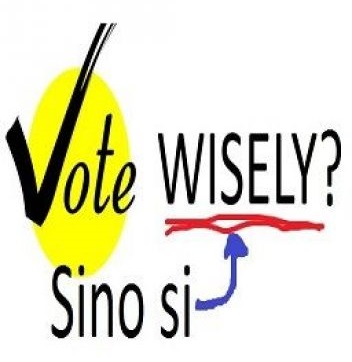
Sorry Wisely!
Talo ka nanaman.
Paano ka ba naman mananalo…
eh di ka qualified.
Ano?
Ah college graduate ka kamo!
Eh ano naman… kahit ba may PhD ka pa.
Ang tanong eh – may datung ka ba?
Wala! Wala! Walang… DATUNG
Kaya di ka qualified.
Ano?
Bakit kaylangan ng datung?
Susme!
We’re you born yesterday?
Oh kaninang madaling araw lang.
Ha?
Malinis kamo record mo.
Who cares…?
Nobody… nobody but you.
Dahil ang tanong eh – “Meron ka bang datung?”
Ha? Handa ka kamong maglingkod.
Hindi pala dapat Wisely pangalan mo.
Mas bagay sa iyo ang pangalang engot.
Ang hanap ng botante…
hindi ang handang maglingkod
Ang hanap nila’y – ang handang magbayad.
Pera-pera ang labanan tsong.
Gets mo na?
Ha?
Bakit ganun?
Aba malay ko.
Itanong mo kaya sa lolo mong panot.
Kaya… sorry na lang Wisely.
Better luck next time.
Try mo kaya mag-budots.
Baka makakuha ka next time ng –
mahigit labing-apat na milyong boto.
On Political Dynasties in the Philippines
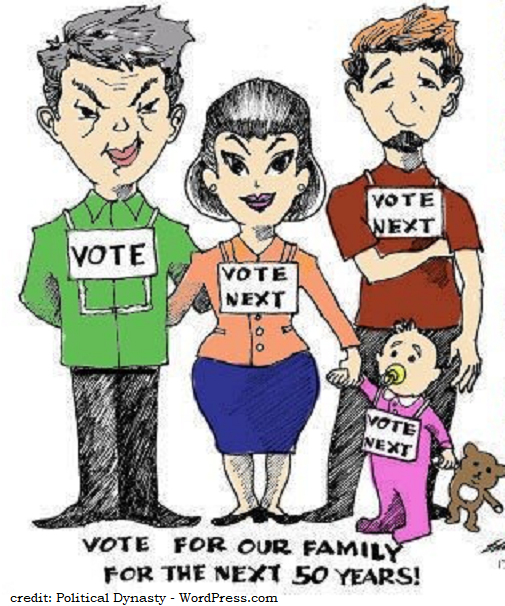 A politician, let’s say a mayor, could no longer run for re-election due to term limits, what would the honorable gentleman do? Turn his back on politics? Of course not! Power is so addicting. So many of those who experienced to be at the helm of either local or national politics (and enjoyed the benefits, including those “passed under the table”) would not just quit politics nor pass the torch to another person.
So, what would happen?
His wife would run for the position he previously held. Then that politician would run for another post – as governor perhaps. Assuming both the politician and his wife win and luckily get re-elected until they reach their term limits, would it be the end? Would their thirst for power (and the so-called “benefits”) be finally satiated?
Not by a long shot!
They are just starting to build a political dynasty.
The couple would ask their son or daughter (or a grandson – or a granddaughter – or an in-law) to run for the positions they would vacate. The shocking thing (and you might not believe it), there are times that siblings, or even husbands and wives, would not give way to the other and so member of the same family would slug it out in the political arena. Anyway, this article is not about family member squabbling in the political arena – this is about the political dynasty their families created.
Let’s continue then.
Let’s go back to the mother who just reached her term limit as mayor? Would she go back to being a full-time mother and wife. I think you know the answer. She would run for the post vacated by the husband-politician. The husband would then aim for a higher position – run either as congressman or even senator. In case all family members win then for years that the power will change hands within the same family. The son (or daughter) is a mayor, the mother a governor and the father either as congressman or senator. When term limits are reached then they will just run for the position that a family member would vacate. Some siblings, and even in-laws, in the family are also occupying minor positions in the geographical units where they reside.
That’s political dynasty.
What’s my beef with political dynasties? Let me answer that question with the following questions:
“How (did they perform) are they performing as leaders?”
“What is the current economic, social and political condition of the country?”
“Is the Philippines marching towards progress with them holding the reins of government?”
Of course you know the answers to the questions aforementioned.
How many of the available positions in the Philippine government, local and national, are held by the same families who have been the gods and goddesses of Philippine politics since time immemorial? Most of them are offspring of the peninsulares who survived America’s power grab at the turn of the 20th century. Eventually they stayed in the country and reaped the dividends for doing so. And it’s not only the politics that they dominate. With the enormous fortune they inherited from their Spanish parents/grandparents, they also control the country’s economy. That’s why Filipinos would sometimes jokingly ask – “Did the Spanish rule really end?”
Only the pure-blooded Filipinos and foreign expatriates of Chinese origin who became wealthy when the Americans took their turn to colonize the Philippine had the financial resources to challenge the Spanish mestizos for political supremacy in the Philippines, especially after the American granted the Filipinos their independence after the World War 2 . Some of them succeeded and when they experienced how intoxicating power is, they themselves established their political dynasties.
It is no longer surprising to know that politicians occupying national positions have one, or two (I hope not all) family members and in-laws occupying seats in the local government.
You might ask – “When would having the same people from the same families passing the reins of leadership to each other in both the national and local governments after elections end?”
It might not!
Why?
It would require for a candidate to have sacks (if not truckloads) of money to win in an election in the Philippines.
You were probably born yesterday if you don’t understand what I mean.
Rare are real public servants getting elected in the Philippines. The ones in position, usually, are the rich and powerful – those who could buy votes. Politicians buy votes because most (I’m not saying all) Filipino voters sell their votes to the highest bidders.
Midterm election in the Philippines is on May, 2019.
Will the Filipinos sell their votes again?
Will the political dynasties continue their reign?
Only God knows!



 M.A.D. L I G A Y A