BACK TO “OFFLINE CLASSES”

Finally holding classes face-to-face after more than two years was like a breath of fresh air. It was the break that people in our university – students, teaching and non-teaching personnel, and school administrators – so badly needed after months of being segregated because of Covid-19.
But with the pandemic slowly waning, the campus has gradually gone back to life. The members of the academic community could be seen again walking to and fro inside buildings and pathways. The queues are back in the university’s bakehouse, cafeteria, and coffee shops. The gym is filled with people, young and old, working out. The basketball and tennis courts are once again noisy.
But there’s no better sign of life and reclaimed semblance of normalcy on the campus than in the classrooms where classes are being held. I had mixed emotions after reading the notice that the university is abandoning online classes and teachers are expected to meet the students for face-to-face classes.
I have no problem with either online or offline education because no matter how teachers deliver learning, virtually or inside the classroom, they perform the same pedagogical functions – they prepare a lesson plan, set objectives, motivate students, discuss the lessons, give assignments and seatwork, and evaluate learning. So, with the marching orders given – conduct classes face-to-face – I got ready for it.
The truth is I heaved a sigh of relief when the university decided to go back to offline classes. Why? After 5 semesters of online teaching, I discovered that virtual classes are more difficult to handle. I figured out why – I did my online classes synchronously. Things could have been easier for me had I chosen the asynchronous method where all I needed to do is prepare a video presentation and ask the students to watch it. No offense meant to anybody, but I don’t consider that teaching. I don’t feel like performing my pedagogical functions when all I do is prepare videos of my lessons. I feel like shortchanging my students. With the synchronous method, classes are run in real time and the students are attending together from different locations. This version of online teaching gives the students a chance to participate in the discussions and to ask questions if they want and need to. Teachers could guide them when performing graded activities. There is actual real-time interaction between the students and their teachers, something that cannot be done when teachers teach by just uploading videos. Not actually interacting with the students, even only through online platforms is not giving them enough guidance in the learning process. It is risky to rely on the assumption that students are responsible enough to watch the videos and perform the required activities by themselves.
As I said earlier, I had mixed emotions when our university made it mandatory for English teachers to conduct classes offline. I was excited and at the same time wondering how would it be to conduct face-to-face classes once again. Admittedly, I was a little bit tentative for I have already gotten used to doing online teaching. But as soon as I stood in front of my students and started talking, everything went seemingly autopilot. I was in familiar territory. The teacher in me went to work without missing a beat. Before I knew it, my first class for the Fall Semester of 2022 was completed.
So, it’s face-to-face classes again. Both I and my students are back in the “real classroom.” I expected the usual things. There might be some classroom management issues – students using their cellphones and other gadgets, one or two of them sleeping while I am teaching, or what-have-you. These things I address during the first day of class. I would tell them that I am dealing with young adults, not kids, who know what they should and shouldn’t do. Most of the time, it works. I never stopped teaching just to call the attention of the students using their cell phones or to arouse the students who fell asleep. Rarely those happened anyway.
There are times a student might come late and I need to decide whether to just excuse them or strictly implement the attendance policies of the university. If it’s only one absence, I strike it off the record especially if the student’s explanation as to why they came late I deem acceptable. I am almost certain also that a number of them would ask me to change their grades for one reason or another… something that unfortunately I would never do. I give my students the grades they deserve. I check and double-check their scores before I encode them into the university’s portal.
It really felt great seeing the students again in the classroom. But while we may have reverted back to face-to-face mode of delivering education, I wouldn’t say that I went back to the traditional way of delivering my pedagogical functions. If there is one great thing the pandemic taught me it is optimizing the use of computer and information technology in everything that I do as a teacher. Even before the pandemic, I relied heavily on computer-aided instruction. I used PPT for my lectures and instead of using chalk or board marker when needing to write something in addition to what I have on my presentation, I would use a blank slide.
I have gone completely paperless for the assessment and evaluation of my students’ performance. I am using the Google form for all my tests, quizzes, assignments, and graded exercises. It is through the university’s portal that I send my students link to those Google forms. They take them using their cell phones, tablets, or laptops. The Google form has features that could be used to prevent and discourage students from sharing answers.
Even the submission of course requirements (projects, homework, etc.) should be done virtually as well. I created an electronic portfolio for each student using the Google Drive folder where they can drag and drop (upload) whatever they need to submit. I also created a common class folder (through Google Drive) where I upload lectures, reviewers, and other documents and files related to the course).
Except for the “paperless” assessment and evaluation of students’ performance, all of the foregoing are things I have been doing before the pandemic. I just figured that as a 21st century teacher teaching 21st century skills, knowledge, and values to 21st century students, it is my obligation to embrace computer and information technology so I could be more efficient in the performance of my duties and obligations as a teacher.
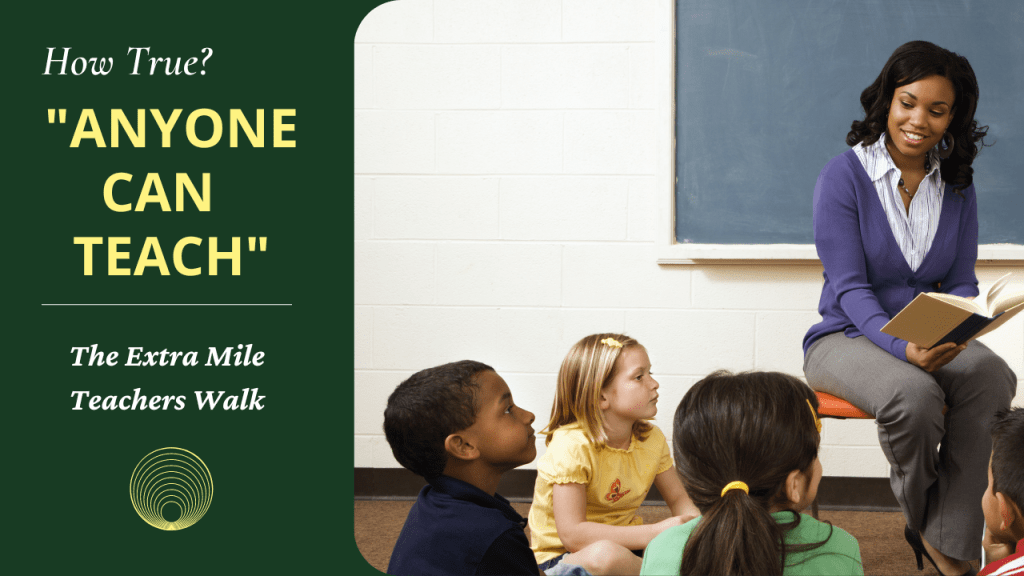
Can Anyone Teach? (The Extra Mile Teachers Walk)
Search any site on the internet for the highest-paid professions in the world and you will not find “teachers” in the top 30. Expand your search and look for the list of professions in different countries where the practitioners receive the best compensation packages and you will find out that teaching is not among them. You will not find a country where teachers are ranked among the highest money earners.
Teaching not classified among the highest paying jobs, of course, is not surprising. That has been the case since time immemorial and it is most likely not to change anytime soon. One possible reason teaching as a profession is not getting the recognition it should get is because of the pervading notion that “anyone can teach.” You cannot say the same for law and medicine… not just anyone can practice those professions. But how true is it that just anyone can be a teacher?
But even if teachers do not get the recognition and sufficient remuneration they deserve, they wholeheartedly perform the role they have embraced. Indifference and poor salary are included among the thorny steps in the extra mile that teachers need to walk when they have accepted that teaching is not merely a profession but a vocation. It is not merely a job to perform but an obligation to carry out.
Acknowledging that teaching is not merely a job but a duty to fulfill is what makes teachers go the extra mile, to do what is more than required in the performance of their tasks, including sacrificing personal resources and sometimes even happiness. Teachers understand and fully grasp the nature of the responsibility that they agreed to fulfill when they signed up for the job. They know it’s not easy. How in the world would one consider it easy to be responsible for the education of other people, especially the young ones? When did it become easy to facilitate the acquisition of knowledge and values and the development of skills of your fellow human beings?
Teachers would be one of the highest-paid professionals if only pay would be commensurate to how significant is one’s job in the enlightenment of the soul, the preservation and enhancement of the fabric of society, and the socio-economic development of a nation. Teaching would certainly be at top of the list of the highest-paid professions in the world.
But it is what it is. Teaching is not a profitable profession. If it is material wealth one would like to accumulate, teaching is not the profession to have. The realities confronting the teachers in the academe could really make them say a lot of things in the “present unreal conditional” form. There are times that they couldn’t also help but make a “wish statement” like “I wish that I were a health care professional.”
And why?
Healthcare professionals like physicians, surgeons, and dentists, consistently round out the top 10 in the lists of highest-paid professionals.
What they (the medical practitioners and their fellow health workers) do, maintenance and restoration of good health are very important. For that, they deserve the pay they get, most especially during the time that the coronavirus pandemic was raging. But nurturing the human spirit…helping a person achieve holistic development is as equally important, if not more important. What professional endeavor could be more meaningful than helping your fellow men achieve their full potential for them to become responsible human beings and productive members of society?
And not only are the teachers not getting the pay commensurate to the importance of the work they do and the effort they need to exert when doing their job, but they also don’t get the recognition they deserve.
A study concluded that American society does not generally view teachers in the same way, as they view other professionals; the belief that “anyone can teach” is not found in other professions. For example, not just anyone can play professional baseball, be an accountant or engineer, or practice law or medicine.
Such is the indifference teachers, as professionals are getting.
But how true is the contention that “anyone can teach?” Those who know what it takes to become a teacher would say that it is a fallacy. That “anyone can teach” is an erroneous assumption.
Education is not just a matter of whether you can teach or not but also whether or not you can make the students learn. Even if a person is an expert in a particular field, it is not a guarantee that they can teach what they know. Knowing something is different from knowing how to teach it.
Hiring just anyone to become a teacher is doing a disservice to the teaching profession. Hiring somebody to teach a language just because they could speak that language is a mistake. Not because somebody is good at math that they should be allowed to teach math. It takes a lot to become a teacher. Teachers undergo rigid training for them to hone their pedagogical skills. They read a lot knowing that teaching and learning are both grounded in Philosophy, Psychology, Sociology, and other related fields. They understand that they need to be familiar not only with their field of expertise or chosen subject area but with different principles and strategies to effectively deliver learning and teaching. They know that when they are done teaching in the classroom, their work is not done yet. There are other things to be done – checking graded activities and preparing a new lesson plan. The preparation of a lesson plan, in itself, is a tedious process.
The list of the things that teachers need to know and do is long. At the end of that long list are two characteristics that teachers need to develop if they wish to succeed in the profession. Those are PASSION for their work and COMPASSION for their students.
With all the aforementioned, what would anybody assume that just “anyone can teach?”
Be that as it may, teaching will forever be a NOBLE PROFESSION! Nothing can diminish its intrinsic value.
One thing is for sure, all successful professionals in the world – business executives, lawyers, architects, engineers, surgeons, physicians, dentists, nurses, brokers, and what-have-you – know that their teachers, who did not mind walking the extra mile contributed a thing or two or more into whatever they have become.
What Makes You Happy?
A lot has already been written about happiness. Much has been said about how to achieve it and where to find it. It is my hope that the things I shared in this video would give you additional insights on the topic.
The Self-improvement Paradigm

According to Jim Rohn, “Success is not to be pursued, it is to be attracted by the person you become.” Imagine success as the fruit of a tree. A tree has to grow and mature. It will reach a certain stage of maturity that allows it to bear fruits. Imagine yourself as that tree. You have to grow and mature. The person you see at the end of the process of growing and maturing is what Jim Rohn refers to as the person you become. The fruits you bear or the success you achieve depends on the kind of tree you would turn into. And you have to become the best version of yourself. That’s the kind of tree you should be. You need to reach your full potential so you would bear the best fruits.
Self-improvement is the key to becoming the best version of yourself. If you succeed in getting to the end of the road to self-improvement, you reach your full potential.
But self-improvement is a complicated process. It is easier said than done. It requires the possession of certain beliefs, attitudes, and characteristics that will make up your value system. It requires also the acquisition of certain skills and abilities and the development of certain practices and habits.
The right beliefs, attitudes, characteristics, skills, abilities, practices, and habits, together, are the catalysts of self-improvement. However, having them is not enough. Something else is needed in order to make them work. Without it any attempt to reach one’s full potential is bound to fail. What is it? It’s self-discipline.
Self-improvement is not as simple as just being able to think positively. Positive thinking is but a tip of a huge iceberg called personal growth and development.
Self-improvement is a tedious process. Its ultimate goal is becoming the “best self” or achieving one’s full potential. As previously mentioned, certain beliefs, attitudes, characteristics, skills, abilities, practices, and habits are required. But possessing the said requirements is not enough. Consistency is needed in their pursuit. Thus, self-discipline is also needed.
The foregoing are the elements that comprise the self-improvement paradigm that I developed to guide my advocacy for personal growth and development.
The contents of my YouTube channel (https://www.youtube.com/channel/UC2zzJ6T94fNnvPPwrA0OxAA) and the personal growth and development book I am currently writing are based on this paradigm.
Tuwing Bubuhos Ang Ulan (Audiobook)

I tried to see if I could create an audiobook. I just did. I created an audiobook out of one of my short novels written in Filipino. It’s a tragic love story. It’s not perfect but I gave it my best shot. One thing that I realized when I finished it is that I should have asked a lady friend or two to read the lines delivered by the female characters in my story. I undertook this project just to make good use of my free time here in South Korea. Doing creative work is the best way to overcome boredom.
HOLIER-THAN-THOU

The accounts of a friend about her encounters with certain individuals in her former church remind me of one word – HYPOCRISY.
I once worked in an institution run by a religious congregation and the stories she told me made me recall my own encounters with people wearing the “habit.” Those many years that I spent with them made me realize one thing – church leaders and personalities (in any religion) and those they assign or employ to assist them in running church affairs are as human as churchgoers. It is my humble opinion that none of them is infallible. They commit mistakes. There are times that their judgment is clouded by their biases and prejudices… and God forbid, by their personal interests, whims, and fancies. I just don’t know if they are also as sinful as I am.
It is unfortunate that I don’t have any way of determining the veracity of my friend’s stories. But I know her to be very intelligent and level-headed and would never resort to concocting lies. She was just trying to vent her grievances because she was then on the verge of leaving the church. Eventually, she did. She had enough of their leaders acting and talking in a manner unbecoming of a Christian. She bewailed the failure of their leaders to observe decorum and protocol.
The personalities involved in the things my friend told me conjured up the image of somebody who is holier-than-thou. How convenient it is for some church leaders and workers to hide under the skirts of God’s words to justify what they say and do. Some of them would advance their selfish motives and interests using the gospel as their façade. What I know is that “even the devil can cite the Scripture for his purpose.” The devil, for example, quoted Psalm 91:11-12 when he tried to tempt Jesus.
My friend refuted the idea that leaving that church was a case of her putting faith in people instead of in God. Her getting offended by what she perceived as inappropriate and indecorous behavior of their leaders could (and should) not be construed as losing faith in God. Finding such behavior as unacceptable doesn’t diminish her Christianity. It was, in my opinion, actually applying the Christian norms and standards that she thought those in the church leadership positions ought to adhere to. Apparently, they didn’t.
Leaving that church means turning her back, not to her Creator, but to HYPOCRISY… of church leaders rendering lip service… of not walking their talk. Not that she did not do anything about it. She did. She tried to make her grievances known. But she was a voice crying in the wilderness.
We need to bestow reverence on those anointed by God to serve as the mediator between Him and us. But that doesn’t mean turning a blind eye when those leading us in the churches where we are attending are abusing their authority. While not each of us may have received the gift of discernment described in 1 Corinthians 12:10, all we need is common sense to determine whether or not our church leaders and workers deserve the reverence we give them and whether or not they are worthy of our obedience.
Do not forget St. Paul’s warning, “Beloved, do not believe every spirit, but test the spirits to see whether they are from God; for many false prophets have gone out into the world (1 John 4:1).”
Face-to-Face and Online English Lounges: A Comparative Analysis

doi: 10.18178/ijiet.2022.12.9.1698
ABSTRACT
Research was conducted to examine how an English lounge program at a university affected students’ speaking ability and their attitude toward their foreign teachers and to determine if there were significant differences in the effects between the program delivered face-to-face and online as perceived by the two groups of respondents – students and teachers. This study is a descriptive-comparative survey research. Frequency analysis, mean comparison analysis, t-test, correlation analysis, and regression analysis were the statistical tools used. The computed mean values show that as perceived by the participants, the program, implemented face-to-face and online; improved the students’ speaking ability and their attitude toward their foreign teachers to a great extent. Results have shown that as perceived by the participants both versions of the program improve the students’ speaking ability and their attitude toward their foreign teachers and that students’ attitude toward foreign teachers is strongly correlated to (and significantly influences) the development of their speaking ability. The findings convey the importance of establishing rapport between students and teachers in the development of the speaking ability of students. It also reveals that online English lounges are as effective as when they’re implemented face-to-face.
 M.A.D. LIGAYA


 M.A.D. L I G A Y A