LEBRON’S GREATNESS

You can love LeBron James or hate him, but you can’t ignore his greatness. “The kid from Akron” has accomplished much, not just as an athlete but as a businessman, that even his staunchest critics and haters, the “Skip Baylesses” of the world, could not help but sing praises.
The list of his career highlights and awards is long. On top of that list are 4 NBA championship rings and the same number of NBA Finals MVP trophies. He was also voted NBA MVP 4 times. His critics would be quick to mention that Michael Jordan has more rings and trophies than Bron and therefore is a greater player… and the greatest of all time. Bill Russel won more championships than Jordan and Lebron combined. So, should he be the GOAT? I could almost hear basketball pundits calling me names for asking that question. They might even say that I know nothing about basketball for not agreeing that MJ is the GOAT.
For the record, I don’t buy the idea of declaring a basketball player as the GOAT. Each of the aforementioned players is/was great. The list of great players who showcased their superb talents and have brought us entertainment through the years is long. The GOAT debate is just like a championship ring. It is rounded and has no beginning or end. Discussions about it would always end in a stalemate. Nobody could definitively say who among past and present basketball players is the greatest of all time. Nobody could claim that they have a statistically sound metric to objectively determine who among those basketeers should be declared the best. Not because ESPN’s Stephen Smith says that Michael Jordan is the greatest hooper that everybody in the basketball universe would already accept it as the truth.
We cannot disregard the greatness of a certain athlete by saying that another one is better. We should not diminish LeBron’s greatness by saying that Jordan (or anyone else) is a better cager. We should learn to appreciate the accomplishments of players individually, not comparatively.
I find it amusing how the LeBron doubters would eagerly await that he fails at something or his team would not perform as well as expected for them to have something to say against him. Is it because they expect too much from him or do they just hate to see him succeed? They won’t consider him helping bring his teams (Miami & Cleveland) to eight straight finals as an accomplishment but rather a monumental failure having succeeded only thrice in those multiple trips to the NBA finals. They refuse to give him credit for leading the Cleveland Cavaliers to come back from a 1-3 deficit and win the championship citing as the reason the suspension given to Daymond Green in Game 5 of that series. They also considered the championship he won with the Lakers as insignificant because the 2020 NBA season was shortened and disrupted by the COVID-19 pandemic. In short, his critics would always find a way to either downgrade or disregard his greatness.
But no matter what the fault-finders say, LeBron remained steadfast in his quest for greatness. At the age of 38, he remained competitive. I don’t know if any player could beat him in the category of longevity. And it is not just a matter of playing as long as they could but playing at a level the way Lebron has been doing it.
Whether he could play as long as Kareem Abdul Jabbar (who retired at the age of 42) remains to be seen. But what is certain to happen is him passing Kareem as the NBA’s all-time leading scorer. As of today (01-04-23), Lebron has 37,903 points. He needs just 485 more points. He is therefore at the precipice of another great milestone. Estimates have it that sometime in February, 2023 the “Kid from Akron” will be breaking the said record that stood since 1984.
King James, for me, is an epitome of a person “aging like fine wine.” At the age of 37, (according to Forbes) LeBron James is the first active NBA player ever to become a billionaire. At the age of 38, he is about to become NBA’s all-time leading scorer. By the way, among the top 5 all-time leading scorers, he has the highest number of assists and is third in total rebounds.
We don’t know if those who despise Lebron so much would be happy to see him add all those feathers to his cap. They may be. Skip Bayless said he is. I have no reason to doubt Skip… or should I?
TO BE OR NOT TO BE A “DON QUIXOTE”
Those who assume that the academe is an ideal workplace where everybody thinks, acts, and talks within the bounds of professionalism and fair play are in for a big disappointment. It is a mistake to think that the school is an organization without faults and that those who work there are infallible. Schools are similar to all other institutions in our society. They are not perfect. And the people who work there – as educated as you may think they are – are human beings susceptible to human frailties.
The foregoing are the things I discovered having served in 8 different schools in 2 different countries. If years were feathers on a cap called an academic career, I already have more than 30 of them. Those years I spent in the academe, both as a classroom teacher and as a school administrator, gave me the opportunity to mingle with different kinds of students (and their parents), teaching and non-teaching personnel, administrators, and school owners.
Imagine the wealth of experience I gained during those years supervising teachers and being one of them. Indeed, I experienced a lot, both good and bad. On top of being able to hone my pedagogical skills, I learned how to deal with different personalities, both good and bad. I obtained a lot of insights about school operations and organizational behavior… insights that could not be read in books.
I learned a lot of lessons, very valuable ones. One of the most significant lessons I learned from the past years of my stay in the academe is “Be not a Don Quixote.”
In case you don’t know him, Don Quixote is a fictional character introduced to the world by the Spanish author Miguel de Cervantes through his epic novel “The Ingenious Gentleman Don Quixote of La Mancha.”
For you to know him better, let me (not paraphrase but) give you exactly how sparknotes.com describes the character.
“The novel’s tragicomic hero. Don Quixote’s main quest in life is to revive knight-errantry in a world devoid of chivalric virtues and values. He believes only what he chooses to believe and sees the world very differently from most people. Honest, dignified, proud, and idealistic, he wants to save the world. As intelligent as he is, Don Quixote starts out as an absurd and isolated figure, becoming a pitiable and lovable old man whose strength and wisdom failed him.”
In any workplace, people are classified as employees, middle managers, and employers. Let me call the employees “people downstairs” and the middle managers and employers “people upstairs.” Most of the time, in the schools where I served in the Philippines, I was “upstairs.” Here in South Korea, “downstairs.”
We all dream of belonging to an organization where everybody from downstairs to upstairs coexist peacefully. But out of 10 organizations, how many have fostered a harmonious coexistence among all members? It’s hard to guess.
I know both sides of the fence are seemingly locked in the ancient battle between good and evil. Whatever side is good… and evil… is anybody’s guess. The relationship between employees and those supervising them is analogous to the relationship between the administration party and the opposition in the realm of governance. They are in perpetual disagreement.
Usually, the point of disagreement between subordinates and their superiors (in the academe.. between teachers and school administrators) emanates from the creation of new policies and the corresponding changes they create.
Naturally, people abhor changes. Anything that displaces us from our comfort zone makes us anxious and uncomfortable. Our comfort zones are like territories we will defend at all costs. This is because we are hardwired to resist change. Psychologists found out that the part of the brain called the amygdala interprets change as a threat and prompts the body to release the hormones for fear, fight, or flight.
But some changes are inevitable in organizations, in the business world, or in the academe. We could resist them all we wanted, but they would happen whether we liked it or not. We can howl our disagreement as loud as we can, but that will not prevent changes from happening.
In a related essay that I wrote, I pointed out the following…
“What employees (teachers) need to bear in mind is that employers (school administrators) have to do what they need to do for their business to prosper or simply survive. They must implement changes and tweak policies at a certain point, sometimes when the employees least expect them. Notwithstanding disagreements from downstairs, changes people upstairs want to make will be implemented.
When changes are implemented and policies get tweaked, the employees should not take them personally. Changes in the workplace happen when they are due. It is something inevitable. They need to get used to it. Employees need to be ready to make decisions when they happen. There are available options that they are free to exercise. They may simply embrace the changes and move on. They may accept organizational shake-ups, policy modifications, and what-have-you, then continue working. Either they view the changes as necessary or accept that they could do nothing to prevent them from happening.”
Those who consider such changes unacceptable… those who think they are being taken out of their comfort zones… those who feel being taken advantage of… do have two possible courses of action. They can either resign and continue their quest to find a perfect workplace, or they may stay and do a Don Quixote.
Expat teachers who think they could dissuade their employers who hired them from making the changes the former wants to implement are as delusional as Don Quixote. We could possibly do it in our own countries. But in a country where we are foreigners and work on a contractual basis, it’s a QUIXOTIC endeavor. It’s like “fighting the windmills.”
It frustrates me when I have colleagues who cannot understand that if the management wants to exercise their prerogatives, they could and would, whether the people downstairs want it.
When, in one meeting, a colleague stood and gave a long speech against a policy our university was about to implement, I felt obliged to cordially beg him to stop his litany because whatever he was saying then would all be in vain. Additionally, I told him that he was just unnecessarily prolonging the meeting and wasting my time and that of those uninterested in what he was saying. I also advised him that if he wanted, he should set an appointment with the university officials and tell them about his protestations. Don Quixote did not realize that he could not force anybody to join his cause, especially those who considered changes necessary and inevitable. What he was trying to do at that time was force everybody in the room to listen to his whinges and whines.
The Don Quixotes should not expect their colleagues to look at things and issues in the organization like they do. People in organizations do not have the same perspectives. Even their circumstances are different. People are also driven by sets of motivations that might be entirely different from one another. If the Don Quixotes came to South Korea to fight against what they perceived as injustice, I did not. I just want to do my work and earn a living for my family.
One thing that the “Don Quixotes” should realize is that locking horns with the bosses is a difficult struggle and a lonely battle. Yes, the legality of new policies employers might implement can be contested. But employers are always careful with the decisions they make. Only the ignorant ones would risk getting hauled to court by effecting changes or making moves contrary to established laws and ordinances. Most employers are wise. One of the things employers or businessmen worth their salt do is study the laws and regulations that govern their business endeavors. It’s hard to catch them off-guard in legal matters. They know what buttons to push when “push comes to shove.” In addition, they also consult lawyers to make sure that they face no legal impediments with anything that they do.
There are still Don Quixotes in our rank. It’s annoying to hear them repeatedly complain about the policies and practices of our employers. They have been doing it for as long as I can remember. The funny thing is every time they are presented with a new contract when a new school year begins, they accept it and sign their names on the dotted lines. They agree to work for the employers whose policies and practices they don’t like. Is that what you call “idealism?”
Tomalo con calma Don Quixote.
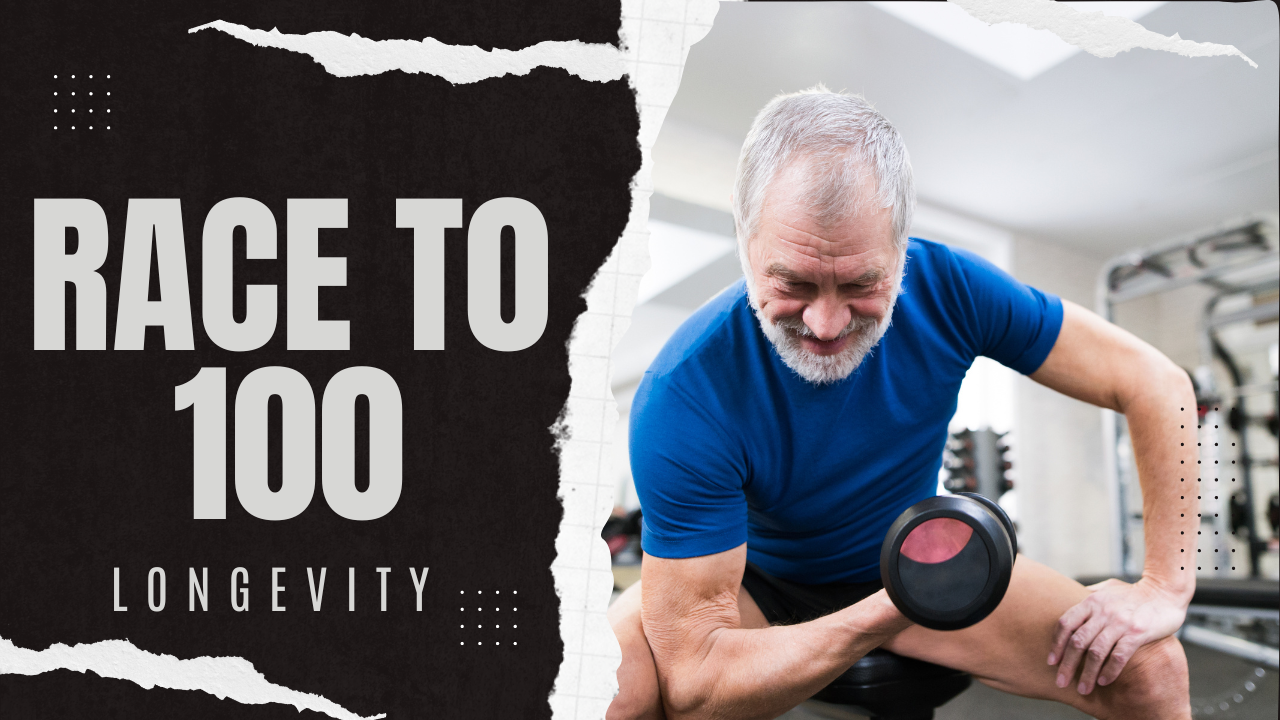
Race To 100 (Longevity)

As I explore deeper into self-improvement, I came across a lot of literature written on longevity. I got so fascinated by the idea of people not just reaching their full potential as persons but living as long as they could.
Creating a paradigm to capture the relationship between the constructs “reaching one’s full potential” and “longevity” is a little bit tricky. Will the conceptual model show that the latter is an integral part (or the result) of the former? Which of the following questions should be answered – “Is living as long as a person could a part of reaching the maximum physical capability of their body?” or “Is longevity the result of being able to develop fully as a person?”
I think longevity should be viewed as a product of the efforts of people to reach their full potential. To say that living as long as people could is the result of them giving their physical bodies the maximum care only is tantamount to considering a person as a mere physical specimen. A person has, not just a body, but a mind and a spirit. In psychology, an individual is looked at as a physical, mental, emotional, social, and spiritual being. I believe that only when people are able to strike a perfect harmony among these different aspects of being that they could hope to have a shot at longevity.
The interest that longevity has been drawing from both the scientific community and the general public has seemingly created a new sport which I call “race to 100.” I signed up for the race. I want to celebrate my 100th birthday. It is my desire to be on my feet dancing and probably carrying one of my great-grandchildren (or would it be great great-grandchildren) when that happens. I don’t like to be in a wheelchair struggling to blow out those 100 candles.
Celebrating the 100th birthday is a milestone only a few were able to reach. Those who are lucky to live that long are called centenarians. The United Nation estimated that worldwide there are only more or less 600,000 centenarians. That’s less than 1% of the world’s total population of 8 billion people. Studies have shown that they live in certain locations in some countries which were designated as “blue zones.” Japan has the highest number of centenarians with more than 90,000.
When I told some of my friends about me wanting to be at least 100 years old, they said I am crazy to want to live that long. For them, they would be happy to live a few more years after their retirement. One of the reasons they would not want to go 80 and beyond is the possibility of them becoming weak and sickly and unable to fend for themselves. They are worried that their loved ones might just send them to nursing homes. One of them who happened to have visited an institution for elderly people lately told me that the pitiful physical, mental, and emotional condition of the old people she mingled with seemingly made her dread reaching advanced age.
That’s the most challenging part of the “race to 100” – getting there on your two feet and not aided by a wheelchair. Thus, it should be treated as a serious goal entailing careful planning and execution. It is definitely not a walk in the park. For those intending to join the race, it will help to know the life expectancy in the country where you live. In the whole world, it is currently pegged at 72.98 years. That’s the number of years an earthling can expect to live. Adding 20 or so more years is a tall order.
Genetics and environment play an important role in healthy aging and longevity. Thus, people aspiring to live way beyond their retirement age need to be aware of their family’s health histories for them to know if they have any genetic predisposition that should be addressed as early as possible. They need to ensure as well that they live in a conducive environment that would help them live healthier and longer.
The to-do list for people wanting to live as long as they could is as formidable as it could be. The list includes among other things slowing down aging, avoiding and curing diseases, staying healthy, striking a work-life balance, and keeping a robust wellbeing. All of the said undertakings are not easy to do.
There are procedures and treatments available to slow down aging. Most of them are skin-related. But it’s not only the skin cells that age. The tissues in our muscles, brain, heart, and other bodily organs succumb to the unforgiving hands of time as well. And available are natural and practical ways to slow down (if not reverse) it. What’s on top of the list is not surprising – proper nutrition and regular exercise. Eating the right kinds of foods and staying physically active help us stay healthy. Health experts claim that they contribute also to making us feel and look younger. Activities like getting enough sleep, meditation, and fasting intermittently or fully have been proven to contribute to longevity.
Additionally, it is also important to take a look at one’s lifestyle. Aside from genetics and the environment, how long people live is influenced also by their manner of living. Destructive habits like smoking should be avoided. How many times we have been told that smoking is known to cause illnesses that include heart disease and lung disorders. Scientists also found out that alcohol doesn’t only inflame the liver, it also infuses every cell causing damage to the genes. So, if drinking could not be completely avoided, at least it should be done moderately.
That’s how difficult the race to 100 is. As if those undertakings listed on the to-do list of people wanting to celebrate their 100th birthday are not already difficult, they must also observe self-discipline and sacrifice self-gratifying activities (of course only those that are classified as destructive). What makes joining this race a bit more challenging is the fact that it’s not just a matter of making sure that the physical, mental, emotional, social, and spiritual aspects of your being are in tip-top shape as you march toward the century mark. It also entails financial stability to ensure that at least your basic needs – food, shelter, clothes, medicine, and what-have-you – are met. Part of the planning in racing to 100 is calculating how much money you’ll need.
If you save more than enough to secure all that you need as you run the race to 100 and you have plenty to spare, consider traveling to places you have never been and enjoy life. Enjoy aging, don’t gripe about it. Age gracefully and gratefully. A study concluded that “those who view growing older positively lived seven years longer than those who griped about it.” So, instead of griping and worrying, just prepare for its coming.
BACK TO “OFFLINE CLASSES”

Finally holding classes face-to-face after more than two years was like a breath of fresh air. It was the break that people in our university – students, teaching and non-teaching personnel, and school administrators – so badly needed after months of being segregated because of Covid-19.
But with the pandemic slowly waning, the campus has gradually gone back to life. The members of the academic community could be seen again walking to and fro inside buildings and pathways. The queues are back in the university’s bakehouse, cafeteria, and coffee shops. The gym is filled with people, young and old, working out. The basketball and tennis courts are once again noisy.
But there’s no better sign of life and reclaimed semblance of normalcy on the campus than in the classrooms where classes are being held. I had mixed emotions after reading the notice that the university is abandoning online classes and teachers are expected to meet the students for face-to-face classes.
I have no problem with either online or offline education because no matter how teachers deliver learning, virtually or inside the classroom, they perform the same pedagogical functions – they prepare a lesson plan, set objectives, motivate students, discuss the lessons, give assignments and seatwork, and evaluate learning. So, with the marching orders given – conduct classes face-to-face – I got ready for it.
The truth is I heaved a sigh of relief when the university decided to go back to offline classes. Why? After 5 semesters of online teaching, I discovered that virtual classes are more difficult to handle. I figured out why – I did my online classes synchronously. Things could have been easier for me had I chosen the asynchronous method where all I needed to do is prepare a video presentation and ask the students to watch it. No offense meant to anybody, but I don’t consider that teaching. I don’t feel like performing my pedagogical functions when all I do is prepare videos of my lessons. I feel like shortchanging my students. With the synchronous method, classes are run in real time and the students are attending together from different locations. This version of online teaching gives the students a chance to participate in the discussions and to ask questions if they want and need to. Teachers could guide them when performing graded activities. There is actual real-time interaction between the students and their teachers, something that cannot be done when teachers teach by just uploading videos. Not actually interacting with the students, even only through online platforms is not giving them enough guidance in the learning process. It is risky to rely on the assumption that students are responsible enough to watch the videos and perform the required activities by themselves.
As I said earlier, I had mixed emotions when our university made it mandatory for English teachers to conduct classes offline. I was excited and at the same time wondering how would it be to conduct face-to-face classes once again. Admittedly, I was a little bit tentative for I have already gotten used to doing online teaching. But as soon as I stood in front of my students and started talking, everything went seemingly autopilot. I was in familiar territory. The teacher in me went to work without missing a beat. Before I knew it, my first class for the Fall Semester of 2022 was completed.
So, it’s face-to-face classes again. Both I and my students are back in the “real classroom.” I expected the usual things. There might be some classroom management issues – students using their cellphones and other gadgets, one or two of them sleeping while I am teaching, or what-have-you. These things I address during the first day of class. I would tell them that I am dealing with young adults, not kids, who know what they should and shouldn’t do. Most of the time, it works. I never stopped teaching just to call the attention of the students using their cell phones or to arouse the students who fell asleep. Rarely those happened anyway.
There are times a student might come late and I need to decide whether to just excuse them or strictly implement the attendance policies of the university. If it’s only one absence, I strike it off the record especially if the student’s explanation as to why they came late I deem acceptable. I am almost certain also that a number of them would ask me to change their grades for one reason or another… something that unfortunately I would never do. I give my students the grades they deserve. I check and double-check their scores before I encode them into the university’s portal.
It really felt great seeing the students again in the classroom. But while we may have reverted back to face-to-face mode of delivering education, I wouldn’t say that I went back to the traditional way of delivering my pedagogical functions. If there is one great thing the pandemic taught me it is optimizing the use of computer and information technology in everything that I do as a teacher. Even before the pandemic, I relied heavily on computer-aided instruction. I used PPT for my lectures and instead of using chalk or board marker when needing to write something in addition to what I have on my presentation, I would use a blank slide.
I have gone completely paperless for the assessment and evaluation of my students’ performance. I am using the Google form for all my tests, quizzes, assignments, and graded exercises. It is through the university’s portal that I send my students link to those Google forms. They take them using their cell phones, tablets, or laptops. The Google form has features that could be used to prevent and discourage students from sharing answers.
Even the submission of course requirements (projects, homework, etc.) should be done virtually as well. I created an electronic portfolio for each student using the Google Drive folder where they can drag and drop (upload) whatever they need to submit. I also created a common class folder (through Google Drive) where I upload lectures, reviewers, and other documents and files related to the course).
Except for the “paperless” assessment and evaluation of students’ performance, all of the foregoing are things I have been doing before the pandemic. I just figured that as a 21st century teacher teaching 21st century skills, knowledge, and values to 21st century students, it is my obligation to embrace computer and information technology so I could be more efficient in the performance of my duties and obligations as a teacher.
Can Anyone Teach? (The Extra Mile Teachers Walk)

Search any site on the internet for the highest-paid professions in the world and you will not find “teachers” in the top 30. Expand your search and look for the list of professions in different countries where the practitioners receive the best compensation packages and you will find out that teaching is not among them. You will not find a country where teachers are ranked among the highest money earners.
Teaching not classified among the highest paying jobs, of course, is not surprising. That has been the case since time immemorial and it is most likely not to change anytime soon. One possible reason teaching as a profession is not getting the recognition it should get is because of the pervading notion that “anyone can teach.” You cannot say the same for law and medicine… not just anyone can practice those professions. But how true is it that just anyone can be a teacher?
But even if teachers do not get the recognition and sufficient remuneration they deserve, they wholeheartedly perform the role they have embraced. Indifference and poor salary are included among the thorny steps in the extra mile that teachers need to walk when they have accepted that teaching is not merely a profession but a vocation. It is not merely a job to perform but an obligation to carry out.
Acknowledging that teaching is not merely a job but a duty to fulfill is what makes teachers go the extra mile, to do what is more than required in the performance of their tasks, including sacrificing personal resources and sometimes even happiness. Teachers understand and fully grasp the nature of the responsibility that they agreed to fulfill when they signed up for the job. They know it’s not easy. How in the world would one consider it easy to be responsible for the education of other people, especially the young ones? When did it become easy to facilitate the acquisition of knowledge and values and the development of skills of your fellow human beings?
Teachers would be one of the highest-paid professionals if only pay would be commensurate to how significant is one’s job in the enlightenment of the soul, the preservation and enhancement of the fabric of society, and the socio-economic development of a nation. Teaching would certainly be at top of the list of the highest-paid professions in the world.
But it is what it is. Teaching is not a profitable profession. If it is material wealth one would like to accumulate, teaching is not the profession to have. The realities confronting the teachers in the academe could really make them say a lot of things in the “present unreal conditional” form. There are times that they couldn’t also help but make a “wish statement” like “I wish that I were a health care professional.”
And why?
Healthcare professionals like physicians, surgeons, and dentists, consistently round out the top 10 in the lists of highest-paid professionals.
What they (the medical practitioners and their fellow health workers) do, maintenance and restoration of good health are very important. For that, they deserve the pay they get, most especially during the time that the coronavirus pandemic was raging. But nurturing the human spirit…helping a person achieve holistic development is as equally important, if not more important. What professional endeavor could be more meaningful than helping your fellow men achieve their full potential for them to become responsible human beings and productive members of society?
And not only are the teachers not getting the pay commensurate to the importance of the work they do and the effort they need to exert when doing their job, but they also don’t get the recognition they deserve.
A study concluded that American society does not generally view teachers in the same way, as they view other professionals; the belief that “anyone can teach” is not found in other professions. For example, not just anyone can play professional baseball, be an accountant or engineer, or practice law or medicine.
Such is the indifference teachers, as professionals are getting.
But how true is the contention that “anyone can teach?” Those who know what it takes to become a teacher would say that it is a fallacy. That “anyone can teach” is an erroneous assumption.
Education is not just a matter of whether you can teach or not but also whether or not you can make the students learn. Even if a person is an expert in a particular field, it is not a guarantee that they can teach what they know. Knowing something is different from knowing how to teach it.
Hiring just anyone to become a teacher is doing a disservice to the teaching profession. Hiring somebody to teach a language just because they could speak that language is a mistake. Not because somebody is good at math that they should be allowed to teach math. It takes a lot to become a teacher. Teachers undergo rigid training for them to hone their pedagogical skills. They read a lot knowing that teaching and learning are both grounded in Philosophy, Psychology, Sociology, and other related fields. They understand that they need to be familiar not only with their field of expertise or chosen subject area but with different principles and strategies to effectively deliver learning and teaching. They know that when they are done teaching in the classroom, their work is not done yet. There are other things to be done – checking graded activities and preparing a new lesson plan. The preparation of a lesson plan, in itself, is a tedious process.
The list of the things that teachers need to know and do is long. At the end of that long list are two characteristics that teachers need to develop if they wish to succeed in the profession. Those are PASSION for their work and COMPASSION for their students.
With all the aforementioned, what would anybody assume that just “anyone can teach?”
Be that as it may, teaching will forever be a NOBLE PROFESSION! Nothing can diminish its intrinsic value.
One thing is for sure, all successful professionals in the world – business executives, lawyers, architects, engineers, surgeons, physicians, dentists, nurses, brokers, and what-have-you – know that their teachers, who did not mind walking the extra mile contributed a thing or two or more into whatever they have become.
What Makes You Happy?
A lot has already been written about happiness. Much has been said about how to achieve it and where to find it. It is my hope that the things I shared in this video would give you additional insights on the topic.
The Self-improvement Paradigm

According to Jim Rohn, “Success is not to be pursued, it is to be attracted by the person you become.” Imagine success as the fruit of a tree. A tree has to grow and mature. It will reach a certain stage of maturity that allows it to bear fruits. Imagine yourself as that tree. You have to grow and mature. The person you see at the end of the process of growing and maturing is what Jim Rohn refers to as the person you become. The fruits you bear or the success you achieve depends on the kind of tree you would turn into. And you have to become the best version of yourself. That’s the kind of tree you should be. You need to reach your full potential so you would bear the best fruits.
Self-improvement is the key to becoming the best version of yourself. If you succeed in getting to the end of the road to self-improvement, you reach your full potential.
But self-improvement is a complicated process. It is easier said than done. It requires the possession of certain beliefs, attitudes, and characteristics that will make up your value system. It requires also the acquisition of certain skills and abilities and the development of certain practices and habits.
The right beliefs, attitudes, characteristics, skills, abilities, practices, and habits, together, are the catalysts of self-improvement. However, having them is not enough. Something else is needed in order to make them work. Without it any attempt to reach one’s full potential is bound to fail. What is it? It’s self-discipline.
Self-improvement is not as simple as just being able to think positively. Positive thinking is but a tip of a huge iceberg called personal growth and development.
Self-improvement is a tedious process. Its ultimate goal is becoming the “best self” or achieving one’s full potential. As previously mentioned, certain beliefs, attitudes, characteristics, skills, abilities, practices, and habits are required. But possessing the said requirements is not enough. Consistency is needed in their pursuit. Thus, self-discipline is also needed.
The foregoing are the elements that comprise the self-improvement paradigm that I developed to guide my advocacy for personal growth and development.
The contents of my YouTube channel (https://www.youtube.com/channel/UC2zzJ6T94fNnvPPwrA0OxAA) and the personal growth and development book I am currently writing are based on this paradigm.