Author Archives: M.A.D. LIGAYA
The Jungle Story
 These articles were some of the blogs I wrote way back in 2009 and posted in another website. These ones specifically chronicle my experiences when I was working at a Catholic institution.
I owe a lot from that school and the Congregation that operate it. I would say that I spent my best years as an educator in that school. That organization helped me shaped my philosophy as a teacher and as a school administrator. Whatever I learned there still inform the decisions I make as an educator today. It’s one of the best schools, if not the best one, in Bulacan, Philippines.
There is only one thing I regret when I was there. When it was time for the Congregation to re-assign their leaders (they do so every three years), we were unlucky to be given a leader that we didn’t deserve. That’s my opinion.
At that time I did not expect to meet a school administrator whose leadership style and interpersonal skills are plain awful and downright unacceptable. It was the least I would expect from an educational leader and a “religious.” The unspeakable experiences I had with that leader consequently led me to decide to leave the institution. In the process I gave up a chance of receiving a decent amount of money in terms of benefits from the school’s pension plan. All that I needed then to do was to bear another school year with her so I could complete the required 10 years for me to qualify to get that amount. But it wasn’t worth it.
Peace of mind is a priceless commodity… almost a rare item. No amount of money can buy it. Since that “religious” took the reins of leadership of the institution, I felt like I stopped growing personally and professionally. I kept criticizing her and the policies of the school which I know is not a healthy thing to do. I was no longer having fun at work. So, I decided to leave. My other reason for leaving is – it’s against my dignity as a person to say negative things about my employers but continuously work for them and accept their money. It doesn’t make sense.
My wife disagreed vehemently with that decision. She is a practical woman. I was head of the Education department, the pay is more than enough for us to meet both ends and enjoy some of the luxuries of life, and the workplace was just a 20-minute drive from home. She tried to convince me stay for even just one more year for the pension benefits. But I said no. There’s one thing more important than money – DIGNITY.
So, going back to what I said several paragraphs back… the only one thing I regret when I worked with the institution.
That regret is the subject of this collection of blogs that ran from 2009 to 2011.
Why do I consider it a regret?
It is not because the school administrator assigned to us was the embodiment of what a leader should not be. It was my fault. I expected nothing but the best from her because I got used to the excellence and benevolence of her predecessor who brought out the best in me. When her predecessor left and she took over, things changed… not for the better. To cut the story short, she succeeded in bringing out the worst in me. That is what I regret. I came to a realization that I don’t deserve to be a Catholic educator. That realization made easier my decision to leave the institution that was my second home for nine years.
So here’s the series of those blogs. It’s just unfortunate that (probably) the ones who could really understand these blogs (and could relate to them) are the ones I worked with in that institution during those times. But I hope you would read on.
**********
THE JUNGLE STORY
There was once a hallowed forest populated by animals (of course!). The leaves of tall trees were so thick that the golden rays of the sun could hardly filter down. Shrubs and grasses abound effectively hiding the light alluvial soil. Life was abundant in the hallowed forest. Different animals from different species abound.
The forest was ruled by specially-trained and and carefully-bred animals belonging to the “veiled clan.” Only those who belong to the clan would have a chance to lead a forest that belongs to their clan. The members of the “veiled clan” take turns in controlling several forests scattered in the face of the earth.
The animals there worked so hard to make that forest hallowed as it should be and for almost a century that the forest existed in peace, harmony and prosperity. It maintained its pristine beauty through the efforts of the animals and their benevolent leaders from the veiled clan.
Those years were the Golden Age of the forest. But the forest was not meant to stay in the pinnacle of success. Just like different civilizations on earth, it passed through own Dark Age. It happened when the “veiled clan” decided to bring in the hippopotamus as the new leader of the hollowed forest.
This series of blog-story begins with the coming of the hippopotamus.
Please click here to continue reading.
Ang Holy Water

Si lola Basyang ay isang biyuda,
Si aling Luring nama’y isang soltera,
Sila’y sanggang dikit, laging magkasama –
Silang dalawa’y tunay na magbarkada.
Sa kanilang baryo ay may isang kapilya
At doon, si Lola Basyang ay nagpunta.
“Luring… dalian mo, ako’y nandito na.”
Aniya sa kaybigan nang tumawag s’ya.
“Nandyan na kumare, nasa jeep na ako,
Heto kasing driver… mabagal magpatakbo.
AYY… hayan binilisan, narinig ako.
Sige mareng Basyang, pababa na ako.”
“Mama para… mama dyan na lang sa tabi.”
Di huminto ang driver, tila yata nabingi.
Sumigaw ang Luring…”PARA NA SABI!!!”
At biglang pumreno, driver na narindi.
Nagkabusiksikan mga pasahero
Napalakas yata sobra ang pagkakapreno
Si aling Luring hiyang-hiya’t dismayado
Katabing lalaki’y hawak sa pundiyo.
“Ay dalag!” Bulalas ni aling Luring.
“Hindi dalag… cobra po yan kung tawagin.
Aray! Teka po… h’wag ninyong sakalin,
Bitawan n’yo na’t baka kayo tuklawin.”
Buamaba ang hiyang-hiyang aling Luring,
Tahimik na umusal ng panalangin
“Ako’y patawarin Diyos na mahabagin,
Kamay kong nagkasala ay lilinisin.”
Dali-dali itong pumasok sa kapilya
“Ay ang aling Luring nandito na pala.”
Wika ni lola Basyang nang siya’y makita.
“O… aanhin mo iyang bitbit mong tasa?”
“O…bakit? Ang holy water sinalok mo?”
“Mareng Basyang, nagkasala ang kamay ko
May lalaking nahawakan ko ang pundiyo
Kaya’t holy water ang panlinis dito.”
Pagkahugas… si aling Luring lumuhod.
Ang Basyang dahan-dahang tasa’y dinukot,
At pasimpleng ng holy water sumalok
Ipinasok sa bibig… siya’y NAGMUMOG.
Ang Tatay Ni Juan
 Excited si Juan nang ama’y kinausap –
“Itay, sa wakas ay aking nang nahanap
Iibigin, ko’t pakakasalang dilag
Bukod sa maganda’y ubod pa ng sipag.”
Nangiti si mang Pedro anak niyakap
“Yes! Magkakaapo na ako sa wakas.”
At tinanong ng ama ang kanyang anak –
“Eh Juan, sino ba itong bago mong sweetheart?”
“Siya po’y si Helen anak ni aling Bebang
Sila’y nakatira sa kabilang kanto lang.”
“Anak, si aling Bebang bang nagpapakwan?”
“Opo itay… ‘yong madalas ninyong bilhan.”
“Naku anak, ako sana’y iyong sundin
Iyang si Helen ‘di mo pwedeng ibigin”
“Bakit po itay? Inyo ngang liwanagin.
“Anak si Helen… sa akin din nanggaling.”
“Itay… si Helen pala’y aking kapatid!
Talagang sa babae kayo’y malupit.
Si aling Bebang kayo ang nakabuntis,
Di ka nasindak sa mister niyang pulis.”
“Si Helen ay pilit kong kakalimutan
Si Joy na lang po ang aking liligawan
Mukha’y maamo’t maganda ang katawan
Siya’y anak ng kumpare ninyong si Teban.”
“Hep! Hep! Hep! Ikaw nga anak eh tumigil
Anak… kay Joy eh huwag ka sanang mang-gigil
Bunga din s’ya nang aking pagtataksil
Nang si kumare ay hindi ko napigil.”
“Ang liligawan ko na lang eh si Gracia,
Nag-iisang anak ni aling Maria.”
“Naku hijo, sorry, pero pasensya na,
Si Gracia’y galing rin sa aking semilya.”
Naglasing ng todo ang dismayadong Juan
Mga kapatid kasi ‘di pwedeng ligawan
Kaya’t ang nanay niya’y kanyang nilapitan.
“Inay…ako po ba’y pwedeng pagpayuhan?”
“Tatlong dilag… aking pinagpipilian
Isa sa kanila nais kong ligawan
Ngunit si itay ako ay pinigilan
Siya daw ang tatay ng mga naturan.”
“Inay si itay ika’y pinagtaksilan
Kataksilang aking pinagdudusahan.”
“Tama na anak pag-iyak ay tigilan
Itong sasabihin ko’y iyong pakinggan.”
“Si Helen at Gracia pwede mong ligawan
Tanging si Joy lang ang dapat mong iwasan.”
Eh bakit po inay? Pwede bang malaman?
“Anak… tunay mong ama’y si pareng Teban.”
On Philosophy and Teachers
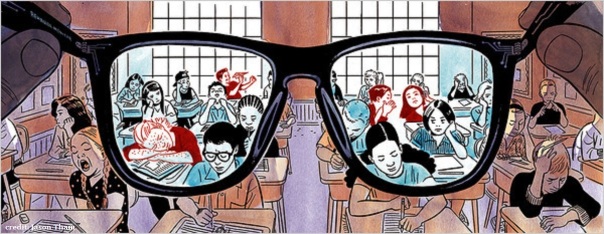
No two teachers are alike. Even if they are from the same race and culture and graduated from the same university, don’t expect them to embrace the same educational philosophies and to develop the same set of beliefs and values. You won’t see them apply the same methods and strategies in the classroom, approach teaching and learning with the same degree of passion, and treat the learners in the same manner.
Teachers are different in many ways.
Teachers decide which perspectives they would use in looking at their role as mentors and in treating their students. Such perspective depends on either the philosophical foundations upon which they are grounded or their personal set of beliefs… or may be both.
Teachers may have read too much of Hegel, Kant and Plato that they may have developed idealistic tendencies indoctrinating their students into believing that they do not exist for themselves but for others and for a higher purpose. Or like Aristotle, Locke or Rousseau, who all tried to debunk the ideas established by Plato and company, the teachers maybe slowly training their students to subscribe to rational thinking, that the latter need to think critically and scientifically. They could be pragmatists like Dewey and Kilpatrick, guiding students to keep themselves in touch with reality for they believe that there is no other world aside from what can be perceived by the senses.
Their educational philosophies determine the way they talk, think, and behave as professionals.
Whatever values and beliefs teachers bring to the class don’t really matter for as long as nothing they say and do in the while teaching is inimical to the interests of the lerners. What is important is that everything that transpires in the classroom is intended to make the students the best persons they could be and make them prepared to live life.
So be it if the teachers are like Satre, leaning towards Existentialism in guiding the students to take responsibility… in deciding who they are in order to make themselves authentic individuals.
Nobody can claim that this or that philosophical perspective in education is superior over the other. It’s fine if the teachers wish to embrace all the philosophies and combine their best features to serve and guide them in shaping their set of values and in choosing their methods and strategies.
Combining the philosophies, by the way, is not a novel idea. In Scholasticism, St. Thomas Aquinas, harmonized Idealism and Realism.
What about coming out with a philosophical perspective combining the four major philosophies in Education?
The philosophies aforementioned have shaped the teachers into the kind of educators that they are today. Whatever they knowingly and unknowingly say and do in the classrooms are offshoots of their set of values and beliefs. And this set of values and beliefs constitute their philosophy of education.
Teachers may have also accumulated through the years a personal system of values that govern every decision they make in the classrooms. Thus we see them approach their teaching (and deal with their students) in different ways. We see them display different degrees of enthusiasm in teaching. Some display no enthusiasm at all.
There are teachers who are “sages on the stage” who believe, the way the realists and idealists do, that knowledge emanates from them being the authorities. So, the students should be spoonfed. Conversely, there are teachers, who, like the existentialists and pragmatists, act like “guides on the side” painstakingly guiding the students to self-discovery.
There are teachers who would choose specific methods and strategies without considering the specific needs of their students. But there are also those who would be conscientious enough to take into consideration the heterogeneity in the class before deciding what learning system they would put into effect.
There are teachers whose mere mention of their names would send shivers down the spine of students. Conversely, there are teachers who try to make learning fun making the students enjoy, and not fear, the classroom.
There are teachers who consider the classroom a workplace, while others consider it a playground. They work playfully or playfully work happy doing what they are doing in the classroom thereby rubbing off to the students their joyful spirit.
There are teachers who have seemingly forgotten that the students are not just empty sheets waiting to be filled-out as in Locke’s Tabula Rasa. The kids in the classrooms are not wax figures with empty minds which the teachers need to stuff with all the knowledge that the curriculum requires. These students are not just intellectual beings, they have emotions. They need more that education. They also need love and understanding. They should be treated the way parents treat their children.
Whatever the teachers decide to be… whatever system they implement… whatever method and strategies they apply… however they view learning… however they treat their students… would depend on their perspectives as dictated by their educational philosophy and their set of values and beliefs.
At the end, the way teachers conduct themselves as professionals and the way they treat their students depend on whether they consider teaching a means of livelihood or a way of life.
Sa TIRAHAN Ni Father

Tinungo ni father likod ng simbahan
Doon si sister kanyang natyempuhan
Dahan-dahang ito’y kanyang nilapitan
Nalingong madre ay kanyang tinunguan.
Sila’y tumingin sa kaliwa’t sa kanan
Ang nandoon ay silang dalawa lamang
Pagkatapos niyon sila’y nagngitian
Halos pabulong silang naghuntahan.
“Wala ka bang gagawin mamayang gabi?”
Madre’y di makasagot, mata’y nanlaki.
“Okay lang naman sister kung kayo’y busy.”
Di naman sapilitan… pwedeng tumanggi.”
“Teka po father…pwede naman po ako
Tatapusin ko lang ang pagrorosaryo
Ayaw ko kasi na ika’y magtatampo
Sige mamayang gabi…magkita tayo.”
“Salamat sister…ako’y pinaunlakan
Sa kwarto ko mamaya, ako’y puntahan”
“Sa kwarto po n’yo?” Madre ay nagulantang.
Si father ngumiti’t tumango na lamang
Sumapit ang gabi, bandang alas-otso
Itong si sister ay kabadong-kabado
Sa TIRAHAN ni father siya’y tumungo
Nakita n’yang bukas pintuan ng kwarto.
At ang sabi ng madre, “I’m here now father.”
Kumatok pa’t nagtanong…”Father, are you there?”
Tugon ang pari…”Come in I’m waiting sister.”
Dugtong pa nito’y…”Please push the door then enter.”
“Ay Diyos ko po father… bakit po madilim?
Naku po… ano ba ang ating gagawin?
Naku po father… maawa ka sa akin,
Pwede po bang ilaw ay ating buhayin?”
Bumukas ang ilaw madre’y nagulantang –
Kasama ni father… dalawang sakristan.
Cake at ng regalo siya’y inabutan
At ng “Happy Birthday” siya’y kinantahan.
Ang Bird ni Father

Umiiyak si Father isang umaga,
Bird kasi niya’y naglaho sa hawla.
May nagnakaw – ang kanyang suspetsa
Kaya’t nagpasya itong magimbestiga.
Bird na naturan mahal na mahal niya,
Hinihimas palagi gabi’t umaga,
Kasa-kasama kahit saan magpunta,
Maging sa pagtulog… hawak-hawak niya.
Kaya’t sumumpa s’yang ito’y hahanapin.
Sukdulang bawat bahay hahalughugin.
Pagiging pari sumumpang gagamitin,
Upang ang bird niya muling makapiling.
Nanawagan pagkasampa sa pulpito,
Pasimpleng tinanong ang mga Katoliko.
Ang tanong, “Sino ba ang may bird sa inyo?”
Syempre nagsitayo lahat ng ginoo.
Paring nagtanong tila nagulantang
Kaya’t ang tanong ay kagyat pinalitan.
“Anyone seen a bird?”… bagong katanungan,
Nagsitayo mga dalaga at ginang.
Ang Mayuming Dalaga

Sa parke nakita’y magandang dalaga
Sa karikta’y mapagkakamalang dyosa
Kabado man ako’y nakipagkilala
Ang swerte ko nama’t hindi s’ya suplada.
Mayuming dalaga’y kay sarap kausap
Walang mapagsidlan nadama kong galak
At nang magutom siya’y aking niyakag
Na aming subukin bibingka’t salabat.
Tumango’t ngumiti magandang prinsesa
Di nag-atubiling sa aki’y sumama
Bumili nga kami…salabat’ bibingka
Nagdagdag pa siya ng puto’t kutsinta.
Aba’t tila gutom ang aking kasama
Biniling pagkain biglang niratsada
At dahil pati niyog kanyang tinira
Ang dalaga’y dumighay na’y nautot pa.
“Sorry!” Wika ng gusto kong maging irog
Ngiti na lamang ang aking isinagot.
Ang dalaga pala kahit maalindog
Masangsang din pala’t mabantot ang utot.
At dalaga’y bigla na lamang bumahin
Lumabas sa bibig tinga ng kinain
At matapos na bibig kanyang pahirin
Kulangot sa labi niya’y lumambitin.
Inisip kung paano ko sasabihin
Nahihiya akong siya’y diretsahin.
Kadiri naman kung aking aalisin
At sariling kamay ko ang gagamitin.
At ang sinabi ko na lamang sa kanya
“Miss sa labi mo may niyog na natira.”
Sa halip na gamitin ang panyong dala
Pinangsungkit sa kulangot ay dila n’ya.
Nang kulangot ay naipasok sa bibig
Susme… nginuya’t ninamnam na pilit
Aniya’y, “Bakit itong niyog mapait.”
Sagot ko’y, “Naku miss… baka iya’y panis.”
 M.A.D. LIGAYA


 M.A.D. L I G A Y A