Author Archives: M.A.D. LIGAYA
South Korea: In the Eyes of an Expatriate (2)
(2nd of 3 parts)

I started mingling with real Korean people – real men and women and not fictional characters. I dined with them, drank their wine and beer, ate their kimchi and their delicious dishes, and spoke (a little) of their language.
I witnessed their way of life and even adopted some parts of it. I saw what’s inside their houses, their theatres, their bars, restaurants, and coffee shops. I have entered their museums, strolled in their parks, and hiked in their mountains.
Through daily encounters with my Korean students, colleagues, and friends, I was also able to probe into their character. I confirmed that just like what I saw in their dramas, South Koreans fall in love, get angry, feel sad and happy, and suffer from anxiety and stress. In short, just like me or any average human being from any part of the world, they also ride the roller coaster of emotions. They do have strengths and weaknesses too. They are not faultless… like me. Anyway, nobody is. They also have fears and uncertainties. But just like me and anyone else, they have dreams and ambitions. They have plans and a vision of a good life in the future for themselves and their families.
I discovered more. I found out that their prosperity is not a myth. Those things I saw in Korean dramas and movies that indicate how progressive and modernized their country is are not fictitious. Their provinces, cities, and towns are effectively interconnected by impressive highway systems that how I wish we could also have in my country of origin. How I wish that our telecom companies could provide us with internet connectivity as fast as South Korea’s.
With everything that I have seen and experienced, I could not help but compare this country to mine. I could not help but be envious of the South Koreans for what they have accomplished as a nation. As I stayed here longer, my “How I wish!” list grew longer. How I wish that in my country, packages could be left in front of our doors, even for days, not fearing that somebody would steal them. How I wish we could also send to prison our politicians who would be found guilty of wrongdoings without fearing that when a political ally would become the next president they would be granted a pardon. How I wish we would take research as seriously and meticulously as the Koreans do.
Whatever metrics I used for the comparison, it was a mismatch with this country always ending up on top after all the comparative analyses I performed except for this – my country has a younger population where the median age is less than 26 years. For this country, it’s more than 40 years. I will no longer be citing other statistics like those of life expectancy, GDP, and international ranking of universities. South Korea’s numbers are far more superior to my country’s.
In addition, South Korean students perform better in Math and Science as compared to the youth of my country. If there is any consolation though, I and my countrymen scored higher in English proficiency.
But does it matter if we in our country are better at English? Does it make my country better than South Korea? The answer is obvious – NO. There is no direct correlation between a country’s English proficiency and its economic performance. If there is, then why does this country, as of 2021, rank as the world’s 10th biggest economy while mine barely made it to the list of newly-industrialized countries?
Don’t get me wrong, I am not putting my country down while I am seemingly extolling South Korea. I love the country where I was born and I am proud to be its citizen. I am just wondering how come this country has gone this far leaving my native land way behind in the race to prosperity and stability.
My desire to figure that out led me to read more about the history of this country. In the process, I discovered certain uncanny similarities between our historical experiences. Both South Korea and my native land are colonized nations and earned independence after the second world war. Both countries embraced the democratic form of government thereafter. Additionally, just like in my country, the development of democracy here in South Korea was interrupted by military takeovers, and what a coincidence that martial law in our countries was declared both in 1972. Was it also a coincidence that powerful military leaders in both countries were removed via popular revolt in the mid 1980s?
Unfortunately, the similarities in the historical development of this nation and mine stop there. We took different paths in building our nations from the ashes of colonization, the second world war, and military juntas.
South Korea: In the Eyes of an Expatriate (1)
(1st of 3 parts)
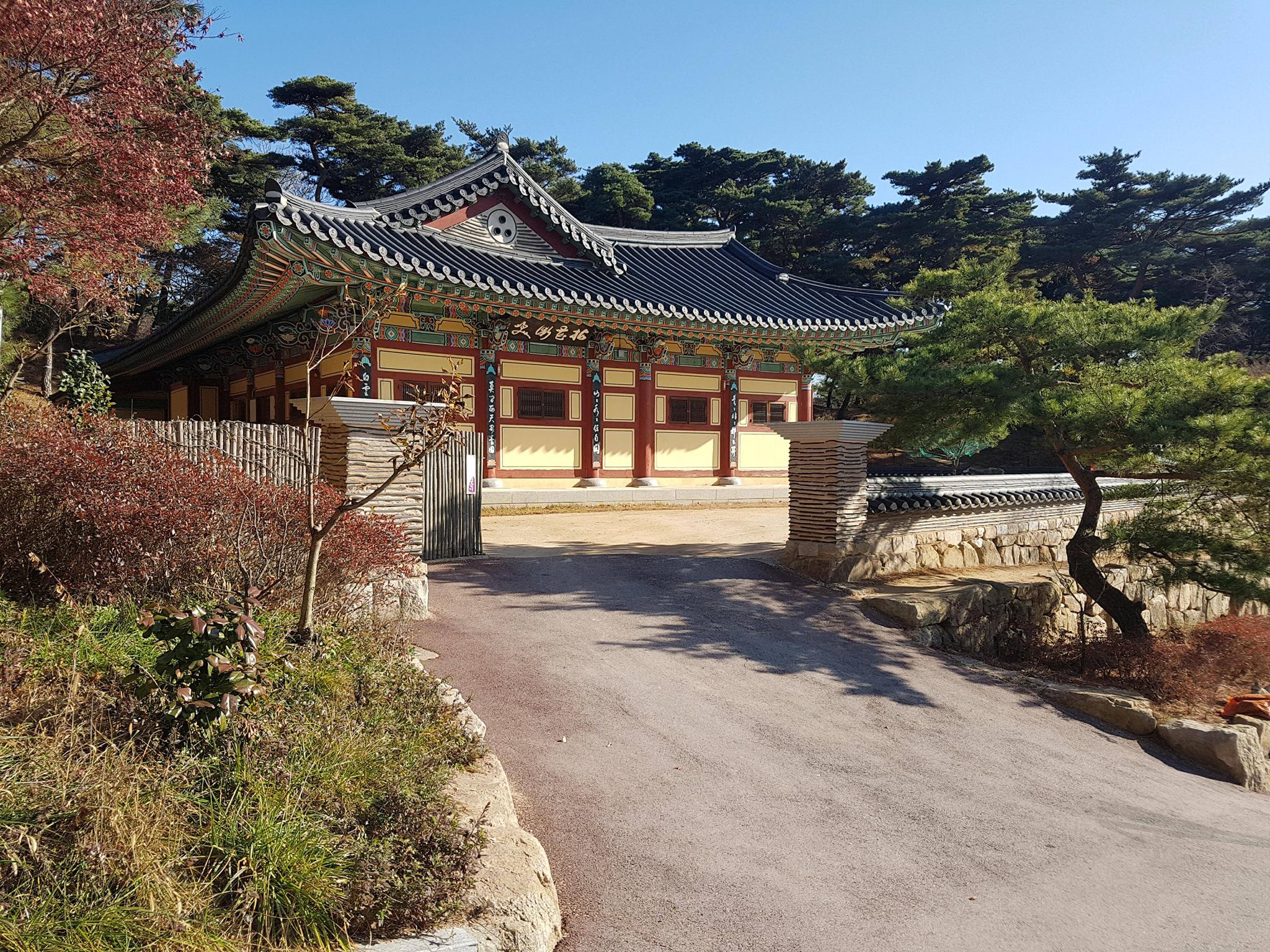
South Korea entered my consciousness through Hallyu – a term that when translated to English means Korean Wave. And yes, when that cultural wave reached our shores, South Korean dramas, movies, and music drowned the country’s airwaves. Local magazines and the entertainment sections of newspapers regularly featured K-pop artists and other Korean TV and movie personalities. Before long, other aspects of Korean culture – food, fashion, lifestyle, and what have you – started to deeply influence me and my countrymen.
Before the Korean Wave came, I knew not much about South Korea. I remember checking the encyclopedia for information about the Korean war when I took World History when I was a college student. It was only then that I found out that my country was one of those which sent troops to help this country to ward off the Communist invasion from north of its borders.
Just imagine how dreadful a picture of the war-torn Korean peninsula the things that I read created in my mind. It was horrible, to say the least. The death and destruction were too much to bear.
But before I graduated, I had another chance to check the encyclopedia for more information about South Korea when the country hosted the 1988 Summer Olympics. Because of the said sporting event, South Korea was all over the news. That triggered my curiosity thus I checked the encyclopedia to once again read something about the said nation.
I saw a country different from what those pages about the Korean war presented to me. I found out that the nation called “Land of the Morning Calm” rebounded from the horrors of the Korean war and eventually became very progressive. Then I wondered at that time and asked – “What did the South Koreans do that enabled them to, like the legendary Phoenix, rise from the ashes of a horrendous war at that time and even became only the second country in Asia to host the world’s biggest sporting event?”
As years passed, I learned more and more about South Korea, not only through traditional media but more from the Internet (which became more accessible than when I was in college). I got to see more and more Korean dramas. It made me, just like many of my countrymen, want to visit the country so bad. I wanted to visit the places in the country that I got to see only on TV programs and movies. I wanted to try soju and maekju and when the two are combined – somaek. I wanted to taste kimchi and eat Korean dishes prepared and served by Koreans. I wanted to try bibimbap, pyo haejangguk, and kalguksu served with plenty of banchan in a restaurant in South Korea, not in a Korean restaurant in my native land. I wanted to meet real Korean people. In short, I wanted to have an authentic Korean experience. I personally call that my “Korean dream.”
That urge became stronger when I enrolled in the program Teaching English to Speakers of Other Languages (TESOL). South Korea was mentioned by the program coordinator as one of the countries considered as premiere destination for ESL teachers. Thus, since teaching overseas is an option in the career path I set for myself, I thought that if I would teach abroad, why not in South Korea? My “Korea dream” suddenly expanded – I no longer just wanted to have an authentic Korean cultural experience but to live and work in this country.
Then I did what I had to do for that “Korean dream” to come true. I left no stone unturned.
My persistence and hard work eventually paid off. My wish was granted. I was given the opportunity to live that dream when a university hired me as a teacher. So, off to South Korea, I flew.
As soon as I exited Gimhae Airport, I started having that authentic Korean experience. The early spring weather giving me an icy cold welcome got it going.
As days and weeks passed, I gradually immersed myself into the country’s culture. I was no longer just watching the people of this land from the television set, the silver screen, and the World Wide Web. It’s no longer a Korean drama I was watching but it’s real Korean life I was experiencing… from reel to real. I got what I wanted.
The Lonely Boat

“What am I without you?”
The boat asked the sea.
Then begged…
Bring back the tide,
make me alive
I beseech thee.
Bring back the tide
Let me ride your waves
Toss me to and fro,
Throw me up high…
then splash me down hard
into your waiting arms.
Bring back the tide,
Pull me out of the dock!
I’d rather face the peril
of being whipped
by the mighty waves of your love
than left alone
moored in the sand along the beach
in that sand wet in tears
of anguish and grief.
On Fate and Destiny

“Each player must accept the cards life deals him or her. But once
they are in hand, he or she alone must decide how
to play the cards in order to win the game.”
– Voltaire
Much has been written about fate and destiny. Those that I read presented varied opinions on whether or not those two concepts are one and the same with some claiming they can be interchangeably used and some arguing that one should not be mistaken for the other. There are assertions that fate and destiny both refer to what the future holds for you and me. However, that future, when viewed using the lens of fate, is negative and is neutral – not really positive as you might have expected I would say – when seen from the vantage point of destiny.
The common thing that the literature I explored on the said constructs clearly articulated is that both fate and destiny are manifestations of the future of a person but the former has negative connotations while the latter is neither positive nor negative… and I will explain why I view it that way.
Fate is negative because it is a belief that everything that happens to us in the future have been set in stone. We cannot change our fate no matter how hard we try. That is a scary proposition because it implies that we are not in control of our life and what will happen to us in the future. There is nothing we could do but go with the flow, dance to the tune of whoever we believe designed our fate. That is we choose to believe it.
Conversely, destiny, as I said previously, is neutral because it presents a future that is yet to happen, a story not written yet. The reason I consider it neither positive nor negative is that things will go either way for you – good or bad – depending on the quality of the decisions you make in the different areas of your life.
I believe that I create my own destiny. I am writing my own story. You should do the same. You hold the pen, you have control over how your story will turn out to be. You should not surrender that pen to other people and make them write that story for you because it may be written not the way you want. You should take control and try very hard to make the right decisions in order to ensure that the destiny you create for yourself is a great one.
Fate and destiny are both considered a predetermined course of events. However, fate is viewed as inevitable which is controlled by an unseen force while destiny is likened to clay in the hands of a potter – it can be shaped as desired. Would you let others hold the mold and put the clay and let them be the ones to shape your future?
You ought to decide whether to accept that the life you live is tied to threads controlled by the puppeteer called fate or is it a book filled with empty pages and you’re holding the pen and have that opportunity to fill those pages with stories of triumphs and happiness. You may decide whether you will be living a fate assigned to you or you will be controlling your own destiny.
Fatalism, the doctrine that events are fixed in advance so that human beings are powerless to change them (Merriam-Webster, n.d.), has influenced the way people live life since time immemorial. The danger with subscribing to the idea that events in our lives are determined by the hand that fate dealt with us is it leads to a passive life. Fatalism reduces a person to merely a driftwood on the waves being tossed to and fro.
Believing that success and failure are preordained, people may not be motivated to give their best shot in any endeavor or be afraid to take risks in any way. They would simply wait for their future to unfold for they are sold to the idea that they are not in control. They believe that fate would bring them to where they should be anyway and would make them what they are meant to be. For them, there is not much (or nothing) that they could do but wait until their wheel of fortune grinds to a halt and hope that they hit the “jackpot” (and not the “bankrupt”) when it does stop.
Fatalistic people also believe that nobody knows what the future holds. But those who use the lens of destiny when viewing the future, while they accept that they don’t have the ability to predict the future and determine what will happen eventually, there’s nothing that can prevent them from preparing for it. They know that there are variables they can control to make sure that the future will unfold the way they want it to happen. This is what extremely successful people do. They plan. They execute that plan. They take control of their future. Some of them would even say that they create their own future.
Innate in us is the capability to chart our own destiny. Living our fate or shaping our own future is a matter of choice. Instead of waiting passively for the future, we should take control by laying out a plan to ensure that it unfolds the way we want it to happen.
Remember what Albert Camus said – “Life is the sum of all our choices.” “Our life,” as Myles Munroe puts it, “is the sum total of all the decisions we make every day.” It is then incumbent upon you to make the right choices all the time. And the first decision you need to make is whether you view yourself as the master of your fate or its slave. Are you in control of your future or the puppeteer called fate is?
The fatalistic attitude of people stems from the doctrine of predestination upheld by most of the world’s monotheistic religions (Christianity, Islam, and Judaism). The said doctrine maintains that whatever happens has already been determined by God. What if this means that God, omniscient and omnipresent that He is, only knows, and not controls, how our future unfolds based on the decisions we make as individuals? It doesn’t require a scientific mind to figure out that it doesn’t make sense that God gifted mankind with free will if after all He already preordained everything.
Buddhists and Hindus believe that our destiny as humans is determined by our actions, thoughts, and words. If it is so, it is important to be careful with what we do, think, and say. We take control of our future by making sure that our actions, thoughts, and words will bring us to the pinnacle of success and not perdition.
Creating our own destiny does not mean denying that certain aspects and events in life are inevitable and unavoidable. For instance, we could not choose the body we want and the physical attributes we desire. We also could not choose the parents we were born to. When finally we face the mirror and contend with our personal realities, we could only wish that we were born to parents who would endow us not only with wealth but with good genes.
Yes, we could not control the circumstances of our birth. There’s no way we could also prevent people around us from making bad decisions that might adversely affect us. However, we can choose how we shall respond to all the limitations and unfavorable conditions that we encounter. We could not afford to be held hostage by them. We should never play the role of a helpless victim. Voltaire puts it this way – “Each player must accept the cards life deals him or her. But once they are in hand, he or she alone must decide how to play the cards in order to win the game.”
As Sartre (1956) argued, “Predetermined nature, facticity or essence do not control who or what we are; moreover, one is radically free to choose one’s destiny and it is one’s moral responsibility to do so.”
The moment we become capable of deciding for ourselves and aware of our capabilities was the moment we start charting our own destiny – that’s when we begin to be in control. We should begin by embracing our limitations and recognizing which aspects of our life were not properly put in place by the people who were in charge of us when we were young and incapable of making decisions for ourselves. Limitations and unfavorable conditions can be overcome if one so desires. This May (1981) articulated by saying, “Fate is that which cannot be changed about a person, such as gender and race. Destiny is that which can be created from what was given.”
Aside from the circumstances of our birth, the only other thing we have no way of avoiding is death. We don’t know when it would come, except to those who are terminally ill and predicted by doctors to have only a certain time left to live. We’ll never know how long we live and how soon we breathe our last. This presents us with a choice – live our life to the fullest and make every moment count or live in fear trembling at the thought of the Moirae named Atropos coming any moment to cut our life thread.
References:
Fatalism. (n.d.). In merriam-webster.com. Retrieved from https://www.merriam-webster.com/dictionary/fatalism.
Sartre, J. P. (1956). Being and nothingness. (H. Barnes, Trans.). New York: Washington Square Press.
May, R. (1981). Freedom and destiny. New York: W.W. Norton.
Kapag Umibig

Winika ni Balagtas ating balikan
Pag-ibig daw… “labis makapangyarihan.”
Kapag pinana’t sa puso’y tinamaan
Utak ay lumilipat sa talampakan
Wika nila’y kapag tumibok ang puso
Pupungay ang mata tutulis ang nguso
Lutang at tulala parang tinotoyo
Nagiging pasaway tumitigas ang bungo.
Kapag umibig lahat ay sasawayin
Mga bilin ni nanay ‘di papansinin
Upang ang kasintahan ay makapiling
Mataas man ang bakod ay aakyatin.
Basta’t ang pag-ibig ay masunod lamang
Basta’t kasama mahal na kasintahan
Tatakas at lahat ay tatalikuran
Magiging bingi’t magbubulag-bulagan.
Animo kasi na shabu ang pag-ibig
Kapag tinamaan ka’y t’yak na maaadik
Harangan ka man ng sibat o ng kampit
Bisig ng sinta mo’y yayakaping pilit.
Kung bakit ganoon mahirap sagutin
Hiwaga ng pag-ibig mahirap arukin
“Gamitin ang isip…” kay daling sabihin
Ngunit tibok ng puso’y mahirap pigilin.
Pag-ibig ay kantang puso ang aawit
Isip ma’y matalas ‘di ito malilirip
Pag-ibig… wikang puso lang ang gagamit
‘di mabibigkas ng pipi’t binging isip.
Wishing Classes Would Still Be Online

For the next semester, I would still prefer that classes are held online instead of face-to-face. Why?
Not because online classes result in better learning. There is no conclusive evidence as to which of the two is more efficient when it comes to delivering education. Research findings of comparative studies made between online and face-to-face classes are inconclusive with some saying one benefits students better than the other while others claim that there’s no significant difference at all on their effects on learning.
Not also because online classes are more convenient for teachers. On the contrary, I consider teaching online more challenging than the traditional method. I am a teacher and whether online or otherwise it is my obligation to perform the following: set objectives and ensure that they are achieved; cover each topic enumerated in the syllabus; motivate students and elicit their participation; give assignments, check them, and show the students the results; and assess and measure learning.
Doing anything less than the foregoing, either in the traditional classroom or in the virtual set-up, is short-changing the students. It’s a disservice to the teaching profession. But doing them all online is easier said than done. Performing those pedagogical functions online tested to the hilt my creativity and resourcefulness. I had to dig deeper into my bag of tricks. My patience was truly tested.
The truth is I really want to go back to the classroom to teach. But why do I wish we could have our classes still online next semester?
Simple – the coronavirus is still like Damocles sword hanging over our heads. You’ll never know when it would drop and deliver a deadly infection. In short, it’s still risky to hold face-to-face classes especially with the current Covid-19 variants proving to be more transmissible and with full vaccination still yet to be achieved.
So, should classes be held online again next semester, I don’t mind having my creativity and resourcefulness getting tested further if that would mean ensuring that all stakeholders in the academe, especially the students, are safe and sound.
In preparation for the possibility of virtual learning again for the autumn semester, I have replenished my bag with new tricks over the summer and I think my patience would no longer be tested. In the past three semesters, I have gained the needed experience and insights about online teaching and learning that I think there’s nothing more that would surprise me.
By now, I am aware of the behavior of students when attending classes virtually. I know how to deal with them. I know what to expect from the students and what not to.
Additionally, through self-study and the generosity of a techie friend, I came to learn what I needed to learn, technology-wise, to make my first venture into online teaching easier. I don’t mean that I embraced the use of technology for teaching for the first time during the pandemic. Ever since I have been trying to learn as best as I could how to apply information and communication technologies in my classes. But when the university (where I am currently teaching now) switched to virtual learning, they provided platforms (Cisco Webex and the university’s E-class) for online teaching which I was unfamiliar with then. That I had to learn. And I did.
During the spring semester last year (2020), the time online classes in our university started, the biggest challenge I faced was the marking/grading of assignments, projects, quizzes, and tests and ensure the reliability and validity of the results. I overcame that dilemma by learning to use the Google form together with an app that allows the setting of time limits. The setting of time limits is necessary in order to avoid cheating in any form. And to avoid the possibility of cheating, I targeted higher-order thinking skills (evaluating, analyzing, and creating) in my tests and other graded activities. It may not be 100% foolproof, thus, at the beginning of the semester, I always explain to my students the importance of intellectual honesty.
I also used the Google drive folder to create an electronic portfolio for each of my students. In their individual Google drive folders is where they upload their assignments and course requirements. That is also where I give them feedback and show them the results of tests and other graded activities.
I think I am now more equipped to do online teaching. So, if ever our university decides to not conduct face-to-face classes yet, I am ready.
On Education and What People Achieve and Become

For education to be meaningful, it should be holistic having as its ultimate goal the development of the whole person. Holistic education helps an individual to grow and develop in all dimensions: emotional, psychological, creative, social, imaginative, physical, intuitive, and spiritual as well as intellectual.1 The focus is on the acquisition of knowledge, skills, and values not for the sake of getting the best scores in standardized tests but to prepare them to engage in the real world. Holistic educators seek to engage students in their real-life worlds to the greatest extent possible.2
Have the schools of the 21st century been approaching education holistically? Do they deliver the kind of education that enables their students to achieve their full potential? Are children in schools trained merely to be a worker in their chosen fields or prepared to take on the multi-layered challenges they have to contend with in real life?
Answering the foregoing questions definitively is difficult. The ones in the best position to answer them are the graduates themselves. It is only after a few years after completing schooling that people can really evaluate whether the education they receive is meaningful or otherwise.
In the process of evaluating the value of the education people received, the question they need to answer is – “What have they achieved and become through it?”
What education allows people to achieve determines only half the value (or even less) of that education. The other half (or even more) lies in what people become through it. It is not enough that people succeed in their chosen careers – either by being gainfully employed or by having a business of their own – to say that their education is meaningful. What have they become as persons needs to be examined as well.
Psychologists have identified the different aspects of the personality as physical, emotional, social, moral/spiritual, and intellectual. It is all in these areas that the evaluation of the process of becoming should be anchored upon.
Tests such as Big Five Personality, HEXACO, Myers-Brigs Type Indicator, and Core Self-evaluation can be used to determine the dominant personality traits a person has. In China, they have their CPAI (Chinese Personality Assessment Inventory). These tests can somehow help people analyze what have they become (or what are they becoming).
There are only two ways to classify personality traits or characteristics – they are either positive or negative. The HEXACO model of personality structure, for instance, is very specific in describing people in the honesty-humility (H) dimension – sincere, honest, faithful, loyal, and modest/unassuming versus sly, deceitful, greedy, pretentious, hypocritical, boastful, and pompous.
What people become can only be labeled in two ways as well – good or bad. There are no gray areas. Ethics (as a branch of Philosophy) established clear guidelines in determining what is good and bad, right and wrong.
It is of paramount importance that education should not only help people prepare for a career but guide them into developing positive traits and the right attitudes. A child is not only a future employee or businessman. When eventually a child becomes an adult, there are other roles he/she has to play in society – as a citizen, as a community member, as a fellowman, as a neighbor, as a friend, as a family member. Life is not all about work. The workplace is only a small part of the world where the child lives.
Achieving is the process of succeeding in one’s chosen career or business – of enjoying the fruits of one’s labor. Becoming is the process of developing into the best person one is capable of turning into – physically, emotionally, socially, morally/spiritually, and intellectually. The person a child becomes would directly impact the way he/she would perform in the workplace, community, and society.
The process of achieving enables a person to have the means to earn a living. But earning a living is different from living life. It is the process of becoming that empowers that person to live a life beyond work.
Education should be considered functional only if it succeeds in guiding the child in the processes of achieving and becoming.
_______________
* (1 & 2) Andrew P. Johnson, Ph.D. Minnesota State University, Mankato
andrew.johnson@mnsu.edu
 M.A.D. LIGAYA



 M.A.D. L I G A Y A