Category Archives: Expat Teachers in South Korea
THE NATION WE CREATED (Part 3)
The darkest places in hell are reserved for those who maintain
their neutrality in times of moral crisis.”
– Dante Alighieri –
WHERE ARE WE? PARADISE, PURGATORY, OR HELL?
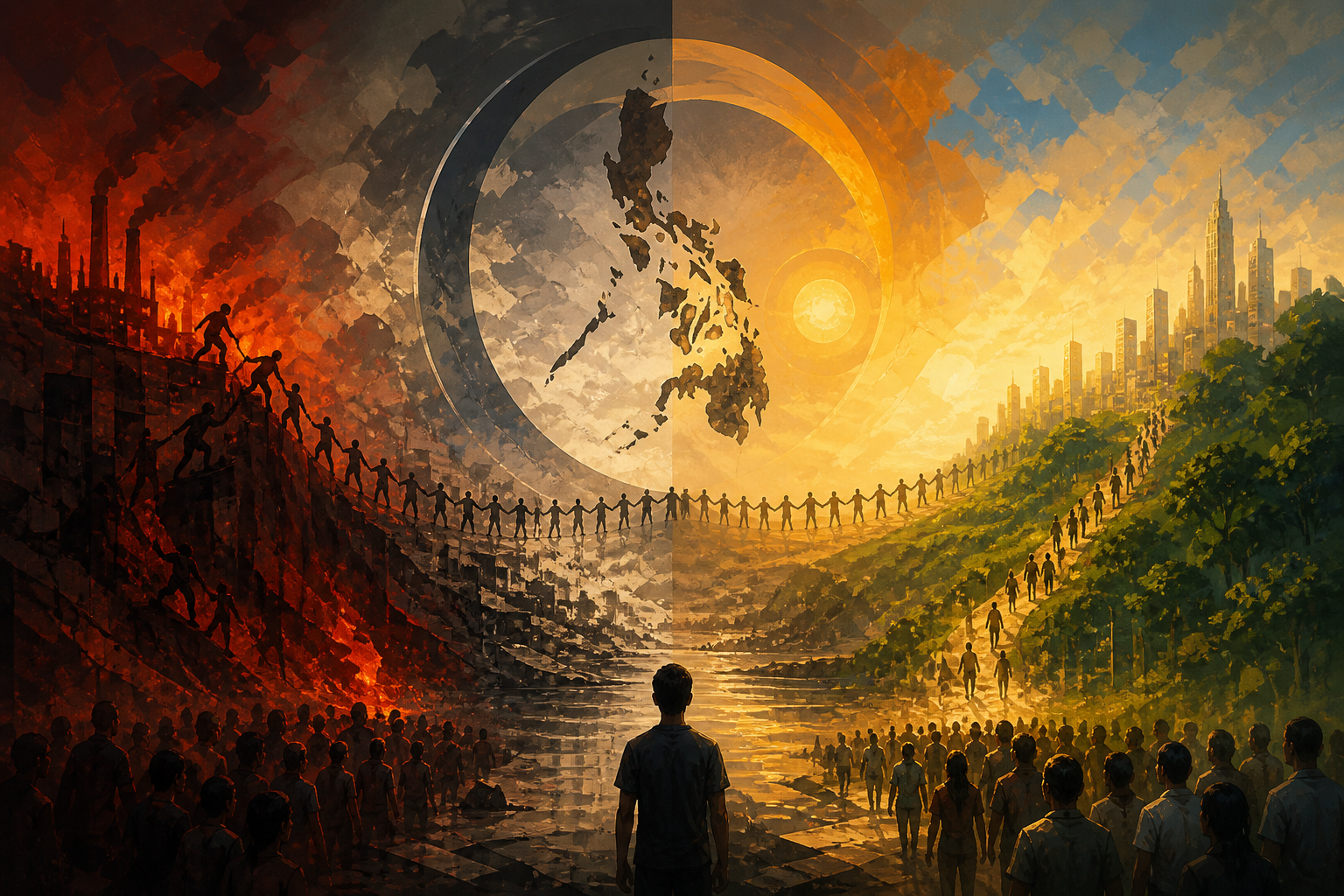
This brings me to the third question:
Where do we stand as a nation—paradise, purgatory, or hell?
Just as Dante was guided through the abyss by Virgil, I believe that if we are to find our way out of the “dark woods” of our national dysfunction, our Virgil must be a vigorous Faith in God. For me, this is not a passive faith that watches from the sidelines, but a demanding moral compass. It is the light that reveals the “ordered circles” of our descent and gives me the strength to finally begin the ascent.
I have long believed that a nation’s destiny rests on two foundations: the strength of its government and the character of its people. When both are strong, the nation thrives in a kind of paradise; when one falters, it drifts into purgatory; and when both fail, it descends into hell.
As I look at the current state of our institutions and reflect on the character of our collective civic behavior, the conclusion is one I can no longer avoid.
We are not in paradise, and I fear we are not even in purgatory. We are in hell.
Yet, my studies of the Divine Comedy have taught me that purgatory represents something fundamentally different from either extreme—it is not a place of final condemnation, but a state of transition. In Dante’s vision, purgatory is where the work of purification begins, and for me, that starts with the difficult step of recognizing our own faults. It is a place where vices aren’t just punished; they are purified as every spirit confronts the very weakness that led it astray. I’ve realized that any path toward our national renewal demands that we not only recognize our failures but also deliberately set out to correct them.
If hell is the result of both a failing government and an irresponsible citizenry, then I see purgatory as the pivotal moment when one side begins to change even as the other lags behind. To me, a nation in purgatory is not yet healed, but it has finally moved past denial; it is a society that has begun to acknowledge its shortcomings and is actively striving for something better.
In our own context, I believe purgatory would require a profound shift in our consciousness—a personal willingness to move beyond the easy comfort of blame and toward the harder path of accountability. It would mean a readiness within our institutions to rebuild trust through genuine reform. For me, this is the stage where we stop avoiding difficult truths and start confronting them; it is where our excuses finally give way to effort, and our passive observation transforms into active participation.
Though we have concluded that we are not yet in this state, the concept of purgatory is fundamental—not as a description of where we are, but as a vision of what lies between our current condition and the possibility of renewal. It reminds us that transformation is neither immediate nor effortless, but attainable through deliberate, sustained change.
To understand how we arrived here, we must recognize that this condition is not merely the result of present failures—it is also rooted in a past that still shapes our present. As a nation, we have long been fragmented—geographically, culturally, and politically—an archipelago not only in land, but in identity. Our colonial history reinforced this fragmentation. Through the divide-and-rule strategy, our colonizers kept us subdued, preventing unity and making sure that resistance remained scattered and ineffective.
Though political independence has long been achieved, the imprint of this division remains. We continue to see ourselves not as a united whole, but as competing factions. This fragmentation deepens further when political actors exploit these divisions, prompting citizens to defend them against one another rather than hold them accountable. In doing so, we become participants in our own disunity.
Over time, our prolonged inability to free ourselves swiftly from colonial rule cultivated a quiet resignation. A decisive moment came when the struggle against our conquistadores from the Iberian Peninsula was nearing victory, and a sense of national identity was beginning to take shape. Yet at that critical juncture, the Filipino people were denied the opportunity to complete their own struggle for liberation, as another power, emerging at the close of Spanish rule, intervened—marking a transition from one colonial master to the next.
What followed was not merely a political transition, but a period in which the natural development of nationalism was constrained, delaying the full emergence of a unified national consciousness and leaving a lasting imprint on how we perceive our collective identity and capacity for self-determination.
I often reflect on how a defining victory for our people—one that might have truly forged a sense of national pride and unity—was interrupted by forces beyond our control. To me, this left behind more than just a political scar; it created a psychological one. In place of a fully realized sense of self-determination, I feel a lingering uncertainty about our capacity to shape our own destiny.

I’ve come to think of this uncertainty as our national Limbo. Much like those in Dante’s First Circle who lived without the “baptism” of a completed purpose, I feel the Filipino spirit remains suspended in a state of “what could have been”. Because our revolution was interrupted and our liberation was eventually granted rather than fully seized, I believe we have inhabited a political twilight for over a century—not fully damned, but not yet free. We are haunted by the sighing of those who are hopeless in desire, longing for a national identity that we were never permitted to finish building for ourselves.
I’ve seen how people subjected to long periods of domination can begin to internalize limitation—a quiet belief that significant change is simply unattainable. This inherited mindset, which I find so damaging, weakens our collective will to act. Yet, I’ve realized this condition isn’t a chaotic fall; it is a structured descent, much like the ordered circles of Hell I read about in the Divine Comedy. Each layer reveals a deeper moral failure: from our negligence and apathy to corruption, and ultimately to the betrayal of public trust. What we experience today is not random misfortune, but the cumulative result of choices I see being made—and responsibilities I see being ignored—time and time again.
Even our natural environment has played a role in shaping our collective mindset. Living in a country frequently visited by destructive typhoons, I believe our repeated exposure to disruption has fostered both a beautiful resilience and a tragic resignation. While these conditions have certainly strengthened our capacity to endure, I worry they have also normalized crisis, reinforcing a tendency in us to merely respond rather than anticipate, and to recover rather than prevent.
I have come to realize that whatever factors or historical circumstances may have shaped our current condition, they do not absolve us of our personal responsibility for it. In my own reflections on self-improvement, I see that our national state is not a sudden collapse, but rather the cumulative result of choices we have made over time—each one contributing to a gradual descent.
**********
WHAT SHALL WE DO THEN?
As I’ve learned from my studies of Dante, recognition of the journey through Hell is only the beginning. What, then, should we do? In the Divine Comedy, the journey does not end in the abyss; there is a path upward to paradise, though I know it is a difficult one to walk.
In Dante’s journey, Hell is governed by a moral logic where every consequence reflects a prior choice. Similarly, I believe the dysfunction we endure as a nation is not without cause; it mirrors the decisions we make, the leaders we choose, and the responsibilities we so often neglect.
Although I do not believe we are yet in Purgatory, I believe we must understand its profound significance.
For me, Purgatory is not a place of perfection, but of transformation—it is the space where acknowledgment finally leads to change and responsibility replaces denial. It is the necessary passage between failure and renewal. I’ve realized this slow ascent requires the effort, discipline, and readiness to confront my own shortcomings that I strive to bring to my writing and my life.
Reaching such a state requires a profound shift in my own consciousness—a willingness to move beyond the habit of blame and toward true accountability. It is the point where effort begins, discipline is cultivated, and active participation finally replaces passivity. However, I’ve come to understand that this path requires a fundamental change in how I think about our development as a nation.
For too long, we have relied on a flawed model that assumes progress begins externally. It is time, therefore, to look inward. Just as Virgil guided Dante through darkness—not by force, but through the light of Reason and the mandates of the Divine—we too must rely on a Faith sharpened by clarity of thought and self-awareness to navigate our way out of this abyss.
The alternative path begins with the individual and extends outward—to the family, the community, and the nation.
If paradise is to be realized, it must be understood not merely as prosperity, but as the restoration of unity and the overcoming of fragmentation that has long defined us. A nation cannot reach its highest potential while divided. True progress demands cohesion and a shared sense of purpose that transcends regional, political, and ideological boundaries.
To arrive at such a state, we must consciously unlearn the divisions that history has imposed upon us. The legacy of divide et impera must no longer define how we relate to one another. Instead of allowing ourselves to be separated by difference, we must recognize that our strength as a nation lies precisely in our diversity—when it is bound together by a common commitment to the greater good.
A nation in paradise is not free from disagreement, but disagreement does not lead to division. It is a nation where citizens hold leaders accountable without becoming instruments of partisan conflict, and where public discourse is guided by a shared desire for national progress rather than hostility.
Ultimately, paradise is not granted; it is built. It emerges when individuals rise above narrow loyalties, families instill values of discipline and responsibility, and citizens view themselves as integral parts of a greater whole. Only through unity, grounded in shared values and mutual accountability, can a nation truly ascend to its highest form.
I have realized that the ascent from Hell in Dante’s journey is neither sudden nor effortless; it demands a kind of movement, struggle, and persistence that I try to channel into my own creative projects. One does not simply wake up outside of the darkness; you must climb out of it. At the end of that grueling climb, Dante shares a powerful image that stays with me: the moment he emerges “to see the stars again”. It serves as a personal reminder that no descent is final, and even from the deepest darkness I may feel, a path toward renewal remains.
Only then can we truly begin our ascent: from hell, through purgatory, and ultimately toward paradise. I’ve come to understand that the path to national transformation doesn’t begin in the halls of power, but in the quiet, daily decisions of individuals like me who choose to change.
In the end, I see that a nation is nothing more and nothing less than a reflection of its people. If I desire a better nation, I must first strive to become a better individual.
The journey out of the abyss is long, but I find comfort in the fact that Dante’s final word in every canticle remained the same: stelle, the stars. For me, those stars are not just distant celestial bodies; they are the three stars of our national emblem, which have felt obscured for so long by the smoke of partisan conflict. Like Dante emerging from the dark to behold them once more, I believe we, too, may rise if we choose not merely to hope for change, but to become its source. Only when we fix our gaze upward, guided by our Faith and our shared history, do we leave the darkness behind. In that rising, we do not merely find paradise; we build it.
THE NATION WE CREATED (Part 2)
The darkest places in hell are reserved for those who maintain
their neutrality in times of moral crisis.”
– Dante Alighieri –
ARE WE A RESPONSIBLE CITIZENRY?
This is an uncomfortable question—one that demands honesty.
Unfortunately, the answer is no. To claim otherwise would be to deny a truth we often avoid.
In my fourteen years of living abroad, I have come to realize that we cannot attribute our failure to reach our full socio-political and economic potential solely to the government. In many ways, we ourselves contribute to the very condition we lament—more often than we are willing to acknowledge. The consequences we face as a nation are a mirror of our own choices. I see this as our own national contrapasso—the principle from Dante’s vision where the punishment perfectly fits the nature of the sin.
I believe we often fail in our most fundamental civic duty: we do not choose our leaders wisely. From my perspective as an author who values the precision of every choice, it is painful to see elections reduced to popularity contests or questionable standards. When we elevate individuals who are unqualified or driven by self-interest, we are essentially drafting the very chapters of the dysfunction we later complain about.
This failure is most evident to me in the persistent cycle of vote-buying and vote-selling. It breaks my heart to see the sacred right of suffrage treated as a transaction rather than a responsibility. This is the contrapasso of the ballot: on the eve of elections, when an envelope changes hands for a day’s relief, it sets a narrative in motion. Years later, those same hands wait again for a change that never comes.
When we sell a vote for a single meal, we shouldn’t be surprised when we are governed by those who treat public office as a commodity to be exploited for years of profit. We are not simply victims of a corrupt system; I’ve come to realize that we are often the architects of our own deprivation. We are bound by a cycle where the short-term relief of a bribe becomes the long-term chains of our national poverty, and leadership is no longer measured by the integrity I strive for in my own life, but by the capacity to buy an advantage.
This dynamic feels like a modern staging of Shakespeare’s Coriolanus, where the titular general’s contempt for the public makes the process of seeking the people’s voice a hollow, transactional performance. In that chasm between a detached leader and a manipulated citizenry, the entire nation is swallowed.
In my view, what makes this cycle so destructive is how it fundamentally warps the meaning of representation. I’ve observed that when someone assumes office through monetary influence, they stop seeing their role as a public trust; instead, it becomes a private investment to be recovered—and, more often than not, multiplied.
In my own creative work, I strive for a “Holistic Approach” where every element serves the whole, but in this distorted system, governance becomes about the “return” on that investment. Decisions are no longer formed by the actual needs of the people, but by a desperate desire to recoup the costs of acquiring power. It makes me realize that corruption isn’t just an unfortunate accident in our story; it is embedded in the manuscript from the very first page.
Faced with this reality, I feel that our duty goes far beyond simply refusing to sell a vote; we must practice a deep, intentional discernment when choosing those we entrust with office. As someone who carefully evaluates every line of a poem or every margin of a 5×8 layout, I believe the right to vote is not just a procedure—it is a moral responsibility that demands our best judgment. We have to set personal standards that exceed the bare minimums of the law, evaluating candidates on their competence, their integrity, and their actual capacity to serve. Without these standards, I fear our voting becomes nothing more than an empty ritual, rather than the meaningful contribution to nation-building I know it can be.
This responsible exercise of our right is even more vital in a culture where we so easily mistake popularity for competence. I’ve often reflected that public office is not an extension of fame, and it shouldn’t be treated as a platform built on recognition alone. True leadership, like the mastery required for complex writing, demands the ability to understand intricate issues and make sound decisions in the public’s best interest. When we let popularity become our primary yardstick for success, I believe we inevitably diminish the very standards of governance we rely on to survive.
Worse still, I see us continuing to recycle the same traditional politicians or replacing them with members of their political dynasties, yet somehow expecting different results from these same tired choices. In doing so, we reinforce a system in which power remains concentrated within a limited circle, which I believe restricts opportunities for genuine reform and perpetuates the very conditions we claim to oppose.
What I often find overlooked, however, is that these political dynasties do not sustain themselves—they are maintained by our repeated electoral support. Leadership within these families persists not just because of their ambition, but because we, the electorate, continually permit it. In this sense, I’ve realized that dynasties are not simply imposed upon us; they are reproduced through our collective decisions.
As I watch positions of power pass from one family member to another, I feel governance becoming less about public trust and more about the perpetuation of control. This tendency narrows the variety of perspectives in our leadership and makes significant change feel increasingly out of reach. When I see the same names dominating our political landscape decade after decade, my expectations for a different outcome grow increasingly detached from reality.
Recognizing this reality highlights a profound personal responsibility for me. I know the means to make informed choices are within our reach; we can examine track records, assess qualifications, and critically evaluate platforms. To me, the ability to choose wisely doesn’t require extraordinary expertise—it only requires us to be attentive, thoughtful, and responsible with our votes.
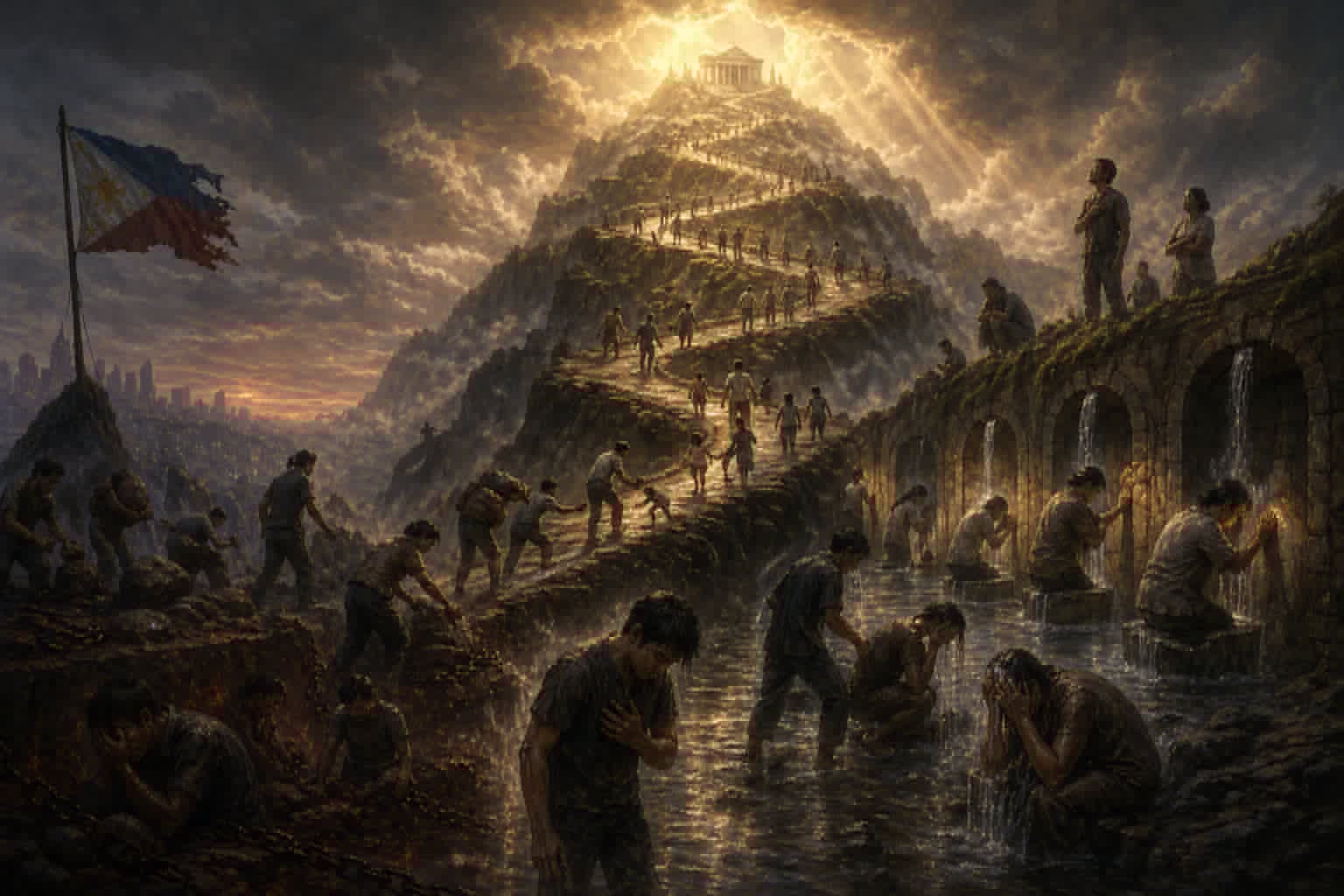
Beyond how we vote, I see a mindset of misplaced expectations, in which we believe the government is solely responsible for solving every societal problem. We often view our relationship with the state through a lens of entitlement, demanding benefits and services without fully recognizing our own vital role in nation-building. In many ways, our national psyche has become a staging of Samuel Beckett’s Waiting for Godot, where we sit by the side of the road, suspended in a state of ‘what could have been,’ waiting for a savior who never arrives. We remain rooted in place, expecting the government to deliver a transformation that can only be authored by our own hands.
I’ve noticed that this belief is often accompanied by a dangerous expectation: that those in power can single-handedly deliver national transformation, as if progress were the work of political saviors rather than a shared responsibility. In my own reflections on self-improvement, I see how such expectations reinforce patterns of dependence that go beyond mere perception and begin to actively shape our behavior.
This mindset is further reinforced by what we often call the ayuda mentality, reflecting a growing dependence on government assistance as a primary means of survival. While I recognize that aid is absolutely necessary during crises, it becomes deeply problematic when it fosters long-term reliance rather than empowerment.
Instead of being seen as temporary relief, I see assistance being regarded as an entitlement, which inevitably weakens our drive for self-reliance and personal initiative. Over time, this erodes the very values I believe are necessary for a responsible citizenry—hard work, discipline, and accountability. Even more concerning to me is how this assistance becomes entangled with political interests. Rather than serving as a mechanism for public welfare, I’ve seen it dangled as a reward for political favors, votes, and loyalty. This practice transforms aid from a tool of empowerment into an instrument of influence, reinforcing our dependency while distorting the democratic process I hold dear.
For me, this cycle of dependency mirrors Dante’s Third Circle, where the gluttons lie in a foul-smelling slush, eternally drenched by cold, ceaseless rain. Our gluttony is not for food, but for the ease of reliance. The contrapasso is evident: by choosing the temporary comfort of a handout over the challenging path of self-reliance, we condemn ourselves to remain in the mud of national stagnation. We are left perpetually waiting for a rain of ayuda that neither cleanses nor empowers, but keeps us mired in a situation of our own making.
The more we rely on external provision without cultivating self-reliance, the more we reinforce the very conditions that make such reliance necessary. It becomes a quiet echo of the same moral logic found in Dante’s vision, where consequences reflect the choices that give rise to them.
When citizens begin to associate public assistance with political allegiance, the relationship between the people and their leaders shifts from one grounded in accountability to one driven by patronage. Instead of evaluating leaders based on competence, integrity, and vision, some are compelled to support those who provide immediate material benefits, regardless of long-term consequences. In this way, assistance no longer uplifts—it conditions. It discourages initiative, weakens independence, and fosters a cycle in which both leaders and citizens become trapped: leaders in the pursuit of political survival through distribution, and citizens in the expectation of continued provision.
To be clear, assistance has a legitimate and necessary role—especially during crises, disasters, and periods of financial hardship. A compassionate government must provide safety nets for its most vulnerable citizens. However, when assistance evolves from temporary support into a permanent expectation, it ceases to empower and begins to weaken.
The issue, therefore, is not the aid itself but the mindset surrounding it. A society that depends primarily on external support, rather than cultivating internal strength, risks losing the qualities that sustain long-term progress: initiative, resilience, and self-reliance.
A nation cannot progress when its people are conditioned to wait rather than act, to receive rather than build.
I see this condition further compounded by a culture of blame that I encounter all too often. When we fail to reach our goals in our personal or professional lives, I’ve noticed how quick we are to point fingers at the government, our leaders, or our circumstances, rather than pausing to examine our own decisions. In doing so, I feel we absolve ourselves of responsibility and, more tragically, surrender the very agency we need for growth. Instead of the accountability I strive for in my own life and work, we resort to excuses.
It brings to mind the caution from Julius Caesar: “The fault, dear Brutus, is not in our stars, but in ourselves, that we are underlings.” In my own work on a holistic approach to self-improvement, I’ve had to confront this same truth—that we often stay suspended in limbo because we have inherited a mindset that change is something granted to us, rather than something we must seize
To me, this mirrors a recurring moral pattern where inaction—though it seems harmless—allows dysfunction to persist. I’ve come to believe that our silence as citizens serves as tacit permission for that dysfunction to continue, unchallenged and uninterrupted.
This is where I feel our Faith must move beyond mere ritual and into resolve. As I reflect on my own spiritual journey, I realize that claiming faith while remaining indifferent to the “hell” of corruption is a profound contradiction. True faith doesn’t offer me an escape from responsibility; it provides the mandate for it. If we are to be led by this “Virgil,” we must realize that God does not build nations—He empowers us to build them ourselves.
At its core, I see the problem as a lack of personal responsibility and civic discipline. Whether I am working on the second edition of my book or navigating life in South Korea, I am reminded that we often neglect the role we must play—not just as voters, but as individuals who must work diligently and contribute to society. Nation-building, I’ve realized, is not a task for the government alone; it is a shared responsibility that demands effort from everyone of us.
THE NATION WE CREATED (Part 1)
“The darkest places in hell are reserved for those who maintain
their neutrality in times of moral crisis.”
– Dante Alighieri –
In my fourteen years in South Korea, I have often reflected on the delicate architecture of a nation’s soul. In those reflections, I found myself drawn to quiet comparisons between the systems of my host country and my own.
As an author, I tend to see the world through the lens of structure and foundation—much like the deliberate order I impose on the pages of my books—and I have come to believe that a nation’s destiny rests on two pillars: the integrity of its leaders and the responsibility of its people.
To me, these aren’t just political concepts; they are the boundary lines between peace and chaos. When both are strong, the nation feels like a paradise. When one falters, we drift into a restless purgatory. But when both fail, as I sometimes fear they have back home, the descent into a collective hell becomes almost inevitable.
Over the fourteen years I have lived in South Korea, I have come to view the condition of a nation not as a static map, but as a journey—a long, winding movement shaped by the weight of our collective choices. As an author, I find myself drawn to the structure of the Divine Comedy, where Dante must descend through the depths of Hell before he can even hope to see the light of Paradise. It’s a lens that helps me process our own national reality: we are not stuck in a fixed state, but are moving through a landscape defined by our actions.
From this perspective, three questions have begun to haunt my thoughts, demanding to be addressed:
Do we have a good government?
Are we a responsible citizenry?
Where do we stand as a nation—paradise, purgatory, or hell?
**********
DO WE HAVE A GOOD GOVERNMENT
The answer to the first question, as painful as it is to write, feels unequivocal to me.
We are governed by a dysfunctional government.
In my time writing about self-improvement and the shadow of our choices, I’ve seen how corruption acts as a plague on our institutions, siphoning away the very resources meant for our growth. It is heartbreaking to realize that the funds intended for our children’s schools or our farmers’ roads are so often lost to dishonesty. Tools that should be used for our collective progress instead become narrow paths for personal gain, turning our public coffers into the private piggy banks of those in power.
In my observations, these practices reveal something far deeper than a simple institutional breakdown; they expose the raw, ethical flaws that I often explore in my own writing—where greed is allowed to prioritize personal gain over the public good, and pride stands like a wall against accountability. These are the same vices I find echoed in the great literary traditions I study, yet they are not confined to the pages of a book; they manifest in the very way our daily lives and institutions function.
I’ve seen how this dysfunction slowly erodes the foundation of our society and lowers the bar for what we expect from one another. As corruption becomes common, integrity feels less like a standard and more like a rare exception. I worry that we have begun to tolerate dishonesty, normalizing inefficiency until we are trapped in a cycle: weak systems create passive citizens, and our passivity, in turn, allows that weakness to persist.
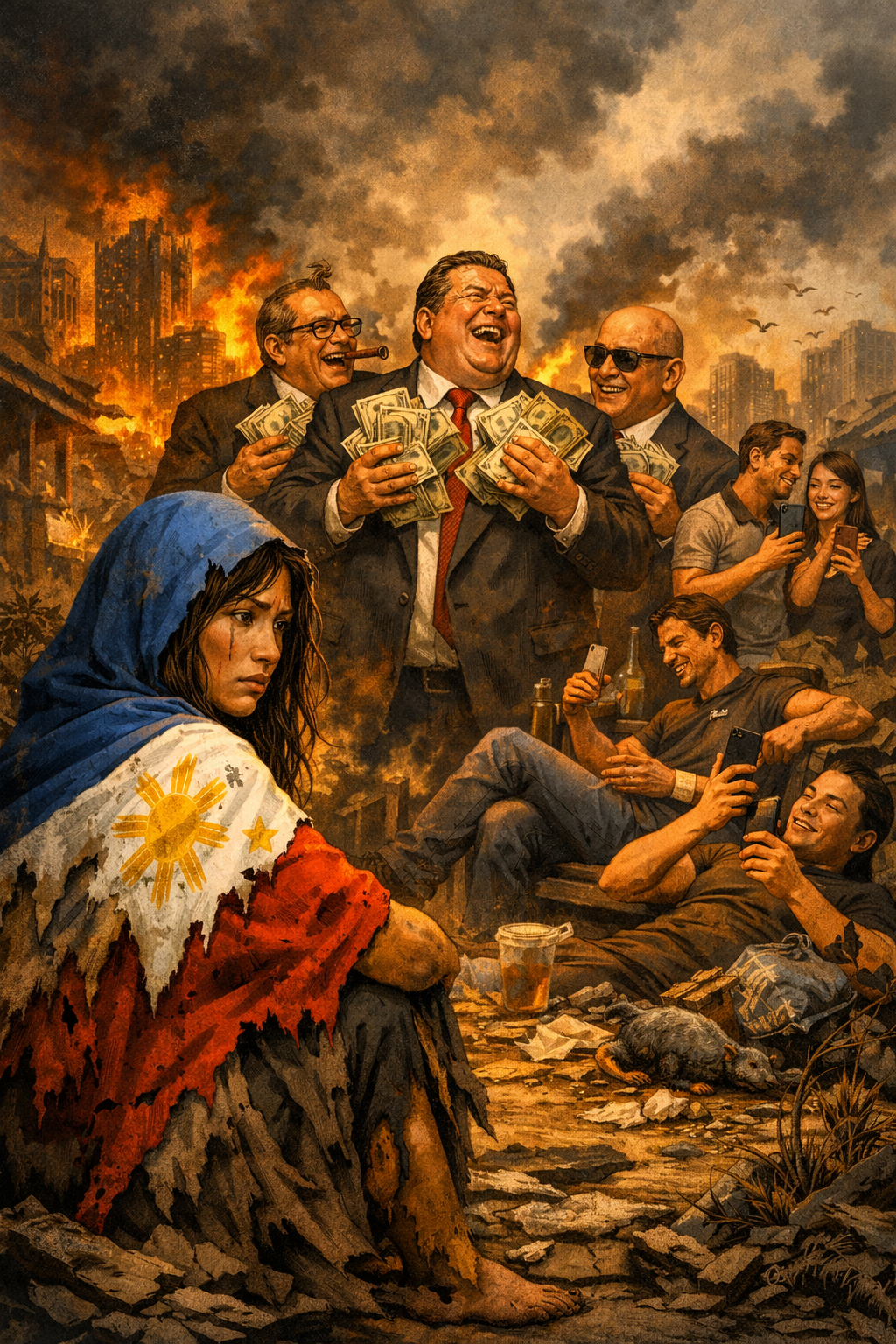
More concerning to me is the resignation this environment breeds. It’s easy to start believing that change is impossible, but that belief only serves to normalize corruption. It silences the critical voices and weakens our collective will to demand something better. When I see hope being lost, I realize that our withdrawal from civic engagement is the very thing that prevents reform from taking root.
I often think of Dante’s vision, where the morally indifferent—those who refuse to take a stand—are denied entry even into Hell. They are condemned not for their actions, but for their silence. In much the same way, I feel that our own inaction allows this dysfunction to continue, unchallenged and uninterrupted.
It reminds me of what Dante portrayed as sloth: not just simple idleness, but a moral passivity that allows injustice to endure through quiet tolerance. Like the inscription at the gates of Hell—“Abandon all hope, ye who enter here”—too many of us have accepted this state as permanent, surrendering the very hope that could spark change and, instead, enabling the very actors who thrive in this dysfunction.
As I watch from afar, the political theater back home often feels less like a debate and more like a spectacle of mudslinging between rival groups. It is a pattern I find deeply unsettling, reflecting not a reasoned disagreement but a descent into raw hostility, in which the pursuit of truth is sacrificed for the sake of division. Instead of the meaningful dialogue and collaboration I advocate for in my own reflections on self-improvement, we witness a cycle of endless accusations and personal attacks.
It resembles a tragicomedy—absurd, disquietingly humorous, yet undeniably tragic. What strikes me most is how we, as citizens, often become unwitting participants in these divisions, defending rival factions even when the conflict yields no real benefit to our lives. The energy I believe should be devoted to substantive governance and personal growth is instead consumed by these political theatrics.
Watching this from afar, I am reminded of Shakespeare’s Troilus and Cressida, a problem play in which the pursuit of truth is buried beneath ego and partisan hostility, leaving the characters mired in a stalemate that mirrors our own national stagnation.
I find it even more troubling to see the persistent failure to hold erring officials accountable. Even when scandals capture our attention, I’ve seen justice delayed or diluted until it is effectively denied. It seems to me that accountability has become selective, fueled by partisan loyalties: rigorous when applied to an adversary, but met with a heavy silence when it concerns an ally. In my view, this selective justice only strengthens a culture of impunity in which misconduct is not just ignored but effectively tolerated because the consequences never seem to match the actions.
Taken together, these realities paint a picture for me of a government struggling to fulfill its basic duties—not because we lack solutions, but because the system itself feels compromised.
It leads me to wonder: if we lack a good government, does that place us in Purgatory?
In my heart, the answer is “not quite,” because I’ve come to realize that the failure of a government never exists in isolation; it is a mirror that reflects and reinforces the shortcomings we carry as a people.
Grace In A Foreign Land
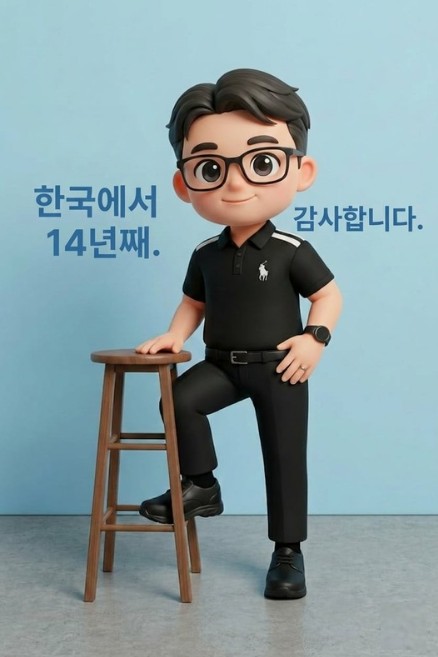
Today, I begin my 14th year here in South Korea.
Fourteen years ago, I boarded a plane carrying more than luggage. I carried questions. I carried fear. I carried unfinished conversations with the people I loved. And yet, above all, I carried conviction — the kind that whispers, Go. There is more waiting for you.
Time has a way of softening distances and turning foreign places into familiar ground. What was once unknown has become part of my story. What once felt like exile became expansion. And in all these years, I have come to understand that certain decisions do not merely change your address — they change your direction.
South Korea did not simply become my workplace; it became a refining ground. Here, I grew not only as an educator but as a thinker, a writer, and a man of faith. The classrooms sharpened my discipline. The solitude deepened my introspection. The unfamiliar culture stretched my perspective. This land became the platform on which I learned to rebuild, rediscover my purpose, and pursue excellence beyond the limits of my former comfort zone.
I thank the Lord for sustaining me through every season — through doubt, through growth, through silent battles no one else saw. And I thank this country for serving as the backdrop to one of the most defining chapters of my life.
But every long journey has a beginning. Every transformation has a first trembling step.
And mine began with a single day — a day marked by cold air, empty rooms, unanswered calls, unexpected kindness, and a faith that refused to collapse.
That first day in South Korea is something I will never forget.
It was in the early dawn of March 2, 2013 when I left the Philippines aboard Asiana Airlines. Around eight in the morning, the plane landed at Busan International Airport. At that time, Mr. Kenn Lachenal was with me. We were both headed to South Korea to teach English at Gyeongju University.
I admit that during that time, I was overwhelmed — not because of drugs, but because of the many thoughts about my loved ones and the anxiety over the new challenge I had chosen to face.
It was against my will to leave my loved ones behind, but it was necessary. I also did not want to step away from the school I had served as Principal for almost a year. Yet I have always refused to be ruled by my emotions. I did not want to avoid a decision simply because I surrendered to feelings. I carefully thought through my decision to go to South Korea to teach. It was not impulsive. It was part of my plans — a long-considered intention whose time had finally come. I would not allow my emotions to stop me.
It was not the desire for a higher salary that drove me abroad. I was already earning well as a principal. On top of that, I was working as an academic consultant at a technical school and as a part-time college instructor. Financially, I was stable. I had even built a house. The problem was this — I was no longer comfortable in my comfort zone.
I had grown weary of supervising teachers and employees. It felt stagnant — no longer challenging. Something was missing — something I longed to find. Personal issues that needed resolution did not help either. It became clear to me that I needed a radical change in my life if I wanted to preserve my sanity. I had to go somewhere new for a fresh beginning.
I felt as though I was at a dead end — yet I knew there was a world beyond dead ends. That was the world I wanted to reach… to explore.
As Jake Sully, the main character in Avatar, once said, “Sometimes your whole life boils down to one insane move.” Like Jake, though I felt fear, I was certain of my decision before I jumped to wrestle and tame my own “Toruk.”
I brought only two things with me to South Korea — self-confidence and faith in God. That combination has always been my shield against trials and my hook for reaching whatever I aspire to achieve.
I was not seeking luck in this country; I do not believe in luck. I believe that “God gives mercy, but man must act.” My purpose was to write a new chapter of my life here — a new phase in the destiny I believe I must draw for myself.
It was my first time traveling abroad, and I was fortunate to be with Mr. Lachenal. Aside from being helpful, he was experienced in overseas travel. Since we were both headed to Gyeongju University, I was confident I would not get lost.
When we arrived at Busan International Airport, I was shocked by the cold. It pierced through my jacket. I had assumed that since winter had ended and spring was beginning, the weather would be like Baguio. Thankfully, the bus we took to Gyeongju-si had its heater running. Though I was sleepy, I could not fall asleep during the ride. I kept looking at every place we passed. I said to myself, “Here I am in South Korea.”
After nearly two hours, we arrived in Gyeongju-si. Mr. Mark Celis welcomed us. He brought us to the apartments where we would stay — Mr. Lachenal to the “white house,” and me to the “blue house.” Not the White House of Washington D.C., nor any political residence in Seoul — those were simply the names given to the apartments provided by Gyeongju University for foreign professors. They were named after their paint colors. There was also a “yellow house” and a “green house.”
Before leaving, Mr. Celis ensured that my unit was in order and introduced me to another Filipino professor at Gyeongju University — Dr. Randy Tolentino, who also lived in the “blue house.”
When I entered my room, I felt for the first time what it truly meant to be alone — far from loved ones, in an unfamiliar place. I simply stood there, unsure of what to do first.
After regaining composure, I opened my suitcase and slowly arranged my belongings.
The surroundings were silent. I heard nothing but my own footsteps. I could even hear my heartbeat and the sound of my swallowing. After arranging my clothes and things, I suddenly felt the intense cold again — and hunger. The refrigerator was empty. There was a gas stove, but nothing to cook. I made do with the biscuits I had brought from the Philippines.
Then I remembered I needed to call my loved ones to inform them I had arrived safely. When I reached for my cellphone, I realized I had not activated roaming on my SIM card. I felt foolish. I cursed under my breath. I could not call anyone; my phone was nothing more than a music player.
I admit that at that moment, deep sadness overwhelmed me. I was still hungry despite finishing almost all my biscuits. I was shivering from the cold. The silence felt deafening. I was alone, with no one to talk to. I also worried that my loved ones were already anxious, waiting for news from me.
In that moment, I understood the true meaning of HOMESICKNESS — just hours after landing in South Korea.
But amid that sadness, I looked up to heaven and remembered that I had prayed many times for the chance to come to this country. I do not know why, but as far as I know, He has never ignored my prayers. I even wrote a poem about it in English — seven syllables only:
He answers.
Just wait.
Have faith!
I was about to lie down to drown my hunger and sadness in sleep when I heard knocks at my door. It was Randy.
He came in and talked with me. He was from Iloilo. At least I had someone to speak with now. While we talked, he looked at my stove and showed me how to operate it. He must have noticed I was cold, because he also taught me how to use the floor heater. I felt somewhat relieved by his help. He opened the kitchen drawers and found a few cans of food left behind by the previous tenant. He left briefly and returned with packs of noodles and some 3-in-1 coffee.
I was surprised by the generosity Randy showed, whom I would later call Sir Randy. It was as though he had known me for years. He stepped out again and returned, saying, “Come on, bro, my girlfriend has cooked. Let’s eat.”
I followed him to his unit. I was surprised, but I did not hesitate — not because I was desperately hungry, but because I felt the sincerity of his invitation. It would have been embarrassing to refuse.
The food was warm, but warmer still was the care shown to me by Sir Randy and his girlfriend, Nikki, who was from China. I was about to take my first bite when Sir Randy offered a prayer of thanksgiving. My respect for him deepened at that moment. At my first bite, tears welled up in my eyes — moved by their kindness and by how God answers prayers. When the couple looked at me, I casually said I must be catching a cold — that was why my eyes were watery. I do not know if they believed me.
After dinner, Sir Randy walked me back to my unit, carrying some cooked food. I said, “This is more than enough, bro!” He smiled and explained they were leaving for Daejeon and just wanted to make sure I had food until the next day. He then returned to his unit and brought me a pot, a pan, a kettle, and some coffee sticks. I did not know what to say. I wanted to hug him for all the help he was giving.
His kindness did not end there. When he learned I could not use my SIM card, he lent me one of his smartphones and his iPod before they left, and he kept his Wi-Fi open so I could use the internet. Our units were only meters apart, so I could access his connection from my room.
I had no words left. “Thank you” felt worn out from repetition. I wanted to hug him, but he was in a hurry to leave. After he stepped out of my unit, I simply closed my eyes and silently thanked Him. I am not a good person. I am weak and sinful. It is simply that the Lord is gracious and loving to those who call on Him.
I am truly fortunate that on my very first day in South Korea, I met friends like Randy and Nikki. They are more than friends — they are siblings from different wombs. They are the reason my first day in South Korea is so special.
Randy and Nikki are living testimonies of God’s goodness.
South Korea: On To My 12th Year

I remember certain things as my twelfth year here in South Korea commences.
I remember my father. He influenced me to consider plying my trade as a teacher in another country. Thus, when I revisited my career path at the turn of the 21st century (Yup… that was eons ago!), I included teaching in a foreign land as one of my options. It was not until 2008 that I seriously considered it. What led me to give this option a try was my father’s response when I informed him that I had finally completed my Ph.D. I even bragged to him about me being the first one in our clan to become a “doctor.” He, of course, congratulated me but asked, “How much is your salary now?.” I gave him the exact amount and the possible increase because of my newly minted PhD. Then he informed me that one of my cousins, a seaman, receives a higher income even if he has not finished college. All I could do then was scratch my head. Four years after that exchange between me and dad, I finally flew to South Korea in 2013. Had my father not died in 2014, I am sure I could have brought him and my mom here for a vacation.
I also recall the FAPE accreditors who interviewed me in 2012 when I was the Principal of a basic education institution in the Philippines. The school I was supervising then applied for FAPE re-accreditation. One of them asked why I left the previous schools where I worked. The interviewer even noted that I had good supervisory positions in those schools. However, the question irritates me a little bit because it seems that for that educator who asked it, something is wrong with somebody in any profession if they move so often from one workplace to another. Why, then, do people immediately label the constant movement of an employee from one company or institution to another as a red flag? What if that employee has justifiable reasons to quit and find another job? I had good reasons for jumping out of those ships. How I wish I could divulge the reasons.
I decided to reply politely to that question: “I have not quite found my niche yet.”
That was true. I had a great run as a teacher and school administrator but wasn’t satisfied. My mother helped me figure out the reason for such dissatisfaction – I could not give time for my other passion – writing. My mom is my number one fan as a writer. She loves reading my stories and poems. She was the one who kept reminding me about my gift of writing. Just like me, my mom loves writing stories.
Then, on March 2, 2013, much to my father’s delight, I flew here to South Korea to teach English.
Leaving my country to work here was both a professional and a personal decision. I suffered from severe job burnout then. I wanted to just be a teacher and not hold a supervisory position at the same time. I just want to teach and to pursue my other passion – writing. On the personal side, I had some personal demons to slay… too personal to share. Suffice it to say that the job burnout, combined with the consequences of some wrong decisions I made, led to depression. If I did not do something to address it, I wasn’t sure if I would emerge from that chaos with my sanity still intact. I escaped from that turmoil and could not have chosen a better place than the Land of the Morning Calm to soothe my hurting spirit and continue my academic career.
So, I got what I wished – to teach only and not supervise people at the same time. The pleasant surprise I got when I started teaching here was the required number of working hours – less than 20. Four days a week, teach for not more than 16 hours and stay in the office for possible visits from students for 3 hours. I have 3 full days and plenty of vacant hours during work days to do the other things I love – particularly writing and working out in the gym.
So, did I finally find my niche?
South Korea has turned out to be the best place where I can pursue both teaching and writing. I am so blessed to be in this corner of the Korean peninsula. Way back in my native land, it was only my academic career that blossomed. I may not have fulfilled my dream of operating my own school, but I checked a significant box in my career path – becoming a college dean.
But I am not just a teacher… I am also a writer. Being a teacher and a school administrator at the same time in my country gobbled up my time and energy. I could not focus on my writing. I was lucky to have at least a poem, an essay, or a story in a week. But here in South Korea, with all the free time that I had ( and still have), I could scratch my creative itch to the fullest. I still do until now. And the bonus… I was able to pursue my self-improvement advocacy.
Oh… I might forget. Every semester, we get to work only for 15 weeks. I already did the math; technically, we have 5 months of vacation a year. But we continue to receive pay. What a blessing! I have lots and lots of free time to use for my writing and my advocacy for self-improvement. Now, I have my own websites and social media accounts where I publish the things I write… where I blog and vlog.
The niche I was looking for was a place where I could be most productive professionally and personally. It is here in South Korea where I found that niche. I cannot thank God enough for leading me here. South Korea is my second home, and I feel so blessed that I am now in my twelfth year… and praying for more years to come.
I will forever be indebted to Dr. Larry Chong and Gyeongju University for paving the way for my entry to South Korea. That indebtedness extends to Hanseo University for being my home for the past 10 years.
South Korea: Celebrating My 10th Year
On to my 10th year here in South Korea. This country has been a huge… huge blessing to me, personally and professionally.
Thank you Lord. To You be the glory!
This video shows a few glimpses of my 10 years in this country.
South Korea: In the Eyes of an Expatriate (3)
(Last of 3 parts)

I really tried hard to figure out what happened. What went wrong for my country and conversely, what did the South Koreans do correctly? To think that in the 1950s, while my country was soaking in the glory of being Asia’s second strongest economy, the Korean peninsula plunged into a devastating war.
I tried to probe deeper into this nation’s history to find the answer to the following questions: 1. How were the South Koreans able to slay the ghosts of a bitter colonial past?; 2. How did they survive the devastation wrought by the Korean war?; and 3. How did they triumph over internal political turmoil while at the same trying to ward off a belligerent neighbor in North Korea?
How were the South Koreans able to accomplish all of the aforementioned then eventually catapult themselves to their current lofty position in the global community?
Then I found out what the South Koreans did in 1998 at the height of the Asian financial crisis. They willingly donated their gold – jewelry (including their personal wedding rings), medals and trophies, good luck keys, and what have you. This they did to save their economy during that crisis. The collective weight of the gold they donated may not be that much. But more significant than the corresponding monetary value of their donation was the willingness of the South Koreans to make a personal sacrifice for their country. I call that nationalism. If it’s not then I don’t know what is. It is the same sense of nationalism that emboldened them to resist one military junta after another… to sacrifice their lives and limbs to lay the democratic foundations of this country which eventually became a fertile ground that nurtured the economic prosperity they are currently enjoying.
I also learned about the collectivist culture of these people. They think first of the general welfare over and above their personal interests. This I witnessed first-hand when I saw how the South Koreans willingly obeyed the restrictions set by their government during the early onslaught of Covid-19. There was no need for their leaders to implement a “hard lockdown,” the way other countries did, including mine. The citizens just strictly wore their masks, observe social distancing, and avoided leaving their homes unless it was necessary. They are willing to sacrifice for the greater good.
I think I found the answer to what enabled the South Koreans to attain prosperity and stability – the combination of their nationalism and collectivist culture. I may be wrong but I could not really see any other possible reasons for their success as a nation. There is nothing more potent of a mix for nation-building than the combination of the two. And if they keep using this formula, the future of this nation is secured.
Other expatriates living in this country may not see things here the way I am seeing them. To them the observations I made may not be a big deal. To me, given the situation in my country now, they are.
If only my countrymen would consider including the South Korean model of nationalism and collectivism among the things from this country that we allow ourselves to be influenced by. We should try to find out if we could also propel our own native land to greatness if we would try to emulate the way South Koreans profess their love for their country. We need to see if we could also make our country better if like them we would put the greater good over and above our personal interests.
We copied hook line and sinker (Or was it forced down our throats?) the socio-political and economic models of our colonizers and we are not getting desirable results. Obviously, our needle of success as a nation is barely moving. We have been trying to fit our colonizers’ square peg into our round hole. It’s not working. It’s time for us to rethink our strategies for nation building. Why don’t we try the South Korean model? Let’s see what will happen if we embrace, not only K-dramas, K-pop, and kimchi but also the values that brought the South Koreans to where they are now.


 M.A.D. L I G A Y A