Mas Nanaisin
 (A poem inspired by Vandross’ “I’d Rather”)
Tila naubos ang pulot sa sisidlan
Ngiting matamis biglang naging matabang
Tala man sa mata’y nawala ang kinang
Nanlamig mong kamay ayaw nang hawakan
Lito ako’t nagpasyang ika’y lisanin
Pilit na tinuldukan ang kwento natin
Ngunit nang ikaw ay malayo sa akin
Naging marubdob sa puso ang panindim
Pumasok ako sa pintuang bumukas
May ngumiti at sa akin ay yumakap
Siya’y ‘di ikaw kaya’t dagling lumabas
Aamining ikaw ang aking hinahanap
Mas nanaisin pala na kamay mo’y hawak
Kasinglamig man ng nyebe ang iyong palad
Hindi baleng ngiti mo sa tamis ay salat
Dulot nito sa puso’y walang hanggang galak
Mas nanaising nasa gitna ng dagat
Hampas-hampasin man ng along mataas
Handang magpaduyan sa hanging malakas
Basta’t kasama kitang hawak ang layag
Heto’t naninikluhod sa ‘yong harapan
Nakapinid na puso’y muli mong buksan
Kapag nang patawad ‘di mo gagawaran
Mas nanaising mapag-isa na lamang
On the Poll That Says “Most Filipinos trust US, not China” – A Case of National Amnesia or Triumph of US Indoctrination?
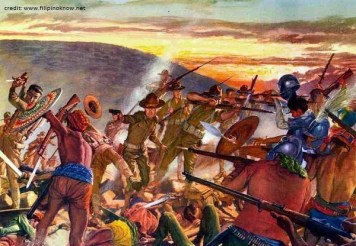
There is something more to that poll that says “most Filipinos trust US, not China” than meets the eyes. It affirms two things. First, Filipinos suffer from a national amnesia and second, the Americans completely succeeded in indoctrinating the people whom then US President McKinley referred to as “savage warriors” and “little brown brothers.1”
Majority of Filipinos trusting the US is a classic case of amnesia. It seems to support the perception that Filipinos tend to have short memory so much so that they easily forget the lessons of history.
Others would dismiss the idea that Filipinos have short memory. It’s just that the Christian in them would make them easily forgive and forget.
But have Filipinos really forgotten the atrocities committed against them by the Americans during the Philippine-American War (1898-1901)?” Or is it a case of them not knowing what really happened.
The world today, even the Filipinos themselves know little (or nothing) about what has been described by historians as the “first Vietnam”, where US troops first used tactics such as strategic hamleting and scorched-earth policy to “pacify” the natives2.
It’s very convenient for people from other countries to criticize Duterte, the Philippine president, for his stance against the Americans. If only they would bother to scan the pages of Philippine history they would know.
Like the Filipinos, the rest of humanity is suffering from amnesia…selective amnesia that is. It’s difficult to fathom why the world chose to remember only the atrocities committed by the Nazis during the Second World War and forget about the wrongdoings inflicted by the US and the other colonial powers upon the people they colonized.
The world thinks that Duterte’s anti-American sentiment stemmed only from the supposed attempt of the president of the US (Obama) to lecture him in an international gathering about the alleged extra-judicial killings in the Philippines. There was more to it… much more than the irony that the leader of a country who massacred thousands of Filipinos, including children and women, would take the moral high ground to lecture about “killings.”
For the most steadfast of the Duterte critics from other countries and the Filipinos who have forgotten their history here are links you can check…
But despite all of the wrongdoings inflicted upon them by the Americans, why then, according to the poll, Filipinos trust the US more than China?
That’s the result of years of American indoctrination.
Education is a powerful tool of indoctrination. Today’s generation of Filipinos are the offsprings of the children taught by the Thomasites (American teachers named after the ship, the USS Thomas, which brought them to the Philippines) to accept their rule. They did not only teach those young Filipinos the three R’s but also indoctrinated them about the greatness of America, its ways, ideas, values, culture3.
The indoctrination of that generations of Filipinos after the Philippine-American war was a tremendous success. “One look at our society say it all: the preference for American products, the promotion of materialism and hedonism, and a general obsession for all things American. No matter how Filipinos try to deny it, the Americans have succeeded in molding us into their ideal “little brown brothers.4”
The funny thing is Rappler, citing a survey conducted in 2013 by the Pew Research Center, said that “Filipinos like the US even more than Americans5.”
And would it be wrong to presume that none of the history books distributed in Philippine schools during their occupation of the archipelago ever mention about the brutal campaign the Americans waged in the Philippines to pacify the Filipinos?
“Until the lions have historians, tales of the hunt shall always glorify the hunters,” says an African proverb.
President Duterte showing (during the most recent ASEAN meeting held in Laos) photos where US soldiers could be seen posing with dead Filipino Muslims was just a right thing to do. With that act both the Filipinos and the world were reminded of some basic historical truths about the US.
What basic historical truths are those?
The US did not come to liberate Philippines from Spain but to join the competition for empire among the wealthy and powerful countries of the West and to establish a strong presence in the Pacific that would enable them to protect their economic interests.1 They duped Emilio Aguinaldo, the leader of the revolt against Spain, into believing that they didn’t need any colony. 6
The double-crossing of Aguinaldo was completed when the US concluded with Spain the Treaty of Paris without concurring with the Filipino people.6
The US was not at all benevolent to Filipinos. “The atrocities of American troops included: the torture of suspected rebels; refusing to take prisoners; wholesale massacres of entire villages of men, women and children and starvation resulting from relocating large populations.7”
Worst of all, the new colonial masters extinguished the flames of Filipino nationalism.
When the US decided to flex its muscles in the Pacific by colonizing the Philippines, Filipino nationalism which was struggling to develop was nipped in the bud. That dark period in the history of Filipino people was referred to as the “Era of Suppressed Nationalism6. Advocate independence from the US and the Filipinos would get either death penalty or a long prison term (Sedition Law, 1901). A simple display of the Filipino flag (Flag Law, 1907) would also get them into trouble6.
The young Filipinos today should be given an honest-to-goodness account of what really happened during the American occupation, particularly in its early years. They need to be presented with an objective analysis of the REAL reasons the Americans came, how it affected the development of Filipino nationalism and how their presence shaped Philippine politics.
It’s not to teach them to hate the Americans but for them to become aware of their past and decide whether or not US should be trusted.
Historical awareness will give the young Filipinos a better understanding of their identity. It will enable them to develop a proper perspective in appraising the current state of things in the country.
References:
[1] Brewer, Susan (2013, October 22). Selling Empire: American Propaganda and War in the Philippines. The Asia-Pacific Journal, Vol. 11, Issue 40, No. 1, October 7, 2013. [Cited 2016 October 29] Available from: http://www.globalresearch.ca/selling-empire-american-propaganda-and-war-in-the-philippines/5355055
[2] American Occupation of the Philippines . [Cited 2016 October 28] Available from: http://www.colorado.edu/AmStudies/lewis/2010/usoccupy.htm retrieved 10-28
[3] Simbulan, D. The modern principalia, the historical evolution of the Philippine ruling oligarchy, Quezon City: University of the Philippines Press; 2005.
[4] Eight Dark Chapters of Filipino-American History We Rarely Talk About (FilipiKnow) [Cited 2016 October 29] Available from: http://www.filipiknow.net/philippine-american-history/
[5] Filipinos like the U Even More Than Americans Do – PEW Research (Rappler) [Cited 2016 October 2016] Available from http://www.rappler.com/nation/56085-philippines-usa-pew-research.
[6] How colonialism shaped the Filipino character (Blog post) [Cited 2016 October 2016] Available from http://www.globalresearch.ca/selling-empire-american-propaganda-and-war-in-the-philippines/5355055.
[7] Ablett, Phillip. Colonialism In Denial: Us Propaganda In The Philippine-American War [Cited 2016 October 2016] Available from https://www.academia.edu/352646/Colonialism
_In_Denial_Us_Propaganda_In_The_Philippine-American_War?auto=download
Patungkol sa Pagtuturo ng English Sa South Korea

Kahit na nga na mas gusto (o ang tanging gusto) ng mga unibersidad dito sa South Korea ang mga native speakers upang magturo ng English ay may ilang mga Pinoy na English teachers na nataggap at dito ay nakapagturo. Kung ang pagbabatayan ay ang statisctics na noong 2013 ay nakalap ng Association of Filipino Professors in South Korea (AFEK), samahan ng mga gurong Filipino sa South Korea, ay mayroong higit kumulang na 100 na mga gurong Pinoy sa bahaging ito ng mundo.
Bukod sa English ay mayroon ding mangilan-ngilang mga Pinoy na nagtuturo ng “content subjects” dito. Ngunit ang karamihan sa amin ay English ang itinuturo, ang ilan ay sa mga unibersidad at ang iba’y sa mga elementarya at hayskul. Hindi ko pa nababalitaan kung may mga Pinoy ding nagtuturo sa mga tinatawag ditong hagwon (academy.)
Ayaw kong sabihing pinalad o maswerteng na-hire ang mga kababayan …
Don’t Smile

Don’t smile
To shroud the pain
To conceal the strain
Don’t smile
To stop the bleeding of the heart
Smile not
Neither to cloud a sore
Nor to veil the real score
Offer not your smile as a gift…
Grinned from the cheeks of a Greek
Don’t wear it as a facade
…a dangerous camouflage
Pick not your smile
From the vines of sore
Let it fall
From the tree of joy
“Pablihasa Lalake” (A One-Act Play in Filipino)

Sina Alfred, Jojo, Nick at Rudy ay mga gurong nagtuturo sa South Korea. Sila ay matuturing na magkakasanggang-dikit…parang magkakapatid ang kanilang turingan.
Upang i-celebrate ang kanyang kaarawan ay naghanda ng maraming pagkain at inumin si Alfred at inimbita ang tatlo. At katulad ng dati ay nagkaroon nanaman sila ng mahabang kwentuhan.
Madalas na kung ano-ano ang kanilang pinagusuapan… politika, trabaho, babae, mga isyu sa Pilipinas, at kung ano-ano pa. Sa gabing iyon ang naging sentro ng kanilang kwetuhan ay ang pinasok ni Alfred na extra-marital affair. Naging mainit ang usapan nila tungkol sa sitwasyon ni Alfred. Maanghang ang naging palitan ng kanilang mga opinyon.
“DON’T BREATHE”: A Review

Would you not hold your breath if breathing may lead to your death?
This, probably, is one of the best suspense-thriller movies of the year.
It appeared to be just an ordinary home invasion movie in the first 26 minutes. That much time was used for the “exposition.” There are movies that took lesser time to introduce the characters and to establish their motives. But once the “rising action” started on the 27:11 mark, when the deceptively helpless blind man asked “Who’s there?,” I found it difficult to leave my seat. From there, the roller coaster ride begins with the switchback going in no other direction but up and hits lots of twists and turns.
The source of the conflict is clearly “man against man.” But it’s not a predictable struggle between two opposing forces. It’s not the usual good against bad stuff for neither of the sides is good. Rocky, Money and Alex are thieves. What about the blind man?
The blind man, a military veteran living alone in an abandoned neighborhood, is about to be a victim of the trio targeting the money he received as a settlement after his child died in a reckless driving incident. So one would think that the blind man plays the role of the victim. But wait! The thieves would end up getting victimized by their victim. The blind man was supposed to be helpless (being blind) but his military experience gives the viewers a perception that he has special skills. What gives him a distinct advantage in the struggle, aside from the gun in his hand, is his familiarity of the nooks and crannies of his house.
The prey turned predator.
Will Rocky, Money and Alex succeed in getting the blind man’s money and come out of the house alive?
A portent of the horror that the young thieves are about to experience came when the Rottweiler, which turned out to be owned by the blind war veteran, came charging at them while they were on a car spying on the house that they were about to burglarize. Luckily, the windows of the car were up.
Rocky witnessed helplessly how Money was killed by the blind man and how he sealed his doors and windows to ensure that no one else would enter (and get out of) his house.
In the basement, when Rocky and Alex were trying to find a way out of the house, they discovered that actually the blind man kidnapped and impregnated Cindy, the young woman who killed the military veteran’s child.
Accidentally that the blind man killed Cindy when some of the shots he fired missed Alex and Rocky and hit Cindy instead.
The movie succeeded in making me glued to my seat… on its edge to be exact. I postponed peeing until I saw the final credits rolling. The scriptwriter did a masterful job in building up the conflict leading to the crisis. The most difficult thing to do in a movie is to maintain constant tension in a limited setting like a house. With so limited a space the writer managed to keep the action going.
This, however, is far from being a perfect movie. There are a number of loopholes.
No! It’s not how on earth did the blind man not hear the barking of his dog when the thieves arrived. I was wondering why too. But when Money opened the living room there I found the answer: He was fast asleep, the windows are tightly closed, and the TV was on.
Here is one of the loopholes… Rocky and Money are lovers yet in no part of the movie you can sense that the two are in love. What was more obvious was Alex likes Rocky.
What about this?…How could the BLIND man have succeeded in kidnapping Cindy? Unless he has an accomplice. His mad dog could have not done it for him.
Another one…The opening scene, where the blind man could be seen dragging a bloodied Rocky, could be considered a spoiler of some sort. Having that in mind, as the action progresses, it gives the viewers an impression that the movie would end up with the blind man coming out victorious in the struggle.
From that scene, the movie proceeds to flashback.
I think that that scene gives some anticlimactic effects to that exciting sequence where Rocky succeeded in luring the Rottweiler into the car and had the dog locked up inside. It allowed me to correctly guess that when Rocky was standing about to celebrate her freedom the camera would roll in an angle where the blind man will been seen coming to grab Rocky from behind…and that, exactly, happened.
That’s the end of the flashback…but not the end of the movie yet. There are 5 more minutes left after that.
I tried to guess what would happen after the blind man recaptured Rocky. I thought that that was it…the blind man getting Rocky back is already the climax. It turned to be just the beginning of the end. Rocky being brought back to the house would only pave the way for an exciting ending.
Rocky was lying on the floor helpless and defenseless against the blind man. Then what seemingly could be considered a “deus ex machina” appeared…an insect, the ladybug.
I recalled seeing a ladybug in the movie once in the beginning and again at that instance toward the end. Rocky also had a tattoo of the insect in her left wrist. She also mentioned in her narrative about her childhood how the ladybug made her feel safe. With both Money and Alex dead, seeing the ladybug again in her most difficult situation, brought courage back to her. She made the alarm sound to confuse the blind man and repeatedly hit him with a crowbar.
The climax came at exactly the 1:20:43 mark. The blind man, after taking a series of blows to the head fell to the basement.
Rocky came out of the house alive and with the blind man’s money…but the blind man survived.
The movie ended with Rocky and her sister leaving Detroit for California.
The Beat of the Climb
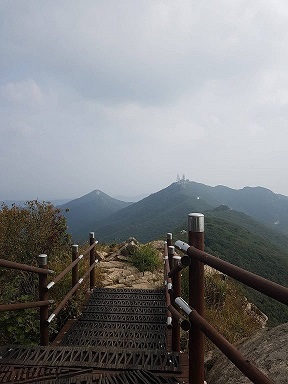 Breeze whistles
Branches creak
Leaves rustle
Birds sing
Crickets chirp
Beasts scream
Heart pounds
Joints crack
Muscles pop
The huffs
The puffs
Never stop
 M.A.D. LIGAYA


 M.A.D. L I G A Y A