Blog Archives
If love… then what? (3)
(A Movie Review – last of 3 parts)

The primary conflict – Will Ben and Phillip succeed in diminishing the role of James in the creation of the OED and in striking out William as a contributor? – is categorized as “man against man.” Conversely, what I consider as the secondary conflict – Will Eliza forgive William? – is classified as “man against himself.” This conflict gives the movie a semblance of drama and romance.
While the challenges James and William had to overcome stem from the selfish motives of two members of the OED project’s oversight committee, Eliza’s struggle comes from within her. She had to choose to forgive the man who killed her husband or not.
Anyone seeking forgiveness needs to show repentance and a willingness to make amends, even when not asked to do so. William did both.
William could have just disregarded the crime he committed and hidden his guilt under the rug of his condition, declared by the judicial and health authorities as insanity. But he did not. Guilt pricked his conscience to no end, knowing fully well the severity of his crime – killing the husband of a wife and the father of 6 children. Already tormented by flashbacks to the American Civil War (in which he served as a surgeon in the Union Army), William also had to bear that guilt.
Thus, he asked that his army pension be given to Eliza. Deep inside, William is a good man with a brilliant mind (when lucid). Such goodness and brilliance were ruined by a mental disorder.
Mr. Muncie, a guard at the psychiatric hospital, recognizes the goodness in William. Eventually, a friendship developed between them. Same with William and James, they became very good friends too.
The story exemplifies what people are willing to do for their friends. Mr. Muncie tried to defend William against the abuses of Dr. Brayne, and James did everything he could to secure his release from the psychiatric hospital. James had a very good friend in Freddie, too. How remarkable are Freddie’s attempts to save James from getting booted out of the OED project by lying to the oversight committee that he was responsible for the missing words that were supposedly included in volume 1 of the dictionary? Freddie went as far as using his connections to secure the royal seal of patronage for James, acknowledging him as the primary mover of the OED, rendering moot and academic all of the efforts of Ben and Phillip “to ease the gentle Scotsman off his little perch.” And that is the resolution of the main conflict.
What about the secondary conflict – Will Eliza forgive William?
Mr. Muncie, upon William’s bidding, visits Eliza to discuss the financial assistance William proposes to give. Eliza, at first, refuses. After a while, seeing how difficult life has been for her and her children, Eliza tells Muncie, who visited them again one Christmas Eve, that she will accept William’s offer, but that is only after seeing the killer of her husband in person to find out if she could stomach accepting the money.
The meeting between Eliza and William happened. Eliza finally agrees to accept the money, but at the end of that encounter with her husband’s murderer, she says that her accepting William’s offer doesn’t make things right. William may not have received the forgiveness he was hoping for. Still, somehow, a certain portion of his guilt went away when Eliza accepted the financial assistance he offered.
Eliza visited William a second time, brought him a book, and thanked him for the money. He also informed William that things were better for her and her children. In that conversation, Eliza said that it wasn’t right for her to continue receiving William’s money, to which the latter replied that his life belongs to Eliza and what is his is hers too… and all that started the night he killed her husband.
Those words perhaps melted Eliza’s heart and vaporized whatever hatred she had for William.
That visit led to more, and when William discovered that Eliza could not read, he begged her to allow him to teach her how to… if only so she could teach her children to read as well.
William explained to Eliza the importance of reading this way – “ [Reading] is freedom. I can fly out of this place on the backs of books. I’ve gone to the ends of the world on the wings of words. When I read, no one is after me. When I read, I’m the one chasing. Chasing after God.”
Eliza accepted William’s offer. Each time she visited, William would teach her how to read. The way she looks at Eliza betrays how he feels towards the widow of the man he murdered.
Eventually, Eliza learned to read the words written in the pages of books. There’s something else she learned to read – the innate goodness of William. Eliza came to know who and what William really was.
On the day Eliza brought her children to the psychiatric hospital for them to meet William for the first time, Claire, Eliza’s firstborn, couldn’t refrain from expressing her anger towards her father’s killer. Eliza apologized to William for her daughter’s outburst, and after kissing him, she told him that she had already forgiven him.
Eliza’s forgiveness paved the way for William’s redemption. At that point, the question – Will Eliza forgive William? – was answered. But instead of the “falling action” (at least for that subplot) following that, there was a heightening (rising) of the action instead. Eliza, aside from forgiveness, gave William something else… love.
On one of James’ visits, he saw the portrait of a woman that William had painted. When asked who that woman is, William replied, “The impossible.”
Indeed, it is seemingly impossible for Eliza to forgive William, her husband’s killer. And what is more, it is impossible for Eliza to end up loving William.
But as James said when William referred to her as “the impossible” – “the more impossible, the greater the love.”
And what happened to the note Eliza gave William – “If love, then what?”
William, with that unstable mind that he had, responded to it unexpectedly. It brought back the guilt that he felt after killing Eliza’s husband. Eliza falling in love with him is like killing her husband for the second time. To Eliza’s question, “If love, then what?” William responded, “There’s no chance of redemption.” That guilt worsened William’s paranoid delusions, prompting him to “punish” himself.
That day, Eliza gave William that note and asked him to open it when she was gone. William said, “I’m sorry, Eliza.” Eliza responded, “But what if I’m not?” Then they kissed.
That, for me, is the most beautiful part of the movie. What followed thereafter are the darkest parts of the story – particularly William “punishing” himself and the monsters – Ben, Phillip, and Dr. Bryne – rearing their ugly heads.
The ending may be formulaic – the good triumphs over evil – but what I would like to remember the movie by is Eliza’s answer to her own question.
“If love, then what?” L O V E.
If you are in love, just love… no ifs… no buts.
If love… then what? (2)
(A Movie Review – 2nd of 3 parts)
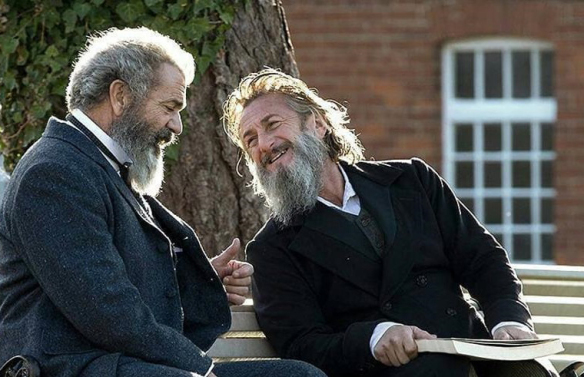
It might be surprising to some that a review of a movie about how a dictionary was created would be subtitled, “If love… then what?”
No… It’s not an attempt to romanticize the love for words of the lexicographers who dedicated their lives to creating a comprehensive compilation of all known English words. I chose that title because of the biopic’s interesting twist involving Eliza and William.
The Professor and the Madman is based on a book with the same title featuring the true story of Sir James Murray, a Scottish lexicographer and first editor of what is now known as The Oxford English Dictionary (OED), and Dr. William Chester Minor, an American surgeon and lexicographer researcher who contributed significantly to the creation of the said dictionary. The latter suffered from paranoid delusions and he killed a man (Eliza’s husband in the story) whom he accused of breaking into his room. He was committed to a psychiatric hospital, and while undergoing treatment, he (reportedly) made contributions to the OED.
Given all the aforementioned, you wouldn’t think this would be an interesting movie. How in the world would a movie about creating a dictionary generate excitement?
Well… I trust in the imagination and creativity of the scriptwriters.
While obviously, the main plot revolves around the events that led to the creation of the OED, as I expected, the creative minds behind the movie injected subplots to make the flick more literary and cinematic.
Those subplots were stitched together using the literary themes of friendship, redemption, forgiveness, and love as threads.
The main plot is centered upon diligence as the source of its theme. Ada, James’ wife, defined diligence to the members of the Oxford University Press. She said the following to the gentlemen deliberating her husband’s ouster from the OED project – “Diligence. I looked it up in your dictionary. A constant and earnest effort to accomplish what is undertaken. Persistence. Application. But also, toil… and pain.”
Those words encapsulate James and William’s efforts to create the OED. The persistence they have shown in the pursuit of such a daunting endeavor is worthy of emulation, and it is perhaps the most important value viewers could learn from the movie.
But as expected, James and Williams should meet an opposition to satisfy one very important requirement in story writing – conflict. Without it, the movie would turn into just a plain documentary. That opposition came from Ben and Phillip, the one whom Ada addressed as Mr. Gell when she gatecrashed into that meeting of the OED project’s oversight committee to speak on behalf (and in defense) of William and her husband.
Ben and Phillip, along with Dr. Richard Brayne (supervisor of the psychiatric hospital where William was undergoing treatment… or is it where he was incarcerated), are the story’s villains.
The maneuverings Ben and Phillip do to make things hard for James and William represent what I think is the story’s main conflict – Will Ben and Phillip succeed in diminishing the role of James in the creation of the OED and in striking out William as a contributor?
The main plot revolves around the aforementioned conflict. But the story has another conflict that, in my opinion, overshadows the main conflict. It is the one that involves William and Eliza.
As previously mentioned, Eliza is the wife of the man whom William killed while having a fit of delusion. This represents the other conflict in the story – Will Eliza forgive William?

If love… then what? (1)
(A Movie Review – 1st of 3 parts)

I recently watched the movie “The Professor and the Madman.” The said biographical drama drew my interest because of this line in an advertisement – “It’s [produced] to teach you an important lesson in the history of the English language.” That tickler ignited the student (and the teacher) of history and language in me.
What made me more interested to watch the movie is that Mel Gibson and Sean Penn lead the cast. I have watched many of the actors’ movies and was curious how the two would fare in this one.
Before watching the movie, I tried to read more information about it on the Internet. I chanced upon an article summarizing what the critics said about the biopic. I don’t usually read reviews before watching a particular movie. Still, because this is not new, it was released in 2019. I decided to read the article and two more after it. The majority of the reviews thumbed down the movie. The comments I read were bad. Of those comments, none could be worse than this – “It is the latest fiasco in bad movie history.” The critics were also not so kind with what they said about the lead actors’ performance.
Other people might not bother to watch the movie at all anymore after reading such negative reviews… but not me.
As far as I am concerned, there is more to a story (or a movie) than what critics say about it. I consider reviews as opinions that could possibly be subjective. If the negative reviews would discourage me from watching it, I would never know what I might be missing.
The subjects I taught in the Philippines before I came here to South Korea include Literary Criticism and Stylistics. I could wear the hat of a movie critic if I choose to. But whenever I watch movies, I put my feet in the shoes of an ordinary movie fan. I put aside all those literary and linguistic devices I was trained to use when dealing with stories. When the movie started, I would always switch off all those literary theories and schools of criticism. All I want to do is enjoy what I am about to see.
Admittedly though, there’s one “ism” that’s not completely switched off while I watch the movie – Appreciative Inquiry. And if you’re familiar with this philosophical model, you know it would not prevent me from enjoying the movie.
I leave the critiquing to the people paid (or whose hobby is) to find faults in movies. I watch films for entertainment and for the possibility of learning a lesson or two about life. I always bear in mind that the stories we read or watch in movies inform, instruct, and somehow prepare us for life if we choose to internalize the morals the story presents to us.
I was glad I decided to watch the movie despite the negative reviews I read because, in the end, I did not only gain more insights into the English language. The movie also broadened my perspectives on four common themes in literature – friendship, redemption, forgiveness, and love. It wasn’t just the student (and the teacher) of history and language in me that experienced satisfaction after watching the movie, the student (and teacher) of literature that I am was also delighted.

The Thanos Effect
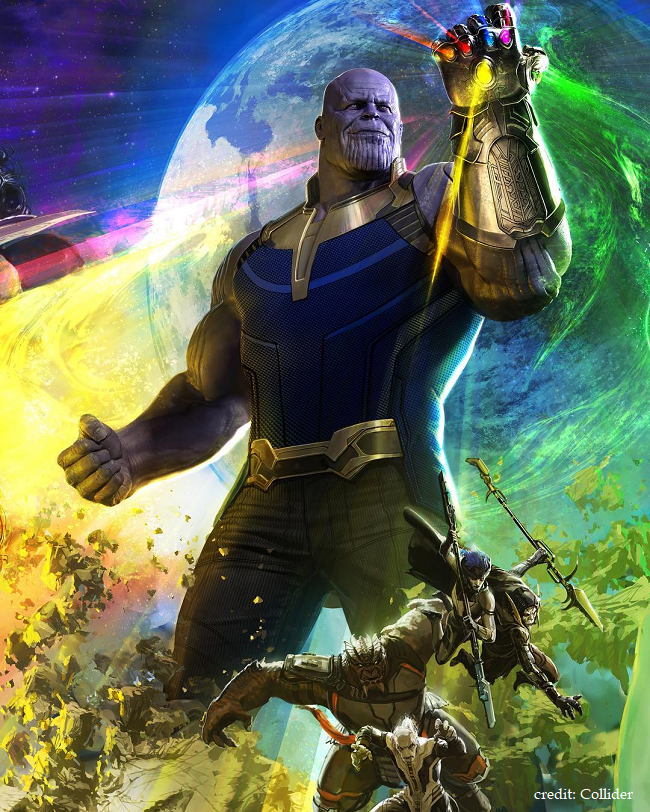 It was surprising that nobody moved from their seats when the movie AVENGERS: INFINITY WAR ended. I wasn’t sure if they just wanted to see the post-credits scene which Marvel has been using as teasers or they could not believe how easily Thanos defeated the team of Avengers that stood on his way and turned many of them into dust after merely snapping his fingers.
I’m used to seeing a few people beginning to move to the exits of the movie theatre when the post-credits start rolling. But that time it was different. It was like Thanos applied his reality-bending power on us and welded our a – – es where we were seated.
Nobody stood. Like me, they were glued on their seats perhaps with jaws dropped and eyes wide open not believing what just happened. They probably didn’t expect it to end the way it did. Spoilers have already warned the movie goers (who do not mind reading them) that Avengers would die trying to prevent Thanos from getting all the infinity stones. However, they and I never thought it would be that many.
It seemed that just like me, the moviegoers stayed for they were hoping that instead of a teaser what Marvel designed for the post-credit scene is to have everything Thanos did getting undone. Perhaps the gods and goddesses (creators) of the Marvel “movieverse” could have possibly used it as an opportunity to introduce time-travelling LORD IMMORTUS who would have moved back everything to the time that Thor attacked Thanos, tell Thor in the process to change his aim and make him target, not the titan’s chest but his arm with the gauntlet so he would not be able to put his thumb on his middle finger and do that infamous finger snap.
The post-credit scene which Marvel cruelly put at the very end was not something I hoped for though. There was no LORD IMMORTUS, not even one of the TIME-KEEPERS who may have possibly not approved of Thanos’ intentions. What we saw instead was a confirmation that Gamora’s stepfather succeeded in “murdering half of all life in the universe.”
At least those among us in the theatre that time who previously read spoilers had the idea that certain Avengers would die. But the spoiler-phobic movie fans there who may have intentionally shut themselves off any information about the movie, and might perhaps avoided watching the trailers (which I sometimes do), were gravely disappointed for perhaps they were expecting an ending similar to the first two installments of the Avengers’ series where all of their favorite characters survived (except for Quicksilver in THE AVENGERS: AGE OF ULTRON) and emerged victorious.
It was possible that not a single one of us in the theatre was heartbroken when Loki died. Moviegoers dislike him anyway. That’s the unfortunate role of bad dudes like him in stories – to be hated. None probably minded when after killing the Trickster Thanos said, “There would be no resurrection this time.” But I was thinking if everyone of us went back to that line and started wondering if that applies to all of the super, mighty and seemingly invincible Avengers who disappeared in thin air after Thanos made that murderous snap of his fingers.
The Winter Soldier was the first to flake into nothing. I, possibly the other moviegoers also, waited with bated breath who would go next after him.
Then one by one the other Avengers disintegrated – the Black Panther, the Scarlet Witch, and the Falcon. Those whom Thanos defeated in Titan were not spared. Dr. Strange, the Guardians – Star-Lord, Groot, Drax and Mantis were also reduced to dust.
Also killed by Thanos, aside from Loki, were Gamora, Heimdall, and the Vision.
The silence that engulfed the movie theatre after the post-credit scene reminds me of a funeral.
I am not sure If anyone of us cried. I didn’t. I was just a little bit moved when Peter Parker sobbed unabashedly clinging to dear life when it became obvious to him that he was randomly chosen in Thanos’ selective slaughter.
But the post-credit scene offered a glimmer of hope. Before Nick Fury disappeared, he successfully sent what appeared to be a distress signal to Captain Marvel paving the way for “AVENGERS 4.”
Of course, some of the Avengers, if not all, will be resurrected in the next Avengers movie. As to who among them will be brought back to life is anybody’s guess.
Reconfiguring Mythology

(I wrote this essay a few years ago after watching the first ‘Avengers’ movie and before the showing of “Prometheus.” Screenwriters and movie producers have mined the pages of Mythology and Legend for their movie projects. Both Marvel and DC (and their partners) keep coming out with movies where their resident superheroes either make friends or clash with mythological and legendary characters and creatures. Watch “Wonder Woman” and you’ll see how elements of “Greek Mythology” were fused into the movie. Go watch the latest “Transformers” movie next and find out whether Merlin, King Arthur and the knights of the round table sided with the Autobots or with the Decepticons.)
Recent movies I watched (“Clash of the Titans”, “Thor” and the “Avengers”) have brought me endless amazement. Amazed because my favorite characters in classic literature come alive in fresh story lines stuffed with visual and sound effects that are breathtakingly outstanding and astounding.
But more than the amazement, the said movies also inspired me to revisit the subject in Literature that I have always considered most interesting – Mythology.
Of course we know that the Titans are entities from Greek Mythology. Seemingly, movie producers are casting their lots on the Titans nowadays. “Prometheus” (which is the title of the movie that soon I will be watching) himself is another Titan. What remains to be seen is whether or not in the movie Prometheus plays out his role of stealing the heavenly fire for the benefit of humanity.
Conversely, Thor and Loki, who appeared in both “Thor” and “The Avengers” are both characters in Norse Mythology.
Generally, script writers and movie producers are seemingly mining the pages of Mythology for their movie projects.
Movies similar to the aforementioned clearly show how enormous advancement in technology benefited Mythology. There’s nothing now that creative writers can’t describe in their narratives that 3D and 4D computer graphics can’t project unto the silver screen.
The unbelievable visual effects made possible through Computer Graphics Imagery (CGI) thrill movie goers and startle them no end. This is one of the best ways to present Mythology. All those imaginary creatures, out-of-this world settings and incredible circumstances would no longer be left for the audience to imagine but for their eyes to feast upon.
What would be the educational implications of this modern rendition of Mythology?
Teaching the said subject has become easier and learning on the part of the students become more fun. For teachers, the movie versions (or even just a few clips) of stories from the pages of Mythology may serve as their audio-visual materials. Discussions during classes will be greatly augmented by the visuals students see in the movies. Lest we forget that the current generation of learners are visual. The better they learn when presented with images, pictures and colors. With the right movies, they learn while having fun.
It could be true that the movie versions of Mythology may make students disinterested with reading but one thing we should bear in mind is that the learning landscape has changed. Through viewing learning could be achieved as well. Viewing, just like reading , has lately been classified as a macro skill in language also.
These reminds me of the suggestion made by one of my students in Creative Writing before. She said that to make sure that the students would read the original story and not just rely on the movie version one activity that could be designed is ask them to find the portions of the original story modified in the movie version.
Could it be that learning Mythology becomes more effective through “viewing” than through “reading?” This is not saying that today’s generation of learners should no longer be encouraged to read. For each area of knowledge there is a corresponding macro skill most applicable. Methinks that for Mythology it is “viewing.”
However, teachers need to pay attention to the discrepancies between the original story and the movie versions. They have to warn the students about such.
For instance, in the movie “Troy”, the Trojan war took place in less than a month. In the original story (Homer’s Iliad), the war ended after ten years. The movie also shows Paris killing Menelaus which is not the case in the original story. The foregoing are but a few of the many discrepancies.
The teachers have to be on the lookout for possible changes to the original story. They themselves need to recognize the changes so the students get to be informed.
Perhaps the movie producers needed to tinker with the original storylines of the “classics” to make the movie versions more cinematic. Understandably, not all the details in the original stories can be included but at least the brains behind the movie production be sensible enough not to change significant details in the story.
Another thing that teachers should be ready for are questions like “Are the Hulk and the Iron Man mythological characters?”
“Myth” is traditionally defined as a story about gods, heroes or imaginary animals which has been handed down from one generation to another from primitive times and is usually of a religious nature. Additionally the purpose of myths is to explain some belief or natural phenomenon.
Should the foregoing definition be considered, the Hulk and the Iron Man are not mythological characters. In the movie “The Avengers” only Thor and Loki fall in that category.
Experts differ in opinion as to whether or not the companions of Thor and Loki in “The Avengers” be classified as mythological characters. Others contend that they are simply fictional characters or superheroes that appear in comic books. Their stories do not bear the prerequisites for a myth.
Some are saying that stories in the comic books are part of “modern mythology.” It is not. In a strict sense the term “modern mythology” is delivering classic mythology using as medium the modern technology available nowadays.
What could really be considered as modern version of mythology are the “urban legends.” “Batman,” also a famous character from the comic books is said to be part of urban legend. Thus, if the comic book character Batman, technically, is a Mythological character, urban legends being a modern version of Mythology, what about the rest of the comic book characters?
Then, the discussion goes in full circle again.
But who knows, with characters from Mythology and comic books finally brought together either as friends cooperating or enemies locking horns in the movie “The Avengers” a redefinition of the term MYTH may follow.
Source: Reconfiguring Mythology
“DON’T BREATHE”: A Review
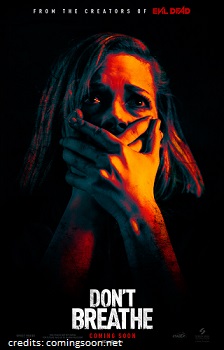
Would you not hold your breath if breathing may lead to your death?
This, probably, is one of the best suspense-thriller movies of the year.
It appeared to be just an ordinary home invasion movie in the first 26 minutes. That much time was used for the “exposition.” There are movies that took lesser time to introduce the characters and to establish their motives. But once the “rising action” started on the 27:11 mark, when the deceptively helpless blind man asked “Who’s there?,” I found it difficult to leave my seat. From there, the roller coaster ride begins with the switchback going in no other direction but up and hits lots of twists and turns.
The source of the conflict is clearly “man against man.” But it’s not a predictable struggle between two opposing forces. It’s not the usual good against bad stuff for neither of the sides is good. Rocky, Money and Alex are thieves. What about the blind man?
The blind man, a military veteran living alone in an abandoned neighborhood, is about to be a victim of the trio targeting the money he received as a settlement after his child died in a reckless driving incident. So one would think that the blind man plays the role of the victim. But wait! The thieves would end up getting victimized by their victim. The blind man was supposed to be helpless (being blind) but his military experience gives the viewers a perception that he has special skills. What gives him a distinct advantage in the struggle, aside from the gun in his hand, is his familiarity of the nooks and crannies of his house.
The prey turned predator.
Will Rocky, Money and Alex succeed in getting the blind man’s money and come out of the house alive?
A portent of the horror that the young thieves are about to experience came when the Rottweiler, which turned out to be owned by the blind war veteran, came charging at them while they were on a car spying on the house that they were about to burglarize. Luckily, the windows of the car were up.
Rocky witnessed helplessly how Money was killed by the blind man and how he sealed his doors and windows to ensure that no one else would enter (and get out of) his house.
In the basement, when Rocky and Alex were trying to find a way out of the house, they discovered that actually the blind man kidnapped and impregnated Cindy, the young woman who killed the military veteran’s child.
Accidentally that the blind man killed Cindy when some of the shots he fired missed Alex and Rocky and hit Cindy instead.
The movie succeeded in making me glued to my seat… on its edge to be exact. I postponed peeing until I saw the final credits rolling. The scriptwriter did a masterful job in building up the conflict leading to the crisis. The most difficult thing to do in a movie is to maintain constant tension in a limited setting like a house. With so limited a space the writer managed to keep the action going.
This, however, is far from being a perfect movie. There are a number of loopholes.
No! It’s not how on earth did the blind man not hear the barking of his dog when the thieves arrived. I was wondering why too. But when Money opened the living room there I found the answer: He was fast asleep, the windows are tightly closed, and the TV was on.
Here is one of the loopholes… Rocky and Money are lovers yet in no part of the movie you can sense that the two are in love. What was more obvious was Alex likes Rocky.
What about this?…How could the BLIND man have succeeded in kidnapping Cindy? Unless he has an accomplice. His mad dog could have not done it for him.
Another one…The opening scene, where the blind man could be seen dragging a bloodied Rocky, could be considered a spoiler of some sort. Having that in mind, as the action progresses, it gives the viewers an impression that the movie would end up with the blind man coming out victorious in the struggle.
From that scene, the movie proceeds to flashback.
I think that that scene gives some anticlimactic effects to that exciting sequence where Rocky succeeded in luring the Rottweiler into the car and had the dog locked up inside. It allowed me to correctly guess that when Rocky was standing about to celebrate her freedom the camera would roll in an angle where the blind man will been seen coming to grab Rocky from behind…and that, exactly, happened.
That’s the end of the flashback…but not the end of the movie yet. There are 5 more minutes left after that.
I tried to guess what would happen after the blind man recaptured Rocky. I thought that that was it…the blind man getting Rocky back is already the climax. It turned to be just the beginning of the end. Rocky being brought back to the house would only pave the way for an exciting ending.
Rocky was lying on the floor helpless and defenseless against the blind man. Then what seemingly could be considered a “deus ex machina” appeared…an insect, the ladybug.
I recalled seeing a ladybug in the movie once in the beginning and again at that instance toward the end. Rocky also had a tattoo of the insect in her left wrist. She also mentioned in her narrative about her childhood how the ladybug made her feel safe. With both Money and Alex dead, seeing the ladybug again in her most difficult situation, brought courage back to her. She made the alarm sound to confuse the blind man and repeatedly hit him with a crowbar.
The climax came at exactly the 1:20:43 mark. The blind man, after taking a series of blows to the head fell to the basement.
Rocky came out of the house alive and with the blind man’s money…but the blind man survived.
The movie ended with Rocky and her sister leaving Detroit for California.
The Confession Wives (Ang Dalawang Mrs. Real): A Review

Admittedly, I got tired watching Filipino drama series shown on Philippine TV. The story lines are so repetitive that it diminishes the element of surprise which is a key ingredient in literary appreciation. Instead of the suspense killing the audience, familiarity with the story line kills the suspense then bores the audience.
Then came GMA 7’s TV series “The Confession Wives” (“Ang Dalawang Mrs. Real”). It’s a story about a philandering husband who married another woman. After going over its synopsis, I said “nothing new.” So, I did not bother to watch… until my wife asked me to find on You Tube the episodes of the said TV drama that she missed. With nothing else to do I decided to peep on what she’s watching. Result: For the first time in years that I eagerly watched a Filipino drama series.
How many times have we watched a movie and TV drama about unfaithful husbands? How many times have we read stories about men not contended with their wives so they resorted to having extra-marital affairs? We know that when the wife learned about it all hell breaks loose. We know that when men got caught they had to choose between their wives and their other women.
The foregoing is also what GMA’s “Ang Dalawang Mrs. Real” is all about. Familiar situations yet the story, generally, succeeded in veering away from becoming predictable. Every scene, actually, is climactic stuffed with twists and turns. Watching it is like riding an emotional roller coaster.
Elements of the rising action are beautifully put together as the story geared towards the climax. The climax itself was something unexpected. I have a penchant on rightly guessing how things would turn out in a story but this one had me wrong several times.
Yes, same story line but delivered differently.
Different not because the actors and actresses, if I may use an oft-repeated phrase, “gave justice to their roles.” This is no longer surprising. It is a given. These people are trained to act out roles.
It is different because the whole story is a realistic rendition of life. And this is exactly what literature is… a faithful reproduction of life.
Characterization and dialogue are consistent with literary realism. The story as a whole presented universal truths about men and women, about family and society making it acceptable even to international audience.
Anthony (Ding-dong Dantes), the husband, is the embodiment of the popular belief about men – “that men are polygamous in nature.” Henry (Robert Arevalo) and Tino (Tommy Abuel), fathers of the two women married by Anthony, are themselves not clean. Both of them have had extra-marital affairs themselves. Among men in many parts of the world, womanizing seems to be a natural thing.
But the story also presents the good side of the male specie through Jun (Jaime Fabregas), a disciple of monogamy. He is a loving husband to his wife Sonia (Conie Reyes) and a supportive father to Anthony. Chaos descended upon his family for all the troubles created by his son yet he keeps his family above water. He was the glue that keep his family together.
On the other hand, Millet (Maricel Soriano) is an epitome of a martyr wife. While almost violently that she reacted to her husband’s infidelity, while she was offended to the utmost upon learning that Anthony married another woman, she forgave him. That’s how wives are, they always stand by their men. As much as possible they must preserve the famiy. Umeng (Susan Africa), the mother of the other Mrs. Real, Shiela (Lovi Poe) also chose to stick by her husband, Tino, even if she discovered that the latter, just like Anthony, had another woman and actually fathered a child.
Millet and the other Mrs. Real, Shiela (Lovi Poe) and her mother Umeng (Susan Africa) represent women who are at the receiving end of an ongoing notion that it is okay for a man to have another woman. Like many women in society, they unwillingly embrace the dictum that men will always be men. Or maybe they are drowned by fear that life may not go on without their husbands.
Aurora (Celeste Legazpi) and Sonia (Conie Reyes) are the typical mothers protective of their children. They are pained to see their children suffer and they would do anything to alleviate their suffering.
In real life, we criticize people for the things they say and do. We do the same in the drama series, we pass judgment on the characters.
We approved the positions taken by each of the families affected. They did what they needed to do to protect their loved ones.
But while we expressed sympathy for some characters, most especially Millet, we criticized some. The harshest criticism fell, not on Anthony, but perhaps on Henry.
Why not on Anthony? He is the most sinful of all the characters. He caused all the troubles. But why was he not crucified. To err is human to forgive is divine. Anthony committed mistakes but tried to correct them. He tried to put things in order thereby earning the forgiveness and sympathy of the viewers.
And why on Henry? Because he is so unforgiving. He plays his moralism to the extreme. He did not forgive Anthony and sued him for bigamy despite the pleas made by his wife and his daughter and Anthony’s mother.
When Millet fell into depression we considered it to foreshadow the possibility of Henry finally forgiving Anthony. But the story did not give the audience what it expected. Millet getting ill all the more strengthened Henry’s resolve to go hard against Anthony. The case Henry filed prospered.
The viewers disliked Henry for such a hardline stance, although it was out of love for his daughter that he ought to do what he did. Any father would want to punish anybody who would hurt their children.
While Anthony went into catharsis starting from the moment he got caught for his infidelity and culminating in what he did during the trial when he retracted from his “not guilty plea” declaring his willingness to go to prison and be punished for his wrongdoings for the troubles he created that even led to his father’s death, Jaime on his part, took until the time that Anthony finished serving his prison time to have his own catharsis and finally forgive him.
The hatred and passion for revenge simmered down as the story march to its denouement. There was reconciliation and acceptance at the end. “All’s well that ends well!”
The lesson is clear, when you do something wrong, brace for the consequences.
The TV drama may have changed the way people look at the plight of women crying a river while languishing helplessly in the shadows of their husbands’ infidelity. It may have also sent a clear signal to Anthonys out there that they could be chewing more than they could swallow.



 M.A.D. L I G A Y A