Category Archives: Philippine Government
The Only Thing That Interested Me in BBM’s SONA
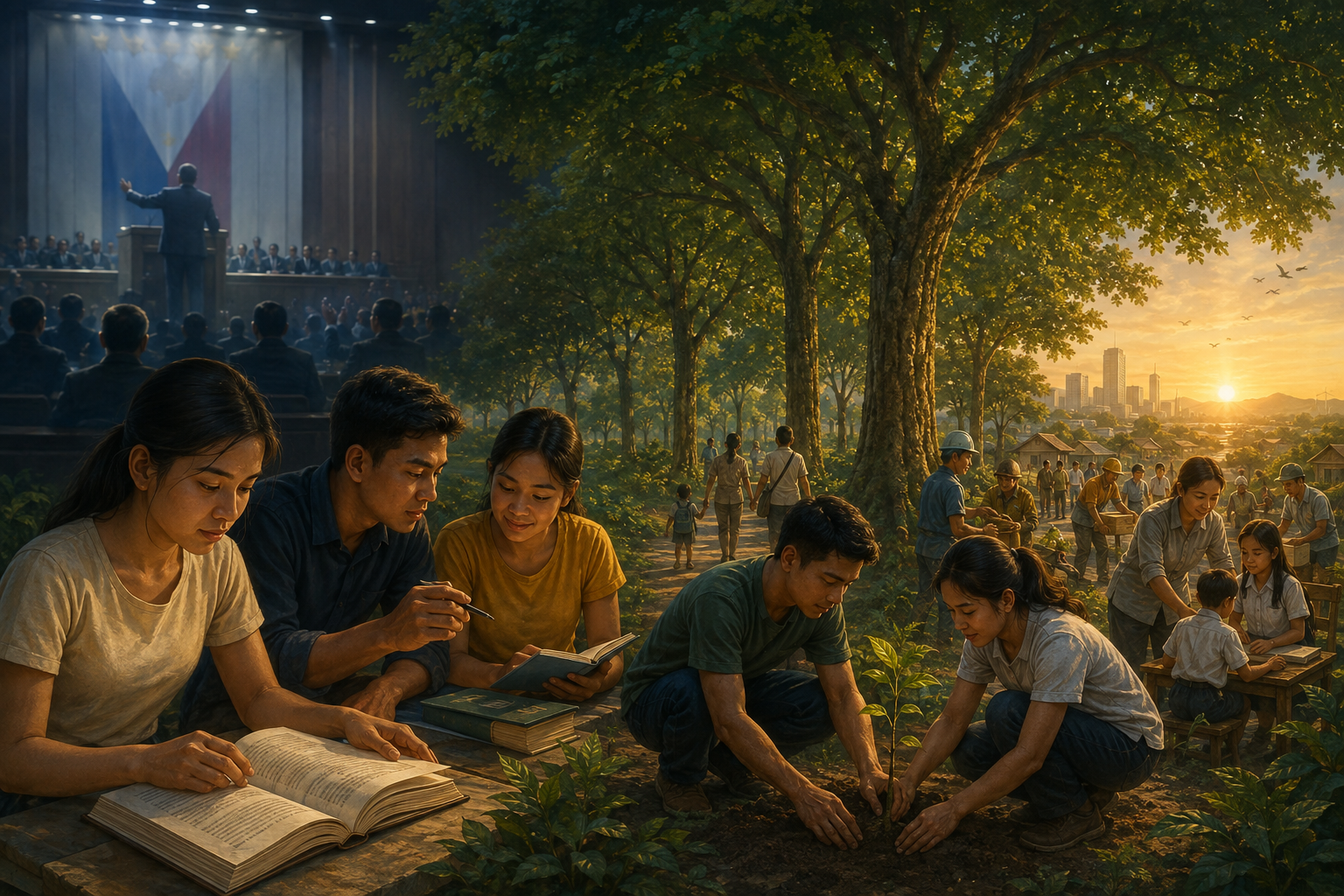
There is only one sentence in President Ferdinand Marcos Jr.’s latest State of the Nation Address that truly interests me:
“Kaya dapat nakakintal sa puso’t isipan ng mga Pilipino ang lifelong learning at continuous self-improvement.”
Rendered in English, the statement reads:
“Lifelong learning and continuous self-improvement must be deeply ingrained in the hearts and minds of Filipinos.”
Of everything spoken from the podium, this single statement transcended politics. It did not ask Filipinos to applaud a reported accomplishment, believe another political promise, defend an administration, or condemn its opponents. Its truth does not depend on whether one supports or opposes the President. It speaks to every citizen regardless of political affiliation because it places neither a politician nor the government at the center of national progress. It places the individual Filipino there.
Ironically, this sentence—if translated into meaningful legislation, coherent public policy, and sustained community programs—could yield consequences far more profound than any of the applause lines that echoed through the plenary hall. Yet it received no ovation. Perhaps it drew little enthusiasm because true education rarely offers the immediate spectacle that politics demands. Investing in human capacity is like planting a forest: the seeds sown today may take years—or even generations—to reach maturity. Political applause is immediate but fleeting; educational investment is gradual but enduring.
Strip this statement of the President’s name, voice, and political identity, and it loses none of its validity. A DDS, a Kakampink, a Marcos loyalist, or someone entirely indifferent to politics can recognize its worth. Its truth does not derive from the authority of the speaker, but from the reality it expresses:
- Lifelong Learning develops what people know and can do—strengthening competence in a rapidly changing world of technology, evolving industries, and shifting responsibilities.
- Continuous Self-Improvement develops who they are and how they live—cultivating character, discipline, health, ethics, and civic responsibility.
Together, these twin pillars prepare citizens to adapt, solve complex problems, resist manipulation, and create meaningful opportunities.
To be clear, self-improvement alone cannot fix every broken institution or eradicate corruption. Nor does this perspective grant government officials an escape from accountability—Filipinos must remain relentless in demanding honest, competent, and responsive leadership. However, systemic policy and individual growth must go hand in hand; even the best policies fail when executed by individuals who neglect their own ethical and intellectual growth.
We must abandon the myth that electing a political savior will, on its own, transform the nation. We cannot demand discipline from leaders while tolerating indiscipline in ourselves, condemn dishonesty in public office while practicing it in daily life, or expect national excellence while settling for personal mediocrity.
The most vital message in the SONA was not a grand promise of what the government will do for us, but a timely reminder of what Filipinos must continually do for themselves—and, ultimately, for one another. Lifelong learning and continuous self-improvement do not render government obsolete; rather, they cultivate citizens capable of demanding better governance, electing wiser leaders, building resilient institutions, and sustaining lasting national progress.
The future of the country cannot be left solely in the hands of politicians. It must be built within the hearts, minds, character, competence, and daily conduct of the Filipino people.
Better Self • Better Life • Better Nation
How Colonialism Shaped the Filipino Character
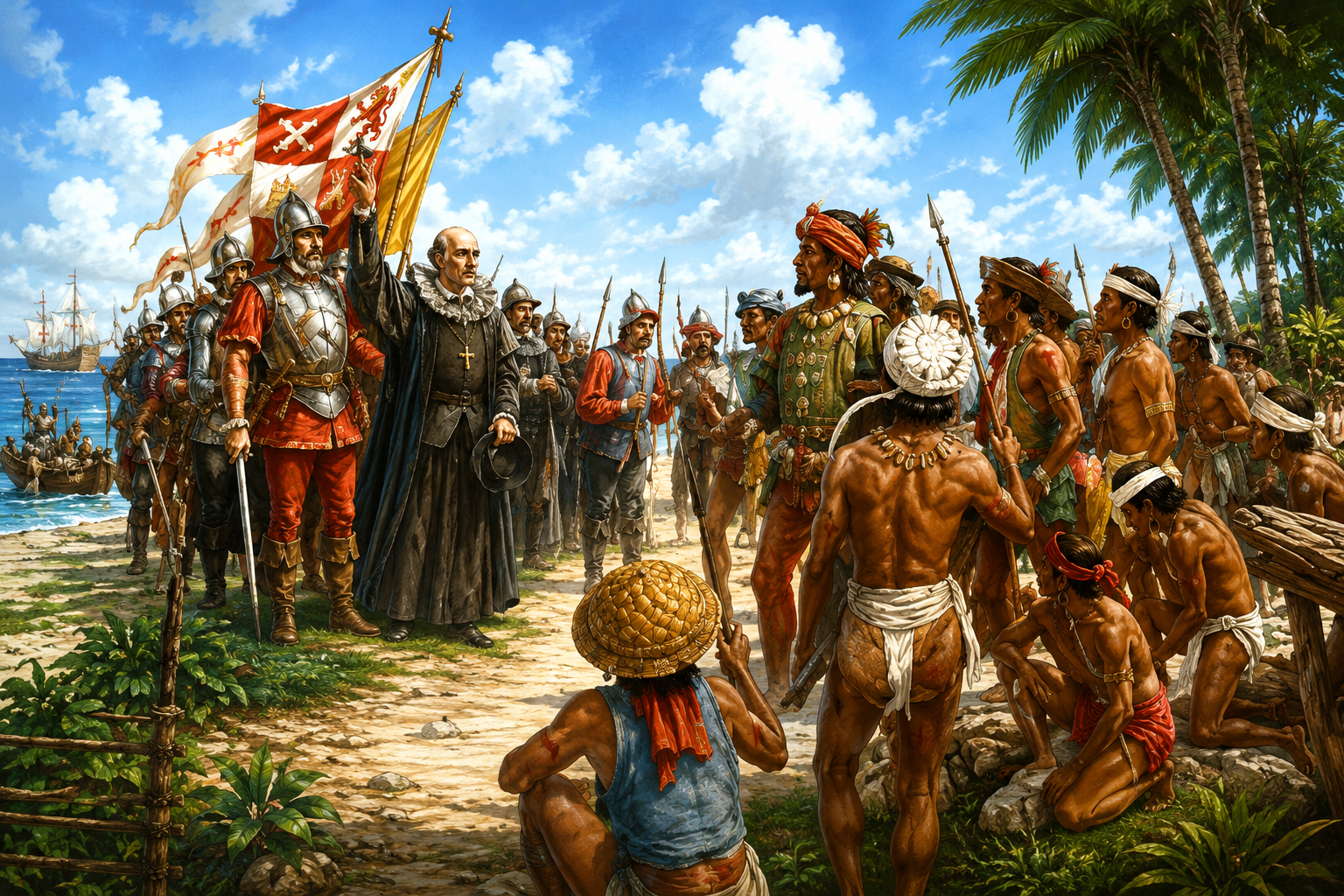
Ask a hundred Filipinos what makes a Filipino a Filipino, and you will likely get a hundred different answers — hospitality, resilience, family, faith, humor, an uncanny gift for finding joy in hardship. Ask a hundred more, and darker answers will surface too: a fatalism that shrugs at misfortune, a habit of measuring themselves against foreigners and coming up short in their own eyes, a suspicion of the next province that borders on hostility. Both sets of answers are true. Neither tells the whole story on its own.
This four-part essay is an attempt to tell that fuller story — not by cataloging Filipino traits as though they simply exist, the way eye color or height exists, but by asking where they came from. A people’s character is not accidental. It is built, layer upon layer, from the specific things that happen to them over specific centuries, under specific rulers. For the Filipino, those centuries were largely colonial ones: 333 years under Spain, nearly half a century more under the United States. To understand the Filipino today without reckoning with those years is to admire a house’s furniture while ignoring the foundation on which it was built.
This essay draws on historical record as much as personal reflection — the documented mechanisms of colonial administration alongside the lived, inherited patterns still visible in Filipino life today. Where the two meet is where this essay lives.
Part One lays that foundation, tracing the Filipino from a people already possessed of their own culture and governance before any galleon arrived, through the long violence of Spanish rule, to the betrayal that followed when a nation Filipinos had mistaken for an ally simply became their next colonizer.
Part Two turns to what survived — and what may have even been strengthened — through all of it: the hospitality, the resilience, the family loyalty and communal spirit that colonization tested but did not break.
Part Three turns to the cost — the fatalism, the regionalism, the colonial mentality that took root during those same centuries, planted deliberately by rulers who profited from a people divided against themselves and unsure of their own worth.
Part Four brings both halves together, arguing that the strength and the wound were never separate stories. They came from the same three hundred years, visited on the same people, and they live on, side by side, in the same national character today.
The writer does not pretend to have the final word on Filipino identity — no single essay could. But for a people whose history has too often been written by outsiders, and too rarely examined by themselves, even an incomplete reckoning is worth attempting. As you read what follows, you might find it useful to ask the same questions of your own family, your own province, your own habits of thought — because the history in these four parts is not abstract. It is, in some quiet way, still writing itself through each of us.
Understanding the wound is the first task. What a Filipino chooses to do with that understanding — for himself, his family, his country — is a separate reckoning, for another time. But understanding why we are the way we are remains the first step toward deliberately deciding who we choose to become next.
Quezon’s Curse
Did Manuel L. Quezon, the second president of the Philippines who served from 1935 to 1944, unknowingly curse the nation when he declared, “I would rather have a government run like hell by Filipinos than a government run like heaven by Americans”?
The Americans eventually ceased governing the Philippines by force after the Second World War. It was not independence that the Filipinos were granted on July 4, 1946, but freedom. The Americans did not save the Philippines from Spain, as some uninformed Filipinos and the rest of the world wrongly thought. The US coerced Spain into selling the island to them. So, the Philippines was passed by a colonial tyrant to another… to a more powerful and ruthless tyrant.
Let this be clear… The US did not save the Philippines from Spain. The former forcibly grabbed our nation from the latter.
When the Americans finally turned over the reins of government to Filipinos, Quezon could have been the happiest man alive had he lived to witness it. At last, the Philippines had a government run by its own people.
But as the saying goes, “Be careful what you wish for.”
Our country has since been governed by Filipino politicians. Given the Philippines’ governance over the decades, how would we assess the performance of those who have served in the different branches of government since the Americans passed the baton of leadership?
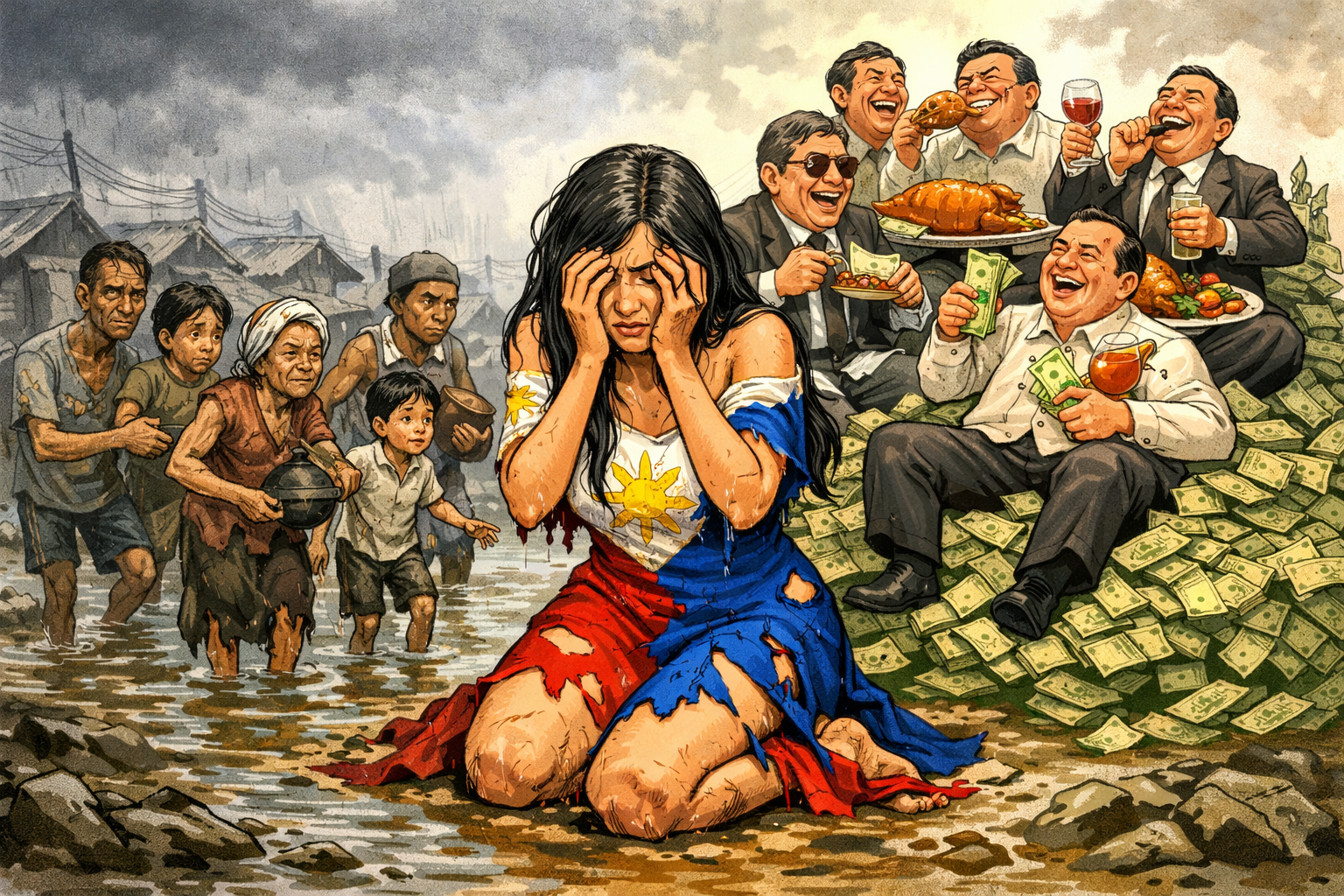
Only the blind — and those who benefit from the system — would deny how badly the nation has deteriorated. Only the naïve would refuse to see that the Filipino spirit seems lost. Like a dried leaf in autumn, it drifts wherever the wind blows. The Filipino identity has become like a shattered mirror. Each broken piece reflects a different truth, yet none shows the whole picture of who we once were or what we should be as a people.
As a nation, we are as fragmented as the islands that form our archipelago. The colonial strategy of “divide and conquer,” once used to weaken and subjugate us, continues to linger in our society. Even today, it keeps us deeply divided.
And all this appears to trace back to what now feels like Quezon’s curse — “a government run like HELL by Filipinos.”
For how long have we been led by politicians who seem to have descended from hell itself? Would it be unfair to describe members of the executive and legislative branches as soulless demons who take turns plunging their hands into the nation’s coffers, depriving the people of the services and opportunities they deserve? And what of those in the judiciary and the military who appear to look the other way?
One cannot help but recall the countless anomalous “flood control projects” — billions poured into programs meant to protect communities, yet every year, towns and cities continue to drown while only a select few grow richer. What was supposed to shield the people from disaster has instead become another avenue for plunder.
The sad reality is that the Filipino people cannot simply play the victim. It was Filipinos themselves who summoned these demons from the depths of hell and enthroned them in Malacañang and in Congress. In short, they voted for them. And the sadder part is that even now, when it is clear as day that the devils they have chosen are guilty of corruption, many still continue to support them.
Thus, Quezon’s pronouncement refers not only to Filipino politicians but also to the Filipinos who placed them in power.
“Kawawang Inang Bayan.”
Would we not, at times, be tempted to think that perhaps we would have been better off had the Americans continued to run our government?
Would we not be tempted to accept their old justification for staying on Philippine soil — that Filipinos were not ready for self-governance?
Yet perhaps Quezon did not curse us at all.
Perhaps what he offered was not a prophecy of doom but a challenge — a declaration of faith in the Filipino people’s capacity to govern themselves, to learn from their mistakes, and to shape their own destiny. The tragedy is not that Filipinos were given the reins of government. The tragedy is that, over time, many surrendered vigilance, traded principles for convenience, and allowed power to fall into the hands of the few.
A government “run like hell by Filipinos” was never meant to be permanent. It was meant to be corrected by an awakened citizenry. Democracy was supposed to be a system in which bad leaders could be removed, corruption punished, and the people remain the true sovereign.
But when a nation grows tired, when poverty silences voices, and when hope is repeatedly betrayed, tyranny does not need foreigners to thrive. It is cultivated from within.
Quezon’s words were not a curse. They were a warning wrapped in hope.
What turned that hope into hell was not Filipino governance itself, but Filipino complacency. We allowed demons to rise not because we were incapable of self-rule, but because we stopped guarding it fiercely.
In the end, the real question is not whether Quezon cursed us.
The real question is whether we, as a people, abandoned the responsibility that freedom demanded.
The More Painful Injustice
ICC’s decision denying former President Rodrigo Duterte’s request for interim release elicited different reactions. As expected, his supporters grieved; his critics rejoiced. Social media erupted. Commentaries burst like fireworks. Lawyers, influencers, and armchair experts all rushed forward with their own interpretations and opinions.
But buried beneath this noise is a truth many refuse to acknowledge: the corruption allegations against the sitting political powers remain unresolved, uninvestigated, and—most damning—protected.
And yes, we should not disregard the corruption committed by previous administrations as well.
At this juncture, we must confront the question everyone keeps tiptoeing around:
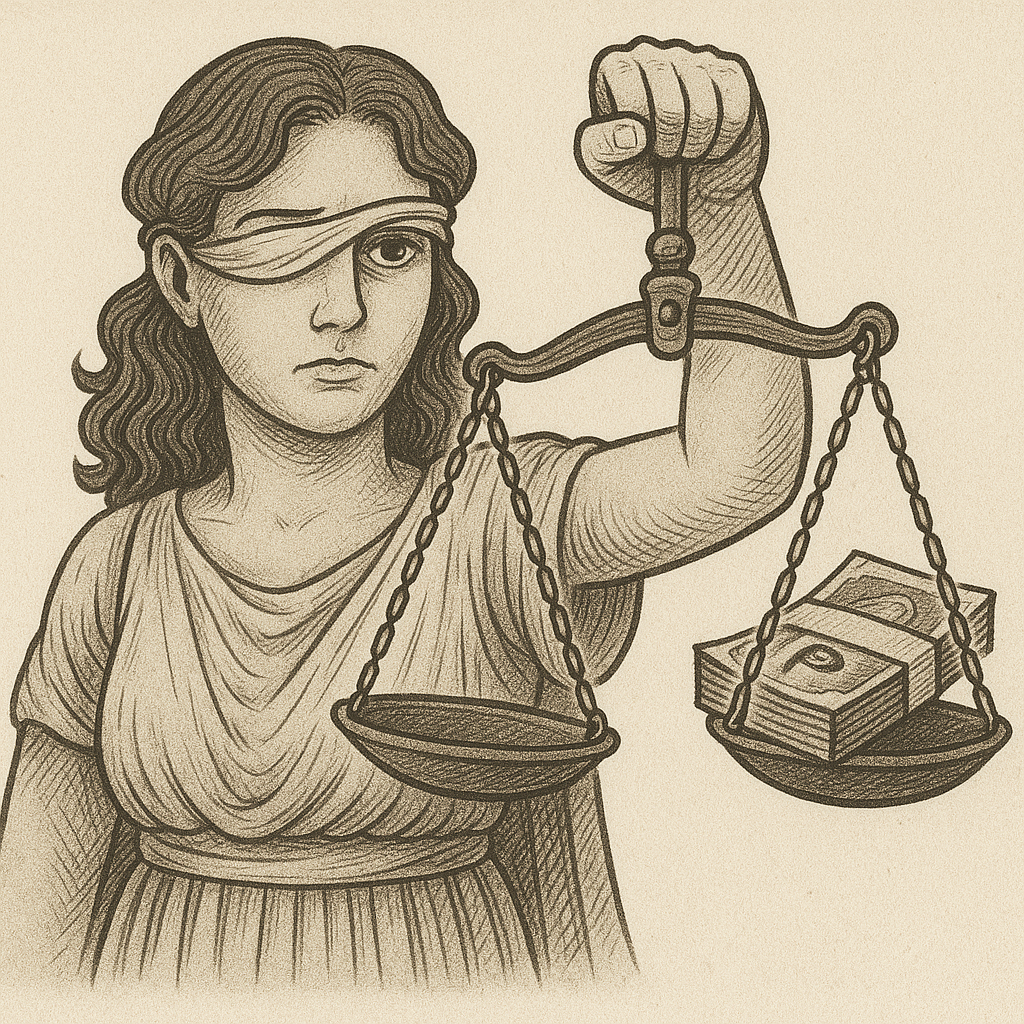
If extrajudicial killings can be considered a crime against humanity, what then do we call the corruption allegedly committed by officials of the incumbent government—corruption so massive it starved hospitals, crippled schools, and robbed the poorest Filipinos of the help they desperately needed?
What do we call leaders who tolerated the theft, shielded the thieves, and—worst of all—turned out to be thieves themselves?
Which is the greater sin: the murder of a few thousand, or the plunder of billions?
Who committed the graver crime: the fingers that pulled the trigger, or the hands that emptied the nation’s coffers?
The corruption committed by those in power—whether yesterday or today—is not petty, not the old excuse of “traditional politics,” and not the sanitized label of a “budget anomaly.”
This is plunder disguised as governance.
Billions meant for healthcare vanished while patients slept on floors, dying without medicine.
Billions meant for classrooms disappeared while children learned beneath leaking roofs.
Billions meant for poverty alleviation were used by the corrupt officials to fatten their bank accounts.
Every peso stolen by those in power translates to: a child who goes hungry, a mother who dies untreated, a worker whose future evaporates, a community trapped in poverty, a family whose hope is extinguished.
We must stop pretending corruption is merely a financial crime.
It is a human rights violation with casualties, as real and as tragic as any body found in an alley.
The painful irony?
One man faces the hostile ICC for killings.
But the many government officials accused of stealing the nation’s lifeblood face the friendly ICI who might possibly give them a simple slap on the wrist.
The ICC cannot touch them — and that is their shield under the Rome Statute, the ICC only prosecutes:
genocide
crimes against humanity
war crimes
aggression
Corruption—no matter how destructive—does not qualify.
The ICC can examine killings linked to a past administration.
But the alleged plunder committed under the current administration is untouchable.
They are shielded not by innocence, but by the ICC’s jurisdiction.
They know it.
Their lawyers know it.
Their political allies know it.
This is why they look unbothered.
This is why they speak as if justice is optional.
Because for corruption, under international law,
The Hague has no handcuffs.
But viewed through the lens of the United Nations Convention Against Corruption (UNCAC), the crime committed by corrupt members of the Executive and Legislative branches of the Philippine government remains evident.
The Philippines is bound by the United Nations Convention Against Corruption (UNCAC).
Under UNCAC, corruption is not merely illegal. It is seen as a violation of human dignity.
Corruption becomes a human rights offense when it deprives citizens of healthcare, destroys education systems, blocks justice through political interference, deepens poverty, and kills through neglect and substandard infrastructure.
Every bridge that collapses because of corruption, every medicine that never reaches a dying patient, every student robbed of a proper education—these are casualties of today’s corruption.
UN bodies cannot jail individual senators, cabinet members, or presidents. But they can expose a government’s failures. They can embarrass a nation on the global stage. They can pressure for reforms and sanctions. They can help freeze stolen assets hidden abroad. And they can force the world to see what our own institutions refuse to confront.
And in the quiet between outrage and applause, a single question remains: Whose crime weighs heavier on the nation’s soul?
Let us stop pretending this is a simple comparison.
Duterte is being investigated for the bodies we saw. But incumbent officials are being accused of crimes whose victims we don’t always see— because the victims are the millions who are slowly suffocating from poverty, hunger, broken hospitals, broken schools, and broken futures.
A bullet kills instantly.
Corruption kills invisibly.
But the graves are real.
Sometimes, corruption is the quieter executioner.
The true tragedy is not that the ICC is pursuing Duterte.
The tragedy is that the officials accused of bleeding the nation dry will never stand before The Hague, never sit behind glass in an international courtroom, never be held criminally accountable in the same way.
They will sleep soundly knowing that international law cannot touch them—not because they are innocent, but because their crimes fall outside the narrow definition of “crimes against humanity.”
They are safe. Not because they are righteous.
But because corruption is not in the ICC’s vocabulary.
And that is the Philippines’ most painful injustice.
If The Philippines Were A House
(When the pillars of democracy are broken…)

For years, I stayed away from political writing. The arena felt toxic, exhausting, and at odds with the culture of positivity I’ve been promoting through my self-improvement advocacy. I even avoided crafting satirical poems that confronted human folly through anthropomorphism. But silence eventually stops being a restraint; it becomes complicity. And seeing what my country has been going through, I knew I couldn’t stay silent any longer.
And so, in recent months, I have been writing about the socio-political upheavals in the Philippines, sharing my thoughts on social media and on my website (madligaya.com). The responses flooded in, and as I replied to them, I realized that I had inadvertently answered two painful questions haunting many Filipinos today:
“Is the Philippines really a democracy? ”
and
“Why is the Philippines down on her knees? ”
In my most recent commentary, I asked why religious and civic organizations are inconsistent in their call for accountability. They demand action yet refuse to urge officials to step down. Don’t tell me they don’t know who is most responsible for the biggest daylight robbery of the national coffers—who orchestrated it, who consented to it, and who deliberately turned a blind eye as it happened. And certainly don’t tell me they don’t understand why, when one of those who colluded realized their scheme was about to explode in their faces, he suddenly played both Judas and Pilate—betraying the plot, then washing his hands as if he were never part of it. Only those born yesterday would fail to see that this is exactly what happened.
A friend argued that these organizations actually know the truth. Their dilemma, he said, is that they are choosing between what they perceive as a “weak” leadership and an alleged “power-hungry, iron-handed” leadership waiting in the wings.
I retorted, “By avoiding what they view as the ‘greater evil’ and the ‘lesser evil,’ they end up protecting both.”
The next part of my extended response to his comments led to the answer to the following question:
“Is the Philippines really a democracy? ”
Let me put it bluntly. The leader some people call “weak” is not weak. He is held firmly by the same oligarchs that the previous “iron-handed” president pushed out. Now that these oligarchs have reclaimed power, they will stop at nothing to keep their puppet in place. Power and wealth are their only ideology.
This is the tragedy: the Philippines is not functioning as a democracy. It is ruled by an oligarchy. Many Filipinos fail to see it—or choose not to. Religious and civic groups are not independent moral voices; many are influenced, funded, or even controlled by the same oligarchs.
These oligarchs (and their allies) are firmly embedded (either directly or by proxy) in all three branches of government—the Executive, Legislative, and Judiciary. They took turns in holding the reins of government.
Even our media, the so-called Fourth Estate, is owned by the oligarchs.
So who stands with the ordinary Filipino?
No one.
This provides an answer to the question, “Why is the Philippines down on her knees?”
Answer: The pillars of our democracy have already collapsed.

Ang mga haligi ng ating demokrasya ay giba na.
If the Philippines were a house, it would be crumbling—if not already in shambles.
Since only God knows when, members of the Executive and Legislative branches have been interested only in one thing: the cake—the national budget—and how to divide it among themselves. I cannot help but wonder how much of the money borrowed by past and present administrations truly benefited Filipinos… and how much went to fattening personal bank accounts.
My friend also pointed out that the 1987 Constitution was crafted by academicians, technocrats, and legal minds from wealthy and influential sectors—people who were once powerless under the dictator at that time, but who seized the opportunity after 1986 to control the government and its resources for their own interests.
To this, I replied:
“…and they were displaced when their bets in 2016 and 2022 lost. But when the person you call the ‘weak’ leader won in 2022, they realized they could manipulate him. That put them back in power. They will do everything to keep him in power and stop those who beat them in 2016 from coming back. Why? Because they would lose their grip on both power and the nation’s coffers.”
That is the real picture. Filipinos are sandwiched between the same old political forces that care not about nation-building but about controlling both power and purse.
Kahabag-habag ka, Juan! Kanino ka tatakbo?
Supreme Court? They had the chance to stop the 2025 National Budget fiasco. They were warned. What did they do? NOTHING. In one of my previous articles, I wrote this:
“The judicial branch of the government has constitutional authority to review actions of the legislative and executive branches, including the passage and implementation of the national budget, if these acts violate the Constitution. The Supreme Court had the opportunity to halt the implementation of a budget tainted by secrecy and excess. How? By issuing a temporary restraining order (TRO). They did not (am I right?). Instead, it looked away.”
Judicial silence, in times of moral crisis, is complicity dressed in robes.
The pillars of democracy have already collapsed—and not quietly. The Executive has been seized by oligarchs who pull the strings behind the curtains. The Legislature has turned its power into a marketplace, where national budgets are bartered like goods at an auction. The judiciary, which should have stood as the last upright pillar, now wavers at the very moments when justice demands a spine. Even the media, the so-called Fourth Estate, has been absorbed into the same circle of power, choosing survival over truth. What remains are not pillars, but ruins—and in those ruins, Juan is expected to believe he still lives in a functioning house.
This is not to say that every public servant, judge, legislator, soldier, or religious leader is corrupt. There are still individuals within these institutions who strive to uphold integrity, who resist the pressure to bow to oligarchic interests, and who try—quietly or courageously—to do what is right. But they are outnumbered, outpowered, and often sidelined. In a system where loyalty is rewarded more than honesty, the righteous become the exception, not the rule.
What about the military? What are they doing? Singing “Silent Night” hoping that bonuses are on their way for the Yuletide.
My friend argued, “The military cannot intervene lest they be accused of forming a fascist, Myanmar-style government, which armed leftists and Islamic secessionists would use as an excuse to return to the conflicts of the 60s and 70s.”
To this, I simply replied:
“Their silence is not neutrality. It is consent.”
Wala ka talagang matatakbuhan, Juan.
The church? You must be joking if you think it remains a refuge. Even the devil can wear a habit and hide behind a crucifix.
Kaya, Juan, dumiretso ka na lang sa Panginoon.
At ang iyong ikapu—gamitin mo na lang dagdag sa budget ng pamilya. Ibili mo na lang ng bigas.
And if Juan turns to the institutions outside government, he finds no refuge there either. The military, which should stand as the nation’s shield, has chosen the safety of silence over the burden of service. They watch the house collapse from the barracks, humming neutrality like a lullaby, even when neutrality has become another form of consent. The churches, meanwhile, have grown timid, compromised by political alliances and oligarchic benefactors. Many pulpits now echo carefully measured sermons—loud on morality, silent on injustice. Even the guardians of faith have learned to kneel before power, leaving Juan with no shepherds, only silhouettes wearing cassocks and collars.
The pillars of democracy are broken. Juan’s house has collapsed, and he is helplessly trapped.
At this point, Juan must understand the painful truth: no hero is coming. Not from Malacañang. Not from Congress. Not from the Supreme Court. Not from the barracks. Not from the pulpit. Not from the editors’ desks. The institutions meant to protect him now protect only themselves. And when a nation’s protectors abandon their duty, the people have only two choices — endure the injustice or confront it.
But if Juan remains silent, then he becomes exactly what the oligarchs expect him to be: obedient, afraid, and easy to rule. Democracy survives only when its citizens refuse to kneel. If the Philippines were a house, the pillars may be collapsing—but Juan still decides whether to rebuild or to live forever in the ruins.
Pro-politico or Pro-Filipino?

A Personal Stand
While I was enjoying the Chuseok celebrations here in South Korea, I received two calls on two separate days asking if I could join the “meet-and-greet a politico” at the end of this month at the Philippine Embassy here. I politely declined.
Before extending the invitation, I was first asked about my political sentiments. I candidly said I don’t like to meet any politicos nowadays – not Marcos, nor Duterte, nor any of those pretending to be public servants “pero mandarambong pala.” They are all responsible for the sufferings of the Filipino people. Only those who were born yesterday, blind, and naïve would not acknowledge this. They are ALL guilty and should be held accountable. I’m giving the benefit of the doubt to the neophytes in Congress (who did not serve in the 19th Congress) and new members of the Cabinet.
I told those people who invited me that I have decided not to support any political personality. Amidst all the political turmoil and government dysfunction, I would like to take not a “pro-politico, ” but a “pro-Filipino” stance. Attending that gathering is tantamount to turning a blind eye to their wrongdoings.
Actually, I coined an expression that is very appropriate for those guilty of plunder and malversation of public funds… “BUWAYANG INA N’YO.” I am afraid I might blurt this out when I see a politico nowadays. Just imagine if I were to hurl this invective in the face of one in that gathering.
Half-jokingly, I said I hope my passport will not be revoked because of my political beliefs.
The Semantics of Corruption
I offer no apologies for using the word ‘politico’ (instead of ‘politician’) in the title. The word is considered derogatory, yet it is the most appropriate way to describe most elected (and appointed) members of the legislative and executive branches of our government.
An online dictionary says, “You can describe a politician as a politico, especially if you do not like them or approve of what they do.” Let me ask you, “Do you approve of what those people in the government do?” Another online dictionary defines ‘politico’ this way: “someone who will do anything to win an election.” The worst example of “will do anything” is “vote buying.” Are the politicos you are supporting not guilty of this? Chat GPT puts its best: “Politico suggests a type of politician – often one driven by ambition, opportunism, or self-interest.”
How I hate “Grammarly” for insisting that I use “politician” instead of “politico.” The algorithm must not know that “politician” is too kind a word for our breed of thieves in barongs.
It fails to grasp that “politico” carries the stench of corruption that “politician” politely hides.
And please, let’s stop addressing them as honorable. They don’t deserve it. They are very much the opposite of that word. “Puwede bang ituring na kagalang-galang ang mga dorobo?”
So, I ask you: Are you pro-politico or pro-Filipino?
The Nation Plundered
The politicos are slowly destroying our nation. They will continue to do so unless we take action. Through the years, they have systematically plundered the nation’s coffers. What were once mere allegations are now supported by emerging evidence, showing that members of both the legislative and executive branches have been dividing the national budget among themselves like a cake. Each takes a slice, along with the icing, leaving only crumbs for the Filipino people.
The greater tragedy is that the Filipino electorate continues to vote for the same politicos. Voters in the Philippines often elect members of the same political clans, as if nobody else is capable of leading the country but those from their own clan.
And what have we gained from voting for them? Did our nation prosper under their leadership? Did voting for them put food on your tables or roofs over your heads?
The Filipino people themselves put the reins of government in the hands of a small group of individuals —the political clans in the Philippines. They are the politicos controlling our nation, its organizations, and institutions.
You may disagree with it, but the Philippines is actually not a democracy, but an oligarchy. The government is run, either directly or indirectly, by the country’s oligarchs, who are also politicos.
The Silence of Institutions
And do you think these oligarch-politicos will ever be convicted of plunder and malversation of public funds? Well, hope springs eternal. But the way I see it, “mga dilis lang at bangus ang huhulihin; iyong mga pating at balyena ay pakakawalan.”
Where was the Supreme Court amidst all the brouhahas? Gentlemen and ladies in robes, “Hindi po kayo safe.” I am not a lawyer (and please correct me if I am wrong), but the judicial branch of the government has constitutional authority to review actions of the legislative and executive branches, including the passage and implementation of the national budget, if these acts violate the Constitution.
The Supreme Court had a chance to stop the bleeding — to halt the implementation of a budget marred by secrecy and excess. How? By issuing a temporary restraining order (TRO). They did not (am I right?). Instead, it looked away.
Judicial silence, in times of moral crisis, is complicity dressed in robes.
Was that judicial restraint, political caution, or internal division? Whatever the case, the result was the same: the budget proceeded while constitutional questions lingered unanswered.
The Fourth Estate, Bought and Sold
“Paano na? Kanino tayo tatakbo ngayon?” The nation is plundered by the members of the executive and legislative branches of government, and the judiciary is doing nothing. Can we run to the Fourth Estate, the fourth pillar of our democracy – the press or mass media? Unfortunately, NO! Search for the meaning of “envelope journalism” and you’ll know why I said so.
The media moguls, who are often oligarchs themselves, are businessmen. The media is intended to safeguard the truth and hold power accountable. But when it sells its soul to the highest bidder, it ceases to be the people’s voice and becomes the regime’s echo.
That’s how grave our situation has become in the Philippines. The legislative and executive branches plunder the nation’s wealth with impunity, while the judiciary looks away, pretending blindness in the face of daylight robbery. The fourth estate, once the voice of truth, now speaks in the language of those who can afford to pay for silence. In a nation where justice sleeps and journalism is bought, who then speaks for the Filipino?
The People’s Guilt
Can the Filipinos rely on themselves?
The answer is very disheartening. Filipinos throw mud at the very politicos they helped elect. They fail to see that they, too, have benefited from the money stolen from the nation’s coffers through the cash handed to them during election season. By accepting that money, they become accomplices. Their hands are as dirty as the politicos they condemn.
Were you born yesterday? Are you blind? Are you naive?
Those born yesterday are the ones who do not understand the concept of “command responsibility.” Those who are blind cannot see that the politicos have been siphoning money from the national coffers to their personal bank accounts. Those who are naive pretend not to know that even the politicos they support are guilty of plunder and malversation of public funds.
It’s time to remove the blindfold—and see our nation for what it has become, and how much the politicos have destroyed it.
As a nation, we have a decision to make. “Patuloy ba tayong magpapagamit at magpapauto sa mga tulisang pulitiko?
The Call to Conscience
We, the Filipino people, are the salvation of our nation. If these “buwayang inang” politicos will not heed the call for them all to resign, at the very least, let’s not vote for them in the next election. Let’s remove the oligarchs from the political landscape. Let them enrich themselves through their legitimate businesses, not through our national budget.
Perhaps it is time we stopped pledging allegiance to politicos and started standing for the people, for the Filipinos, for the Philippines. For once in your life, abandon the political personalities you are supporting until you have proven beyond a reasonable doubt that they are not guilty of plunder and malversation of public funds.
To be pro-Filipino is to reject the culture of impunity that thrives in envelopes, offices, and chambers of power. It is believed that love for country begins not in applause for politicos, but in outrage against their deceit.
For the soul of our nation, silence is no longer an option.
What Do Filipinos Need to Realize (4)
(Last in a Series)
The first three parts of this series of articles identified our serious faults as Filipinos – we sell our votes, we use questionable standards when choosing leaders, we treat elections as if they are popularity contests allowing immensely popular but inexperienced and incompetent celebrities to win, and we either keep restoring from the “recycle bin” the same traditional politicians or replace them with a family member.
Our inability to choose the right leaders is clearly one of the factors preventing us from reaching our full socio-political and economic potential as a nation.
We know that the government plays the most essential role in leading all efforts to make this country progressive. We need the best leaders if we really want to become a “developed nation.” It is our responsibility as citizens to select the best ones to hold the reins of government. Unfortunately, we keep failing to do so.
The funny thing is that after we put them into power – the politicians who won because they have the money to buy votes, celebrities-turned-politicians who are inexperienced and incompetent, and “recycled politicians” and the members of their political dynasties – we expect them to perform well. After every election, we expect a better-performing government.
And why would we expect a different government – a more effective one – when we know that we keep electing the same politicians or use the same old rotten standards when choosing new leaders?
Let us revisit Albert Einstein’s definition of insanity – “Doing the same thing over and over again and expecting a different result.”
But assuming that one day we restore our sanity and finally we refuse to sell our votes – finally we learn to elect into office the most deserving and most qualified among candidates – would the wheels of national development start rolling?
Not quite yet!
There’s one more problem, a problem more serious than our failure to vote wisely and conscientiously. The more serious problem of Filipinos, as mentioned in the first part of this series, is the mindset that that the leaders we elect are solely responsible in solving all of our society’s ills and nation’s problems.
We view our relationship with the state at the vantage point of “self-entitlement.” We think that it is the duty of our leaders to give us “this and that.” We say that the government should do “this and that” for us. See, we expect too much from leaders whom we don’t even choose using the best and most appropriate standards.
Is it the duty of the government to provide each citizen with food, cloths, and shelter?
Of course not!
What the government does, generally speaking, is to formulate, implement, and enforce the laws of the land, to build infrastructure, to ensure peace and order, and to create economic and other opportunities that would help its citizens enjoy the conveniences of life and have the best chance to get good education and find or create means of livelihood.
It is also not the duty of the government to provide everybody a job?
One of the functions of the government is to create an environment that would promote economic growth. They have to make sure that businessmen would be encouraged to invest and initiate businesses activities thus creating job opportunities. But jobs are not given in a silver platter. We have to search for job openings and apply and make sure that we have the required qualifications for the jobs we want. Getting ourselves ready for employment is a personal responsibility. The government will not deliver to our doorsteps the jobs that we want.
The government itself is also an employer but it cannot possibly provide each citizen with a job. It is also impossible for the private sector to employ everybody. That’s just the reality. Harsh it may be. Those who won’t get employed, or do not want to work for others because they have better plans for themselves, could perhaps succeed as entrepreneurs.
Not everybody would get a college degree. Not everybody are trained and destined to be in a workplace – either in the corporate world or in the academe. Some of us will be factory workers, sales clerks, farmers, fishermen, plumbers, drivers, gardeners, or what-have-you. It doesn’t matter whatever jobs we have for as long as they are decent and they allow us to earn a living honestly.
Don’t reason out that you came from a poor family and your parents could not send you to school to get a good education and have a better chance for a better life.
This is just how many of us Filipinos are. When we don’t succeed in life, when things don’t turn the way we expect them to, when we are not doing well in the different areas of our personal lives, we are always ready to check our “blame list” to find somebody or something to put the blame on. And our favorite whipping boy – the government. When we are done accusing our leaders for not doing their job well causing us to become losers, we next vent our ire on our parents saying that they did not work hard enough to ensure that we live a good life when we become adults.
We need to throw away that “blame list” for whether we like it or not we are personally responsible and accountable for our success and failure. There comes a time in our lives when we should become be self-sufficient, a time when we, not the government nor our parents, decide for ourselves and take full control of our destiny.
We Filipinos need to realize that unless we recognize our faults and change there’s no way our country becomes progressive and “developed.” We will never gain the respect of the community of nations if we remain the way that we are now.
Something was said by John F. Kennedy that we should reflect upon – “Ask not what your country can do for you – ask what you can do for your country.”
We Filipinos need to realize that there are two requirements for a country to become progressive and developed – good government and cooperative citizenry. Remove one and a country is doomed. The citizens and their leaders need to work harmoniously towards achieving national goals. There’s no other way. Both of them need to work hard. They have to work hand in hand.


 M.A.D. L I G A Y A