If love… then what? (1)
(A Movie Review – 1st of 3 parts)

I recently watched the movie “The Professor and the Madman.” The said biographical drama drew my interest because of this line in an advertisement – “It’s [produced] to teach you an important lesson in the history of the English language.” That tickler ignited the student (and the teacher) of history and language in me.
What made me more interested to watch the movie is that Mel Gibson and Sean Penn lead the cast. I have watched many of the actors’ movies and was curious how the two would fare in this one.
Before watching the movie, I tried to read more information about it on the Internet. I chanced upon an article summarizing what the critics said about the biopic. I don’t usually read reviews before watching a particular movie. Still, because this is not new, it was released in 2019. I decided to read the article and two more after it. The majority of the reviews thumbed down the movie. The comments I read were bad. Of those comments, none could be worse than this – “It is the latest fiasco in bad movie history.” The critics were also not so kind with what they said about the lead actors’ performance.
Other people might not bother to watch the movie at all anymore after reading such negative reviews… but not me.
As far as I am concerned, there is more to a story (or a movie) than what critics say about it. I consider reviews as opinions that could possibly be subjective. If the negative reviews would discourage me from watching it, I would never know what I might be missing.
The subjects I taught in the Philippines before I came here to South Korea include Literary Criticism and Stylistics. I could wear the hat of a movie critic if I choose to. But whenever I watch movies, I put my feet in the shoes of an ordinary movie fan. I put aside all those literary and linguistic devices I was trained to use when dealing with stories. When the movie started, I would always switch off all those literary theories and schools of criticism. All I want to do is enjoy what I am about to see.
Admittedly though, there’s one “ism” that’s not completely switched off while I watch the movie – Appreciative Inquiry. And if you’re familiar with this philosophical model, you know it would not prevent me from enjoying the movie.
I leave the critiquing to the people paid (or whose hobby is) to find faults in movies. I watch films for entertainment and for the possibility of learning a lesson or two about life. I always bear in mind that the stories we read or watch in movies inform, instruct, and somehow prepare us for life if we choose to internalize the morals the story presents to us.
I was glad I decided to watch the movie despite the negative reviews I read because, in the end, I did not only gain more insights into the English language. The movie also broadened my perspectives on four common themes in literature – friendship, redemption, forgiveness, and love. It wasn’t just the student (and the teacher) of history and language in me that experienced satisfaction after watching the movie, the student (and teacher) of literature that I am was also delighted.

Like A Roller Coaster
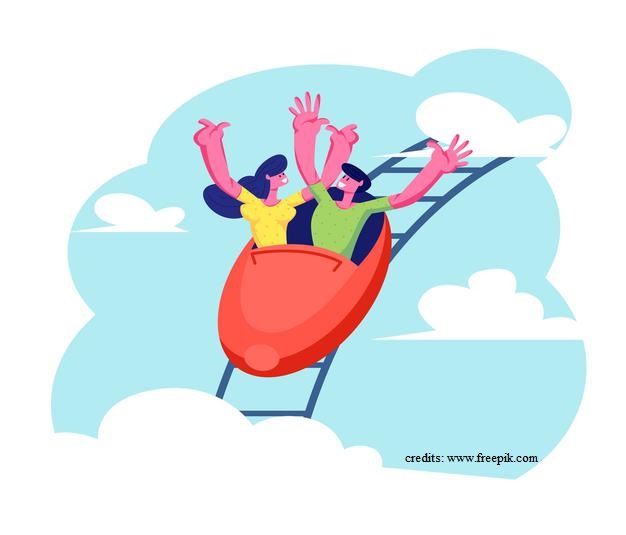
Love’s indeed a roller coaster
Treacherous switchback it bestrides
It would throw you up and under
Scary! But stay… enjoy the ride
Be not afraid when love rolls down
Expect to be twisted and turned
Buckle up in delight be drowned
Before downwards the ride returns
Expect the twizzles and the twines
Hold tight… sit tight… embrace the flow
When spun and twirled never whine
Buckle up don’t ever let go
Love couldn’t be any wilder
Than a ride on a roller coaster
Buckle up if you want to try
Be ready to laugh… and to cry
Beyond Schooling

We stop schooling at a certain age but we should never stop learning. Learning is a lifelong endeavor and education is not confined to the four corners of the academe. The process of acquiring the desired knowledge, skills and values should continue even after graduation.
Schooling is not the only way to learn. There are other ways to obtain knowledge, develop skills, and cultivate the values required for us to become the best that we can be and function as productive members of society.
The foregoing assertions should not be construed as an attempt to undervalue schooling rather they should be viewed as arguments against the perception that not going to school to get a formal education is a reason for us not to be able to maximize our potentials and succeed.
Not everybody has the financial resources to afford formal education from kindergarten to at least college and not everybody who has the capability to pay would also have the interest and enthusiasm for schooling.
If parents are well-off, the higher the possibility for the children to finish at least an undergraduate degree. That is if said children believe that education is a key to securing a good future. It is rather ironic that sometimes those who have the money to spend for education are not motivated to go to school and those who have the motivation to do so don’t have the capability to pay.
For some, not having enough financial resources is not a hindrance in the pursuit of a good education. We heard a lot of narratives about people belonging to poor families who worked while studying, earned their degrees, then eventually succeeded in life.
But there are people who also attained success even if they have no university diploma. A few of them even made it to the Forbes’ list of richest persons in the world. The oft-repeated stories of the Bill Gates and the Steve Jobs of the world support the assertion that a bachelor’s degree (or higher – Master’s and PhD) is not the only key that could be used to unlock the doors to wealth, fame, and success.
It can be argued that a university degree does not always guarantee success in life in the same manner that not having it means that a person’s future would be bleak. It all depends on how those who manage to earn degrees and those who did not play the cards their circumstances dealt them and the way they maximize their opportunities and whatever potentials they have.
There are degree holders who could not find decent jobs citing the lack of job opportunities as reason. Conversely, there are college dropouts who do not relish the idea of being under someone’s employ. So, they charted their own destinies and created their own opportunities. Check the list of the Forbes’ list of billionaires and you’ll be surprised to see some how many are actually college dropouts.
There are specific professions requiring prolonged training and certain qualifications that can be acquired only through formal education. This is when schooling becomes a necessity. But there are also occupations where formal education is not required. Artists, athletes, and business men for example need not have a university diploma. The degree they need is the degree of expertise they must exhibit in their respective arts, sports, and business.
It can also be argued that the schools could not possibly teach all of the competencies and skills we need to acquire aside from those required by whatever professions or occupations we have embraced. And even the said competencies and skills we learn while schooling need to be honed and upgraded. There’s more learning that must be done beyond schooling.
And there is one thing that we ought to learn when we start practicing our chosen profession or occupation – live a balanced life.
Life is not all about work and work is supposed to be “earning a living” and not “slowly killing one’s self.” While we may work hard to achieve whatever we want in life – money, degree, fame, and what have you, we should not sacrifice our relationships and health. Don’t work unreasonably hard that you may earn your millions just so you have money to spend for your hospitalization when you get sick. Living a balanced life means taking care of your work or business without sacrificing your health and disregarding the family and friends who need your attention.
The Sounds of the Trail

As the trail steepens
the breeze whistles,
the branches creak…
then the leaves rustle.
Suddenly the birds sing
I even heard crickets chirping
I think from behind the bushes
I heard a hissing.
I could really hear
my heart pounding…
my joints cracking…
my muscles popping…
So I decided to rest
then the huffs
the puffs…
Stopped.
Why The Lakers Lost to the Suns

What happened to the Lakers in the NBA this season wasn’t the Hollywood ending that many expected. The Suns melted their hope of repeating as champs. But LeBron James (LBJ) and the Lakers have nothing to be ashamed of because if you understand basketball and you’re not a LEBRON HATER, you know why they’re not supposed to get past the first round after what happened in Game 3 of the series. It was a game they won, but ironically, it was when they lost the series. It was a battle they won but it made them lost the war.
Does Booker and the Suns beating LeBron and the Lakers mean that they are the better team? I am of the opinion that it does not. Of course you would say that this is just the LeBron diehard in me expressing a sentiment.
Skip Bayless and his disciples – the legion of LeBron haters – were quick to crucify the leader of the Lakers for that early playoff exit. They will most certainly be calling him again “the washed king,” a label they grudgingly swallowed like a bitter pill when in 2020 he led the Purple and Gold to their 17th NBA title.
Why did the Lakers lose to the Suns?
Go back to Game 3 of the series. If you are indeed a fan of basketball and not just waiting for LeBron to fail, you would have noticed three significant takeaways in that game.
Firstly, it revealed the formula in beating the Suns – inside the paint. Knowing how atrocious is their team’s outside shooting this season, particularly from beyond the arc, Vogel and his coaching staff figured that they have to use their advantage in size. The Lakers outshone the Suns in the paint 58-38 with Anthony Davis (AD) and LBJ leading the charge. Check the statistics of that game and you’ll see also that Chris Paul and company were outrebounded 51 – 35. Now, remove AD from the equation. What would happen to that advantage in inside scoring and rebounding?
In games 1 to 3, AD had this points-rebounds-assists-blocks stat line – 27-9-4-2.
That brings us to the second takeaway from Game 3 – AD’s injury. That happened when he tried to block from behind Booker’s lay-up late in the 2nd quarter. While he may have finished the game, those who understand the nature of injuries in basketball, knew that AD will feel the effects of that injury after the game. True enough, in Game 4, he was not himself, did not play in Game 5, and logged in only 5 minutes in Game 6. That means that the Lakers’ season was pretty much over after Game 3. Why? Where would his team get the 27 points, 9 rebounds, 4 assists, and 2 steals per game that AD contributed during the first 3 games?
That question leads us to the third takeaway – Dennis Schorder’s performance. In Game 3 which the Lakers won, he scored 20 points. He was supposed to be the third most reliable scorer and backup playmaker. The reason the Lakers acquired him, sacrificing Danny Green and a future draft pick in the process, is to take some pressure off LBJ and AD. But he was surprisingly inconsistent in his performance throughout the series. In the 2 games that the Lakers won, he averaged 22 points per game. In their 4 losses, he scored 10.5 per game. He did not score a single point in the pivotal game 5 where they scored only 85 against the Sun’s 115. And it was that game that AD did not play.
What exacerbated matters for the Lakers was the fact that it wasn’t AD only who got injured in Game 3. Cadwell Pope got hurt as well. In case you haven’t noticed, he was the most reliable defender against Booker. In Pope’s absence and his ability to defend compromised when he returned, Booker averaged 31.33 points in Games 4, 5, & 6.
Generally, those injuries to AD and Pope in Game 3 very much encapsulated Lakers’ injury-plagued season. Don’t forget that LBJ himself was out for a long time because of ankle injury and it was not only in Game 3 of their playoff series against the Suns that AD was injured, not to mention the games that Dennis Schroder and Marc Gasol missed because of COVID-19 protocols. Just imagine how those injuries and missed games by the said players affected the building of team chemistry. Thus, even if they would have eclipsed the Suns in the first round, which they had high probability of accomplishing had Davis not suffered that injury, getting deeper into the playoffs and possibly the championship is almost a losing proposition.
And by the way, LeBron, at 36 and probably not playing at 100% because of the injury he had, was still the Lakers’ best performer with averages of 23.33, 7.16, and 8 (points-rebounds-assists).
Staying Focused
“The successful warrior is the average man with laser focus.”
– Bruce Lee

In my essay entitled Becoming Purpose-Driven, I referred to purpose-driven as the desire to find your WHYs and knowing what to do afterward. There I explained that it is a powerful driving force in our quest for a better self and a better life. Being purpose-driven is knowing your purpose and be driven by it.
To become purpose-driven, there’s one very important skill required – focus. Focus, like self-discipline, is a simple concept and easy to define. But like self-discipline, focus is also difficult to practice.
Focusing is the ability to give your undivided attention to something. And just like other skills, abilities, attitudes, and beliefs related to self-improvement, the ability to stay focused is easier said than done.
We live in a world littered with different kinds of distractions. There’s no shortage of things that could distract us in our everyday life and knock us off the path that we intend to take. But these distractions are not actually the problem. The problem is we allow ourselves to get distracted. It seemed so hard for us to stay focused.
And nowadays, what do we usually blame for our inability to give our full attention to whatever it is that we should be doing – technology. Right? We point our accusing fingers to our smartphones, to all these different social media platforms and applications for ruining our concentration, for tempting us to veer away from the tasks that we are supposed to be doing. But is it the fault of our innocent gadgets and the Internet if we could not focus?
Think about it.
Technology is not bad if we are in charge, if we make it our slave and not the master. It is a matter of knowing how to use our computer and information technology devices properly. We need to figure out how to leverage them to enhance the quality of our work and life in general and not to distract us from our personal and professional pursuits.
Don’t blame social networking and gaming sites and apps for making you lose your focus. No one is forcing you to use them. Computer programs are designed to tease you into using them, if you allow it. You probably have heard about the process of using learning algorithms to predict human behavior. We got figured out by the brains lurking in the techno-social systems. They know how to seduce us into getting drowned in cyberspace and consume (and be addicted by) whatever they are feeding us there. Now, it’s up to us to make a stand, to make a conscious effort on how we use the Internet to our advantage, of choosing which sites (and their corresponding contents) could help us in whatever personal and professional undertakings we have.
Thus, it is important that you don’t lose sight of your WHYs. Let your dreams and ambitions serve us your anchor. Use technology, not to distract, but to help you achieve your goals.
Another possible reason why we find it hard to stay focused is having too many things in our plate or us spinning too many plates at the same time. Whoever said that multitasking is a great thing is gravely mistaken. Unfortunately, you believed and embraced the idea.
Cole (2019) explained that multitasking is a myth. He argued that concentrating on multiple tasks at once is not possible and that we pay a mental price each time we interrupt one task and jump to another. That mental price is called switching cost which is the disruption in performance that we experience when we switch our attention from one task to another. In short, multitasking reduces productivity and lessens the quality of your outputs.
Simple things like listening to music while doing household chores or working out would be fine. But in any activities that would require concentration to get better results, performing them while doing other things at the same time is a bad idea.
We do multitasking not only on two simple daily activities but also on our long-term goals. It’s a strategy that is bound to fail. People do fail sometimes not for lack of goals but having too many of them. It is but natural to want to accomplish a lot of things but we should learn to identify the most important ones and focus on achieving them one at a time. You need to prioritize your top goals.
This reminds me of Warren Buffet’s “2-List Strategy.” Let me explain it in the shortest way possible.
- Write down your top 25 goals.
- Check the top 5 on your list.
- Focus on those 5 goals and avoid at all cost the ones you did not check.
This probably is Warren Buffet’s recipe for success which made him the multi-billionaire that he is. He focused on his most important goals and avoided those that might just divide his attention and ruin his concentration.
Following this strategy will make you focus your efforts and energy into what matters most. Identifying your top 5 goals would allow you to put together all of your resources on the things that will move your needle of success. The other 20 goals may be important but those items are possibly distractions that would cause you to multitask. Thus, Mr. Buffet recommended that you avoid them at all cost.
Staying focused entails the elimination of all forms of distractions and only you know what are the other things or who are the people hindering you from achieving your goals. That distraction could be a vice or a relationship weighing you down preventing you from giving your best efforts to achieve what you want.
That vice could be an addiction to any substance (or any unproductive undertakings like gambling) that when it spirals out of control would ruin not just your focus but your future. That relationship could be with somebody who does not help at all in bringing out the best in you.
In the end, it’s a matter of choice. Are you willing to give up that vice or that relationship for the sake of your dreams? Decide.
It is hard to break free from a vice, from an addiction. It is even harder to walk away from a person (or people) whom you love. But you’ve got to do what you need to do. You cannot juggle with vices, toxic relationships, and your dreams and ambitions.
It’s also possible that what’s preventing us from staying focused is the state of our overall well-being.
Well-being embraces more than just physical health. It takes into account the entire person, both body and mind. It indicates not just the absence of illness but also the presence of positive mental states (Purcell, 2018).
There’s no doubt that when we have a healthy body, mind, and spirit (if like me you believe that there is such a thing), we are more productive. This is so because we have less distractions and could concentrate more in doing what we should be doing. Diseases can affect our concentration and attention and prevent us from performing optimally.
It will be difficult for somebody suffering from any kind of illness to focus on their personal and professional endeavors. Focusing is primarily a mental exercise. And doing so would be a mighty struggle if physically and emotionally something is wrong with a person. Thus, it is important that we take a holistic approach to life – that while we work hard in the attainment of our dreams and ambitions we should also pay attention to our overall wellbeing.
References:
Cole, M. (2019). Marc Cole: The Multitasking Myth. Retrieved from https://www.johnmaxwell. com/ blog/mark-cole-the-multitasking-myth/
Purcell, J. (2018). The Difference Between Wellness and Wellbeing. Retrieved from https://www.linked.com/pulse/ difference-between-wellness-wellbeing-jim-purcell.
Pintig

Taludturan ay muli kong lalakbayin
Pintig ng puso’y pagtutugma-tugmain
Talinhaga nito pilit mong talusin
Sa kanyang kariktan sarili’y lunurin.
Mga saknong sa tayutay hahabiin
Maraming pagwawangis dito’y gagamitin
Hindi dahil nais isip mo’y guluhin
Nang ito’y maarok puso ang gamitin.
Damdaming dumaloy sa bawat taludtod
Ay laman ng pusong sa pantig tumibok.
Kung isip ang gagamitin – ‘di mo maaarok
Tanging sa puso damdami’y iindayog.
Mata mo sana’y ipikit aking giliw…
Sumayaw tayo sa kumpas ng aliw-iw
Sabihin man nilang ako’y isang baliw
Pag-ibig sa iyo’y hindi magmamaliw.
Pag-ibig ko’y araw na laging sisikat
Tala itong sa gabi laging kukutitap
Pag-ibig ko’y kulay na hindi kukupas
Kawalang hanggan may marating ang wakas
Aking giliw ako sana’y iyong dinggin
Lumapit ka’t masuyo akong yakapin
Pintig ng mga puso nati’y pagtugmain
Sa bawat pantig ng tula’y padaluyinAdvertisements
 M.A.D. LIGAYA


 M.A.D. L I G A Y A