Author Archives: M.A.D. LIGAYA
Defining Success
 How do you view success? How do you measure it? These two are the usual questions whenever the topic is discussed. But I think the more important question that should be asked is – Do you consider yourself successful?
Before you answer those questions, let’s revisit the definition of the word. Let’s check how online dictionaries define success.
Cambridge’s definition of the word is something broad – “The achieving of the results wanted or hoped for.” Colin’s goes – “The achievement of something that you have been trying to do.” Oxford is more specific with its definition – “The attainment of fame, wealth or social status.” Merriam-Webster’s is almost the same as Oxford’s – “The attainment of wealth, favor or eminence.”.
Our favorite research assistant – “Dr. Google” – says that success is “the accomplishment of an aim or purpose” and “the attainment of popularity and profit.”
Let’s also check the synonyms: prosperity, affluence , wealth, riches, opulence, and triumph.
I hope that the foregoing definitions and synonyms are sufficient to help you come out with meaningful and definitive answers to the questions I asked at the beginning of this article. And by the way, do the ideas conveyed by those definitions and synonyms jibe with what you think success is?
The definitions and synonyms above actually show the way people in our society quantify success. They tell us about the measuring sticks being used by most people, including you probably, to determine whether or not a person is successful. Everything boil down to one or a combination of the following: wealth, fame and power.
So, when asked who are the most successful people in the world, people never fail to mention the names of the world’s richest men – Jess Bezos, Warren Buffet, Bill Gates, Mark Zuckerberg, and the others who are listed in Forbes’ top 10 world’s billionaires . The next ones in our lists are the showbiz, sports, media, and political personalities. We also remember the names of quite a few people – some of them could be our own friends – who excel in their respective fields of endeavors when we discuss about successful people.
Now, let me ask some questions.
Are those people we consider successful happy also? Have the money, fame, power, and accomplishment they possess brought them happiness? They are the only ones, or their relatives (or their close friends and confidants), who could answer those questions. People outside of their inner circle could only make speculations and assumptions.
Many believe that rich people live under the constant pressure of wanting to amass more wealth – famous people to ensure that their stars keep shining – politicians to perpetuate themselves to power – so much so that they forget to live a life. Thus, they are perceived to be unhappy.
At least, they have the money.
“But can their money buy them happiness?” This question has been asked so many times that it could be considered meaningless already. But in the light of the present discussion it should be asked, not for the purpose of having it answered, but as a point to ponder on.
We presume that with all the luxuries the money of the wealthy, famous and powerful could afford, it’s almost impossible that they are not happy. Unless it is true that of the needs which Maslow’s identified in the hierarchy of needs, only the basic ones (physiological and safety) could be covered by money. The psychological needs (esteem needs, belongingness and love needs) and self-fulfillment needs are definitely not available in the shelves of even the most expensive stores.
Here is the next question I would like to ask – “Are they healthy?”
They are already rich, famous, and powerful. They are truly blessed if they are also in good shape. Of course they are – financially. What about physically, emotionally, and mentally? In their quest for riches, fame and power, did they not sacrifice their health, values, and relationships? While they sit on their thrones clutching their coffer, do they feel peace flowing within them? Again, they are the only ones, and the people around them, who could give a definite answer. They are the only ones who know whether or not they are suffering from any debilitating disease, mental anguish, and emotional stress?
I brought out the questions on happiness and health in the discussion of success because I believe that there is a need to strike balance between the ephemeral and the ethereal when defining the concept. The prevailing view of success is materialistic. We attach tangible proofs to it – money, big house, new car, degree, job title, a certain body type, etc. I am not saying that such act (of attaching those tangible proofs to success) is wrong. I just consider it as not encompassing.
Why?
What about simple people who did not attend school, don’t have cars, and live in simple houses in far-flung farming and fishing villages happily living a simple life and diligently performing their role in society? Can’t they not be considered successful in their own right?
When you don’t have a mansion – a car – fancy clothes – expensive jewelry – a university degree – huge amount in the bank, when you’re not famous and not powerful, when you’re just an ordinary decent individual honestly earning a living and contended with what you have and what you’re capable of achieving and you’re happy and healthy, would people not consider you successful?
If a person’s goal is to be happy and healthy and he/she achieves it, isn’t that success?
Correlating happiness and health to success is a kind of paradigm shift that will make capitalists unhappy. It is the materialistic view of success that keeps most of their present business ventures alive.
Well, we define success in different ways. Success is subjective and I think that nobody could claim that their way of looking at it is the right one.
The most valuable lesson I learned about success is this – define it for yourself. Don’t allow other people to define success for you. Don’t subscribe to the standards they set. You know your capabilities and limitations more than anyone else, factor them when setting your success parameters. But be not satisfied with your current skill set. You have to improve and as you see yourself becoming better set the bars of your success higher. And most importantly, don’t forget that as you march towards the achievement of your simplest goals and the realization of your grandest ambitions, you should not sacrifice your happiness and health.
Bata… Bata… Saan Ka Ginawa?
 Inay… si kuya ay mainit ang ulo
Hayun sa kuwarto nagmamarakulyo
Barkada n’ya kasi siya’y niloloko
Bakit kasi pangalan niya’y Anito?
“Kasi anak nagdate kami ng tatay n’yo
Doon namin nabuo iyang kuya mo.”
“Ah… eh… alam ko na kung bakit si diko
Ang ipinangalan n’yo sa kanya’y Sogo.”
“Tama! Napakatalino mo Luneta,
Mabuti na lang sa akin ka nagmana.”
“Ay inay, hayan, si bunso po’y gising na.”
“Oh FX! Halika nga, hug mo ang mama!”
Nang mag-ring ang phone sinagot ni Luneta.
“Inay, si ate nasa kabilang linya.”
“Akin na! Hello… Sofa… aba’y gabi na!
Hala… uwi! Si Rooftop, kasama mo ba?
Punso Sa Likod Bahay
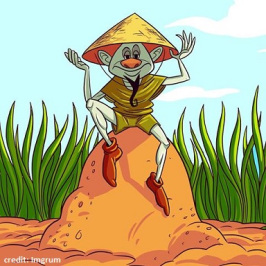 “Nagmamadali ka yata pareng Teban?”
Ang tanong ni Pedro sa kanyang kaybigan.
“Oo pare, albularyo’y pupuntahan,
Nagkaproblema inaanak mong si Juan.”
“Lumaki’t namaga ang paa ni bunso
Nang sa likuran namin sila’y naglaro
Paano ba naman sinipa ang punso
Kaya hayon nagalit yata ang nuno.”
“Pati nga iyong kaybigan n’yang kalaro
Aba eh dinuraan daw iyong punso
Kaya’t sa kanya ma’y nagalit ang nuno
Hayun ang pobre… namamaga ang nguso.”
“O… pareng Pedro saan ang tungo mo n’yan?
Biglaan mo yata akong nilayasan!”
“Pare… likod-bahay ninyo’y pupuntahan –
Iyong punso doo’y aking iihian.”
Nang Maholdap Si Mam
 Kayo po ay muli kong kukwentuhan,
Paksa natin ngayo’y tungkol sa holdapan,
Kwento na nasagap sa isang huntahan,
Nang mga kapwa guro’y naka-umpukan.
Nang kwentong holdap ko’y kanilang nadinig –
Aba’y may isa ng tawa’y bumunghalit.
Isang kwento daw ang samagi sa isip,
Nang magsimula siya kami’y tumahimik.
Isang gabi guro niya sa kolehiyo,
Sumakay sa bandang Taft papuntang Recto,
May mga kawatan… bilang daw ay tatlo,
Sumigaw – “Walang kikilos holdap ito!”
Ibang pasahero syempre’y nataranta,
Ngunit ang guro mukhang naka-relax pa,
Holdapan yata ay nakasanayan na,
Inihanda ang relo’t kaniyang pitaka.
Madaling-madali ang mga kawatan,
Mabilis na mga gamit ay sinamsam,
At nang ang guro na ang nilalapitan,
Isang holdaper kasama’y pinigilan.
Ang wika niya, “Brod, balato ko na si mam!”
“Magaling kong guro noon sa iskul ‘yan,”
Dugtong pa ay, “Hi! Good evening po madam.”
“Ako po ba ay inyong natatandaan?”
Natamemeng guro ay umiling lamang,
Ibang pasahero’y nagulumihanan,
At bago bumaba ang mga kawatan,
Wika ng isa – “Goodbye na po, ingat mam!”
Is The Workplace a Jungle?
 I couldn’t agree more whenever people describe the workplace as “a jungle.” I have been working long enough – thirty years in eight different institutions in two countries – that I could cite a thousand or two reasons why I consider that description accurate in the metaphorical sense. There are uncanny similarities in the behavior of people inhabiting the working environment and the animals in the forest. Even the patterns of relationships between people in the field of work resemble the way the living creatures in the wild treat each other. Thus, they say, in the workplace “only the fittest survive.”
I have been in this jungle called workplace for three decades now. Here I am, still standing and breathing. I managed to hold my own against the different animals I cross paths with as I searched for greener pastures and overflowing water holes. I experienced being stared down by a lion, stalked by an eagle, ambushed by a crocodile, bitten by a snake, clipped by a crab, and stung by a bee. Attacks that left me scarred. Nevertheless, I survived – still alive.
How did I do it? How did I live to tell the tale?
I simply took a cue from Charles Darwin who theorized that “species with useful adaptations to the environment are more likely to survive.” Adaptation is the name of the game. That exactly is what I have been doing (and what you should also be doing if you intend to stay alive and sane in your workplace) – ADAPT.
If you wish not to be dinner for the predators it would behoove you to study carefully the environment of the workplace where you belong. Know what kind of animals you are dealing with. Study them carefully. You also need to put your survival instincts into full gear.
Predators lurk in the shadows. It could be a big cat hiding in the bushes or a mighty bird hovering above. These predators could the “people upstairs” or somebody from among you “downstairs.”
Don’t get me wrong. I don’t mean that all bosses who succeeded in their business endeavors did it at the expense of the people in the rank and file – like predators slaying their preys and eat them. It could be just a few, or half, or most of them. Nobody knows for sure. But definitely not all. Perhaps a majority of them (I hope) consider themselves rhinos and the people they hire oxpeckers whom they allow to freely land on their backs to feast on the insects pestering them.
The point I wish to drive at when I posited that they (the bosses) are predators is that they are at the top of the food chain and like it or not, when you agreed to work for them, you entered their territory. They dictate the terms and conditions of your employment. That doesn’t sound good but it’s the reality in the workplace.
The ones who own or manage the workplace are the alpha males. You need to have a full understanding of how they think and operate. Better if you could dig deeper and try to know what they like and dislike. If it is not too much for your dignity (or should we say EGO) to adapt to their whims and fancies then stay in the pack. These whims and fancies could be the policies that you consider disagreeable. You’ve got to make a choice whether to follow these policies or not. For not following, of course you are not naïve not to understand that there are consequences. Following the terms and conditions of your employment is not equivalent to flopping onto your back to show that you submit to the alpha males. It is simply like the chimpanzees presenting their backs, crouching, bowing and bobbing in order to show deference to the alpha in their group.
If not, if you are tired of being an omega, if your ego clashes with that of the alpha, the wisest thing to do is leave. Find another pack, or better still, be a lone wolf. Don’t be employed. Establish your own business and be your own boss. If you succeed and your business grows big, hire people. That is your chance to be the alpha and see for yourself if you are a better one than your former bosses or… worse than them.
Believe me, you cannot afford to take too much bravado and think you are that brave “angry bird” who would tweet your disagreement and not expect dire consequences. Your chirps will not go unheard and before you know it the eagle will swoop down on your nest and tear you apart with its powerful beaks.
More often than not, or almost always, that locking horns with the “powers that be” in the workplace is like a deer thinking it could take on a full-gown lion. It’s a losing proposition.
Of course not all bosses are saints. Some of them would take advantage of the people they hire in different ways. That you’d discover (hopefully) in time. So, why stay on a watering hole when you know that there are crocodiles under the mud waiting in ambush? Move out. You’re not a tree! You have limbs. Run, walk or crawl from out of there.
What about the predators among you “downstairs”.
Wherever you work, you’ll encounter malevolent individuals. So, be careful. Beware of the wolf in sheep’s clothing. These are co-workers who camouflage themselves as your friends but would stab you in the back when they have the chance.
Okay. Let’s talk more about the different animals in the workplace. You’ve got to be able to identify them if you really want to survive the wild called the workplace.
We have already mentioned about the big cats and the mighty birds. Yeah, including the wolves pretending to be sheep.
Are there other animals you ought to be wary of?
Yes, there are!
Watch out for them. Better watch them like a hawk.
Be careful of the buzzing bees called the rumormongers.
Thinking that they are your friends and therefore could be trusted, you share with them your darkest secrets. Letting the cat out of the bag is the biggest mistake you commit with this type of animals. Later you’ll just discover that the entire workplace is talking about the skeletons you’ve tried so hard to keep in your closet for so long.
Gossiping is a deadly disease in the workplace. It kills reputation and trust. It ruins relationships and careers. So widespread it is that even the people who consider themselves as professionals and who think of themselves as decent individuals spread gossips – both personal and work-related – unmindful of the pain and shame their traitorous act might inflict on their victims.
Identify who among your co-workers are fond of tittle-tattling. Don’t say anything negative to them about the work, co-workers, much less personal matters. Just listen when they talk. Don’t fall into their trap. They will quote you without batting an eyelid. But here is the best way to deal with them – avoid them like the plague. They sometimes appear as if they wouldn’t hurt a fly. That’s their facade. The truth is – they are dogs that eat dogs.
Among your co-workers, you should also be able to spot the crabs.
Why?
Do you know what happens when you put crabs in a bucket? They’ll try to escape by pulling back down others effectively preventing anyone of them from climbing out of the bucket.
That’s the origin of the proverbial “crab mentality.” The philosophy of the malevolent among your co-workers is “if they can’t have a promotion or an incentive, neither can you.” Some people in workplaces just don’t want to see their co-workers succeeding. They so hate it when somebody climbs up the ladder especially if they’ve been there longer. These are the snakes who would bite you with intrigues and gossips when they see you work harder than they do. They would accuse you of being a leech trying to suck the attention and favor of the people upstairs.
Don’t allow the venom of the snakes get through your nerves. Let them not succeed in getting your goat. Continue to work as hard as your personal values would allow you. Don’t be pig-headed like them.
That’s just the reality in the workplace – that generally there are two types of workers – the ants and the termites.
And with who would you rather be associated – with the ants in the workplace who keep themselves busy working and helping one another in order to achieve the goals of the organization or with the termites, whose actions and pronouncements, deliberate or otherwise, are damaging – not only to the organization but more so to themselves?
They are basically a negative bunch that should be avoided at all cost. The termites hold a grudge against the people upstairs for one reason or another and they think that by not doing their jobs the way they ought to and by behaving oddly, they could get even. They spin tales about the current state of the organization basically for the purpose of demotivating people. Be aware that the termites could also sow dissension among their co-workers.
Nonetheless, the people upstairs are not naïve. They could easily detect the existence of termites and they get them exterminated.
Watch out also for the parasites in the workplace.
The parasites seem to have special training in detecting generosity. Once they have spotted a kind-hearted co-worker who wouldn’t say no when asked for favors then they will have a field day. They would ask you to solve their work-related problems and sometimes even seek personal favors.
So, be careful. Learn to say no when you have to or else they would eat up your time and resources. They won’t hesitate to abuse you.
It’s okay if they return the favor. The problem is the word “reciprocate” is not in their vocabulary.
They also tend to exhibit that selfish attribute in their work. You could neither expect them to walk an extra mile for the organization nor perform their duties and responsibilities as stipulated in their contracts. They care for nothing but their salaries.
For the workplace to prosper, the relationship between the people and the organization should be symbiotic.
Let’s consider the relationship between the clownfish and the sea anemone. It’s a perfect example of a symbiotic mutualistic relationship. While the fecal matter from the clownfish serve as nutrients for the sea anemone, the latter provide the former with protection from its predators.
You can choose between becoming a parasite or a clownfish.
The workplace gives you a venue for professional growth and a source of livelihood. You need to keep it afloat. Your organization needs your help for it to succeed and continue existence. You may have disagreements with the people upstairs but you need to bear in mind that commitment to job and organization is different from commitment to your employers.
Lastly, in order to survive in the forest, you need to clearly determine where you rank in the food chain. Identify the different kinds of animals there. And most importantly – don’t stand in the path of your predators.
It’s as simple as knowing your designated place in the organization, being mindful of your words and actions, and being careful with how you deal with everyone. And remember that the most foolish thing to do is to offend your employers.
You have to study the culture of the workplace. Again… ADAPT. Remember what Charles Darwin said, “It’s not the strongest species that survive, nor the most intelligent, but the ones most responsive to change.
If you can’t adapt, if you feel so disrespected and gravely offended, if you think you are no longer growing professionally – what are you waiting for? It’s time to migrate to another forest.
If you think that your current workplace is (as described by Simon Sinek) “like a tree full of monkeys where everyone at the top, looking down, sees only smiles but everyone at the bottom, looking up, sees only asses” then you should leave as soon as possible. Unless you could stomach looking at the same “asses” everyday when you go to work.
And when you’re finally out and begin looking for a new workplace, don’t ever expect that you’ll find a perfect workplace. That’s a wild goose chase. You’ll never find one. You’ll see the same animals.
Ang Kasalanan ni Sister Joy
 May apat na madreng namasyal sa labas
Nang makabalik… sa kumbento’y naglakad
Kanilang superyora sila’y tinawag
At sa opisina sila’y kinausap.
“Dating gawi tayo mga kapatid ko,
Pumasok kayo’t magusap-usap tayo.
Ano ang nangyari nang lumabas kayo?
Kung kayo’y nagkasala’y aminin ninyo.”
“Mother Claire… Ano ba ang dapat kong gawin?”
Hiyang-hiyang wika ni sister Luningning.
“Sa umiihing mama ako’y natingin
Nakita ko po’y kobrang nakalambitin.”
“Nagulat po ako sa aking natanaw
Tinignan ko lang po… hindi ko ginalaw”
“Naku Luningning, masyado kang magaslaw,
Mabuti at kobra’y hindi ka tinuklaw.”
“Luningning ang hardin ay iyong puntahan
Sa ilalim ng manga ay may sisidlan
Tubig doo’y akin nang nabendisyunan
Sumalok ka’t mata mo’y hugasan”
Hetong si sister Joy nang iyo’y madinig
Hindi napigilang siya’y humagikgik
At nang si mother Claire sa kanya’y tumitig
Napayuko siya’t biglang tumahimik.
“Mother Claire… Ako man po’y nagkasala.”
Ang sinabi naman ni sister Donita.
“Sumakay kasi ako ng jeep kanina,
Nang biglang pumreno ako ay nagitla.”
“O, ano ba ang nangyari ng pumreno?
Ano ang kasalanan na nagawa mo?”
“Lalaki pong nakaupo sa kanan ko…
Mother… nahawakan ko po sa pundiyo.”
“May nadakma po ako na parang bato,
Napakatigas mother… parang martilyo.”
“Donita… anak ka nga ng karpintero.
Hugasan ng holy water ang kamay mo.”
Si sister Joy muli nanamang natawa
Huminto lang nang tignan ng superyora.
Anito’y, “Sister Joy baka mautot ka,
Bakit mukha yatang ikaw ay masaya?”
“At sister Joy ha… meron akong napansin
Tuwing holy water aking babanggitin
Ang pagtawa’y hindi mo kayang pigilin
Mamaya ipaliwanag ‘yan sa akin.”
At superyora’y kay sister Lyn bumaling.
“O sister Lyn, meron ka bang aaminin?”
“Mother… ako ay pupunta na sa hardin
At holy water ay aking mumumugin”
“Ha! Ano ba ang ginawa mo sister Lyn?
Bakit ba ang bibig mo ang lilinisin?”
“Mother… may lalaking kumindat sa akin,
‘Di ko po napigilang siya’y murahin.”
“Akala ko… Oh sige ika’y magmumog,
Pagbalik mo holy water ako’y isalok,
Kasi eh gusto ko munang maghilamos,
Bago kami nitong si Joy eh magtuos.”
Naghilamos nga ang madre superyora,
Nang holy water ay kanya nang nakuha,
At si sister Joy tumawa nang tumawa
Habang si mother Claire sobrang nagtataka.
“Sister Joy tigilan mo na ang pagtawa.
Ayusin ang sarili’t magsalita ka.”
Tawahing madre’y pumormal at kumalma,
At bago nagsalita’y umubo muna.
“Iyong sisidlan sa ilalim ng mangga,
Ang nakalagay holy water po pala.
Napagkamalan ko kasing arinola
Eh doon po ako umihi kanina.”
Dissecting Positive Thinking
 Some people say that positive thinking is nothing but a delusion. It is… to them. Yes, only to them. To those who think that positive thinking is just a fantasy, it is. What we think things are – they are. Our thinking shapes our truth. It is the brush we use to paint our reality. It doesn’t mean though that what we think about something is correct and is the absolute truth. The reality that our brush called thinking painted doesn’t apply to everyone.
To those who think positive thinking doesn’t work, it won’t. They’d better not try it because their efforts are deemed to fail. It’s unlikely though they would try, given the kind of mindset that they have.
Those who consider positive thinking as a crap also think of people who embrace it as not attuned to reality. Reality? Whose version of reality have the positive thinkers failed to tune in to? Have the idealists, realists, pragmatists, and existentialists (insert more “ists” here) already settled their disputes as regards the nature of reality? What I know is that the debates on whether reality is absolute or relative have not ended conclusively yet.
It’s so tempting to ask the question, “Is reality real?” Well, I just did but I will no longer explore that topic. Let me just share how Ran Zilca describes reality. He said, “Reality is not outside of you. It only exist in your mind, and you view it through your own unique lens, filtered by your senses, your memories, your mood, and by your thoughts. A different person would look through his or her own perspective, and may describe a vastly different reality, as if the two of you are at not all in the same place and time.”
So, nobody should force on anyone the version of reality informed by his or her personal experiences and created by his or her own brand of thinking.
But is it really necessary to run the gamut from classical to contemporary philosophies to discuss and argue the essence of positive thinking? That is tantamount to analysis paralysis. Positive thinking is not an issue to be resolved but a decision to be made. Accept it if you think it works. If not – reject it.
There is no need to argue the rightness and wrongness of positive thinking because it is not a moral issue? Positive thinking does not involve a difference of belief but it is a matter of preference. There’s no moral dispute.
If for example I chose to be optimistic, hopeful , and cheerful, I am not disagreeing with the pessimists. I am merely exercising my right to decide which mindset I would bear. My decision to embrace positive thinking would not affect the pessimists. It would not harm them. Would it harm me? How in the world could a mental attitude that expect good results and a successful future harm the person having it?
Critics better not say that positive thinking has no academic credibility, that no empirical evidence could be provided to prove that it works. It is not true that the proponents of positive thinking have nothing but anecdotal evidence to prove that it works. The critics simply ignoring the latest findings in the field of brain science and are not seeing how practices related to positive thinking, like meditation and mindfulness, have been gaining wide acceptance. There are lots of studies conducted to establish a scientific foundation for this idea.
In an article I wrote on positive thinking, I cited the works of Marc Guidi and Hans Villanueva as examples of studies that have been helping positive thinking develop academic credibility.
Evidence proving that positive thinking works are difficult to ignore, unless the critics are intentionally turning a blind eye. A website called “The Pursuit of Happiness” published an article entitled “Review of Key Studies on Mindfulness and Positive Thinking.” The said article is a list of links to several studies conducted in the areas mentioned in the title (of the said article).
Simply type “studies on positive thinking” in any search engine and you’ll find a lot articles and studies conducted about it.
Positive thinking is more than the “Law of Attraction” – the basic idea of the controversial 2006 documentary film “The Secret.” The principle “like attracts like” is not the be all and end all of positive thinking. The former is only one of the many ideas associated to the latter.
One strategy that advocates of positive thinking suggest is “fake it till you make it.” The critics call it absurd. But what if it works… the way a placebo drug does. Let people try anything that would get them out of a funk. Anyway, the said strategy is only one of the many strategies available for those who want to try positive thinking. If it doesn’t work – abandon it and try other available methods. Nobody really knows it it works or not. There’s no harm if one tries it. Remember that Alfred Adler, the Austrian medical doctor and psychotherapist who founded the school of Individual Psychology, developed a therapeutic technique that he called “acting as if,” a strategy that gave his clients an opportunity to practice alternatives to dysfunctional behaviors.
The one thing that is difficult for me to comprehend sometimes is why some motivational speakers are discrediting positive thinking. The only reason I could think is probably they are trying to sell another self-mprovement method and the only way they could get the attention they need is to say something negative about positive thinking.
The more we really try to dissect the essence of positive thinking using all the isms of intelligent people as lens the fuzzier it becomes. It is but a simple concept.
In Psychology they simply call it dispositional optimism.
Let’s simplify it further in a way that even the modest of minds could understand. Let’s call it hope.
It is as simple as this – Positive thinking is expecting that good things, rather than bad things, will happen… that success is attainable. Positive thinking is always trying until you get (and you become) what you want. It is a refusal to have limiting beliefs. It is deciding to choose only the positives in the different frames of perspectives.
Don’t get me wrong though. Yes, I have asserted (a few paragraphs back) that positive thinking is a simple concept. But making it work is difficult.
Positive thinking has been misconstrued as just that – thinking. It is not. It is not as simple as you close your eyes, take a deep breath, think about the things you want – money, good health, good relationship, peace of mind and what have you – think you have them, as hard as you could then when you open your eyes you’ll have them in front of you served hot in a silver platter. NO! It doesn’t work that way. That is not positive thinking but rather wishful thinking.
Positive thinking is just a springboard. Nothing happens if a person just thinks and doesn’t act. Isn’t that common sense?
In another article I wrote about positive thinking, I posited, “Positive thinking without positive action won’t work.” A plan of action is required – a plan of action that should be executed and vigorously pursued.
Thinking precedes action. People are (supposed to be) rational beings and whatever decisions they make, whatever course of action they take, they should think about it first. And which would be a better launching pad for the decisions we make and corresponding action we take – a positive frame of mind or a negative one?
Believing that good things are bound to happen and that success is attainable would lead people to know their purpose in life. If people have no limiting beliefs they will be prompted to define clearly their goals and frame a plan of action to attain them. The process will help them develop self-discipline and become self-sufficient, organized, and focused.
Positive thinking is not as simple as it seems. Let me reiterate that for it to work, a corresponding plan of action is required. And that would entail a lot of hard work, dedication, and discipline.
Actually, the believers and critics of positive thinking are both correct. It works and it doesn’t. Confused? Consider this – “Whether you believe you can do a thing or not, you are right.” That’s from Henry Ford. And here’s from Virgil… “Possunt quia posse videntu” (“They can because they think they can.”)
 M.A.D. LIGAYA


 M.A.D. L I G A Y A