Blog Archives
Teachers’ Commitment and Students’ Performance in English at a University in South Korea
A research paper published in a Scopus-indexed journal

Teachers’ Commitment and Students’ Performance in English at a University in South Korea
Massuline Antonio D. Ligaya, Joung-Hyun Ham, and Hyun-Jung Min
Indian Journal of Science and Technology, Vol. 8, No. S9, May 2015, pp. 228–233
DOI: 10.17485/ijst/2015/v8iS9/68306
Research Summary
Teachers play a central role in students’ academic development, but effective teaching may depend on more than professional knowledge and instructional competence. The extent to which teachers are committed to their work and to the institutions they serve may also influence how they perform their responsibilities and, ultimately, how their students learn. This study examined the relationship between teachers’ commitment and students’ performance in English at a university in South Korea, with particular attention to two dimensions of commitment: commitment to job and commitment to organization.
The study involved 15 foreign English teachers and 420 students. The participating teachers were teaching English to Korean students learning the language as non-native speakers, placing the teachers in a professional environment that required them to address not only differences in language ability but also cultural differences between themselves and their students. Teachers assessed their own levels of commitment to their job and organization through a questionnaire, while students’ performance was measured using their test scores in writing, listening, and speaking.
A descriptive research design was employed. Frequency counts and means were used to describe teachers’ levels of commitment and students’ English performance, while regression analysis was used to examine whether commitment to job and commitment to organization predicted performance in each of the three language areas.
The teachers reported being committed both to their job and to their organization. However, their mean commitment-to-job score (4.00) was slightly higher than their commitment-to-organization score (3.80), suggesting somewhat stronger identification with the work of teaching itself than with the institution in which they were employed.
Students, meanwhile, demonstrated generally high performance across the three English-language areas, with their strongest performance occurring in speaking. Regression analyses showed that, when considered together, commitment to job and commitment to organization did not significantly predict students’ performance in writing or listening. The same overall pattern was found for speaking: the regression model containing both commitment variables was not statistically significant.
An important result nevertheless emerged at the individual-predictor level. Commitment to job was significantly associated with students’ speaking performance (p = .042), whereas commitment to organization was not. The finding suggests that teachers’ dedication to the actual work of teaching may have particular relevance to an interactive language skill such as speaking, where student development depends heavily on classroom engagement, communication, encouragement, and sustained interaction with the teacher.
The study therefore presents a more nuanced picture than the simple assumption that greater teacher commitment automatically produces better student performance. Commitment to the organization itself did not emerge as a significant predictor of achievement in the three English skills examined, while commitment to the teaching job showed a significant relationship only with speaking. The results suggest that different forms of teacher commitment may relate differently to specific dimensions of student learning.
Research Contribution
The study contributes to research on teacher commitment and language-learning outcomes by distinguishing commitment to one’s teaching job from commitment to the employing organization and examining their relationships with separate English skills rather than with a single overall academic-performance measure. Its finding concerning speaking raises an important possibility: in communicative language education, teachers’ dedication to the actual work of teaching may be particularly relevant to learning outcomes that depend heavily on direct teacher-student interaction. The study also provides an early empirical foundation for further investigation of teacher-related factors affecting English-language performance in the South Korean university context.
Keywords: teacher commitment, commitment to job, organizational commitment, English performance, speaking, listening, writing, South Korea
Full Text
The full text of this publication is available upon request. Researchers, educators, students, and other interested readers who wish to obtain a copy may contact the author through this website or by email at madligaya@gmail.com.
TEACHER OR LECTURER?
A Reflection on What It Really Means to Teach
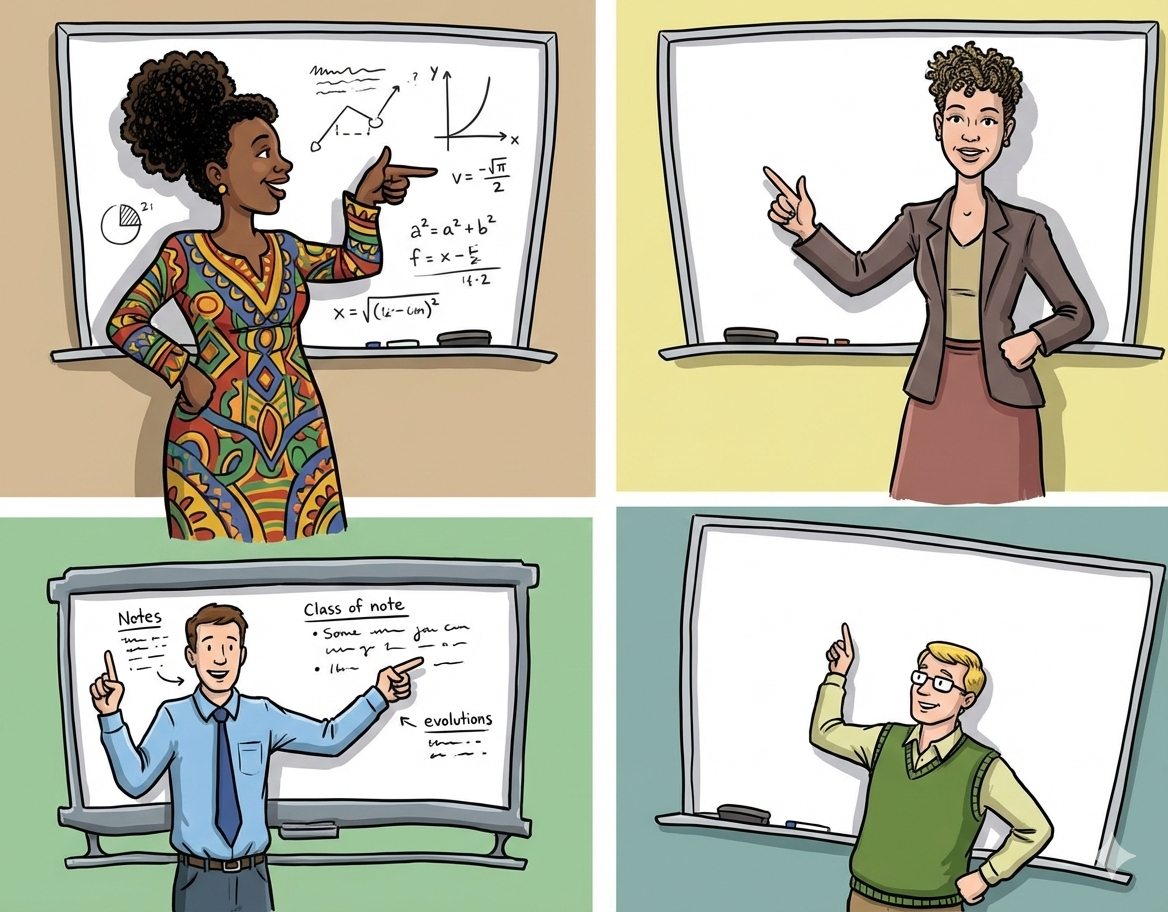
“Teaching starts with a relationship. Until then, you are just a dancing monkey standing
in front of your students performing tricks.”
~ Andrew Johnson~
I. The Question Worth Asking
Not everyone who stands in front of a classroom truly teaches.
Some deliver content. Others shape minds. The titles may be identical — Teacher, Instructor, Professor — but the intentions, mindsets, and commitments behind them often are not. And this gap, quiet as it sometimes is, makes all the difference in the world to the students sitting in those chairs.
This raises an uncomfortable yet necessary question — not to accuse, but to reflect:
Are you a teacher? Or are you merely a lecturer?
These are not the same thing. A lecturer delivers content; a teacher transforms it into learning. A lecturer measures success by how much material was covered; a teacher measures it by how much understanding was actually built. Lecturers speak to students; teachers listen to them. A lecturer is satisfied when the lesson ends on time; a teacher is troubled by what remains unclear after the bell rings.
All teachers lecture at times — that is unavoidable. But not all who lecture truly teach. The distinction lies not in the method but in the mindset: Does this person see their role as the transmission of information, or as the cultivation of human potential?
II. How Teachers Differ From One Another
Even among those who genuinely intend to teach, no two practitioners approach the profession in exactly the same way.
Like fingerprints, their mindsets, tendencies, and personal philosophies are unlikely to be identical. Given the same course syllabus, we cannot expect any two teachers to design the same lesson plans or implement the same strategies. Some approach each class with meticulous preparation; others improvise; and some — regrettably — do not plan at all.
Work attitudes vary just as widely. There are teachers acutely conscious of the hours stipulated in their contracts, unwilling to extend themselves beyond what is formally required. There are others who go far beyond — who assist students outside teaching hours, volunteer for tasks no one asked them to do, and give freely of their time and energy without expectation of compensation.
And then there are those who arrive late, leave early, and submit required paperwork only when pressed — or not at all. If you are a teacher reading this, the question is not which group others belong to, but which group you honestly belong to yourself.
No one can force a teacher into the second group. But every teacher owes it to their students — and to themselves — to stay as far as possible from the third.
There are also teachers who are perpetual fault-finders — those who can always identify what is wrong with a policy, a colleague, or an administrator, but rarely what might be improved. When they find fault, they whine about it or gossip about it, or both. This habit does not make them critical thinkers. It makes them corrosive presences in a community that depends on trust and collaboration.
III. How Teachers Treat Their Students
Perhaps no difference among teachers is more consequential than the way they treat the people in their care.
Some set standards so exacting that only the strongest students can meet them, leaving the rest behind without apology. Others calibrate their expectations thoughtfully — maintaining rigor while ensuring that even the slowest learner has a genuine pathway to success. Some believe in a one-size-fits-all approach, as though all students arrive at learning in the same way, at the same pace, with the same needs. Others recognize that students differ profoundly in learning styles, abilities, languages, and personal histories — and they differentiate their methods accordingly.
Numerous studies confirm what students have always known intuitively: among the most valued qualities in an effective teacher are the ability to build genuine relationships, and a patient, caring, and kind personality. These are not soft virtues. They are the foundation on which all learning is built.
What causes some teachers to treat students with indifference or harshness? Sometimes the answer lies in upbringing or in the treatment they themselves received as students — a sad inheritance, passed unconsciously from one generation to the next. Sometimes it is simply burnout. Exhaustion does not excuse poor teaching, but it does help explain why some teachers gradually lose the fire they once had. Compassion, it turns out, is not inexhaustible. It must be renewed.
IV. The Heart of the Matter: Passion and Compassion
At its deepest level, the difference among teachers may be reduced to two qualities — and what each teacher does or does not possess of them.
There are teachers who possess both passion and compassion.
There are teachers who have only one of the two.
There are teachers who have neither.
Passion is what drives a teacher to prepare thoroughly, to stay current in their field, to search for better methods even when existing ones are adequate. It is the restlessness of someone who genuinely believes that this lesson, this class, this student deserves their best effort.
Compassion is what keeps that passion human. It is what reminds a teacher that behind every exam score is a person — with pressures, fears, histories, and hopes that the classroom did not create and cannot simply ignore.
Without passion, teaching becomes mechanical. Without compassion, it becomes cold. Without both, it becomes something that should not be called teaching at all.
If you are a teacher reading this — and if, in honest reflection, you find yourself in the third category — it may be time to ask whether you are in the right profession. That is not an accusation. It is an invitation to reconsider, before another generation of students pays the price for a choice that was never truly theirs to make.
V. The Question of Training — and Its Limits
One of the gravest mistakes an institution can make is hiring someone with no pedagogical training to teach.
Knowledge of a subject is not the same as the ability to teach it. Being a mathematics wizard does not automatically make one a mathematics teacher. Having perfect pronunciation and impeccable grammar does not make one an English teacher. Teaching requires something beyond subject mastery — it requires the ability to make that mastery accessible, to motivate learners who do not yet share it, to design assessments that genuinely measure growth, and to adjust strategies when understanding has not yet arrived.
To be fair, there are rare individuals who compensate for the absence of formal training through humility, mentorship, and a genuine hunger to learn the craft. But these are exceptions, not the rule. And relying on exceptions as a hiring strategy is a gamble made at students’ expense.
Yet perhaps the more troubling question is not about the untrained. It is this:
Why are there teachers who were trained to teach, yet behave as though they were not?
Teachers’ conduct is shaped by the educational philosophy they develop through their training — an evolving framework built from theory, practice, experience, and the personal belief systems they carry into the classroom. That philosophy, whether articulated or not, is visible in every decision a teacher makes: how they speak to students, how they respond to failure, how they handle disagreement, how they use — or misuse — the authority their position grants them.
When teachers act or speak in ways that diminish students, ignore professional codes, or prioritize personal comfort over student welfare, they are not simply having a bad day. They are revealing what they truly believe about teaching — and about the people they were hired to serve.
Common sense, even in the absence of formal training, should be enough to remind any adult in a position of influence: words carry weight. Actions leave marks. Students remember — sometimes for a lifetime — how their teachers made them feel.
VI. A Calling, Not a Paycheck
Teaching is not a neutral act.
Every teacher who enters a classroom makes a choice — consciously or not — about what kind of presence they will be. They can be a source of clarity or confusion, of encouragement or discouragement, of possibility or limitation. They can be the reason a student discovers a love of learning, or the reason that love dies quietly before it ever had a chance to grow.
The difference between a teacher and a lecturer is not merely technical. It is ethical. It is a question of whether one has accepted not just the job title, but the responsibility that comes with it — the responsibility to know your students, to adjust your methods, to take ownership of whether learning is actually happening, and to care about the answer.
A lecturer fills the time. A teacher uses it. A lecturer covers the syllabus. A teacher uncovers the student.
Not every teacher will be extraordinary. Not every lesson will ignite a passion. But every teacher can choose, on any given day, to be present — truly present — for the people who have been entrusted to their care.
That choice is available every single morning. It costs nothing except the willingness to make it.
That is — if they care.
If teaching is still a calling, and not merely a paycheck.
★ ★ ★
— M.A.D. Ligaya, PhD
Native Speaker…ism

A couple of weeks ago, I was at our university’s English lounge when a colleague from a native-speaking country, who was chatting with one of our Korean students, suddenly called my attention. He said he just wanted to confirm that I was from a country where English is not the native language. I responded in the affirmative, and he went on to mention some of my countrymen who are also part of our university’s foreign faculty. He then reiterated to the student that English is only a second language to us Filipinos.
At that moment, I felt uncomfortable. Was this another case of native speakerism? Was this yet another instance where someone implied that the native variety of English is inherently superior, while the English spoken by non-native speakers is somehow lesser? Was he indirectly suggesting that he was a better English teacher than I am, simply because he happens to be a native speaker?
I was tempted to approach the table where they were conversing, but I held my horses. I inhaled, then exhaled—flooding my brain with the oxygen that, according to positive psychology experts, is often lacking in the gray matter between one’s ears when negative emotions, such as anger informed by patriotism, begin to rise. I did it one more time: I inhaled (counting one, two, three, four) and exhaled (counting one, two, three, four) again.
But it wasn’t working. While my arteries were busy transporting oxygen to my skull, the floodgates of my hippocampus seemed to open, reminding me of an unfortunate experience last summer. The Immigration officers had denied my request to teach at an English camp simply because I was not from any of the seven native English-speaking countries. Despite my explaining that I was already teaching English at a university in South Korea—and that my university had authorized me to teach at that camp—they stood firm on their decision. Their reasoning was that only native speakers could teach there. I wanted to ask why Immigration would allow me to teach English at a university but not at a small English camp. It seemed illogical and unreasonable. However, I decided to move on, considering it a learning experience and choosing not to jeopardize my future interactions with the officers I would eventually encounter again for my contract renewal.
I took another deep breath, this time with my eyes closed. In the darkness, I imagined two figures whispering into my ears—one with horns and a pitchfork, urging me to confront my colleague and demand why he needed to stress that English is merely a second language to Filipinos; and the other with beautiful wings and a gleaming sword, gently reminding me that I didn’t know the full context of their conversation and that perhaps he meant no harm.
I suppose I had taken in just enough oxygen for the “Andres Bonifacio” in me to yield to the “Jose Rizal.” I heeded the whisper of the one with the sword.
I slipped on my earphones, shutting myself off from the rest of their conversation. I would rather not have anything more to do with it.
Since then, every time I see that colleague, the memory of that encounter still crosses my mind, but I shrug it off, knowing that one day I’ll forget it altogether.
Then, two days ago, I received a text message while working out at the gym. A reliable source informed me that our university has released the results of this year’s faculty evaluation for foreign faculty members. Three Filipinos landed the top spots—first, second, and third. I recalled that last year (and almost every year I can remember), Filipinos were consistently among the top-performing foreign English teachers at our university.
Now, I’ll leave it to you to draw the moral of this story.
What Matters (2)
(A Short Story – Second of 6 Parts)

Every time we planned a get-together, it was a predictable pattern. Jay was always the first to show up, eager and ready for the fun to begin. I followed closely behind, but Chris and Mario seemed to have a knack for arriving late, occasionally switching between being third and last. Their tardiness became a running joke among us, but it also made us appreciate those moments when we were all together just a little bit more.
I got off the jeep and walked over to Jay’s car. He opened the door and let me in.
I checked my watch—it was already half past two, and I wasn’t late. The moment I stepped into Jay’s car, I was greeted by an exquisite scent, far from the typical air freshener smell. This was something unique, a fragrance that hinted at luxury, perhaps even an expensive perfume.
In stark contrast, I couldn’t shake off the lingering odor of rubbing alcohol that clung to me. Jay, on the other hand, presented a polished image in his long-sleeved shirt and tie, likely having just come from a meeting. It was clear: whether by necessity or preference, he had a habit of dressing to impress when meeting others.
“Let’s stay inside for now; it’s sweltering outside,” Jay suggested. “This gives us the perfect chance to catch up! How have you been? What’s new in your life since high school?”
“Oh, I don’t really have anything exciting to share. I just stayed here in our town. I drive a Jeep and work on our farm. I didn’t get the chance to go to college,” I paused, reflecting on the reasons I missed that opportunity. “You go ahead, sir. Please tell your story first, and I’ll continue later.”
Jay shared his inspiring educational journey, demonstrating how determination can lead to extraordinary achievements. With relentless effort, he earned both his Master’s and PhD, showcasing his remarkable intellect. It’s truly impressive that he has risen to the position of dean at a prominent college in the nearby town—the very institution to which I frequently drive students. His story is a testament to the power of hard work and dedication!
He had connections with Chris and Mario because they were friends on Facebook, and he shared that they had been trying to locate me on social media for quite some time. But it’s no surprise they couldn’t find me; I don’t have a Facebook account or engage in any social media. I’ve always felt that I don’t need it. Instead, I immerse myself in the world of newspapers. Every day, I buy the Philippine Star and Tempo, and I dive into them while waiting for passengers. When I’m behind the wheel of my Jeep, I tune into the radio, and at home, I enjoy watching TV. I believe this keeps me well-informed about what’s happening around me. I’m aware of platforms like Facebook and YouTube because I see my kids using the computer, and I occasionally catch viral videos on TV. In a way, I stay connected and current without relying on social media.
We had been chatting for almost 20 minutes, and Chris and Mario still hadn’t arrived.
“They’re taking forever.”
“They have not changed. Those two are always late whenever we have a meet-up, sir.”
“Could you please stop calling me sir? This is the second time you’ve done it. I’m really not sure why you’ve started being so formal. It would mean a lot to me if you just called me Jay.”
“Well, you’re a doctor and the dean of a college. You should be addressed formally.”
“Alright, I understand. When you’re at school and in the presence of others, you can address me as ‘Sir.’ However, in this setting, let’s keep it casual—just call me Jay.”
“Okay, doc.”
“Ahh… now it’s doc? What is this now? Geez. Come on, let’s get out. I need a smoke.”
We both got out of Jay’s car and sat on the big rocks surrounding the acacia tree. It was one of the few acacia trees still around the basketball court where we used to play when we were in high school. The sari-sari store and the “lugawan” beside the court were still there.
Jay offered me a cigarette. I declined. I never learned to smoke.
“You don’t smoke?” Jay said. “Good for you. I wish I hadn’t learned to.”
“Huh? Why?”
He looked at me.
“Oh, it’s nothing. Just forget about it.”
I could tell Jay wanted to say something. He suddenly seemed down. He lit his cigarette.
“Jay, that board looks really old. It might fall apart anytime. And the ring is hanging loosely.”
“Yeah, it looks like it hasn’t been replaced. That’s probably the same board and ring we used when we used to come here to play.”
“I think you’re right.”
“Well, there’s a new sports center near the town hall now, so the basketball players just play there.”
“At least Nanay Mameng’s store and Mang Isko’s lugawan have improved. Look, their place is now made of concrete.”
“Oh, I didn’t notice that earlier. Before, it was made of bamboo and nipa.”
I pass by this place almost every day, but I never noticed that they had changed the structure of the store and the lugawan.
“Do you think Nanay Mameng and Mang Isko are still around?”
“We’ll find out later, Jay.”
“Yeah, when I finish this cigarette, we’ll check on them. By the way, do you still play basketball?”
“Sometimes, when I’m not driving the jeep. There’s a court in our barangay, near my house. I join when they have a league.”
After Jay finished his first cigarette, we saw a car approaching. It stopped right in front of us, and the window slowly rolled down.
“Hello, ladies…” It was Chris. “Wait, bros, let me park this properly.”
Jay parked his new-looking car next to my jeep. My jeep was between Jay and Chris’s cars. Both were Honda Civics – Jay’s was black, and Chris’s was red.
Chris got out of the car. We were both wearing polo shirts, jeans, and rubber shoes. His looked new, while mine was a bit worn out.
“Whose junk is this? It might infect my car,” Chris said.
“Idiot, that’s Mon’s,” Jay said.
“Oh, sorry, bro. I didn’t realize it was yours.”
“No problem, bro.”
“Same old Chris… tactless,” Jay added.
“So, how have you been, bro?”
Jay and I both gave him a thumbs-up.
“And the playboy, how’s he doing?” Jay asked.
“Playboy? You’re the playboy. I heard you have a student girlfriend.”
“Come on, Chris, we’re different. I don’t shit where I eat. Having an affair with a student is a dangerous game I will never play. I am not like you… skirt-chaser.”
“Really!?” I asked.
“Yes Mon. He even tried to hit on our lady guard at school.”
“No, I didn’t.”
“She told me. You asked for her number when you visited me at school.”
“Okay, okay. She’s a hot mama, that lady guard. She has a great… bumper.”
“Anyway, how many of our high school classmates did you date when you started working?”
“Hey, Jay… just three: Aida, Lorna, and Fe.”
“Come on. Those are names in a song.” I exclaimed.
“I can’t tell you their real names. You know them. I am no kiss-and-tell guy.”
Jay asked, “For real? Three of our high school classmates?”
“What was I supposed to do? They were the ones who contacted me and chased me.”
After saying that, Chris sat in between Jay and me.
“Wow, you smell really good, bro. Looks like you used perfume to shower earlier.”
“I just used cheap cologne,” Jay replied.
“Mon, what’s that smell? Damn, it’s alcohol… you’re using rubbing alcohol as cologne?”
“Yeah, bro. Green Cross rubbing alcohol.” I just went along with Chris’s teasing. That’s how he was. He liked to joke around.
“I miss you guys so much,” Chris said, putting his arms around both Jay and me.
“Now we’re just waiting for Mario,” Jay said.
“Wait, let’s take a groupie,” Chris said, setting up his phone.
“We’ll do it later, when Mario gets here, so we’ll be complete,” Jay suggested.
To be continued…
When The Rain Falls (7)
Chapter 7 – “A Woman Scorned”

Sleep was a distant memory, replaced by the relentless echo of your name. Though I’d made my choice, tethering myself to Elena and our unborn child, the pull towards you remained a stubborn ember. My feelings for you, a complex tapestry woven with threads of longing and regret, refused to unravel. In a world without the weight of impending fatherhood, our paths would have diverged from Sagada, hand in hand.
A dull ache pulsed in my temples as I pushed myself out of bed. Elena was lost in slumber; her peaceful face contrasted with my turmoil. The kitchen offered a momentary respite, and a black coffee was the only solace I could find.
The terrace could offer a momentary respite to clear my head. But fate had other plans. There you were, a tableau of domestic bliss, your head nestled on Daniel’s shoulder. A bitter bile rose in my throat as jealousy, a venomous serpent, slithered through my veins.
“Oh, you’re up already,” Daniel said.
“Yeah, I got up early. I have to prepare my things. I’m heading to Marlboro Hills later.”
“It’s beautiful there, Jeff. You’ll enjoy taking pictures. Sorry for the trouble we caused last night.”
“That’s okay, Daniel.”
“By the way, I’ll go ahead. I need to tend to our vegetable garden.”
“Oh, I see. Alright, take care, brother.”
“I’m the only one going. Camille will stay here for now. I’ll pick her up this afternoon.”
I opened the gate for your husband. After he left, I went back to the terrace. As I got closer to where you were sitting, you stood up. Your sudden rise was a silent declaration of war. Your hands, once soft, connected with my face twice with a stinging force. The world tilted, and I was suspended in a bubble of disbelief for a brief, disorienting moment.
“Why?” I asked, glancing inside the house to ensure no one saw what you did.
“Why? You don’t know why? What you did to me was far worse than these slaps.”
I managed to block your next slap.
“Stop it, Camille… stop it. Please forgive me.”
“Goddamn you, Jeff. Why did you do this to me? You pushed me in deeper instead of pulling me out of the quicksand I fell into.”
I shook my head.
“What’s your answer to my question last night? Didn’t you enjoy being with me? I’m asking you, not Daniel. What’s your answer?”
You started to cry. I gently guided you to sit down.
“Camille… let me explain.”
“I don’t need your explanation. It’s you I need. We can still leave. Later today… or even tomorrow… whenever you want.”
“Sorry, Camille… we can’t do that.”
“Why not? Why?”
I shook my head as I looked at you. You kicked me in the leg.
“Get away from me.”
I retreated to the far end of the terrace, your sobs a mournful symphony that echoed in the still morning air. The weight of your anger pressed down on me, a crushing burden. I wanted to explain, to unravel the tangled mess of our lives, but words seemed inadequate. Your pain was tangible, a physical presence between us.
After a few moments, Elena came out of the room. She saw us on the terrace.
“Good morning, Ate Camille.”
You just smiled in response.
“Why do you look like you’ve been crying, Ate?”
“It’s nothing, I just remembered what happened yesterday.”
“Ah, I thought Jeff was making you cry,” Elena laughed. I knew my fiancée was just joking. You looked at me before smiling at Elena in response to what she said.
Then, Elena came over to me and kissed me on the cheek. You bowed your head, just like I did when you kissed Daniel. It seemed like you didn’t want to see Elena kiss me. Maybe it was jealousy, too.
“Your cheek looks red, Dad. What happened there?”
“Nothing… I just scratched it earlier. That’s why it’s red,” I said, trying to divert your attention by asking, “Is your mom still asleep?”
“Let’s just let her rest so she can get better soon.”
Elena took a sip of my coffee. “Oh… by the way, Ate Camille, I have good news for you.”
“Ha!? What is it?”
“Dad, why don’t you tell Ate Camille?”
“Oh. Why me?”
“Please, Dad… pleeeassseee!”
Reluctantly, I granted Elena’s request. “Camille… El… Elena is pregnant. Six weeks now.”
“Really?”
“Yes, Ate Camille.”
“Wow… well, congratulations to both of you. You’re going to be parents.”
You smiled as you said that. Your forced smile was a mask concealing a tempest of emotions. I saw the flicker of defeat in your eyes, starkly contrasting the joy she was feigning. Your arm, once resting confidently on the chair, now hung limply, a silent confession of her despair. It was a tableau of pain, a silent plea for solace.
“Thank you. Of course, we’ll ask you to be the godmother… right, Dad?”
I nodded. “Ah… sure… sure. Why not.”
When you said that, it seemed like you wanted to burst into tears, especially when Elena lifted her shirt like a child and placed my hand on her belly.
“Hold on, I’ll go inside and lie down again. I have a headache.”
“Oh… that’s a hangover, Camille. Alright, rest well. I’ll go cook breakfast now.”
You and Elena went inside the house together. It was a silent exodus that left me alone with my thoughts. Elena disappeared into the kitchen while you collapsed onto the sofa, your back turned to me. You seemed to be a fortress of solitude, shielding your vulnerability from my probing gaze. I couldn’t decipher the storm within you—sorrow, anger, or a mix of both.
**********
After that day, you and Daniel only visited the house once a week, usually on a Sunday. It was obvious you were avoiding me whenever you were at the house. Those Sundays became a ritual of avoidance, a carefully choreographed dance around the elephant in the room. Not once did we have a conversation alone. But that’s probably for the best because I didn’t want to give Elena any more reason to doubt us—if she had any doubts at all.
Aside from no families being broken, one positive outcome of my not showing up at our meeting that day is the changes I’ve seen in your husband. Your mother-in-law, who will also be my mother-in-law, says Daniel is completely different now. Once trapped in a shadowy world, Daniel now radiated a newfound sense of purpose. If what she says is true, he hasn’t touched alcohol since the day we were supposed to leave Elena and him. And maybe if what I saw in his clutch bag back then was drugs, perhaps he has quit that too.
The following month and a few days had good weather. There were no heavy rains, just occasional light drizzles that didn’t last long. Because of this, Elena and I could visit the places I wanted to go to for the pictures and videos I needed. Taking care of Elena and my travel vlog kept me busy during those days.
We chose the following week as the schedule for our civil wedding because we would be returning to Pasig the week after that. Elena was three months pregnant by then. Only my father, mother, and one sibling would attend because it would just be a simple wedding. I promised Elena that the grand wedding would be after she gave birth.
TO BE CONTINUED…
When The Rain Falls (6)
Chapter 6 – “The Decision”

The rooster’s crow was a rusty blade scraping against my conscience. Sleep had been a stranger the entire night, replaced by a relentless loop of “Camille or Elena?” Shame burned in my throat as I glanced at the clock – almost nine. Elena, bless her heart, had taken the other room to care for her sick mother.Stepping onto the terrace, the cool mountain air slapped me awake. Elena and her mother were already there, their worried expressions deepening as they saw me.
“You had a good sleep, didn’t you, son? It’s almost nine o’clock,” said Elena’s mother.
“I walked quite a distance yesterday. They said I was almost at Marlboro Hills.”
“Ah… so, Dad, did you see Marlboro Hills already?”
“Not really. I was running out of time, so I headed back to visit the mini rice terraces. Next time, I’ll go there.”
“I see. Dad, do you plan to go out today?”
“Huh? Uh… I’m not sure. We’ll see later.”
“Okay, wait for me before you leave. We’re just going to the clinic in town with mom. We’re leaving, just waiting for you to wake up.”
“We’ll leave you for now, Jeff.”
“Alright, take care.”
“I’ll buy some cooked dishes for our lunch later,” Elena said before they left.
Alone in the house, I paced like a caged animal. The weight of my choice pressed down on me, a suffocating burden. Elena, a future filled with comfort and familiarity. Camille, a passionate whirlwind that threatened to upend everything. I set a deadline for myself – a decision by lunch.
It was almost noon when Elena and her mother returned. Fortunately, I had already cooked some rice. I helped Elena prepare the food on the table.
“Jeff, Elena has a surprise for you later.”
“A surprise Mom? What is it?”
“It’s a surprise, after all. Elena will tell you herself.”
Elena just smiled when she looked at me. I thought maybe she bought something for me in town.
Once the table was set, we started eating. At that moment, I wondered if you were already at the hut. I thought about what would happen if I decided to go with you and leave Sagada. My thoughts were interrupted when Elena tried to feed me some food.
Then, her mother spoke.
“Elena, give Jeff your surprise now.”
“Oh, right.”
“What is it, Mommy?”
“Hold on… you’re too excited.”
Elena stood up and grabbed her shoulder bag. She took something out and handed it to me.
IThe pregnancy test felt like a live grenade in my hand. Positive. Those two red lines burned into my retinas. Relief warred with terror in my chest as I saw Elena’s radiant smile. Elena was pregnant. I couldn’t speak right away.
“Oh, it looks like you’re not excited, Dad.”
Once I collected myself, I squeezed Elena’s hand, a silent apology tangled with a burgeoning sense of responsibility. The turmoil within me remained a locked box, but for now, this child was my anchor. Maybe, I thought with a sliver of hope, the universe had intervened, a divine hand steering me away from a path of destruction.
“I was just surprised, Mommy. But you don’t know how happy I am. I’m going to be a father.”
“… and I’m finally going to be a grandmother. I want you to get married at the courthouse as soon as possible. Just a simple celebration. I don’t want people here to see my daughter pregnant without knowing you got married.”
“Yes, Mom. I’ll call my parents later, and Elena and I will tell them our plans.”
Elena was thrilled with what she heard. I caressed her cheek, and she kissed my hand.
“Oh… finish your meal quickly, Dad. You have plans.”
“Huh… I don’t feel like going out anymore. I’d rather stay here by your side.”
“Aww, my Dad suddenly became sweet. Just yesterday, you were so grumpy.”
I still thought of you amid those conversations. You are the reason I could leave Elena, but now I’ve found a reason not to choose you – Elena’s bearing my first child. I don’t need to think any further, and maybe when you learn why I didn’t meet you at our rendezvous, you’ll understand.
Perhaps I can say that the Lord answered my prayer. Let’s just say that the Lord foresaw the future and knew I would be in this situation, so He granted Elena a child to prevent me from doing something foolish.
This doesn’t mean I now believe in fate… that destiny has wheels. The Lord gave us two gifts. The first is life, and the second is the freedom to make any decision we want. He doesn’t interfere with which path we take. I know that the sadness and failures we experience are not punishments from Him. Those are the results of our wrong decisions.
However, sometimes the Lord does favor those He cherishes. I’m not saying He favored me, but Elena. My fiancée is a very good person. I’m not saying you’re not a good person. I have no right to judge you because I am also not pleasing in the eyes of the Lord.
What’s frightening is karma. I feared that Daniel might be punished for the wrongs he did to you. I also feared we might be punished for the infidelities we committed and the wrong we intended to do. I just hope that since we didn’t go through with our plan, we won’t face retribution.
**********
That night, we were awakened by the continuous honking of a car. Elena and I came out of the room, as did her mother. We peered out the window.
“Mom, could you please open the gate?”
It was Daniel calling.
“Jeff, please open the gate,” her mother said.
I opened the gate. Daniel drove the car in, quickly got out, and opened the back door. You stepped out, almost stumbling, so your husband decided to carry you inside the house.
You were soaking wet, and if I’m not mistaken, you seemed drunk.
Daniel laid you on the sofa in the living room. Their mother quickly went into the bedroom, got a pair of shorts and a t-shirt, and changed you out of your wet clothes. I turned away while they dressed you together.
“Why don’t you ever carry an umbrella when you know it’s the rainy season?” their mother said.
“What happened to Camille?” Elena asked.
“She left the house before noon, said she was going somewhere. She took her shoulder bag and a large plastic bag.”
“Wait, let me wipe her face with warm water,” Elena said.
Daniel continued his story.
“When it got dark and she hadn’t returned, I started looking for her. Someone mentioned that around three o’clock, she bought wine and beer at the store and seemed to head into the woods towards the mini rice terraces. I thought she might be at the hut, so I went there. That’s where I found her.”
I just listened to their conversation. There was nothing I could say. I felt so sorry for your condition. I wanted to blame myself. I hope you can forgive me, but I can’t leave Elena, I can’t abandon the child that soon we’re going to have.
“Her plastic bag was full of clothes. I think Camille was planning to leave me.”
We all fell silent for a moment.
“That’s why, Daniel, you need to think things over. Treat Camille better. She told us she wants to separate from you.”
“Yes, Mom. When I realized she was planning to leave me, I understood that I don’t want to lose her. I’ll try to save our marriage. I’ll try to change, Mom.”
As Elena wiped your face with a cloth soaked in warm water, you suddenly opened your eyes. Our gazes met.
“I thought you loved me. But you didn’t. You just led me on.”
I was shocked when you said that. Elena looked at me, confused.
“Weren’t you satisfied with the way I f—– you? Wasn’t it good enough for you?”
Your words hung heavy in the air, a scathing indictment of my betrayal. Elena’s gaze darted between us, the first crack appearing in the facade of her happiness. It was a confused look, but the seed of doubt was sown.
“Ca… Camille… It’s Jeff… I’m not Daniel.”
“Ha!? Is that so?” you said.
Then you started laughing uncontrollably.
“So, you’re Jeff… not Daniel. Well, sorry then.”
“Oh, it looks like Camille is delirious,” said Elena’s mother.
“Yes, it seems so. She probably mistook Jeff for me,” said your husband.
Relief washed over me as you drifted off to sleep, a temporary truce declared. But Elena’s furrowed brow, a silent storm brewing, sent a fresh wave of unease crashing over me. The weight of my choices, for better or worse, had settled in. The consequences, like a gathering storm, loomed on the horizon.
TO BE CONTINUED…
When The Rain Falls (3)
Chapter 3 – Under The Table

We all bowed our heads. I noticed you all closing your eyes. I was the only one who didn’t. I watched you as Elena prayed. While Elena’s rhythmic voice filled the silence, your presence filled my being. Moments later, I saw your eyes fluttered open. You looked at me. Your eyes were moist, red, and swollen. You forced a smile. It was the same smile you gave me the first time you smiled at me in the hut – forced. But that smile caused fragile happiness to flicker in my chest like a butterfly – happiness quickly crushed by the circumstances surrounding us. I smiled back and nodded. Then you closed your eyes again. I closed mine, too.
I was happy and sad at the same time. I was pleased because I saw you again. I was sad because of the situation, because of the timing. I am still determining what will happen next. Amidst all the problems you’re carrying, I felt compassion. And here I am, looking like I’m adding to your burden.
“Welcome to the family, brother-in-law,” Daniel said after the prayer.
“Okay. Let’s eat. I’m starving.” That was Elena’s Mom.
“Chicken tinola, pork adobo, fried bangus, and chop suey… wow! You’re really good to Mom, Jeff. Four dishes. When I go here, Mom just fries eggs and opens sardines.”
“Stop talking, Daniel, just eat,” their mother said.
“Sis… what were you saying happened to you earlier on your way here?”
I looked at you when Elena asked that. You looked at me before looking away and back at Elena. I knew you wouldn’t say anything about us. We both know that if the truth gets revealed, it will shatter our lives like a dropped glass.
“It was just in the hut earlier.” You responded after taking a deep breath and a forced smile.
“What, sis? What happened in the hut?”
“It’s just… it’s like someone was following me while I was walking. That’s it.”
“Maybe one of your admirers was really following you earlier?” Daniel said.
“Oh, come on… let’s just eat,” their mother said.
While we were eating, you kept your head down. Very quiet. I tried not to keep my eyes on you because Elena might notice and get even more suspicious. I am almost sure that her jealousy is back. Elena knows the terrible things I did before we became a couple. Elena knows my weaknesses. She knows I’m not a saint, just human, not holy.
“Dad here…” Elena’s voice intruded into my thoughts. You flinched slightly as she leaned across the table, offering a chicken drumstick. “Legs are your favorite, right?” Her seemingly innocent question felt loaded, a veiled challenge to you and me.
You looked at me while Elena fed me a chicken drumstick. It was just for a moment, and you immediately looked away. I don’t know if you felt anything or if you were jealous.
“Camille,” Daniel said, “they’re so sweet. Maybe you could give me the other piece of chicken drumstick the way Elena did it to Jeff. I could feed you, too.”
“Oh, Daniel, stop it. After you fight with your wife, you act like that. If I were Camille, I would shove the spoon and fork into your mouth instead of feeding you, so you’d behave.” That was their mother’s retort, which was laced with a hint of exasperation.
“Come on, Mom. Camille has forgiven me already. I’ve apologized. Isn’t that right, Ma?”
Is that all? If everything I heard from Elena about what your husband is doing is true, does he think a simple apology will be enough to forgive him?
You nodded in response. But it seemed forced. I could see how tears welled up in your eyes when your mother-in-law, my future mother-in-law, said that. I felt sorry for you. If only I could wipe away those tears or hold your hand to make me feel better.
I did what I could. I just tried. I took a chance to see if you would be okay with it. At that moment, defying the constraints of the situation, I reached out with a silent plea for connection. Under the table, I placed my foot on yours. I gently brushed my foot against yours. Surprise seemed to flicker through you, but you didn’t pull away. Instead, you left your foot there, a small gesture that spoke volumes in the silence.
“Are you okay, sis?”
You seemed surprised when Elena asked you. I was surprised, too. You pulled your foot away quickly as you said, “Yeah… yeah. I am okay.”
But then, just as quickly, your foot returned, seeking mine out with a newfound insistence. This time, it wasn’t a hesitant touch but a bold claim, your foot resting possessively on top of mine. A memory flickered to life – the insistent pressure of your body on top of mine in the dimly lit hut, a memory that sent a forbidden thrill coursing through me. Was this a deliberate echo of that stolen moment, a silent plea for connection amidst the suffocating web of lies we were entangled in?
And then we rubbed our toes together. From our stolen glances, I noticed that your face seemed to brighten. Your sadness was gone, and you started eating with gusto. You had no idea how happy I was then.
We let Daniel, Elena, and their mother talk while we eat. We let the conversation flow around us, mere background noise to the silent symphony beneath the table. Our occasional murmurs were formalities, veiling the truth that consumed our attention. A surge of exhilaration, laced with a hint of apprehension, bubbled within me as I decided to take a bolder step. With a slow, calculated movement, I inched my foot up your shin, then to your thighs. A flicker of surprise crossed your features, quickly replaced by a silent acceptance. At that moment, I saw a subtle shift in your posture, a slight lean towards me that mirrored my unspoken desire. Emboldened, I continued my ascent, brushing our skins and sending a jolt through my senses. A satisfied sigh escaped your lips as I reached my destination, and I couldn’t help but notice how your eyes fluttered shut, a silent surrender to the forbidden pleasure. We continued this delicate dance of touch, each movement measured and discreet, the thrill of defiance electrifying the stolen intimacy.
After we ate, your husband and I started drinking while you and Elena helped their mother clean the kitchen and wash the dishes.
Before we started drinking and chatting, Daniel, with a casualness that surprised me, reached into a clutch bag and withdrew a gleaming .45 caliber pistol. The metallic glint was almost eclipsed by the sight of small plastic sachets within the bag. They were probably drugs. Maybe shabu. I played dumb, pretending not to see it. Feigning nonchalance, I averted my gaze, and the metallic click of Daniel cleaning the gun was a jarring counterpoint to the jovial chatter around us. He downed his drinks with alarming ease, a practiced routine that spoke of a man far too familiar with the bottom of a glass. Alcoholic wasn’t quite the right word, but it danced on the edge of the definition. He offered me a drink, his gaze lingering for a beat too long, but there was no pressure. He let me have a shot whenever I wanted.
“Here’s our secret, brother-in-law. Even Mom and Elena don’t know this. I killed someone with this gun. It was probably two years ago. I did it cleanly.”
My breath hit my throat as Daniel’s words hung heavy. Killed someone? The casualness with which he said what he said sent a wave of nausea washing over me. Was it a twisted joke fueled by alcohol or a chilling confession? I just listened to your husband’s story. It could be true, or it could just be a drunken story. My mind raced, searching for signs of truth or inebriated bravado. But admittedly, fear, cold and sharp, pricked at my skin.
He downed another drink, his gaze fixed on me so intensely that I could not reasonably determine if he was trying to intimidate me. I just didn’t know if it was a brother’s way of warning the soon-to-be husband of his sister to better be good or if he was warning me to stay away from you.
“You know why I killed that person?” His voice was a low rumble laced with a dangerous undercurrent. “Because,” he continued, leaning closer until his breath tickled my ear, “I heard he really liked Camille. I saw him tailing my wife while she was here in the Philippines on vacation. So I looked for a chance to take him out. Before I shot him, I said something to him. Guess what it was.”
My stomach lurched. The playful facade he’d maintained all evening had vanished, replaced by a predator sizing up its prey. “What did you say to him before you…?” My voice barely rose above a whisper.
“What belongs to Pedro stays with Pedro, and what belongs to Juan stays with Juan.” The weight of his words settled upon me, a dark secret shared under the guise of drunken camaraderie. This seemingly innocent family gathering had taken a sinister turn, leaving me trapped in a web of lies, betrayal, and a chilling truth that threatened to shatter everything I thought I knew.
Daniel even told me the name of the man he killed and challenged me to check the records at the Sagada municipal hall to believe him. I said to myself, why do I need to do that? But Daniel’s challenge hung in the air, a sickening dare that fueled my turmoil. Part of me yearned to believe it was a twisted joke, a cruel fabrication born from the depths of the bottle. But another, more terrifying part couldn’t shake the chilling possibility of truth. The weight of his confession threatened to suffocate me, leaving me gasping for a semblance of normalcy. Yet, here I was, trapped in this twisted charade, clinging to Elena for reasons that seemed increasingly flimsy with every passing moment.
After about an hour, you, Elena, and their mother went to the terrace. As you joined us on the terrace, a wave of relief washed over me, a temporary reprieve from the suffocating tension that had seemingly settled between Daniel and me.
“Daniel, let’s talk for a while.” Their mother said.
“Come on, bro, put away the gun. It might go off.” That was Elena.
“Okay…okay.” Daniel replied as he put his gun in his clutch bag.
“Daniel, what’s going on between you and Camille? Why are you still blaming her for not leaving for Italy?”
“Mom, if Camille wasn’t such a fool, she would have returned there. I can’t sell any of my vegetables because of the lockdown. I can’t transport the vegetables out of Sagada. At least we would have a source of income if she returned to Italy.”
“Why can’t you understand that I’m afraid to return there because of COVID? I don’t want to work there anymore. What if something happens to me?”
You were crying again when you said that. I felt so sorry for you and was really annoyed with Daniel. His selfishness grated on my nerves. Should I speak up? Should I defend Elena and challenge Daniel’s callous behavior? But I can’t, and I shouldn’t. It’s a discussion of family matters I didn’t feel I was in a position to bat in yet… unless asked to. So, just as quickly as the urge arose, it receded, leaving me a silent observer in this storm of emotions.
“Then why is our elder sister Nancy still there and alive?”
“Bro, you should not force Camille to return if she doesn’t want to. And our sister’s situation is different. Her boyfriend is there too, so she preferred to stay.” That was Elena.
“Damn it! You’re all ganging up on me.”
“We have saved a lot of money. I told you to put the money I’ve been sending you every month for five years in the bank so we’d have something for a business. You’re also earning from our farm.”
“That’s right, Daniel. Where is your money? How much have you saved in the bank?” their mother asked.
Your husband couldn’t answer. You just kept crying and shaking your head.
“Daniel, son, tell me the truth. Is it true that you had an affair with the wife of an OFW in your barangay? And is that where you spent your savings?”
There was a moment of silence. No one spoke. Then Daniel suddenly stood up and grabbed Camille by the hand.
“Come on, let’s go home.”
“Ouch… let go of me. I don’t want to go with you.”
“Daniel, let go of your wife. You’re such a scoundrel.”
“Mom… don’t interfere with us… none of you interfere.”
Daniel was holding the clutch bag containing the gun. He pointed it at us as he said that. I clearly saw how Daniel forcefully pushed you into the back of his car.
There was nothing I could do but feel sorry for you.
Before the car sped away, you looked back at us. It was as if you were asking for help. I wasn’t sure if you were directly looking at me, Elena, or their mother. But I felt like you were pleading for someone to rescue you. But what could I do?
TO BE CONTINUED…



 M.A.D. L I G A Y A