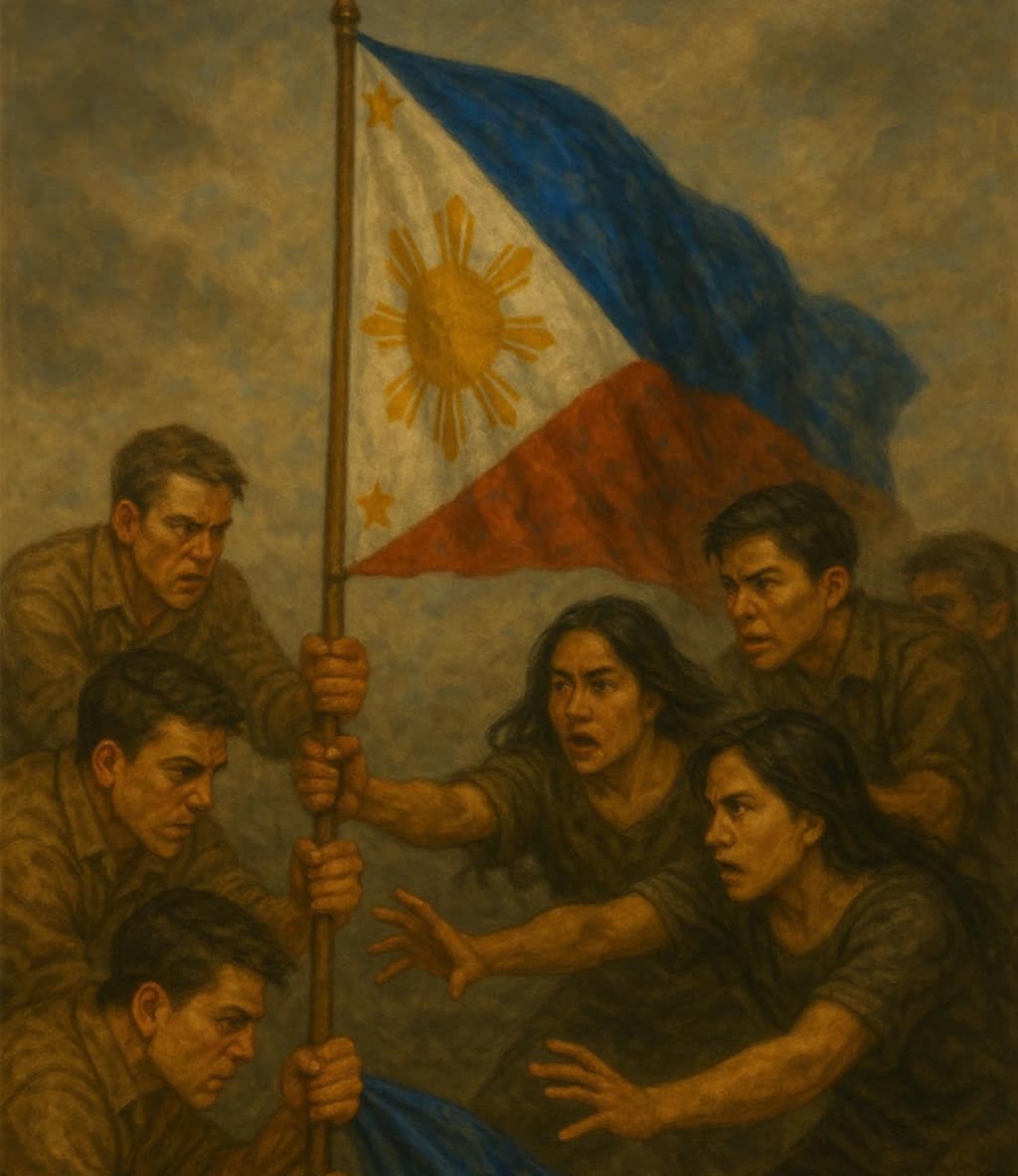
Kumusta Juan? Usap nga tayo sandali. May itatanong lang ako. Nakita mo naman siguro ang pamagat ng akda kong ito na nakasulat sa itaas. Iyan ang gusto kong itanong sa iyo. Totoo bang malaya ka na? Wala na nga bang sa iyo’y umaalipin? Wala na nga bang sa iyo’y pumipigil upang makamit mo ang mga pangarap mo sa buhay? Wala na nga bang sagabal upang marating ng bayan mo ang kaunlaran?
Syempre ang una mong reaksyon eh, “Ano bang tanong ‘yan?” Napaka-absurd! Obvious naman na malaya ka na dahil wala na ang mga Kastilang umalisputa’t sa iyo’y umalipin. Maging ang mga Amerikanong pumalit sa kanila ay matagal nang wala, pati nga base-militar nila’y pinalayas na natin ‘di ba? Napakatagal na rin namang tapos ang World War II at ang mga Hapon na nandito’y hindi mga sundalo kundi mga turista at mga asawa ng mga dating OFW sa Japan.
So, wala nang sagabal sa pag-unlad mo dapat ‘di ba? Kaya sasabihin mo bang malaya ka na? Wala na rin naman sa Malacanang ang mapaniil na diktaduryang Marcos. Kahit na nga ba alive and kicking pa ang aleng Imelda pero harmless na s’ya. Pero teka, ‘di ba Marcos din ang nakaupo ngayon, at may kapatid pa siya sa Senado na posibleng mamuno doon. Hala, pinsang buo pa pala niya ang nagpapatakbo ng Kongreso ngayon. Pero hindi sila ang kaaway at hadlang sa pag-unlad mo.
Kung gayon, kung hindi sila, eh sino kalaban at sagabal sa pag-angat mo sa buhay? Iyon bang nasa kabilang kampo… ang mga Duterte? Ay naku hindi rin. Mali ka t’song.
Hindi ang mga Marcos o Duterte at kung sino mang kumakampi sa kanila ang batong suong mo sa balikat kaya sa buhay ay hindi ka makausad. Hindi sila ang mga tanikalang nakakabit sa iyong mga paa kaya hindi ka makahakbang patungo sa mga pangarap mo… kung may pangarap ka nga.
Eh kung hindi sila, sino ang kaaway na hanggang ngayon ay umaalipin sa iyo kaya hindi mo masasabi na malaya ka.
Eh sino?
Nasaan siya?
Nakatira s’ya sa bahay n’yo. Isinusuot nga n’ya ang mga damit mo, medyas , at sapatos. Pati underwear mo! Pati nga pala toothbrush mo. Kumakain nga s’ya sa pinggang kinakainan mo.
Ano ulit kamo? Sino? Tatay mo? Nanay mo? Hindi kaya isa sa mga kapatid mo? Kuya mo? Engot! Ikaw iyon. Ang matinding kaaway mo ay ang sarili mo. Manalamin ka nang makita mo ang itsura ng totoo mong kaaway. Sige na humarap ka sa salamin.
Ayaw mo? Nahihiya ka! Ayaw mong aminin na ikaw mismo ang dahilan kung bakit hanggang d’yan lang ang narating mo. Ayaw mong aminin na ikaw ang pinakamatinding sagabal sa ‘di mo pagunlad at ng bansa mo?
O h’wag kang magalit sa akin. Totoo naman ah. Ano iyon? Hindi ka nagsisikap dahil kahit anong gawin mo ay hanggang d’yan ka na lang kasi hindi ka ipinanganak na mayaman? Na ang mga magulang mo kasi ay isang kahig isang tuka lamang. Tapos ano pa idudugtong mo? Na nasa guhit ng palad mo na maging mahirap. Na baka sirain lang ng bagyo o lindol ang ano mang bagay na ipupundar mo. Don’t give me that crap Juan! Ang sabihin mo hindi ka nagsisikap dahil tamad ka. JUAN TAMAD!
Tamad ka! Batugan! Iniaasa mo ang lahat sa iba. Aba’y hanggang ngayon eh nasa poder ka pa yata ng mga magulang mo. Baka ultimo pambili mo ng sigarilyo eh hinihingi mo pa sa nanay mo. Bakit ayaw mong maghanap ng trabaho.
Adik ka ba Juan… sa droga o ayuda?
Alipin ka ng katamaran mo Juan. Kaya h’wag mong sabihing malaya ka. At ‘di bale nga sana kung sarili mo lang pinuperwisyo mo. Kaso mo hindi eh. Pati ang bayan eh apektado. Ikaw ang sagabal kung bakit ang bansa mo’y gumagapang pa rin hanggang ngayon sa balag ng alanganin. Bakit? Oh come on Juan. Alam mo ang dahilan, h’wag ka nang magmaang-maangan pa. Batid mong isa kang modernong Hudas na nagkakanulo sa sarili mong bayan para sa halagang P500 o P1,000 (o magkaano man ang iyong tinanggap noong Mayo 12).Tuwang-tuwa ka sa ibinayad sa boto mo, pambili ng yosi at pangtoma. Pero ano ang kapalit? Hayun, maraming mga buwaya at linta ang nakaupo pa rin sa pamahalaan. Malabo pa sa burak ang asensong pinapangarap.
At pagkatapos ng eleksyon ano ang ginawa mo? Sa halip na kumilos ka para maabot mo ang iyong pangrap eh ano ang pinili mong pagkaabalahan? Ang pagkampi kay Marcos o kay Duterte? O baka sa ikatlong puwersang nanahimik pero nagsisimula na namang mag-ingay.
Anak ng tokwa, wala kang mapapala diyan. Bago ka kumabit kanino mang panig, unahin mo ang paghahanap ng pagkaing isasalpak mo diyan sa iyong bibig. Kaylangan ng katawan mo ng damit. Kaylangan mo ng bahay na masisilungan sa panahon ng tag-araw o tag-init. Mga iyan ang unahin mo. Tiyakin mo ring may pambili ka ng gamot kapag ikaw eh nagkasakit.
Sa halip na pagpapaunlad ng sarili mo at kabuhayan ang iyong atupagin eh pakikipagbangyan sa mga hindi mo kapanalig sa pulitika ang ginagawa mo. Makakadagdag ba iyan kahit singkong duling sa pitaka mong naghihingalo. Panay ang pagpopost mo ng mga opinyon laban sa kabila. Eh ano ba alam mo? Sigurado ka ba sa mga sinasabi mo? Nag-aral ka ba ng abugasya para magpahayag ka ng opinyon na may kaugnayan sa batas? Ano ba basehan mo sa iyong mga sinasabi? Mga sabi-sabi? Nag-research ka ba? At kung abugado ka man eh wala bang halong pulitika ang interpretasyon mo sa mga nangyayari? Hindi ba ikaw iyong tipo ng abugado na babaluktutin ang isyu pabor sa pinili mong panig… o sa panig na binayaran ka upang sayawin ang tugtog na gusto nila.
Hayaan nating Korte Suprema ang magpasya kung aling panig ang tama at legal ang ginagawa. Sila lang ang puwedeng gumawa niyan, hindi ang grupo mong kinabibilangan. Hayaan mong kasaysayan ang humusga sa mga politiko na sa tingin mo eh taliwas sa tamang katwiran ang mga desisyon. Hayaan mong ang mga abugado ng magkabilang panig ang magpingkian ng talino. Tumahimik ka dahil wala namang bilang ang opinyon mo.
Palayain mo ang iyong sarili sa walang kabuluhang pakikipagkagalit sa mga hindi mo kapanalig. Ako eh maka-Duterte, hindi ko itanago iyan mula noon. Oh kung ikaw eh galit sa mga Duterte eh dapat ba tayong mag-away. Hindi ba puwedeng irespeto mo ang paniniwala ko. Ano man ang dahilan ng panggagalaiti mo sa kanilang angkan eh igagalang ko yan. Bahala kang ma-stress sa galit mo sa kanila.
Ang problema kung makapanglait ka sa mga hindi mo kakampi eh akala mo perpekto kang tao. Kung makabatikos ka ng mga pulitikong kinasusuklaman mo parang wala kang bahid dungis. Kung makapangmenos ka ng mga taong hindi sumasangayon sa iyo eh akala mo ubong ka ng galing at talino. Brad, manalamin ka paminsan-minsan.
Palayain mo ang sarili mo sa pakikisawsaw sa away ng mga pulitiko? Inaalipin ka ng maling paniniwala na sa pagsali mo sa mga usaping ganyan eh makakatulong ka na magkaroon ng pagbabago sa atin lipunan. Diyos ko po! Gumising ka. Makakagulo ka lang. Hindi mo kayang baguhin ang mga politiko natin. Ang puwede mo lang gawin eh tiyakin na iyong mga karapat-dapat sa kanila ang iyong iboboto at… huwag kang magpapabayad. Iyong lang brad ang puwede mong gawin. Pero ginagawa mo ba? Hindi, di ba? Dahil nakakasilaw ang P500 o P1,000. Lalo na kung mahigit pa. Alipin ka ng kasakiman sa kaunting pera na iniaabot sa iyo tuwing eleksyon.
Sa halip na makisawsaw ka sa mga usaping pulitika eh unahin mo ang iyong kapakanan at ng iyong pamilya. Wala naman pakiaalam sa iyo ang mga pulitikong iyan. Ni hindi ka nga nila kilala. Asikasuhin mo na lang ang pagbabuti ng iyong kalusugan – katawan at isip. Iwanan mo ang politika, masyadong toxic iyan. Walang idudulot yan sa iyo kundi inis at away.
Pansinin mo Juan, kunwari lamang na umalis ang mga Kastila noon. Nandito pa rin sila’t alipin pa rin ang tingin sa iyo. Sila ang mga namimili ng boto mo upang paulit-ulit silang maupo sa pwesto at patuloy na salantain ang bayan mo.
Juan! Brad! H’wag kang magalit sa akin. Sinasabi ko ito dahil gusto kong magkasama tayong tahakin ang landas ng pagbabago. Ako man kasi’y kaylangan ding lumaya mula sa mga bagay na nakakasagabal sa pag-asenso ko. Ikaw, ako…TAYO, ang pag-asa ng bayan natin.
H’wag nating sayangin ang sakripisyong ginawa nina kuya Jose, Andres, Emilio, Marcelo, Gregorio at iba pang mga kuya natin. Hindi ko naman sinasabi na magpunta tayo sa Monumento at hiramin natin ang itak ni kuya Andres at pagtatagain ang mga natitirang Kastila na nagkukuwaring mga Pilipino. Ayaw kong maging mainitin ang ulo mo katulad ni Antonio, oo… iyong kapatid ni Juan, at pagbabarilin ang politikong sa tingin mo eh dapat nang sunugin sa dagat-dagatang apoy.
Juan, may isang linya sa isang kanta ni Michael Jackson na gusto kong ipaunawa sa iyo at gusto ko rin mas maunawaan pa… “If you want to make this world a better place, take a look at yourself and make a change.”
Kapag nagawa natin yan saka natin masasabi na malaya na tayo.
I was lost, in love’s all-consuming grace, Like Kama’s arrows, piercing hearts and minds. “Feel passion’s pull,” his gentle voice a trace, “Let love ignite, and leave the world behind.”
Rati, his consort, with beauty so divine, “Come, surrender to love’s deep, tender fire. Let desire bloom in your heart’s sacred shrine, In love’s embrace, you’ll find your soul’s desire.”
Saraswati spoke, her wisdom calm and pure, “Let love be guided by the mind’s clear light, For in true love, wisdom will always endure, And balance love with knowledge’s gentle might.”
But Shiva, with his power dark and vast, “Love is both creation and destruction’s reign. Through every trial, true love will always last, In sacrifice, your heart will bear the pain.”
And finally, from the lotus, Vishnu smiled,“ Love is the path, both simple and profound, In every form, in every heart, compiled, Love binds the universe, where peace is found.”
Why were the Nazis the only Whites who were made to account for the crimes they committed against humanity? There is also a need to consider past acts of slavery and the abuses, killings, and plunder committed by the White imperialist powers against the colonized people in countries they invaded as criminal acts. The Nazis committed their barbaric acts only for the duration of World War 2. Conversely, the White colonial powers perpetuated their brutality for centuries and yet got nothing, not even a slap on the hand.
The colonial powers and slave masters should acknowledge that they owe a debt to the descendants of the countries they colonized. There’s no way around it. It’s the only way that justice will be served. They must pay for the damages they caused. A way to quantify the debt for generations of exploitation, plunder, and enslavement must be devised. The colonizers must pay. More importantly, aside from financial restitution, they must also offer an apology.
However, convening in Geneva to establish statutes to retroactively determine the guilt of the practitioners of slavery and the White colonial masters is seemingly like Don Quixote fighting the windmills. Waiting for justice to be served, at least in terms of restitution and apology, is like Vladimir and Estragon waiting for Godot.
The victims of slavery and imperialism, like Don Quixote, are fighting against the insurmountable Caucasian forces hiding in their cocoon of denial and amnesia, and impervious to their pleas for justice. But unlike the delusional Don Quixote, the victims’ fight for justice is grounded in the harsh reality of the oppression they suffered at the hands of their colonial abusers. But the victims of slavery and imperialism could be like Vladimir and Estragon, endlessly awaiting the arrival of Godot, who never comes. The justice that should be given to them may never materialize.
Will the proud and mighty Caucasians of the world agree to indemnify and apologize to the victims of their colonial abuses? To hope that it will happen is more like waiting for Godot than believing that hope springs eternal. Those powerful white-dominated nations will never allow the passing of such measures if ever a convention for that purpose is held in Geneva or elsewhere in the world.
Instead of reparations for colonial crimes, the perpetrators justify their actions, asserting self-defense. They contend that they fought with and killed the native inhabitants of the countries they invaded because those people resisted. But why would they not? What else were they supposed to do when they were being enslaved, robbed, beaten, killed… and their daughters, sisters, and mothers raped? Would they be expected to say and do nothing? There are even arguments positing that colonial governments shouldn’t be condemned but rather compensated because they built roads, bridges, and schools for the people they colonized, as if that makes up for the crimes and abuses they committed. As if they didn’t exploit and force those same people to build those things and use those people’s own resources. As if they didn’t steal the natural resources of every land they took.
Colonizers claim that they brought prosperity to the countries they invaded. But what if it’s the opposite? What if, in reality, the resources the colonizers stole from their colonies through the violent subjugation of the Native peoples made their countries wealthy and progressive?
After a few years in the academe, a tertiary institution employed me as a school administrator. It necessitated my staying in an apartment away from my family during weekdays. I had no choice but to do the laundry myself. I decided to veer away from my grandmother’s strict orders to separate the white garments from the colored ones. I put them all together in the washing machine. When I did so for the first time, I recalled my grandmother’s stern warning, “You’ll be in big trouble with me if you do.”
That time was already the 21st century, and I thought that the world had become more aware of (and sensitive to) issues related to equality and racial discrimination. I thought that the world had embraced the doctrine of political correctness. I thought that people are trying to avoid language and actions that could be offensive to others, especially those relating to sex, gender, and race.
I was wrong.
I experienced firsthand how the monster called racial discrimination reared its ugly head. Such experience made me realize how deeply the injustice of colonialism and racial segregation had permeated societies, not just in America and Europe but all over the world.
That experience occurred when I applied as an English (ESL) teacher overseas and was unpleasantly surprised to discover that most universities in the countries where I hoped to work would hire only native speakers of English who were citizens of (guess what?) predominantly white countries. I had thought native speakerism was just gossip. How naïve of me not to believe what some of my friends said that preference is given to native speakers of English in the field of English language teaching overseas. Can I be faulted for thinking that the academe would be the last bastion of equality, justice, and meritocracy?
While the period of colonialism may have ended, neo-colonialism has taken its place. And I never thought that some universities have become their purveyors. Standing before the mirror at that moment, I was reminded that, yes, I am fully capable of teaching English, and I have the necessary educational qualifications, pedagogical training, and teaching experience. However, there is one thing I don’t have: fair skin. It made me think that even if I were a citizen of one of those countries predominantly populated by Caucasians, I might still not be hired by those universities because the unspoken standard is not citizenship—it’s the color of one’s skin.
What my grandmother repeatedly said when instructing the ones doing the laundry came back to mind: “Separate the whites from the colored fabrics.” Was I cursed because I did not follow her bidding? Should I have separated the white garments from the colored ones? Should I have treated the whites delicately? That’s essentially what those universities were doing. They were giving the Whites preferential treatment. It felt like a cruel reminder of the color of my skin… dark brown, almost black.
What hurts is the fact that the people in those universities who implement that discriminatory rule of hiring only native speakers of English to teach the language are Asians like me. Then I realized that the color of their skin is neither black nor brown. They belong to the yellow race, and their skin is almost white. White and yellow, both skins are fair. At that time, in my mind, neo-colonialism ceased to be just an abstract political term. I saw how alive it is in the structures that still marginalize people based on race and skin color.
The painful truth that many of the universities in those countries I hoped to work in would hire only native speakers of English from predominantly white nations, while overlooking my qualifications, is a stark reminder that colonial ideologies still shape opportunities and perceptions
*****
Just one more WHY?
When I was young, my mother told me that one day, when I grew older, I would understand why in America, colored people weren’t allowed to use the same toilets as White people. But here I am, a grown-up with graying hair that is supposed to symbolize wisdom, and still I do not understand.
Here’s my next why.
Why, after all these years, do we still see the same patterns of discrimination, hatred, and violence based on skin color?
What would I say to my children, or grandchildren, or any young person if they were to see the same images I saw before? Will I be able to sufficiently respond if they asked why people with dark skin couldn’t use the Whites’ drinking fountain?
What if, in the future, they see on social media the image of a person of color being mercilessly manhandled by a White person, like the photo of a White police officer (yes, a police officer) kneeling on the neck of a defenseless Black man, causing his death? Something that happened not centuries ago, when black slavery was at its worst, but one that occurred only a few years back. What will I say if they ask me why? Why do people like Derek Chauvin continue to exist, inflicting so much pain on the George Floyds of the world?
Maybe I’ll do as my mother did—nod, smile, and say, “Someday, my children, you will understand why.” But my fervent prayer to the Good Man above is that they never have to ask the same questions I did.” I hope they will live in a world where skin color no longer dictates one’s worth or opportunities.
I once had the opportunity to speak with three other married individuals. And yes, we discussed our married life and what we, along with our respective spouses, have been doing in our quest for marital bliss.
While we acknowledged that our respective partners are far from perfect, we also admitted to our own flaws and the possibility that they may be more mature and better people than we are.
When we think that we are a better person than the one we married, we could either be right or wrong. But marriage is not about who is the better person – the husband or the wife? It’s about how the couple complement their strengths and make up for whatever weaknesses the other one has – how they help each other overcome their imperfections. Marriage is about our willingness to accept our spouses for who they are.
In that conversation, we all agreed that the worst presumption married people could make is that their spouses are perfect. Assuming that the person we married is a paragon of virtue is a primary source of disappointment. Any person is a package of good and bad characteristics and attitudes. That’s the reality. One of the ways to attain marital bliss is to embrace both the positive and negative attributes of the person we exchanged “I do’s” with. We marry both the positive and the negative of a person. The reason there is an engagement period is for both parties to get to know each other fully. Eventually, agreeing to tie the knot means accepting unconditionally everything that both parties have discovered about each other in the process.
We also discussed expecting (or forcing) our spouses to think and behave the way we want, to change their confident attitude or tendencies that we perceive as negative. We discovered that trying to do so only frustrated us. Thus, we all stopped doing that at a particular juncture in our married life, and things got better. Our partners are unique individuals who became who they are as a result of their upbringing. We were educated differently, and we also grew up in different environments. It is highly unlikely that we will have the same set of values, mindsets, and perspectives. It is a matter of respecting our differences and figuring out what compromises could be made to preserve the marriage.
The greater challenge is that two of us in the conversation are married to foreigners whose cultures are entirely different from theirs.
Asking spouses to give up a particular vice is sometimes a marital issue, too. Luckily, the spouse’s vice mentioned in the conversation was only smoking, and it didn’t become a big deal between the concerned couple.
We admitted as well that while marriage is a bed of roses, hidden by the leaves in the stems of those roses are the thorns. We all have our share of ups and downs in our married life. So difficult were some of the challenges we faced that we almost ended up “untying the knots.” But in the end, we all found out that we had more and better reasons to stay with our spouses than reasons not to. We all thought the love between us and our partners was just too strong, enabling us to weather all the storms that stood between us and marital bliss. The bible says, “Therefore what God has joined together, let no one separate.” (Mark 10:9)
We also shared personal strategies to keep the flame burning between us and our spouses. Three common strategies emerged: finding the simple things that make our spouses happy, giving them space, and avoiding doing things that irritate them.
Determining what could put a smile on the face of our spouses is not rocket science. That is one of the first things we ought to know about our partners if we intend to be with them for the long term. Take note that it’s not always a material thing.
Giving them space is also essential. Our partners never want to feel as if we’re putting chains on their hands and feet.
Avoiding doing things that might anger our spouses is the most challenging thing to do. Disagreements between couples are simply unavoidable. However, any issue between spouses must eventually be resolved, and it should be done in a manner befitting mature adults. They cannot afford to allow quarrels, especially if they are petty ones, to go on for days. There is only one logical conclusion to a disagreement between a couple who love each other (and have no intentions of divorcing), and that is for them to kiss and make up. So, they’ve got to do it as soon as possible.
Two of us in the conversation are men. I expressed the belief that it will not be too much for a man to always initiate the kiss and make-up process. It doesn’t matter whose at fault – him or his lady. That’s what real gentlemen do.
One of the ladies added, “In addition to love, the husband and the wife need mutual respect.”
I said that I couldn’t agree more with what was said. At that point, I shared my personal strategy for a happy married life. I have set a personal goal and am exerting my best efforts to achieve it – to make the lady of my house feel loved, needed, and respected. The preceding words enclosed in parentheses are included among those that I recite when doing my daily positive affirmations. I swear to God it works.
We all agreed at the end that what could help attain marital bliss is for both husband and wife to make each other feel special – that the man should not think that the courtship ends when the wedding bells stop ringing. The woman should try her best to look beautiful in the eyes of her husband every day in more ways than one.
I was consumed with hatred’s burning flame, like Juno’s fury, scorching all in sight. “No peace for you,” her voice a cry of shame, let vengeance reign, and make your world ignite.”
Mars appeared, his armor dark as night, “Come, battle on, in war’s eternal haze. your fury’s fuel, the blood, the sword’s delight, in conflict, find your solace, let it blaze.”
Venus, in her grace, then softly spoke, “Let love subdue the beast that rages loud, for in your heart, hatred will only choke, and peace shall lift you from the furious crowd.”
But Pluto’s grip was cold, his eyes so grim, “Hatred is mine to carry down below. In death’s embrace, the light will start to dim, let anger fall, and darkness will bestow.”
And finally, from atop Olympus’ hill, Minerva’s wisdom whispered through the breeze, “Leave vengeance now, for calm can heal the ill, let knowledge guide you, bring your soul to ease.”
Entangled follows the lives of Christian and Patrick, two Filipino expatriates working in another country. Both are married and lead seemingly uncomplicated lives—Christian works as a factory worker, and Patrick as a company driver. Though they share a deep friendship, their relationship is one of contrasts. Christian, an open book who frequently shares his struggles and misadventures, contrasts with Patrick’s more reserved nature. While Christian confides in Patrick about his difficulties, Patrick prefers to keep his life private, shrouded in secrecy.
Christian is at a crossroads. After years of infidelity, he feels the weight of his actions and decides to end an affair back in the Philippines. Fearing the loss of his wife, Missette, he resolves to mend his ways and rebuild his family. However, as Christian struggles to follow through on his decision, he is drawn into a deeper web of lies and betrayal.
The plot thickens when Christian, attempting to help his son with schoolwork, uses a remote access app to assist with online assignments. This seemingly innocent act reveals more than Christian bargained for. As Christian navigates the digital world, secrets begin to unravel, and he faces uncomfortable truths about those closest to him.
The play explores the complexities of trust, loyalty, and the impact of modern technology on relationships. Entangled uncovers the fragility of human connections, revealing how hidden secrets can be unearthed with a button. In a world where communication is constant, yet meaningful connections remain elusive, Christians must come to terms with the consequences of their actions before everything they value falls apart.





 M.A.D. LIGAYA



 M.A.D. L I G A Y A