KAMALIG

barnMalakas ang hangi’t madilim ang langit
Parating na bagyo handang humagupit
Kaya’t sa likod-bahay ika’y sumaglit
Pumasok ka’t silipin ang ‘yong kamalig.

May imbak ka bang palay na babayuhin,
Kapag naubos na bigas na pang-saing?
May sobra ba na puwede mong kalakalin,
Kung biglaang pera’y iyong kakaylanganin?

Sa kamalig ba ika’y may isinusksok
Upang kapag nagipit may madudukot
O nang umani ka lahat ay inubos
Pinagbilha’y winaldas, lahat ginastos.

Diskarte mo’y ayusin, huwag kang bulaksak
Sa kamalig mo matuto kang mag-imbak
Nang sa ganoon ay handa kang humarap
Kapag dumating pagsubok na mabigat.

Sana kung may panahon upang magtanim
Sikapin mong palagi lupa’y bungkalin
Batid mo namang ikaw ay may tungkulin
Tiyaking bukas may bigas kang isasaing.

Diligin ng pawis ang iyong pananim
Nang sa ganoon marami kang anihin
Maaani’y ‘wag kagyat lahat kainin
Magtira’t sa kamalig doo’y ipunin.

A Test On Self-reliance

1_MI6MyiERSjPzPbXSjmgqbw

There’s no better time to discuss this subject – self-reliance – than now that a health crisis is fiercely challenging the indomitability of the human spirit. As I emphasized in a previous essay, humans have always been the apex predator. Then came COVID-19. These microbes predate on us and suddenly we are made to play an unfamiliar role – that of the prey. Much to our chagrin, we have become the game of these microscopic parasites.

The coronavirus has put us to a battery of tests. We miserably flunked the first one – the test of preparedness. We were not ready when this deadly pestilence came. The statistics on infections and deaths clearly show that. Not that nobody saw this current pandemic happening. Many did but the alarms they sounded were either not loud enough or fell on deaf ears. We are now paying the price of our unpreparedness. We now have to bear the consequences of our complacency.

The next test is adaptation. COVID-19 is also testing our ability to adapt. This we cannot afford to fail. To adapt is the  only option we have now, at least until we have both cure and vaccine against the deadly pathogen. If we won’t, we perish.

Surviving the pandemic is the goal of adaptation. It is a personal responsibility. Each individual has to make a choice – take all the necessary precautions or naively say “come what may.” There are people who chose not to follow science-based  protocols set by the authorities to prevent possible infection. Should they get infected, they only have themselves to blame. God forbid that in their stubbornness and ignorance, other people, particularly their loved ones, would also suffer.

Surviving means not only avoiding getting infected but staying afloat in the dire conditions created by the onslaught of the deadly virus. It is not only a matter of  steering away from the deadly path of this infectious disease but also coping to the situations that emerged from its trail of destruction.

Overcoming the difficulties and challenges we are now facing  because of the pandemic require  all forms of toughness – physical, emotional, mental, and spiritual (for those who, like me, believe in God). We may also need all the help we could get during these times.

But what if nobody would help? What if we only have ourselves to rely upon in order to survive? Can we shift our gear to self-reliance if we need to?

That’s the next test and perhaps the most crucial – the test on self-reliance.

When governments of affected countries had to implement extreme measures including declaring lockdowns, all socio-political  and economic activities grinded to a halt. People were forced to stay at home and couldn’t go to work to earn a living. Many got worried, particularly the breadwinners, because they had mouths to feed and bills to pay.  Lucky were the citizens of some countries who were given economic assistance  by their governments. Some governments don’t have the capability to do the same. Luckier were those who live in very rich countries whose pockets are very deep.  But were the dole outs provided by those holding the reins of government sufficient? Are the financial resources of even the wealthiest among nations unlimited that no matter how long it will take for the COVID-19 threats to dissipate they would be able to provide the needs of their people?

The next question we have to answer is – “Are we supposed to just rely on the relief package that our respective governments would provide?”  Here’s another – “Are we going to put our fate and that of our families in the hands of other people when situations like the current health crisis occurs?”

What if the coffers of our governments run dry? What if the usually generous countries would decide not to send aids to other countries because they would want to prioritize the needs of their own citizens? What if the philanthropists and their charitable organizations have nothing more to give? What if we have no friends, relatives,  and loved ones who would (and could) give us the assistance we need? What if we only have ourselves to rely upon because everyone else have their own problems and concerns?

Yes, when COVID-19 cases started to go down some countries lifted (or eased down)  their quarantine measures, economic activities resumed, although in a limited scale only. But as soon as that happened, as soon as more people and more people ventured out of their houses and  started moving to and fro for whatever reasons, statistics on infections and deaths  started to surge again.

So, in light of the aforementioned, what should the governments of concerned countries be doing? Would they choose to preserve the lives of their citizens or resuscitate their dying economies? Should our leaders choose the former, we go back to square one. We go back to being confined in our homes and not capable of earning a living. We go back to relying solely on the support from our governments. That is, if  they still have the resources to distribute to us.  But what if they have nothing more to give?

It is our moral obligation to put ourselves in a position that when everything else fail, we can at least have ourselves to rely upon and that we have sufficient resources to draw from come rain or shine. We should be thankful if our government, our neighbors, our friends, or our relatives would offer help during difficult times but it is our duty as a person with dignity to work smart and hard enough to ensure that even without the help from anybody we (and those who rely on us) will survive.

We have all spring, summer, and fall to prepare for the winter. We should not spend the first three seasons just watching the buds in branches of trees  become leaves  until they become dry and shriveled then fall to the ground. Till the land. Sow the seeds of the kind of crop you want to reap. After the harvest, don’t eat everything. Save some for the winter. Make sure that you saved enough in your barn in case the winter gets longer than usual.


The Price of Unpreparedness

coronavirus_and_economy_3543035The  coronavirus is still wreaking havoc and there are no signs it’s stopping soon. Humanity’s resilience is being tested to the hilt.

 The deadly pathogen  arrived swiftly and stealthily like the proverbial thief in the night stealing lives and ruining dreams.  Like a powerful earthquake, the COVID-19 crisis struck violently and shook  the foundations of  our socio-political and economic institutions.  If the shaking does not stop soon,  the said institutions might collapse with us trapped under the rubbles.

The COVID-19 pandemic is an unfolding tragedy affecting the whole world. Pandemics, like other  disasters and tragedies, natural or man-made, are inevitable. They happen when they happen. Some of them can be predicted by science, but some are hard (if not impossible) to predict.

Like an  earthquake, a pandemic cannot be predicted. We know that both may occur but it is difficult (if not impossible) to predict when or where. All that humanity can do is to prepare in case they do happen. The question we should ask now is – Were we ready when the current health crisis broke out? Unfortunately we were not! The coronavirus caught the world with its pants down.

We were sufficiently warned by scientists and epidemiologists. Papers were published and  books  were written about the possibility of a pandemic as deadly as the coronavirus  occurring. The Swine Flu, Ebola, MERS, and SARS, all happening during the first 20 years of the 21st century  were telltale signs that outbreaks of infectious and deadly diseases are happening more frequently. They were all ignored and humanity is now paying the price for not heeding the warnings.

It wasn’t information we lacked but something very basic for surviving calamities (or at least lessen their damage) – preparation.

For earthquakes, we usually conduct earthquake drills to at least learn what we should do should an unpredictable earthquake occurs. What about with pandemics? What preparations did countries put in place for infectious and deadly diseases? With the way the coronavirus events unfolded in different parts of the world,  it is accurate to say that not a semblance of preparation was made… except probably in South Korea.

Experts explained that South Korea’s efficient response to the coronavirus crisis was informed by their experiences and the data they gathered from the country’s MERS outbreak in 2015. The National Geographic reported that in the immediate aftermath of the outbreak aforementioned, the country’s lawmakers laid out the legal foundation for a comprehensive strategy for contact tracing. This is crucial in containing the virus and in preventing further spread. They amended an existing law that gave their health authorities the power to collect private data from both confirmed and suspected patients even without warrant.   They also built up their diagnostic testing capabilities.

The South Koreans were, somehow, prepared. They had a plan should another MERS occur. Probably, the rest of the world had none. The South Koreans and their leaders knew what to do while the rest of the world was clueless as to how to deal effectively with the pestilence.

The South Koreans learned their lessons from a previous disease outbreak (MERS). This time they were prepared. Conversely, the US and most European countries have seemingly forgotten about the 1918 Spanish flu.  Perhaps because that was a century ago. They (and other countries) assumed that just like  the Swine Flu, Ebola, MERS, and SARS, any other outbreaks could easily be put under control. They were all wrong. The coronavirus is a testament that “assumption is the mother of all f*** ups.”

Benjamin Franklin once said, “If you fail to plan, you are planning to fail.”  The citizens and leaders of his country learned this the hard way. The US owns the dubious distinction of the country with the most COVID-19 cases and deaths.

The US and other wealthy European nations being rendered seemingly helpless  by this deadly pestilence is an irony. The said countries are among the wealthiest in the world (with the US on top). They   also have the most advance science and technology and the  most number of Nobel Prize winners in Medicine and Chemistry. So, what happened?

The answer is simple – they were not ready for the onslaught of the coronavirus.

The deaths and sufferings we are witnessing in different parts of the world are the price we pay for our unpreparedness.

Links to other articles I wrote about COVID-19.

The Challenges of Online Teaching – 1

After a semester of online teaching, teachers can now be asked which one they would prefer when classes resume after the summer break – to teach online or face-to-face.

Answers may vary depending on what kind of experiences teachers had during the recently-concluded spring semester or how seriously they carried out their pedagogical functions when their respective schools decided to deliver learning through the online platform.

Having gone through what I have experienced during the spring semester, I have much to say about online teaching. I could sum them up in one word – challenging. If I want to I could also say which one I would prefer when the fall semester begins –  online  or face-to-face teaching? But I wouldn’t for  it won’t matter. Why? Because whether  schools would still do online teaching or go back to the classrooms for traditional classes is not contingent upon which one the teachers (or even the students and school officials) prefer but what their  government leaders would tell the academic community to do based on the status of the current pandemic.

So, if the marching order is for me to teach online, I should follow – the way a good soldier would. The question to ask therefore should not be whether the teachers prefer to teach online or in the classrooms. The “essential” question is whether or not they are ready should the situation next semester warrants  that for the safety and well-being of everybody, most especially the students, they should teach online again.

When the current school year started, many teachers were probably caught by surprise when out of the blue their schools announced that classes would  be held online. Nobody saw the coronavirus coming. By the time COVID-19 started spreading in different parts of the world, schools already had plans laid out for this school year. Such plans were changed factoring the effects of what eventually became a pandemic.

The academe was left with not choice but to switch to remote learning.

Now, let’s answer the following question: Did the teachers really have only a few weeks to prepare for online teaching?

I don’t think so!

They had all the time in the past.

In one of my previous essays about online teaching, I asserted the following:

“With or without COVID-19, the ability to use technology in  the classroom – to apply all available technology resources to education – is something that teachers should have trained themselves to do a long time ago. The use of technology has become an integral part of being a 21st century teacher. There’s no way out of it. Schools should have made it a basic requirement for the teachers they hired. The abilities to create, evaluate, and effectively utilize information, media, and technology are  required 21st century skills. Teachers are expected to possess them.”

Take it from HG Wells – “Adapt or perish, now as ever, is nature’s inexorable imperative.” The landscape of education is very dynamic, it keeps changing. Most of the changes are driven by advances in communication and information technology. Teachers will be doing their profession a disservice should they not adapt. 

Based on what I have personally experienced, online teaching is very challenging. I actually consider it more difficult than teaching in the classroom.

Remember that online teaching will test not only the extent of your accumulated knowledge and skills in communication and information technology but also how you incorporate such knowledge and skills in pedagogy, in the major activities that teachers do – planning, instruction and assessment.

Online teaching is not only a matter of learning how to use video conferencing applications. Video conferencing is only the tip of the iceberg called online teaching. As I emphasized in another essay –  “Online or otherwise, when you are a teacher, you should teach. You ought to find a way to achieve the objectives of the course/s you are teaching, cover the topics enumerated in the syllabus, motivate your students, discuss the lessons, give assignments, and evaluate learning.  It will definitely test the limits of your creativity, resourcefulness, and patience.

Why Do I Write?

Why do I write?

Is it to impress?

I don’t write to impress. I’m well aware of the fact that my writing skill is nowhere near excellent. It seems to me that I am not even halfway my journey to excellence in writing. But I am sure I’ll get there before I breathe my last. Right now, I am still inside the “room for improvement.” 

Let me go back to the question – Why do I write?

Do I write in the hope that I earn money and become famous?

Not even!

Becoming famous and earning money are not my primary reasons for writing. Of course I need money. It’s hypocritical to say that I don’t like to have additional numbers to the farthest north of the first digit in my bank account.

But can writing earn you money?

Writing is very financially rewarding especially if you are a script writer of one of the popular TV networks or movie outfits in your own country or a novelist who belongs in the league of the likes of J.K. Rowling, Dan Brown, and Stephen King.

Yes, I am also earning from writing. It’s actually my secondary source of income. I got paid for some of the articles/papers I have written. When I began writing when I was young, I did not expect that someday it would be an extra income source. I used to think that “there’s no money in writing.”

The university where I am currently employed offer cash incentives to professors for research works published in international (indexed) journals. The university also gives honorarium  for articles  contributed to the school’s publication in English.

I wouldn’t pass up the opportunity to hone my skills as a writer and researcher, to possibly add to the sum of existing knowledge, to have my works read, and to even earn extra money in the process. So, I have been publishing papers in international journals and contributing articles to our university publication. In addition, I have been doing it (the publication of research papers) because university professors are supposed to publish.  Our university is not requiring us but I consider publishing as a “professional obligation.”

Once in a while, some individuals would also commission me for writing jobs. There were times I did it for free. There were also times that I was promised remunerations for what I wrote but didn’t get any. I was also duped once by an online news organization who did not pay me a single cent for the articles I wrote for them.

I consider the cash incentives as my reward for doing what I love doing – WRITE.   But it’s not all about the money. The money is not the reason I write.

The rewards that writing gives, for me, are hard to quantify. Such rewards are transcendental. That’s not me trying to sound philosophical. That’s just the way I feel about it.

What about fame? What about the accolades? Are those the the things that inspire me to write?

NOPE!

As a matter of fact, when I write and allow people to read my works I am unnecessarily putting myself under the microscope. I am putting myself in the line of fire if among my readers there are unforgiving members of the grammar police who wouldn’t hesitate to shoot on sight anyone whose spoken and written English are perforated with errors in grammar. When they start firing you can not hide. My missing the comma between the words “firing” and “you” in the previous sentence is something they could not miss.

So, instead of accolades I may get negative comments.  This is the reason, a friend said, that he would never write for any publication or post any of his writings on any of the social networking sites. He is afraid he may not  be able to take negative comments. He added he fears committing errors  in grammar. He considers it embarrassing to be corrected for such mistakes.

In my case, criticisms and corrections are welcome. I won’t die if criticized and corrected. As a matter of fact, I have already received a lot of those and here I am – still alive and kicking. I don’t mind if somebody calls my attention for mistakes I committed.  Just break it to me gently and constructively.

The reason erasers were invented and keyboards of computers have backspace and delete keys is…  nobody’s perfect.

I keep rereading my stuffs in this website to correct possible errors and to improve them.

People may read or disregard what I write. If they do read, a million thanks. If not – no hard feelings. And for having reached this far into my essay, I want to say thanks to you.

I may have received some good comments from  my  friends  for  some    of my writings  in the past.   But of course,    those   comments may have   been   either meritorious or simply generous. Sometimes there are people who give positive and encouraging compliments. Thanks to them.

But aside from good comments some of my works have also angered some individuals who were offended thinking that what I wrote pertained to them. Writing sometimes is a magnet for trouble. How many journalists around the world have been killed (and ostracized) for articles they have written?

I remember quite well when I wrote a satirical poem in Filipino (about a wolf in sheep’s clothing) when I was working in a Catholic college. The parish priest who felt alluded to (and I was really alluding to him) reportedly asked the Sister-President of the college, my superior, to summon me to the latter’s office so he could talk to me about what I wrote. However he was dissuaded from pursuing his request. But even if he was able to convince the President and the College Dean then, I wouldn’t see him. Why? That poem I wrote and my act of writing it had nothing to do with my employment. My being a writer has no personality and office that could be connected to any of the lines that run vertical and horizontal in our organizational chart. In short, the priest had no authority over me. The priest never bugged me again but I wrote another poem for him (Habit and Habit).

My quatrains (in Filipino) are the ones that brought me some colorful moments. I have lost a friend or two (or is it three… perhaps more) for the quatrains I have posted in a social networking site. I once wrote a quatrain and a friend liked it. Almost a year later, I re-posted the same quatrain and surprisingly the same person who previously liked it was angered and gave me a mouthful. We’re very good friends so we talked about it. He understood, apologized, and we both forgot about it since then.

Also, my writings where my political beliefs are in full display had me losing very dear friends.

So, why do I write then?

Is it for the “likes,” “reactions,” and compliments I get when I have those poems, stories, and essays posted in my social networking accounts or in this website?

Not also.

Of course those things make me happy and I am so thankful for those friends who take time to read my works then reacted and commented on them.

Then, why? Why do I write?

It’s hard to explain. It’s  something like a combination of the answers to the following questions:  Why do people need to eat when they are hungry? Why do they need to drink when they are thirsty? Why do they need to take medicine when they are sick? Why do they have sex? Why do they laugh and cry? Why do they love and hate? Why do they dream and despair? Why do they live and die?

There is a kind of hunger within me that only writing can satisfy. There’s an insatiable thirst in my soul that would go away only when I read what I write. I suffer from a very mysterious illness that goes away only when I write in sentences or verses  the equivalent words of the thoughts and feelings that drown me during quiet moments in my life.

Writing is my endorphin.

I must release my pain, anger and disagreement by writing about them or else they will haunt me endlessly. When I feel wronged I have to respond, not by violent means. I respond in a creative manner – through poems – sometimes satirical. I do it usually using anthropomorphism.

If the spirits of William Shakespeare and Elizabeth Browning I could not summon through the glass to inspire me to express in poetry whatever I wish to say then I turn to Francis Bacon and Michel de Montaigne’s way of capturing into words – essays – whatever it is that I wish to convey. If I don’t wish to be so direct with my points and would like to hide my feelings and thoughts between lines and behind symbolism then I walked the path that Edgar Allan Poe and Guy de Maupassant paved. I write stories.

I just don’t keep quiet when I notice human follies displayed by my loved one, friends, and other people around me. Again I resort to anthropomorphism. I use animals to represent their irrationality. It may hurt them and make them angry but the truth may be bitter but sweeter than the sweetest lie. VERO NIHIL VERIUS. Nothing is truer than the truth.

This is not saying that I am a perfect human being. I am as imperfect as anyone else and may have, perhaps, done more terrible things. Thus, the satires I wrote are like boomerangs. They sometimes hit me also.

Pain is like a prison cell. It is by writing that I break free from that hell. As my heart churns out the words, I go through the pain, feel it,  not escape from it. And as I write the final sentence or verse, as I put the final punctuation mark, the pain vanishes.

Even my happiness and satisfaction wouldn’t be complete if I do not write about them. I need to  capture in either prose or poetry those moments so I can feel more deeply the joy they bring. I do write about  them so I can relive those moments any time I wish to.

I need neither material rewards nor accolades for what I have written (and will be writing.) The essays, plays, poems, research works, and stories I create are themselves the rewards. I love and treasure them.

A picture paints a thousand words. Prose and poetry provide the caption that make the picture complete.

I write  not to impress but rather to express my thoughts, feelings and ideals. Writing is my freedom, my happiness.

SCRIBO, ERGO SUM. I write, therefore I am.

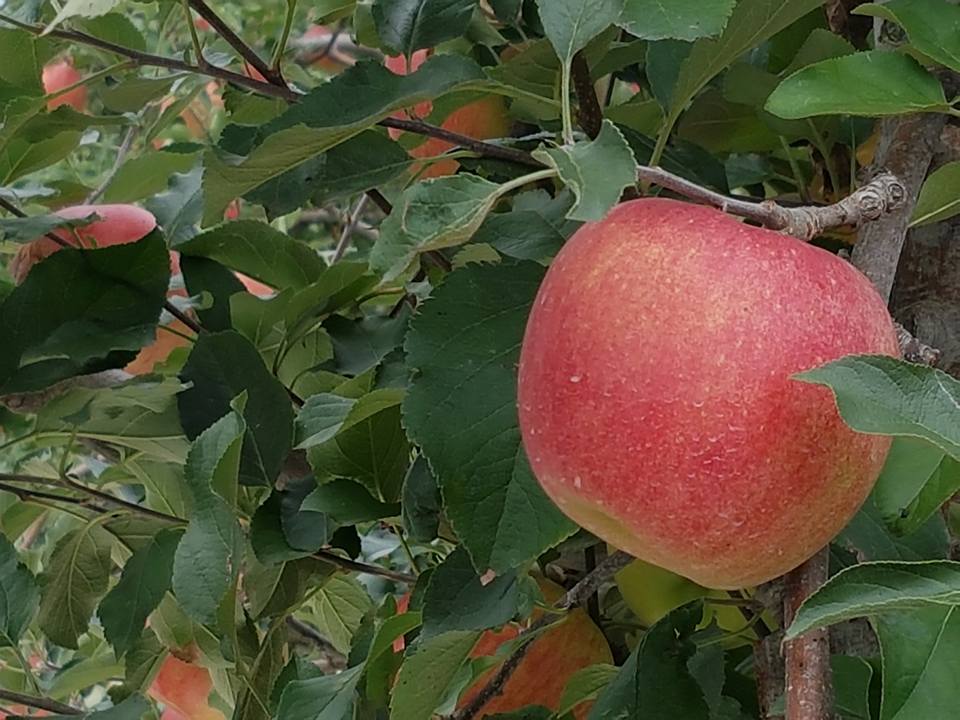
Ako’y Hinog Na

22308827_10155714833364844_4940550963316553665_n

Ika’y nagbantay,
Matyagang naghintay.

Sa wakas, ako’y nahinog.
Hinog na hinog!
Pagmasdan mong mabuti ang aking alindog.
Hayaan mo munang mata mo’y mabusog.

Ika’y lumapit.
Di ba’t ako’y walang kasing-kinis?
Batid mo nang ako’y ubod tamis.
Batid mo ring ako’y makatas…
na ako’y walang kasing-sarap.

Halina.
Lapit pa.
Hawakan mo ako.
Hinay-hinay lang.

Ako’y hinog na.
Hinog na hinog.
Ako’y haplusin,
Dahan-dahang pitasin.
Amuyin…
Kagatin…
Gutom mo’y iyo nang pawiin.

Spot the Difference