The Extra Mile Teachers Walk

Search any site on the Internet for the highest paid professions in the world and you will not find “teachers” in the top 30. Expand your search and look for the list of professions in different countries where the practitioners receive the best compensation packages and you will find out that teaching is not among them. You will not find a country where teachers are ranked among the highest money-earners.

Teaching not classified among the highest paying jobs, of course, is not surprising. That has been the case since time immemorial and it is not expected to change anytime soon. However, insufficient remuneration does not deter teachers from performing the role they have embraced. Such is only one of the steps in the extra mile that teachers need to walk when they have accepted that teaching is not merely a profession but a vocation. It is not merely a job to perform but an obligation to carry out.

Acknowledging that teaching is not merely a job but an obligation to carry out is what makes teachers go the extra mile, to do what is more than required in the performance of their tasks, including sacrificing personal resources…sometimes happiness. Teachers know the nature of the responsibility that they agreed to fulfill when they signed up for the job. They know it’s not easy. How in the world would one consider being responsible for the education of other people, especially the young ones, easy? When did it become easy to facilitate the acquisition of knowledge and values and the development of skills of your fellow human beings?

If only pay would be commensurate to how significant is one’s job in the enlightenment of the soul, the preservation and enhancement of the fabric of society, and the socio-economic development of a nation then teachers would get paid handsomely.

But it is what it is. Teaching is not a profitable profession. Realities teachers confront in the academe could really make them say a lot of things in the “present unreal conditional” form. There are times that they couldn’t also help but make a “wish-statement” like “I wish that I were a health care professional.”

Why?

Health care professionals (physicians, surgeons, anesthesiologists, dentists, etc.) consistently round out the top 10 in the lists of highest-paid professionals.

What they (the medical practitioners and their fellow health workers) do, maintenance and restoration of  good health is very important. For that, they deserve the pay they get, most especially during this time that the coronavirus pandemic is still raging. But nurturing the human spirit…helping a person achieve holistic development is as equally important, if not more important. What professional endeavor could be more meaningful than helping your fellow men achieve their full potential for them to become responsible human beings and productive members of society?

And not only are the teachers not getting the pay commensurate to the importance of the work they do and the effort they need to exert when doing their job, but they don’t also get the recognition they deserve.

American society, for example, does not generally view teachers in the same way, as they view other professionals; the belief that “anyone can teach” is not found in other professions (i.e., not just anyone can play professional baseball, or be an accountant or engineer, or practice law or medicine.)1

Such is the indifference teachers, as professionals, are getting.

How true is the contention that “anyone can teach?” Those who know what it takes to become a teacher would say it is a fallacy.

Education is not just a matter of whether you can teach or not but also whether or not you can make the students learn. Even if a person is an expert in a field of learning it is not a guarantee that he can teach what he knows. Knowing something is different from knowing how to teach it.

Hiring just anyone to become a teacher would be a huge mistake. Hiring somebody to teach a language just because he or she could speak that language  is a huge mistake. It takes a lot to become a teacher. Teachers undergo rigid training for them to hone their pedagogical skills. They read a lot knowing that teaching and learning are both grounded on Philosophy, Psychology, Sociology and other related fields. They know they need to be familiar not only in their field of expertise but with different principles and strategies to effectively deliver learning and teaching. They know that when they are done teaching they still have to evaluate the learning.

The list of the things that teachers need to know and to do is long. At the end of that long list are two characteristics that teachers need to develop if they wish to succeed in the profession – PASSION for their work and COMPASSION for the students.

How then in the world it becomes possible that just “anyone can teach?”

Be that as it may, teaching will forever be a NOBLE PROFESSION! Nothing can diminish its intrinsic value.

One thing is for sure, all successful professionals in the world – business executives, lawyers, architects, engineers, surgeons, physicians, dentists, nurses, brokers, etc. – know that their teachers contributed a thing or two into whatever they have become.

———-

1 Tichenor M.S., Tichenor, J.M. (2005). Understanding teachers’ perspectives on professionalism. ERIC.

Ang Tatlong Salaan Ni Socrates

Karamihan sa atin ay kilala ang Griyegong pilosopo na si Socrates. Pilosopo na hindi pabalang at baluktot ang pangangatwiran kundi isang pantas sa pagmamatwid.

At tunay ngang hindi baluktot kung mangatwiran at hindi balikong mag-isip si Socrates sa dahilang bago niya paniwalaan ang isang bagay ay bubusisiin muna niya ito’t pag-aaralan. Gaano man ito kasimple o maaaring sa iba ay wala namang kuwenta at hindi na kaylangan pang pagaksayahan ng panahon upang surii’t sisiyasatin.

Ang ganitong pananaw ni Socrates minsan ay nasubok nang isang araw ay may lumapit sa kanya’t sinabing, “May sasabihi ako sa iyo. May nabalitaan ako tungkol sa isa mong kaybigan.”

Tayo ba, ano ang gagawin nati’t sasabihin kung biglang may nagbulong sa atin ng ganyan?

Kadalasan na ang isinasagot natin eh ganito, “Ow talaga! Ano iyon? Sino ba siya? Sige ikuwento mo nga.” Sana mali ako.

Pero, iba si Socrates. Ito ang isinagot niya sa taong nagbulong sa kanya niyon.

“Teka muna. Bago mo sabihin sa akin ang alin mang bagay tungkol sa ibang tao ay hayaan mong gamitin ko muna ang aking tatlong salaan.”

“Salaan? Tatlo?”

“Tama ka… tatlong salaan.” Ang sagot ni Socrates.  “Kaylangang salain muna natin ang ano mang bagay na paguusapan natin tungkol sa ibang tao. At tatlo ang salaang ginagamit ko pagdating sa ganyang bagay.”

“Sige. Ano iyong una?”

“Ang una ay ang salaan ng katotohanan. Ang tanong, sigurado ka bang totoo ang sasabihin mong iyan sa akin?”

“Ah. Hindi eh. Kasi nadinig ko lang. May nagsabi din lang sa akin.”

“Oh. Ganoon ba!? Hindi mo pala sigurado kung totoo nga ang gusto mong sabihin sa akin. Siya… sige. Sa pangalawang salaan tayo. Ang salaan ng kabutihan. Iyan bang sasabihin mo sa akin tungkol sa kaybigan ko ay maganda o kaya’y mabuti?”

“Ay hindi. Kasiraan nga niya ang bagay na sasabihin ko.”

“Ibig mo sabihin may sasabihin ka sa akin na kasiraan ng isang tao at hindi mo sigurado kung totoo ito?

Tumango, ngunit tahimik, ang kausap ni Socrates.

Sige… gamitin natin ang pangatlong salaan. Baka naman dito eh pumasa ka. Ito’y ang salaam ng kahalagahan. Gaano ba kahalaga iyang sasabihin mo sa akin? Magagamit ko ba iyan? Makakatulong ba iyan sa akin? Dagdag kaalaman ba iyan na magagamit ko sa ano mang bahagi ng buhay ko?

Hindi na nagsalita ang kausap ni Socrates. Yumuko na lamang ito.

“Malinaw na sa akin. Ang sasabihin mo ay hindi mo sigurado kung totoo at ito’y hindi pa maganda. Wika mo nga kasiraan iyan ng kaybigan ko. At kung totoo man iyan eh ano naman ang halaga niya sa akin? Hindi naman pala makakatulong?. Eh bakit kaylangan mo pang sabihin?”

Tikom ang bibig, umalis na lamang ang kausap ni Socrates…

The Business Venture Called Politics

How many of the incumbent local and national officials in the Philippines (and also in your own country) can come forward and with  heads held high say that they did not buy their way  to  victory?

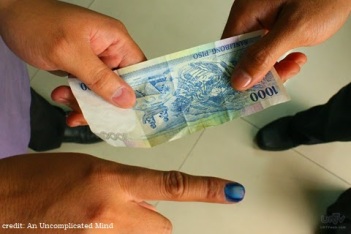
The painful truth is that elections have turned out to be a business venture. Politicians are like businessmen who if they hope to win must be willing to make an investment. And the investor in the politicians would expect a profit, not just a return on investment.

How much should a politician invest? Do the math.

According to the Commission on Elections, the number of registered voters for 2022 polls hit 63 million.

Last year (2020), the House of Representatives approved House Bill No. 6095 amending provisions of RA No. 7166. The bill provides that those running for President and Vice President can spend up to P50 per voter for their campaign. That used to be P10 per voter. From P3, senators, district representatives, governor, vice governor, board members, mayor, vice-mayor, and councilors are now allowed to spend up to P30 per voter. But those who were not born yesterday know that candidates for national and local elections spend way much beyond what the laws allow.

Beyond what the statutes allow, a candidate has to dig deeper into his pocket if he hopes to win. Vote-buying is no longer a secret making this writer say that election now is nothing but a business venture. It is no longer the best and most qualified candidates getting elected but the ones who have enormous financial resources.

A candidate willing to pay at least P500 for every voter is likely to win. The percentage for winning gets higher if the one seeking an elective position has the capacity of making that amount higher… like P1000 to P2000 for each vote.

Now, do the Math if you wish to know how much a candidate needs to prepare for his election bid. Include the amount needed for campaign advertisement, salaries of campaign leaders per geographical unit (province, town, city, barangay, districts, or zones) depending on which position is being sought, and other miscellaneous expenses. Don’t forget to add the amount a candidate is willing to pay for each voter (multiplied by the number of voters.)

For the millions of pesos those candidates extricate from their coffers what do they wish to get in return?

It’s not difficult to determine what drives people to run for election (and seek re-election). It’s as simple as A, B, or C.

A – a political position is a business venture for which they expect to get returns for their investments and a whole lot of profit (How? Use your imagination!!!).

B – an opportunity to wield power allowing the one who holds it to protect personal and family interests and to advance other personal motives and agendas.

C – love for public service.

The citizens who care are hoping it’s the C. For those who sell their votes, A and B. Why? Come on, don’t tell me you don’t know.

Let me end the way I started – with the following question.

How many of the country’s incumbent local and national officials can come forward and with a head held high say that they did not buy their way  to  victory?

Allow me to ask one more question.

How many local and national officials whose assets did not exponentially increase at the end of their terms?

And one more…

How many of them ran (and obviously won) and will seek reelection – for the love of public service?

Dissecting Positive Thinking

“Pessimism leads to weakness, optimism to power.”

– William James

Some people say that positive thinking is nothing but a delusion. It is… to them. Yes, only to them. To those who think that positive thinking is just a fantasy, it is. What we think things are – they are. Our thinking shapes our truth. It is the brush we use to paint our reality. It doesn’t mean though that what we think about something is correct and is the absolute truth. The reality that our brush called thinking painted doesn’t apply to everyone.

To those who think positive thinking doesn’t work, it won’t. They’d better not try it because their efforts are deemed to fail. It’s unlikely though they would try, given the kind of mindset that they have.

Those who consider positive thinking as crap also think of people who embrace it as not attuned to reality. Reality? Whose version of reality have the  positive thinkers failed to tune in to? Have the idealists, realists, pragmatists, and existentialists (insert more “ists” here) already settled their disputes as regards the nature of reality? What I know is that the debates on whether reality is absolute or relative have not ended conclusively yet.

It’s so tempting to ask the question, “Is reality real?” Well, I just did but I will no longer explore that topic. Let me just share how Ran Zilca describes reality. He said, “Reality is not outside of you. It only exists in your mind, and you view it through your own unique lens, filtered by your senses, your memories, your mood, and your thoughts. A different person would look through his or her own perspective, and may describe a vastly different reality, as if the two of you are at not all in the same place and time.”

So, nobody should force on anyone the version of reality informed by his or her personal experiences and created by his or her own brand of thinking.

But is it really necessary to run the gamut from classical to contemporary philosophies to discuss and argue the essence of positive thinking? That is tantamount to analysis paralysis. Positive thinking is not an issue to be resolved but a decision to be made. Accept it if you think it works. If not – reject it.

There is no need to argue  the rightness and wrongness of positive thinking because it is not a moral issue? Positive thinking does not involve a difference of belief  but it is a matter of preference. There’s no moral dispute.

If for example, I chose to be optimistic, hopeful , and cheerful, I am not disagreeing with the pessimists.  I am merely exercising my right to decide which mindset I would bear. My decision to embrace positive thinking would not affect the pessimists. It would not harm them. Would it harm me? How in the world could a mental attitude that expects good results and successful future harm the person having it?

Critics better not say that positive thinking has no academic credibility, that no empirical evidence could be provided to prove that it works. It is not true that the proponents of positive thinking have nothing but anecdotal evidence to prove that it works. The critics simply ignoring the latest findings in the field of brain science  and are not seeing how practices related to positive thinking, like meditation and mindfulness, have been gaining wide acceptance. There are lots of studies conducted to establish a scientific foundation for this idea.

In an article I wrote on positive thinking, I cited the works of Marc Guidi and Hans Villanueva as examples of studies that have been helping positive thinking develop academic credibility.

Evidence proving that positive thinking works are difficult to ignore unless the critics are intentionally turning a blind eye. A website called “The Pursuit of Happiness”  published an article entitled “Review of Key Studies on Mindfulness and Positive Thinking.” The said article is a list of links to several  studies conducted in the areas mentioned in the title (of the said article).

Simply type “studies on positive thinking” in any search engine and you’ll find a lot of articles and studies conducted about it.

Positive thinking is more than the “Law of Attraction” – the basic idea of the controversial 2006 documentary film “The Secret.” The principle “like attracts like” is not the be-all and end-all of positive thinking.  The former is only one of the many ideas associated with the latter.

One strategy that advocates of positive thinking suggest is “fake it till you make it.” The critics call it absurd. But what if it works… the way a placebo drug does. Let people try  anything that would get them out of a funk. Anyway, the said strategy is only one of the many strategies available for those who want to try positive thinking. If it doesn’t work – abandon it and try other available methods. Anyway, there’s nobody who really knows it works or not. There’s no harm if one tries it. Remember that Alfred Adler, the Austrian medical doctor and psychotherapist who founded the school of Individual Psychology, developed a therapeutic technique that he called “acting as if,” a strategy that gave his clients an opportunity to practice alternatives to dysfunctional behaviors.

The one thing that is difficult for me to comprehend sometimes is why some motivational speakers are discrediting positive thinking. The only reason I could think is probably they are trying to sell another self-improvement method and the only way they could get the attention they need is to say something negative about positive thinking.

The more we really try to dissect the essence of positive thinking using all the isms of intelligent people as lens  the fuzzier it becomes. It is but a simple concept.

In Psychology they simply call it dispositional optimism.

Let’s simplify it further in a way that even the modest of minds could understand. Let’s call it hope.

It is as simple as  this – Positive thinking is expecting that good things, rather than bad things, will happen… that success is attainable. Positive thinking is always trying until you get (and you become) what you want. It is a refusal to have limiting beliefs. It is deciding to choose only the positives in the different frames of perspectives.

Don’t get me wrong though. Yes, I have asserted (a few paragraphs back) that positive thinking is a simple concept. But making it work is difficult.

Positive thinking has been misconstrued as just that – thinking. It is not. It is not as simple as you close your eyes, take a deep breath, think about the things you want – money, good health, good relationship, peace of mind and what have you – think you have them, as hard as you could then when you open your eyes you’ll have them in front of you served hot in a silver platter. NO! It doesn’t work that way. That is not positive thinking but rather wishful thinking.

Positive thinking is just a springboard. Nothing happens if a person just thinks and doesn’t act. Isn’t that common sense?

In  another article I wrote about positive thinking, I posited, “Positive thinking without positive action won’t work.” A plan of action is required – a plan of action that should be executed and vigorously pursued.

Thinking precedes action. People are (supposed to be) rational beings and whatever decisions they make, whatever course of action they take, they should think about it first. And which would be a better launching pad for the decisions we make and corresponding actions we take – a positive frame of mind or a negative one?

Believing that good  things are bound to happen and that success is attainable would lead  people to know their purpose in life. If people  have no limiting beliefs they will be prompted to define clearly their goals and frame a plan of action to attain them. The process will help them develop self-discipline and become self-sufficient, organized, and focused.

Positive thinking is not as simple as it seems. Let me reiterate that for it to work, a corresponding plan of action  is required. And that would entail a lot of hard work, dedication, and discipline.

Actually, the believers and critics of positive thinking are both correct. It works and it doesn’t. Confused? Consider this – “Whether you believe you can do a thing or not, you are right.” That’s from Henry Ford. And here’s from Virgil… “Possunt quia posse videntu” (“They can because they think they can.”)

On Teaching Philosophies

No two teachers are alike. Even if they are from the same race and culture and graduated from the same university, don’t expect them to embrace the same educational philosophies and to develop the same set of beliefs and values. You won’t see them apply the same methods and strategies in the classroom, approach teaching and learning with the same degree of passion, and treat the learners in the same manner.

Teachers are different in many ways.

Teachers decide which perspectives they would use when looking at their role as mentors and when looking at their students. Such perspective depends on either the philosophical foundations upon which they are grounded or their personal set of beliefs… or maybe both.

Teachers may have read too much of Hegel,  Kant, and Plato that they may have developed idealistic tendencies indoctrinating their students into believing that they do not exist for themselves but for others and for a higher purpose. Or like Aristotle, Locke, or Rousseau (who all tried to debunk the ideas established by Plato and company) the teachers maybe slowly training their students to subscribe to rational thinking, that the latter need to think critically and scientifically. They could be pragmatists like Dewey and Kilpatrick, guiding students to keep themselves in touch with reality for they believe that there is no other world aside from what can be perceived by the senses.

Whatever values and beliefs teachers have doesn’t really matter for as long as nothing they say and do in the class is inimical to the interests of the students. What is important is that everything that they say and do in the classroom is intended to lead  the students to the attainment of their full potentials, help them acquire and develop the necessary knowledge, skills, attitudes, and values,  and prepare them to live a meaningful and productive life. Teachers should  not forget Descartes’ view of formal education – “It is the process of acquiring and developing quality or skill.”

So, for as long as the end is to make the students the best they can be, the philosophy upon which the teachers grounded their teaching doesn’t matter.

So be it if  the teachers are like Satre, leaning towards Existentialism in guiding the students to take responsibility in deciding who they are in order to make themselves authentic individuals.

Nobody can claim that this or that philosophical perspective in education is superior to the other. It’s fine if the teachers wish to embrace all the philosophies and combine their best features to serve and guide them in shaping their set of values and in choosing their methods and strategies.

Combining the philosophies is not, by the way, a novel idea. In Scholasticism, St. Thomas Aquinas, harmonized Idealism and Realism. What about coming out with a philosophical perspective combining the four major philosophies in Education?

The philosophies aforementioned have shaped the teachers into the kind of educators that they are today. Whatever they knowingly and unknowingly say and do in the classrooms are offshoots of their set of values and beliefs. And this set of values and beliefs constitute their philosophy of education.

Teachers may have also accumulated  through the years a personal system of values that govern every decision they make in the classrooms. Thus we see them approach their teaching (and deal with their students) in different ways. We see them display different degrees of enthusiasm in teaching. Some display no enthusiasm at all.

There are teachers who are “sages on the stage” who believe, the way the realists and idealists do, that knowledge emanates from them being the authorities. So, the students should be spoonfed. Conversely, there are teachers, who, like the existentialists and pragmatists, act like “guides on the side” painstakingly guiding the students to self-discovery.

There are teachers who would choose specific methods and strategies without considering the specific needs of their students. But there are also those who would be conscientious enough to take into consideration the heterogeneity in the class before deciding what learning system they would put into effect.

There are teachers whose mere mention of their names would either disgust the students or send shivers down their spine. Conversely, there are teachers who try to make learning fun making the students enjoy, and not fear, the classroom.

There are teachers who consider the classroom a workplace, while others consider it a playground. They work playfully or playfully work happy doing what they are doing in the classroom thereby rubbing off to the students their joyful spirit and make learning fun.

There are teachers who have seemingly forgotten that the students are not just empty sheets waiting to be filled out as in Locke’s Tabula Rasa. The kids in the classrooms are not wax figures with empty minds which the teachers need to stuff with all the knowledge that the curriculum requires. These students are not just intellectual beings, they have emotions. They have needs beyond knowledge and skills. They also need respect, love, and understanding. They should be treated the way parents would treat their children. What for that we call the school the second home? What for that we call the teachers the second parents?

Whatever the teachers decide to be… whatever system they implement… whatever method and strategies they apply… however they view learning… however they treat their students… would depend on their perspectives as dictated by their educational philosophy and their set of values and beliefs.

The way  teachers conduct themselves as professionals and the way they treat their students depend on whether they treat teaching as means of livelihood or a way of life.

What We Filipinos Ought To Realize (4)

(Last of 4 parts)

Part 1

Part 2

Part 3

In the first three parts of this series, I identified our serious faults as Filipinos – we sell our votes, we use questionable standards when choosing leaders, we treat elections as if they are popularity contests allowing immensely popular but inexperienced and incompetent celebrities to win, and we either keep  restoring from the “recycle bin” the same traditional politicians or replace them with any of their family members.

Our inability to choose the right leaders is clearly one of the factors preventing us from reaching our full socio-political and economic potential as a nation.

We know that the government plays the most essential role in leading all efforts to make this country progressive. We need the best leaders if  we really want to become a “developed nation.”  It  is our responsibility as citizens to select the best  ones to hold the reins of government. Unfortunately, we keep failing to do so.

The funny thing is that after we put them into  power – the politicians who won because they have the money to buy votes, celebrities-turned-politicians who are inexperienced and incompetent, and “recycled politicians”  and the members of their political dynasties – we expect them to perform well. After every election, we expect a better-performing government.

And why would we expect a different government – a more effective one – when we know that we keep electing the same politicians or use the same old rotten standards when choosing new leaders?

Let us revisit  Albert Einstein’s definition of  insanity – “Doing the same thing over and over again and expecting a different result.”

But assuming that one day we restore our sanity and finally we refuse to sell our votes – finally  we learn to elect into office the most deserving and most qualified among candidates – would the wheels of national development start rolling?

Not quite yet!

There’s one more problem, a problem more serious than our failure to vote wisely and conscientiously. The more serious problem of Filipinos, as mentioned in the first part of this series, is the mindset that that the leaders we elect are solely responsible in solving all of our society’s ills and nation’s problems.

We view our relationship with the state at the vantage point of “self-entitlement.” We think that it is the duty of our leaders to give us “this and that.” We say that the government should do “this and that” for us. See, we expect too much from leaders whom we don’t even choose using the best and most appropriate standards.

Is it the duty of the government to provide each citizen with food, clothes, and shelter?

Of course not!

What the government does, generally speaking, is to formulate, implement, and enforce the laws of the land, to build infrastructure, to ensure peace and order, and to create economic and other opportunities that would help its citizens enjoy the conveniences of life and have the best chance to get good education and find  or create means of livelihood.

It is also not the duty of the government to provide everybody a job?

One of the functions of the government is to create an environment that would promote economic growth. They have to make sure that businessmen would be encouraged to invest and initiate  businesses activities thus creating job opportunities. But jobs are not given in a silver platter. We have to search for job openings and apply and make sure that we have the required qualifications for the jobs we want. Getting ourselves ready for employment is a personal responsibility. The government will not deliver to our doorsteps the jobs that we want.

The government itself is also an employer but it cannot possibly provide each citizen with a job. It is also impossible for the private sector to employ everybody. That’s just the reality. Harsh it may be.  Those  who won’t  get employed, or do not want to work for others because they have better plans for themselves, could perhaps succeed as entrepreneurs.

Not everybody would get a college degree. Not everybody is trained and destined to be in a workplace – either in the corporate world or in the academe. Some of us will be factory workers, sales clerks, farmers,  fishermen, plumbers, drivers, gardeners, or what-have-you. It doesn’t matter whatever jobs we have for as long as they are decent and they allow us to earn a living honestly.

Don’t reason out that you came from a poor family and your parents could not send you to school to get a good education and have a better chance for a better life.

This is just how many of us Filipinos are. When we don’t  succeed in life, when things don’t turn the way we expect them to, when we are not doing well in the different areas of our personal lives, we are always ready to check our “blame list” to find somebody or something to put the blame on. And our favorite whipping boy – the government. When we are done accusing our leaders for  not doing their job well causing us to become losers, we next vent our ire on our parents saying that they did not work hard enough to ensure that we live a good life when we become adults.

We need to throw away that “blame list” for whether we like it or not we are personally responsible and accountable for our success and failure. There comes a time in our lives when we should become be self-sufficient, a time when we, not the government nor our parents,  decide for ourselves and take full control of our destiny.

We Filipinos need to realize that unless we recognize our faults and change there’s no way our country becomes progressive and “developed.” We will  never gain the respect of the community of nations  if we remain the way that we are now.

Something was said by John F. Kennedy  that we should reflect upon – “Ask not what your country can do for you – ask what you can do for your country.”

We Filipinos ought to realize that there are two requirements for a country to become progressive and developed – good government and cooperative citizenry. Remove one and a country is doomed. The citizens and their leaders need to work harmoniously towards achieving national goals. There’s no other way. Both of them need to work hard. They have to work hand in hand. The one thing we should bear in mind is we have control over who would lead us, of who will be holding the reins of government. So, if we fail to choose the right people to man the executive and legislative branches of our government, then don’t expect our country to do better… to be better.

What We Filipinos Ought To Realize (3)

(3rd of 4 parts)

Part 1

Part 2

We keep on criticizing the political dynasties in our country. But haven’t we Filipinos realized that we are so guilty of creating them? Yes, we have to admit it. We allowed the same politicians and their family members to lord it over in the Philippine political landscape for God knows how long. We made our country look like a de facto monarchy ruled by political kings and queens… their princes and princesses.

When  a politician, let’s say a mayor, could no longer run for re-election due to term limits, what would the honorable gentleman do? Turn his back on politics? Of course not! Power is so addicting. So many of those who experienced being at the helm of either local or national politics (and enjoyed the benefits, including those “passed under the table”) would not just quit politics nor pass the torch to another person.

So, what would happen?

His wife would run for the position he previously held. Then that politician would run for another post –  as governor perhaps. Most of the time, Filipino voters would allow them to win and usually  they would be able to mesmerize (or buy) the voters  to luckily get re-elected until they reach their term limits. Would it be the end? Would their thirst for power (and the so-called “benefits”) be finally satiated?

HELL NO!

The couple would ask their son or daughter (or a grandson – or a granddaughter – or an in-law) to run for the positions they would vacate. The shocking thing (and you might not believe it), there are times that siblings, or even husbands and wives, would not give way to the other and so members of the same family would slug it out in the political arena. Anyway, this is not about family members squabbling in the political arena – this is about the political dynasty their families created.

Let’s continue then.

Let’s go back to the mother who just reached her term limit as mayor. Would she go back to being a full-time mother and wife? You were born only yesterday if you don’t know the answer to that question. Yes – she would run for the post vacated by the husband-politician. The husband would then aim for  a higher position  – run either as congressman or even senator. In case all family members win then for years that the power will change hands within the same family. The son (or daughter) is a mayor, the mother a governor, and the father either as congressman or senator. When term limits are reached then they will just run for the position that a family member would vacate. Some siblings, and even in-laws, in the family are also occupying minor positions in the geographical units where they reside.

Did that family create their political dynasty? No! We ourselves did it. We Filipinos created the political dynasties in the Philippines.

And how did (have) these members of a few beholden families whom we allowed (are allowing) to exclusively hold the reins of our government – local to national – perform (been performing)?

You are either blind or dumb if you don’t know the answer to that question.

You got fooled if you think they keep pursuing positions in government in the name of “public service.”

You are naive if you believe that what drives them to stay in power is they love you, they want to serve you, and they want to help you have a better life.

How many of the available positions in the Philippine government, local and national, are held by the same families who have been the gods and goddesses of Philippine politics since time immemorial? Most of them are offspring of the peninsulares who survived  “America’s power grab” at the turn of the 20th century. They decided to stay in the country and reaped the dividends for doing so. And it’s not only the politics that they dominate. With the enormous fortune they inherited from their Spanish parents/grandparents (which the Americans allowed them to keep), they also control the country’s economy. That’s why  I would sometimes jokingly ask – “Did the Spanish rule really end?”

Only a few  pure-blooded Filipinos  and foreign expatriates of Chinese origin who became wealthy when the Americans took their turn to colonize the Philippines had the financial resources to challenge the Spanish mestizos for political supremacy in the Philippines, especially after the Americans granted the Filipinos their independence after the World War II. Some of them succeeded and when they experienced how intoxicating power is, they (and their offsprings)  kept running and we kept electing them as if nobody else were qualified.

It is no longer surprising to know that politicians occupying national positions have one, or two family members and in-laws occupying seats in the local government.

Here is a question – “When would having the same people from the same families passing the reins of leadership to each other in both the national and local governments after elections end?”

That’s up to the Filipino voters.

So, we should not wonder why we as a nation could barely move the needle on socio-political stability and economic progress.

Socio-political stability and economic progress are the most important metrics that we ought to use when evaluating the performance of these leaders who are members of the few families whom we allowed (let me say this again) to lord it over in the political arena. We keep electing them then keep our fingers crossed that they will deliver.

According to Albert Einstein, “insanity” is doing the same thing over and over again and expecting a different result.

Why in the world do we expect a better-performing government when we keep electing the same politicians from the same families? Are we insane?