Blog Archives
Ang Hamon Ng Salamin
(A Personal Essay in Filipino)

Habang ang bayan natin ay nilulunod ng tubig-bahang tila ayaw nang humupa at ng walang katapusang bangayan sa pulitika, sisinghap-singhap akong humarap sa salamin at napatanong:
“Kailan kaya magbabago ang bansang ito?”
Habang tinititigan ko ang aking sarili sa salamin at pinagninilayan ang katanungang iyon, bigla kong naalala ang isang bahagi ng kanta ni Michael Jackson na Man in the Mirror.
At muli kong binalikan ang katanungang iyon.
May magbabago pa nga ba? May pagbabago bang ihahatid ang halalan sa 2028?
Pumikit ako.
At muli na namang umalingawngaw sa aking isip ang bahaging iyon ng kanta ni Michael Jackson.
At kapagdaka’y napagtanto kong mali ang tanong ko.
Ang pagbabagong kailangan ng ating bansa ay hindi magsisimula sa halalan sa 2028.
Magsisimula ito sa akin—hindi sa balota, hindi sa 2028, kundi ngayon.
Napakadaling tumingin sa mga pulitiko, sa mga institusyon, at sa sistema at sabihin kung ano ang mali sa kanila. Ngunit may isang simpleng katotohanan akong napagtanto. Sabihin ko man kung ano ang mali sa kanila, ipagsigawan ko man ito sa kanilang mukha hanggang malagot ang lahat ng litid ko sa leeg, wala pa ring katiyakang magbabago sila.
Hindi ko kayang baguhin nang mag-isa ang Pilipinas. Hindi ko kayang baguhin nang mag-isa ang sistema. At lalong hindi ko kayang pilitin ang aking kapwa Pilipino na magbago.
Pero kaya kong baguhin ang sarili ko.
Hindi nito inaalis ang pananagutan ng mga politikong nangungulimbat sa kaban ng bayan. Hindi rin ibig sabihin nito na dapat akong tumigil sa paghingi ng katapatan, kakayahan, at pananagutan mula sa mga namumuno.
Managot ang dapat managot.
Pero may pananagutan din ako, eh. Dapat din akong managot. Hindi ako puwedeng magmalinis.
Bakit?
Ibinoto ko sila.
Paulit-ulit.
At aaminin kong pati mga tatay, nanay, ate, kuya—at kung sinu-sino pang kadugo nila—ay naiboto ko rin.
Noong una, nagpaloko ako. Nang kalaunan ay nakikita ko na ang panlilinlang, nagbulag-bulagan naman ako. Mas masahol pa, kung minsan ay ipinagtanggol ko pa sila.
Nakipag-away pa nga ako dahil sa kanila.
Pero ano ang napala ko?
Umunlad ba ang buhay ko? Nadagdagan ba kahit singkong kusing ang kinikita ko? Sumarap ba ang pang-ulam na kinakain ko?
Nangyari na ang nangyari. Hindi ko na mababago ang nakaraan. At lalong hindi ko kayang baguhin nang sapilitan ang mga lider kuno na hinayaan kong paulit-ulit na nakawan ang kaban ng bayan at paikot-ikutin akong parang trumpo.
At marahil, doon dapat magsimula ang aking pananagutan—hindi sa pagsisikap na baguhin ang mga politiko o ang ibang tao, kundi sa pagbabago ng aking sarili.
Mahirap nang baguhin ang sarili ko. Bakit ko pa uubusin ang aking lakas sa pagsisikap na baguhin ang mga taong wala naman akong kapangyarihang kontrolin?
Maaari kong tuligsain nang tuligsain ang sistema ngunit manatili pa rin akong katulad ng dati. Maaari akong magreklamo tungkol sa katiwalian ngunit palampasin ang maliliit na pandaraya at kasinungalingan sa sarili kong buhay. Maaari akong humingi ng disiplina sa mga opisyal ng pamahalaan habang ako mismo ay kulang sa disiplina. Maaari akong humingi ng responsableng pamumuno habang ayaw kong akuin ang pananagutan sa sarili kong mga pasya.
Kaya napagpasyahan kong magsimula kung saan mayroon talaga akong kapangyarihan.
Sa sarili ko.
Kung magsisimula ako sa sarili, unti-unti akong magiging mas mabuting bersyon ng kung sino ako ngayon. At sa pagiging mas mabuting tao, mas malaki ang pagkakataon kong magkaroon—kasama ang aking pamilya—ng mas mabuting buhay.
At paano kung mas marami pang Pilipino ang gumawa ng ganito ring pasya?
Hindi naghihintay ng halalan.
Hindi naghihintay ng bagong pangulo.
Hindi naghihintay ng isang malaking pangyayaring biglang babago sa buong bansa.
Kundi nagsisimula sa sarili.
Isipin natin ang milyun-milyong Pilipinong nagsisikap maging mas responsable, mas disiplinado, mas matapat, mas mahabagin, mas mahusay, at mas handang managot sa kanilang mga ginagawa.
Isipin natin ang mga pamilyang mahuhubog ng ganitong mga tao, ang mga lugar ng trabahong maiimpluwensiyahan nila, ang mga pamayanang mapauunlad nila, at kalaunan, ang mga institusyong pamumunuan nila.
Marahil, ang isang mas mabuting bansa ay hindi nagsisimula sa Malacañang.
Marahil, nagsisimula ito sa ating mga tahanan, sa ating mga pinagtatrabahuhan, sa ating mga silid-aralan, at sa maliliit na pasyang ginagawa natin araw-araw.
Marahil, ang pagbabago ng Pilipinas ay hindi lamang nakasalalay sa paghahanap natin ng mas mabubuting pinuno.
Marahil, nakasalalay rin ito sa pagiging mas mabubuting mamamayan natin.
Hindi ko kayang baguhin nang mag-isa ang Pilipinas.
Pero kaya kong baguhin ang sarili ko.
At biglang naging mas makahulugan sa akin ang mensahe ng Man in the Mirror:
“If you want to make this world a better place, tak a look at yourself then make a change.”
Kung tunay kong nais na maging mas mabuti ang mundong ginagalawan ko, marahil ang unang taong dapat kong hamuning magbago ay ang taong nakatitig sa akin mula sa salamin.
Kaya sa halip na itanong ko,
“Kailan kaya magbabago ang bansang ito?”
marahil ay panahon nang ibaling ko sa aking sarili ang tanong.
“Kailan ako magsisimulang magbago?”
Better Self… Better Life… Better Nation.
The Only Thing That Interested Me in BBM’s SONA
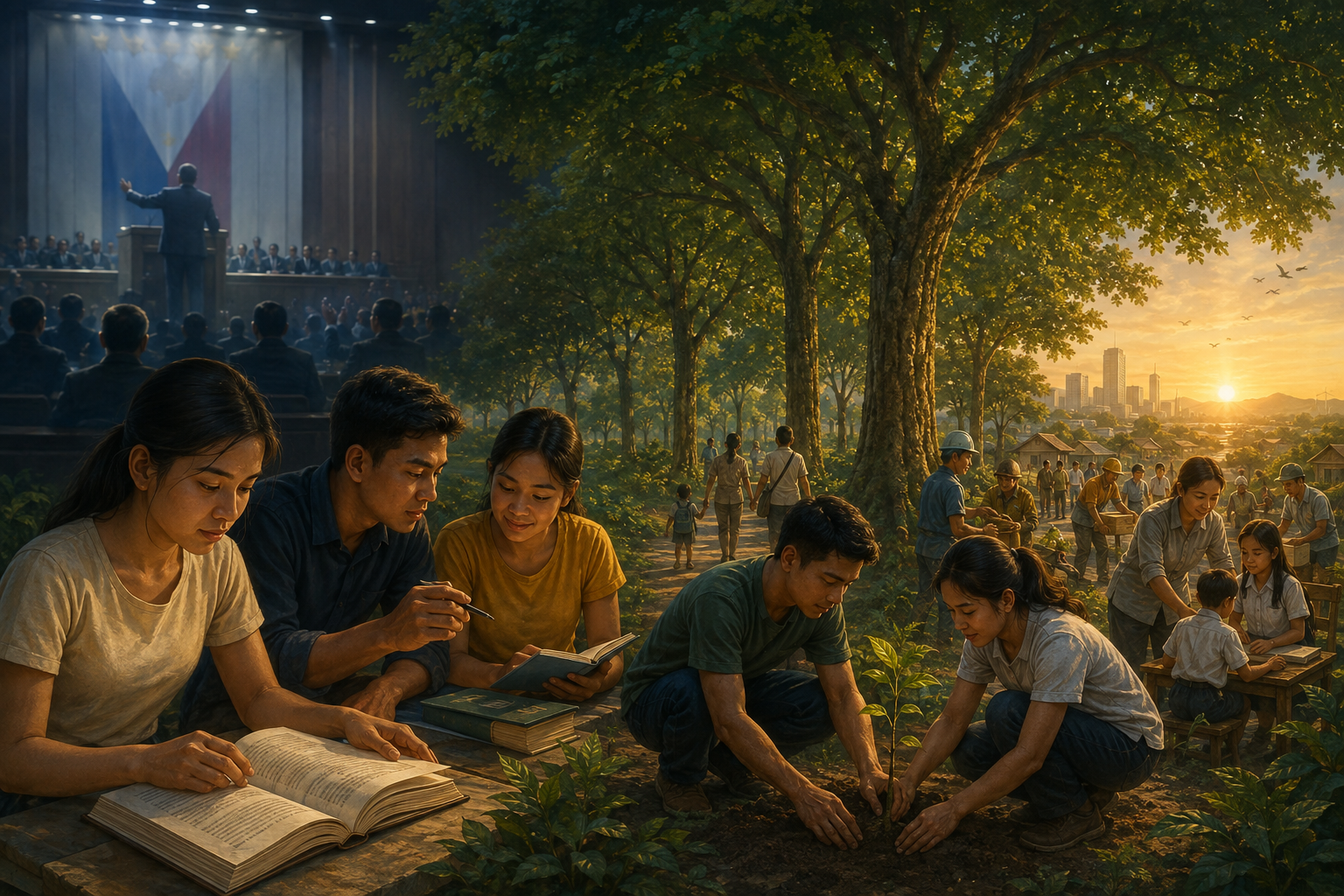
There is only one sentence in President Ferdinand Marcos Jr.’s latest State of the Nation Address that truly interests me:
“Kaya dapat nakakintal sa puso’t isipan ng mga Pilipino ang lifelong learning at continuous self-improvement.”
Rendered in English, the statement reads:
“Lifelong learning and continuous self-improvement must be deeply ingrained in the hearts and minds of Filipinos.”
Of everything spoken from the podium, this single statement transcended politics. It did not ask Filipinos to applaud a reported accomplishment, believe another political promise, defend an administration, or condemn its opponents. Its truth does not depend on whether one supports or opposes the President. It speaks to every citizen regardless of political affiliation because it places neither a politician nor the government at the center of national progress. It places the individual Filipino there.
Ironically, this sentence—if translated into meaningful legislation, coherent public policy, and sustained community programs—could yield consequences far more profound than any of the applause lines that echoed through the plenary hall. Yet it received no ovation. Perhaps it drew little enthusiasm because true education rarely offers the immediate spectacle that politics demands. Investing in human capacity is like planting a forest: the seeds sown today may take years—or even generations—to reach maturity. Political applause is immediate but fleeting; educational investment is gradual but enduring.
Strip this statement of the President’s name, voice, and political identity, and it loses none of its validity. A DDS, a Kakampink, a Marcos loyalist, or someone entirely indifferent to politics can recognize its worth. Its truth does not derive from the authority of the speaker, but from the reality it expresses:
- Lifelong Learning develops what people know and can do—strengthening competence in a rapidly changing world of technology, evolving industries, and shifting responsibilities.
- Continuous Self-Improvement develops who they are and how they live—cultivating character, discipline, health, ethics, and civic responsibility.
Together, these twin pillars prepare citizens to adapt, solve complex problems, resist manipulation, and create meaningful opportunities.
To be clear, self-improvement alone cannot fix every broken institution or eradicate corruption. Nor does this perspective grant government officials an escape from accountability—Filipinos must remain relentless in demanding honest, competent, and responsive leadership. However, systemic policy and individual growth must go hand in hand; even the best policies fail when executed by individuals who neglect their own ethical and intellectual growth.
We must abandon the myth that electing a political savior will, on its own, transform the nation. We cannot demand discipline from leaders while tolerating indiscipline in ourselves, condemn dishonesty in public office while practicing it in daily life, or expect national excellence while settling for personal mediocrity.
The most vital message in the SONA was not a grand promise of what the government will do for us, but a timely reminder of what Filipinos must continually do for themselves—and, ultimately, for one another. Lifelong learning and continuous self-improvement do not render government obsolete; rather, they cultivate citizens capable of demanding better governance, electing wiser leaders, building resilient institutions, and sustaining lasting national progress.
The future of the country cannot be left solely in the hands of politicians. It must be built within the hearts, minds, character, competence, and daily conduct of the Filipino people.
Better Self • Better Life • Better Nation
Quezon’s Curse
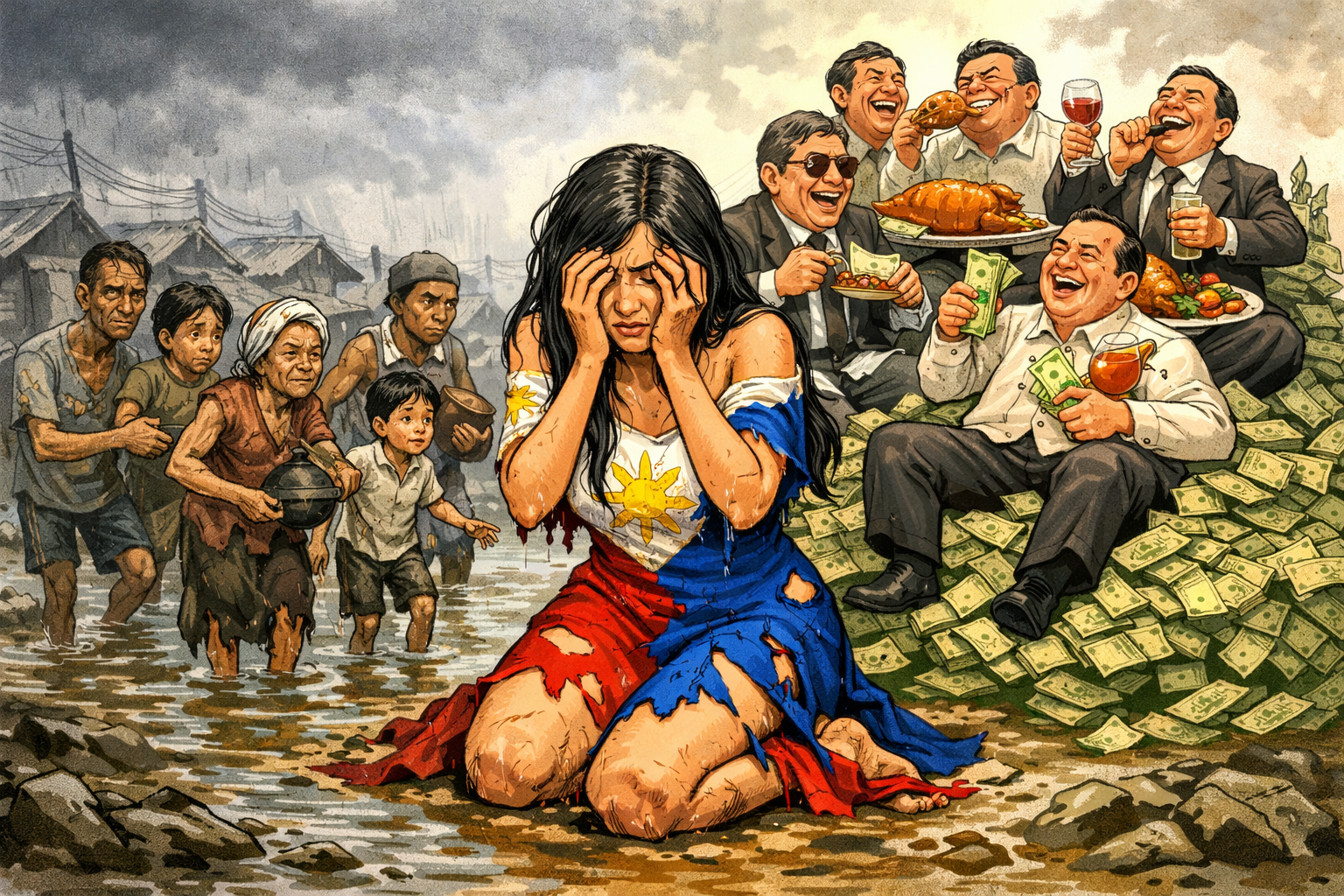
Did Manuel L. Quezon, the second president of the Philippines who served from 1935 to 1944, unknowingly curse the nation when he declared, “I would rather have a government run like hell by Filipinos than a government run like heaven by Americans”?
The Americans eventually ceased governing the Philippines by force after the Second World War. It was not independence that the Filipinos were granted on July 4, 1946, but freedom. The Americans did not save the Philippines from Spain, as some uninformed Filipinos and the rest of the world wrongly thought. The US coerced Spain into selling the island to them. So, the Philippines was passed by a colonial tyrant to another… to a more powerful and ruthless tyrant.
Let this be clear… The US did not save the Philippines from Spain. The former forcibly grabbed our nation from the latter.
When the Americans finally turned over the reins of government to Filipinos, Quezon could have been the happiest man alive had he lived to witness it. At last, the Philippines had a government run by its own people.
But as the saying goes, “Be careful what you wish for.”
Our country has since been governed by Filipino politicians. Given the Philippines’ governance over the decades, how would we assess the performance of those who have served in the different branches of government since the Americans passed the baton of leadership?
Only the blind — and those who benefit from the system — would deny how badly the nation has deteriorated. Only the naïve would refuse to see that the Filipino spirit seems lost. Like a dried leaf in autumn, it drifts wherever the wind blows. The Filipino identity has become like a shattered mirror. Each broken piece reflects a different truth, yet none shows the whole picture of who we once were or what we should be as a people.
As a nation, we are as fragmented as the islands that form our archipelago. The colonial strategy of “divide and conquer,” once used to weaken and subjugate us, continues to linger in our society. Even today, it keeps us deeply divided.
And all this appears to trace back to what now feels like Quezon’s curse — “a government run like HELL by Filipinos.”
For how long have we been led by politicians who seem to have descended from hell itself? Would it be unfair to describe members of the executive and legislative branches as soulless demons who take turns plunging their hands into the nation’s coffers, depriving the people of the services and opportunities they deserve? And what of those in the judiciary and the military who appear to look the other way?
One cannot help but recall the countless anomalous “flood control projects” — billions poured into programs meant to protect communities, yet every year, towns and cities continue to drown while only a select few grow richer. What was supposed to shield the people from disaster has instead become another avenue for plunder.
The sad reality is that the Filipino people cannot simply play the victim. It was Filipinos themselves who summoned these demons from the depths of hell and enthroned them in Malacañang and in Congress. In short, they voted for them. And the sadder part is that even now, when it is clear as day that the devils they have chosen are guilty of corruption, many still continue to support them.
Thus, Quezon’s pronouncement refers not only to Filipino politicians but also to the Filipinos who placed them in power.
“Kawawang Inang Bayan.”
Would we not, at times, be tempted to think that perhaps we would have been better off had the Americans continued to run our government?
Would we not be tempted to accept their old justification for staying on Philippine soil — that Filipinos were not ready for self-governance?
Yet perhaps Quezon did not curse us at all.
Perhaps what he offered was not a prophecy of doom but a challenge — a declaration of faith in the Filipino people’s capacity to govern themselves, to learn from their mistakes, and to shape their own destiny. The tragedy is not that Filipinos were given the reins of government. The tragedy is that, over time, many surrendered vigilance, traded principles for convenience, and allowed power to fall into the hands of the few.
A government “run like hell by Filipinos” was never meant to be permanent. It was meant to be corrected by an awakened citizenry. Democracy was supposed to be a system in which bad leaders could be removed, corruption punished, and the people remain the true sovereign.
But when a nation grows tired, when poverty silences voices, and when hope is repeatedly betrayed, tyranny does not need foreigners to thrive. It is cultivated from within.
Quezon’s words were not a curse. They were a warning wrapped in hope.
What turned that hope into hell was not Filipino governance itself, but Filipino complacency. We allowed demons to rise not because we were incapable of self-rule, but because we stopped guarding it fiercely.
In the end, the real question is not whether Quezon cursed us.
The real question is whether we, as a people, abandoned the responsibility that freedom demanded.
What Now, Philippines?
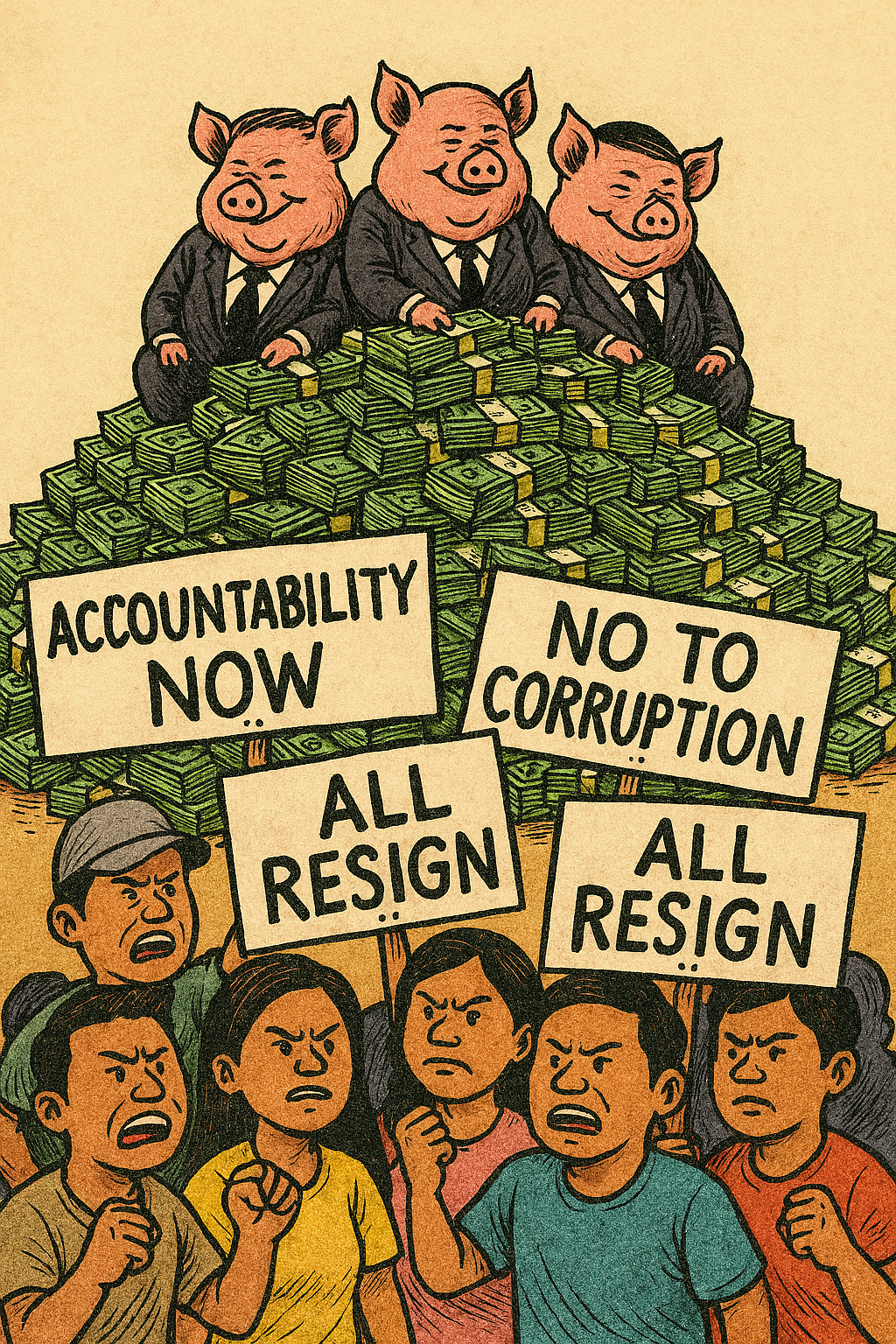
Yesterday, I spoke with a friend here in South Korea, and we discussed the situation in our country. She was as gravely disappointed and angry as I was (just like the millions of our countrymen back home) by the blatant plunder of our national coffers. The story of the flood control program, a tragi-comedy, has taken many twists and turns, and the plot continues to thicken.
We agreed that it was right for the South Korean government to halt its P28-billion loan to the Philippines amid corruption concerns. I added that no financial institution anywhere in the world should lend to the Philippine government until those who stole from the nation’s coffers are brought to justice—and a transparent, foolproof system of government spending is implemented. Mga kapalmuks kayo, mangungutang tapos paghahati-hatian lang ninyo.
We disagreed as to who should be blamed for the flood control project scam. According to her, by virtue of command responsibility, the President is most guilty. She considers it improbable that the Chief Executive did not know about the wrongdoings of his alter egos from the very beginning. Why did it take him three years to expose the corruption happening right under his nose? His duty is supposedly to prevent such corruption practices from happening under his watch. Did he only discover the substandard and ghost flood control projects this year? And why did he exclude himself from blame when he said, “Mahiya naman kayo” during his SONA a couple of months ago? That should have been “Mahiya naman tayo.”
And if these demonic acts of plunder also occurred during the times of Presidents Duterte, Aquino (Noynoy), Arroyo, Estrada, Ramos, and Aquino (Cory), then all of them should be held accountable as well. “Mahiya naman kayong lahat.”
I told her that blaming the President is correct. Still, half of the blame should be borne by the Filipino electorate who voted for those greedy politicians, fattening themselves like pigs in the supposedly august halls of Congress, now nothing more than a stinking sty of corruption.
We deserve the leaders we elect. There are many Filipinos who are very angry with what the politicians are doing, not realizing that they should be partly to blame for what is happening because they voted for those corrupt leaders. The truth is “Nakakahiya tayong lahat.”
Suppose we are genuinely seeking accountability and transparency. Why is nobody suggesting that the yearly National Budget from the time of Cory Aquino (1986) to Marcos (2025) be scrutinized and checked to see how the budget of DPWH (and other government agencies) was allocated each year? It is not only the records of the budget of the DPWH that should be scrutinized but all the departments of the Executive branch. The records will definitely show who, among the Senators and Congressmen (past and present), made “insertions.” A thorough investigation and accounting should be made to determine who among the members of the Executive and Legislative branches of government, past and present, colluded to plunder the nation’s coffers. The truth is written in all those documents.
We also agreed that the Philippine government, as presently constituted, has lost its credibility to govern. Which branch of government is trustworthy now? The Executive or the Legislative branch?
That is for you (the readers) to answer. But as far as I and the friend I talked to yesterday are concerned, it’s scary to entrust the future of our nation to anybody from Malacañang, the House of Representatives, and the Senate.
What about the Judiciary? Can the Filipino people trust our Justices? Did they perform their solemn duty to intervene and restore constitutional order when they were flooded with petitions challenging the constitutionality of the 2025 General Appropriations Act (GAA)? What happened to their hearings? Did they do something to prevent the kleptomaniacs from dipping their hands into jars of people’s money? None that I could recall (and please correct me if I am wrong).
If none of the three branches of government could be unequivocally trustworthy, what about the fourth estate, the media? Do they genuinely care about the Filipino people? My answer is simple: they are too busy building their business empires.
But if neither government nor media can be trusted, then the responsibility ultimately falls on us, the Filipino people.
The last question we addressed in our conversation was, ‘What should be done?’
What should the Filipinos do now?
I was surprised that she was thinking the same thing I was… REVOLUTION.
We agreed that all the investigations being done by both the lower and upper chambers of Congress on the flood control project anomalies will amount to nothing. Even the planned independent commission cannot be expected to be genuinely independent. The loyalty of the members belongs to the authorities that appointed them.
Politicians have their way of sweeping under the rug the messes of their colleagues. They have mastered the art of compromise to such an extent that, in the end, only the lowly contractors will serve prison time.
Meanwhile, the equally guilty, high-ranking individuals in the government—who belong to wealthy and powerful families—will only receive a slap on the wrist.
Honestly, I have entirely lost my faith in our government. I don’t know who among them can be trusted. Even the international community has doubts about the moral ascendancy of our leaders to hold the reins of government. The South Korean government is the first to cast doubt on the trustworthiness of our government. And soon, other countries may. For the first time in my life, I find myself hesitating to say I’m from the Philippines.
Somehow, the only credible government institution now is the Military. They are our “second-to-last” hope. They need to take control of the government, either peacefully or by force. Everybody in the government must resign. The Military must investigate the widespread corruption and send to jail all those who are found guilty. They must do a comprehensive audit and accounting of all government expenditures. They must start with the yearly National Budget from the time the Marcos dictatorship ended up to this year. They should not leave any stone unturned.
The crooks must be prevented from running for any public office. When finally justice is served, the military shall order new elections to elect a new government.
If the military will not take over, we could be heading in the direction that the Indonesians and the Nepalese went. We must not allow the present government officials to continue running the affairs of government.
As I said before, the Military is our “second-to-last” hope. But our final hope—the true hope—rests with us, the Filipino people.
It’s time to breach party lines and set aside ideological differences. Let’s stop supporting any politician and stand together in love for our country. The slogan should be clear: “Save Our Nation,” not “Save a Politician.” We have been exploited and betrayed by greedy politicians for too long—it’s time to take back our country.
And when the time comes to exercise our freedom of suffrage again, we must vote for the most qualified leaders. It’s time to weed out the politicians and choose leaders who are true statesmen, not career (greedy) politicians.
It’s time to reclaim our nation. The time is now. When we march to the streets, bring no party banners, only our nation’s flag.
The Floodgates of Command Responsibility

The Secretary of Public Works and Highways (DPWH) appears to be taking all the blame as the scandal surrounding the flood control projects unfolds. The question is this: Whose conscience will get inundated with guilt if we open the floodgates of command responsibility?
Suppose we adhere to every aspect of the command responsibility framework. Shouldn’t someone be uttering the well-known phrase, popularized by U.S. President Harry Truman, “The buck stops here”?
Who should be saying, “The final responsibility rests with me”?
Who is conscientious enough to say, “I take full responsibility”?
Nobody is doing so. Instead of doing a Harry Truman, the mayors, governors, congressmen, and senators are all doing a “Pontius Pilate.” I will not be surprised if, in the days to come, these Honorable Gentlemen and Ladies will also do a “Judas Iscariot.”
I don’t know if President Bongbong Marcos was correct in using the pronoun “kayo” when he said “Mahiya naman kayo” in his latest State of the Nation address. I think it should have been “Mahiya naman tayo.” He would have gained more admiration had he used “tayo” instead of “kayo.” While the DPWH is directly responsible for implementing flood control projects, the President, as the head of the executive branch, bears ultimate accountability for ensuring proper oversight. At least, His Excellency is now correcting the acts of omission and commission (and yes, the “commission,” if you get what I mean). He should be given credit for that, although “prevention” would have been preferable to “correction.”
Did you see how some local executives, congressmen, and senators crucified the DPWH officials and contractors? Did they not know about the substandard and ghost flood control projects in their respective localities? Did they not really know about the corrupt practices happening right under their noses? Come on, we were not born yesterday.
Nobody will believe you, even if you deny to death that you know nothing about the substandard and ghost flood control projects. It is improbable that nobody informed you that these mega projects are being undertaken in your jurisdiction. As a VIP (being an elected official), nobody in their right mind would construct anything in your backyard without notifying you. Furthermore, it is impossible that nobody whispered to you about “for the boys.” Whether you accepted or rejected it, only you and God know.
Don’t be a “Pontius Pilate.” You may not be guilty of accepting anything passed under the table, but why are you not brave enough to say that you actually turned a blind eye? Don’t act now as if you are the champions of your constituents and during TV interviews hurl all those invectives against those who are now tagged as suspects in the “flood control project scams.” Your act of washing your hands on national television didn’t go unnoticed. It’s not funny at all. If only we had an intelligent electorate, I doubt you would get reelected because of it.
We need to answer the following two questions:
“Is it proper for the House of Representatives to conduct an inquiry into the flood control project scam?”
“Is it proper for the 12 remaining senators from the 19th Congress to join the ongoing investigation of the Senate’s Blue Ribbon committee on the same issue?”
Just asking!
There is another web whose strands we need to trace aside from command responsibility. It’s the web of corruption. The webs of command responsibility and corruption are connected.
Who is responsible for the Congressional appropriations for the 2025 National Budget’s subpar and ghost flood control projects?
Who is brave enough to say, “I bear ultimate responsibility”?
Who, after a deep reflection, would say, “The final decision and its consequences are mine to bear”?
And please don’t mind me asking a last question:
Whose bank accounts fattened through the scam involving the flood control project?
Puwede po bang makabalato?
What We Filipinos Ought To Realize (4)
(Last of 4 parts)

In the first three parts of this series, I identified our serious faults as Filipinos – we sell our votes, we use questionable standards when choosing leaders, we treat elections as if they are popularity contests allowing immensely popular but inexperienced and incompetent celebrities to win, and we either keep restoring from the “recycle bin” the same traditional politicians or replace them with any of their family members.
Our inability to choose the right leaders is clearly one of the factors preventing us from reaching our full socio-political and economic potential as a nation.
We know that the government plays the most essential role in leading all efforts to make this country progressive. We need the best leaders if we really want to become a “developed nation.” It is our responsibility as citizens to select the best ones to hold the reins of government. Unfortunately, we keep failing to do so.
The funny thing is that after we put them into power – the politicians who won because they have the money to buy votes, celebrities-turned-politicians who are inexperienced and incompetent, and “recycled politicians” and the members of their political dynasties – we expect them to perform well. After every election, we expect a better-performing government.
And why would we expect a different government – a more effective one – when we know that we keep electing the same politicians or use the same old rotten standards when choosing new leaders?
Let us revisit Albert Einstein’s definition of insanity – “Doing the same thing over and over again and expecting a different result.”
But assuming that one day we restore our sanity and finally we refuse to sell our votes – finally we learn to elect into office the most deserving and most qualified among candidates – would the wheels of national development start rolling?
Not quite yet!
There’s one more problem, a problem more serious than our failure to vote wisely and conscientiously. The more serious problem of Filipinos, as mentioned in the first part of this series, is the mindset that that the leaders we elect are solely responsible in solving all of our society’s ills and nation’s problems.
We view our relationship with the state at the vantage point of “self-entitlement.” We think that it is the duty of our leaders to give us “this and that.” We say that the government should do “this and that” for us. See, we expect too much from leaders whom we don’t even choose using the best and most appropriate standards.
Is it the duty of the government to provide each citizen with food, clothes, and shelter?
Of course not!
What the government does, generally speaking, is to formulate, implement, and enforce the laws of the land, to build infrastructure, to ensure peace and order, and to create economic and other opportunities that would help its citizens enjoy the conveniences of life and have the best chance to get good education and find or create means of livelihood.
It is also not the duty of the government to provide everybody a job?
One of the functions of the government is to create an environment that would promote economic growth. They have to make sure that businessmen would be encouraged to invest and initiate businesses activities thus creating job opportunities. But jobs are not given in a silver platter. We have to search for job openings and apply and make sure that we have the required qualifications for the jobs we want. Getting ourselves ready for employment is a personal responsibility. The government will not deliver to our doorsteps the jobs that we want.
The government itself is also an employer but it cannot possibly provide each citizen with a job. It is also impossible for the private sector to employ everybody. That’s just the reality. Harsh it may be. Those who won’t get employed, or do not want to work for others because they have better plans for themselves, could perhaps succeed as entrepreneurs.
Not everybody would get a college degree. Not everybody is trained and destined to be in a workplace – either in the corporate world or in the academe. Some of us will be factory workers, sales clerks, farmers, fishermen, plumbers, drivers, gardeners, or what-have-you. It doesn’t matter whatever jobs we have for as long as they are decent and they allow us to earn a living honestly.
Don’t reason out that you came from a poor family and your parents could not send you to school to get a good education and have a better chance for a better life.
This is just how many of us Filipinos are. When we don’t succeed in life, when things don’t turn the way we expect them to, when we are not doing well in the different areas of our personal lives, we are always ready to check our “blame list” to find somebody or something to put the blame on. And our favorite whipping boy – the government. When we are done accusing our leaders for not doing their job well causing us to become losers, we next vent our ire on our parents saying that they did not work hard enough to ensure that we live a good life when we become adults.
We need to throw away that “blame list” for whether we like it or not we are personally responsible and accountable for our success and failure. There comes a time in our lives when we should become be self-sufficient, a time when we, not the government nor our parents, decide for ourselves and take full control of our destiny.
We Filipinos need to realize that unless we recognize our faults and change there’s no way our country becomes progressive and “developed.” We will never gain the respect of the community of nations if we remain the way that we are now.
Something was said by John F. Kennedy that we should reflect upon – “Ask not what your country can do for you – ask what you can do for your country.”
We Filipinos ought to realize that there are two requirements for a country to become progressive and developed – good government and cooperative citizenry. Remove one and a country is doomed. The citizens and their leaders need to work harmoniously towards achieving national goals. There’s no other way. Both of them need to work hard. They have to work hand in hand. The one thing we should bear in mind is we have control over who would lead us, of who will be holding the reins of government. So, if we fail to choose the right people to man the executive and legislative branches of our government, then don’t expect our country to do better… to be better.
What Do Filipinos Need to Realize (4)
(Last in a Series)

The first three parts of this series of articles identified our serious faults as Filipinos – we sell our votes, we use questionable standards when choosing leaders, we treat elections as if they are popularity contests allowing immensely popular but inexperienced and incompetent celebrities to win, and we either keep restoring from the “recycle bin” the same traditional politicians or replace them with a family member.
Our inability to choose the right leaders is clearly one of the factors preventing us from reaching our full socio-political and economic potential as a nation.
We know that the government plays the most essential role in leading all efforts to make this country progressive. We need the best leaders if we really want to become a “developed nation.” It is our responsibility as citizens to select the best ones to hold the reins of government. Unfortunately, we keep failing to do so.
The funny thing is that after we put them into power – the politicians who won because they have the money to buy votes, celebrities-turned-politicians who are inexperienced and incompetent, and “recycled politicians” and the members of their political dynasties – we expect them to perform well. After every election, we expect a better-performing government.
And why would we expect a different government – a more effective one – when we know that we keep electing the same politicians or use the same old rotten standards when choosing new leaders?
Let us revisit Albert Einstein’s definition of insanity – “Doing the same thing over and over again and expecting a different result.”
But assuming that one day we restore our sanity and finally we refuse to sell our votes – finally we learn to elect into office the most deserving and most qualified among candidates – would the wheels of national development start rolling?
Not quite yet!
There’s one more problem, a problem more serious than our failure to vote wisely and conscientiously. The more serious problem of Filipinos, as mentioned in the first part of this series, is the mindset that that the leaders we elect are solely responsible in solving all of our society’s ills and nation’s problems.
We view our relationship with the state at the vantage point of “self-entitlement.” We think that it is the duty of our leaders to give us “this and that.” We say that the government should do “this and that” for us. See, we expect too much from leaders whom we don’t even choose using the best and most appropriate standards.
Is it the duty of the government to provide each citizen with food, cloths, and shelter?
Of course not!
What the government does, generally speaking, is to formulate, implement, and enforce the laws of the land, to build infrastructure, to ensure peace and order, and to create economic and other opportunities that would help its citizens enjoy the conveniences of life and have the best chance to get good education and find or create means of livelihood.
It is also not the duty of the government to provide everybody a job?
One of the functions of the government is to create an environment that would promote economic growth. They have to make sure that businessmen would be encouraged to invest and initiate businesses activities thus creating job opportunities. But jobs are not given in a silver platter. We have to search for job openings and apply and make sure that we have the required qualifications for the jobs we want. Getting ourselves ready for employment is a personal responsibility. The government will not deliver to our doorsteps the jobs that we want.
The government itself is also an employer but it cannot possibly provide each citizen with a job. It is also impossible for the private sector to employ everybody. That’s just the reality. Harsh it may be. Those who won’t get employed, or do not want to work for others because they have better plans for themselves, could perhaps succeed as entrepreneurs.
Not everybody would get a college degree. Not everybody are trained and destined to be in a workplace – either in the corporate world or in the academe. Some of us will be factory workers, sales clerks, farmers, fishermen, plumbers, drivers, gardeners, or what-have-you. It doesn’t matter whatever jobs we have for as long as they are decent and they allow us to earn a living honestly.
Don’t reason out that you came from a poor family and your parents could not send you to school to get a good education and have a better chance for a better life.
This is just how many of us Filipinos are. When we don’t succeed in life, when things don’t turn the way we expect them to, when we are not doing well in the different areas of our personal lives, we are always ready to check our “blame list” to find somebody or something to put the blame on. And our favorite whipping boy – the government. When we are done accusing our leaders for not doing their job well causing us to become losers, we next vent our ire on our parents saying that they did not work hard enough to ensure that we live a good life when we become adults.
We need to throw away that “blame list” for whether we like it or not we are personally responsible and accountable for our success and failure. There comes a time in our lives when we should become be self-sufficient, a time when we, not the government nor our parents, decide for ourselves and take full control of our destiny.
We Filipinos need to realize that unless we recognize our faults and change there’s no way our country becomes progressive and “developed.” We will never gain the respect of the community of nations if we remain the way that we are now.
Something was said by John F. Kennedy that we should reflect upon – “Ask not what your country can do for you – ask what you can do for your country.”
We Filipinos need to realize that there are two requirements for a country to become progressive and developed – good government and cooperative citizenry. Remove one and a country is doomed. The citizens and their leaders need to work harmoniously towards achieving national goals. There’s no other way. Both of them need to work hard. They have to work hand in hand.


 M.A.D. L I G A Y A