Oh C.M.!

You’re sweet
You’re strong
You lift me up
You make my heart beat fast
You gave me sleepless nights
They say you’re no good for me
I then tried hard to avoid you
…against my will
I succeeded
But just briefly
For one day, that familiar fragrance
Shattered what’s left of my conviction
Never to submit again to your spell
So down I went to the coffeehouse where I first met you
I was excited oh C.M.
To have my soul
Enslaved again by your fullness
Twisted by your sweetness
There in the coffeehouse I told the server
“C.M. please!”
“And what’s that sir?” She asked.
“Caramel macchiato!!!” I replied.


How Colonialism Shaped the Filipino Character (Last of 4 parts)

The last quarter of the 19th century was perhaps the most significant stage in the development of the Philippines as a nation. It was when nationalism started to flourish. It took centuries before the natives managed to put up a united front against their colonizers. Like the sun starting to rise from the east spreading its golden rays to signal the coming of a new day, the emerging solidarity among the natives became a portent of greater things to come (that never came.)
The most important ingredient for national development was finally manifesting among Filpinos at that time. The seeds of nationalism began to sprout. The influx of liberal ideas from Europe, the rise of the middle class, and the martyrdom of Fathers Gomez, Burgos and Zamora (GomBurZa) were among the factors believed to have fan the flames of national unity.
It was a long and arduous journey towards national solidarity made difficult to achieve by a combination of factors – the island nation is geographically fragmented, the people speaking different dialects, and the Spaniards’ employment of “divide-and-conquer” tactics.
The Spaniards succeeded tremendously in employing the “divide-and-conquer” tactic against the colonized people so much so that they reigned supreme for more than 300 years. But when the Filipinos began to develop a cohesive spirit to fill their geographical gaps, when they dismantled the language barriers with their deafening cry for freedom, the days of the Hispanic colonizers became numbered. The colonial masters suffered humiliating defeats from the people they held by the neck for a long time and were forced to retreat to the walled city of Intramuros.
But the next chapter of the Philippine drama unfolded not the way the Filipinos had the script written but the way the directors from Hollywood penned it. And just when the Filipinos were ready to hit the last nail in the coffin of Spanish tyranny, the Americans said, “CUUUTTTT!”
With absolute certainty, the revolution the Filipinos started in 1896 would have finally ended Spanish rule. The natives had them figured out. All they needed was just to march together with their hands tied by the bond of patriotism. The Filipinos were ready to storm Intramuros, the last bastion of Spanish rule but they were stopped on their tracks by the Americans who they wrongly perceived to be an ally in their quest for freedom from Spain. The Filipinos naively thought that the Americans who were waging a war against Spain in Cuba, also a Spanish colony then, came as a friend, not a foe.
Cutting the story short, the Americans occupied the Philippines when the Spaniards left and the Filipinos were forced to wage war against a military far more powerful and more advance in weaponry than their former colonizers.
The natives lost the war and the sprouts coming out from the seeds of nationalism sown by the forebears of the Filipino race was not allowed to grow and bloom. It was forcibly uprooted and trampled upon by the Americans. The new colonial masters extinguished the flames of Filipino nationalism with laws like the Sedition Law (1901) which imposed a death penalty or a long prison term on anyone who advocated independence from the United States even by peaceful means and the Flag Law (1907) which prohibited the display of the Philippine flag in any place. [9]
Filipino nationalism was nipped in the bud. That period in the history of the Filipino people was referred to as the “Era of Suppressed Nationalism.” While the natives were still licking the wounds inflicted by their former Spanish masters, the Americans started whipping them.
And as everybody knows, the justification provided by the Filipinos’ new colonial masters was the natives were not ready for self-governance and it would have been very chaotic had they been left alone to fend for themselves.
They could have been right…or wrong. Nobody would know now? But what critical thinking Filipinos today know was that the Americans had no right to deprive the Filipinos at that time the opportunity to determine their own fate as people. The natives could have been left to face the consequences of their attempt to stand on their feet. They had no right to deprive the Filipinos of that opportunity to raise their arm in a victory against Spain. It would have been so meaningful had the colonizer surrendered to the colonized. That would have been a huge moral victory for a people enslaved and deprived of their basic rights and freedom for so long. That would have been a big boost to the morale of the Filipinos. But instead of a boost to their psyche, the actions of the Americans wounded the pride of the Filipino and impeded the development of a stronger national character.
The Americans should have taken a page from their history for them to understand how the Filipinos felt at that time. The main reason the American colonists fought for independence against Britain in the 1700s was they believed in the inalienable rights of the individual and them being taxed by the British Parliament without any representation is a violation of such rights [10]. They believed that whatever a government does must have the consent of the governed. The Filipinos did not want another foreign power to govern them, they had enough of the Spaniards already. The Americans did not have the Filipinos’ consent to stay in the country and govern them.
But there was nothing the Flipinos could do, no country could come to their succor at that time. The Americans had France to support them in their drive for indepedence against Britain and perhaps the Fillipinos were hoping that America would be doing a France when they came, but it was wishful thinking.
The Filipinos were on their own and the world at the time was a big jungle where the colonial powers were the predators and the weaker nations the helpless prey.
The Filipinos then cannot even invoke any law to contest the legality of the American occupation of the Philippines. Imperialism has its own laws, and is backed by brute force. Becausu of its armed forces imperial law supersedes international law. “The legality of imperial activity is based largely on the imperial state’s judicial system and its own legal experts [11]. But wasn’t it that America championed liberalism. They know that natural rights are not contingent upon the laws, customs, or beliefs of any particular culture or government, and therefore universal and inalienable. [12]
But all those are water under the bridge. One thing that every Filipino needs to understand is the importance of revisiting the hallowed pages of their history in order to understand what have become of them and why they think and behave the way they do.
The Filipinos need to do some tinkering in their system. They have to remove the bad microchips their colonizers placed in their harddrive that cause them to malfunction. Find suitable replacements, then reboot.
__________
[9] http://www.thefilipinomind.com
[11] http://www.globalresearch.ca
[12] http://www.crf-usa.org
How Colonialism Shaped the Filipino Character (3rd of 4 parts)
 Filipinos are not perfect, far from it. But is there any race or group of people in any part of the world who could claim that they are? No race is without blemish. All people, from any nation, have negative tendencies and characteristics. Some may even be worse than the Filipinos. There’s no shame in accepting that one’s race is imperfect. There’s no reason to deny and hide the misgivings of a nation and its people.
When something bad happens, it’s not accurate to say the expression “only in the Philippines” because things even much worse happen elsewhere in the world.
Among Filipinos, it is almost natural that they stress their minus points and to find fault in their behavior. Sometimes there are Filipinos who compare themselves unfavorably with Westerners by using Western standards [6]. Perhaps somewhere in their sub-consciousness, they have not shaken off yet the cobwebs of having been dominated in the past by the fair-skinned colonizers.
These Southeast Asian people are aware of the negative traits they possess. They never sweep under the rug their perfect imperfections. Some of the negative Filipino traits are petty but there are also very serious ones that are considered inimical to national development and could be the reason the country is lagging behind in terms of socio-economic performance.
One thing that people not familiar with the history of the Filipinos don’t understand is that some (if not most) of the negative traits this race developed through time resulted from their unfortunate and painful experiences during the colonial period.
Filipinos are fatalistic. They believe that whatever happens does happen because of fate. They believe that events inevitably take place. They think that from the beginning of time set of events are put in motion and they go in the direction that they were programmed to, no deviations.
Having been Christianized by the Spaniards the Filipinos developed a strong faith in God, which is a positive trait. However, they embraced almost blindly the doctrine of predestination. They believe that God exercises control over everything in the world and that He freely and unchangeably ordained whatsoever comes to pass.[7] For them whatever happens is God’s will. Filipinos think that if a person is destined to succeed all his stars will align and he becomes what the Supreme Being pre-destined him to be.
This sometimes makes some Filipinos work just half-heartedly thinking that no matter how hard they try they will succeed only if such is written in their stars. They call it “guhit ng palad” or destiny. When something good happens to them they call themselves lucky (“swerte”) and when misfortune struck them they say “malas” (bad luck), shrug their shoulders off and accept their faith. They say it’s God’s will and that He allows both good or bad to happen.
Their experiences during the colonization period also compounded their being fatalistic. The Filipinos during the Spanish and American periods felt that no matter how hard they would work they could go only as far as their colonizers would allow them to and have only what their conquerors would permit. Worse was more often than not that the fruits of their labors would be taken away by their colonial masters. With that, they learned to live life saying say come what may (“bahala na”). They plunge into endeavors uncertain of the results and just keep their fingers crossed that things go well while assuring themselves that “God will see them through” (“May awa ang Diyos”).
And why is regionalism strong among Filipinos? Why do they have this strong feeling of loyalty to that part of the country where they live? Why when in another country they prefer to be grouped with people who speak the same language they are using and eat the same foods they are eating? Why is there animosity between people living in different regionsy
Two of the reasons many believed contributed to regionalism among Filipinos are the following: Philippines is composed of groups of islands and the people spoke different vernaculars. This could be true but there’s a more compelling reason regionalism became part of the Filipino’s repertoire of negative traits.
Both the Spaniards and the Americans had to implement policies that would ensure the longevity of their reigns. The colonizers needed to find ways to contain the colonized, keep the latter at bay, and prevent them from driving the former away from the islands.
As it is, thousands of islands comprise the Philippine nation, geographically it is fragmented. This the Spaniards used to their advantage in order to ensure a tight rein on the natives. It became easier for them to employ their “divide and rule” tactics. They prevented the natives from moving from one province or region to another in order to avoid fostering oneness among them.
Additionally, during the times when there were uprisings in a province or a region, the Spanish authorities enlisted soldiers from other geographical zones to help them quell the revolts. Technically, they made the natives fight against one another while they watched safely from a distance.
This explains the animosity and mistrust between Filipinos living in different regions of the country. While the Spaniards prevented the natives from forming strong ties by literally not allowing them to move one region to another they made them kill one another. They were like Romans enjoying the view of gladiators cutting each other’s throats.
Having been colonized by Spain and America, it was almost inevitable that the Filipinos would develop a colonial mentality. The Filipinos tried to resist the colonizers, thus they staged uprisings but eventually succumbed to the more powerful Westerners. They had no choice but to accept the colonizers and embrace their cultures. The Filipinos grudgingly followed everything the colonizers imposed, from ideas to ways of doing things, and from manners to foods. In the process of either trying to impress or not wanting to get the ire of his colonial masters, he copied his ways, thinks that way he thinks, eats his kind of foods and wears his kind of clothes. And this was how the legendary Filipino colonial mentality started. Through the years the natives came to like and bought those manufactured by the colonizers and disregard their own. Until now this is observable among Filipinos.
But those years under the Spaniards and the Americans created fondness for the colonial masters in one extreme and deep-seated resentment to them on the other.
The primary objective of colonization is the enslavement of both the indigenous people and their land which is achieved either by the imposition of the colonizers’ dominant physical force through raids, expropriation of labor and resources, imprisonment, and objective murders or by sacking the cultural patterns of the native population [8] The colonizers of the Filipinos did exactly those to them and their country.
Would the foregoing be reasons enough that the Filipinos detest their colonizers? Filipinos who know their history do not have a single strand of colonial mentality in them. There’s no love lost between the colonizers and the Filipinos who know that they deserve to have been given the right to determine their own fate as a nation and to chart their own destiny as people.
(To be concluded…)
How Colonialism Shaped the Filipino Character (Last of 4 Parts)
__________
[6] http://www.crvp.org/book/series03/iii-7/chapter_v.htm
[7] https://en.wikipedia.org/wiki/Predestination_(Calvinism)
[8] http://theanarchistlibrary.org
How Colonialism Shaped the Filipino Character (2nd of 4 parts)
Filipinos often ask questions like, “What would the Philippines be like today had Spain not colonized the island nation? Would the Filipino character have developed the way it is now had the Spaniards not succeeded in putting the natives in chains for more than three centuries?”
 What if the Americans observed the principle that “governments derived their just powers from the consent of the governed” [3] and decided not to stay in 1898 and allow the Filipinos to govern themselves? Americans should have known better. That principle was the driving force of the declaration of their independence in 1776. It is touted to be the model for the right to self-determination, the very right that they deprived the Filipinos of when they colonized the Philippines. The Americans justified their occupation of the islands by saying that the Filipinos were not ready for self-governance. But how sure were they? Even then, the Filipinos certainly would have preferred to chart their destiny as a nation, no matter the consequences. The world will never know what would have happened to the Philippines had the Americans given them the reins of their own government. While it is not certain that the Filipinos would have succeeded, one thing is clear, neither did the Philippines become a better nation because the Americans occupied it.
It would have been a significant boost to the Filipino pride if only they were allowed to continue their war with Spain, which they were winning at that time when the Spanish and American strategists connived to stage what would later become known as the “Mock Battle at the Manila Bay” which the Americans purportedly won. That plan was concocted to prevent Manila, the nation’s capital, from falling into the hands of Filipino revolutionaries. Just imagine how big a victory like that would have affected the Filipino psyche. Its character as a nation would have evolved in a much different direction. But it was not meant to be.
As it was, the Philippines was colonized by Spain and America. The evolution of the Filipino psyche did not go how it should have had had they not been colonized by Spain and America. And how did that colonization affect the formation of the Filipino character? How did Spanish cruelty and American treachery impact the evolution of Filipino values and traits?
A nation’s character is manifested through its people’s values and traits. These values and traits develop over time and are shaped by the events in the nation’s life. They are also affected by the environment where people live.
Filipinos have positive and negative values and traits. Hospitality and resilience are positive qualities that can be attributed to these people.

Filipinos are famous for their hospitality. They treat their visitors, especially foreigners, extraordinarily, giving them the best of what they have. As a host, the Filipino will try to make his visitors comfortable and provide them with the best amenities. The Spaniards had a taste of this hospitality when they came to the islands. They loved it and took advantage of it. Although there were places where the natives were hostile to them, they were generally welcomed.
Sometimes, this is mistaken as being subservient. Some contend that being colonized for hundreds of years made the Filipinos feel inferior; thus, they are gracious to other people, especially those coming from other countries. The Filipinos are perceived to have that feeling of inferiority complex, especially in the presence of foreigners, because they were programmed by their former colonial masters to obey, serve, and never ask questions. This stereotyping of Filipinos was compounded by the fact that many Filipinos work as domestic helpers abroad.
Those who look at Filipinos in the manner mentioned above are mistaken. They chose to view that trait of these people using a negative perspective.
Filipinos are naturally caring and friendly. They are also very polite and respectful. Their hospitality is a manifestation of their innate humanity, not subservience. These people from Southeast Asia are highly relational. They can quickly establish connections with other people. They are highly flexible and able to adapt rapidly to different cultures. Filipinos embrace people, especially foreigners, for who they are and do not judge them. If people worldwide were tested for what Howard Gardner describes as “interpersonal intelligence,” the Filipinos would probably top.
This trait did not vanish with the arrival of the Spaniards; it was actually reinforced. The Spaniards introduced Christianity to the natives, and becoming Christians made them discover more reasons to love and care for others.
Genuine care for others is something very natural among Filipinos. Thus, aside from domestic helpers, there are many Filipino doctors, nurses, caregivers, nannies, and teachers abroad. Filipinos are not egotistical. They can take on menial jobs, thinking “any necessary work that pays an honest wage carries its own honor and dignity” [4]. This is the reason many Filipinos accept these kinds of jobs abroad. However, skilled Filipino workers and professionals are also being sought in many countries. There are also a lot of Filipino artists working in different parts of the world. All these are proofs of Filipino intelligence and innate talent.
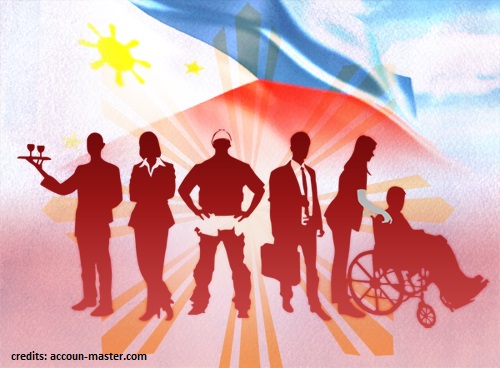 Filipinos are also good at communication. This can be attributed to their confidence in speaking and high interpersonal intelligence. Their good command of the English language, the result of their American occupation, and their being naturally friendly enables them to quickly start a conversation with people from other countries. Aside from being hardworking, Their excellence in communication makes them attractive to foreign employers. If there’s a profession where the ability to communicate well and deal effectively with other people is badly needed, it is teaching. Thus, many Filipinos work as teachers abroad, not just for English but in different learning fields.
These people are also resilient, almost unwilling to give up. Both the natural calamities that have plagued this nation since time immemorial and their painful experiences as colonized people hardened them. They always get back to their feet after suffering from serious setbacks. Their ingenuity and resourcefulness enable them to find ways to wiggle out of difficult situations. Their trademark humor makes them laugh out of even the hardest of problems.
Another Filipino value that was preserved notwithstanding colonization was close family ties. Perhaps the despotic rules of Spain and America made the Filipino families closer, for in times of sorrow and desperation, during those long years of being unwillingly chained, they had nothing to rely upon but each other. This Filipino trait is indeed epic. They maintain affinity to their relatives up to almost the fourth degree of consanguinity. Parents also allow their children to stay with them even after getting married.
Strong among Filipinos also is the so-called “Bayanihan” (spirit of communal unity). It is something similar to volunteerism. The natives display this trait in many ways, but the most famous is the old tradition of neighbors helping a family trying to relocate. Long bamboo poles will be placed under a traditional Filipino house and carried by volunteers to their new location [5]. It has not vanished even now that homes are built using wood and concrete. The concept of “Bayanihan” still lives on. It goes on in other forms, especially in times of natural calamities. The Filipinos are ready to offer their help, even resources, to their neighbors in need. This is also part of the Filipino’s innate humanity that was strengthened by their having been exposed to the doctrine of Christianity.
But Filipinos have negative traits as well.
How Colonialism Shaped the Filipino Character (3rd of 4 Parts)
_____
How Colonialism Shaped the Filipino Character (1st of 4 parts)
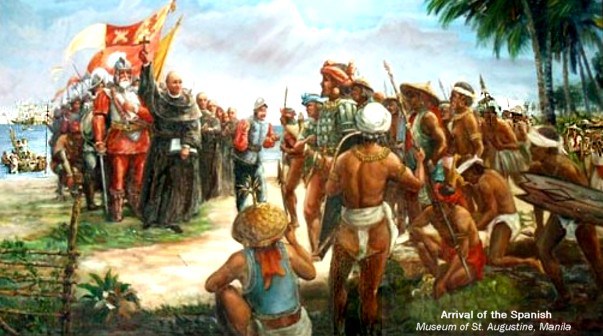
The United States, initially perceived by Filipinos as allies in their quest for independence, had other motives. Emilio Aguinaldo, leader of the revolution, was deceived into believing that the Americans sought to liberate the Philippines from Spanish rule without ulterior motives. In reality, the Treaty of Paris in 1898 saw Spain cede the Philippines to the United States for $20 million, equivalent to over half a billion dollars today. The treaty, negotiated without Filipino input, transferred control of the islands from one colonial power to another.
This betrayal was a bitter blow to the Filipinos. After centuries of resisting Spanish domination, they had hoped to chart their own future. Instead, they faced a new colonial master. Filipinos resisted, but despite their bravery, the Philippine-American War (1899–1902) ended in defeat after three years of intense fighting. The struggle for independence continued, but the dream of genuine self-determination was postponed again.
When the Spaniards left, the natives fought the more superior American forces. It was a case of a “David” having to contend with a “Goliath.” But in this version, Goliath subdued David. It wasn’t that way that it ended for the Filipinos. They gallantly stood their ground and fought as fiercely as they could but eventually lost the Fil-American war after three long years of struggle.
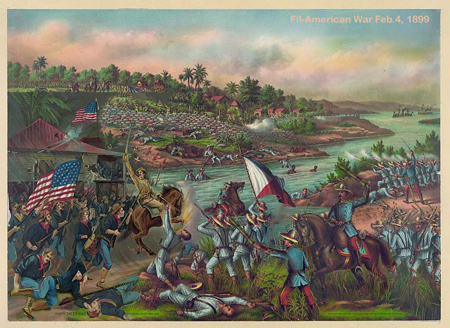
So, the Philippines changed hands – from one colonial master to another, from the Spanish yoke to that of the American.
As the Philippines transitioned from Spanish to American rule, elements of both cultures became integrated into Filipino society. The Spanish and American periods deeply imprinted Filipino values, traditions, and gene pool. The policies and practices implemented during these colonial periods undoubtedly influenced the evolution of the Filipino character.
The 20th century witnessed the rise of a distinct post-colonial Filipino identity—a fusion of Asian and European influences shaped by a history of colonization and resilience in the face of frequent natural disasters. This unique character continues to evolve, blending the past with contemporary influences.
How did these centuries of colonization influence the formation of the Filipino character? How did the cruelty of the Spanish and the betrayal of the Americans shape the values and traits of the Filipino people? These questions remain central to understanding what it means to be Filipino today.
How Colonialism Shaped the Filipino Character (2nd of 4 Parts)
__________
[1] philippinestudies.net
[2] asianjournalusa.com
Images used were taken from the following sites:
> lifestyle.inquirer.net
> angelsinasphere.wordpress.com
 M.A.D. LIGAYA


 M.A.D. L I G A Y A