Category Archives: Positive Thinking
Your Blame List

The last time we came to work late, was it the traffic or the weather that we blamed? Or was it the alarm clock’s fault for it didn’t go off? Ahh, the battery of the cellphone went dead.
When we had a break-up with a lover (or a major falling out with a friend), who did we blame? Ourselves or the other party?
Whenever something goes wrong, seldom or rarely (or is it never?) do we hold ourselves responsible for it. We always point our finger at something or hold others accountable. When things don’t turn the way we expect them to, we are always ready to check our blame list to find somebody or something to put the liability on.
This reminds me of one of the narratives of Jim Rohn.* He said that one day he was asked by his mentor Earl Shoaff, “Jim just out of curiosity tell me how come you haven’t done well up until now?” What Mr. Rohn did, according to him, for him not to look too bad, was read on his list why he wasn’t looking good and not doing well. He blamed, among other things, the government, weather, traffic, company policies, negative relatives, cynical neighbors, economy, and community.
What about our personal blame lists? Is it as long Mr. Rohn’s. Perhaps it’s longer.
Who do people who could not find jobs blame? Of course the favorite whipping boy – the government. They contend that it is the duty of the government to create job opportunities for them. That is true. But work is something that is not going to be awarded to anybody in a silver platter. We have to search for it and we ought to be prepared. It is our responsibility to get ourselves ready for employment. Get the required education or training. We need to have the necessary knowledge and skills.
What if you could not get the education and training you need? Well, whose fault? Okay, I will give you time to check your blame list.
Done?
Now let’s continue.
Common sense will tell us that the government cannot possibly provide each citizen with a job. It is also impossible for the private sector to employ everybody. That’s just the reality. Harsh it may be. So, what should we do? Simple – be competitive. Be the best in our field or profession. The best are always on top of the priority lists of prospective employers. And if in our respective countries there are no job opportunities, or we won’t get the salary we want, let’s consider applying for work overseas. If you’re not satisfied where you are, go somewhere else.
“You can always move out from where you are now to find yourselves better opportunities. You’re not a tree.” That’s also from Mr. Rohn.
The ones who won’t get employed, or do not want to work for others because they have better plans for themselves, could perhaps succeed as entrepreneurs. Not everybody are trained to be in a workplace and be someone else’s employee. Some of us will be farmers, or fishermen, or plumbers, or drivers, or gardeners. There is always a way to earn an honest living. Whatever it is that we find as a source of livelihood, let’s us be thankful.
Accept the reality that some are rich and some are poor. And hey, don’t blame the rich if they don’t want to help the poor. Don’t blame your rich siblings, friends, and neighbors if they don’t share with you their blessings. It’s either you work as hard as they did for you to have what they have or be content with what you are capable of having.
Just bear in mind that each of us has a choice to A – Be rich; B – Have the means to meet both ends and at least get extra cash to afford some luxuries in life; or C – Have 3 square meals a day. Yes, I consider A, B and C as choices. It’s up to us to decide what to aim at… which of the three would make us happy.
Some people live simple lives happy to be able to eat three times a day. Some set their ceilings high and sometimes even go through it. Each of us has a chance at A. Nobody would prevent us from wanting to become rich. But becoming that won’t be easy… unless you win millions in the lottery.
There are two ways to go (and robbing a bank is not one of them) for those who would aim at A – hope that you hit that lotto jackpot or work as hard and wisely as those who became millionaires and billionaires did.
And when you fail to be so… when you fail to achieve your dreams and realize your goals… blame no one.
People who suffer from setbacks and face adversities would more often than not blame their friends or family members – parents, siblings, children, spouses – citing lack of support. Let’s not forget that support is something that is given voluntarily. It is not an entitlement. We could say that it is the obligation of our loved ones to help us. But what if they are not capable of helping for just like us they also need help or they also have problems of their own?
Or what if they have the capacity to support but they won’t? That would bring us to another “don’t” aside from don’t blame. That is don’t expect. If we get support in the pursuit of our dreams and goals we should be thankful. If not, our fight goes on. It’s not the end of the world. We should always be ready to fight our battles alone.
And please, let’s not blame our parents also if we are not doing well in life. Let’s not accuse them of not paving the way for us and ensure that rolled in our paths to better lives is a red carpet. Whatever kind of parents we have (or had) – good or bad – they ceased to be in control of us and our future the moment we became capable of deciding for ourselves. The question is, “What did we do when we sat in the driver’s seat of our lives?” Did we do everything we could to ensure that we succeed in our endeavors? Or did we expect that success is like the manna that fell from heaven which the Israelites in the Exodus just freely picked up?
Remember the narrative of Mr. Rohn? It did not end after he made a litany of the reasons why he was not succeeding and who and what should be blamed for that. Mr. Shoaff patiently listened to him and at the end said the following, “Mr. Rohn, the problem with your list is you ain’t on it!”
Before Mr. Rohn decided to work for Mr. Shoaff, he tore off his old blame list and replaced it with a new one where he wrote the only reason for not doing good in life – “ME.”
Now, let’s review our personal blame lists? Are we included on it? Or we automatically assign fault to something or someone for the misfortunes and failures that befall us?
Something that we should understand and accept is whatever we have become, wherever we are in the socio-economic pyramid, and whatever we have and don’t have, are the results of all the decisions we made. Others may disagree but I believe that our destiny is the sum total of all our decisions and indecisions.
We disagree in our interpretation of destiny. Theists believe that whatever happens to us is the will of a supreme being. I also believe that God exists but I think that we chart our own destiny. He gave us the gift of volition so we could have the dignity to decide for ourselves.
So, if we are not succeeding in our endeavors, if we are not healthy, and if we are not happy, we only have ourselves to blame.
__________
* Jim Rohn was a successful American entrepreneur and motivational speaker and his net worth before his death, according to estimates, was $500 million.
Essays On Personal Growth and Development

I have in this part of my website the articles I have written about personal growth and development. I want to share the lessons and insights I learned from motivational speakers whose books (and videos on YouTube) have given me the blueprint on how best I could restructure my way of thinking so I could make better decisions in the different areas of my life.
I have been experiencing amazing changes in my life that I started regretting why didn’t I dig into these personal development stuffs when I was younger. I have heard a lot about “positive thinking” and related ideas before but I did not pay attention. But as the saying goes, “better late than never.”
I figured that “positive thinking” is but the first step in a person’s journey to a better self and a better life. It’s not the be-all-end-all of personal growth and development. But it all begins in setting a positive mindset. The corresponding positive actions should come next.
My goal in writing these articles and have them put together in this corner of my website is to help promote awareness on personal growth and development. I am not an expert in this field… all I want is to share the little things I have learned so far and to say that I am so happy with the results I am getting.
**********
Self-doubt: The 8th Deadly Sins
Dissecting Positive Thinking
 Some people say that positive thinking is nothing but a delusion. It is… to them. Yes, only to them. To those who think that positive thinking is just a fantasy, it is. What we think things are – they are. Our thinking shapes our truth. It is the brush we use to paint our reality. It doesn’t mean though that what we think about something is correct and is the absolute truth. The reality that our brush called thinking painted doesn’t apply to everyone.
To those who think positive thinking doesn’t work, it won’t. They’d better not try it because their efforts are deemed to fail. It’s unlikely though they would try, given the kind of mindset that they have.
Those who consider positive thinking as a crap also think of people who embrace it as not attuned to reality. Reality? Whose version of reality have the positive thinkers failed to tune in to? Have the idealists, realists, pragmatists, and existentialists (insert more “ists” here) already settled their disputes as regards the nature of reality? What I know is that the debates on whether reality is absolute or relative have not ended conclusively yet.
It’s so tempting to ask the question, “Is reality real?” Well, I just did but I will no longer explore that topic. Let me just share how Ran Zilca describes reality. He said, “Reality is not outside of you. It only exist in your mind, and you view it through your own unique lens, filtered by your senses, your memories, your mood, and by your thoughts. A different person would look through his or her own perspective, and may describe a vastly different reality, as if the two of you are at not all in the same place and time.”
So, nobody should force on anyone the version of reality informed by his or her personal experiences and created by his or her own brand of thinking.
But is it really necessary to run the gamut from classical to contemporary philosophies to discuss and argue the essence of positive thinking? That is tantamount to analysis paralysis. Positive thinking is not an issue to be resolved but a decision to be made. Accept it if you think it works. If not – reject it.
There is no need to argue the rightness and wrongness of positive thinking because it is not a moral issue? Positive thinking does not involve a difference of belief but it is a matter of preference. There’s no moral dispute.
If for example I chose to be optimistic, hopeful , and cheerful, I am not disagreeing with the pessimists. I am merely exercising my right to decide which mindset I would bear. My decision to embrace positive thinking would not affect the pessimists. It would not harm them. Would it harm me? How in the world could a mental attitude that expect good results and a successful future harm the person having it?
Critics better not say that positive thinking has no academic credibility, that no empirical evidence could be provided to prove that it works. It is not true that the proponents of positive thinking have nothing but anecdotal evidence to prove that it works. The critics simply ignoring the latest findings in the field of brain science and are not seeing how practices related to positive thinking, like meditation and mindfulness, have been gaining wide acceptance. There are lots of studies conducted to establish a scientific foundation for this idea.
In an article I wrote on positive thinking, I cited the works of Marc Guidi and Hans Villanueva as examples of studies that have been helping positive thinking develop academic credibility.
Evidence proving that positive thinking works are difficult to ignore, unless the critics are intentionally turning a blind eye. A website called “The Pursuit of Happiness” published an article entitled “Review of Key Studies on Mindfulness and Positive Thinking.” The said article is a list of links to several studies conducted in the areas mentioned in the title (of the said article).
Simply type “studies on positive thinking” in any search engine and you’ll find a lot articles and studies conducted about it.
Positive thinking is more than the “Law of Attraction” – the basic idea of the controversial 2006 documentary film “The Secret.” The principle “like attracts like” is not the be all and end all of positive thinking. The former is only one of the many ideas associated to the latter.
One strategy that advocates of positive thinking suggest is “fake it till you make it.” The critics call it absurd. But what if it works… the way a placebo drug does. Let people try anything that would get them out of a funk. Anyway, the said strategy is only one of the many strategies available for those who want to try positive thinking. If it doesn’t work – abandon it and try other available methods. Nobody really knows it it works or not. There’s no harm if one tries it. Remember that Alfred Adler, the Austrian medical doctor and psychotherapist who founded the school of Individual Psychology, developed a therapeutic technique that he called “acting as if,” a strategy that gave his clients an opportunity to practice alternatives to dysfunctional behaviors.
The one thing that is difficult for me to comprehend sometimes is why some motivational speakers are discrediting positive thinking. The only reason I could think is probably they are trying to sell another self-mprovement method and the only way they could get the attention they need is to say something negative about positive thinking.
The more we really try to dissect the essence of positive thinking using all the isms of intelligent people as lens the fuzzier it becomes. It is but a simple concept.
In Psychology they simply call it dispositional optimism.
Let’s simplify it further in a way that even the modest of minds could understand. Let’s call it hope.
It is as simple as this – Positive thinking is expecting that good things, rather than bad things, will happen… that success is attainable. Positive thinking is always trying until you get (and you become) what you want. It is a refusal to have limiting beliefs. It is deciding to choose only the positives in the different frames of perspectives.
Don’t get me wrong though. Yes, I have asserted (a few paragraphs back) that positive thinking is a simple concept. But making it work is difficult.
Positive thinking has been misconstrued as just that – thinking. It is not. It is not as simple as you close your eyes, take a deep breath, think about the things you want – money, good health, good relationship, peace of mind and what have you – think you have them, as hard as you could then when you open your eyes you’ll have them in front of you served hot in a silver platter. NO! It doesn’t work that way. That is not positive thinking but rather wishful thinking.
Positive thinking is just a springboard. Nothing happens if a person just thinks and doesn’t act. Isn’t that common sense?
In another article I wrote about positive thinking, I posited, “Positive thinking without positive action won’t work.” A plan of action is required – a plan of action that should be executed and vigorously pursued.
Thinking precedes action. People are (supposed to be) rational beings and whatever decisions they make, whatever course of action they take, they should think about it first. And which would be a better launching pad for the decisions we make and corresponding action we take – a positive frame of mind or a negative one?
Believing that good things are bound to happen and that success is attainable would lead people to know their purpose in life. If people have no limiting beliefs they will be prompted to define clearly their goals and frame a plan of action to attain them. The process will help them develop self-discipline and become self-sufficient, organized, and focused.
Positive thinking is not as simple as it seems. Let me reiterate that for it to work, a corresponding plan of action is required. And that would entail a lot of hard work, dedication, and discipline.
Actually, the believers and critics of positive thinking are both correct. It works and it doesn’t. Confused? Consider this – “Whether you believe you can do a thing or not, you are right.” That’s from Henry Ford. And here’s from Virgil… “Possunt quia posse videntu” (“They can because they think they can.”)
Cultivating a Positive Mindset
 Mindset refers to the general attitudes of people and the way they think about things. It is what informs whatever decisions they make (or don’t make). It is what controls what they say and do. Their mindset is also the lens they use when evaluating the issues and events happening around them.
Factors related to family, school, and environment are considered determinants of the kind of mindset that people display. How such elements affect them as they grow older could be gleaned from the way they behave, think and talk.
A person’s mindset could be affected by the culture he/she has grown into and it could either be positive or negative. Studies done on mindset have established a strong correlation between mindset and achievement and happiness. Needless to say that people with a positive mindset are more successful and live a stress-free life. They have either a flourishing business or a rewarding career (or both) and their personal lives are amazing.
A positive mindset can be cultivated if anyone wants to. But it’s easier said than done. It would require self-discipline and a very strong determination for it to happen. It will entail hard work. The rewards people with a positive mindset are reaping are not being handed to them in a silver platter. Those are the fruits of the seeds of hard work they have sown.
We need to make a choice between having a “fixed mindset” or a “growth mindset.” Dr. Dweck explained that, “In a fixed mindset students believe their abilities, their intelligence, their talents, are just fixed traits. In a growth mindset students understand that their talents and abilities can be developed through effort, good teaching and persistence.”
Learning is a lifelong process. We never stop learning. We never cease to be students. The question is, “Which kind of student are we – with a fixed mindset or with a growth mindset?”
I tried to cultivate a better mindset too. It is an ongoing process and I am happy with the results. How I wish I have started doing so when I was younger.
My journey to changing my mindset for the better was (and is) not easy. It made me completely overhaul my way of thinking that was programmed by the environment I have grown into and the kind of education I had. It is equivalent to getting out of my comfort zone because I have to change habits and routines that I got accustomed to.
I have in this part of my website the articles I have written on the subject of positive mindset. I want to share the lessons and insights I learned from motivational speakers whose books and videos on YouTube have given me the blueprint on how to restructure my way of thinking so I could live a better life.
**********
Beyond Positive Thinking

Some people would say that “life sucks.”
Really!?
I adhere to the dictum that “Life is what we make it.” I believe then that when people say that “life sucks” it’s because that’s the way they made it to be. The kind of life we live is defined by the mind-set we have. It is one’s way of thinking that would make life suck. It is the negative attitude towards life that make people fail in their undertakings – it is what makes them unhappy and dissatisfied. It’s in the midst of all their failures, sadness and dissatisfaction that they say “life sucks.”
People are seemingly not sold on the idea that their way of thinking affects the way they live life and would determine whether or not they succeed. It is hard for them to accept that it is their innate responsibility to examine their way of thinking and ensure that it doesn’t stand in their way to happiness and success. This is something I learned so late in life. How I wish I had learned so when I was younger.
I have heard a lot of things about positive thinking before but it was only around 2009 that I started digging deeper into the idea and it took a few more years before I really became serious about it.
I realized that there is more to positive thinking than veering away from negative thoughts and shedding off negative attitudes.
It all began when I watched a film entitled “The Secret.” I saw the DVD of the movie by accident. The store owner mixed it with regular movies. When I bought it, I had no idea what it was. There was no synopsis, not even a brief note explaining anything about it. That was it… everything was what the title suggests – SECRET.
I thought it was either a mystery-thriller or a sci-fi movie. When I played, it I found out that it was some kind of a “self-help” film. It was technically a documentary. I have to admit that at first I considered the ideas presented as preposterous. Things I was seeing and hearing from the beginning of the film were like lifted straight from the pages of a science fiction book… but at the same they also tickled my curiosity.
So, I continued watching and tried to be open-minded and thought of the information in the film as tips for personality development. I have always considered anything that advocates positive change as worth my time and worth trying. I watched it a few more times after that and even shared the ideas I learned to my students whenever I would see a connection to the contents of the topic we’re discussing.
Then I decided to do an internet search for one of the speakers in the documentary who impressed me the most – Bob Proctor. That internet search led me to his (Bob Proctor’s) motivational videos on YouTube and to links to information and videos of other motivational speakers such as Wayne Dyer, Les Brown, Jim Rohn, Joe Dispenza, Brendon Burchard, Brian Tracy, Zig Ziglar, Tony Robbins, Simon Sinek, Tom Bilyeu, John Maxwell and Mel Robbins.
I watched the videos of the said speakers and searched for electronic copies of the books they have written. At first, it was like once a week that I would play their videos on YoutTube until such time that I started doing it everyday – in the morning and at night. It became part of my daily routine.
I found out later that Napoleon Hill, Earl Nightingale, and Earl Shoaff came ahead of the motivational speakers previously mentioned. My constant browsing of the internet intended to quench what has seemingly become an insatiable thirst for ideas for personality development led me to the works of one of the “pioneering figures of modern inspirational thoughts” – James Allen. His most famous book – “As A Man Thinketh” – set straight everything I learned about positive thinking.
Dr. Joe Dispenza’s book “Evolve Your Brain: The Science of Changing Your Mind” provided enough science into the positive thinking paradigm that wiped out whatever doubts I had about it. I love the way Dr. Wayne Dyer incorporated Asian philosophies into that paradigm and the infusion of practical wisdom and humor to it by Jim Rohn and Les Brown.
Then John C. Maxwell made me think the way I think. His book “Thinking For A Change” reminded me of the value of effective and creative thinking. His suggestions on how to be more focused and creative in the way people should think are very practical but tremendously effective.
I didn’t take everything I read and heard from motivational speakers hook, line, and sinker. I always had my filters and my critical lens ready when I listened to talks and read books. I analyzed their ideas carefully and (without judging and doubting) tried to see which ones work for me and which writers and speakers make sense.
The one thing those motivational speakers succeeded in doing was to change my mind-set. They taught me how to look at things using a positive perspective. They had confirmed what I believed all along that whatever we become is the sum total of all the decisions we make… that a person is in-charge of his own destiny. It is a personal belief I started forming after reading W.E. Henley’s “Invictus” way back in college.
The process of my personal transformation was rather slow and I got to observe things in my life changing for the better only in 2013.
When positive thinking succeeded in changing my perspectives on life, things in my life improved, particularly in the areas of relationships, health, work, and finances.
One day I just woke up and realized that things are the way that they are. People are who they are. They talk, behave and think the way they want, whether I like it or not. I can not change them. I can not change the system of the government, the policies in my workplace, the attitude of my co-workers, the character of my friends and loved ones. The only things I could change are those that I could control directly – my words, actions, and my thoughts. It is my perspective that must change. I need to have paradigm shift as Bob Proctor would put it.
I did exactly that. I changed my perspective and it is continuously evolving. I’m not saying that everything in my life now is perfect. One thing I could say though is I am happy with who I am, what I have, and where I am. Perhaps the life I live now is what Brendon Burchard would describe at the end of his videos as – “a charged life.”
I fully embraced self-sufficiency and personal accountability.
People wrongly think that positive thinking is just that – thinking. It’s merely the springboard. Great things happen to people when they start changing their mindset – from negative to positive. What would make positive thinking weave its magic is the corresponding positive actions you undertake.
Positive thinking without positive action doesn’t work. Brian Tracy added one more to the equation – “One must have an organized plan of action.” He added that action without planning is the cause of every failure, underachievement, frustration, time wastage, anxiety, and stress.
So, it’s not just a person needing to think positively and that’s it. Action and planning are needed.
All motivation gurus advocate the setting of goals. They strongly suggest that people should have their daily, weekly, monthly, and yearly goals… on top of their long-term goals. They also identified two qualities that a person must have in order for positive thinking to work – self-discipline and self-sufficiency.
For me, self-discipline is the most difficult obstacle to hurdle. Old habits die hard. It’s true, but somehow I am succeeding in slaying the bad ones – albeit slowly.
I know it’s not easy to change one’s perspectives on anything especially if such perspectives are already deeply anchored in the person. “You can’t teach an old dog new tricks.” Right? Allow me to be literal on that idiomatic expression and let me add this – “… but people are not dogs.”
On Perspective


I do have a friend who would usually be mistakenly identified as me. There were many instances that people in the university where both of us are teaching called me by his name and him by mine. Why? None of us is a dead ringer for the other but very likely that our similar built, height and rounded face would make people commit that mistake.
Seemingly bemused, he asked me one time, “Why would they think I am you? Do I look as old as you are?” I paused for a while, smiled then told him jokingly, “No, I think I just look as young and handsome as you are.”
As my friend laughed at my response, I thought that the contrasting way we looked at the issue has opened an opportunity for me to revisit the topic “perspective.”
That (perspective) is one of the most amazing things about us…
View original post 689 more words
SELF DOUBT: The Unknown Sin
Lust, gluttony, greed, sloth, wrath, envy and pride are referred to in Christian teachings as the “seven deadly sins.” These, to the Roman Catholics, are the cardinal sins. If a person commits any of them, he is believed to be cut off from God’s grace.1
Actually, the Bible does not specifically mention the concept “seven deadly sins.” But in Galatians 5: 16-19, fifteen acts of the sinful nature are identified – sexual immorality, impurity, debauchery, idolatry, witchcraft, hatred, discord, jealousy, fits of rage, selfish ambition, dissensions, factions, envy, drunkenness, and orgies. Perhaps St. Gregory the Great, during his reign as Pope (590 – 640 AD), wanting to be concise, shortened that long list of capital vices.
All Christian faithful are being called upon to not commit those acts of the flesh. St Paul said that believers are free but he implored them not to use their freedom to indulge the flesh. That, definitely, is easier said than done.
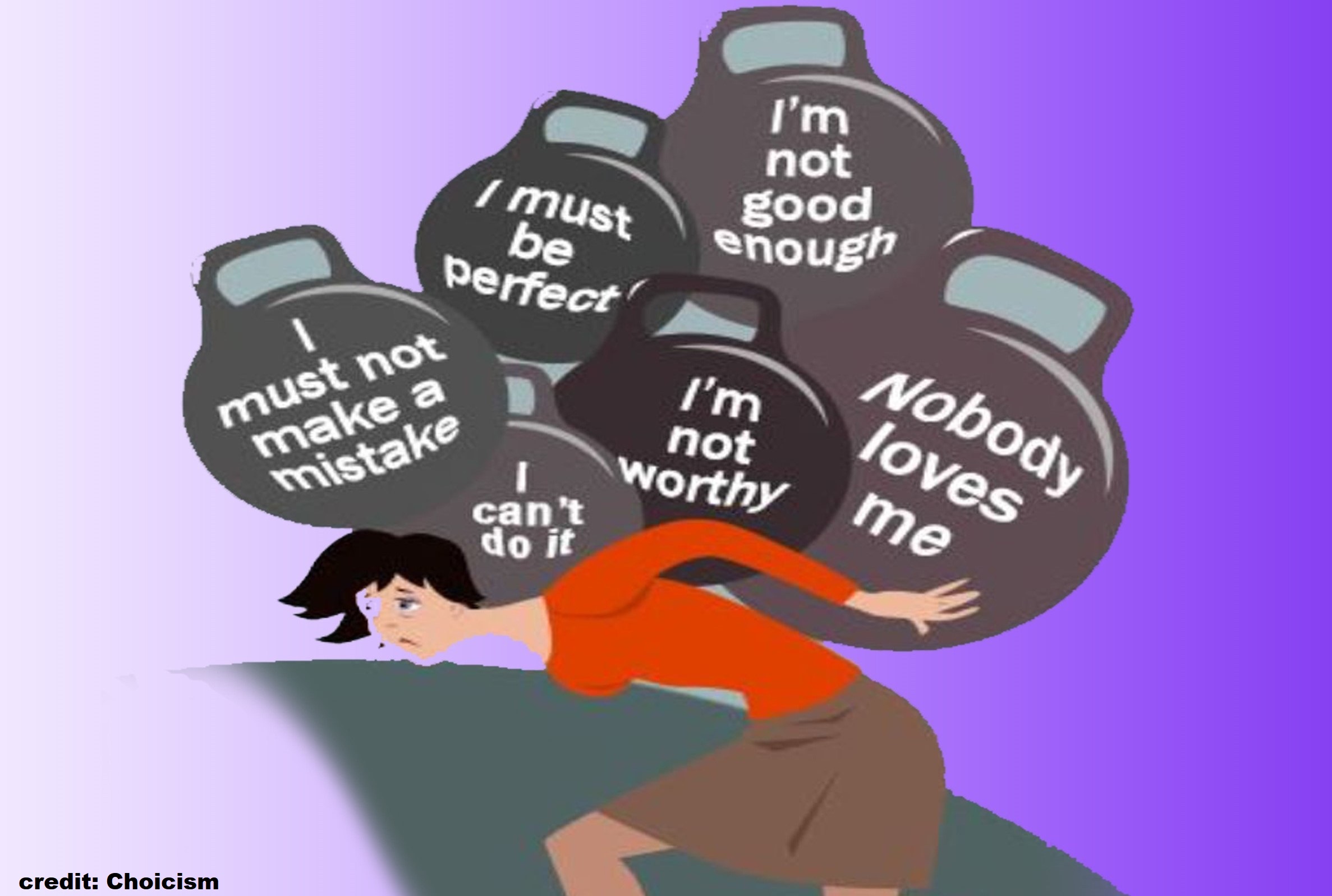
I think St. Paul (who wrote the Galatians) and St. Gregory may have overlooked another human frailty that should have been added in the list of sins. There exists another spiritual infirmity which I believe should be considered equally harmful as any of the deadly sins. It’s called self-doubt.
My proposition (that self-doubt be classified also as sin) may not be considered seriously. Many might even say it’s absurd.
Is it?
Is self-doubt just an ordinary flaw in a person’s character? Is it really a bit too much to consider it a sin? Is it not a serious offense – something that when committed could ruin a person’s life?
Allow me to argue my assertion that self-doubt is a sin.
For the purpose of this essay, we will define self-doubt, strictly, as “the feeling of not having confidence in yourself or your abilities.”2 The DOUBT being discussed here does not refer to that philosophical function “to cast doubt.”3
The definition above (the one before the disambiguation) makes self-doubt sound harmless – not something immoral or demonic that would make the moralists and bible scholars (both past and present) look at it as a sin. That’s probably the reason no religious movement, Christianity included, classified such human inadequacy as a sin.
Self-doubt, however, is not as simple as it seems. This impotence of the human spirit has grave consequences not only to the person having it but to the family where he belongs and to the society where he lives. A person plagued by it will be less-productive or not productive at all and is definitely not going to contribute anything for his family and society.
In arguing that self-doubt is a sin it is important to review the nature of sin in the philosophical standpoint.
Sin is said to be a moral evil.4 This brings us to another question – what is evil? St. Thomas defines the word (evil) as a privation of form or order or due measure. Evil implies a deficiency in perfection.4
Self-doubt is clearly an imperfection. It indicates the absence of confidence which is considered essential for a person’s well-being and is a requirement in the pursuit of what Abraham Maslow refers to in Psychology as “self-actualization” or achieving one’s full potential. Sin is a diversion from the perceived ideal order of human living.5 A person doubting his capabilities veers away from becoming the best that he can be and reduces his chance of living life to the fullest.
It could be argued that there are lot of other negative human characters that may indicate imperfections. But none is as damaging to the person as self-doubt. Something is wrong with a person if he lacks confidence and has very low (or no) feeling of self-worth. These are conditions that may lead to failure and unhappiness.
In addition, philosophical or moral sin is a human act not in agreement with rational nature and right reason.5
It is an offense against reason, truth, and right conscience. 6 It is unreasonable to doubt one’s capabilities. It is a person’s moral obligation to believe in himself. It is not right to think one would fail even without really trying. He needs to have faith not only in God (if he happens to believe in one) but also in himself.
Allowing self-doubt to reign is depriving the self of discovering one’s potentials. When a person decides to doubt himself, he eradicates his ability to fulfill his goals and to achieve his dreams.
Failures are indeed impossible not to happen. But even if one fails in several attempts to succeed he should decide not to stop trying. There’s a long list of famous personalities (like Albert Einstein, Abraham Lincoln, J.K. Rowling, Bill Gates, Walt Disney and Henry Ford) who had their share of failures but never gave up.
Sin, also, wounds the nature of man.6
Thalk emphasizes that self-doubt destroys the heart, mind, body and soul. It is one of the major obstacles to living the life that people truly deserve. This unhealthy food for the soul drags down a person’s spirit, crushes his ambitions, and prevents him from achieving all that he can.7
Doubt impedes a person’s development. It is the biggest roadblock to self-actualization. Self-doubt prevents people from becoming the best they could be, from realizing their full potentials, and from achieving their dreams. Shakespeare stressed, “Our doubts are traitors, and make us lose the good we oft might win, by fearing to attempt.” Suzy Kassem added that doubt kills more dreams than failure ever did.
Some degree of self-doubt is generally held to be normal. It can be helpful in some cases, as it often leads to introspection and enhanced performance. But it may require medical help when it becomes debilitating, affects daily function, or impedes performance at work or school.8
There’s no immorality committed when one doubts himself. Why should it be then considered a sin?
This brings me to the last among my arguments to convince you that self-doubt is a sin.
A sin may either be a sin of commission or a sin of omission. Sins of commission are sins we commit by doing something we shouldn’t do and sins of omission are sins we commit by not doing something.9 The seven deadly sins are all sins of commission except sloth.
Sloth, which is excessive laziness or the failure to act and utilize one’s talents,10 is considered a sin of omission. I think self-doubt belongs to that category. If sloth made it to the list of the deadly sins, self-doubt should be there also.
“Self-doubt,” is just as damaging (perhaps more damaging) to a person than this sin called “sloth.” Actually, in some instances, a person’s failure to use his innate talents starts with his inability to believe what he is capable of thinking.
*****
In overcoming self-doubt, it is important that a person traces the root causes. He should know what factors trigger his self-doubts and learn how to overcome them. If it is lack of knowledge and skills then he must exert efforts to learn and acquire those that he perceives he lacks. There is a possibility that the ones causing him to doubt himself and his capabilities are people… sometimes his own friends. Then by all means avoid them. Equally important it that he must surround himself with people who bring the best in him.
It may be easier said than done but it is important that a person maintains a positive outlook and thinks that there is nothing he cannot achieve or do if he wills it.
———-
References:
- http://www.deadlysins.com
- http://www.macmillandictionary.com/dictionary/british/self-doubt
- http://rebirthofreason.com/Articles/Rowlands/Philosophy_as_Doubt.shtml
- http://www.newadvent.org/cathen/14004b.htm
- https://en.wikipedia.org
- http://www.vatican.va/archive/ccc_ccs/archive/cathecism/p3s1c1a8.htm
- http://www.huffingtonpost.com/dr-cynthia-thaik/self-doubt_b_2960936.html
- http://www.goodtherapy.org/learn-about-therapy/issues/self-doubt
- http://www.revelation.co/2015/07/21/sins-of-commission-vs-sins-of-ommission
- http://www.bibleinfo.com/en/questions/what-are-seven-deadly-sins