Category Archives: Novelette
The Hardest Choice
(Were We Ever Meant to Be – Part 7)
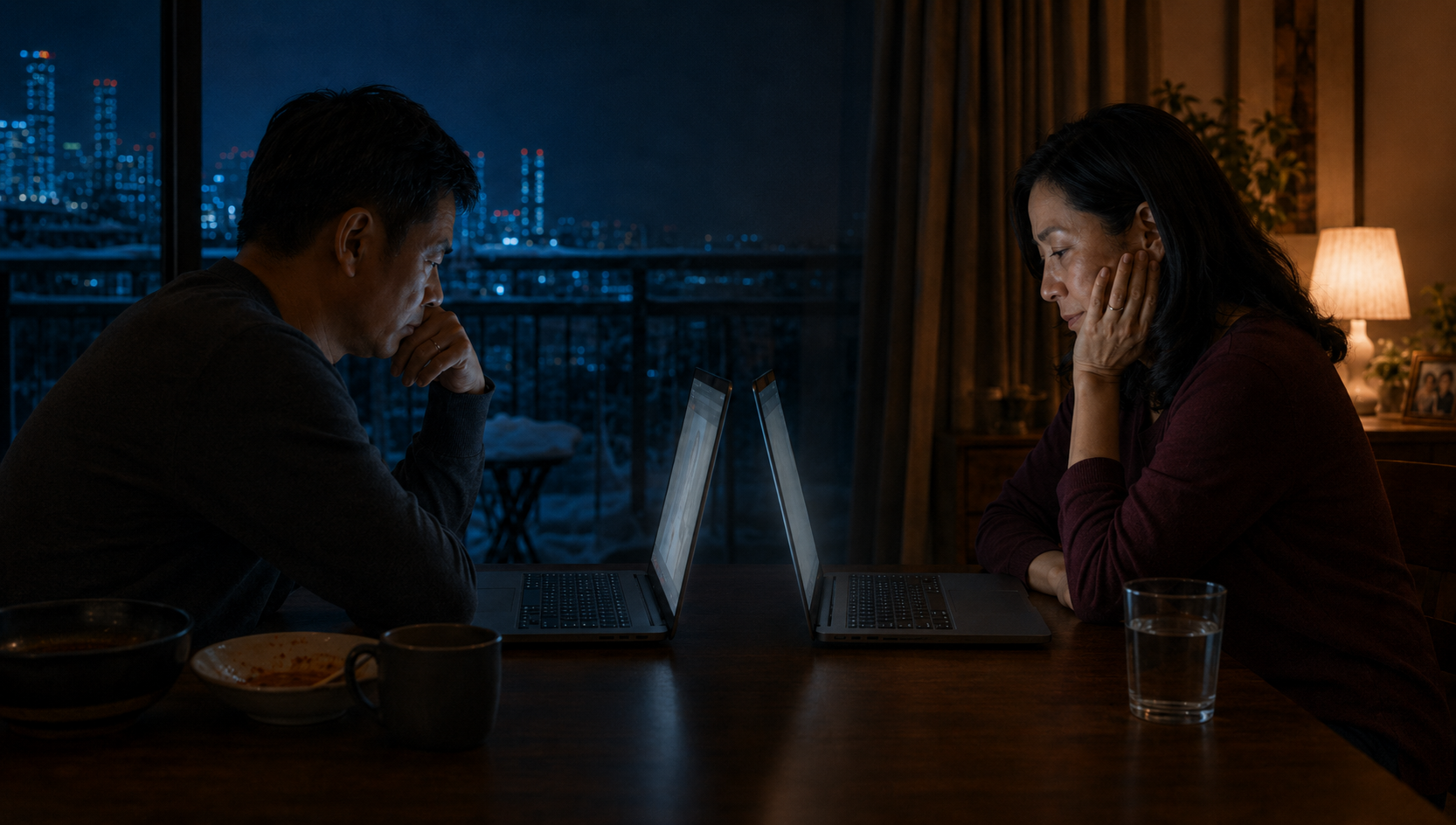
Two days later, Kath asked that we not speak over the weekend. Her church had an important Sunday activity, and she needed time alone to think.
I gave her the silence she asked for, but filled it with visions of the life I believed we would finally claim. By then, I understood that Jay was not the greatest obstacle between us. Something far more powerful had already begun calling her back.
Kath called on Sunday night. Her eyes were swollen.
Her laptop was on the study table again, not on the bed. The change was small but deliberate. She had moved our conversation away from the place where we had surrendered to desire, as though furniture and distance could help her recover the boundary we had erased.
“I’m not all right,” she said. “The sermon struck me again.”
She told me that every service since our affair became serious had felt directed at her. Every time we undressed for each other, every time she chose my call over Jay’s, she felt the distance between her desire and her faith widening.
Her Christianity was not a convenient device she discovered at the end of our affair. It had shaped the marriage she chose to repair, the community in which she served, and the understanding of herself she wanted to preserve. Loving me had not erased those commitments. It had divided her against them.
“Doesn’t what we’re doing trouble you?” she asked.
I believed in God, though I was not devout in the way she was. I had asked for forgiveness and understanding, but desire had thrown my conscience aside. All I wanted was Kath.
“We love each other,” I said. “That is what matters.”
“Stop using love to make this right. It isn’t right. Are we supposed to live permanently in sin?”
“Would it be less sinful to remain with people we do not love?”
Kath wiped her eyes. “You keep speaking as if Anna and Jay are merely mistakes standing between two rightful lovers. They are people, Marco. We made promises to them. Our children did not choose this. Love does not make them disappear.”
I had no answer that did not return to what I wanted.
Even as I said it, I heard the convenience in my reasoning.
“It has to end,” she said. “Before Jay, Anna, or anyone else discovers us.”
“Kath—”
“I am not choosing between you and Jay. I am choosing between what is right and what is wrong.”
The sentence was not a denial of her feelings. That was why it hurt. If she had stopped loving me, I could have blamed time or distance. Instead, she was refusing precisely because the love remained powerful enough to destroy what she believed she was called to protect.
There it was: the rival I could not charm, outwait, or defeat.
“We can still be friends,” she continued. “We can exchange messages occasionally, but no more calls.”
“Let me call sometimes.”
“We both know what will happen. If you call, I will block you. If you use your phone, I will block your number. Please help me do this. I have grown used to your presence, and you know how weak I am when it comes to you.”
I had pushed against every boundary she had drawn because I believed persistence was proof of love. Now the only loving act left to me was the one I least wanted to perform: allow the boundary to remain.
“Jay will call soon,” she said. “I asked him to. Instead of talking to you, I should be talking to my husband.”
The words hurt more than I expected.
“Is there anything else you want to say?”
I shook my head.
“Then let me say this one last time. I love you, Marco. But I have to learn to forget you. I hope you understand why.”
“I love you too, Kath.”
“Goodbye. Please try to love Anna. I wish both of you well.”
The screen went dark.
For several minutes, my own reflection remained on the screen. The apartment was unchanged: the cup beside me, the winter lights outside, the empty room waiting for another film or another sleepless night. Yet the space felt altered because I had allowed Kath’s presence to occupy it so completely.
I thought of Anna, who had forgiven betrayals I would have struggled to forgive and still remembered to ask whether I had eaten. I thought of Kenneth, whose failure to answer my call I had dismissed so easily, without considering how much of his life I had already missed. I thought of Jay at sea, trusting that his wife would be there when he called. For the first time since Kath’s birthday, I understood that what we had called our private story had never belonged only to us. We had made it private by pushing everyone else beyond its borders, even though they would have borne the consequences of every choice we made.
I had spent all that time thinking of Jay as my rival. But I had not lost Kath to him. In the end, she had not chosen one man over another.
She had chosen her faith—and the person she still wanted to be.
It was difficult to compete with God.
Against Him, I never had a chance.
Perhaps Kath had been right all along.
Perhaps we were never meant to be.
— END —
It Has Always Been You
(Were We Ever Meant to Be – Part 5)
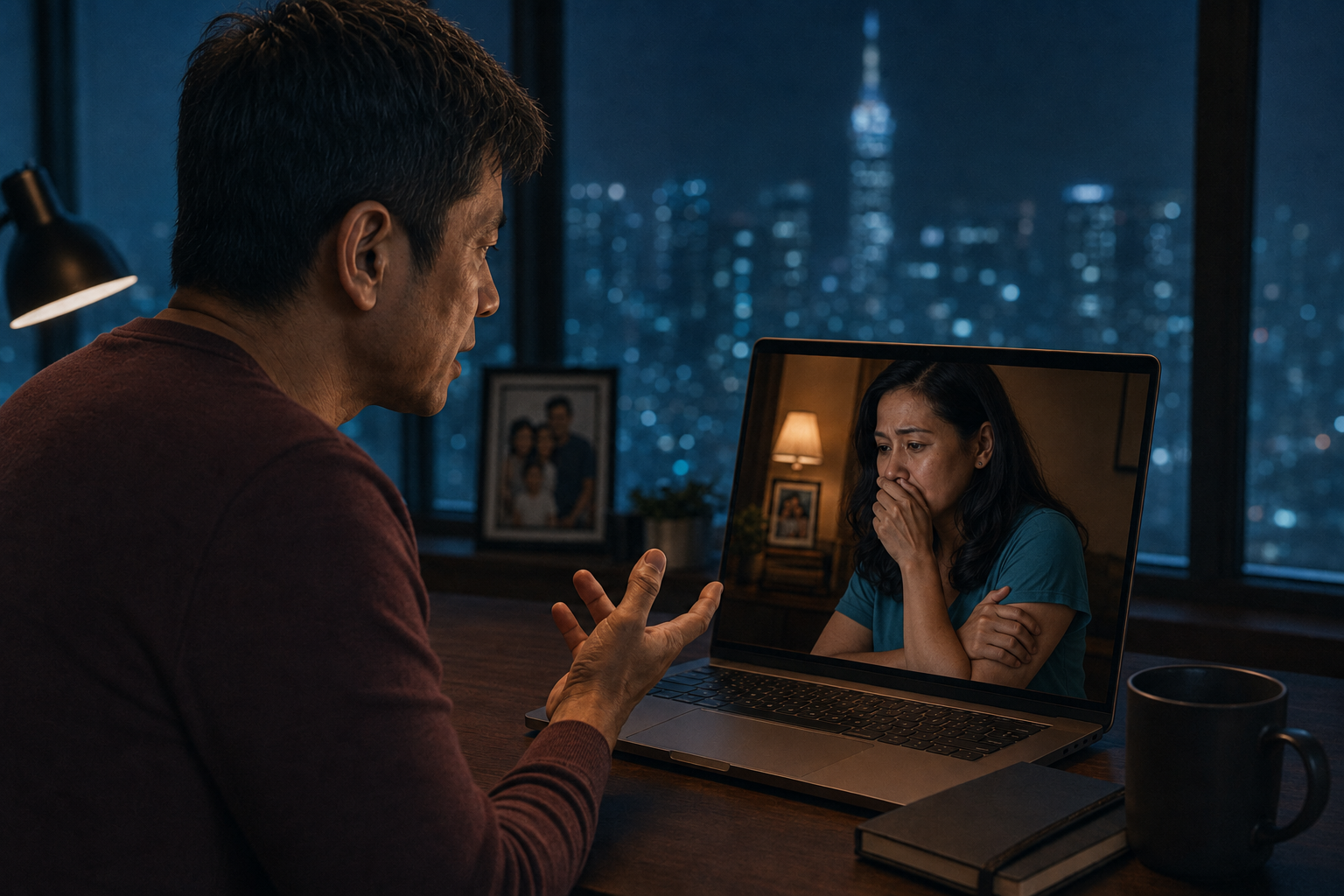
“It’s you, Kath. It has always been you.”
“Stop, Marco.”
“I should have waited. I should never have rushed into marriage with Anna. I should not have listened to my mother. I should have taken you to Cebu.”
“I said stop.”
“I stayed with Anna because there was nowhere else to go. There was no Kath waiting for me. If I ever love someone again, it can only be you. I never stopped loving you.”
Kath stood and moved away from the laptop. When she returned, she looked shaken.
“Do you know what you are doing?”
“I’m being honest.”
“No. You are disturbing my peaceful life. You did it before, and you are doing it again.”
She ended the call.
For a moment, clarity pierced my certainty. She had entered my office years ago wanting nothing more than to begin a career. I had allowed her feelings to deepen while knowing I was married and held authority over her future. Now, after she had built a family and repaired her marriage, I had returned carrying the same disruption.
Kath had not been innocent, but neither was she merely an equal reflection of me. I sent the birthday greeting, insisted on the first video call, revived the old questions, and pushed every answer toward the conclusion I wanted. Each time she said friendship, I searched for a way to make the word contain romance. Each time she asked me to stop, I treated the request as fear to overcome rather than a decision to honor.
Yet even as I recognized the harm, part of me wondered only whether I had moved too quickly. Perhaps I should have revealed my feelings gradually. Perhaps I had frightened her by forcing the issue.
Near midnight, I sent an apology. I promised that I would never call again.
Kath called.
For a long time, neither of us spoke.
“I’m sorry,” I said. “I never intended to disturb your life.”
“But you did. You disturbed my mind.”
I wanted to ask why, but I believed I already knew.
“All I wanted was to reconnect,” I said. “To talk to you again.”
“Can’t you talk to Anna?”
“I can. But I don’t merely want conversation from you. I long for your presence. I want to see you.”
She shook her head. “Why can’t you leave me alone? Forget me.”
“I tried. God knows I tried. I failed.”
“I cannot control what you feel. But expect nothing from me. We are married. We have children. What we can have is friendship.”
“Then let me call once a week.”
She sighed. “Once a week.”
“Thank you. I love you.”
“We are friends, Marco.”
“Friends can say ‘I love you.’”
“Always a loophole.”
“Say it.”
She looked into the camera. “I love you too, my friend.”
The word friend should have ended the matter. Instead, it became permission.
Over the next two weeks, our weekly call became twice a week, sometimes three times. We told each other what had happened during the eight years apart. Kath spoke about her Christian community and the worship services she attended with Jay whenever he was home. I told her that I had begun taking my writing seriously and had created a website.
We also spoke about ordinary things—the children’s classes, groceries, weather, books, films, and the inconveniences of pandemic life. Those conversations were perhaps more dangerous than the declarations. They allowed us to rehearse companionship. We began imagining not only kisses and escape but breakfast, errands, shared jokes, and growing old within reach of each other. Desire entered through nostalgia; domestic fantasy persuaded it to stay.
“I know,” she admitted. “I read your stories and poems.”
“Then you know some are about you.”
“I didn’t want to assume.”
“Whenever I need to write love, joy, longing, or pain, I think of our memories. I think of the us that never happened.”
She asked about the white rose in one of my poems.
“You,” I said. “Obviously.”
“You must have prepared that speech to make me fall in love with you again.”
“Again? Are you saying you aren’t in love now?”
“Friends, Marco. Nothing more, nothing less.”
But soon she began calling me during the day. She knew the hour of my coffee break and the days I left work early. Once, when she noticed a woman behind me in a café, jealousy sharpened her voice.
At home, Kath waited until her children had gone to their rooms before answering my calls. Sometimes one of them knocked, and her entire expression changed as she turned away from the screen and became their mother. Those brief interruptions should have restored perspective. Instead, I waited impatiently for her to return, as though her family were intruding upon time that belonged to me.
“Make sure she isn’t with you.”
“No, baby. I don’t even know her.”
“Baby?”
“May I call you that?”
“Do whatever you want.”
I treated her refusal to refuse as consent.
That night, however, she did not answer my messages. At midnight, I called.
“Are you all right?”
She shook her head. “We have to stop this.”
“Why?”
“The pastor’s sermon struck me hard tonight. I realized that I long for your presence more than I long for Jay’s. I used to talk to him almost every night. Now I would rather talk to you.”
Jay was somewhere at sea, trusting the wife who had told him years earlier about me and had chosen to rebuild their marriage. I knew that history, yet I regarded his absence as an opening. Because Kath and I shared language, humor, and emotional intimacy, I treated compatibility as a superior claim. I rarely asked what promises Jay had kept during the years when I had been absent from her life.
Her confession filled me with joy even as I watched it frighten her.
“Why are you doing this to me again?” she cried. “I had become peaceful. I could have ended our first conversation, but I stayed. I answered your calls. When it comes to you, I am so weak.”
“I love you, baby.”
She looked directly into the camera.
“I love you too, Marco. May God forgive me, but I love you.”
PART 6 – Beyond the Screen
The Line Between Us
(Were We Ever Meant to Be – Part 4)
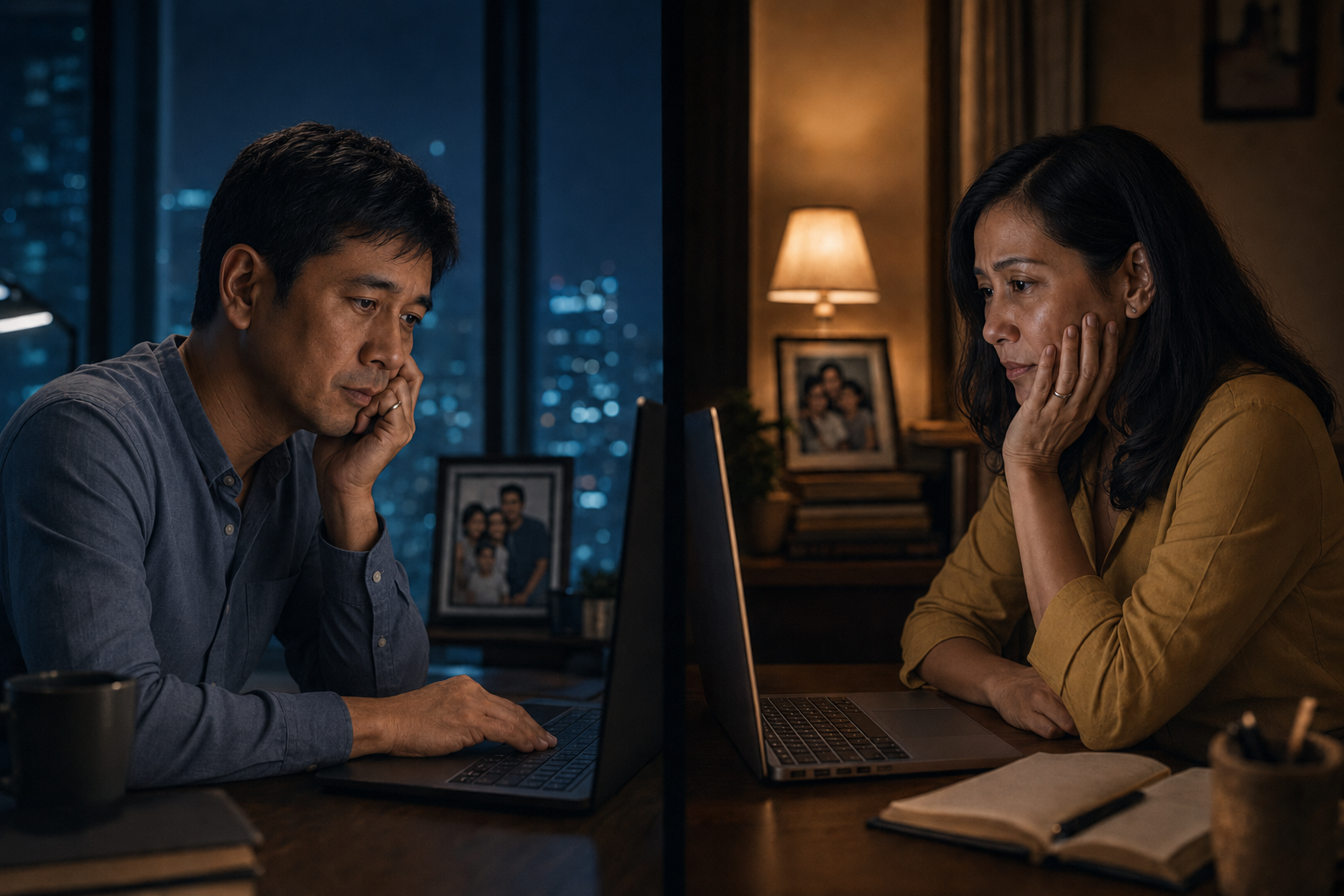
Two days later, I opened Kath’s profile again. I looked through her photographs until restraint felt more dishonest than desire.
That was the explanation I gave myself: restraint was dishonesty. I did not call my silence respect for her boundary or loyalty to my wife. I called it denial. By changing the name of the act, I made surrender sound courageous.
“Hello, Kath. Busy?”
“Not really. Just reading to kill time.”
“Can I call?”
“Why? Didn’t we discuss everything two nights ago?”
“Please. Just for a few minutes.”
“Why, Marco?”
I told her the truth. “I miss you. I only want to see you again.”
The message remained marked Seen for several minutes. Then she called me.
“Thank you,” I said as her face appeared.
“Don’t thank me. You are still impossible to refuse.”
She was wearing a sleeveless shirt and shorts. When she noticed where my gaze had settled, she adjusted the camera.
“I’m looking at your face,” I protested.
“Of course you are.”
I asked whether she missed me. She tried to evade the question, then surrendered.
“Yes. I miss you too. Are you happy now?”
“Very.”
Her expression grew serious. “Let me make something clear. We are both married. We both have children. I am talking to you because we are friends and because we shared a past. Nothing more, nothing less.”
“Loud and clear.”
She told me it would be our last video call. I asked for one call a week. She refused, and I knew—or convinced myself—that she would answer the next time anyway.
When she mentioned that Jay might not return until the following year, I asked when she expected me to visit the Philippines.
“You must miss Anna,” she said.
“I miss everyone I love.”
“Including your wife?”
“Why do you always bring her into our conversation?”
“Who should I mention—Mayette?”
Her teasing turned coarse. She asked whether I missed the sex I had had with Mayette. Irritated, I blurted out that I had not slept with anyone in Korea—not once in eight years.
She laughed. “Do you expect me to believe that?”
“It’s the truth.”
“Marco, you have needs. Are you telling me that in eight years, you never once paid a woman there for one night of sex?”
“Never.”
“That’s impossible.”
“I would never pay a woman for sex.”
“And why should I believe that?”
“Because if I ever sleep with a woman, I want it to happen because we both want it—not because I paid her. There should be desire on both sides and something real between us, even if neither of us knows where it will lead.”
Kath gave a short, disbelieving laugh. “That sounds very principled for someone with your history.”
“What is that supposed to mean?”
“Where was all that concern about what a woman wanted when you kissed me in your office and then—”
She stopped, leaving the rest suspended between us.
“And afterward?” she continued. “When you went home to Anna, did you kiss her too?”
“Kath—”
“Did you hold her the way you had just held me? Did you tell her you loved her?”
“It wasn’t like that.”
“Of course not. It never is when you are the one explaining it.”
I could have reminded her that I stopped when she pulled away. I could have insisted that what happened between us had never been entirely one-sided. But neither answer would erase the truth beneath her questions: I had wanted honesty from her while living dishonestly with both women.
“Believe whatever you want.”
“And Anna? What happens when you go home?”
I told her that Anna and I had not had sex since Kenneth was born. Diabetes had diminished her desire, and intercourse had become painful for her. We did not even share a bedroom during my visits.
“I’m sorry,” Kath said quietly.
“We found an arrangement that preserves our marriage and gives both of us peace.”
The arrangement was difficult to explain. Anna and I had forgiven many things without becoming truly compatible. The distance created by my work in Korea had probably saved us from the daily disagreements that once exhausted us.
Kenneth gave us another reason to remain a family, although I rarely admitted how much of the emotional labor of raising him Anna carried while I lived abroad. I called from Korea, sent money, came home when my schedule allowed, and told myself that provision was presence. The unanswered video call earlier that evening should have reminded me of the distance between my son and me. Instead, I had spent the night trying to erase the distance between Kath and me.
“Then why stay?” Kath asked.
“What else should I have done—find another Mayette?”
“I don’t know.”
“In Korea, I finally understood who I should have married. If I ever begin another relationship, I want it with only one person. If I cannot have her, I would rather have no one.”
The declaration sounded noble in my own ears. It converted years of infidelity into evidence of constancy: I had betrayed Anna with other women, yet because none of them mattered as Kath did, I could still imagine myself faithful to one great love. I did not ask whether devotion to an idealized woman could excuse disloyalty to the real woman I had married.
Kath turned partly away. “Who is she?”
“You know.”
“Say it.”
PART 5 – It Has Always Been You
The Truth About Then
(Were We Ever Meant to Be – Part 3)
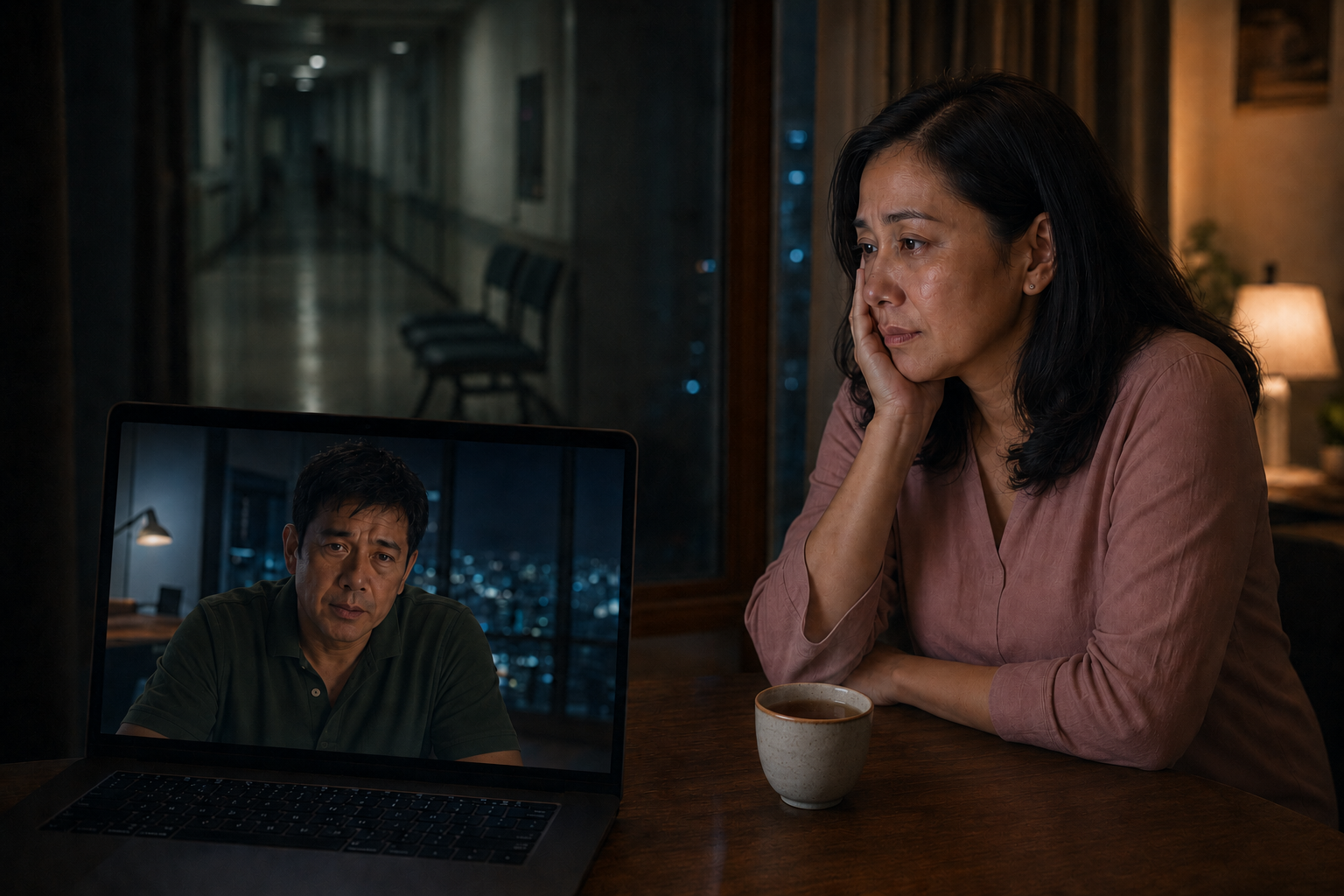
I knew that question would come.
The agency where we had worked was large enough for secrets to travel slowly but small enough for them to arrive eventually. My uncle, a former soldier, owned it with a Korean friend he had known since the war. The business recruited Filipino workers for factories in Korea, which was why my family later had somewhere convenient to send me. Officially, I was transferred to supervise our workers abroad. Unofficially, I was being placed beyond Mayette’s reach—and beyond the daily consequences of what I had done to Anna.
“Why are you frowning?” Kath asked. “Are you angry?”
“No.”
“Then answer me. Do you know Mayette?”
I nodded. There was no point denying it. Kath had made friends at the agency; sooner or later, someone would have told her everything.
“Do I still have to explain?”
“No. I know the details—from the moment Anna found you at Mayette’s apartment to the day your mother and uncle practically exiled you to Korea. I only wanted to hear you admit it.”
I nodded again.
“The last time we met,” I said, “when you were having problems with Jay, I had intended to tell you about Mayette. I was also going to tell you I was leaving for Korea.”
“Your problem, Marco, is that you could never keep that thing under control. Did every intern who worked for you become—”
“Fine. I was a terrible person.”
The irritation in my voice silenced her. For a while neither of us spoke.
“Do you have a girlfriend there?” she finally asked. “How many Korean women have you been with?”
“You wouldn’t believe me if I said none.”
“I hope there’s no one. I hope Mayette ended all that.”
“It was your fault,” I said.
She stared at me. “What was my fault?”
“You left me.”
Even as I said it, I knew how unfair it was. Kath had not abandoned a relationship I had clearly offered her. I had given her secrecy, stolen affection, and complaints about my wife. I had wanted her loyalty while refusing to name what I intended to give in return. Still, the wounded part of me had transformed her transfer and resignation into betrayal. That story allowed me to regard everything I did afterward as pain rather than choice.
Her laughter was sharp with anger. “That’s ridiculous. Did I ask to be transferred? And what exactly was I to you? The person who listened whenever Anna disappointed you? The woman you kissed whenever you needed someone to kiss? Tell me, Marco—what place did I actually have in your life?”
She reminded me of the day I had promised to meet her so we could visit my mother in the hospital. I never arrived. Kath went anyway and felt like a fool.
“I never meant to stand you up,” I said. “When I told Anna I was visiting my mother, she insisted on coming. I delayed our departure, hoping you would finish your visit before we arrived. My mother later told me that you and Anna almost crossed paths.”
“You never explained. One call or message would have been enough.”
“I know.”
“And why was I transferred? Did Anna discover us?”
I drew a breath. “My mother requested the transfer.”
Kath looked stunned. “But your mother liked me.”
“She did. That was why she wanted to protect you. She knew about us—and she knew what I was planning.”
For the first time, I told Kath the truth. I had intended to leave Anna. On the day I failed to meet Kath, I had planned to ask her to fly with me to Cebu and stay there while I arranged the separation. My mother had warned me not to destroy a young woman’s future because of my unhappiness.
My mother had seen what I refused to see. I was newly married, emotionally volatile, and already searching for someone to become everything Anna was not. Kath was intelligent, attentive, affectionate, and easy to talk to. I called those qualities proof that she was my destined partner. My mother feared that I was turning Kath into an answer before I had honestly confronted the questions inside my marriage.
Tears gathered in Kath’s eyes. “Why didn’t you tell me?”
“Because I thought you rejected me.”
The evening after the missed meeting, we had worked late. When Kath brought me coffee, I pulled her into my arms. I kissed and touched her with an urgency I had never shown before. I wanted us to go all the way—not only because I desired her, but because I believed that once we crossed that line, it would be easier to persuade her to leave with me.
“And you thought I would agree?” she asked.
“I felt you pull back. I stopped. But because you had never said you loved me, I decided you were uncertain about us.”
“I was frightened,” she said. “You were married, I had Jay, and I did not know whether you wanted a life with me or only wanted my body that night. You expected me to risk everything on a plan you had never even told me existed.”
There was no defense against that. I had wanted her to prove her love before I proved the seriousness of mine.
“I loved you,” she said after a long silence. “But I could not fight for that love because of Anna. What we were doing was wrong. Every time we kissed, I felt guilty. And you never told me you were serious. I thought you only wanted to make me your…”
She did not finish the sentence.
The call suddenly disconnected. I tried several times to reach her, but she neither answered nor rejected me. Finally, I sent a good-night message.
She called back.
“Are you tired of talking to me?” she asked.
“No. I’m only sad about how things turned out.”
We looked at one another through our screens.
“How long had you and Anna been married when I became your intern?”
“Two months,” I said. “You arrived two months too late.”
“Another perfect line from Marco.”
It was playful, but it was also true. Anna and I had married after knowing each other for barely six months. Both of us had recently emerged from failed relationships. We had mistaken urgency for certainty.
My former girlfriend had wanted me to follow her to the United States, and I had refused. Anna had left a boyfriend she considered lazy and unambitious. We met at the agency, where my uncle—her godfather—had given her work. Two people nursing rejection found comfort in one another and called the speed of their attachment certainty. By the time Kath arrived, the marriage certificate was only two months old, but the differences between Anna and me had already begun to surface.
“Such a waste,” I said.
“It’s simple, Marco. We were not meant to be.”
I told her that when I finally accepted Anna as she was, I began to see her good qualities. We remained incompatible in many ways, but our marriage became more peaceful. I also admitted that after losing Kath, I had used affairs to punish Anna whenever we fought. Mayette had not been the only one.
Anna had forgiven behavior that I would have struggled to forgive in her. That truth complicated every complaint I made about our marriage. She could be temperamental, and our disagreements could be exhausting, but she had remained when she had every reason to leave. Whenever I presented myself as trapped, I omitted the ways she had absorbed the consequences of my choices.
“I’m not proud of what I did.”
“At least you didn’t leave Anna for Mayette.”
“Mayette was not Katherine. It was that simple.”
Kath rolled her eyes, but she smiled.
By the time we ended the call, it was three in the morning.
“Good night, Marco.”
“Good night, Kath.”
Before sleeping, I sent one last message: Love you, my friend.
Her reply came quickly. Friend? Have I been friend-zoned?
When I asked what she meant, she called it a joke and ordered me to delete our conversation.
I began erasing the messages. When I reached the line in which she said we were not meant to be, I stopped.
Were we really not meant to be?
PART 4– THE LINE BETWEEN US
What We Left Unsaid
(Were We Ever Meant to Be – Part 2)
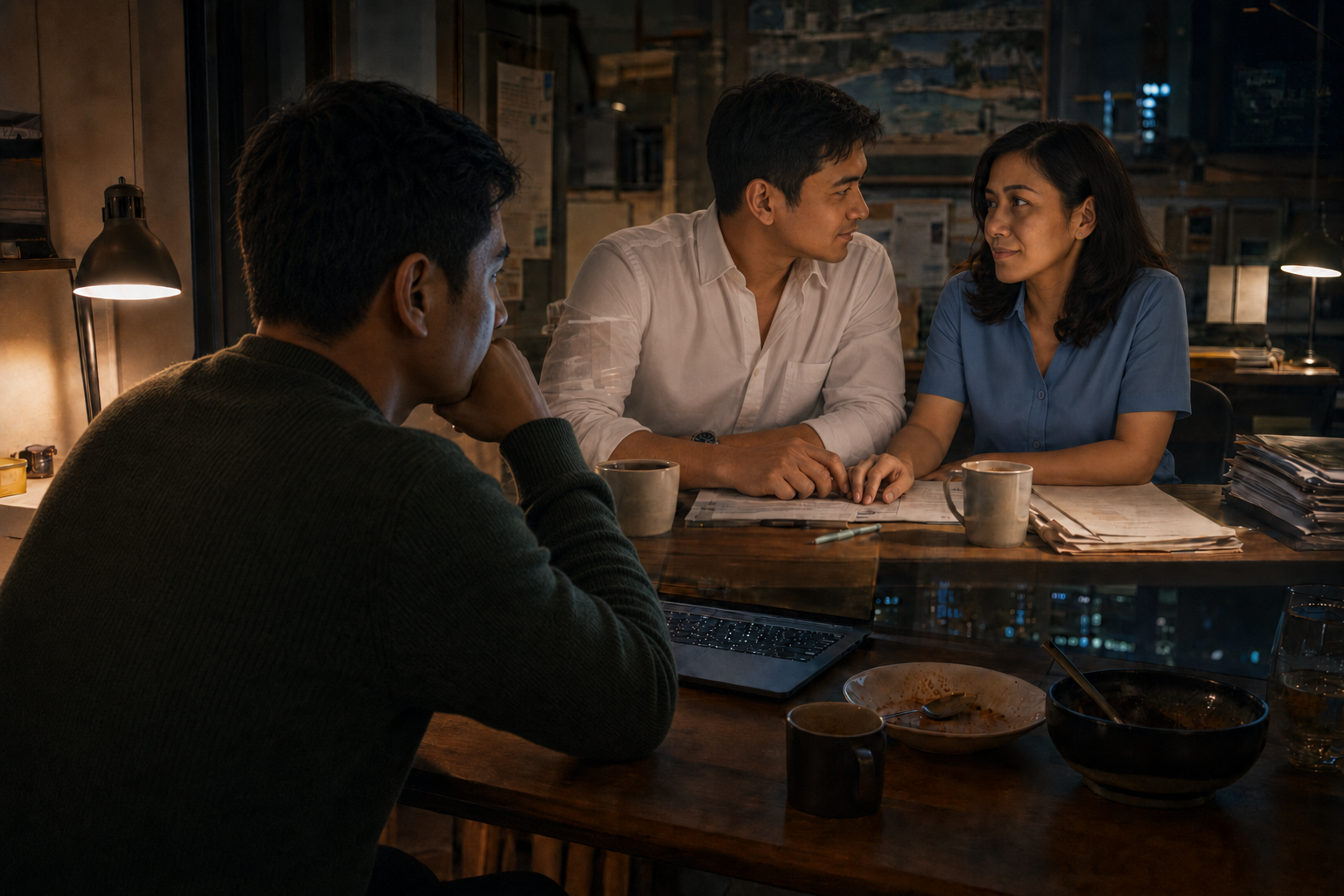
“Do you really need to ask me that?”
“You can refuse to answer.”
“Why are you asking?”
Why was I? What difference would the answer make now? What if she admitted that she had loved me—or that she still did?
“Because there are things we never clarified,” I said. “Every time we met after you resigned, we avoided them. Maybe we were afraid. Maybe we knew nothing good could come from talking about them.”
She lowered her eyes.
“Perhaps I was wrong,” I added. “Perhaps I only imagined that something important had happened between us.”
“What was your question again?”
“Did you really love me?”
“Of course I do—I mean, I did. Did.”
I could not suppress a smile.
“What are you grinning at?”
“So it’s did, not do.”
“You heard me.”
“Meaning you don’t love me anymore?”
“You are unbelievable, Marco. Some questions are better left unanswered.”
I let the silence answer for her.
“I’m happy when I see photographs of you and Anna,” she said. “You look happy together.”
“So you check my Facebook page.”
“Don’t you check mine?”
I admitted that I did. Then I asked what she had wanted to ask me.
“You already know,” she said. “But I want an honest answer.”
“Which question—did I love you then, or do I still love you now?”
She smiled. “Both.”
“Do you really need to ask me that?”
She laughed at hearing her own words returned to her.
“I loved you then, Kath.”
“And now?”
“Some questions are better left unanswered.”
“I can read between the lines, Marco.”
“So can I.”
When she left briefly to use the bathroom, memories crowded into the silence. We had once spent nearly every working day together. At first, while she was my intern, we had been strictly professional. Then our conversations became personal. I told her about my difficulties with Anna; she told me about Jay, who was then still courting her.
One night, while we were working overtime, I held her hand and kissed her. The kiss lasted longer than either of us could excuse. After that, affection became part of our secret routine. Sometimes a kiss welcomed one of us into the office. Sometimes I whispered that I missed her or loved her. At night, behind a closed door, we kissed until restraint was the only thing keeping us from going further.
Kath never allowed us to cross that final boundary. She never once said she loved me. And because Anna worked in the next office, we made certain no colleague noticed anything unusual.
Kath returned to the call and settled on a sofa. She wore shorts and a thin shirt, and when she reclined I had to remind myself not to stare.
The years had altered her less than I expected. There were faint lines around her eyes now, but they made her beauty feel lived in rather than diminished. She had become a mother, a wife, and a woman who spoke with greater certainty than the young intern I remembered. Yet when she smiled at something foolish I said, I could still see the twenty-something woman who used to enter my office carrying two cups of coffee and pretend not to notice that I had been waiting for her.
The memory pleased me, but it also carried a fact I preferred not to examine: back then I had been her supervisor. My recommendation had helped determine whether she would be hired. I had told myself that her affection was freely given—and perhaps it was—but I had never asked what my authority might have meant to a young woman beginning her career. It was easier to remember the kisses than the imbalance surrounding them.
“Careful, Marco. Your eyes might fall out.”
“You’ve attracted me for a long time.”
“There goes the charmer again.”
“You’re still very attractive.”
“I know.”
We laughed, but the ease did not last.
“I have another question,” she said. “Do you know someone named Mayette?”
PART 3 – THE TRUTH ABOUT THEM
Were We Ever Meant to Be?
Were We Ever Meant to Be? is a provocative love story told as a novelette—a story of unfinished love, renewed desire, marital commitment, and the difficult choice between what the heart wants and what one believes is right.
Story Preview
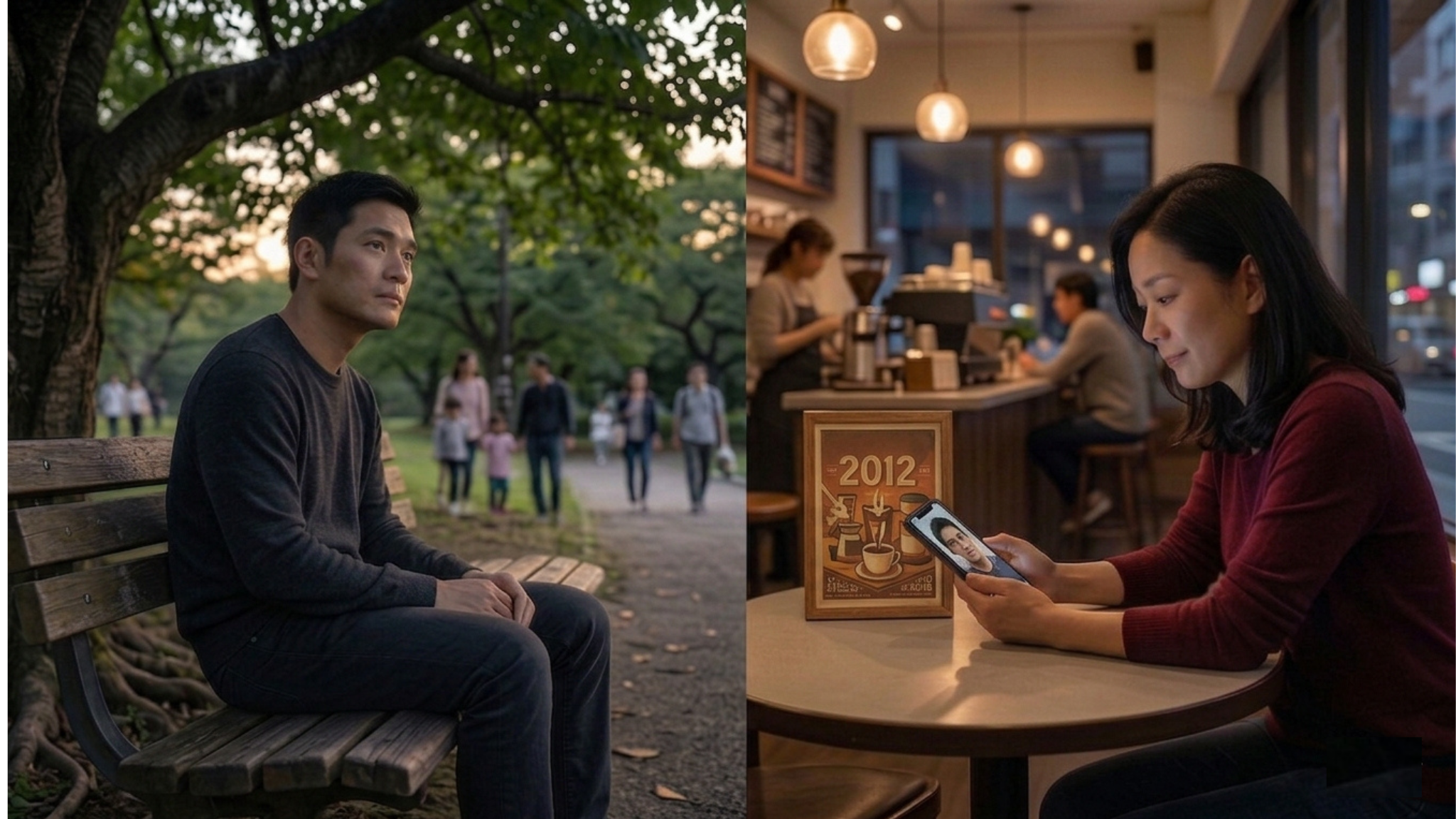
Living alone in South Korea during the COVID-19 pandemic, Marco sends a simple birthday greeting to Katherine, a woman he has not seen in eight years. What begins as a friendly exchange soon reopens a past they had carefully buried—and feelings neither of them has completely forgotten. But Marco and Kath are no longer the people they once were: both are married, both have children, and both have lives that could unravel if they allow an unfinished love to begin again. As distance disappears through their screens and old questions demand new answers, they must confront a dangerous possibility: perhaps some loves survive because they are meant to be—or perhaps surviving is precisely what makes them hardest to resist.

Part One – A Message After Eight Years
After finishing my third movie of the day, I finally switched off my desktop computer. I would open my laptop later when I felt like browsing the internet.
That was how my days usually passed whenever I had no work—Netflix, the internet, and, when inspiration visited, writing a story, poem, or essay for my website. When I did not feel like watching, browsing, or writing, I read. Whatever I chose, I remained inside my apartment.
I had no desire to go out. COVID was still spreading, and because it was the weekend, I knew the streets and public places would be crowded. Koreans loved going out whenever they were free. Besides, winter was not quite over, and the evening was cold.
I had promised myself I wouldn’t touch anything work-related all weekend. I needed a break from the stress. The report my boss had requested could wait until I returned to the office.
I stepped onto the terrace of my two-bedroom apartment to stretch and breathe some fresh air. It was already past eight, and darkness had settled over the neighborhood.
The terrace was small, with just enough room for a chair and a little table. I sat there whenever I wanted some air, some morning sunlight, or a quiet place to read. Sometimes I drank coffee there. Sometimes beer.
I did not stay long that evening. Hunger drove me back into the kitchen. I had started watching movies after lunch and had not eaten since. I reheated the leftover chicken and pizza in the microwave and cooked a packet of ramen so I would have something warm to sip in the cold weather.
Carrying my food, I returned to the second bedroom, which I had converted into a study and miniature theater. It had also served as my workplace when the rising number of COVID cases forced our company to send its employees home. We had only recently been required to return to the office.
I opened my laptop while I ate. As always, Facebook was my first stop. I messaged Anna, my wife, to ask if she was feeling better. We hadn’t chatted all day because she had told me that morning that she was unwell.
She appeared to be offline. The green dot beside her name was gone.
I tried video-calling our son, Kenneth, but he did not answer. He was probably asleep—or too absorbed in Mobile Legends to notice my call.
I scrolled through my feed instead, then checked the profiles of several close friends and relatives. From thousands of kilometers away, Facebook was the easiest way to know what was happening in their lives back in the Philippines. If I saw something that made me miss someone, I messaged them.
That evening, one of them was celebrating her birthday.
Katherine.
I opened Kath’s profile, found an attractive birthday image on Google, and sent it to her through Messenger, along with a brief greeting and a question about how she had been.
Then I moved on to ESPN to check the day’s NBA results and watched the game highlights on YouTube. By the time I finished, it was already eleven. My food was gone, and I was tired of browsing.
I decided to watch another movie, but first I made myself a cup of coffee.
Before closing the laptop, I checked Facebook one last time. Kath’s profile was still open. I looked at the message I had sent her.
Not yet seen.
She was probably asleep. She would see it in the morning.
For no particular reason—or perhaps for one I did not want to admit—I opened our conversation history and began scrolling upward.
We had not had a real conversation since I moved to South Korea. Every year, I greeted her on her birthday. She thanked me, we exchanged a few questions about how life was treating us, and then we said goodbye. I often wanted to keep talking, but I could never tell whether she wanted the same.
I scrolled down again.
The year before, when I had been preparing to visit the Philippines, we had talked about meeting. Friends often promised to have coffee with me whenever I came home, but most of those plans remained exactly that—plans. Perhaps Kath and I would have met if COVID hadn’t disrupted everything.
I knew I would not have wasted the opportunity to see her.
I simply did not know whether she felt the same way.
I was about to close Facebook when the status beneath my message suddenly changed.
Seen.
Kath was online.
A moment later, the three moving dots appeared. She was typing.
“Sirrr!!!”
I smiled.
Even after all these years, she still called me Sir. She had once been an intern at the travel and recruitment agency owned by my uncle, where Anna and I had both worked before I was assigned to Korea. I had headed the human resources office, and my uncle had placed Kath directly under my supervision.
She had been a fresh graduate then. The arrangement was that she would complete a one-month paid internship, after which my recommendation would determine whether she would be hired as a regular employee.
“How are you, sir?” she added.
“What is this, Kath? First you call me Sir, and now you’re being formal with me. Just call me Marco.”
“All right. Let me try again. How are you, Marco?”
“Still beautiful.”
“Wow. Same here—and I’m more beautiful than you.”
We exchanged laughing emojis.
“Thank you for remembering my birthday,” she wrote.
“How could I forget? You’re on my annual list of people I’m required to greet.”
“Oh, really? Well, thank you for including me on your precious list.”
She reacted to my message with a heart.
“What have you been doing lately?” I asked.
That simple question began the longest conversation we had shared since I left the Philippines. Before that night, we rarely exchanged more than three or four messages before one of us found a reason to leave.
I asked about her family.
“Jay and I are happy together,” she replied. “We’ve been blessed as a couple.”
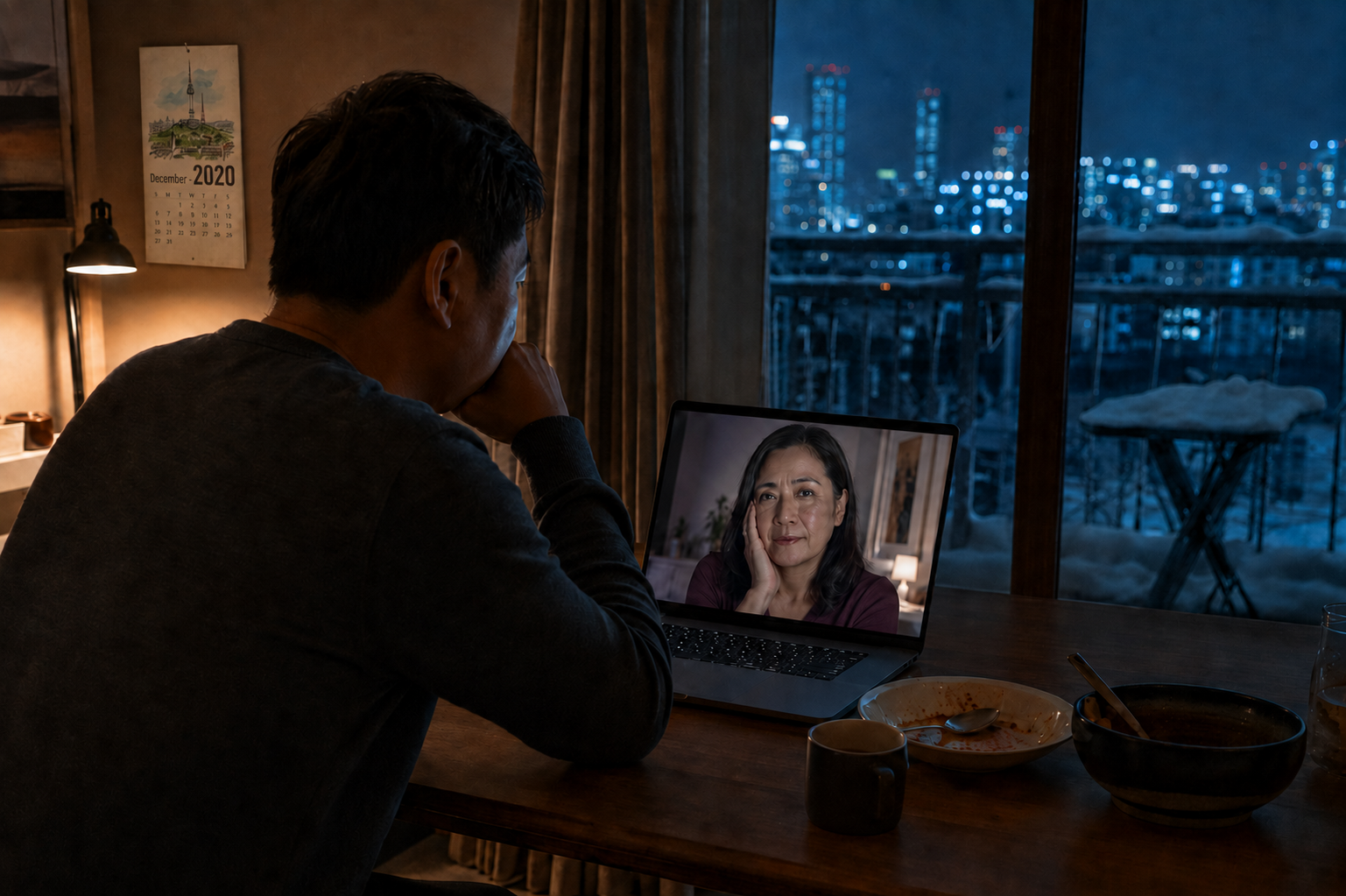
I had meant her whole family. To be honest, her husband had not even entered my mind when I asked. But since she had brought him into the conversation, I asked whether he was home.
I knew Jay was a seafarer. Kath said he was currently aboard a ship operating in South America.
“How about you and Anna?” she asked.
My fingers remained above the keyboard for a long time.
How were Anna and I?
“We’re okay,” I finally typed.
Kath replied almost immediately.
“Wow. It took you that long to answer, and all you can say is that you’re okay?”
I had intended to add more. I had pressed Enter too soon.
“Things became more peaceful between us when I stopped expecting her to meet my standards.”
“Has she changed?”
Again, I hesitated.
“Anna is Anna,” I wrote. “She is who she is. I’ve learned to accept that.”
Kath sent a thumbs-up.
Her question stirred memories I had kept untouched for years. Whenever Anna and I fought back then, Kath had been the person who listened to me. If she entered my office and found me unusually quiet, she immediately knew that something had happened between my wife and me. She would make me coffee, sit nearby, and tell me I did not have to keep everything to myself.
I thought the thumbs-up would end our conversation. Instead, she sent a sad emoji.
“I’m all right, Kath,” I assured her.
She reacted with a heart.
I turned the question toward her.
“How are things between you and Jay? Have you completely repaired your relationship? Are you back to the way you used to be?”
“Yes. We worked through our problems. We both realized that perhaps we needed to experience what happened—just as you and Anna needed to go through your own difficulties. You know we’re both Christians. We chose to remain together and allowed God to guide us through the healing process.”
I sent her a thumbs-up.
“I think we’re more mature now in the way we handle our problems,” she added.
Shortly before I moved to Korea, Kath and I had met because she and Jay were going through a serious marital crisis. She had needed someone to talk to, and I had listened. At the time, she believed their problems might end their marriage. I asked what caused the conflict, but she was reluctant to tell me.
Her problems had seemed so heavy that I never found the opportunity to tell her about mine. I had been going through a crisis severe enough for a doctor to prescribe antidepressants. I had not even told her that I would soon be leaving for South Korea.
“You suddenly went quiet,” she wrote. “Are you busy?”
“No. I was just remembering the last time we saw each other. We watched a movie that day, didn’t we?”
“Which part are you remembering—the movie, or the way you pretended to comfort me so you could steal a kiss on my cheek?”
“That isn’t true,” I protested. “I was genuinely trying to comfort you. If I had wanted anything else, then I would have—”
“Stop it, Marco.”
“All right. But I really didn’t have any hidden intention that day.”
“If you say so.”
I sent her smiling emojis.
She sent back three hearts.
“I miss you, Kath,” I typed. “I really do.”
The words had escaped before I could decide whether they were appropriate. Something familiar had risen inside me—a feeling I knew too well whenever it concerned her.
The message had already been delivered when I realized she might take it the wrong way.
“Oh, Marco,” she replied. “It’s getting late. I should say good night.”
Perhaps I had offended her.
“I’m sorry, Kath.”
“Sorry? What are you sorry for?”
I stared at the screen, unable to type a single word.
“Marco, I asked what you’re apologizing for.”
I do not know how long I sat there. Memories I had spent years avoiding began returning one after another.
Finally, I typed, “It’s nothing. You said it’s time to sleep, so good night. Thank you for talking to me.”
A series of angry emojis appeared.
“Fine, Marco. Leave me hanging again. I should be used to that by now.”
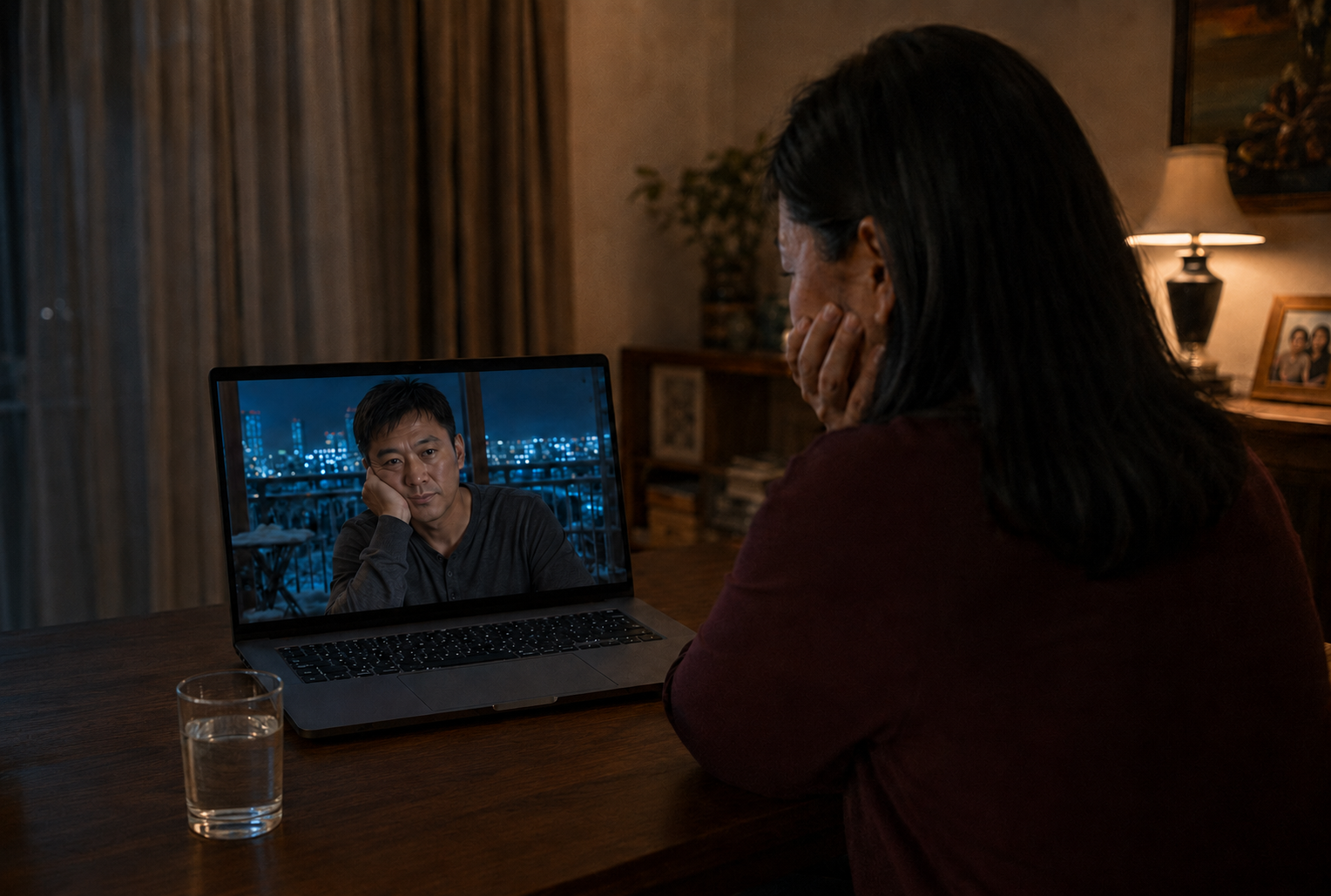
I pressed my palm against my forehead.
This was why I kept my distance even when I wanted to speak to her. Perhaps it was also why she kept hers. Neither of us wanted to uncover what we had spent years burying.
Instead of replying, I tried to video-call her.
She rejected the call.
I tried again.
Rejected.
“Please answer,” I wrote. “My hands are tired from typing.”
I called a third time.
At last, she answered—but her camera was off.
“Please turn on your camera,” I typed.
“Why?”
“I want to see you.”
It took her a while, but eventually the screen flickered and her face appeared.
I looked at Kath. She seemed to be studying me in the same way. Almost eight years had passed since we last saw each other, yet she looked scarcely changed.
“Have you been crying?” I asked.
“You’re infuriating, Marco. Why did we have to make this a video call?”
“My fingers were beginning to hurt from typing. And besides…”
I stopped.
“Besides what?”
I drew a breath. “I miss you, Kath.”
“I can never tell whether you’re telling the truth or merely charming me.”
“Is that really what you think of me?”
“Yes. It has been—for a long time. Since the day you failed to show up.”
I had no answer.
Whenever our conversations came dangerously close to what had once existed between us, she returned to that day—the meeting I had missed and the explanation I had never given.
“Marco, I want to ask you something,” she said. “And for once in your life, please answer me honestly. Just this once.”
Her words hurt. They made me sound like a man who had lied about everything.
“All right. I promise I’ll be honest. What do you want to know?”
She stared at me through the screen.
I tried to guess what she was about to ask.
Was it why I had not shown up that day when we were supposed to visit my mother in the hospital? Was it why my uncle had transferred her to another branch after she had worked in my office for six months? She had resigned two months after the transfer. Perhaps she wanted to know why I had not tried to stop her.
Or why I had seemed unaffected when she told me that she and Jay were getting married.
Perhaps she wanted to know why I had left for Korea without telling her—or why I had made so little effort to remain part of her life afterward.
Which of those questions had she carried all these years?
She took so long to speak that I wondered whether she had changed her mind.
“Never mind,” she finally said. “It’s embarrassing.”
“What are you—a teenager?”
“That’s enough, Marco.”
“All right. Ask me.”
“I said forget it.”
I sighed.
Perhaps I already knew what she had wanted to ask.
“Fine,” I said. “Then I’ll ask the question.”
“Go ahead. Just don’t ask me anything about mathematics. You know that’s my weakness.”
I smiled. Her humor had not changed.
“Kath…”
“Yes?”
“Did you really love me back then?”
She closed her eyes and released a long, unsteady breath.
Part 2 – What We Left Unsaid
Huwag Kang Lilingon ~ Chapter 7

CHAPTER 7
“Sa Muling Pagtatagpo”
Nakaalpas kami mula sa sakmal ng gubat na siyang naging libingan ng mga biktima ng mga halimaw at bumulaga sa amin ang isang sapa.
Napakalinis at napakalinaw ng tubig nagaanyayang kami’y magtampisaw… hinihimok kaming limutin ang lahat ng mga hindi magagandang karanasan namin mula ng dumating kami sa islang iyon. Pero napakahirap gawin niyon.
Naupo kaming magkakalapit, ang mga mata ay patuloy sa pagmamasid sinusuri ang bawat sulok sa paligid. Maging ang sapa, para sa akin, ay kahina-hinala—masyadong malinis, masyadong tahimik, masyadong mapang-akit.
Naupo ako sa mabatong bahagi sa tabi ng tubig, pinagmamasdan ang aking repleksyon na gumagalaw sa umaagos na tubig ng supa. Tuyot na tuyot na ang lalamunan ko mula sa mahabang oras ng paglalakad at nakaktuksong yumuko para uminom. Kumikinang ang malamig na tubig, napakahirap tanggihan.
Ibinaba ko ang aking hawak na pamalo, bagama’t nag-aalinlangan akong bitawan ito. Ang kahoy na ito ay parang nagbibigay sa akin ng lakas ng loob at huwag matakot sa mga Sutsot.
Akmang ilulubog ko na ang aking kamay sa sapa, ang mga daliri ko’y nasa ibabaw na ng tubig. Pero may pumigil sa akin. Iginala ko ang aking paningin sa paligid. Sa likuran namin ay pinanggalingang gubat. Sa kabilang pampang ng sapa ay isa nanamang kagubatan.
Nakakangilo ang katahimikan. Napakahirap kumampante at isipang okay na ang lahat.
Paano kung ito ang sandaling piliin ng mga Sutsot para sumalakay? Ang sapa ay mukhang masyadong perpekto, ang agos ay tila isang duyan na parang gusto akong ipaghele.
Binawi ko ang aking mga kamay. Baka may kung ano sa tubig—isang bagay na kapag nainom namin ay magpapahina sa amin laban sa mga demonyo. Kung ano-ano na ang inisip ko. Pati tubig na walang malay ay pinagduduhan kong kakampi ng mga halimaw.
Sinulyapan ko sina Tomas at Jasmine. Ang kilos nila’y nagpapahayag nang pag-aalinlangan. Huminga ako nang malalim. Hindi ako pwedeng maging pabaya. Hindi ngayon… hindi kaylanman. Hindi ako pwedeng mamatay. Hindi ngayon. Hangga’t hindi ko nasisigurong ligtas si Eve.
Pagkatapos ay muli kong naramdaman ang pamilyar na kilabot na gumapang sa aking gulugod, malamig at matalas, parang haplos ng mga daliring hindi nakikita. Natutunan ko nang pagkatiwalaan ang pakiramdam na iyon. Iyon ang paraan ng katawan ko para magbabala na meron nagbabantang panganib pero hindi ko nakikita.
Tumayo ako, at pinagmasdan ko ng mabuti ang paligid. Bawat kilos sa madilim na bahagi sa harapan namin at likuran ay pilit kong inaaninag. Bawat tunog ay mabusising pinapakinggan. Batid kong ganoon din sina Tomas at Jasmine. Kaligtasan namin ay kaylangang tiyakin. Lahat kami’y nangangamba na biglang sumulpot ang mga Sutsot at katawan nami’y pilit na agawain..
Napansin ni Tomas na ako ay balisa.
“Ano ‘yun, bro?” tanong ni Tomas.
“Hindi ko alam…” Pabulong kong sagot. “May nararamdaman lang akong kakaiba.”
Mula sa likod ng isang malaking bato, isang lalaki ang lumabas.
Ang kanyang buhok ay tila mga madulas na lubid, ang kanyang balbas ay ligaw at may mga guhit ng abo. Halos kasing-tangkad siya ni Tomas pero mas malapad ang balikat. Ang machete sa kanyang baywang ay bahagyang kumikislap—ang hawakan nito ay parang pudpod na dahil sa ilang taong paggamit.
Dahan-dahan siyang humakbang palapit. Naamoy ko ang alat, kalawang, at pawis na umalingasaw mula sa kanyang katawan. Bumilis ang tibok ng puso ko. Hinablot ko ang aking sanga at humanda sa pakikipaglaban. Itinaas ni Tomas ang kanyang baril at itinutok sa lalaki. Pero nakakagulat ang bilis na ipinamalas ng lalaki. Sa isang iglap, naagaw niya ang baril ni Tomas at itinutok ito sa amin.
Susugod sana si Jasmine, pero mabilis na ibinaling ng lalaki ang baril sa kanya. “Huwag mong gawin ‘yan, Jasmine!”
Napatigagal kami.
“Kuya? Kuya Adam! Ikaw ba talaga ‘yan?”
Bahagyang ibinaba ng lalaki ang baril. “Oo. Ako nga. Kanina ko pa kayo pinagmamasdan simula nung makarating kayo sa sapa.”
Dali-daling lumapit si Jasmine para yakapin ang kapatid, pero mabilis akong humarang. “Sandali lang, Jasmine. Paano kung—”
“Huwag kang mag-alala, hindi ako Sutsot. Hindi ako nasaniban.”
Nakahinga ng maluwag si Jasmine. “Salamat sa Diyos at buhay ka! Alam kong matatag ka!” bulalas niya, bago mahigpit na niyakap ang kapatid. Pagkatapos ay humarap siya sa amin at ipinakilala kami ni Tomas sa kanyang kuya.
“Kayo ba ‘yung nasa balsa ni Kharon kagabi?” tanong ni Adam habang ibinabalik ang baril ni Tomas.
Tumango ako.
“Ako ‘yung nagwawagayway ng sulo kagabi. Tuwing nakakakita ako ng hanay ng ilaw sa gitna ng dagat, umaakyat ako sa tuktok ng mga burol na ‘yan.” Itinuro niya sa pinakamataas na bahagi ng isla. “Doon ako nagsisindi ng sulo para makita ng mga nasa balsa.”
Napailing si Tomas. “Mahirap paniwalaang nakatagal ka nang ganito dito sa dami ng mga demonyong ‘yan sa paligid.”
Ngumiti si Adam. “Sa tingin ko, ang training ko sa militar ang naghanda sa akin para rito. Pero ang tunay na nagpatibay sa akin ay ang kagustuhang ipaghiganti ang pagkamatay ni Julie… at iligtas ang sinumang maihahatid ni Kharon dito.”
Lalong hinigpitan ni Jasmine ang yakap sa kapatid. “Pero bawat taong naililigtas ko,” patuloy ni Adam, bakas ang panghihinayang sa kanyang boses, “sa huli ay kinakain din ng mga demonyong Sutsot.”
Kumalas siya sa yakap ni Jasmine. Tumingin sa aming isa-isa “At hindi ko alam kung hanggang kailan tatagal ‘yung nailigtas ko kamakailang lang… at kayo man.”
Nanlaki ang mga mata ni Tomas. “Ano? May nailigtas kang buhay pa hanggang ngayon?”
Hindi makahinga si Jasmine. “Babae ba siya, kuya?”
Sinalubong ni Adam ang kanyang tingin. “Oo.”
Nag-atubili siya—saka bumulong, “Evelyn ang pangalan niya.”
Nakaramdam ako ng hindi maipaliwanag na kaligayahan. Kitang-kita ko rin kung paano nagliwanag sa galak ang mukha ni Tomas.
“Nasaan ang kapatid ko? Nasaan siya?” Ang tanong ni Tomas.
Laking gulat ni Adam. “Oww, ikaw ang kapatid ni Eve?”
Lumapit ako’t kinamayan ko si Adam. “Salamat brod. Maraming salamat. Si Eve ang dahilan kung bakit kami narito. Dalhin mo kami sa kanya.”

Sandaling hindi gumalaw si Adam. Pagkatapos, sa isang dahan-dahang tango, humarap siya sa mabatong bangin. “Sumunod kayo sa akin.”
Tumawid siya sa sapa. Mababaw lang naman ito. Lampas tuhod lang angn pinakamalalim na bahagi. Sinundan namin siya. Hawak ko ng mahigpit ang aking pamalo. Si Tomas ay nagkasa ng baril. Nakahanda rin ang patalim ni Jasmine. Batid naming lahat na hindi kami puwedeng kumampante.
Nang matawid namin ang sapa ay pumasok kami sa isa pang bahagi ng gubat. Mas malinis ito, hindi gaanong masukal—pero amoy ng kerosene ang paligid.
Nagtaas ng kamay si Adam, hudyat na magdahan-dahan kami. “Mag-ingat kayo sa bawat hakbang,” babala niya. “Ang bahaging ito ng gubat ay puno ng mga patibong. May mga hukay dito na may mga matatalas na tulos at binuhusan ko ng kerosene. May mga alarm system din ako dito sa bahaging ito ng gubat. Ginawa ko ito para hindi hindi ako masalisihan ng mga Sutsot habang ako’y natutulog.
Habang naglalakad, napansin ko ang mga bahagyang kislap ng bakal sa pagitan ng mga ugat at sanga na natatabunan ng dahon. Ang hangin ay malapot sa amoy ng kerosene at kalawang.
Pagkatapos ay biglang tumigil si Jasmine. Sa unahan namin, nakasabit sa isang animo’y sapot ng gagamba pero yari sa baging ang isang kalansay—malinis na ang mga buto nito, ang bungo ay nakatingala sa langit. Ilang hakbang pa, may isa pang kalansay na nakasalampak sa isang hukay na puno ng matutulis na tulos ng kawayan.
“Mga Sutsot ang mga ‘yan,” ang wika ni Adam. “Mga biktima ng bitag ko ang mga iyan. Kapag narinig kong humihiyaw sila kapag nahuhuli sa mga patibong na iyan eh pinupuntahan ko para gamitan ko nitong bendidatong machete ko. Kaya takot na silang pumasok sa bahaging ito ng isla. Marami sa kanila ang namatay rito.”
Sa malayo, natanaw namin ang isang dampa na may bubong na gawa sa tuyong dahon ng nipa. Habang papalapit kami, may lumabas ng bahay… Eve.
“Diyos ko! Kuya! Kuya!” Ang boses niya ay binalutan ng magkahalong galak at iyak.
Mabilis na tumakbo si Tomas at niyakap nang mahigpit si Eve. “Salamat sa Diyos at buhay ka! Alalang-alala si Nanay sa’yo—pati na si Jeff.”
Gusto ko ring yakapin si Eve, sabihin sa kanya kung gaano ako kasaya na ligtas siya. Pero ang tanging nagawa ko lang ay ipikit ang aking mga mata at bumulong ng isang dasal ng pasasalamat.
“Hindi mo na kaylangang pumunta dito Kuya. Sobrang mapanganib.”
“At bakit hindi? Pinangako ko kay Tatay na poprotektahan kita sa lahat ng oras. Gagawin ko ang lahat para tiyaking ligtas ka Eve.”
“Sorry! Patawarin mo ako! Dapat nakinig ako sa’yo. Hindi ko na lang sana pinatulan ang hamon ng mga classmates ko na pumunta sa islang ito. Na-excite kasi sila sa mga napanood nila sa YouTube tungkol dito. At totoo nga palang may mga halimaw na naninirahan dito.”
“Masaya kami Eve na makitang ligtas ka.” sabi ko.
“Oo, salamat kay Adam. Iniligtas niya ako,” sabi ni Eve habang kumakalas sa yakap ni Tomas at sumisiksik kay Adam, ang kanyang ulo ay sumandal sa balikat nito. Para bang kay tagal na nilang magkakilala.
Gusto ko ring pasalamatan si Adam, pero ang mga salita ay tila bumara sa aking lalamunan. Sandaling nakalimutan ko ang isla, ang mga demonyo, pati ang pagkamatay ni Daniel. Ang makita si Eve na ganoon, buhay pero nakasandal sa balikat ni Adam—ay naghatid ng isang matinding kirot sa aking dibdib.
Gusto kong magdiwang dahil nakita ko siyang buhay, pero hindi ko magawa habang nakikita ko na parang napakalambing niya kay Adam. .
Tumingin ako sa malayo bago pa mabasa nina Tomas o Jasmine ang nakasulat na pagkadismaya sa mukha ko. Pero duda akong napansin nila. Ang mga mukha nina Tomas at Jasmine ay bakas rin nang pagkalito habang pinagmamasdan ang ipinapakitang lambing ni ni Eve kay Adam.
Napansin ko ang pag-aalinlangan sa ngiti ni Tomas. Ang kanina’y pasasalamat na ipinpakita niya kay Adam ay mukhang napalitan ng duda at kalituhan. Halatang pilit ang kanyan ngiti nang tumingin siya sa akin.

Si Jasmine naman ay parang nagtataka. Ang kanyang tingin ay nakatutok sa kanyang kapatid, pinagmamasdan kung paano nito hawakan si Eve. Hindi ko mahulaan kung ano ang naglalaro sa isip ni Jasmine. Pag-aalinlangan, marahil. O takot. Tahimik siyang nag-antanda ng krus, bumubulong ng dasal na siya lang ang nakakarinig.
“Siyanga pala, gustong sumama ni Jeff, pero hindi siya pinayagan ng nanay niya,” sabi ni Tomas, upang basagin ang katahimikan biglaang namayani sa kalagitnaan namin.
“Jeff… Sino naman si Jeff?”
“Ha… eh … Family friend,” mabilis na sagot ni Eve.
Napansin ko ang bahagyang inis sa kanyang boses. Kung bakit hindi niya sinabing kasintahan siya nito ay hindi ko alam. Marahil galit siya dahil hindi ito sumama sa amin para hanapin siya. O baka may iba pang dahilan.
“Ah… Kuya, nakita mo ba ang mga classmates ko?” tanong ni Eve ng may bahid ng pananabik na marinig ang kasagutan.
Nagkatinginan kami ni Tomas.
“Sorry Eve… pero wala na sila—maliban na lang sa isa, marahil,” seryosong sagot ni Tomas.
Napayuko si Eve nang madinig iyon.
“Kami lang ni Eve ang nakaligtas sa islang ito. Maging ang mga kasama namin ni Julie na pumuta dito noon ay isa-isa ring namatay,” dagdag ni Adam. “Halika, pasok tayo sa dampa.”
Sumunod kami sa loob. Isang lamesa na yari sa kahoy ang nasa gitna ng bahay. May mga prutas at tila bagong ihaw na mga isda sa ibabaw nito. Ang mga upuang nakapaligid sa lamesa ay yari din sa kahoy. Sa isang sulok ay may dalawang manipis na kutson—luma, sira-sira, at magkatabi.
“Kumain muna kayo—alam kong gutom na gutom na kayo. May tubig din dito.”
Atubili man ay kaylangan naming kumain.
“Huwag kayong mag-alala. Walang lason iyan.” Ang pabirong sabi ni Adam ng napansin niya tila parang nagaalangan kaming isubo ang mga pagkaing hawak na namin.
Habang kumakain, muli kong naramdaman ang pangangalisag ng mga balahibo ko sa aking kamay at batok. Parang may mga matang nakatingin mula sa labas o baka nasa bubong ng dampa.
“Paano ka nailigtas ni Adam, Eve?” tanong ni Tomas.
Ang tingin ni Eve ay napako sa sahig, napabuntong-hininga. “Ang natatandaan ko lang… matapos naming itayo ang mga tent, ang isa sa mga kasama ko ay nagpasimula ng siga. Nakaharap kami sa apoy nang makarinig kami ng paswit mula sa likuran namin. Lahat ng lumingon ay nagsimulang mangisay. Nawala ang kanilang mga mata, at ang kanilang mga tiyan ay unting nawawakwak.”
Nanginginig ang boses ni Eve habang ito’y nagkukwento.
“Dahil sa takot, tumakbo ako sa gubat. Nang tumigil ako para huminga, may humablot sa akin mula sa likuran at tinakpan ang bibig ko. Si Adam ‘yun. Sinabi niya sa aking huwag gagalaw at huwag gagawa ng ingay. Sinabi niya ring huwag akong magpa-panic habang naglalakad kami.”
Nabulunan si Eve sa emosyon. Inakabayan siya ni Adam. Isinandal ni Eve ang kanyang ulo sa kanyang balikat.
Sinakmal nanaman ako ng matinding panibugho. Pero wala akong magawa.
“Paulit-ulit na nagbabala si Adam na huwag lilingon sa likod, anuman ang mangyari—kahit may tumawag pa sa pangalan ko o may papaswit. Ang mga Sutsot ay tinatawag ang pangalan ko. May kaboses nga noon si kuyaTomas.”
“Patuloy niyang iwinawasiwas ang kanyang itak para hindi makalapit ang mga demonyo. Tumigil lang sila sa pagsunod nang makarating kami sa sapa.” Sinulyapan ko si Adam. Gusto kong magpasalamat sa kanya, pero aaminin kong mas nanaig ang matinding selos.
Napapikit ako ng makita kong halos idikit na ni Eve ang ulo sa mukha ni Adam. Nakakainggit. Dapat ako ang nakapagligtas sa kanya mula sa mga Sutsot. Kung nangyari iyong marahil ay sa balikat ko ngayon nakahilig ang ulo ni Eve.
Ngunit, may kung ano kay Adam na bumabagabag sa akin. Hindi panibugho. Parang mas mas malalim. Hindi ko maintindihan kung ano.
“Bakit kaya hindi tayo sinusundan ng mga Sutsot dito?” tanong ni Tomas. “Ang mga halimaw na nakapasok sa katawan ng tao lang ang pwedeng masaktan ng mga bitag na nakita natin kanina.”
“Apoy lang ang tatapos sa isang demonyo na wala pa sa katawan. Alam nila na ang bahaging ito ng isla ay diniligan ko ng kerosene—lalo na ang paligid ng dampang na ito—at susunugin ko ito hanggang dagat kung kinakailangan. Kumukuha ako ng kerosene sa mga balsa ni Kharon tuwing may mga bagong dumarating.”
“Takot din sila rito.” Binunot ni Adam ang itak sa kanyang tabi; ang talim ay kumislap sa liwanag ng gasera. “Marami na itong napatay sa mga halimaw na yan. Dala ito ni Julie nang pumunta kami rito—sabi niya ay binasbasan ito ng isang pari.”
May kinapa si Jasmine sa kanyang bulsa. Inilabas niya ang singsing ni Julie—at inilagay ito sa palad ni Adam.
Pinagmasdan ni Adam ang singsing. “Nawa’y makahanap ng kapayapaan ang kanyang kaluluwa,” bulong ni Adam, ipinikit ang kanyang mga mata at itinikom ang kamay sa singsing na parang isang dasal at pangako. “Nawala ko siya nang ang isang Sutsot ay nagbago ng anyo at nagpanggap na ako. Iyon lang ang tanging paraan para makuha nila siya. Sandali lang akong pumunta sa sapa para kumuha ng tubig noon. Pagbalik ko… wala na siya.”
Lumapit si Jasmine at niyakap siya.
“Kailangan na nating makaalis sa islang ito,” sabi ni Adam. “Okay pa ba ang balsang ginamit niyo?”
Tumango si Tomas. “Oo.”
“Kailangan nating kumilos nang mabilis. Kung tapos na kayong kumain, tara na.”
Nagpalitan kami nina Tomas at Jasmine ng mga seryosong tango.
“Kailangan nating makarating sa dalampasigan bago lumubog ang araw,” sabi ni Adam. “Ang ilang minuto pagkatapos ng paglubog ng araw ang tanging pagkakataon natin.”
Noon ko lang tiningnan ang aking relo—halos alas-kuwatro na ng hapon. “Tara na,” sabi ni Adam, at humakbang na siya papalabas ng bahay. Sinundan namin siya.
Chapter 8
“Sa Ningas Ng Paghihiganti”
Huwan Kang Lilingon
(Maikling Nobela – Horror)
__________
This short novel has been translated into English and published through Amazon.


 M.A.D. L I G A Y A